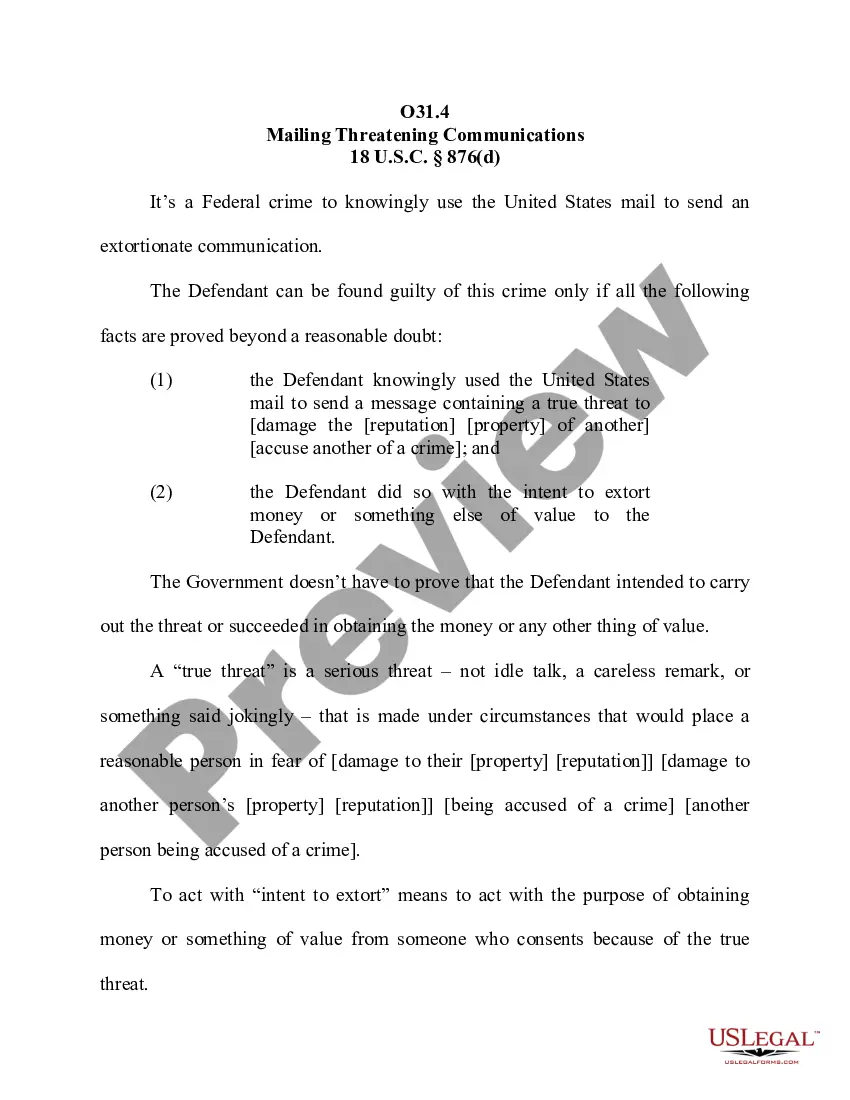
Mailing Threatening Communications 18 U.S.C. Sec. 876(d)
About this form
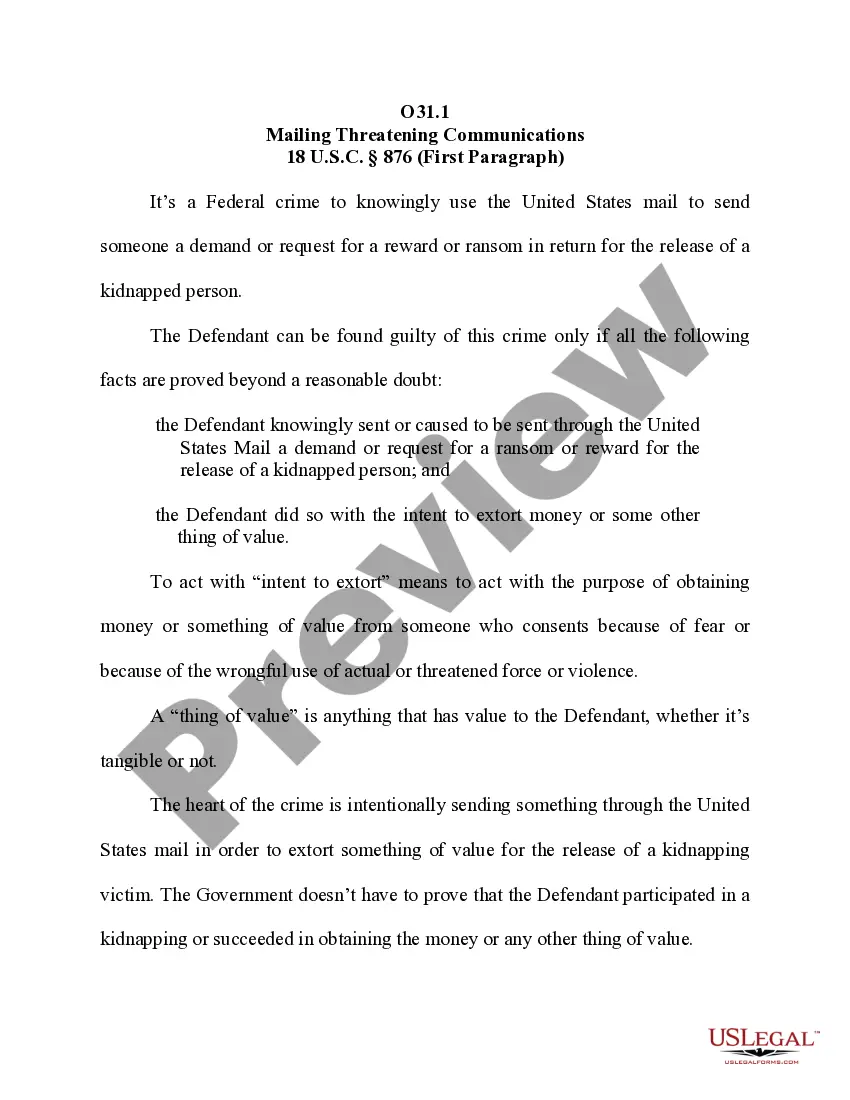
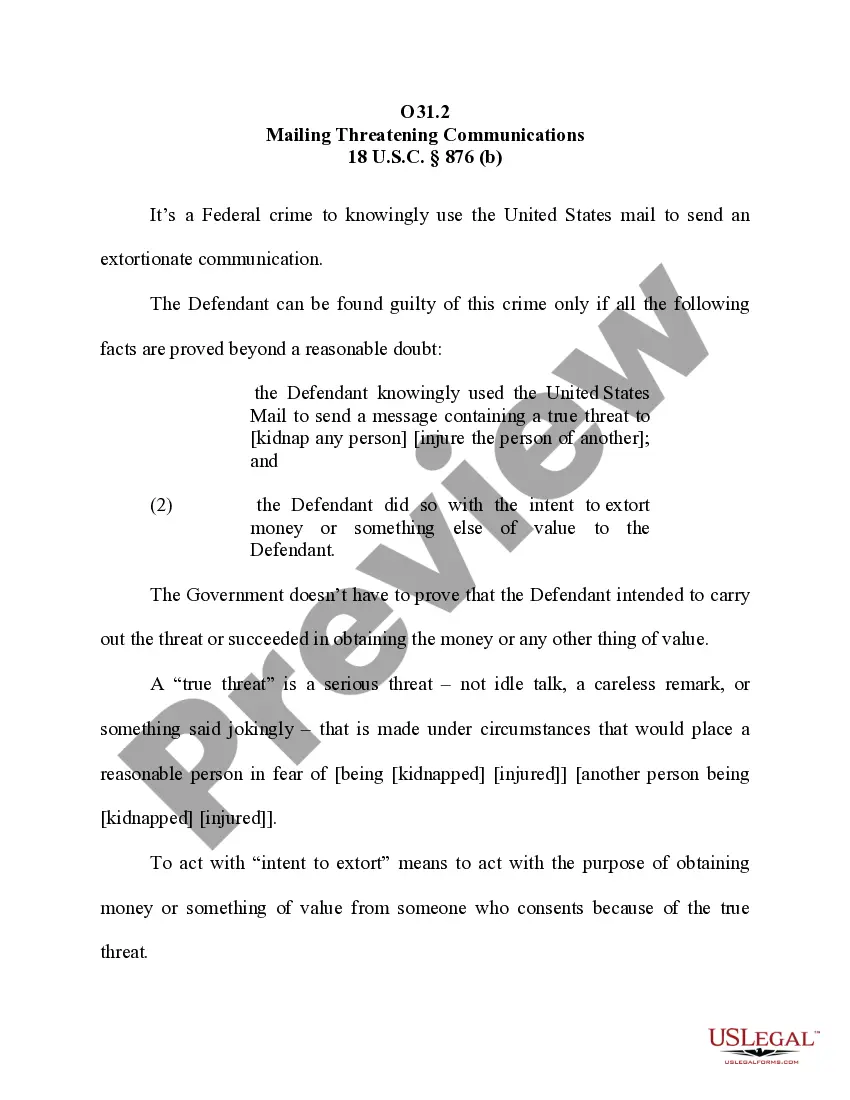
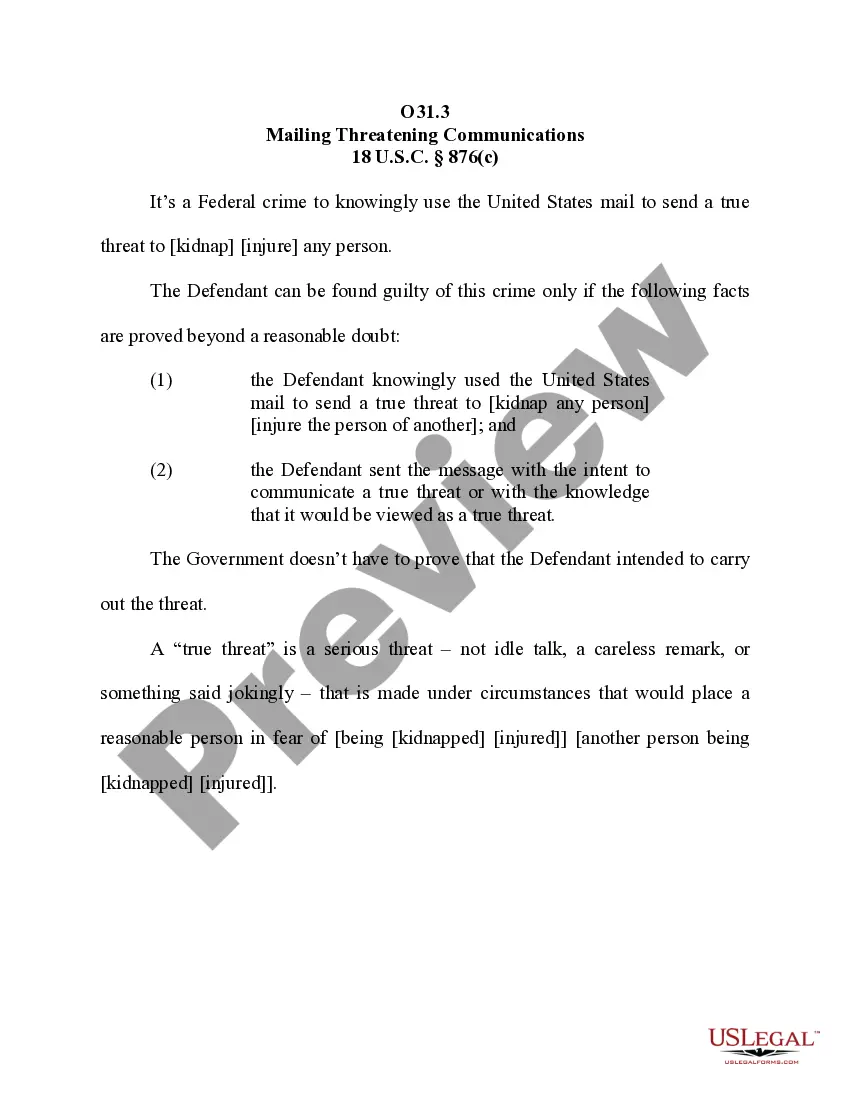
The Mailing Threatening Communications form, under 18 U.S.C. Sec. 876(d), is a legal document used to address the serious offense of using the United States mail to send extortionate communications. This form helps clarify the legal conditions that constitute a federal crime in this context, distinguishing it from other legal documents associated with threats or extortion. It outlines the necessary elements to prove guilt, including the use of mail and the intent to extort, ensuring users understand the specific legal implications of their communications.
Main sections of this form
- Description of what constitutes a true threat and legal ramifications.
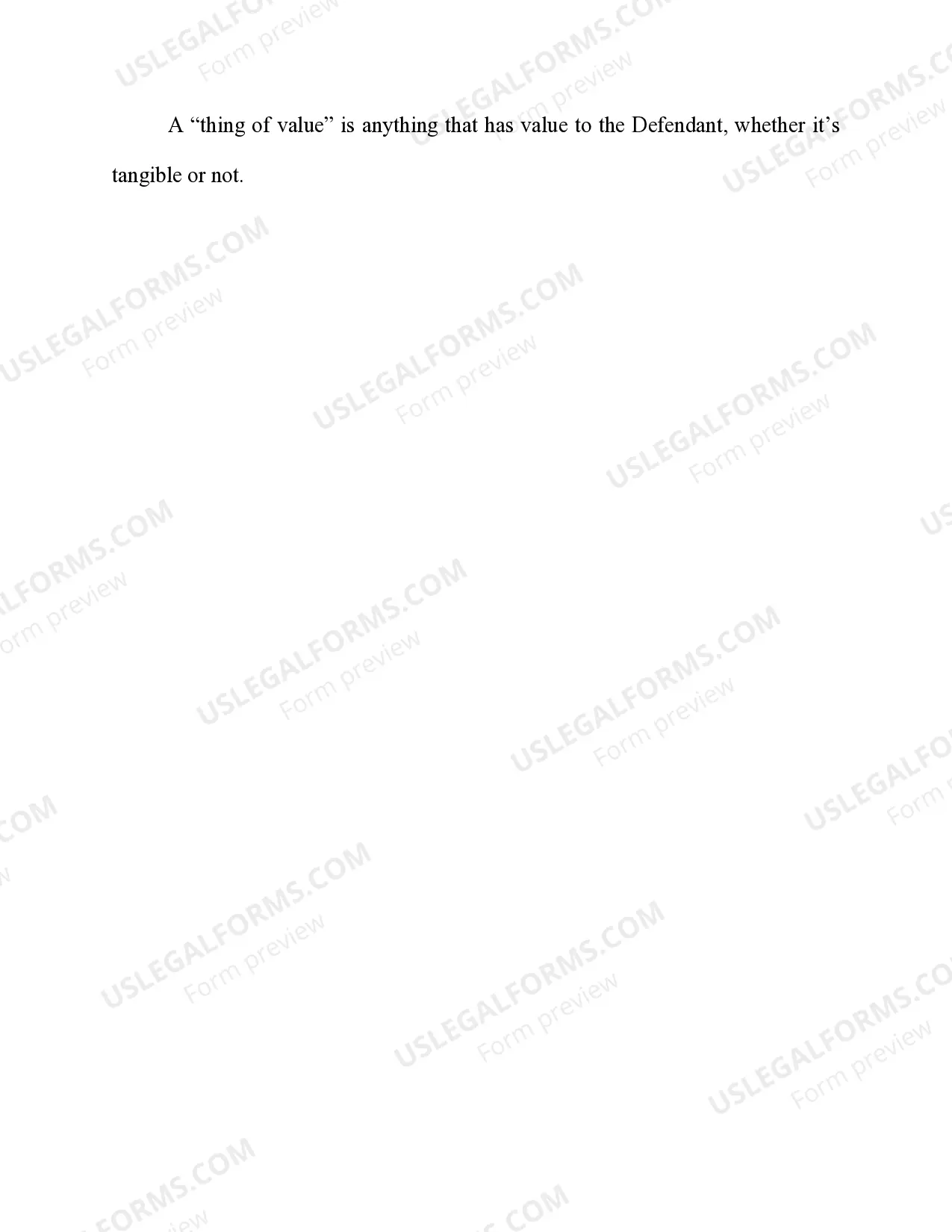
- Definition of intent to extort and the meaning of a "thing of value."
- Criteria needed to establish guilt beyond a reasonable doubt.
- Information about the consequences of mailing an extortionate communication.
Common use cases
This form is necessary when an individual faces allegations of using the United States mail to send threatening communications for the purposes of extortion. It may be used in legal defense cases where one needs to understand the specific allegations against them and how to navigate the legal system related to federal offenses.
Who needs this form
- Defendants in federal court facing charges related to mailing threatening communications.
- Individuals seeking to understand their rights and responsibilities under federal law concerning extortion.
- Legal representatives or attorneys handling cases of alleged threats made via postal services.
How to prepare this document
- Identify the defendant, including full name and address.
- Clearly state the details of the mailing in question, including dates and contents.
- Document any communications that could be claimed as a threat.
- Specify the intended recipient of the communication.
- Gather any evidence supporting your case, if applicable.
Is notarization required?
Notarization is generally not required for this form. However, certain states or situations might demand it. You can complete notarization online through US Legal Forms, powered by Notarize, using a verified video call available anytime.
Get your form ready online
Our built-in tools help you complete, sign, share, and store your documents in one place.
Make edits, fill in missing information, and update formatting in US Legal Forms—just like you would in MS Word.
Download a copy, print it, send it by email, or mail it via USPS—whatever works best for your next step.
Sign and collect signatures with our SignNow integration. Send to multiple recipients, set reminders, and more. Go Premium to unlock E-Sign.
If this form requires notarization, complete it online through a secure video call—no need to meet a notary in person or wait for an appointment.
We protect your documents and personal data by following strict security and privacy standards.

Make edits, fill in missing information, and update formatting in US Legal Forms—just like you would in MS Word.

Download a copy, print it, send it by email, or mail it via USPS—whatever works best for your next step.

Sign and collect signatures with our SignNow integration. Send to multiple recipients, set reminders, and more. Go Premium to unlock E-Sign.

If this form requires notarization, complete it online through a secure video call—no need to meet a notary in person or wait for an appointment.

We protect your documents and personal data by following strict security and privacy standards.
Avoid these common issues
- Failing to provide complete details of the communication sent.
- Not including all parties involved in the communication.
- Misunderstanding the definitions of "true threat" and "intent to extort."
- Overlooking the importance of the context surrounding the mailing.
Why complete this form online
- Immediate access to a legally valid template drafted by licensed attorneys.
- Convenient download options that allow for easy completion at your own pace.
- Editable fields to tailor the form to your specific situation.
- Reliability and assurance that the form meets current legal standards.
Looking for another form?

Form popularity
FAQ
Report the abusive email or message to the host platform. If the message comes from a free messaging service such as Gmail, Hotmail, Facebook, etc. you should be able to report it to the host.
Whoever transmits in interstate or foreign commerce any communication containing any demand or request for a ransom or reward for the release of any kidnapped person, shall be fined under this title or imprisoned not more than twenty years, or both.
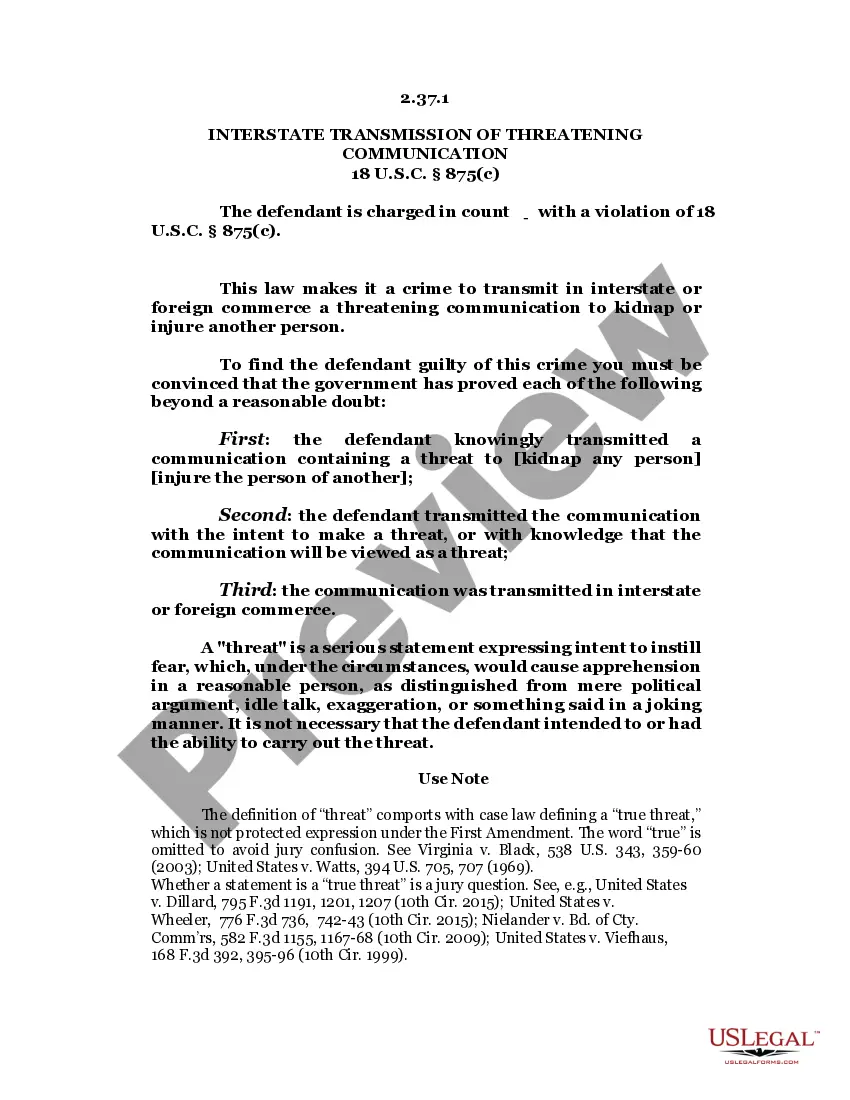
875(c), which provides that any individual who "transmits in interstate or foreign commerce any communication containing any threat to ? injure the person of another" is guilty of a felony and faces up to five years in prison.
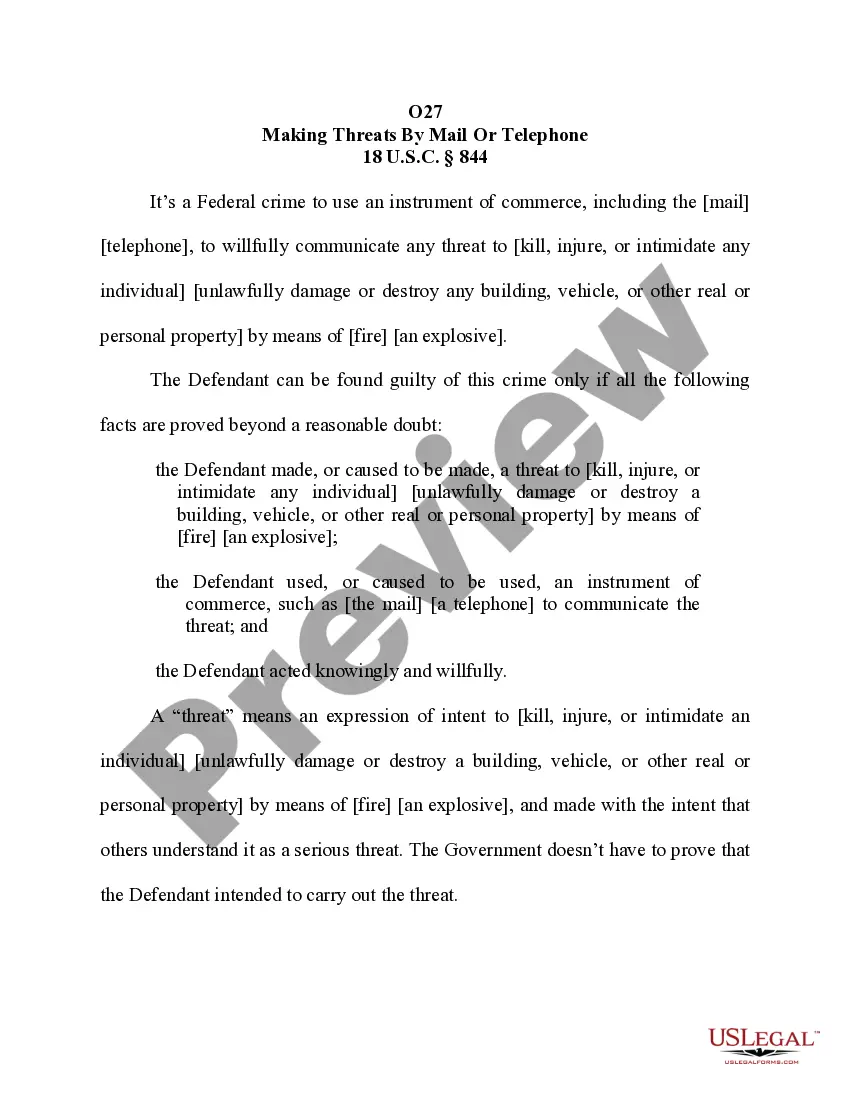
Threats or Intimidation Against Voters 18 U.S.C. § 241, which makes it unlawful to ?conspire to injure, oppress, threaten, or intimidate any person? exercising a constitutional right, including the right to vote; ? 18 U.S.C.
Furthermore, California online harassment law states that it is illegal to use an electronic device to repeatedly contact someone with the intention to harass or annoy them. A singular message that contains obscene or threatening language is also illegal.
Harassment. Sending threatening, unsolicited, obnoxious, or sexually explicit messages to others by email is a form of harassment, as is continuing to mail someone who has asked you to stop. You should never send anyone an email message containing things you wouldn't say in person.
If someone is spamming you or sending you threats via email, you can use the email header data to possibly trace the originating IP to get the location of the sender, essentially finding an IP from an email for free.
If you get an unwanted email, there are two ways to report it. Forward unwanted or deceptive messages to: your email provider (like Gmail, Hotmail, or Yahoo). Most email services include buttons to mark messages as junk mail or report spam.