Informed Consent for Counseling Services with References
What this document covers
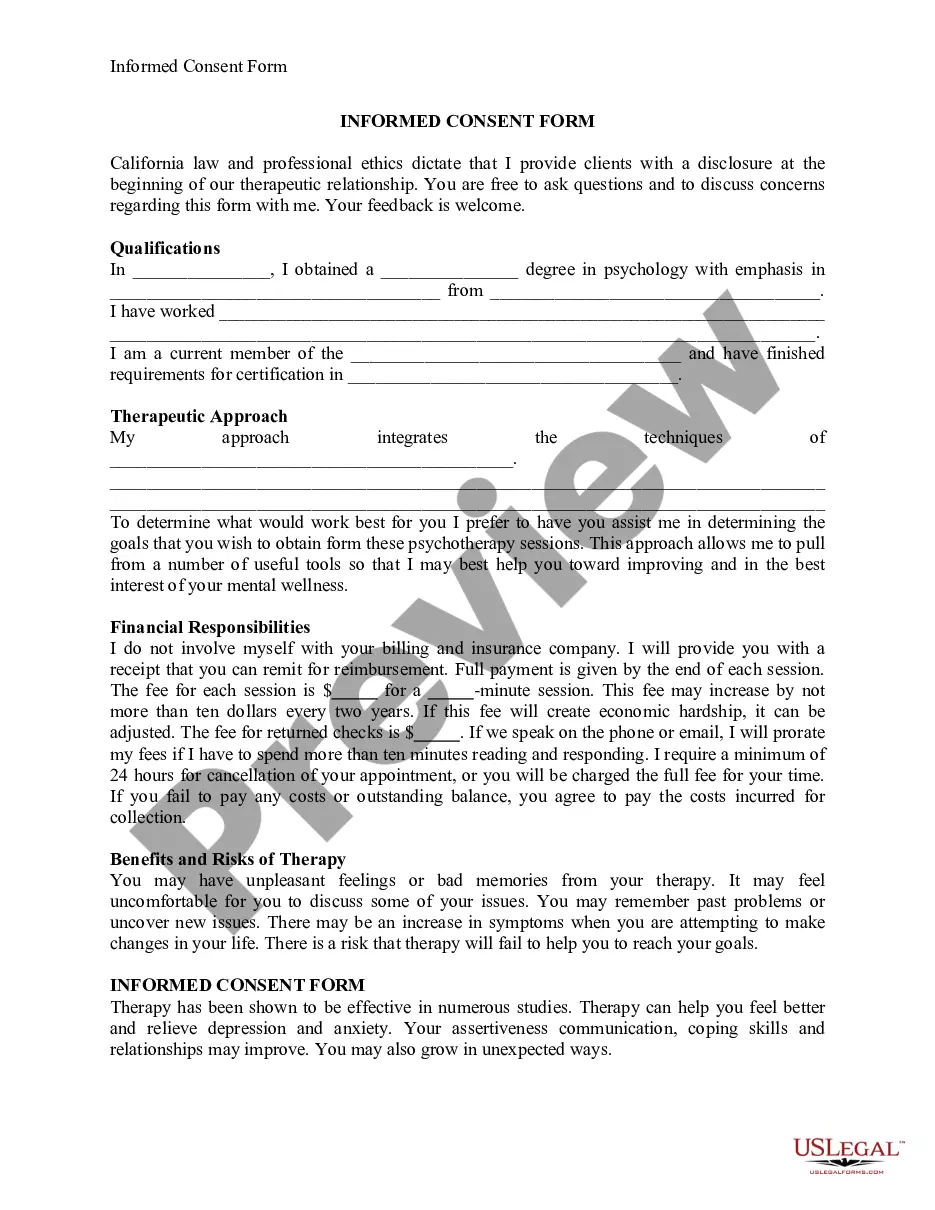
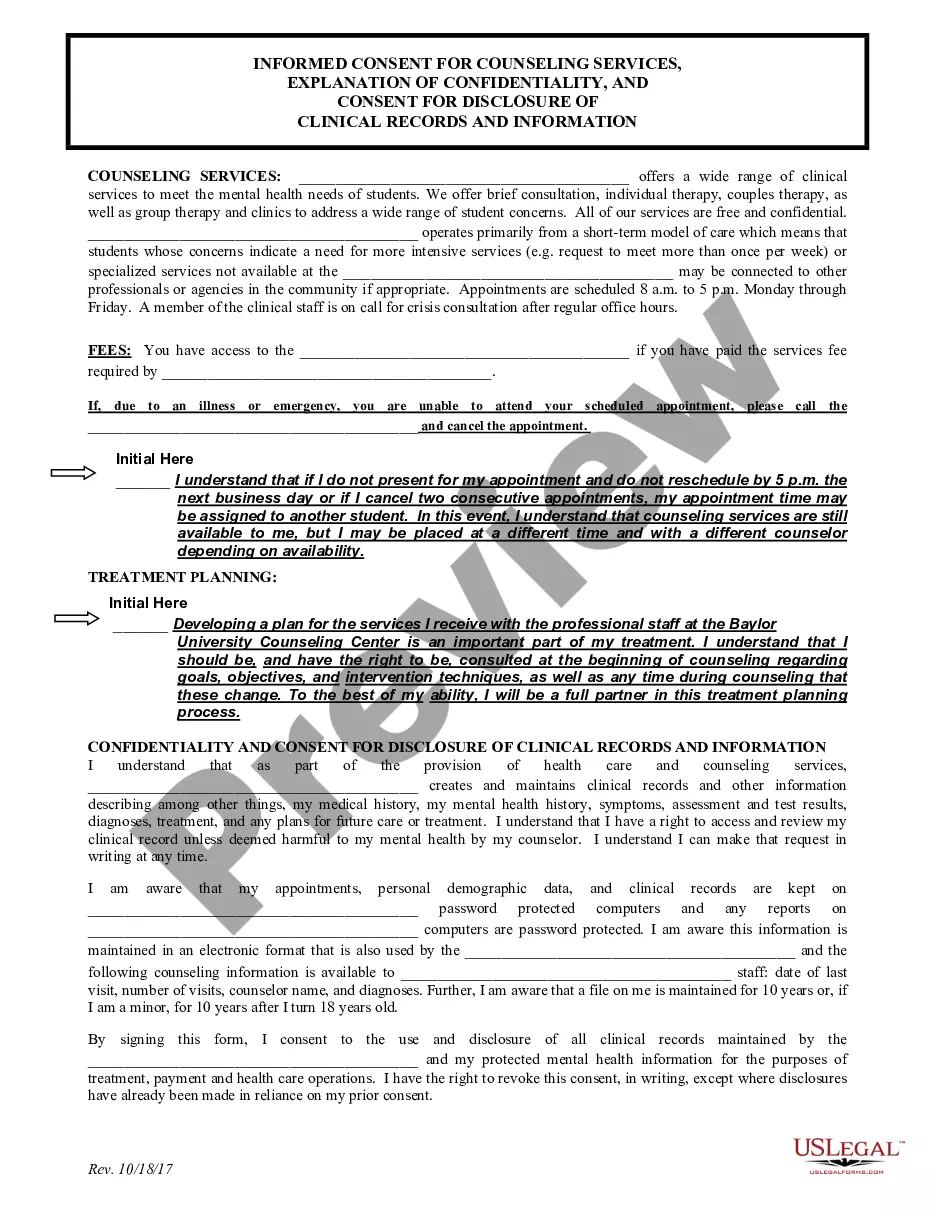
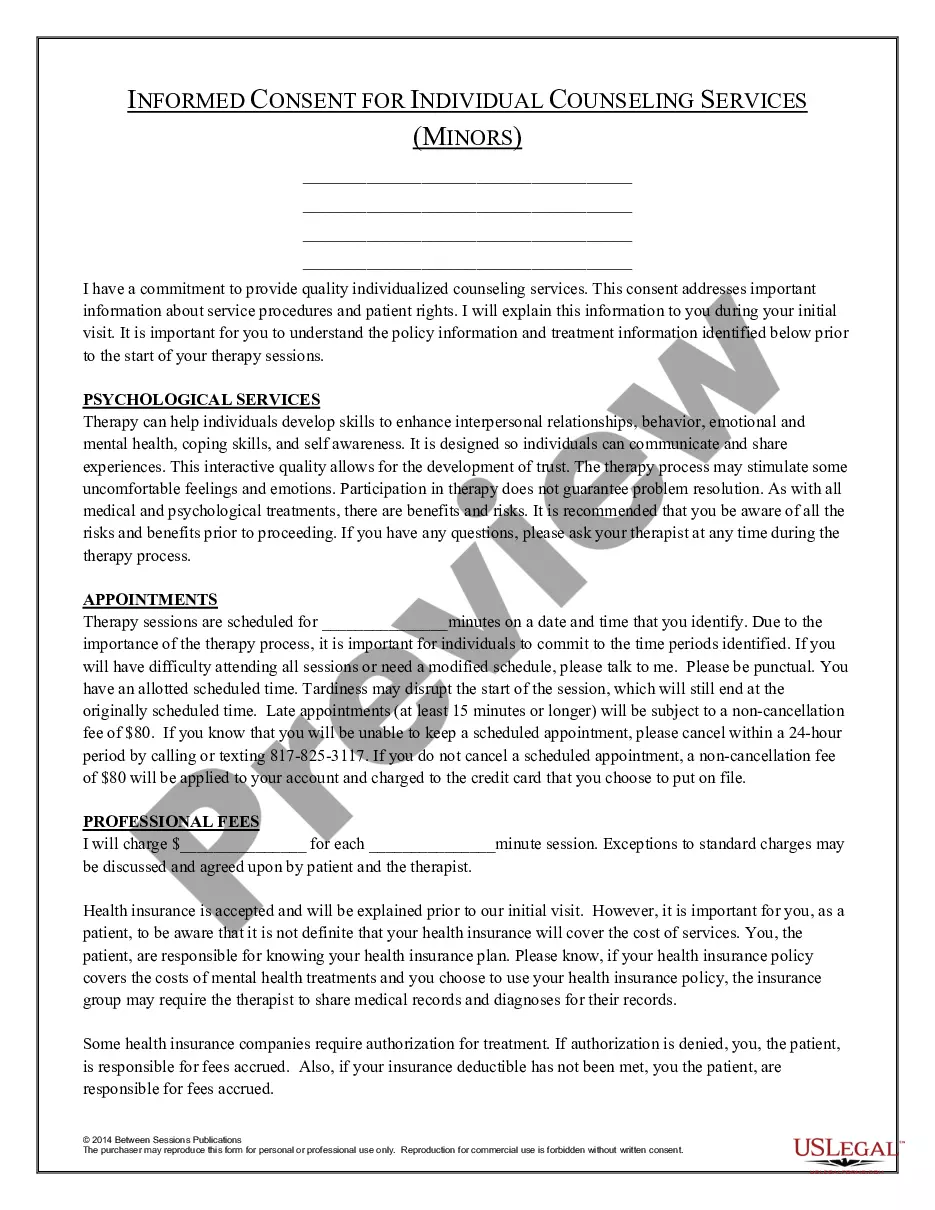
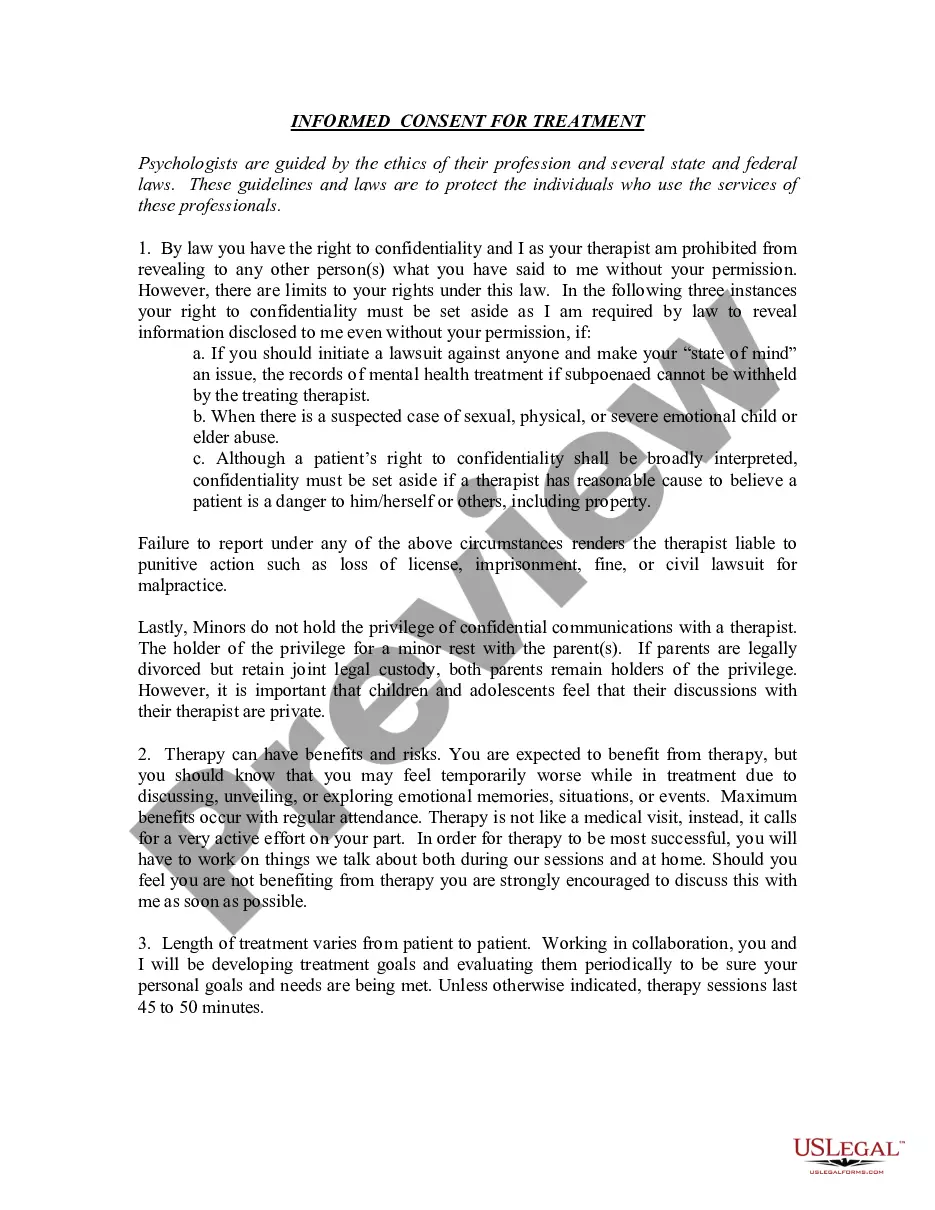
The Informed Consent for Counseling Services is a crucial document that outlines the terms of therapy between a client and a mental health professional. This form ensures that clients understand their rights, the therapist's qualifications, the therapeutic approach, and the boundaries of confidentiality. It is essential for establishing a transparent relationship and differs from other forms by its focus on informed consent specifically tailored to counseling services.
Key parts of this document
- Qualifications of the therapist, including education and certifications.
- Description of the therapeutic approach and client's role in goal-setting.
- Information on financial responsibilities and potential risks and benefits of therapy.
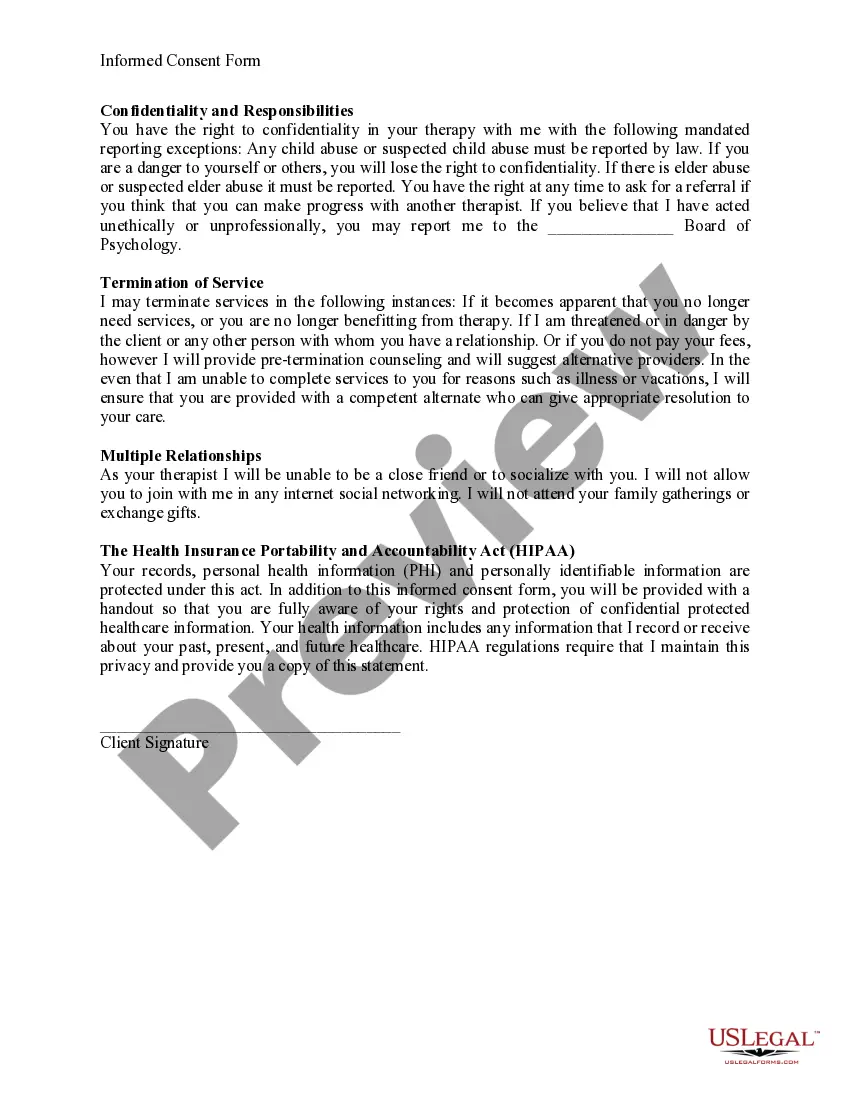
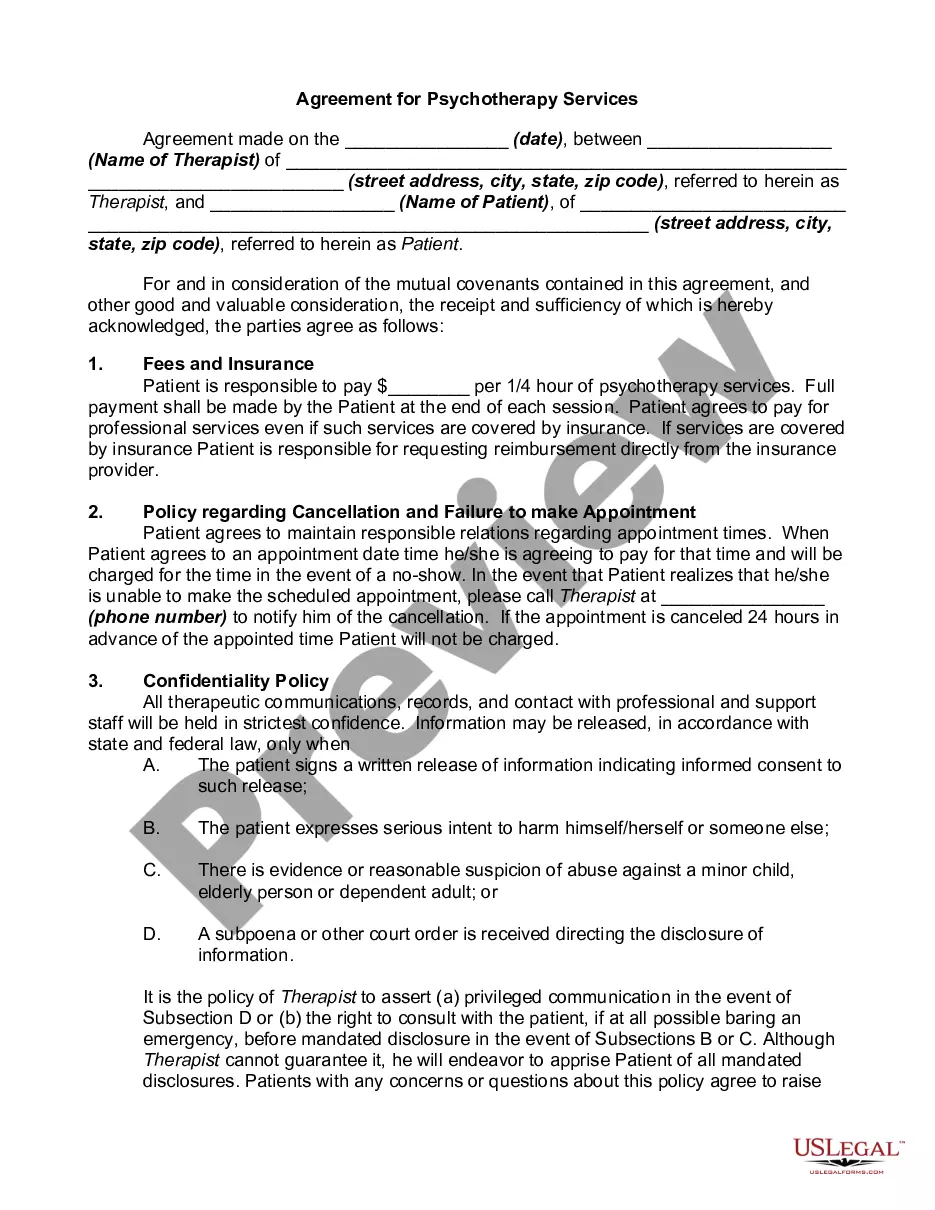
- Confidentiality guidelines and exceptions, including mandatory reporting.
- Conditions under which services may be terminated.
- Billing details and insurance considerations, including the HIPAA regulations.
Common use cases
This form should be used prior to commencing counseling services. It is essential for therapists to provide this informed consent to clients to establish clarity regarding the therapeutic process, confidentiality, and the potential risks involved. Clients should review and sign this document when they are ready to start therapy, ensuring that they fully understand their rights and responsibilities within the therapeutic relationship.
Who needs this form
- Clients seeking mental health counseling services.
- Mental health professionals who provide therapy and need to establish informed consent.
- Anyone involved in establishing a therapeutic relationship between a therapist and a client.
Steps to complete this form
- Fill in your name and information where indicated.
- Provide the qualification details of your therapist.
- Review and discuss the therapist's approach and feedback with them.
- Sign and date the form to indicate your consent and understanding.
- Keep a copy of the signed form for your records.
Does this form need to be notarized?
This form does not typically require notarization unless specified by local law.
Get your form ready online
Our built-in tools help you complete, sign, share, and store your documents in one place.
Make edits, fill in missing information, and update formatting in US Legal Forms—just like you would in MS Word.
Download a copy, print it, send it by email, or mail it via USPS—whatever works best for your next step.
Sign and collect signatures with our SignNow integration. Send to multiple recipients, set reminders, and more. Go Premium to unlock E-Sign.
If this form requires notarization, complete it online through a secure video call—no need to meet a notary in person or wait for an appointment.
We protect your documents and personal data by following strict security and privacy standards.

Make edits, fill in missing information, and update formatting in US Legal Forms—just like you would in MS Word.

Download a copy, print it, send it by email, or mail it via USPS—whatever works best for your next step.

Sign and collect signatures with our SignNow integration. Send to multiple recipients, set reminders, and more. Go Premium to unlock E-Sign.

If this form requires notarization, complete it online through a secure video call—no need to meet a notary in person or wait for an appointment.

We protect your documents and personal data by following strict security and privacy standards.
Typical mistakes to avoid
- Not reading the form thoroughly before signing.
- Missing to ask questions about unclear sections.
- Failing to keep a copy of the signed form for personal records.
Why use this form online
- Convenient downloading and access from any device.
- Editable fields allow for personalized information to be easily integrated.
- Accessible from any location, ensuring flexibility in managing therapy documentation.
Legal use & context
- The form serves to establish an informed consent that is legally binding in the context of counseling.
- It helps protect both the therapist and the client by clarifying expectations and responsibilities.
- Failure to provide such a form can lead to misunderstandings about the therapeutic relationship.
Main things to remember
- The Informed Consent for Counseling Services is necessary for establishing therapy terms.
- Understanding the form helps clients navigate their rights and responsibilities in therapy.
- It ensures compliance with legal and ethical standards in mental health care.
Looking for another form?
Form popularity
FAQ
Three basic principles, among those generally accepted in our cultural tradition, are particularly relevant to the ethics of research involving human subjects: the principles of respect of persons, beneficence and justice.
The underlying principle of consent isn't particularly complicated: Patients have a right to make an informed, voluntary decision about their care. That means they need to know the nature, risks, and benefits of their options ? which includes declining treatment.
Informed consent is the process in which a health care provider educates a patient about the risks, benefits, and alternatives of a given procedure or intervention. The patient must be competent to make a voluntary decision about whether to undergo the procedure or intervention.
Types of consent include implied consent, express consent, informed consent and unanimous consent.
Informed Consent Essentials Consent must be given voluntarily. The client must be competent (legally as well as cognitively/emotionally) to give consent. We must actively ensure the client's understanding of what she or he is agreeing to. The information shared and all that is agreed to must be documented.
Four core criteria must be met: the patient giving consent must have capacity ? the consent must be freely given ? the consent must be sufficiently specific to the procedure or treatment proposed ? the consent must be informed.
I will make every attempt to inform you in advance of planned absences, and provide you with the name and phone number of the mental health professional covering my practice. If you are unhappy with what is happening in therapy, I hope you will will talk with me so that I can respond to your concerns.
There are 4 components of informed consent including decision capacity, documentation of consent, disclosure, and competency. Doctors will give you information about a particular treatment or test in order for you to decide whether or not you wish to undergo a treatment or test.