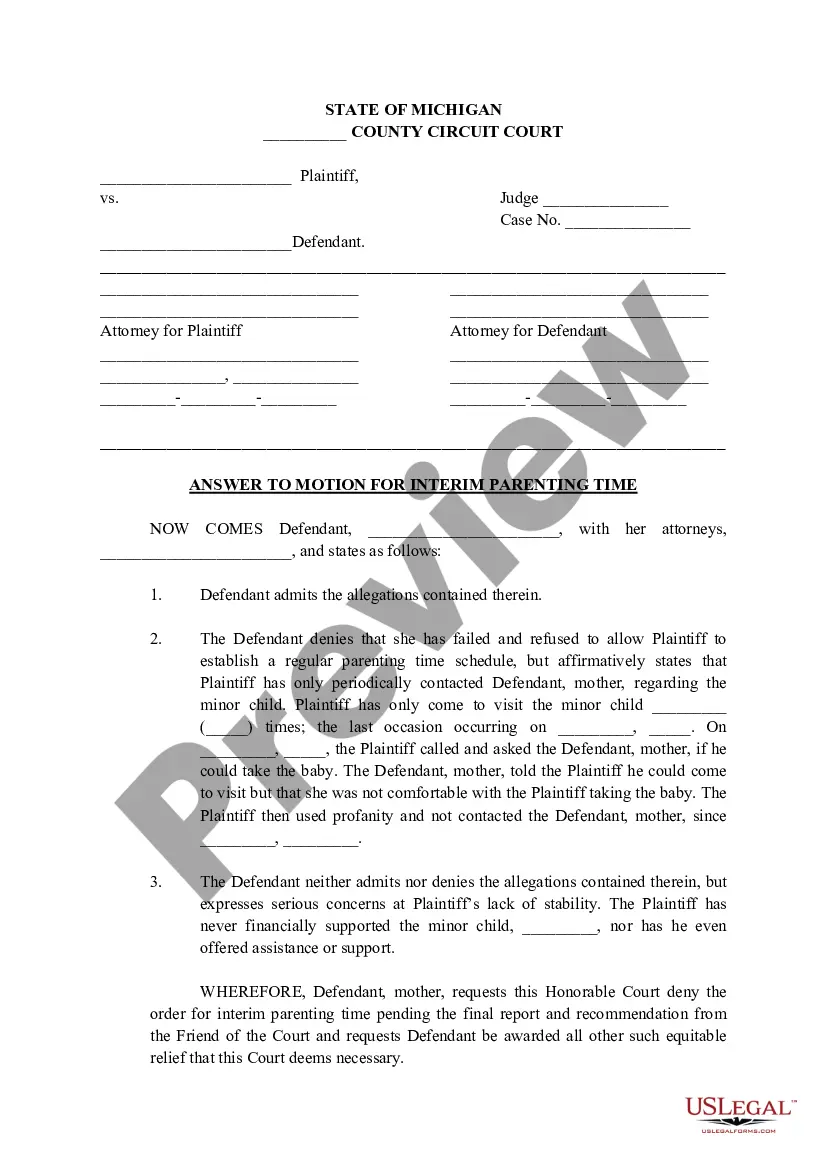
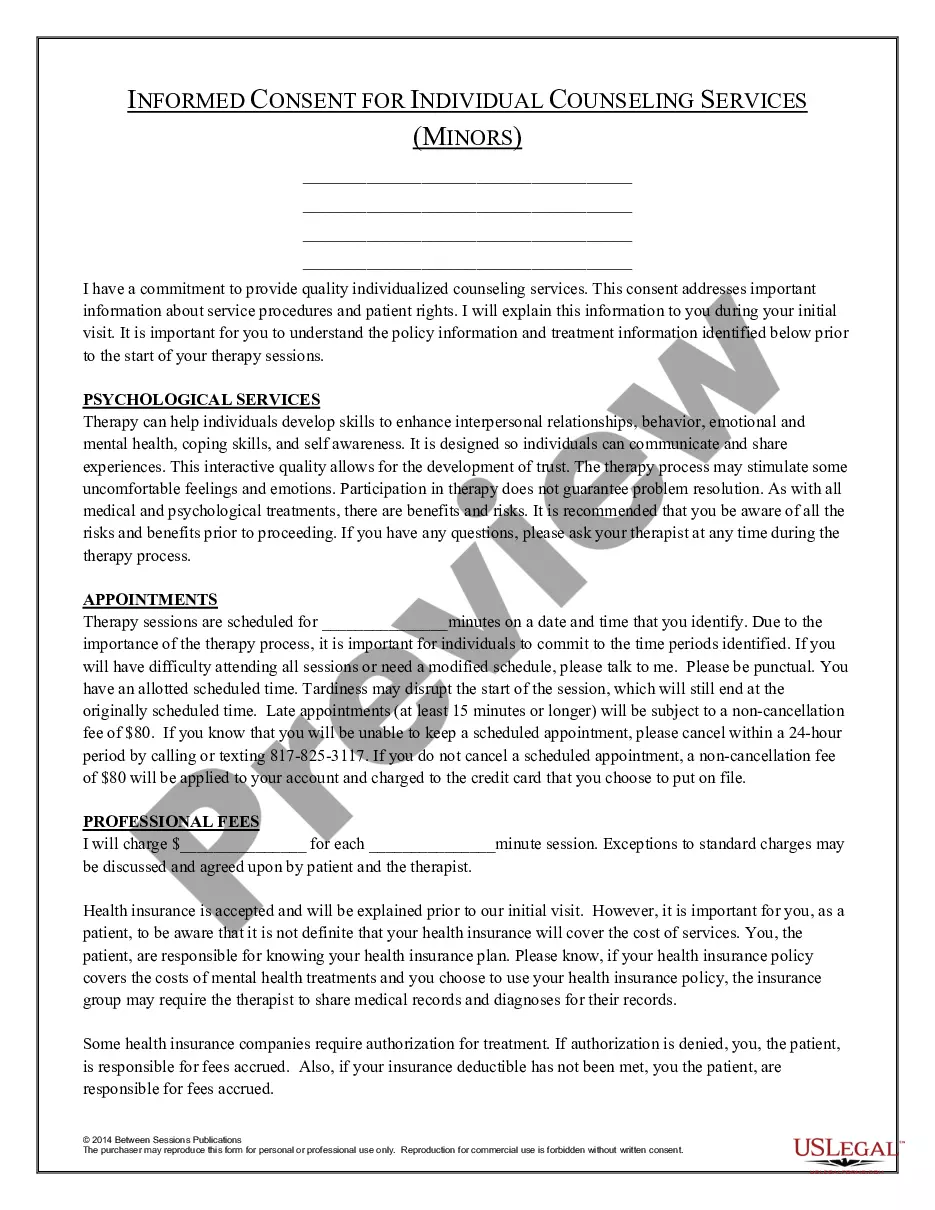
Informed Consent for Counseling Services for a Minor
What is this form?
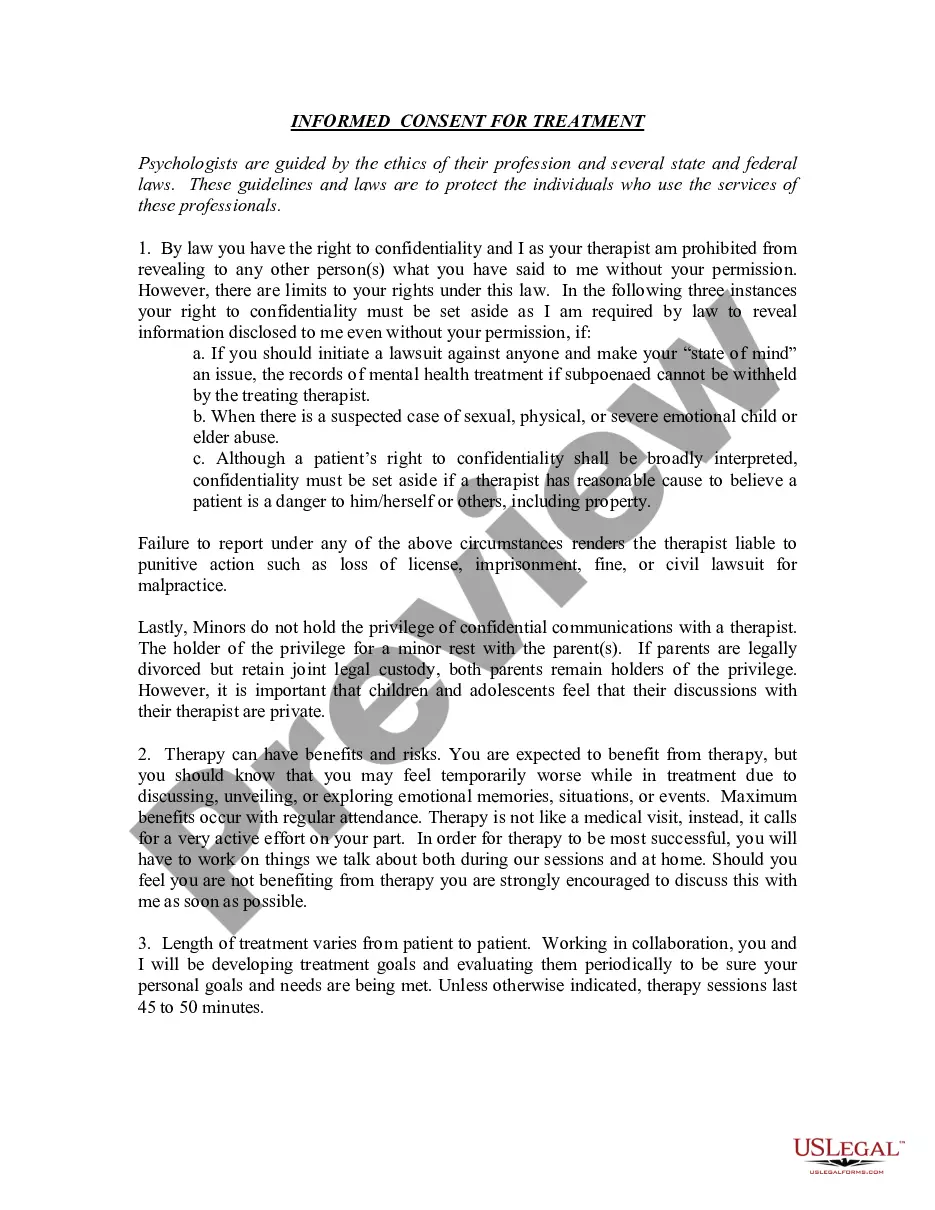
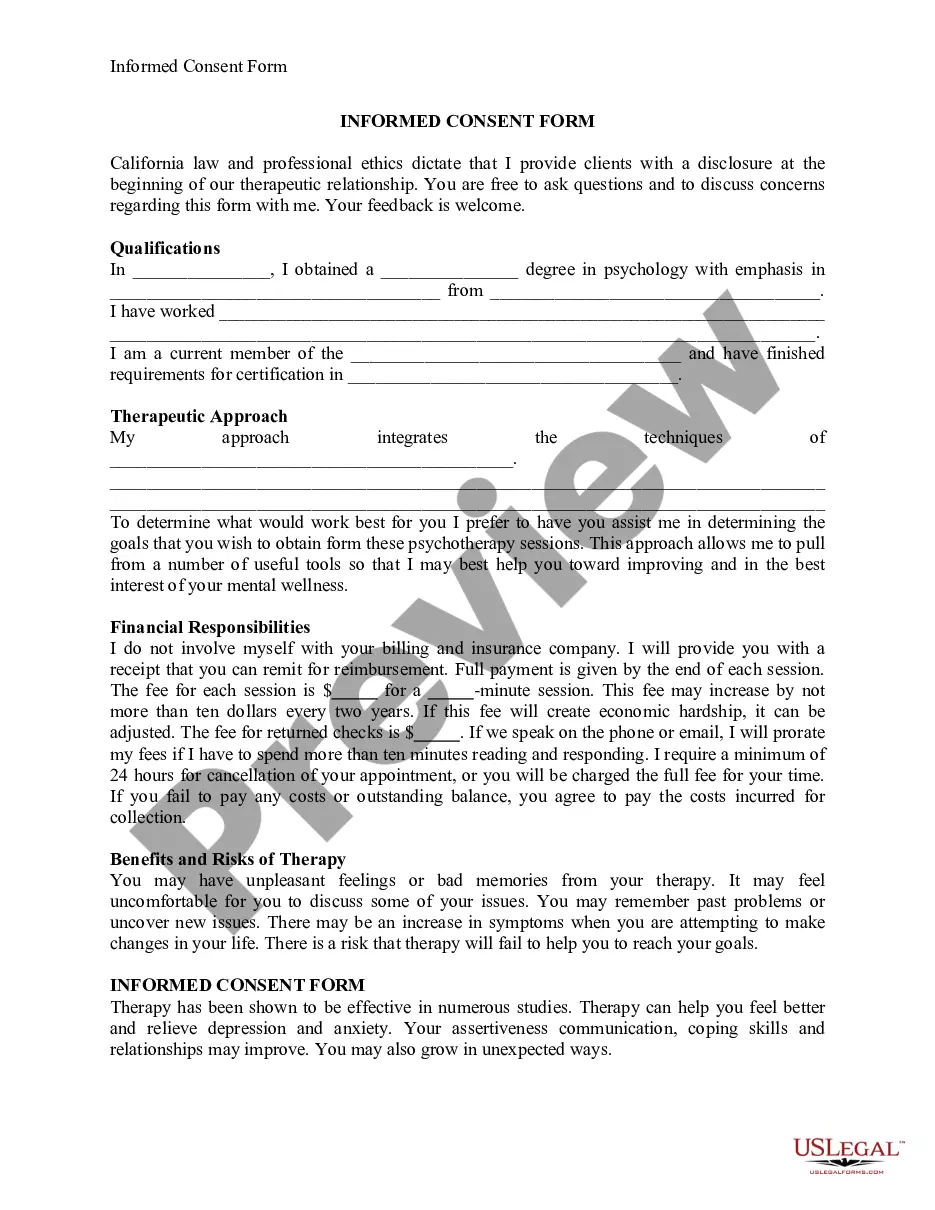
The Informed Consent for Counseling Services for a Minor is a legal document that outlines the terms and conditions under which a mental health counselor provides therapeutic services to a minor child. This consent form is distinct from other medical or therapeutic consent forms as it specifically addresses the unique needs and legal considerations involved in counseling minors, ensuring that parents or guardians are informed about the treatment process, policies, and their child's rights.
Key components of this form
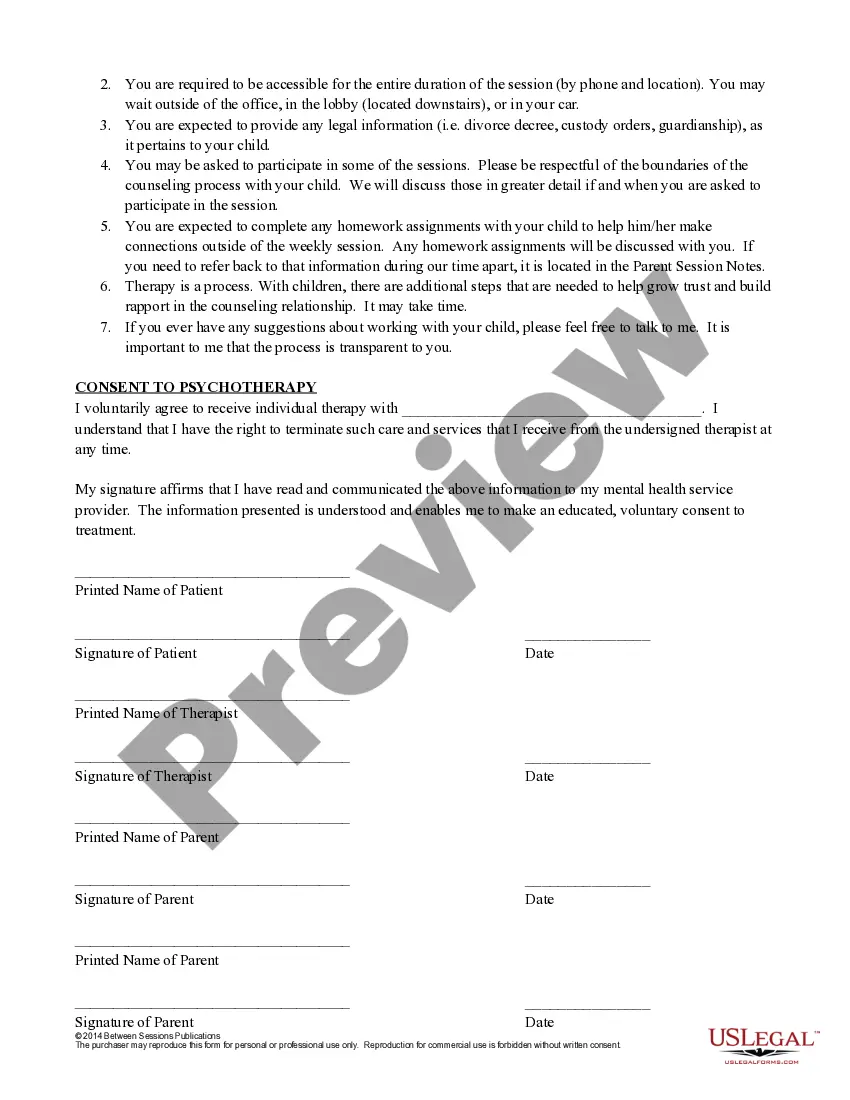
- Consent to therapy: Acknowledgement of understanding and willingness to participate in counseling.
- Psychological services: Overview of the therapeutic process and potential outcomes.
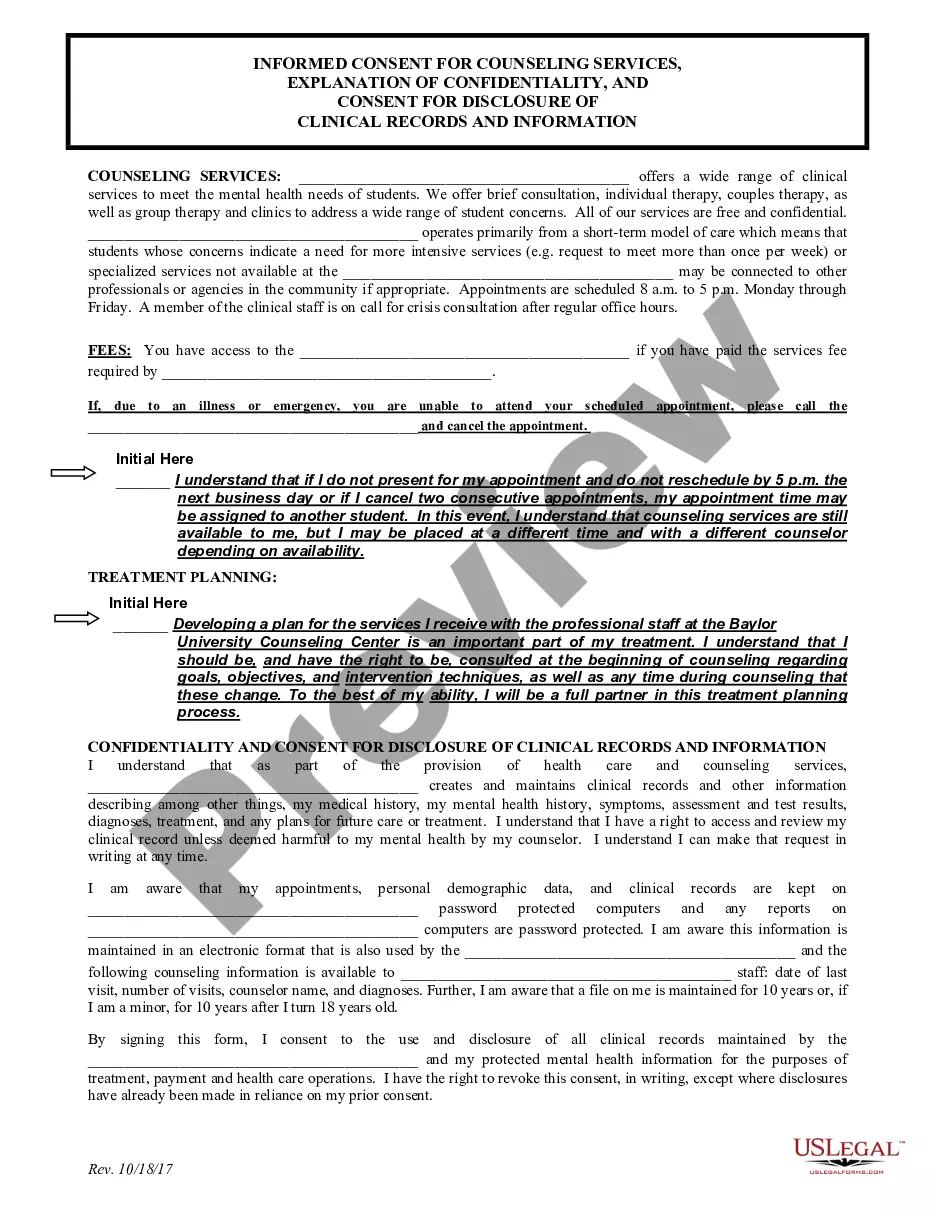
- Appointment details: Policies regarding scheduling, cancellations, and fees.
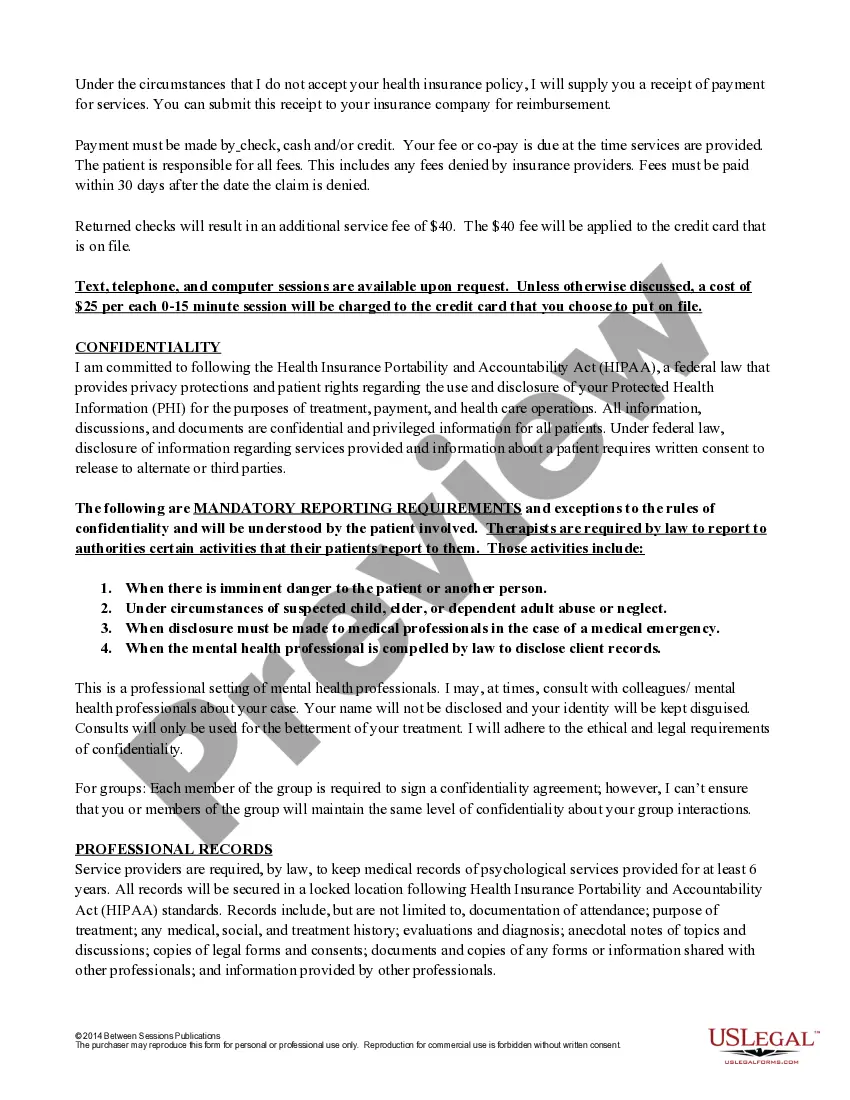
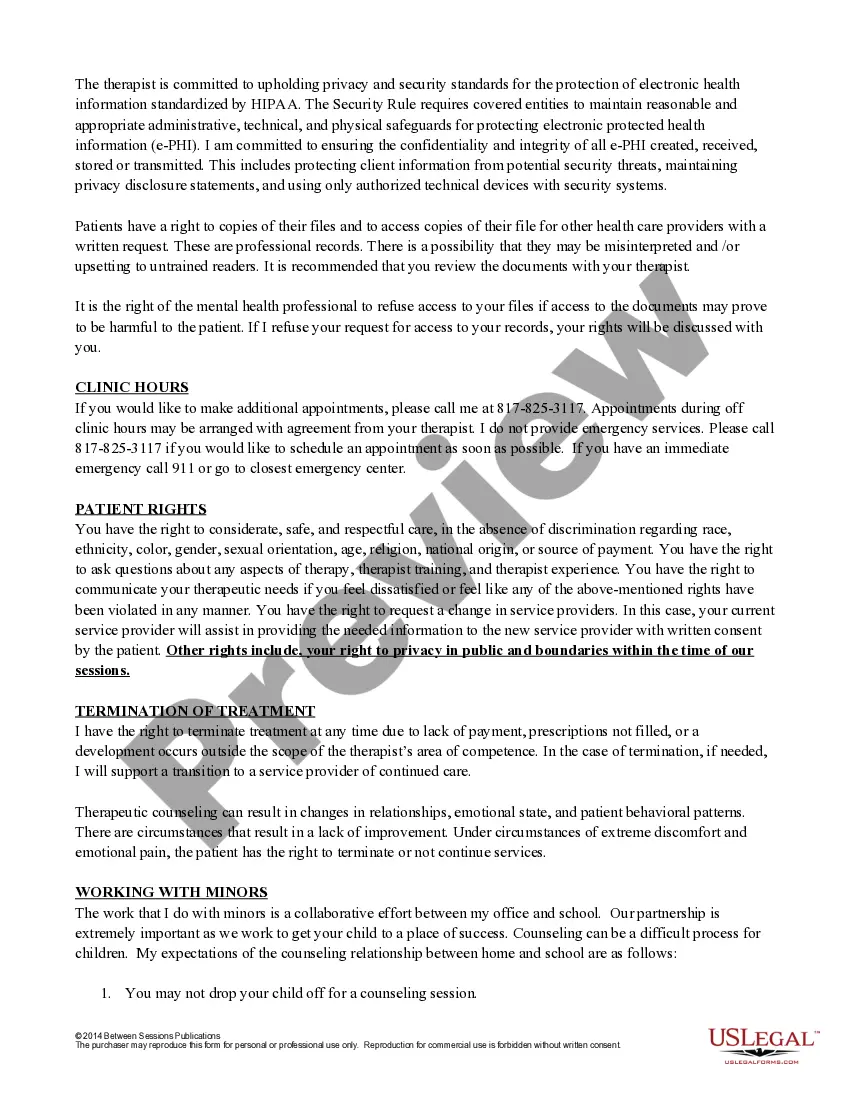
- Confidentiality: Explanation of legal obligations to maintain privacy and exceptions to confidentiality.
- Patient rights: An outline of the rights a minor and their guardians hold in the therapeutic process.
- Working with minors: Guidelines for parental involvement and expectations during therapy sessions.
Situations where this form applies
This form should be used when a guardian seeks counseling services for a minor child. It serves as a formal agreement between the provider and the guardian, ensuring that both parties understand the treatment methods, responsibilities, and expectations. The form is essential before any therapy session begins to ensure legal compliance and clarity between the involved parties.
Who should use this form
This form is intended for:
- Parents or legal guardians who are seeking mental health counseling for their minor children.
- Mental health professionals providing counseling services specifically to minors.
- Caregivers or guardians involved in the consent process for a childâs therapeutic treatment.
Instructions for completing this form
- Begin by filling in the patientâs (minorâs) name and the therapistâs name at the designated sections.
- Review the sections on psychological services and patient rights with the minorâs guardian.
- Complete the details on appointments including duration and fees for therapy sessions.
- Ensure the guardian understands and signs consent for therapy, acknowledging their rights.
- Discuss any concerns regarding confidentiality and how it applies specifically to minors.
- Both the guardian and therapist should keep a copy of the signed form for their records.
Does this document require notarization?
This form does not typically require notarization unless specified by local law. It is important to check state regulations regarding the need for notarized signatures when consenting for minors in therapy.
Get your form ready online
Our built-in tools help you complete, sign, share, and store your documents in one place.
Make edits, fill in missing information, and update formatting in US Legal Forms—just like you would in MS Word.
Download a copy, print it, send it by email, or mail it via USPS—whatever works best for your next step.
Sign and collect signatures with our SignNow integration. Send to multiple recipients, set reminders, and more. Go Premium to unlock E-Sign.
If this form requires notarization, complete it online through a secure video call—no need to meet a notary in person or wait for an appointment.
We protect your documents and personal data by following strict security and privacy standards.

Make edits, fill in missing information, and update formatting in US Legal Forms—just like you would in MS Word.

Download a copy, print it, send it by email, or mail it via USPS—whatever works best for your next step.

Sign and collect signatures with our SignNow integration. Send to multiple recipients, set reminders, and more. Go Premium to unlock E-Sign.

If this form requires notarization, complete it online through a secure video call—no need to meet a notary in person or wait for an appointment.

We protect your documents and personal data by following strict security and privacy standards.
Typical mistakes to avoid
- Failing to discuss the terms of the consent form thoroughly, leading to misunderstandings.
- Not keeping a copy of the signed consent form for both the therapist and the guardians.
- Ignoring state-specific regulations regarding consent for minors.
Advantages of online completion
- Convenience: Easily accessible and downloadable from any location.
- Editability: Allows for customization to meet specific needs and circumstances.
- Reliability: Developed by licensed attorneys to ensure legal compliance and accuracy.
Looking for another form?
Form popularity
FAQ
What Is Informed Consent? There are 4 components of informed consent including decision capacity, documentation of consent, disclosure, and competency. Doctors will give you information about a particular treatment or test in order for you to decide whether or not you wish to undergo a treatment or test.
(See Virginia §54.1-2969, E) . See footnote #1. Therefore, under HIPAA, a Virginia minor who enters mental health treatment under his/her own authority and by giving his/her own consent is considered to be ?the patient,? retaining all the rights afforded to adult patients.
Children Under 13 Cannot Provide Legal Consent No child who is under the age of 13 can consent to a sexual act. Therefore, no person can have consensual sex with a person under 13 years of age without violating Virginia Code §18.2-61.
Legally, children are not able to give true informed consent until they turn 18. So, before taking part in a clinical trial, they are asked for their assent. Assent means that they agree to take part. They may also dissent, which means they do not agree.
Consent must be given voluntarily. The client must be competent (legally as well as cognitively/emotionally) to give consent. We must actively ensure the client's understanding of what she or he is agreeing to. The information shared and all that is agreed to must be documented.
The informed consent process involves three key features: (1) disclosing to potential research subjects information needed to make an informed decision; (2) facilitating the understanding of what has been disclosed; and (3) promoting the voluntariness of the decision about whether or not to participate in the research.
Obtaining informed consent in medicine is process that should include: (1) describing the proposed intervention, (2) emphasizing the patient's role in decision-making, (3) discussing alternatives to the proposed intervention, (4) discussing the risks of the proposed intervention and (5) eliciting the patient's