Account Stated for Construction Work
Overview of this form
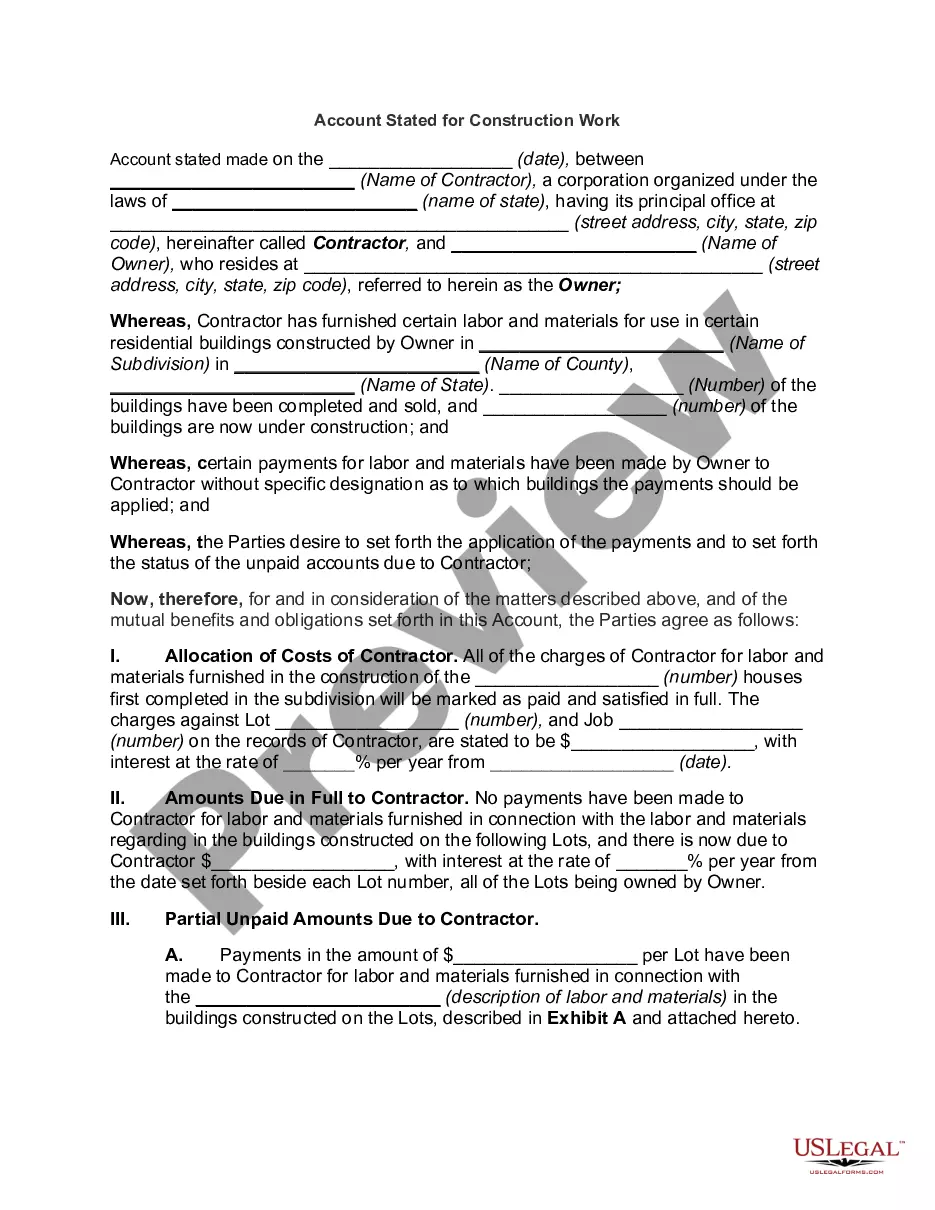
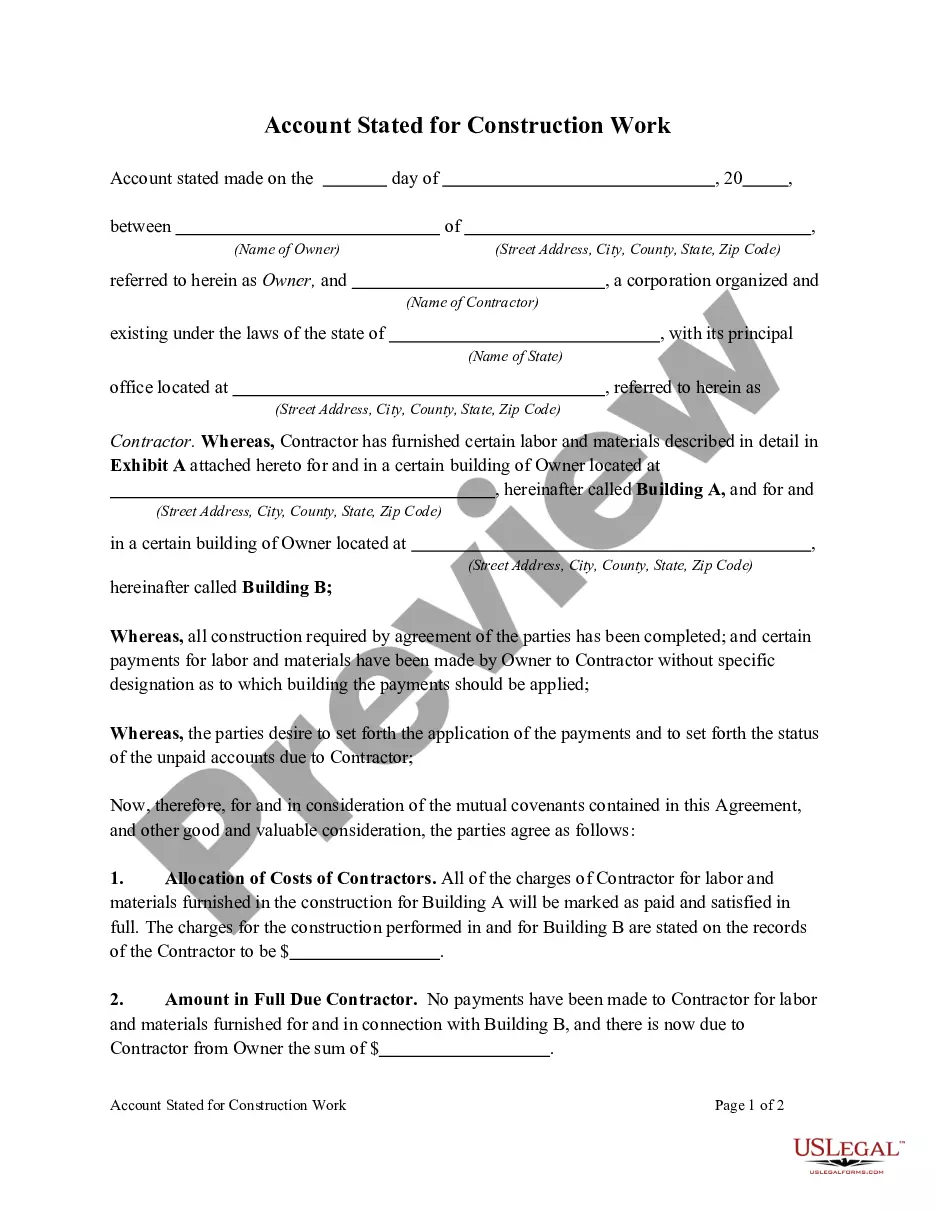
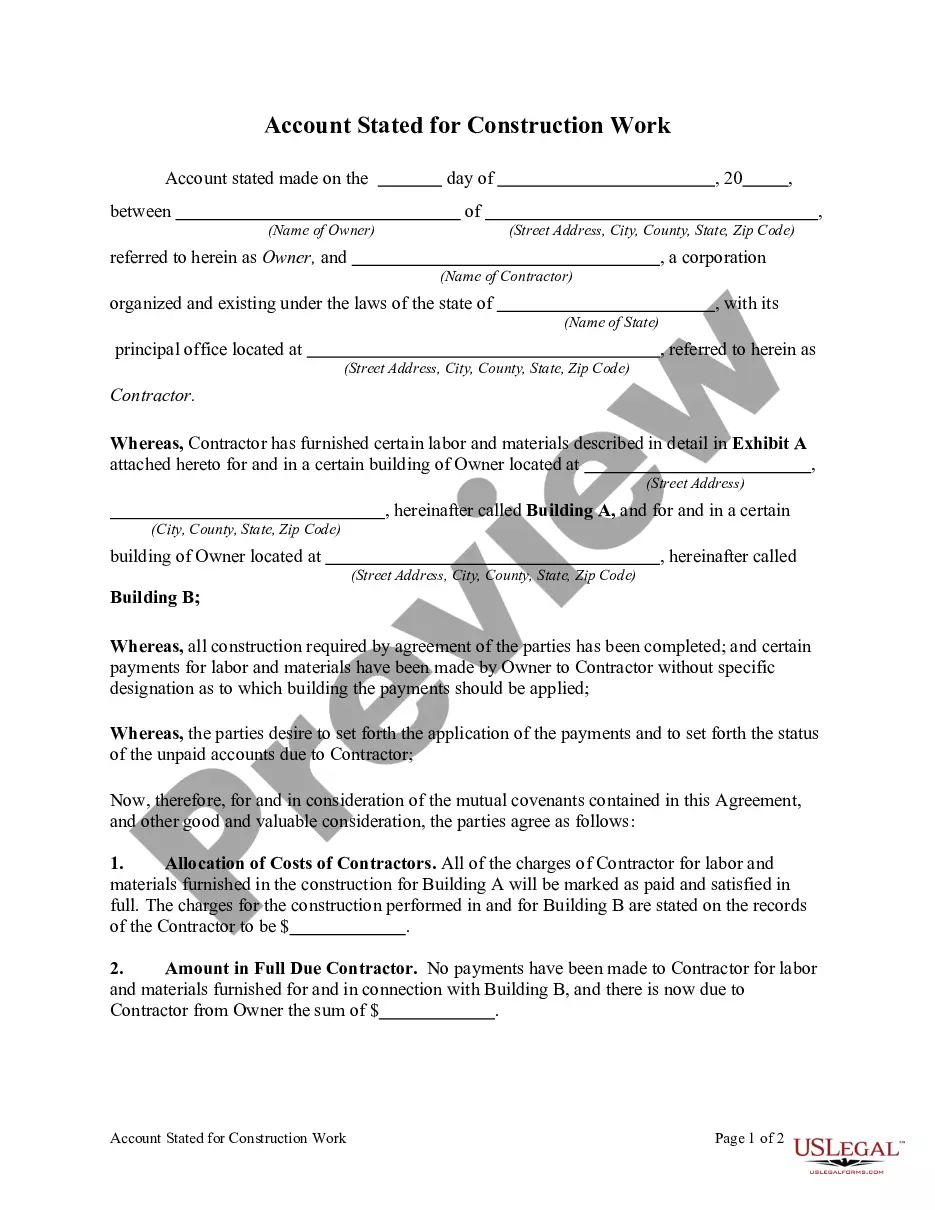
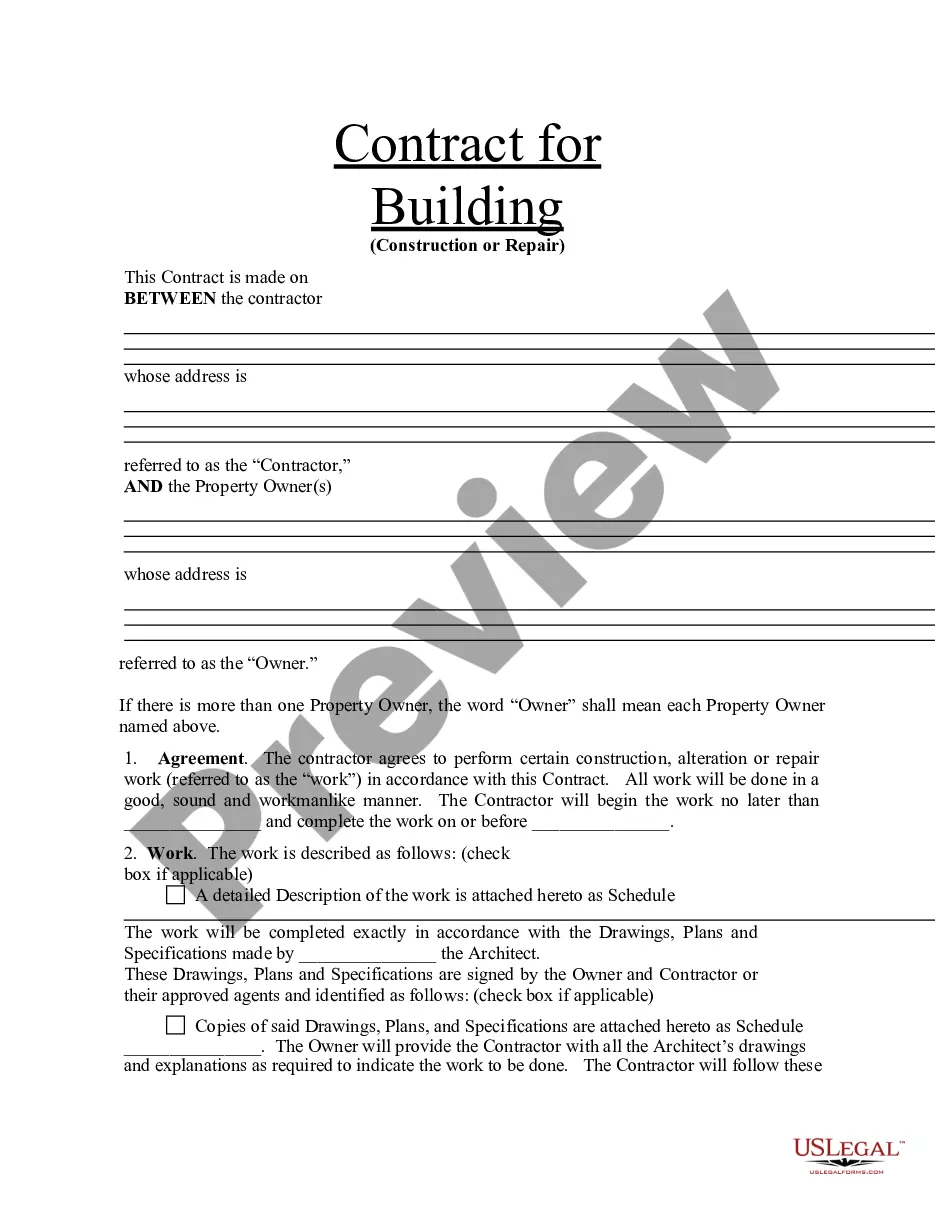
The Account Stated for Construction Work is a legal document that formalizes an agreement between a contractor and an owner regarding the accuracy of a construction account balance. This form ensures that both parties acknowledge outstanding payments and the allocation of costs related to construction services and materials, differentiating it from general payment agreements by focusing specifically on construction-related transactions.
Main sections of this form
- Date of the agreement.
- Identification details of the contractor and the owner.
- Description of the construction project, including location and property details.
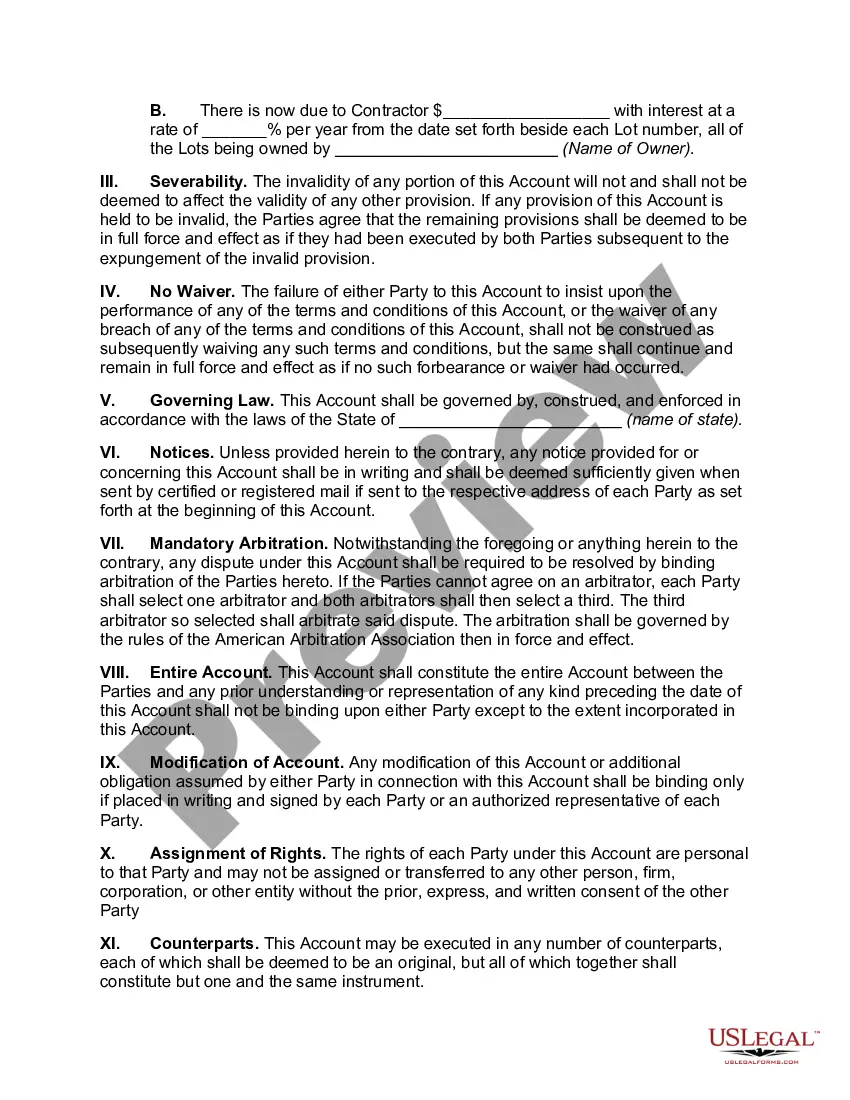
- Allocations of costs and statements of amounts due to the contractor.
- Terms regarding severability, waiver, governing law, and arbitration.
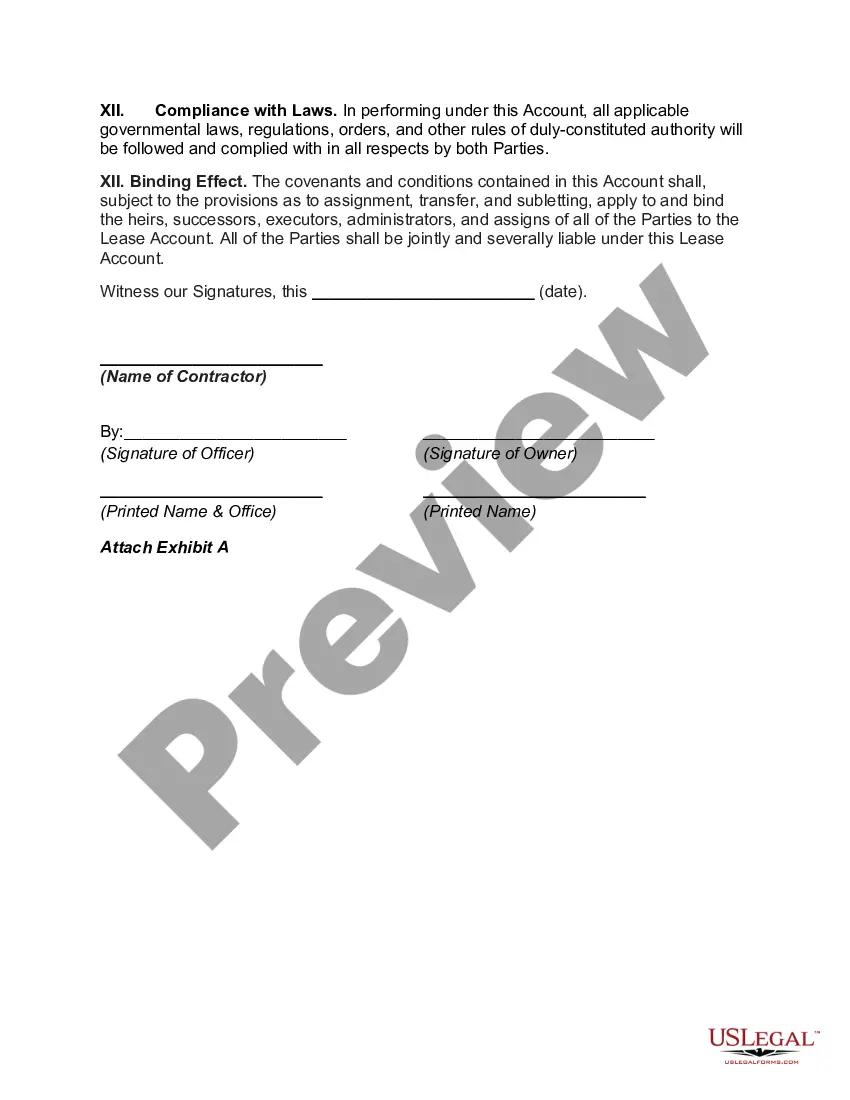
- Signatures of both parties to validate the agreement.
When this form is needed
This form should be used when a contractor and owner have completed work on construction projects but need to clarify the payments made and the outstanding balances. It is particularly useful in situations where multiple construction projects are involved, and payments may not have been specifically allocated to individual jobs. This helps prevent disputes over payment and project completion.
Intended users of this form
- Contractors who have provided services for construction projects and need to formalize payment arrangements.
- Property owners overseeing residential construction and need a record of contractor payments.
- Real estate developers involved in multiple construction activities.
Completing this form step by step
- Identify and enter the date of the agreement.
- Provide the full legal names and addresses of both the contractor and the owner.
- Specify the details of the construction project, including location and lot numbers.
- Include details of allocated costs, payments made, and amounts still due.
- Sign and date the form in the designated areas to finalize the agreement.
Does this document require notarization?
This form does not typically require notarization unless specified by local law. However, having it notarized can provide additional legal reassurance and authenticity.
Get your form ready online
Our built-in tools help you complete, sign, share, and store your documents in one place.
Make edits, fill in missing information, and update formatting in US Legal Forms—just like you would in MS Word.
Download a copy, print it, send it by email, or mail it via USPS—whatever works best for your next step.
Sign and collect signatures with our SignNow integration. Send to multiple recipients, set reminders, and more. Go Premium to unlock E-Sign.
If this form requires notarization, complete it online through a secure video call—no need to meet a notary in person or wait for an appointment.
We protect your documents and personal data by following strict security and privacy standards.

Make edits, fill in missing information, and update formatting in US Legal Forms—just like you would in MS Word.

Download a copy, print it, send it by email, or mail it via USPS—whatever works best for your next step.

Sign and collect signatures with our SignNow integration. Send to multiple recipients, set reminders, and more. Go Premium to unlock E-Sign.

If this form requires notarization, complete it online through a secure video call—no need to meet a notary in person or wait for an appointment.

We protect your documents and personal data by following strict security and privacy standards.
Common mistakes
- Failing to specify the details of the construction work and payments.
- Not having signatures on the document from both parties.
- Using incorrect or incomplete address information for the contractor and owner.
- Omitting the date of agreement or the applicable governing laws.
Advantages of online completion
- Conveniently fill out and download the form at your own pace.
- Edit the template to meet specific project details and requirements.
- Access professionally drafted templates created by licensed attorneys.
- Save time and effort while ensuring compliance with legal standards.
Looking for another form?

Form popularity
FAQ
Account stated refers to a document summarizing the amount a debtor owes a creditor. An account stated is also a cause of action in many states that allows a creditor to sue for payment.
Under California law, "an account stated is an agreement, based on prior transactions between the parties, that the items of an account are true and that the balance struck is due and owing."4 The three elements of the claim are 1) previous transactions between the parties establishing the relationship between debtor
Collections actions involving the sale of goods often include two varieties of ?account? claims in addition to traditional breach of contract theories: ?account stated? and ?open account.? Generally, an account stated claim alleges the failure to pay an agreed-upon balance, while an open account claim alleges an
To establish a cause of action for an account stated in New York, the plaintiff must plead that: 1) an account was presented; 2) the account was accepted as correct; and 3) the debtor promised to pay the amount stated. Whether there is an implied account stated?by silence or otherwise?is a question of fact.
An account stated is formed when either (1) the parties expressly agree upon the sum due or (2) the party receiving the account does not object within a reasonable time, in which case the receiving party's assent is inferred.
The most common way to defeat an action for account stated is to show that the debt claimed is new, i.e., that there was no prior course of dealing between the parties or, at best, only a very short period with very few transactions.
12) How is Account Stated different from a breach of contract? An Account Stated establishes an implied contract whereas breach of contract traditionally refers to an expressly written contract. Account Stated is used when no contract exists, or when the plaintiff cannot prove the existence of the contract.