Residential Construction Escrow Agreement
What this document covers
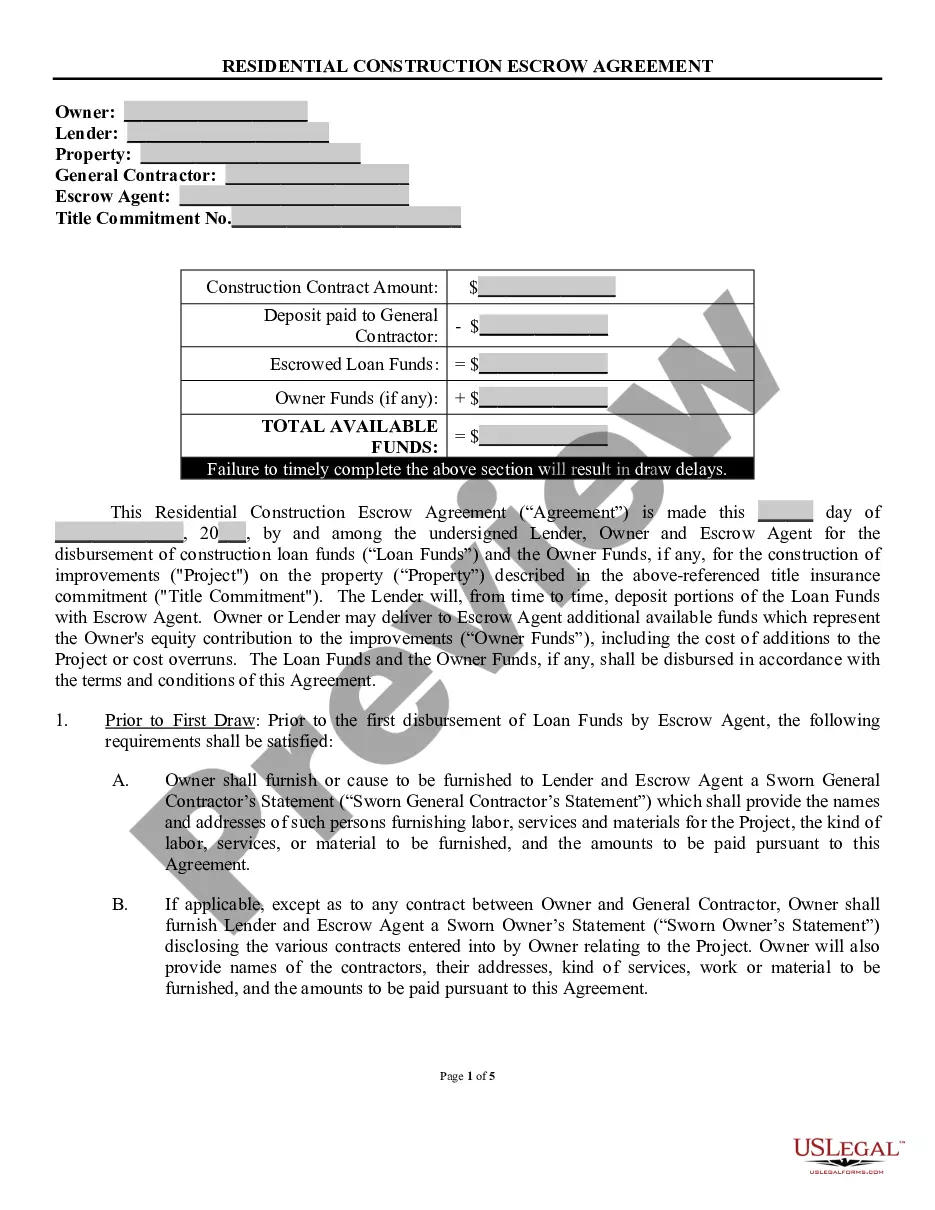
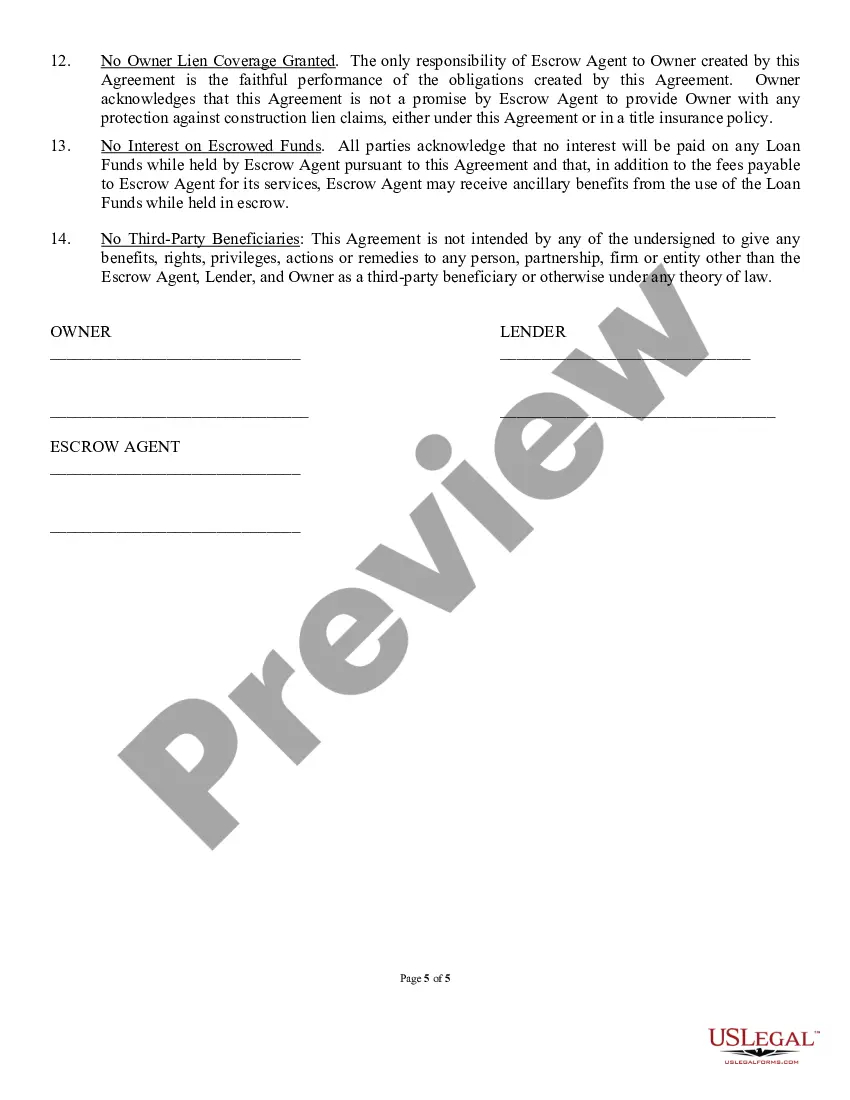
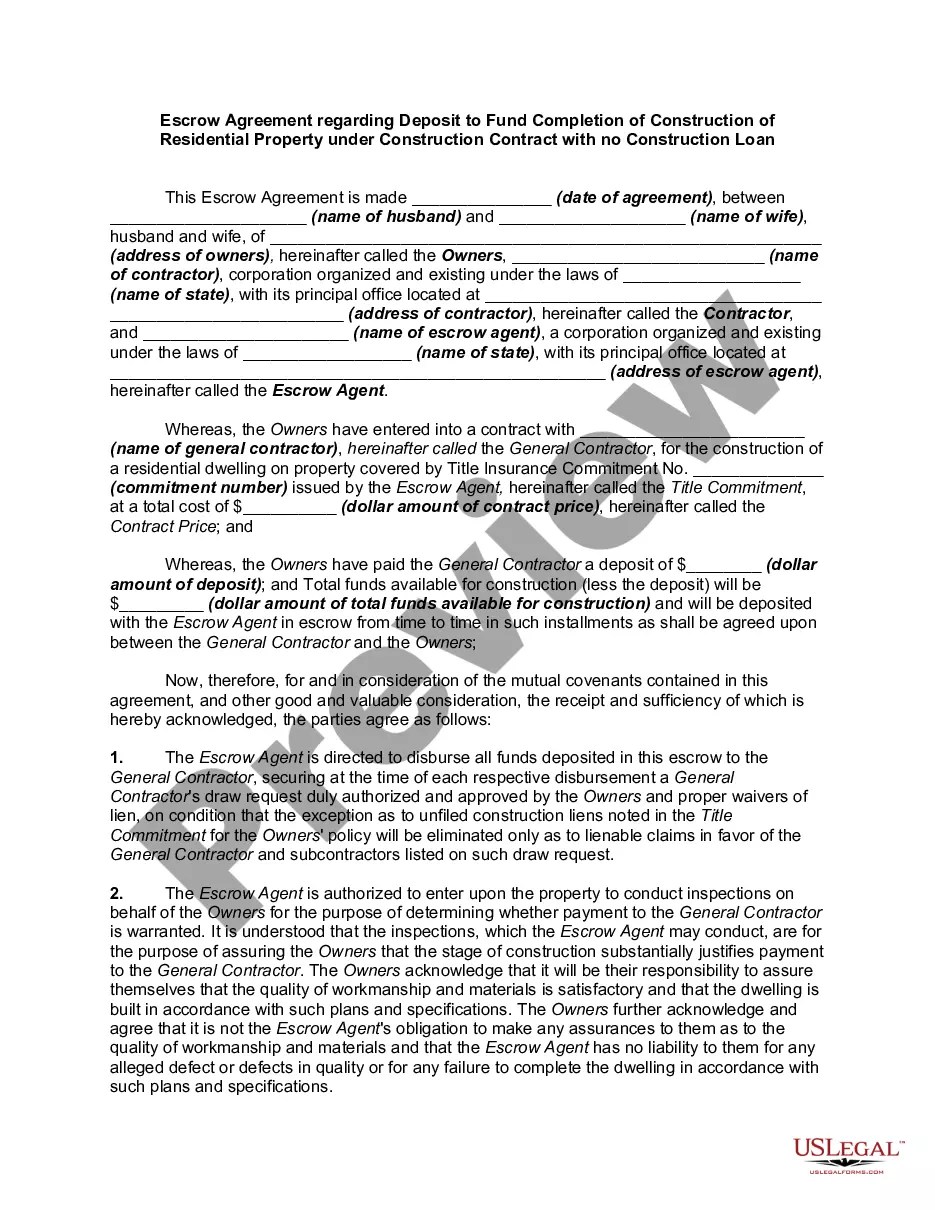
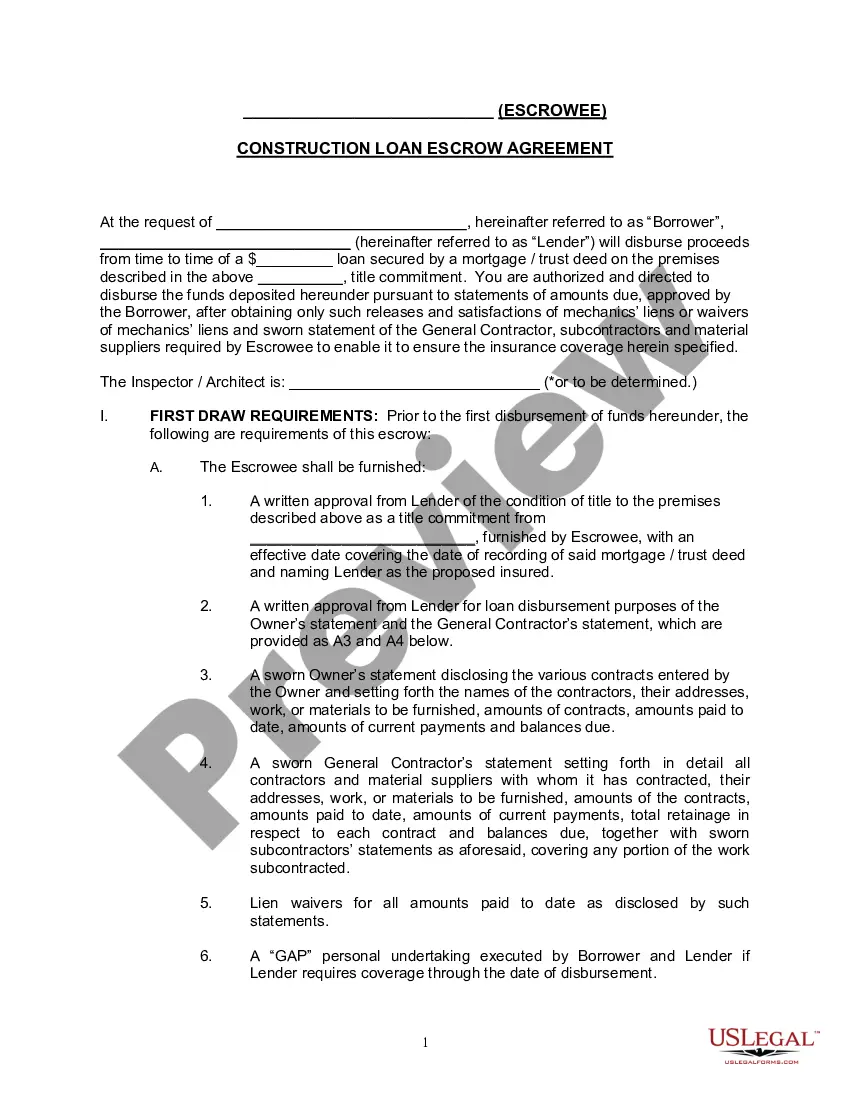
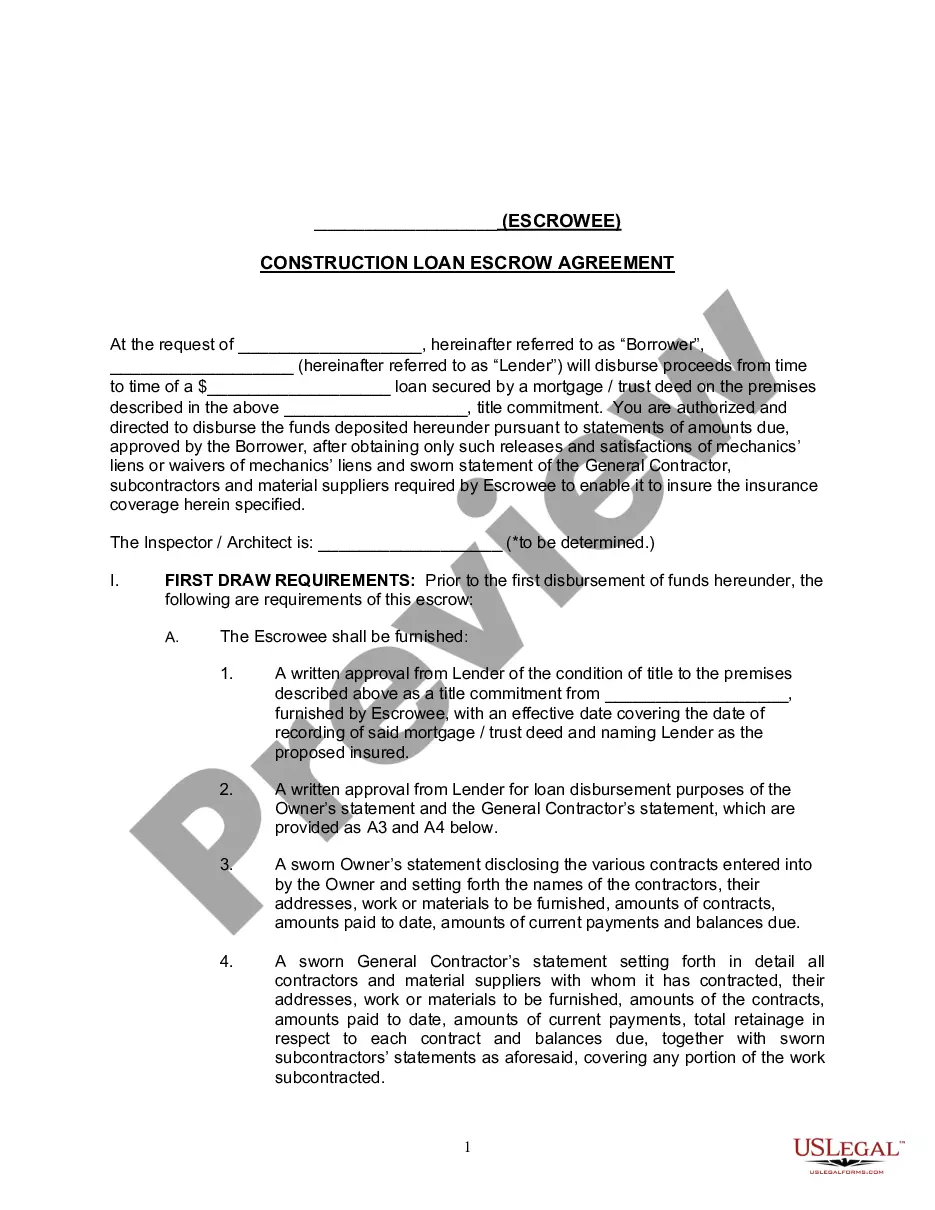
The Residential Construction Escrow Agreement is a legal document that outlines the terms under which an escrow agent holds and disburses funds for a construction project. This form differentiates itself from other construction-related documents by involving a neutral third party to manage payments, ensuring that funds are only released when specific conditions are met. It is essential for both residential owners and lenders to establish clear expectations regarding the flow of funds associated with a construction project.
Key components of this form
- Identification of the owner, lender, property, general contractor, and escrow agent.
- Details on the construction contract amount and deposit paid to the general contractor.
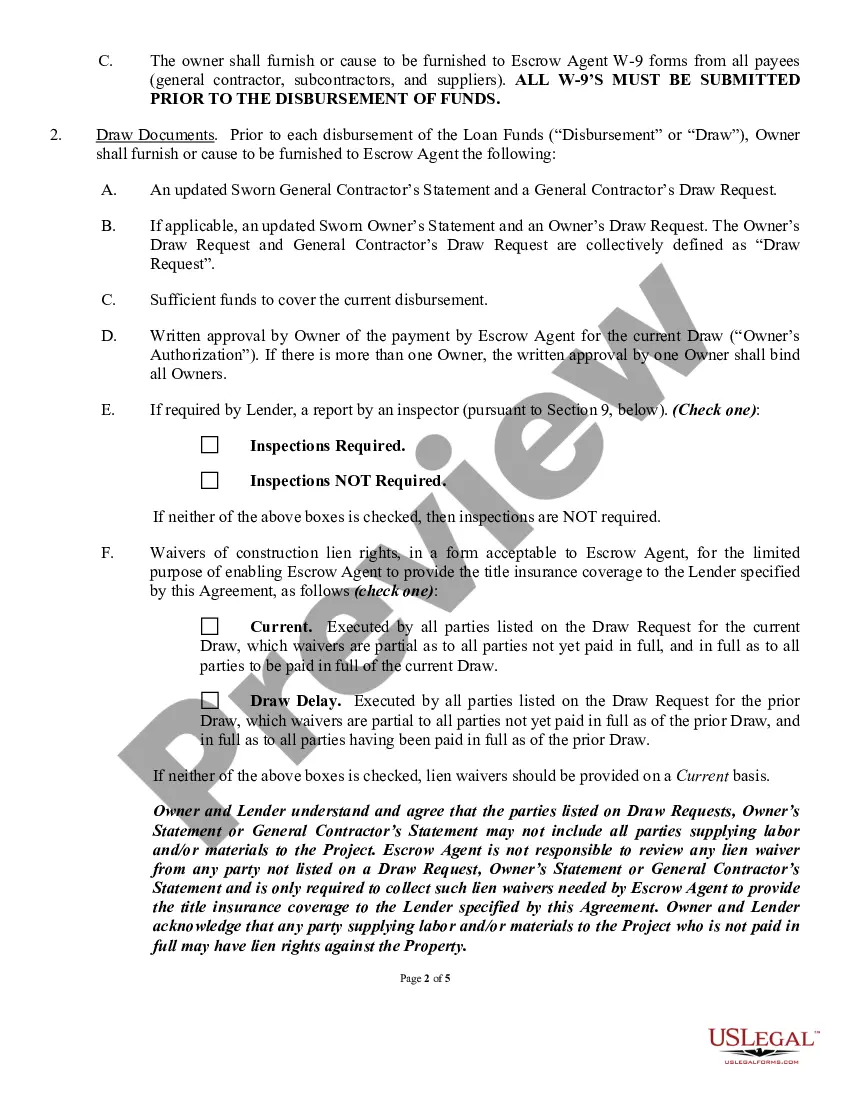
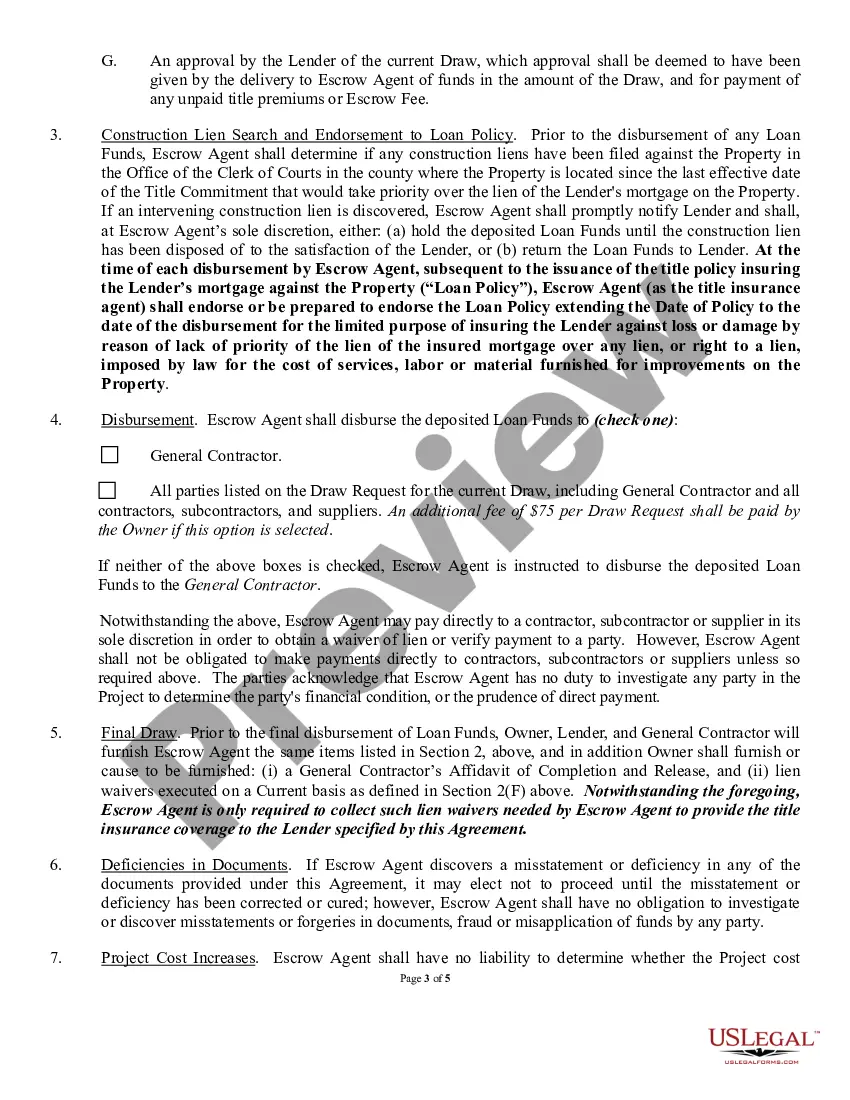
- Requirements for initial and ongoing disbursements of funds.
- Documentation needed for each draw, including sworn statements and approvals.
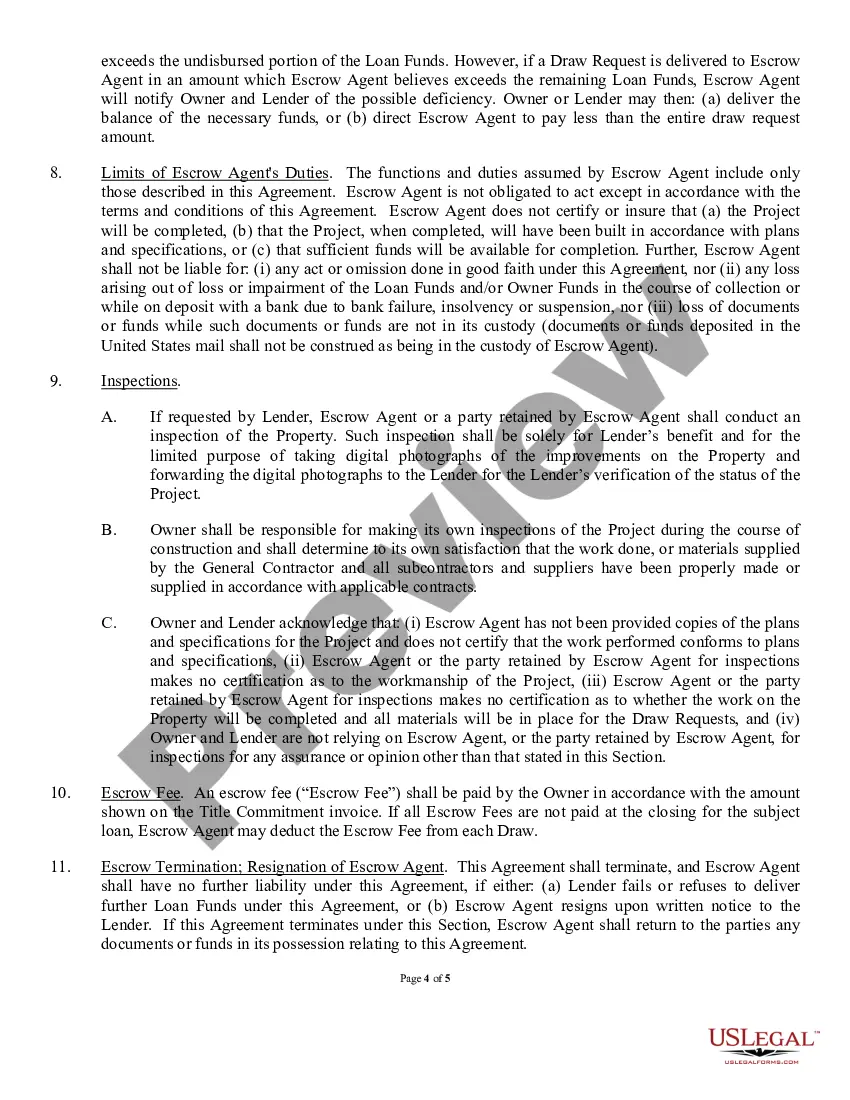
- Conditions for inspections and lien waivers to protect all parties involved.
- Termination clauses and roles of the escrow agent.
When to use this document
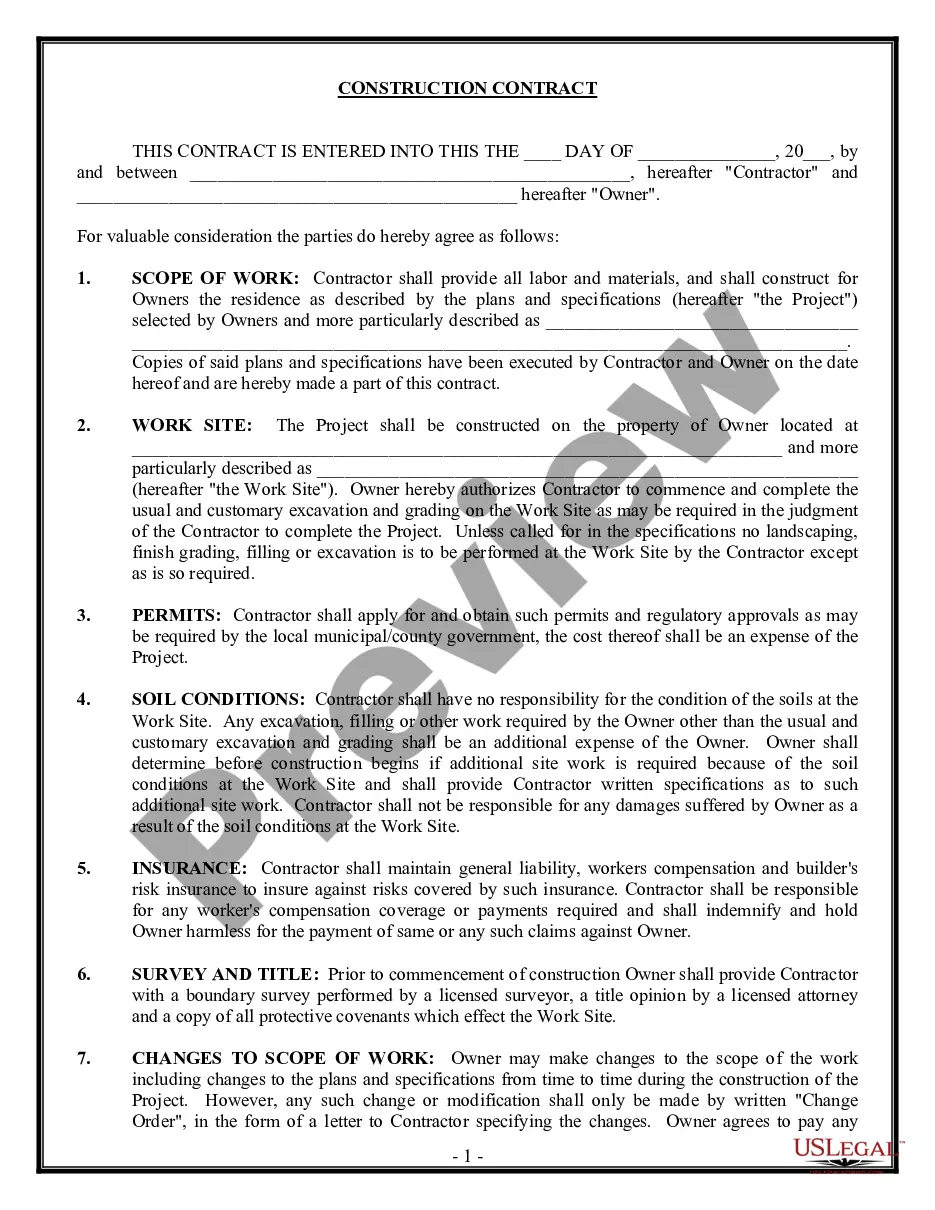
This form is necessary when an owner hires a general contractor for a residential construction project and requires a secure way to manage payments. It is particularly useful when large sums are involved and when there is a need for oversight regarding the timing and conditions under which funds are disbursed. Additionally, it serves to protect all parties by ensuring that payments are linked to project milestones and that lien rights are properly managed.
Intended users of this form
- Residential property owners engaging a general contractor for construction projects.
- Lenders providing financing for residential construction.
- Escrow agents responsible for managing disbursement of funds in construction projects.
- Contractors and subcontractors who require assurance of payment upon meeting specific project milestones.
Steps to complete this form
- Identify and enter the names of all parties involved: owner, lender, general contractor, and escrow agent.
- Specify the property details and construction contract amount, including related deposits and funds.
- Gather and attach the necessary documentation for initial funding and subsequent draws, such as sworn statements and lien waivers.
- Indicate whether inspections are required by checking the appropriate box.
- Ensure all parties sign and date the form, confirming their understanding and agreement to the terms outlined.
Does this form need to be notarized?
This form does not typically require notarization unless specified by local law. It is advisable to check with relevant state laws to confirm any notarization requirements specific to your situation.
Get your form ready online
Our built-in tools help you complete, sign, share, and store your documents in one place.
Make edits, fill in missing information, and update formatting in US Legal Forms—just like you would in MS Word.
Download a copy, print it, send it by email, or mail it via USPS—whatever works best for your next step.
Sign and collect signatures with our SignNow integration. Send to multiple recipients, set reminders, and more. Go Premium to unlock E-Sign.
If this form requires notarization, complete it online through a secure video call—no need to meet a notary in person or wait for an appointment.
We protect your documents and personal data by following strict security and privacy standards.

Make edits, fill in missing information, and update formatting in US Legal Forms—just like you would in MS Word.

Download a copy, print it, send it by email, or mail it via USPS—whatever works best for your next step.

Sign and collect signatures with our SignNow integration. Send to multiple recipients, set reminders, and more. Go Premium to unlock E-Sign.

If this form requires notarization, complete it online through a secure video call—no need to meet a notary in person or wait for an appointment.

We protect your documents and personal data by following strict security and privacy standards.
Common mistakes to avoid
- Failing to complete all initial funding requirements before the first draw.
- Not providing updated documentation for each draw request.
- Omitting necessary signatures from parties involved in the agreement.
- Neglecting to check for inspections when required by the lender.
Why complete this form online
- Convenient access to a professionally drafted escrow agreement tailored for residential construction projects.
- Editable fields allow users to customize the form according to their specific needs.
- Time-saving, as users can complete the form and obtain additional documents without the need for an attorney visit.
- Reliable, as it adheres to legal standards and best practices in escrow agreements.
Legal use & context
- The Residential Construction Escrow Agreement serves to legally secure funds until project milestones are met.
- By using this form, parties can help prevent disputes related to payment timing and conditions.
- The agreement outlines the responsibilities and limitations of the escrow agent, providing clear guidance on fund management.
Summary of main points
- The Residential Construction Escrow Agreement is essential for managing construction financing safely.
- Users must understand the required documentation and procedures for fund disbursement.
- Reviewing state-specific regulations is crucial for compliance and effective use of the form.
- Taking care to complete the form accurately can help avoid common pitfalls and delays.
Looking for another form?
Form popularity
FAQ
Who owns the money in an escrow account? The buyer in a transaction owns the money held in escrow. This is because the escrow agent only has the money in trust. The ownership of the money is transferred to the seller once the transaction's obligations are met.
Escrow agreements are commonly used in real estate transactions. The escrow agreement generally includes, but is not limited to, information about the escrow agent's identity, the funds in escrow, and the acceptable use of funds by the agent?.
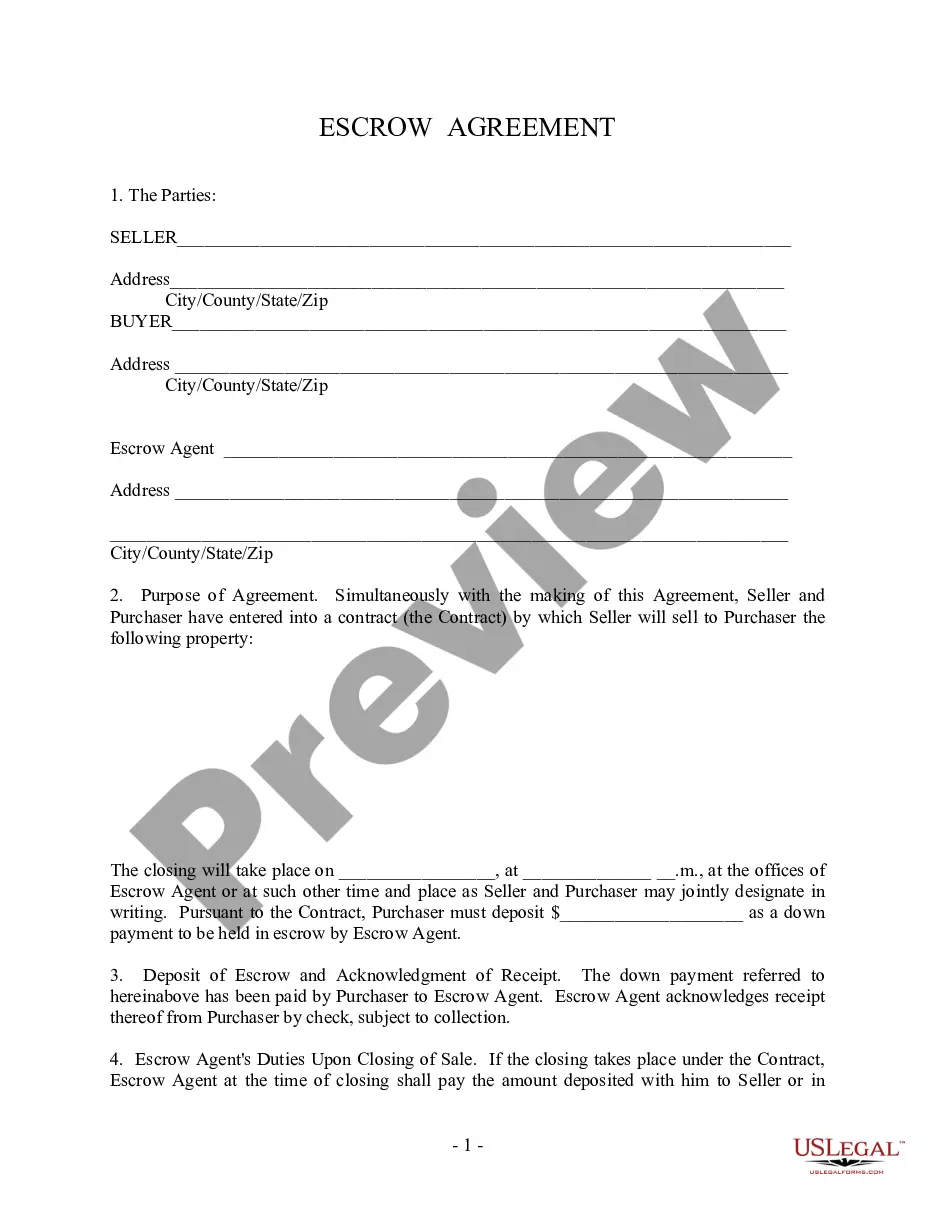
An escrow agreement refers to a contract that outlines the terms and conditions of a transaction for something of value ? such as a bond, deed, or asset ? which is held by a third party until all conditions have been met.
By. Escrow is the use of a third party capable of holding assets on behalf of two parties who are in the process of completing a transaction. The asset could be money, funds, stocks etc.
An escrow account is a separate bank account that holds funds for a specific purpose, such as paying for construction work or materials. The account is controlled by a third party, called an escrow agent, who acts as a neutral intermediary between the parties involved in the project.
In the home purchasing context, some mortgage lenders require that the buyer use an escrow account during the transaction. Even if there is no requirement to use an escrow account in the home purchase context, using such an account may provide additional protection to all parties involved in the transaction.
Construction escrow is a third party holding account for funds on a construction project. This account holds funds for the project until specific terms are met, then releases those funds to the contractor. Having funds in escrow helps guarantee that funds will be available for the project.
When you own a home, you're responsible for additional home-related expenses like property taxes and insurance. Escrow accounts help you plan for those payments and make sure you have the money set aside for them so you don't have to think about it.