Construction Loan Escrow Agreement
About this form
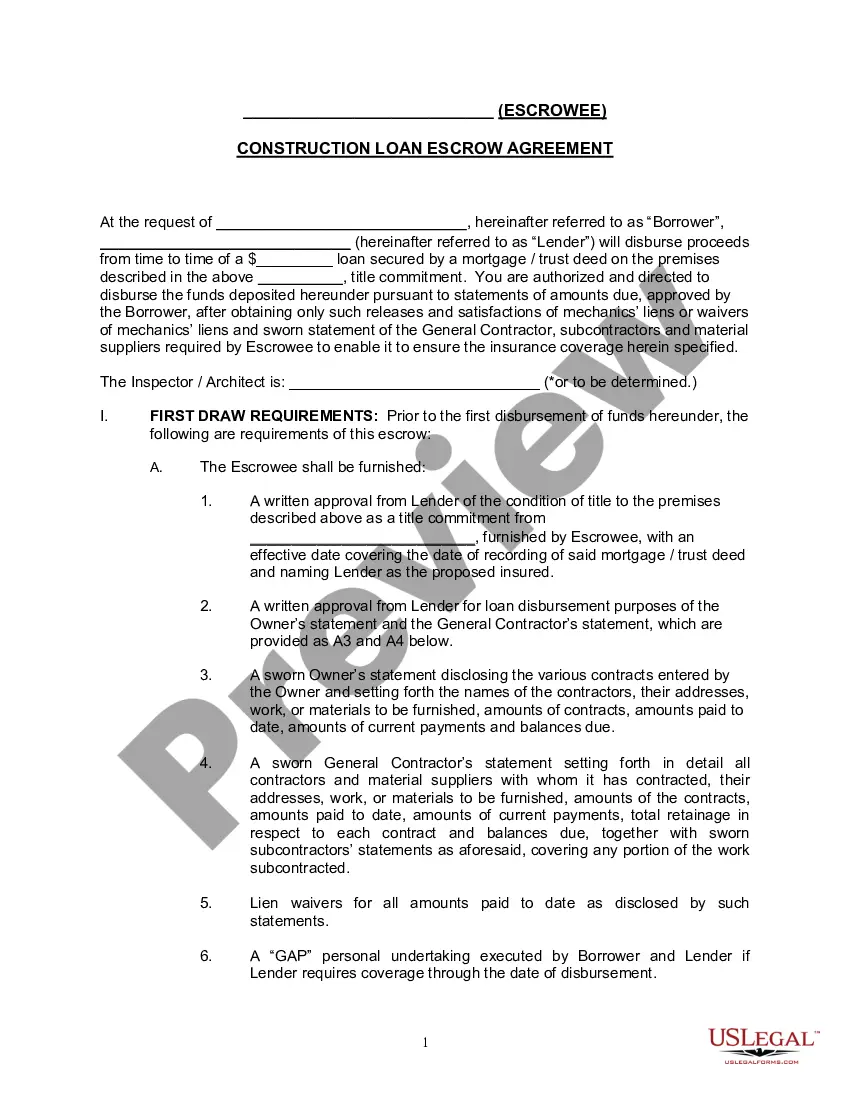
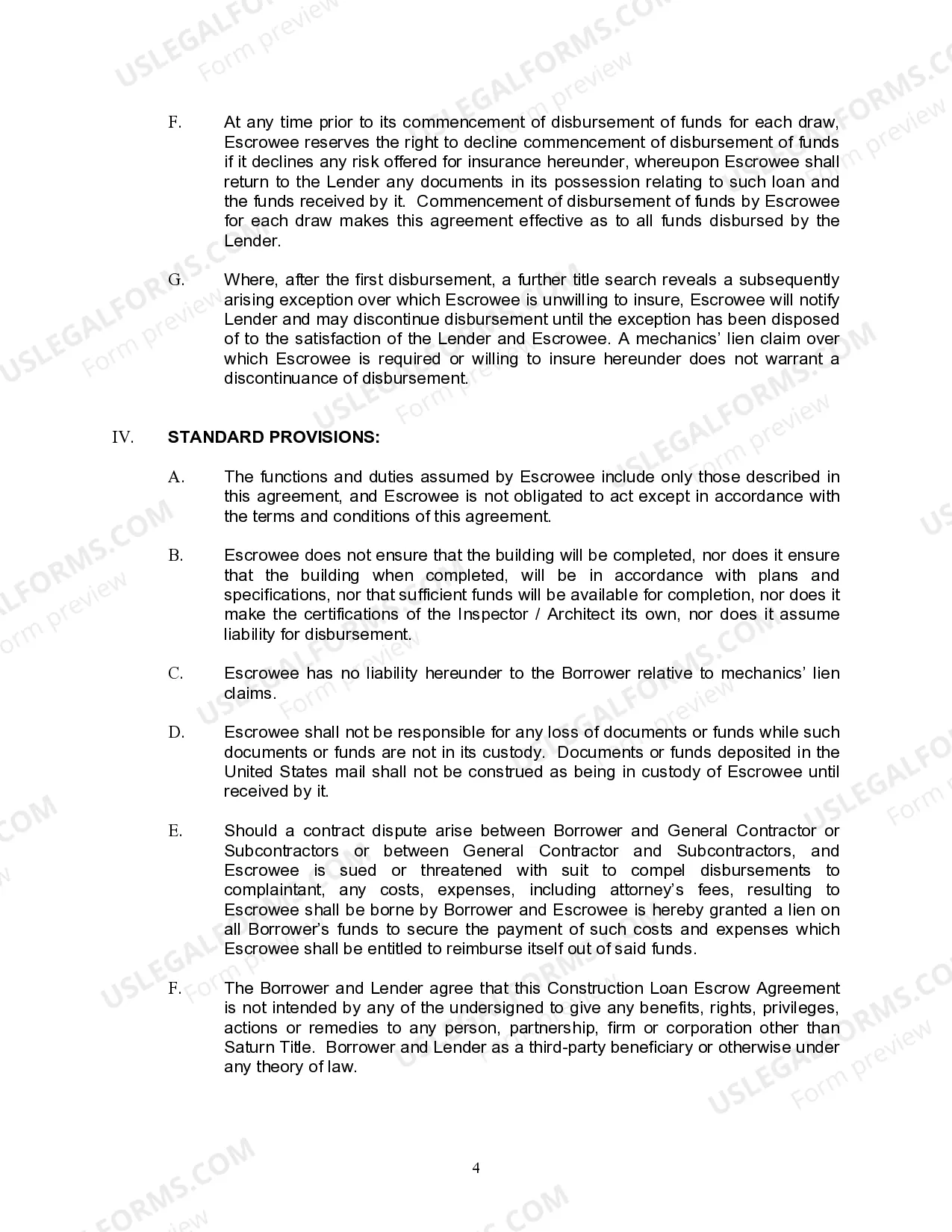
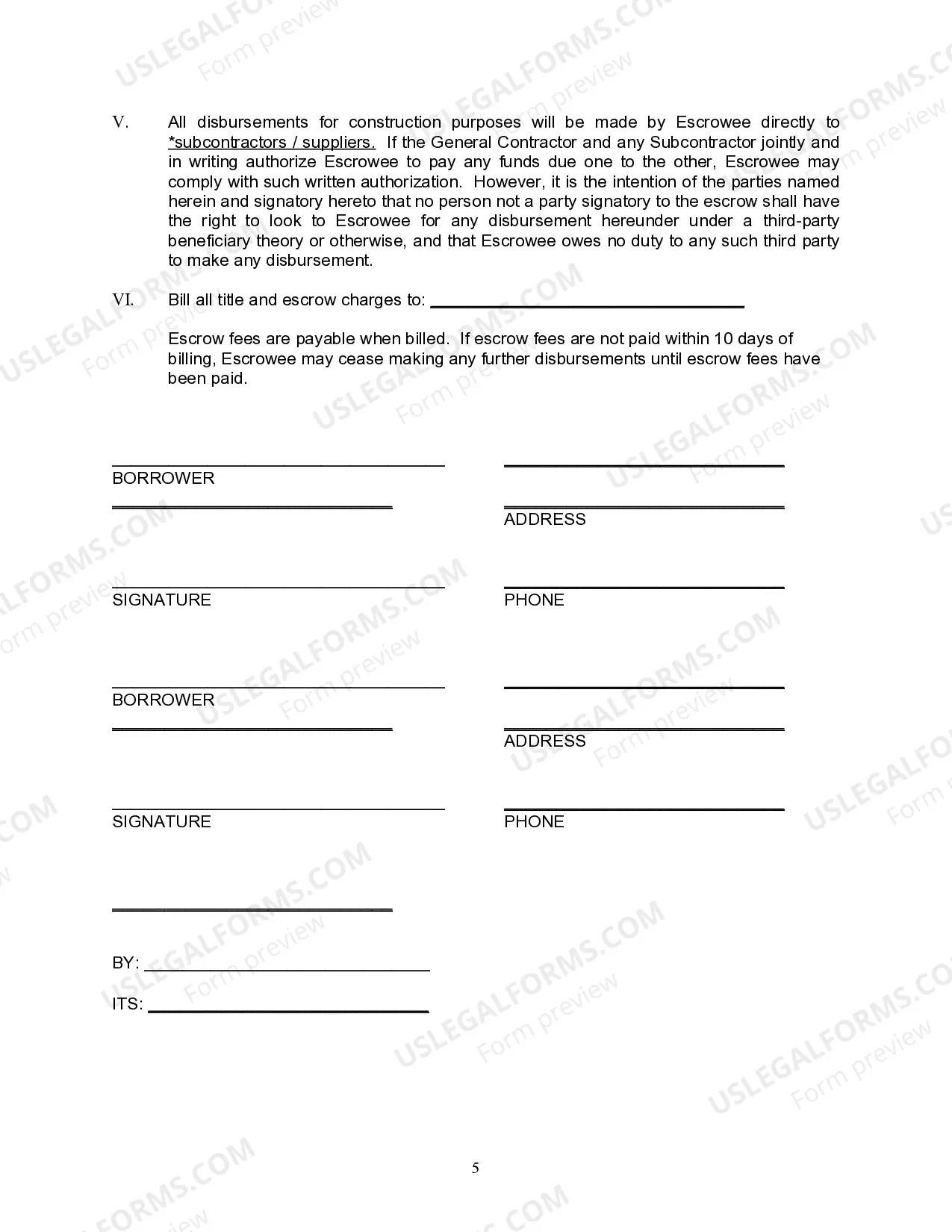
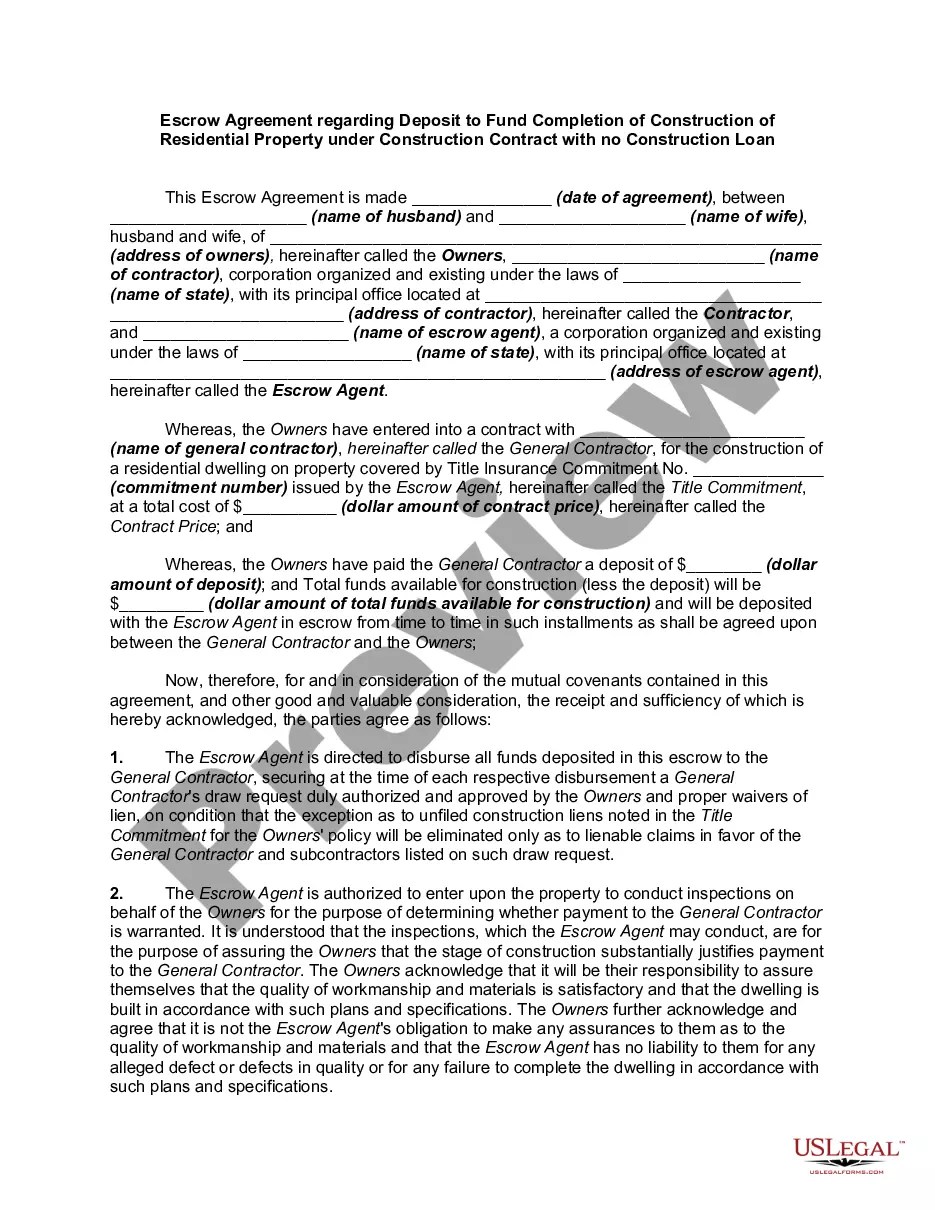
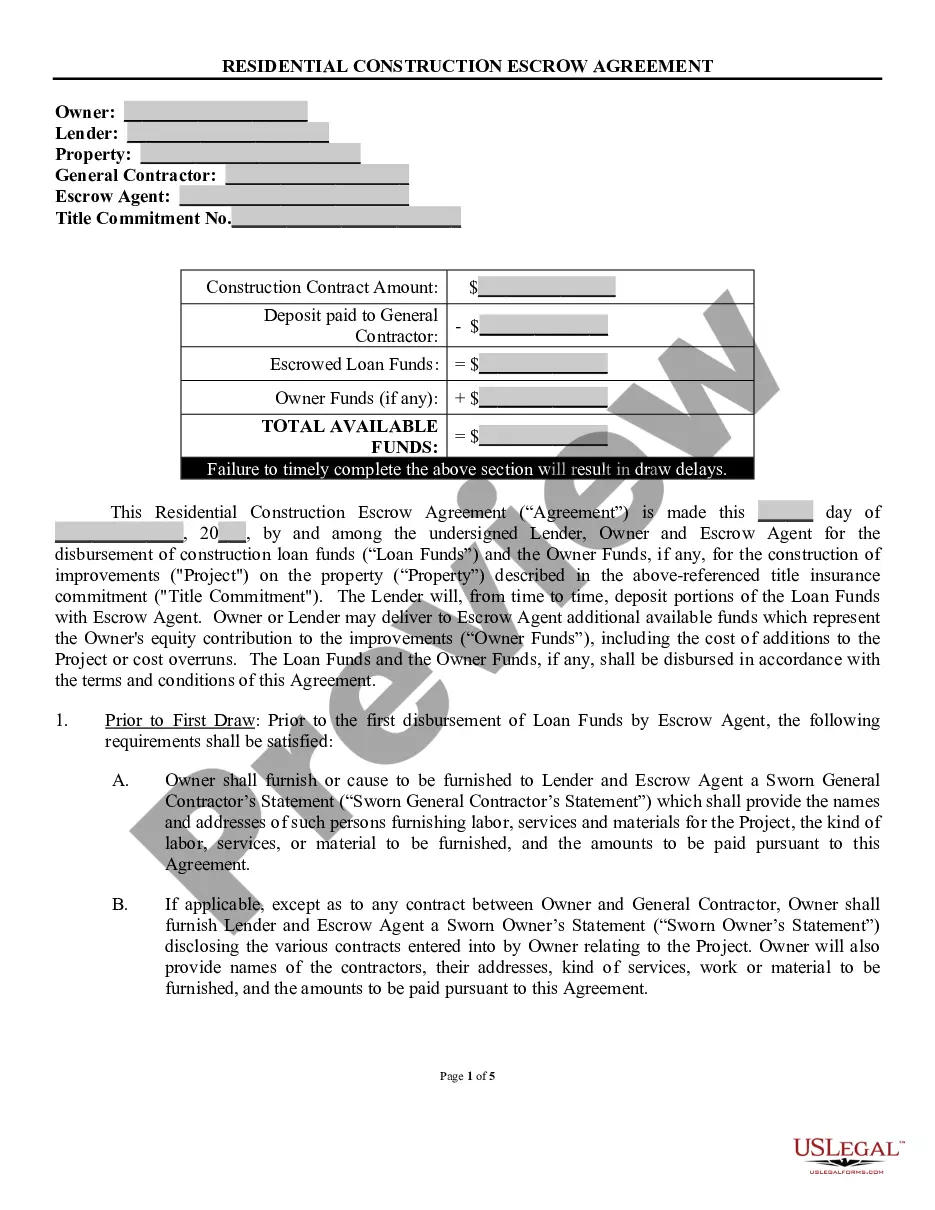
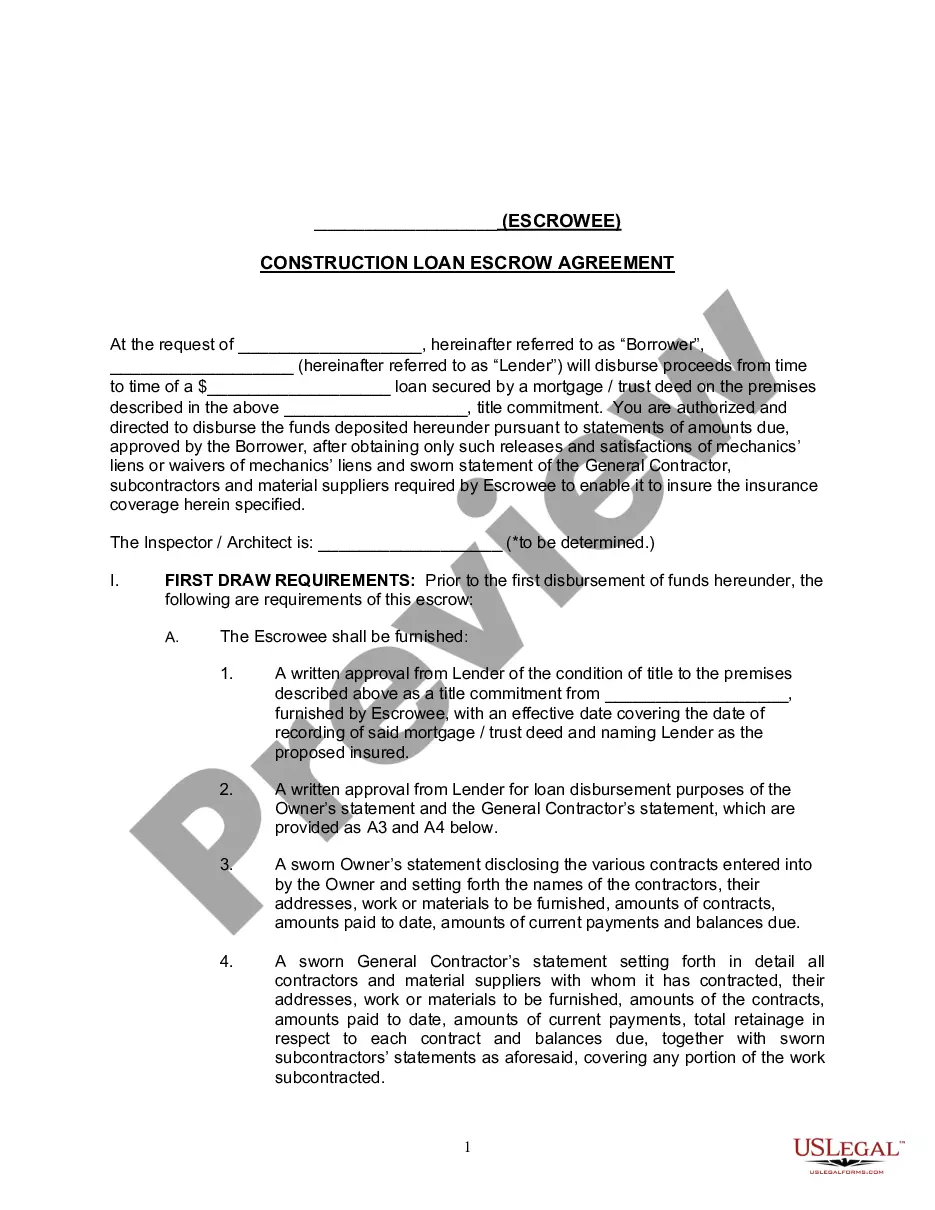
The Construction Loan Escrow Agreement is a legal document that governs the disbursement of loan proceeds for construction projects. It outlines the relationship between the borrower, lender, and the escrow agent, ensuring funds are released according to specified conditions. This agreement is essential for managing the financial aspects of construction, protecting both the lender and borrower from disputes and financial mismanagement, which distinguishes it from other types of escrow agreements that may not focus specifically on construction loans.
Key components of this form
- Identification of the Borrower, Lender, and Escrow agent.
- Details on loan amount and the property secured by a mortgage or trust deed.
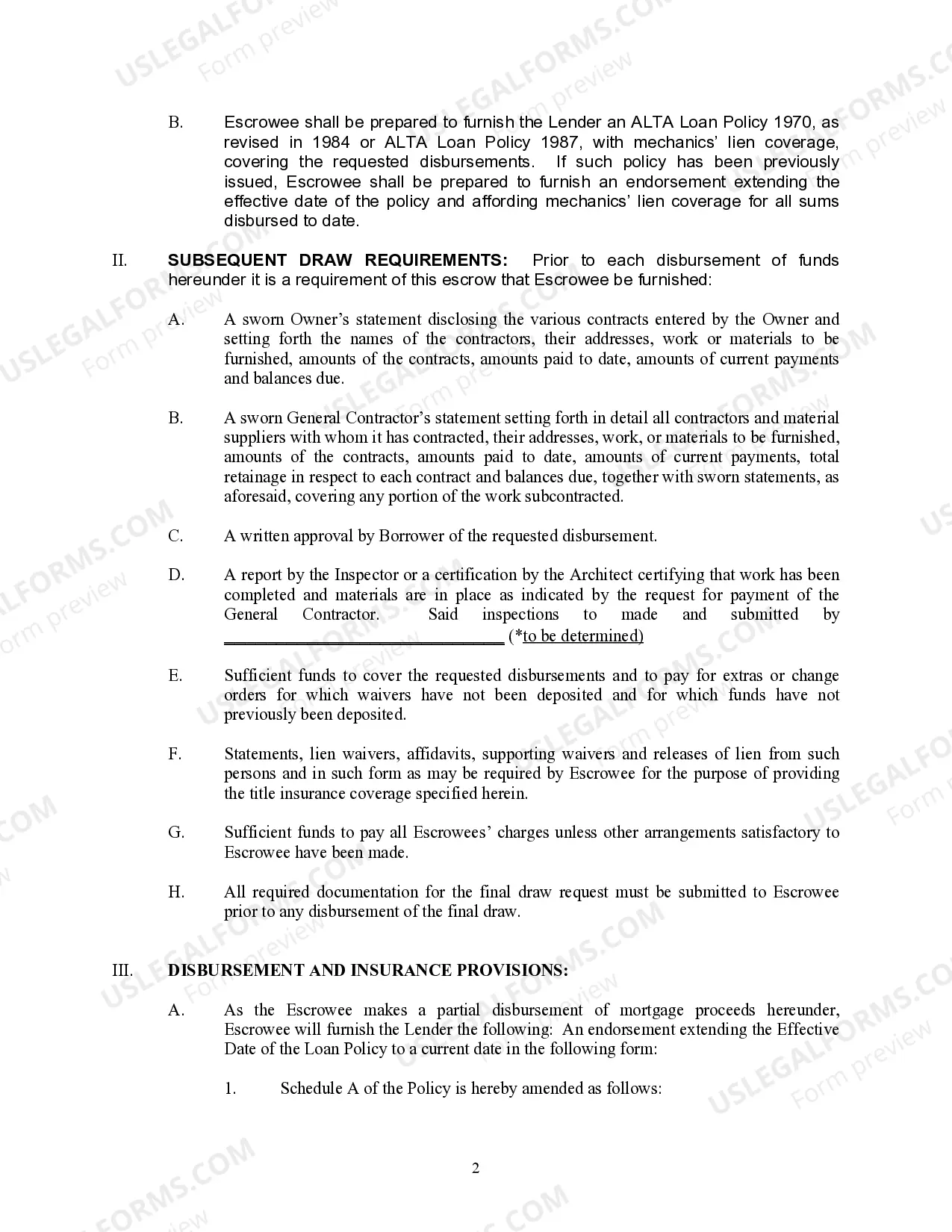
- Requirements for initial and subsequent loan draws, including necessary approvals and statements.
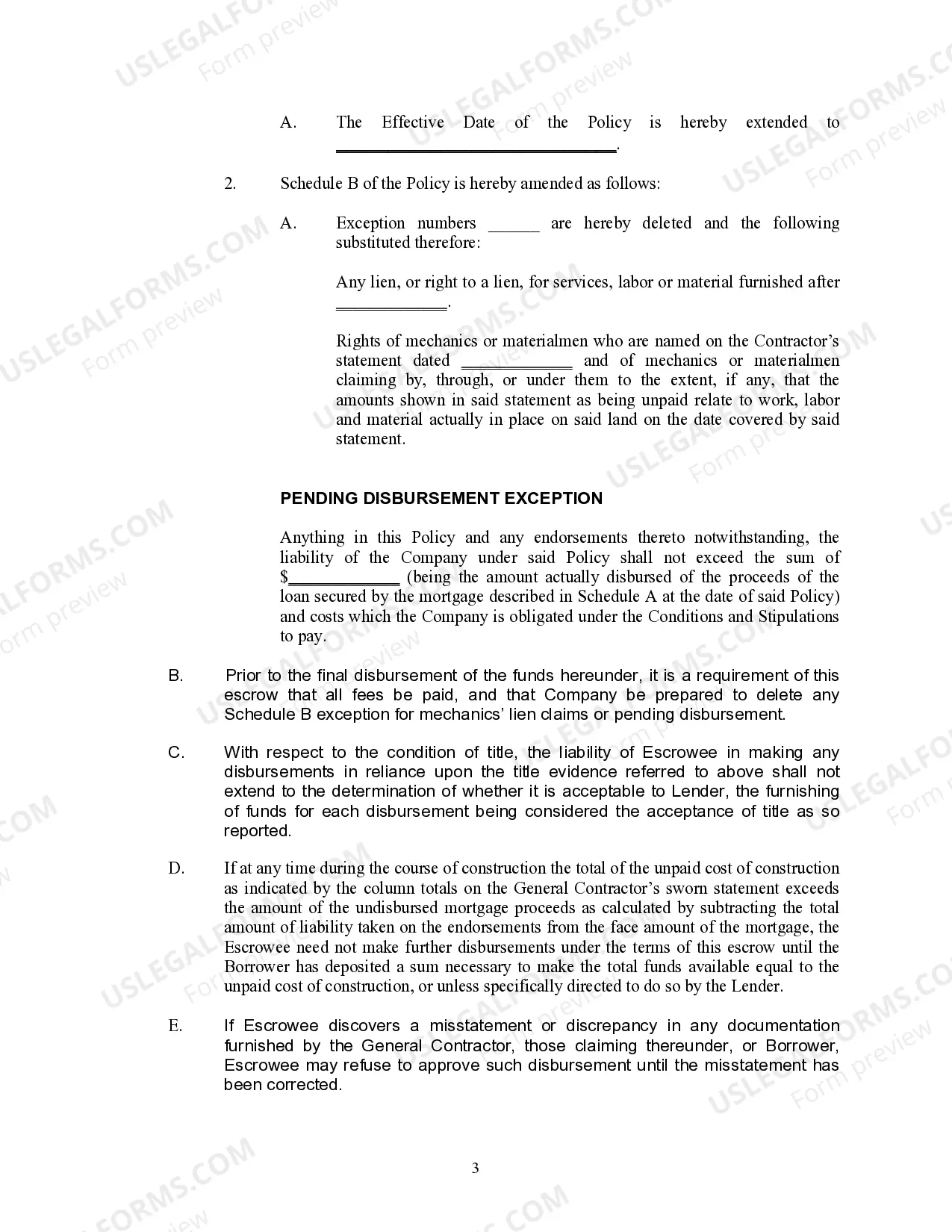
- Provisions related to lien waivers and insurance coverage.
- Disbursement instructions and conditions for fund release.
When to use this form
This form should be used when securing financing for a construction project. It is crucial in situations where funds are needed at different stages of construction, ensuring that the disbursement of loan proceeds aligns with project milestones. Whether you are a borrower seeking to renovate, build a new structure, or a lender providing the funds, this agreement helps facilitate a clear understanding of disbursement conditions and protects all parties involved.
Who this form is for
- Homeowners financing new construction or renovation projects.
- Contractors managing construction projects that require external financing.
- Lenders providing construction loans.
- Real estate professionals involved in structured financing.
Completing this form step by step
- Identify all parties involved, including the Borrower, Lender, and Escrow agent.
- Enter the loan amount and specify the property details secured by the mortgage or trust deed.
- Provide the required documentation for initial and subsequent draws, including approvals and contractor statements.
- Ensure lien waivers and insurance coverage are properly documented and included.
- Review and sign the agreement to make it legally binding for all parties involved.
Is notarization required?
This form does not typically require notarization unless specified by local law. It is advisable to review any specific state requirements that may necessitate notarization for construction-related transactions.
Get your form ready online
Our built-in tools help you complete, sign, share, and store your documents in one place.
Make edits, fill in missing information, and update formatting in US Legal Forms—just like you would in MS Word.
Download a copy, print it, send it by email, or mail it via USPS—whatever works best for your next step.
Sign and collect signatures with our SignNow integration. Send to multiple recipients, set reminders, and more. Go Premium to unlock E-Sign.
If this form requires notarization, complete it online through a secure video call—no need to meet a notary in person or wait for an appointment.
We protect your documents and personal data by following strict security and privacy standards.

Make edits, fill in missing information, and update formatting in US Legal Forms—just like you would in MS Word.

Download a copy, print it, send it by email, or mail it via USPS—whatever works best for your next step.

Sign and collect signatures with our SignNow integration. Send to multiple recipients, set reminders, and more. Go Premium to unlock E-Sign.

If this form requires notarization, complete it online through a secure video call—no need to meet a notary in person or wait for an appointment.

We protect your documents and personal data by following strict security and privacy standards.
Common mistakes
- Failing to provide complete documentation for loan disbursements.
- Not obtaining necessary approvals from the lender before fund disbursement.
- Ignoring local state-specific escrow requirements, which could affect legal validity.
Advantages of online completion
- Convenient access to the form anytime and anywhere.
- Edit and customize the form quickly to fit specific project needs.
- Reliable templates drafted by licensed attorneys, ensuring legal compliance.
Looking for another form?

Form popularity
FAQ
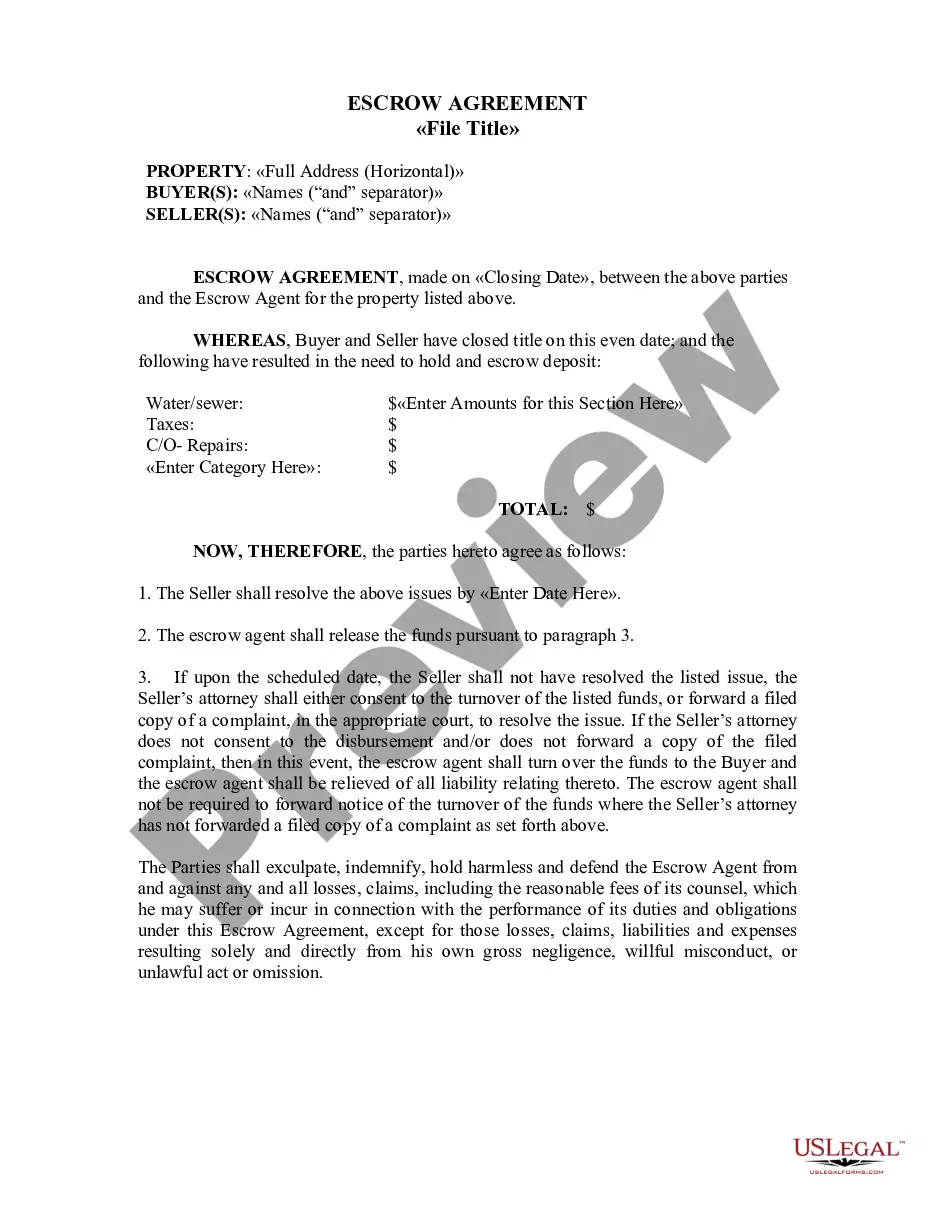
Most escrow agreements are put into place when one party wants to make sure the other party meets certain conditions or obligations before it moves forward with a deal. For instance, a seller may set up an escrow agreement to ensure a potential homebuyer can secure financing before the sale goes through.
The two essential elements for a valid sale escrow are a binding contract/agreement between buyer and seller and the conditional delivery to a neutral third party of something of value, as defined, which typically includes written instruments of conveyance (grant deed) or encumbrance (deed of trust) and related
An escrow agreement refers to a contract that outlines the terms and conditions of a transaction for something of value ? such as a bond, deed, or asset ? which is held by a third party until all conditions have been met.
Escrow agreements are commonly used in real estate transactions. The escrow agreement generally includes, but is not limited to, information about the escrow agent's identity, the funds in escrow, and the acceptable use of funds by the agent?.
Construction escrow is a third party holding account for funds on a construction project. This account holds funds for the project until specific terms are met, then releases those funds to the contractor. Having funds in escrow helps guarantee that funds will be available for the project.
Essential elements of a valid escrow arrangement are: A contract between the grantor and the grantee agreeing to the conditions of a deposit; Delivery of the deposited item to a depositary; and. Communication of the agreed conditions to the depositary.
In the home purchasing context, some mortgage lenders require that the buyer use an escrow account during the transaction. Even if there is no requirement to use an escrow account in the home purchase context, using such an account may provide additional protection to all parties involved in the transaction.
You must withdraw from escrow in writing. In California, buyers must usually provide written notice to the seller before canceling via a Notice to Seller to Perform. The written cancellation of contract and escrow that follows must then be signed by the seller to officially withdraw from escrow.