Escrow Agreement
What is this form?
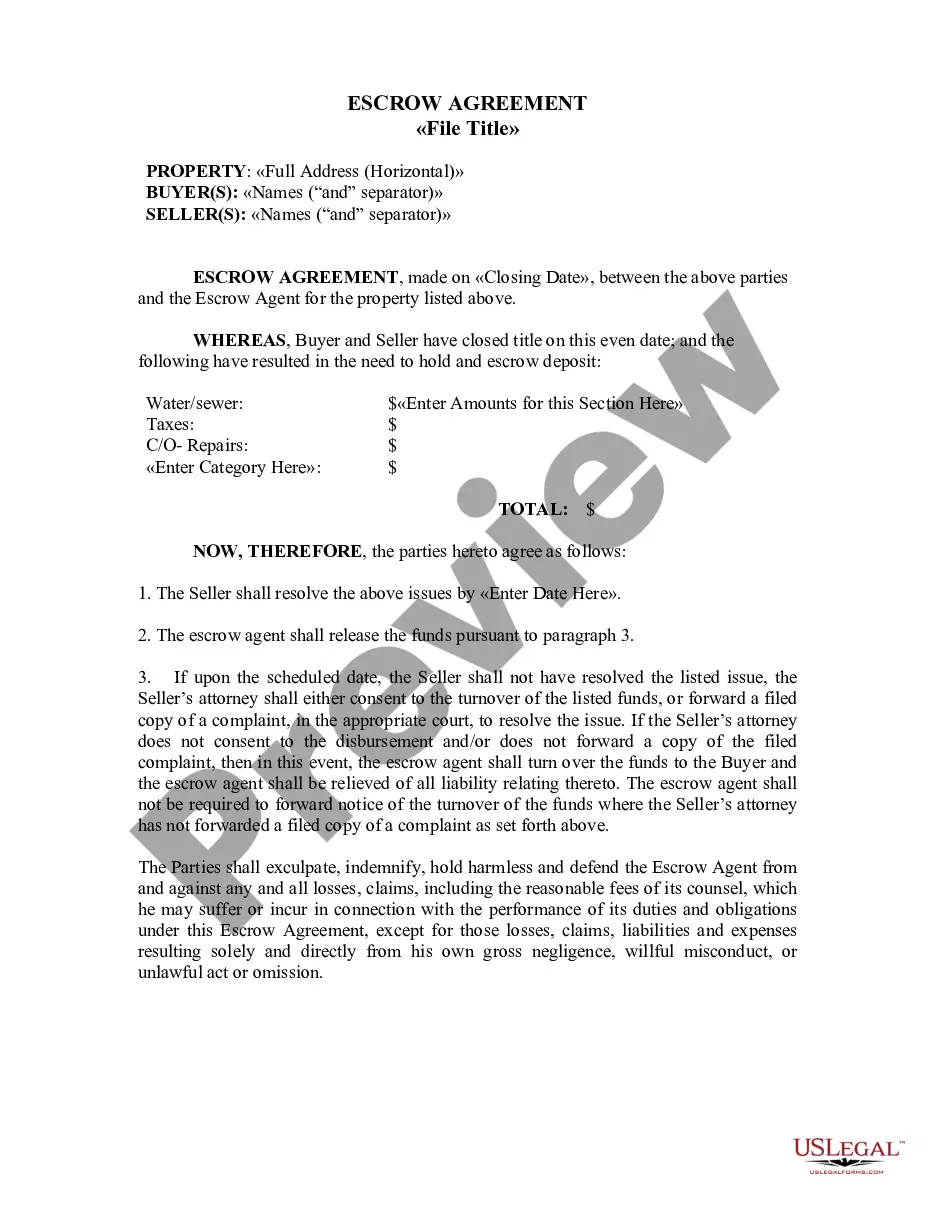
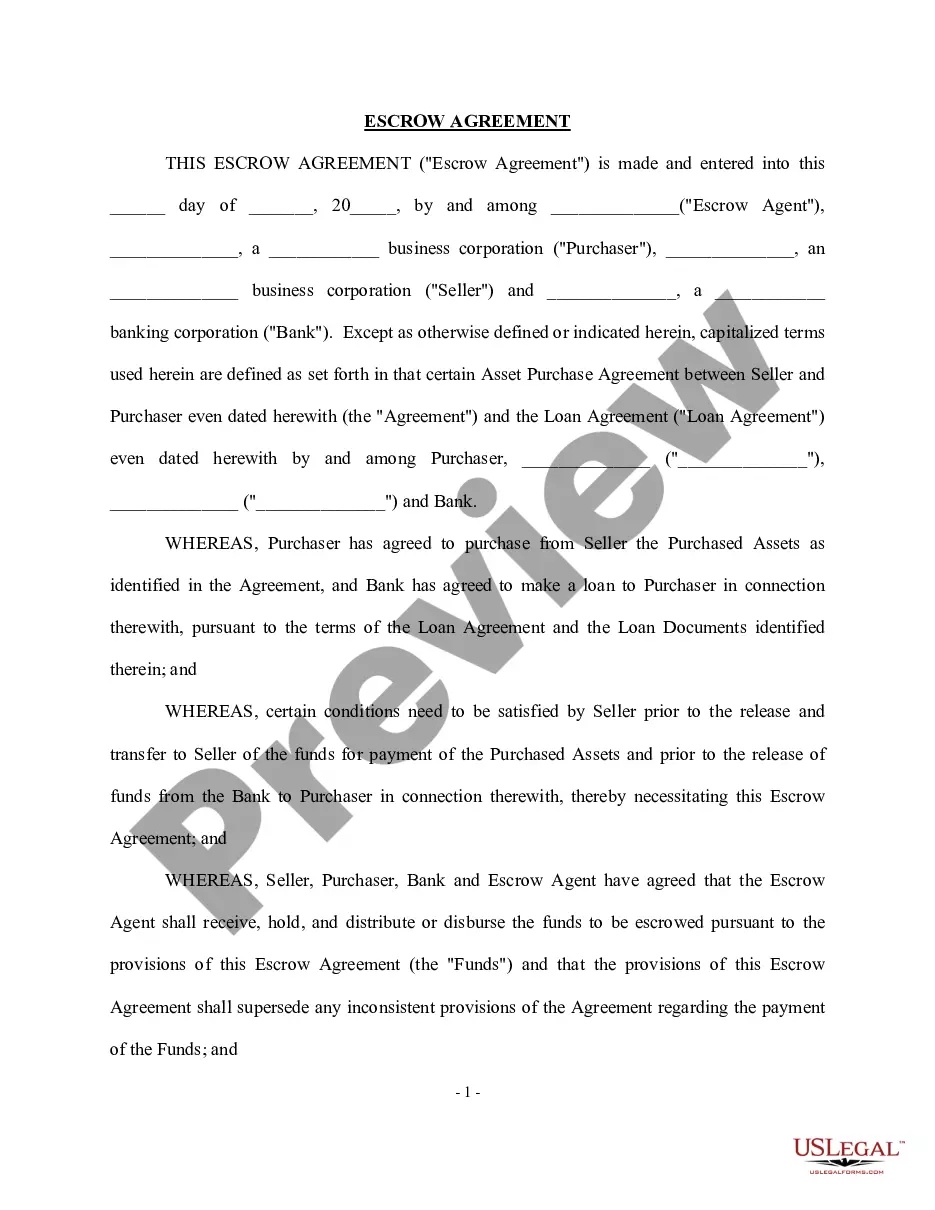
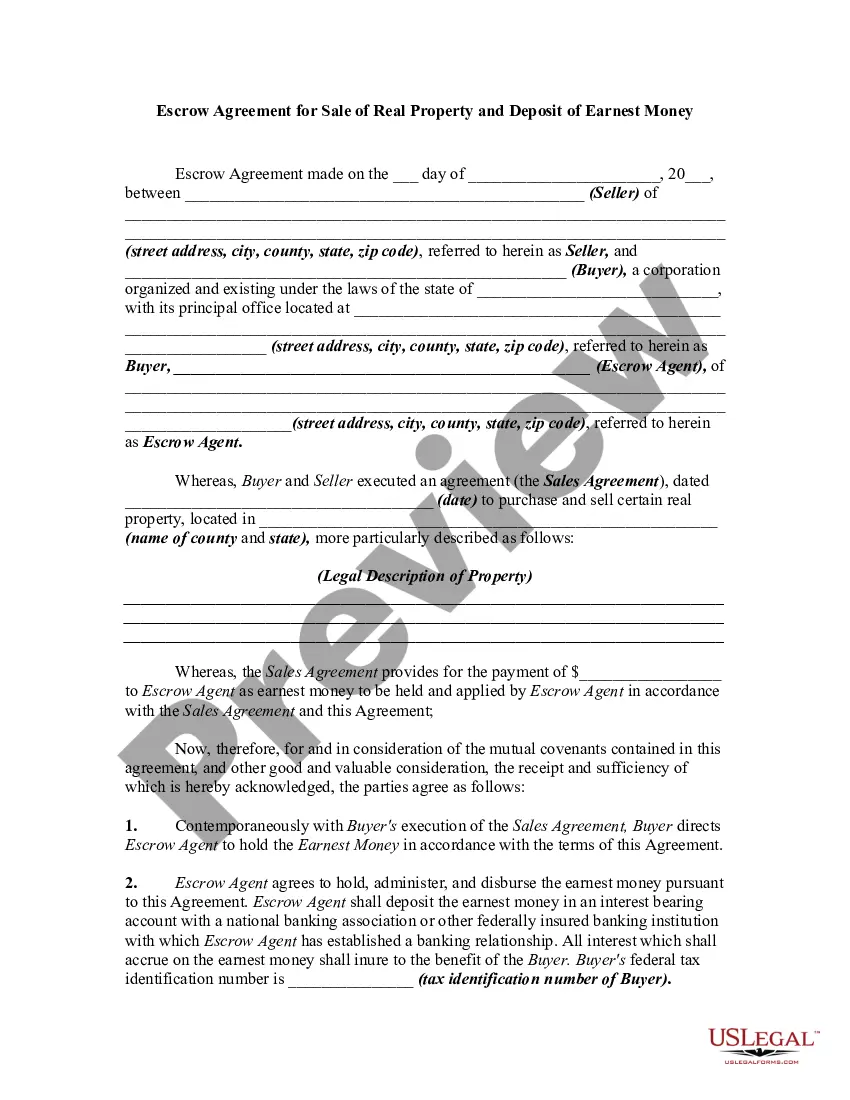
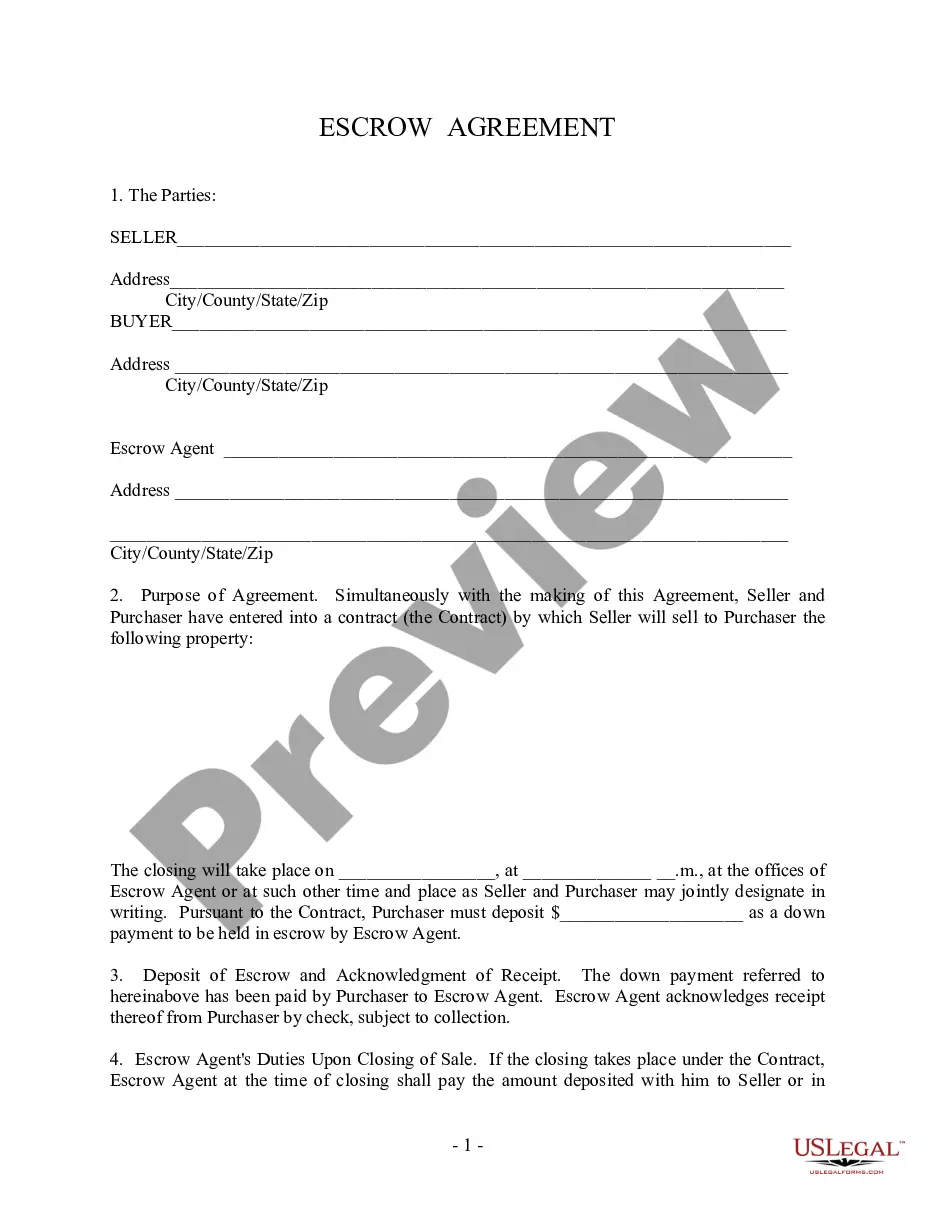
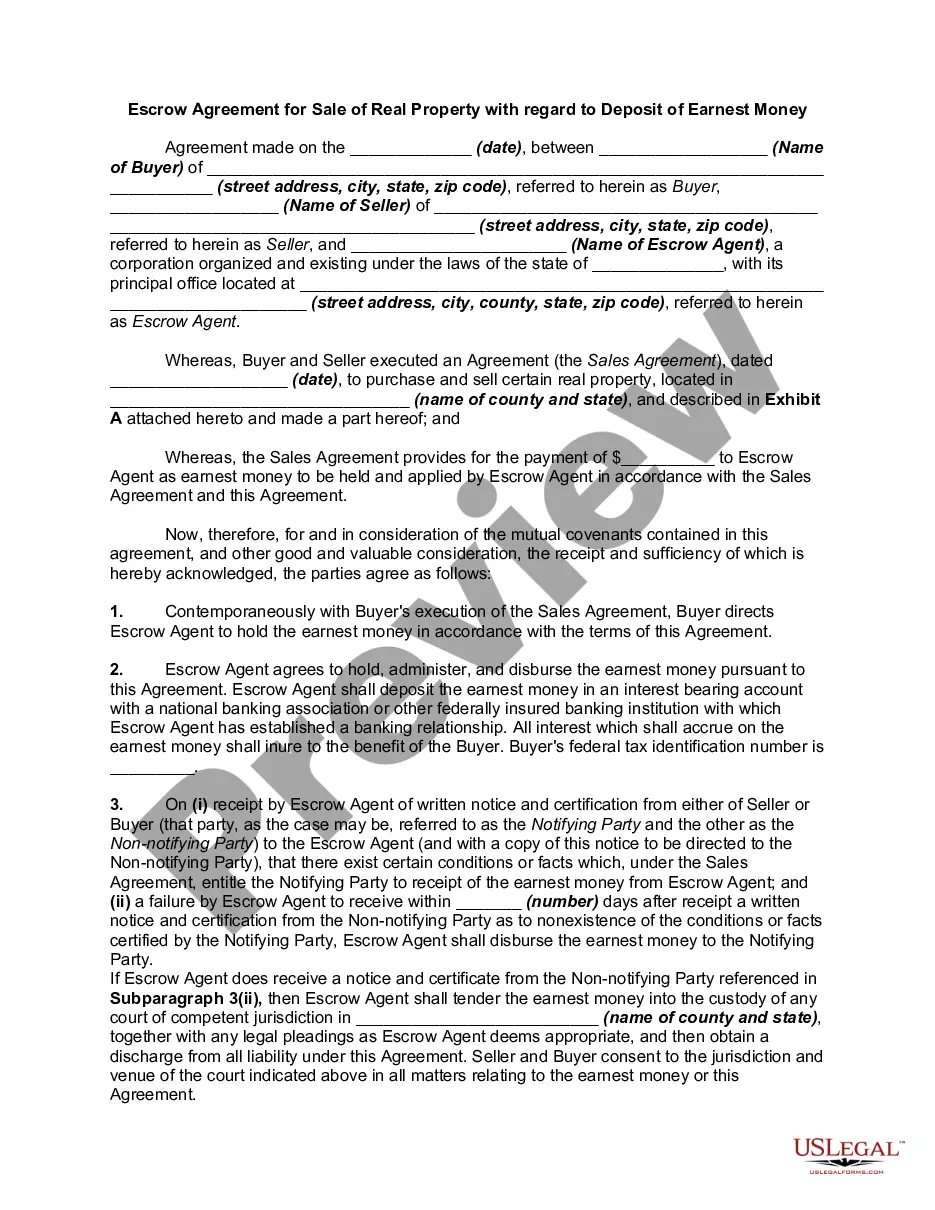
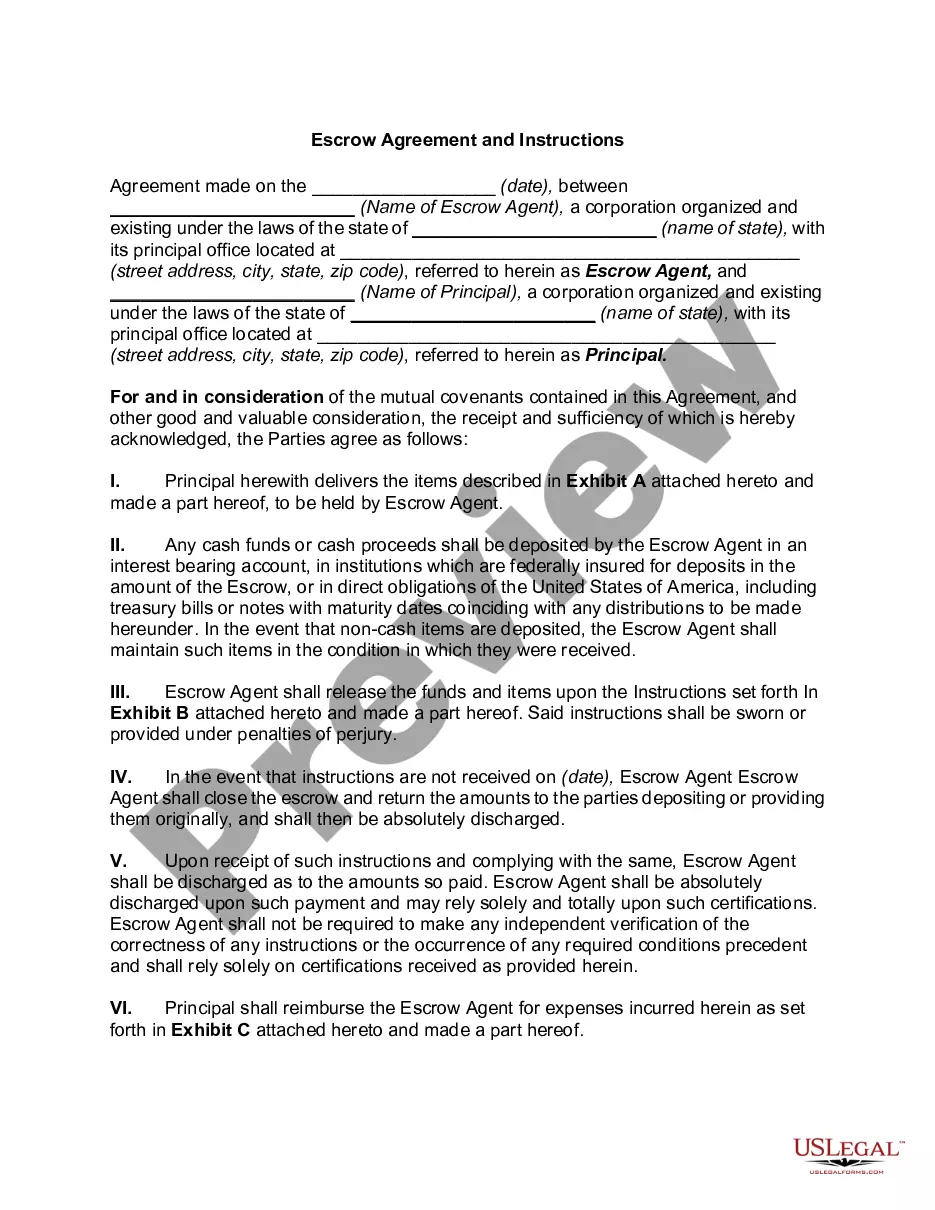
An escrow agreement is a legal document used to facilitate a transaction where a third party holds and regulates funds or assets until the terms of an agreement are fulfilled. This form is especially common in real estate sales, providing a secure way for buyers and sellers to protect their interests until conditions are met, such as inspections or financing approvals. Unlike purchase agreements, which focus solely on the sales terms, an escrow agreement specifically outlines the management of deposits and conditions for releasing funds.
Form components explained
- Parties involved: Details of the buyer(s), seller(s), and escrow agent.
- Property description: Full address of the property involved in the transaction.
- Deposit terms: Conditions under which the escrow amount will be held or released.
- Resolution clause: Outlines the procedure if issues arise prior to closing.
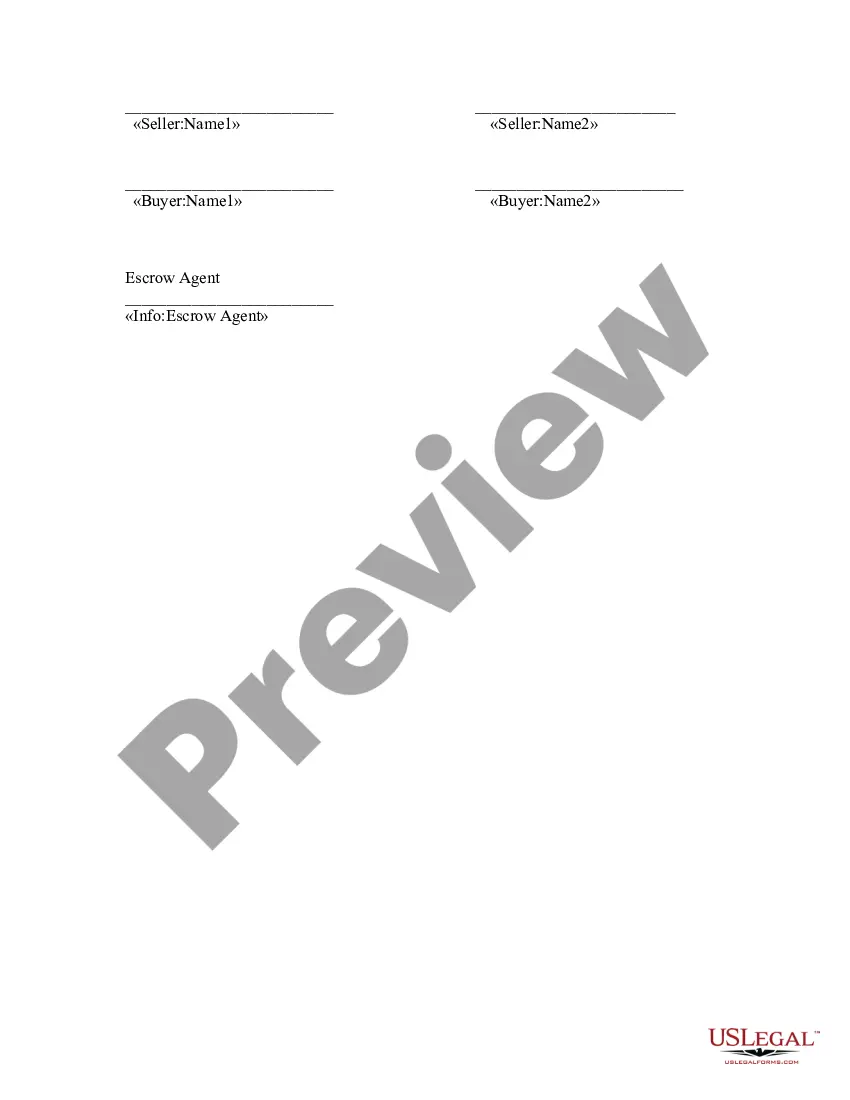
- Signatures: Required signatures of all parties to make the agreement legally binding.
Common use cases
This form is used in situations where a buyer and seller agree on a sale but require a secure way to handle funds or assets until specific conditions are completed. You should consider using this escrow agreement for real estate transactions, such as purchasing a home or a commercial property, or when terms require third-party management of deposits, such as for repairs or title clearance.
Who should use this form
- Buyers and sellers engaged in a real estate transaction.
- Real estate agents or brokers facilitating a sale.
- Escrow agents managing the holding of funds.
- Legal professionals advising clients on escrow arrangements.
Steps to complete this form
- Identify the parties: Enter the full names of the buyer(s), seller(s), and the escrow agent.
- Specify the property: Fill in the complete address of the property being sold.
- Set the closing date: Indicate when the escrow agreement becomes effective.
- Detail the deposit terms: Clearly outline the conditions for holding and releasing the escrow deposit.
- Obtain signatures: Ensure that all parties sign the document to finalize the agreement.
Notarization requirements for this form
This form does not typically require notarization unless specified by local law. However, it is always a good practice to check with local regulations or legal counsel to ensure compliance with any notary requirements for escrow agreements.
Get your form ready online
Our built-in tools help you complete, sign, share, and store your documents in one place.
Make edits, fill in missing information, and update formatting in US Legal Forms—just like you would in MS Word.
Download a copy, print it, send it by email, or mail it via USPS—whatever works best for your next step.
Sign and collect signatures with our SignNow integration. Send to multiple recipients, set reminders, and more. Go Premium to unlock E-Sign.
If this form requires notarization, complete it online through a secure video call—no need to meet a notary in person or wait for an appointment.
We protect your documents and personal data by following strict security and privacy standards.

Make edits, fill in missing information, and update formatting in US Legal Forms—just like you would in MS Word.

Download a copy, print it, send it by email, or mail it via USPS—whatever works best for your next step.

Sign and collect signatures with our SignNow integration. Send to multiple recipients, set reminders, and more. Go Premium to unlock E-Sign.

If this form requires notarization, complete it online through a secure video call—no need to meet a notary in person or wait for an appointment.

We protect your documents and personal data by following strict security and privacy standards.
Avoid these common issues
- Failing to accurately identify all parties involved, which can lead to disputes.
- Omitting important terms related to conditions for fund release.
- Not specifying a clear closing date, leading to confusion on deadlines.
- Neglecting to secure all required signatures, making the agreement unenforceable.
Benefits of using this form online
- Convenience: Download the form at your convenience, anytime and anywhere.
- Editability: Easily customize the form to fit your specific transaction needs.
- Reliability: Use professionally drafted templates created by licensed attorneys.
Legal use & context
- Escrow agreements help protect both buyers and sellers by ensuring that funds are only released when contractual obligations are met.
- They are commonly enforced in many jurisdictions, but local laws may impact requirements or enforceability.
- Using this form properly can help prevent disputes and misunderstandings during real estate transactions.
Looking for another form?
Form popularity
FAQ
Close of escrow is part of closing on a house when both parties complete their half of the agreement. It's important to note that close of escrow may or may not happen on the actual closing date. For instance, you could exchange all the necessary materials ahead of time before the title exchange.
In the home purchasing context, some mortgage lenders require that the buyer use an escrow account during the transaction. Even if there is no requirement to use an escrow account in the home purchase context, using such an account may provide additional protection to all parties involved in the transaction.
The two essential elements for a valid sale escrow are a binding contract/agreement between buyer and seller and the conditional delivery to a neutral third party of something of value, as defined, which typically includes written instruments of conveyance (grant deed) or encumbrance (deed of trust) and related
6 Advantages of Using an Escrow Agreement for Your Real Estate Transaction 1) Escrow reduces risk. 2) It acts as a buffer between the buyer and the seller. 3) It helps to solve any disputes that might arise during the closing. 4) Escrow speeds up the closing. 5) Escrow helps protect the buyer. 6) Escrow protects the seller.
In California, when an Escrow is officially ?closed?, it means that is the day that the Grant Deed is recorded at the County Recorder's office, and is officially of public record. Specifically, ?Closing? is the moment the Grant Deed is date-stamped by the County Clerk.
Escrow is a legal contract that involves custody of an asset until all conditions are met. Once all conditions are met by both the buyer and the seller, escrow is closed. Closing of escrow can differ from your closing date. There are situations that could delay or prevent closing escrow.
The close of escrow means that all requirements have been met and that the funds and property are transferred. The seller is paid, and you can now take full possession of the property.
In real estate, escrow is typically used for two reasons: To protect the buyer's good faith deposit so the money goes to the right party ing to the conditions of the sale. To hold a homeowner's funds for property taxes and homeowners insurance.