Informed Consent for Counseling Services for a Minor
About this form
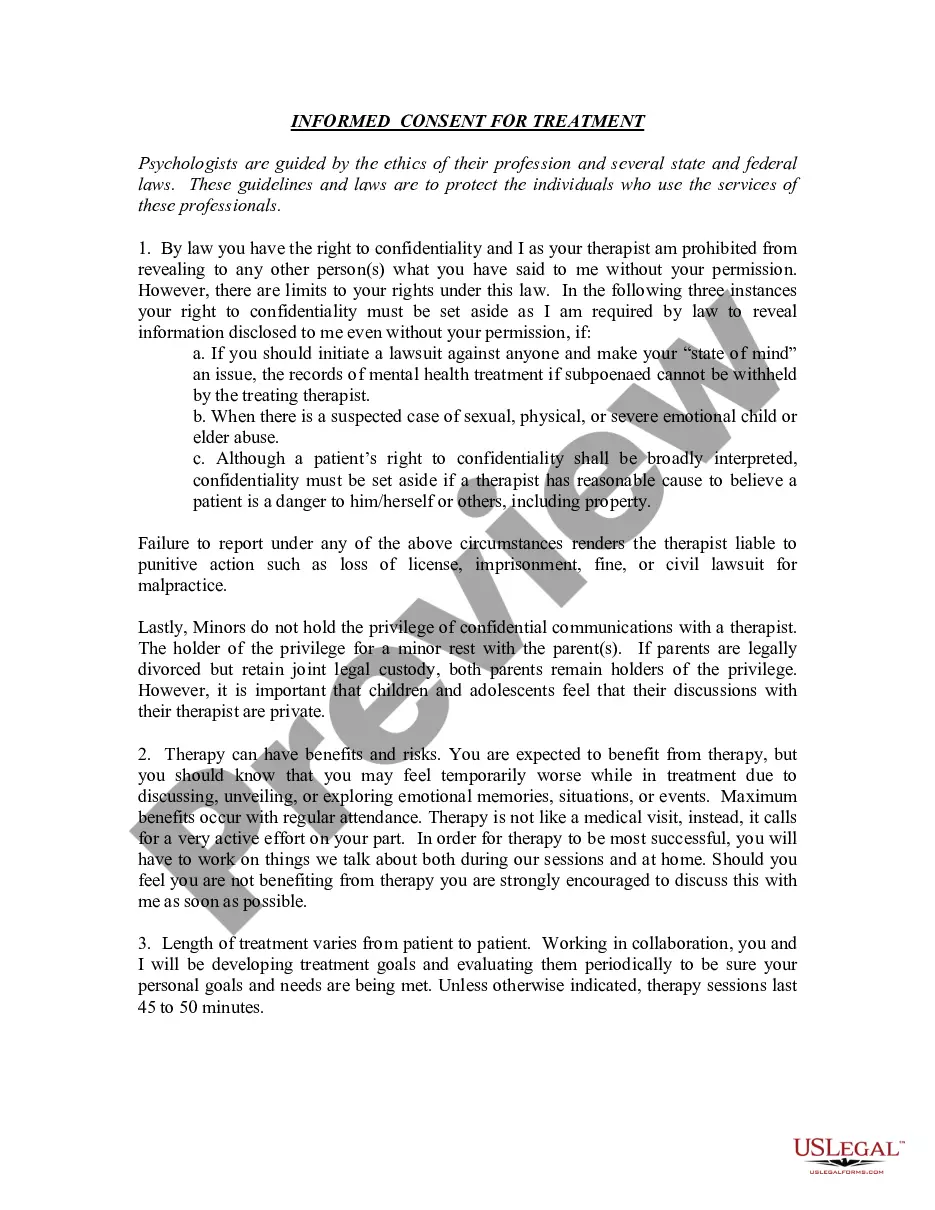
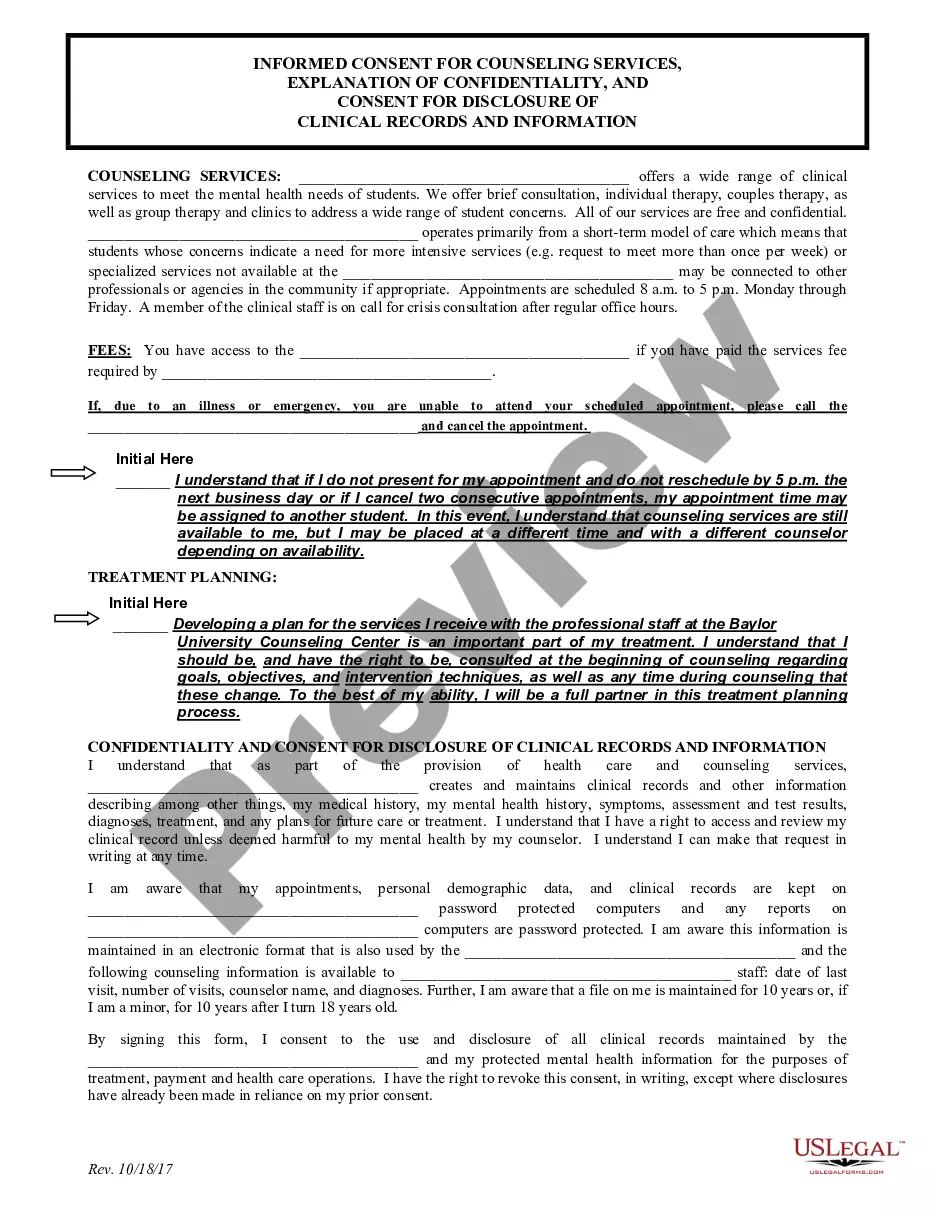
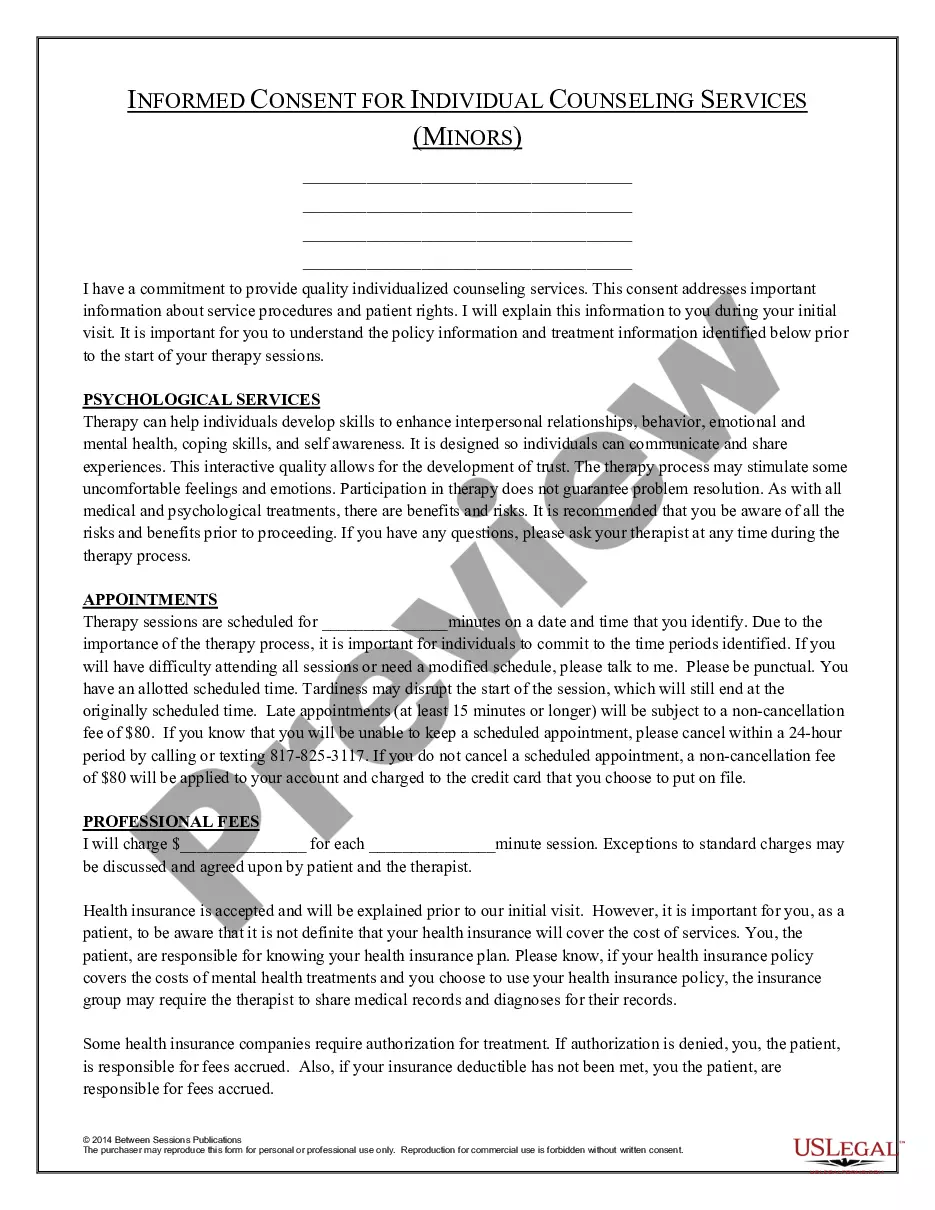
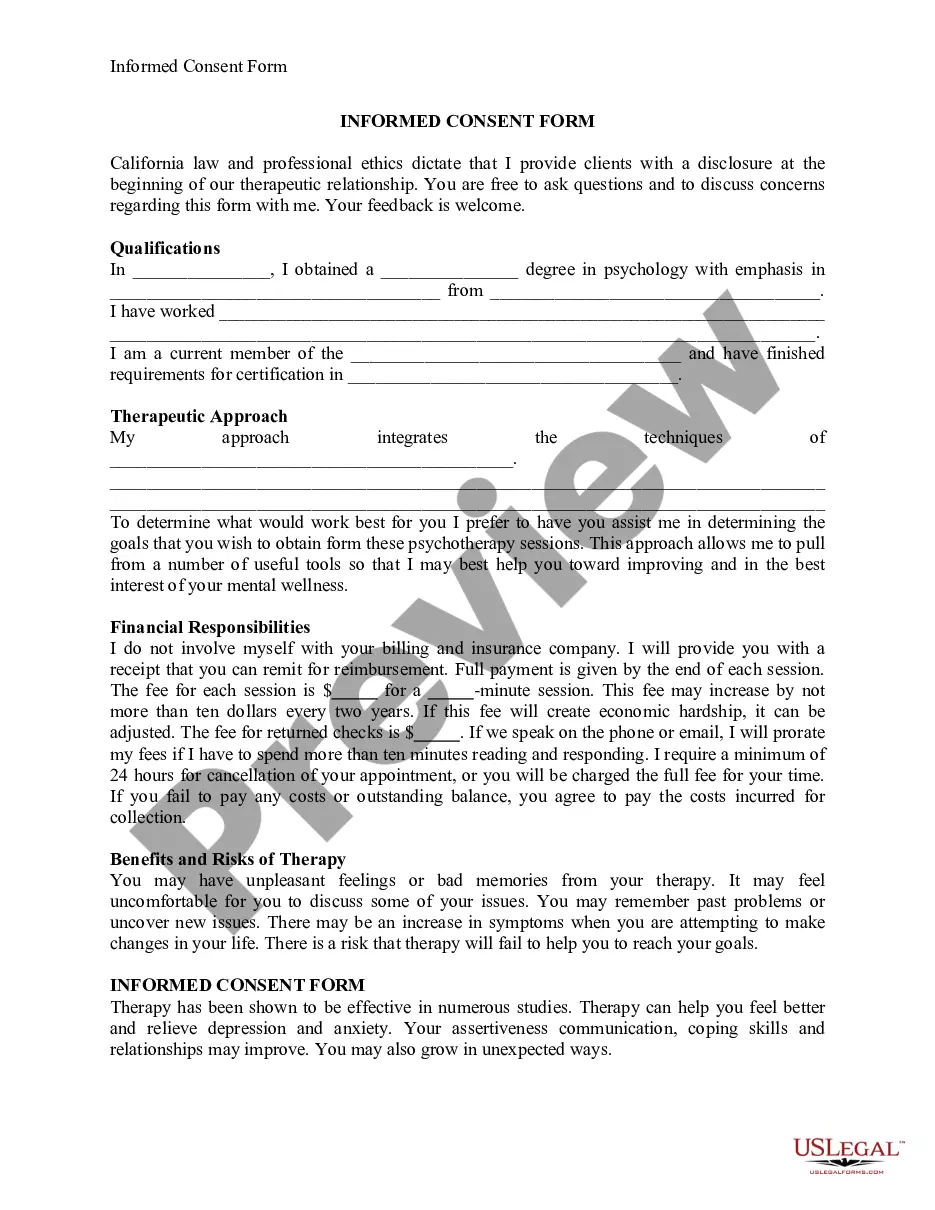
The Informed Consent for Counseling Services for a Minor is a legal document that ensures parents or guardians understand the nature of the mental health services provided to their child. This form safeguards the rights of minors during counseling by outlining confidentiality, risks, benefits, and the therapeutic process. It differs from other consent forms by specifically addressing the unique circumstances surrounding minors in therapy and the limitations of confidentiality that apply to them.
Key parts of this document
- Confidentiality rights: Explains the boundaries of confidentiality in therapy for minors.
- Risks and benefits: Outlines potential positive and negative effects of therapy.
- Length of treatment: Discusses session duration and frequency of appointments.
- Collaboration in treatment: Encourages partnerships between the therapist, minor, and parents in setting goals.
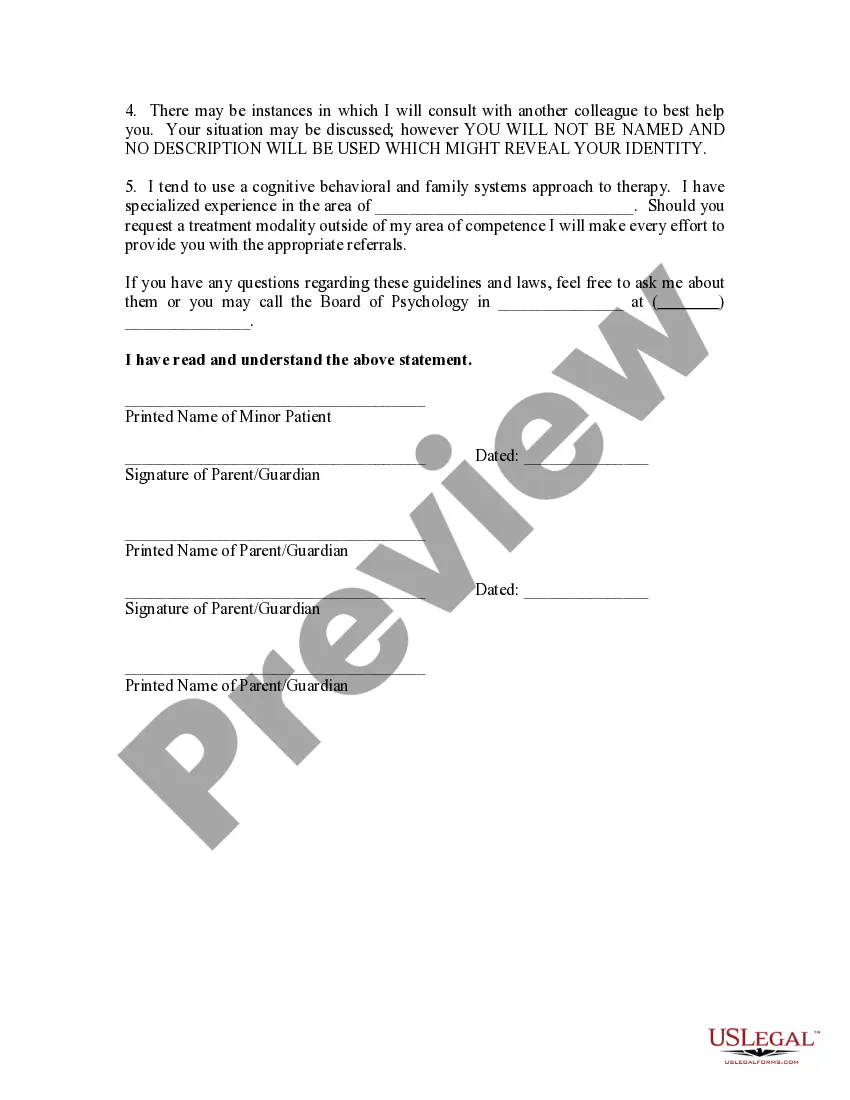
- Signature section: Required for both parents/guardians to consent to treatment.
Common use cases
This form should be used when a minor is seeking mental health counseling services. It is essential for parents or guardians to complete this document prior to their child starting therapy sessions, ensuring that they are informed of the process and their rights as it pertains to their child's care.
Who needs this form
The following individuals should use this form:
- Parents or guardians of minors seeking counseling services.
- Therapists or mental health professionals providing services to children and adolescents.
- Caregivers who are legally responsible for minors and wish to authorize therapy.
Steps to complete this form
- Review the form carefully to understand all sections concerning treatment and rights.
- Both parents/guardians should read the confidentiality notice and acknowledge any limitations.
- Sign the form where indicated, providing the printed name and date.
- Discuss any concerns with the therapist regarding potential risks and benefits.
- Keep a copy of the signed form for your records.
Notarization requirements for this form
This form does not typically require notarization unless specified by local law. Ensure to verify any specific requirements based on your jurisdiction.
Get your form ready online
Our built-in tools help you complete, sign, share, and store your documents in one place.
Make edits, fill in missing information, and update formatting in US Legal Forms—just like you would in MS Word.
Download a copy, print it, send it by email, or mail it via USPS—whatever works best for your next step.
Sign and collect signatures with our SignNow integration. Send to multiple recipients, set reminders, and more. Go Premium to unlock E-Sign.
If this form requires notarization, complete it online through a secure video call—no need to meet a notary in person or wait for an appointment.
We protect your documents and personal data by following strict security and privacy standards.

Make edits, fill in missing information, and update formatting in US Legal Forms—just like you would in MS Word.

Download a copy, print it, send it by email, or mail it via USPS—whatever works best for your next step.

Sign and collect signatures with our SignNow integration. Send to multiple recipients, set reminders, and more. Go Premium to unlock E-Sign.

If this form requires notarization, complete it online through a secure video call—no need to meet a notary in person or wait for an appointment.

We protect your documents and personal data by following strict security and privacy standards.
Typical mistakes to avoid
- Not reviewing the confidentiality clauses before signing.
- Failing to complete all signature lines if multiple guardians are involved.
- Overlooking discussions about the therapeutic approach and how it may affect the minor.
Advantages of online completion
- Convenience: Easily download and complete the form from home.
- Editability: Make necessary changes to customize the form as per your familyâs needs.
- Access to expert advice: Form templates drafted by licensed attorneys for legal compliance.
Summary of main points
- The form ensures informed consent for minors receiving counseling.
- Confidentiality has specific limitations that must be understood by parents/guardians.
- Both parents or guardians should typically sign the document to authorize treatment.
Looking for another form?


Form popularity
FAQ
See Virginia Code §54.1-2969. If a minor seeks outpatient therapy on his/her own, the provider must make a case-by-case judgment about whether it is appropriate to work with the minor without parental consent, or over a parent's objection.
However, in the case of a minor 14 years of age or older who is physically capable of giving consent, such consent shall be obtained first. 4. Medical or health services needed in the case of outpatient care, treatment or rehabilitation for mental illness or emotional disturbance.
Children Under 13 Cannot Provide Legal Consent No child who is under the age of 13 can consent to a sexual act. Therefore, no person can have consensual sex with a person under 13 years of age without violating Virginia Code §18.2-61.
Legally, children are not able to give true informed consent until they turn 18. So, before taking part in a clinical trial, they are asked for their assent. Assent means that they agree to take part. They may also dissent, which means they do not agree.
(See Virginia §54.1-2969, E) . See footnote #1. Therefore, under HIPAA, a Virginia minor who enters mental health treatment under his/her own authority and by giving his/her own consent is considered to be ?the patient,? retaining all the rights afforded to adult patients.
Consent must be given voluntarily. The client must be competent (legally as well as cognitively/emotionally) to give consent. We must actively ensure the client's understanding of what she or he is agreeing to. The information shared and all that is agreed to must be documented.
Minors who consent to their own treatment (as authorized under §54.1-2969) have the legal right to give, or refuse to give, consent for disclosures to others, both under that statute and under the Virginia Health Records Privacy Statute ( § 32.1-127. ) and under HIPAA. 4.
The state of Virginia recognizes the age of majority as age 18. When a minor reaches age 18, they are considered an adult in the state thereafter. State laws also govern a minor's ability to become emancipated from their parents or legal guardians, give consent for medical treatment, and other legal matters.