Michigan Response to Objection to Ex-Parte
Understanding this form
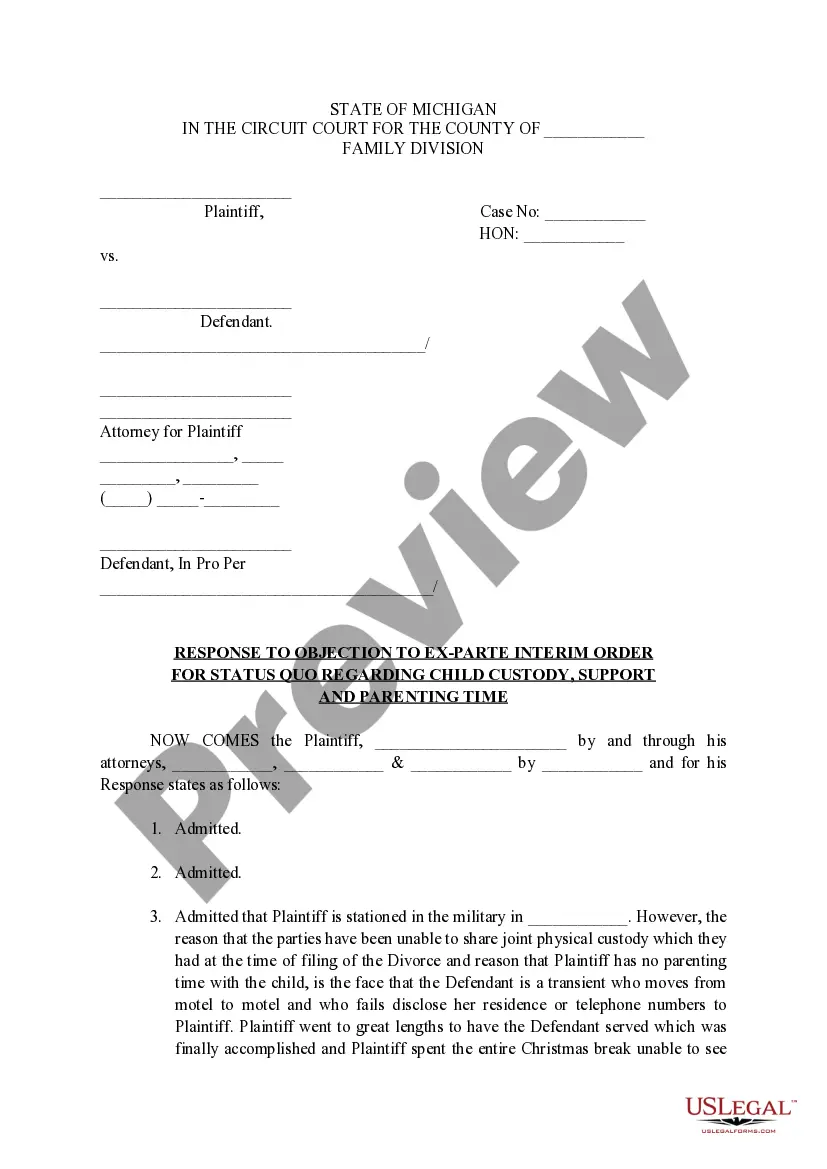
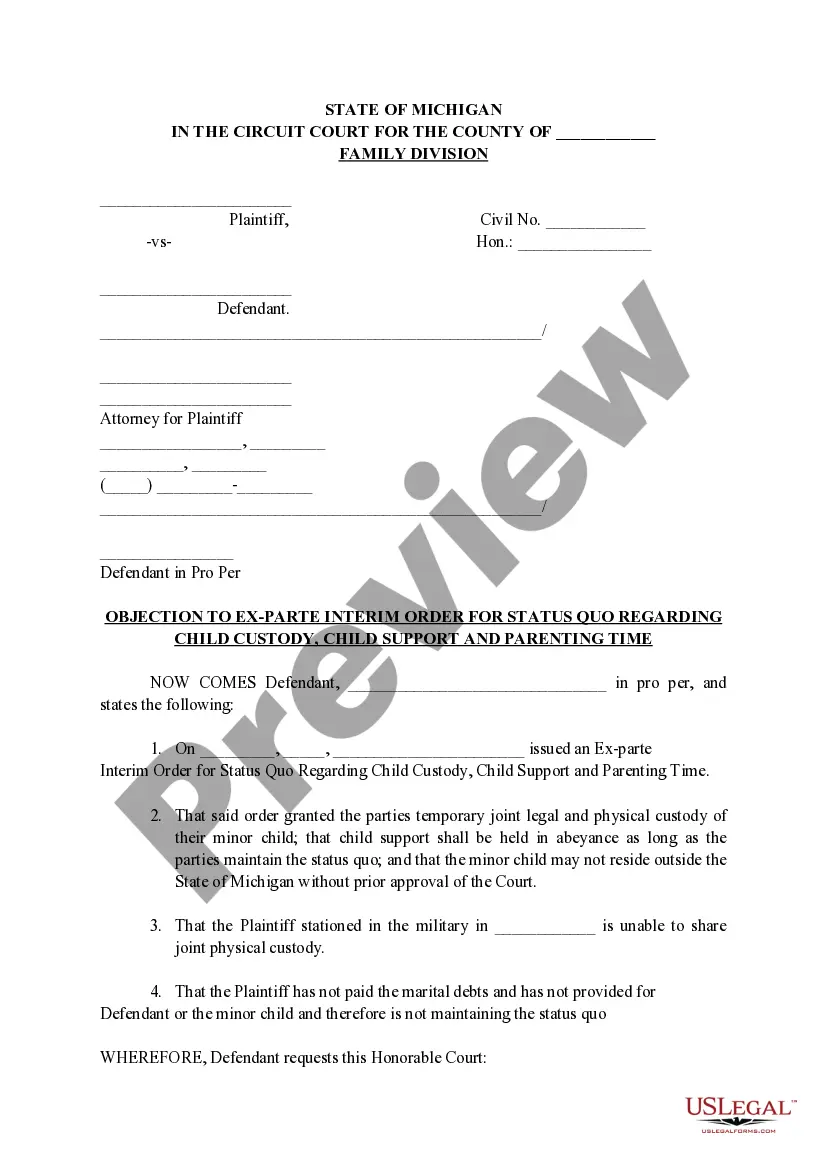
The Response to Objection to Ex-Parte is a legal document used in family law cases. It provides an avenue for a party to contest an ex parte order, which is a temporary order made without notifying the other party. This form allows the affected party to formally respond and seek to rescind or modify the order within 14 days of being served. Its purpose is to ensure that both parties have an opportunity to present their side before the court makes a final decision.
Key components of this form
- Parties involved: Identifies the plaintiff and defendant in the case.
- Case details: Includes case number and court information.
- Response sections: Contains specific sections for admitting or denying claims made in the ex parte order.
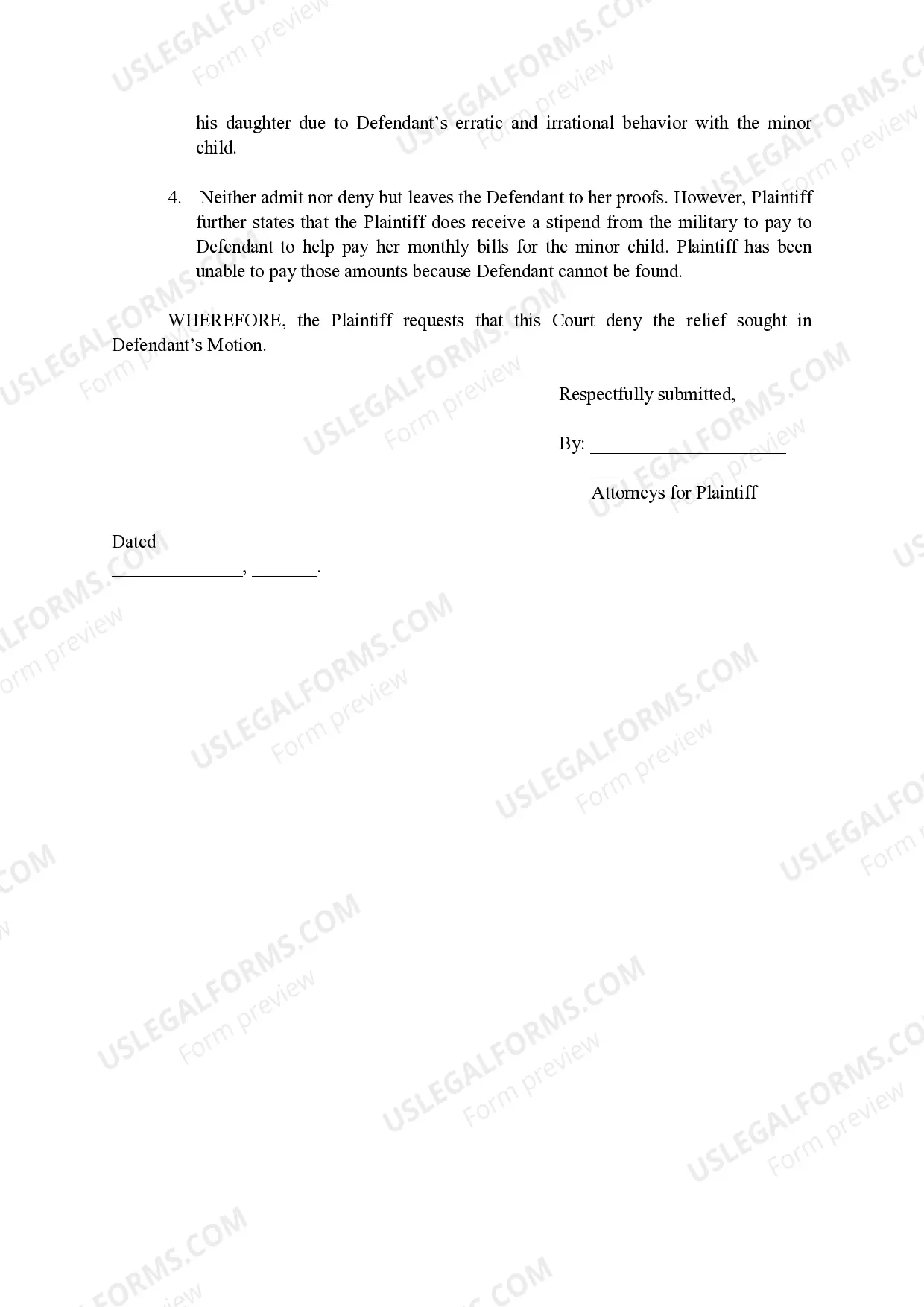
- Request for relief: A section where the plaintiff requests the court to deny the defendant's motion for the ex parte order.
- Signature lines: Spaces for attorneys and the date of submission.
When this form is needed
This form is used when a party has been served with an ex parte order regarding issues like child custody, support, or parenting time and wishes to object to that order. It is typically filed when the circumstances prompting the ex parte order have not been adequately communicated to the court, or when the party believes that the order is unjust or necessary to modify it.
Intended users of this form
- Persons who have received an ex parte order affecting their rights in a family law case.
- Individuals seeking to contest the contents or implications of the ex parte order.
- Parties involved in ongoing custody disputes or support issues with the other parent or guardian.
- Litigants who wish to ensure their side is presented to the court for consideration.
Steps to complete this form
- Identify the parties: Fill in the names of the plaintiff and the defendant as they appear in court documents.
- Enter case information: Include the case number and the name of the court where the case is filed.
- Respond to claims: Clearly state which claims you admit or deny, providing explanations as needed.
- Make your request: Specify what you are requesting from the court, such as denial of the ex parte order.
- Sign and date: Ensure all parties involved sign the form and date it appropriately.
Does this document require notarization?
This form does not typically require notarization unless specified by local law. It is advisable to check your local courtâs regulations to ensure compliance.
Get your form ready online
Our built-in tools help you complete, sign, share, and store your documents in one place.
Make edits, fill in missing information, and update formatting in US Legal Forms—just like you would in MS Word.
Download a copy, print it, send it by email, or mail it via USPS—whatever works best for your next step.
Sign and collect signatures with our SignNow integration. Send to multiple recipients, set reminders, and more. Go Premium to unlock E-Sign.
If this form requires notarization, complete it online through a secure video call—no need to meet a notary in person or wait for an appointment.
We protect your documents and personal data by following strict security and privacy standards.

Make edits, fill in missing information, and update formatting in US Legal Forms—just like you would in MS Word.

Download a copy, print it, send it by email, or mail it via USPS—whatever works best for your next step.

Sign and collect signatures with our SignNow integration. Send to multiple recipients, set reminders, and more. Go Premium to unlock E-Sign.

If this form requires notarization, complete it online through a secure video call—no need to meet a notary in person or wait for an appointment.

We protect your documents and personal data by following strict security and privacy standards.
Common mistakes to avoid
- Failing to file within the 14-day deadline after being served.
- Not providing sufficient detail in responses, leading to unclear positions.
- Overlooking signature requirements or failing to date the document.
- Not serving copies of the response to the Friend of the Court or the opposing party.
Benefits of completing this form online
- Convenience of completing the form from anywhere, at any time.
- Editable formats that allow for easy updates and changes before submission.
- Access to legal guidance that simplifies the understanding of the form's requirements.
- Secure storage of your documents for future reference or legal proceedings.
Looking for another form?

Form popularity
FAQ
Yes, you can respond to an ex parte motion in Michigan, typically by submitting a written response to the court. This response forms a key part of your Michigan Response to Objection to Ex-Parte, as it allows you to counter the claims made in the initial motion. It's important to act promptly, as there are often time limits involved. Utilizing the resources available on the uslegalforms platform can help ensure your response is appropriately filed and effectively structured.
To challenge an ex parte order in Michigan, you must file a formal objection with the court that issued the order. This Michigan Response to Objection to Ex-Parte allows you to present your case and explain why the order should be reconsidered. It is crucial to gather relevant evidence and present a solid argument to support your objection. Consulting with a legal professional can greatly enhance your chances of successfully having the order revoked.
Rule 2.313 in Michigan outlines the procedures for a party to request information from another party during litigation. When you file a Michigan Response to Objection to Ex-Parte, it plays a crucial role in addressing any concerns about disclosure and discovery. This rule ensures that both parties have a fair opportunity to present their case, maintaining the integrity of the legal process. Understanding this rule is essential for effectively managing your legal rights and obligations.
Yes, an ex parte order can be challenged in court. You will need to file a motion explaining why the order is unjust and present any supporting evidence. Timeliness is important, so act quickly to ensure your challenge is heard. The US Legal Forms platform offers helpful resources to guide you in preparing your motion and preparing a strong argument for your Michigan response to objection to ex parte.
To respond to an ex parte order, you must file a formal objection promptly. It is crucial to gather all relevant documents and evidence that support your position. Make sure to follow the specific court procedures in Michigan regarding filings and notifications. Utilizing resources such as the US Legal Forms platform can help simplify this process, providing templates and guidance tailored to the Michigan response to objection to ex parte.