New Jersey Marital Domestic Separation and Property Settlement Agreement Minor Children no Joint Property or Debts effective Immediately
Overview of this form
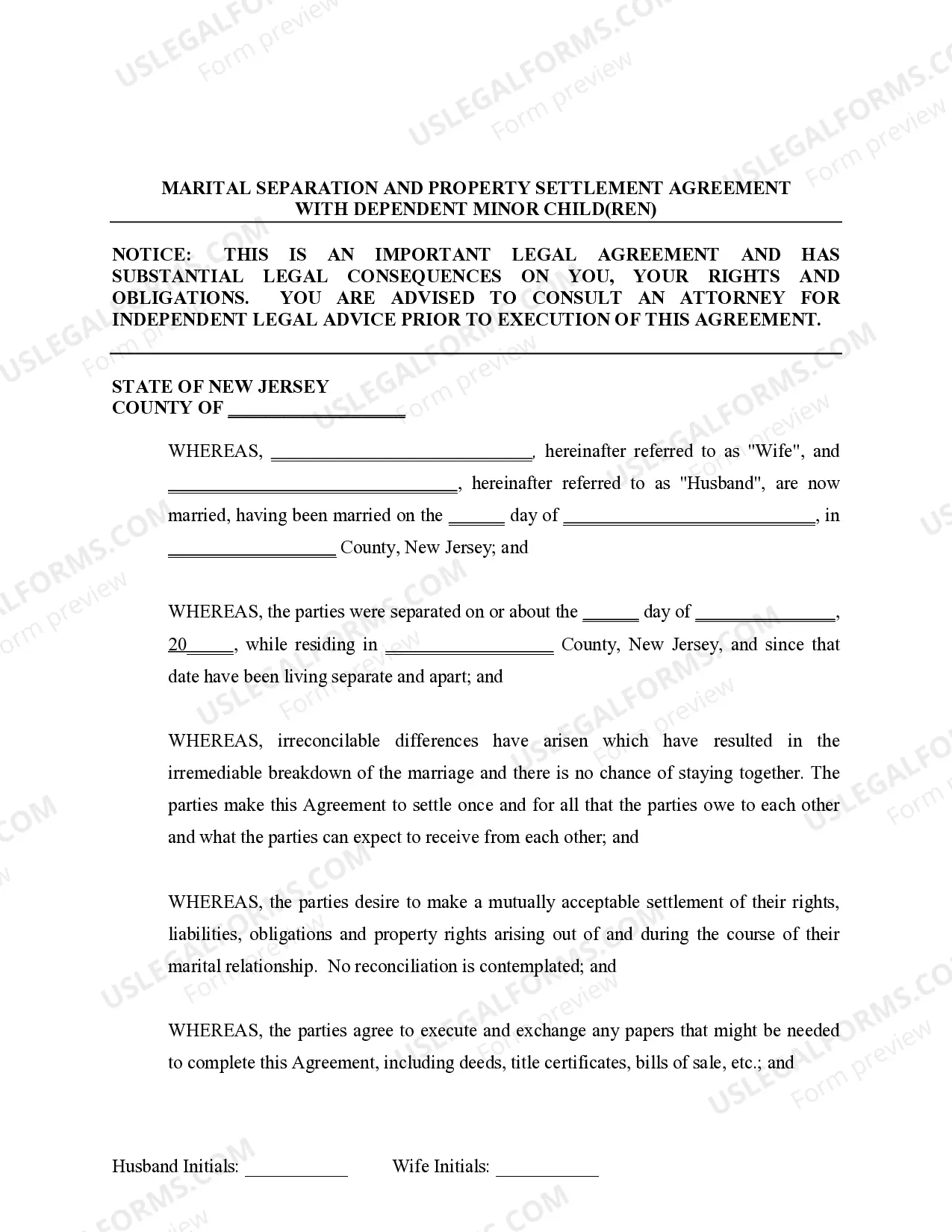
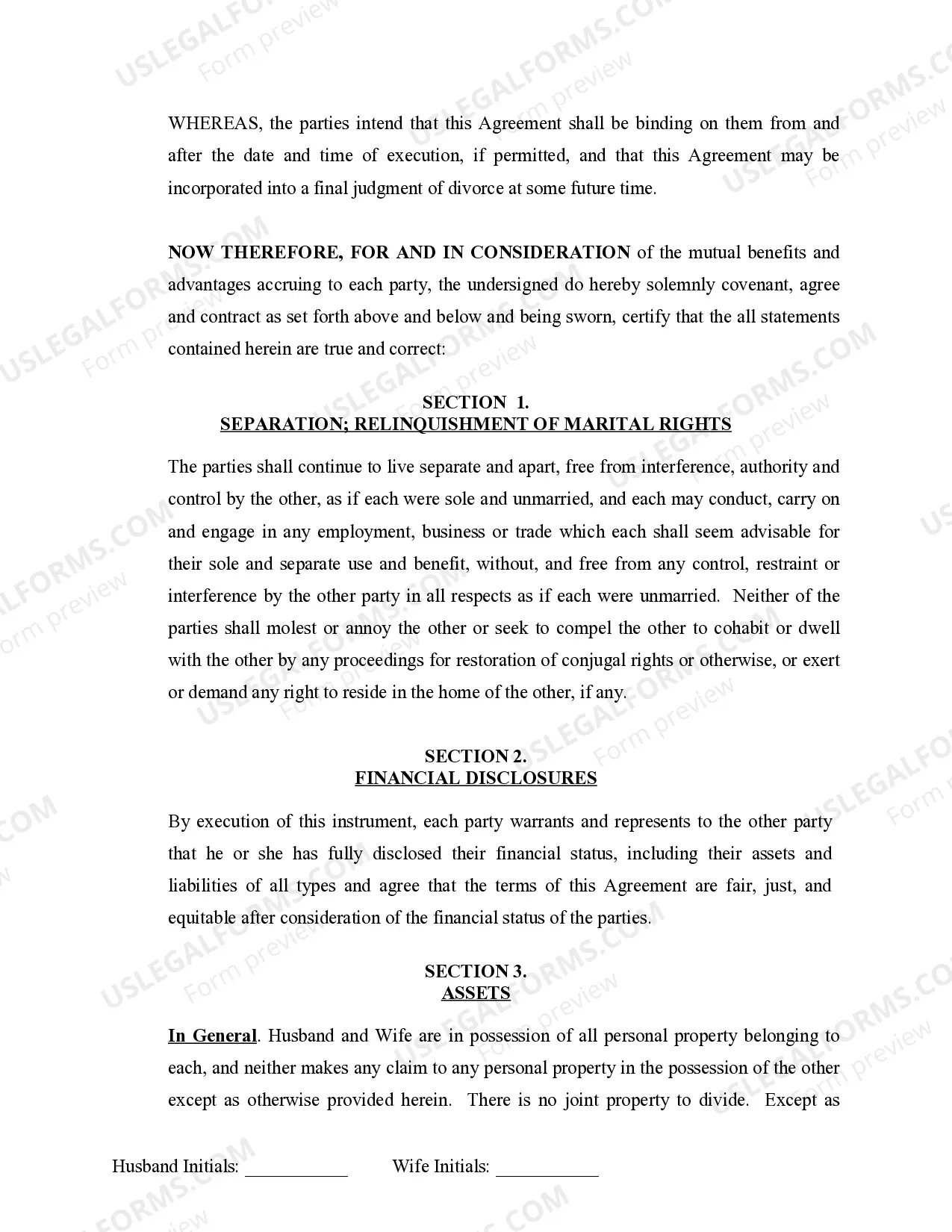
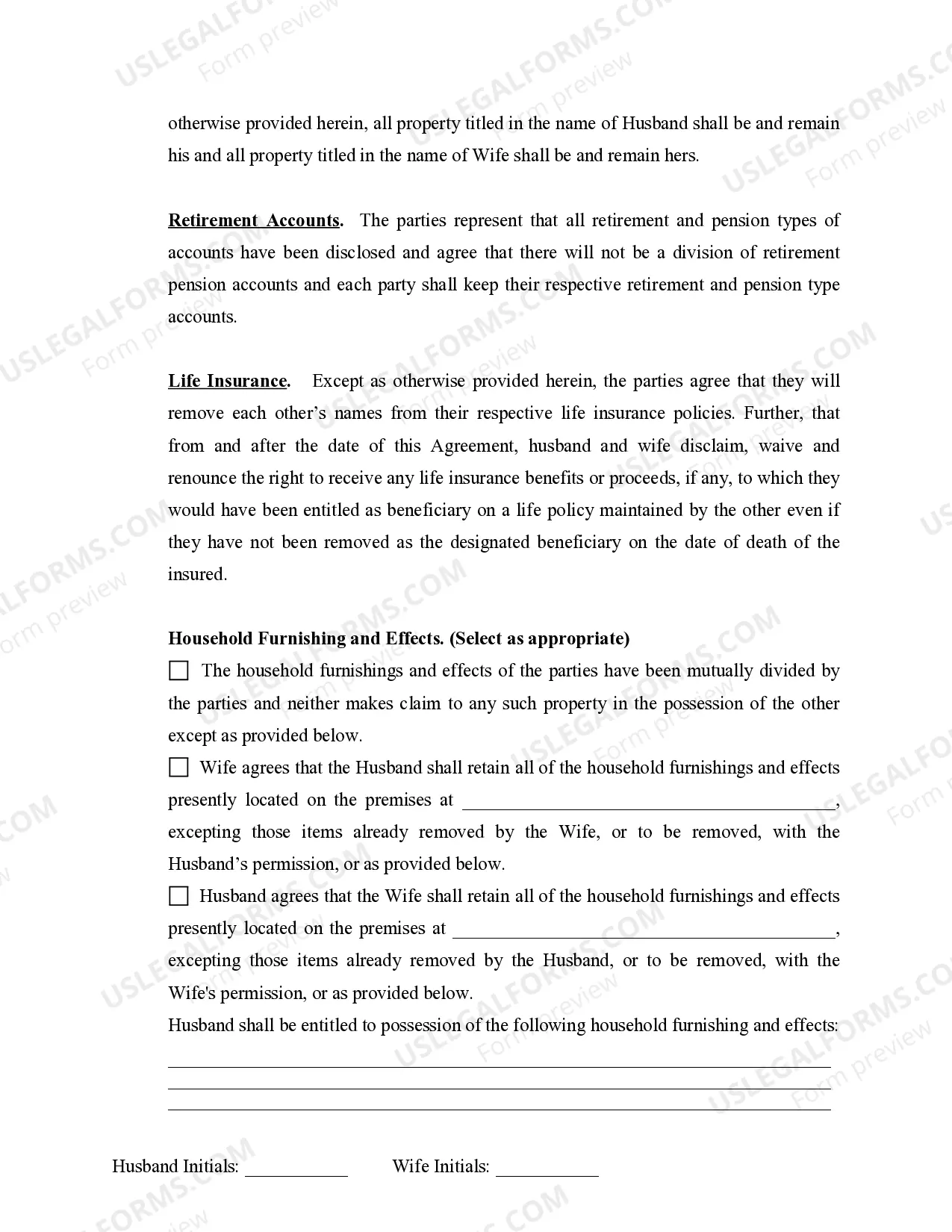
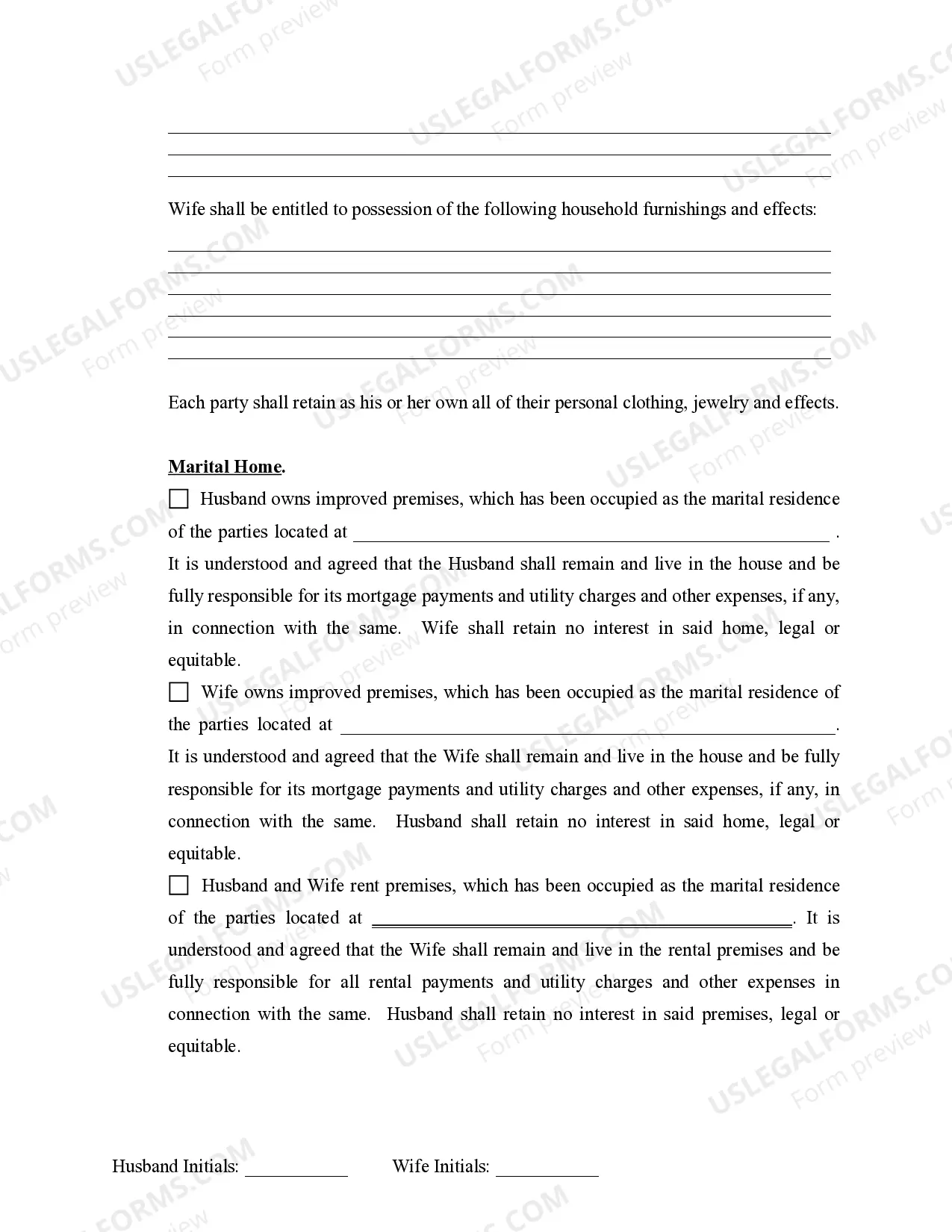
The Marital Domestic Separation and Property Settlement Agreement is a legal document designed for couples with minor children who do not share joint property or debts and wish to separate immediately. This form outlines the terms of separation, including custody arrangements, visitation rights, and child support obligations, while ensuring that no joint financial responsibilities are left unresolved. Unlike standard separation agreements, this form is specifically tailored for situations where the parties aim to formalize their separation with an immediate effect, differentiating it from documents requiring court approval or waiting periods.
Main sections of this form
- Immediate effectiveness upon execution or as stipulated by court approval.
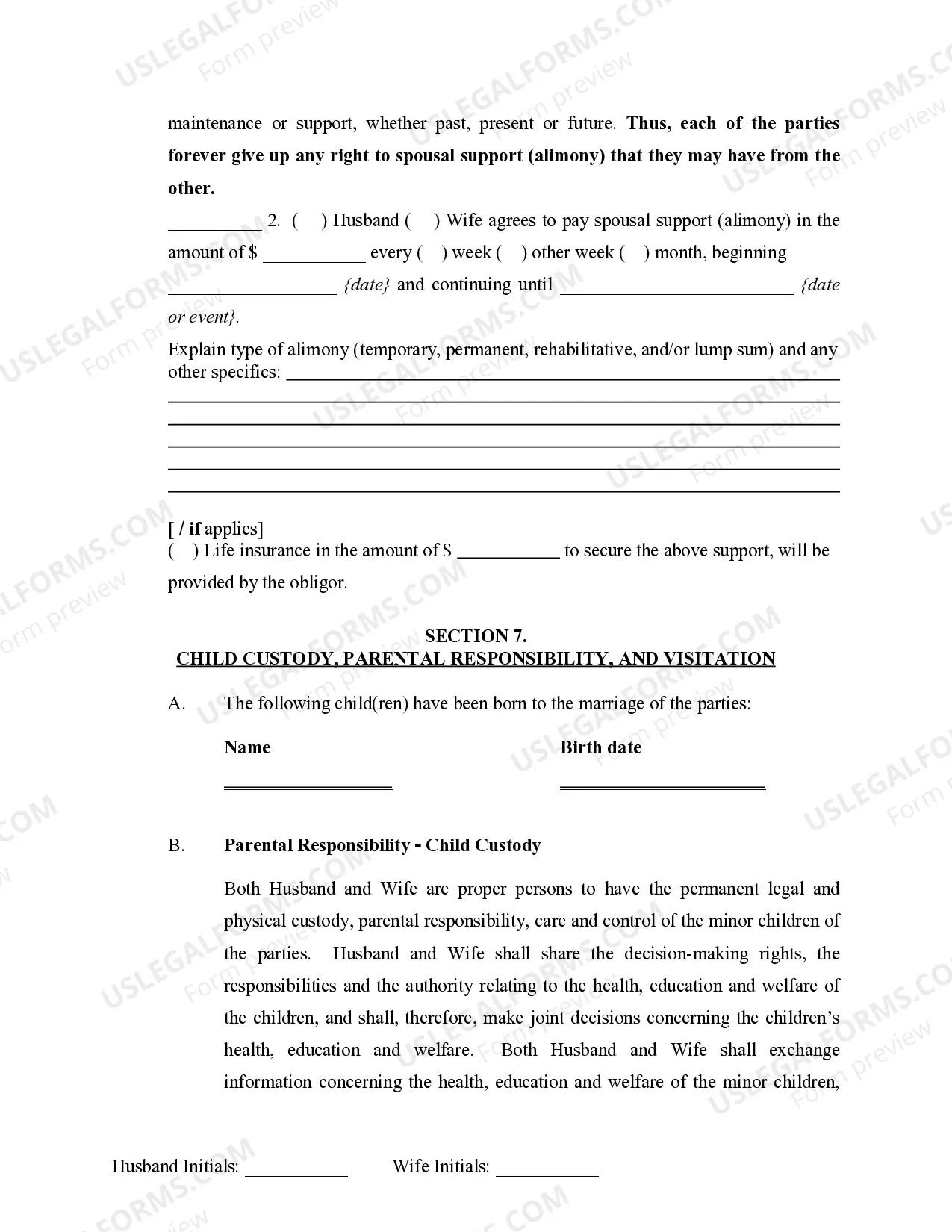
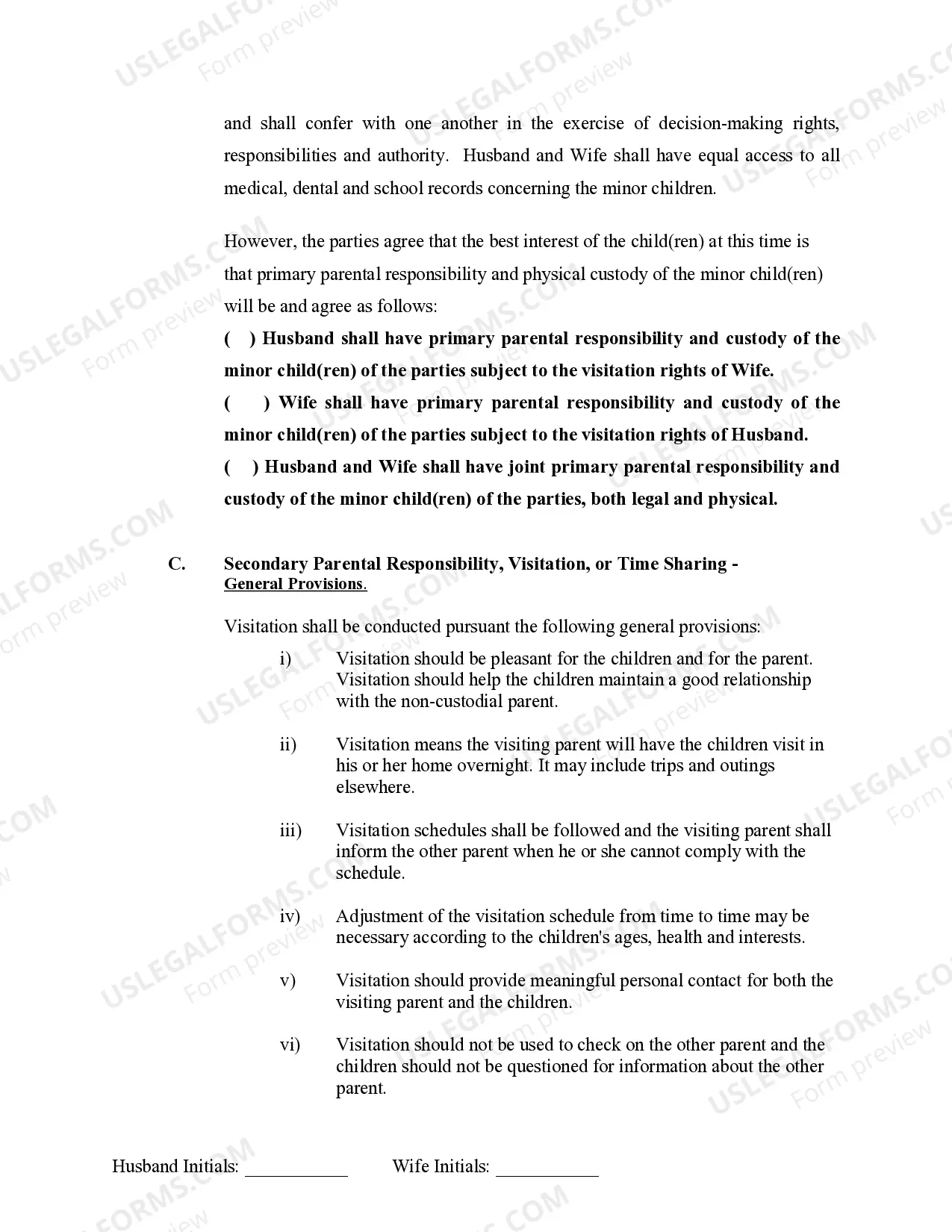
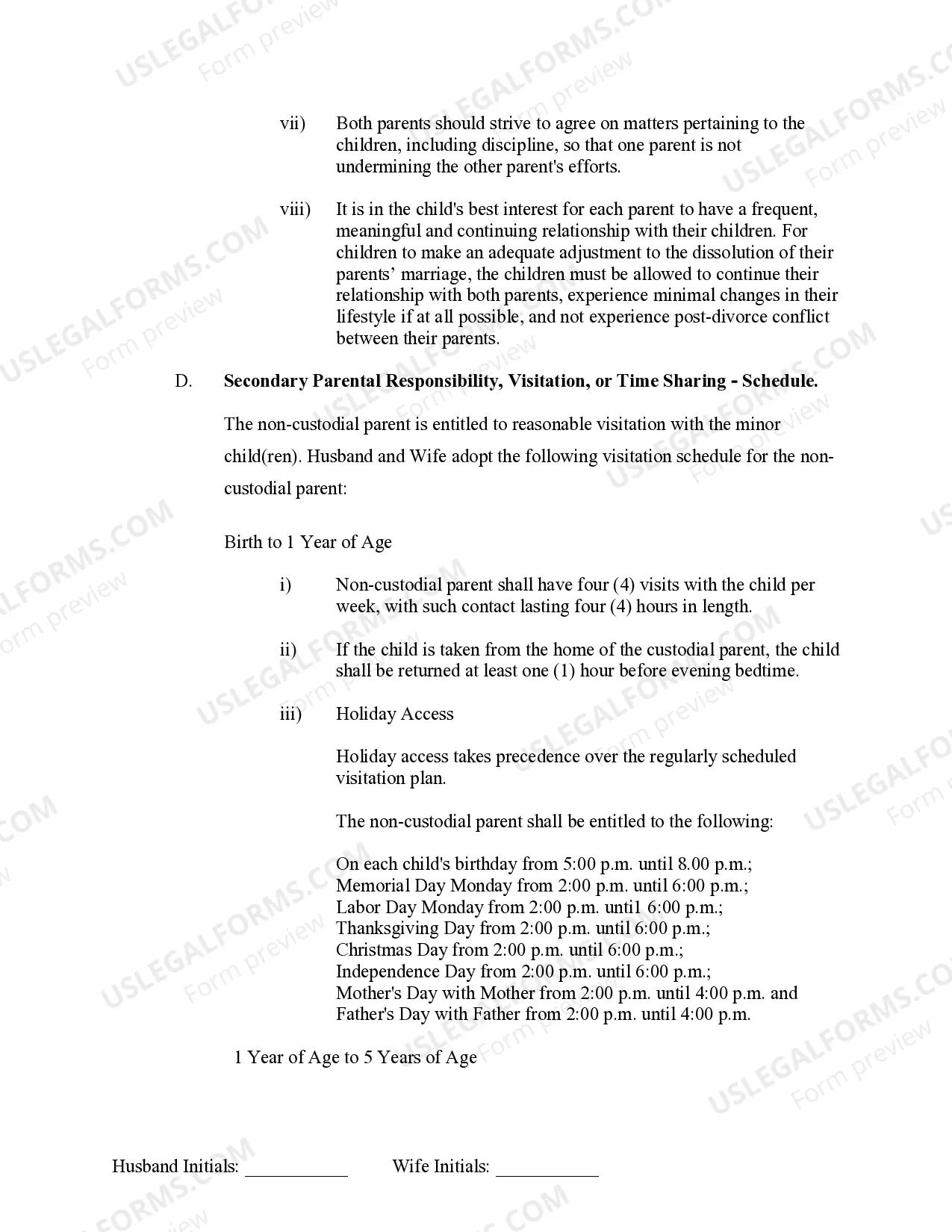
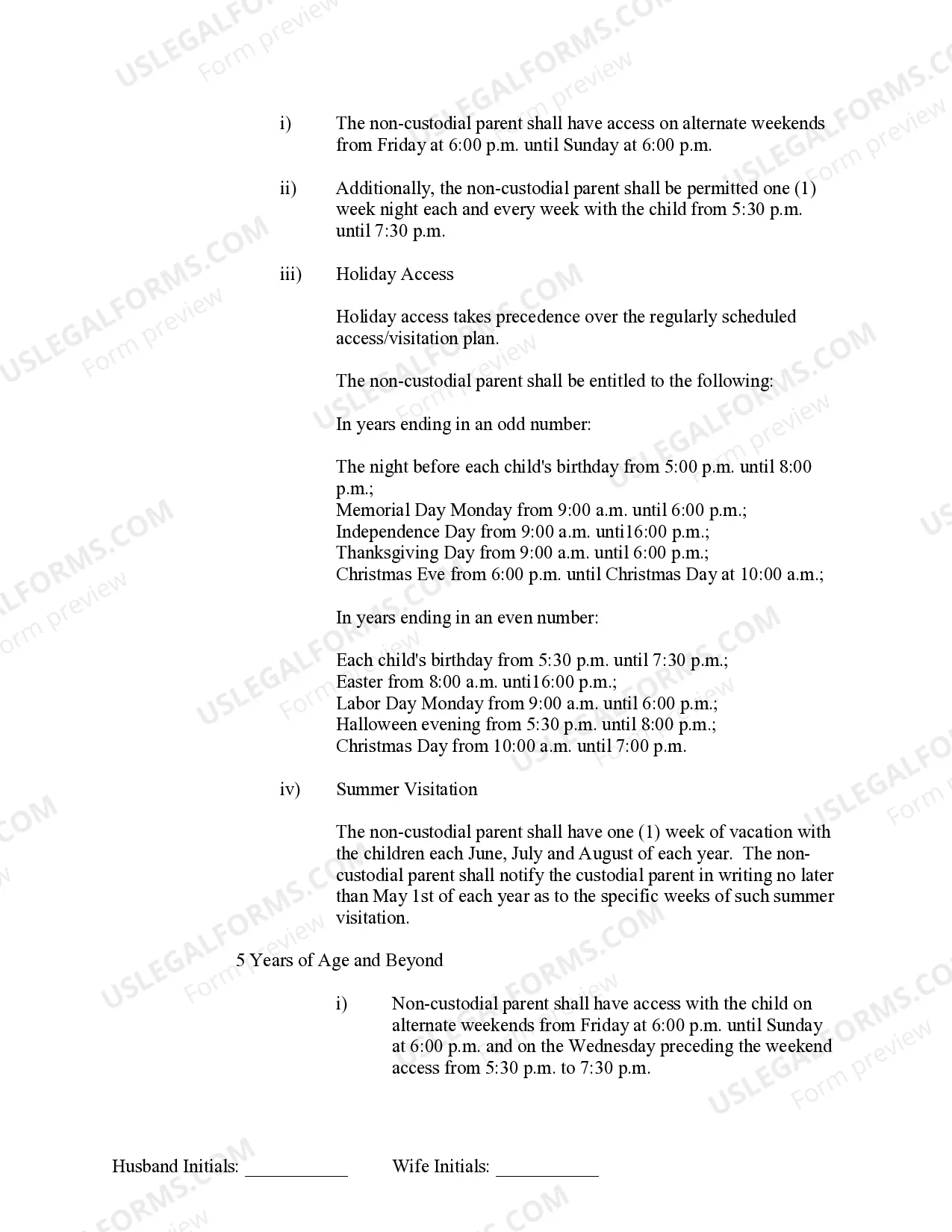
- Sections detailing child custody, visitation rights, and child support payments.
- Clarification of financial disclosures and separate property ownership.
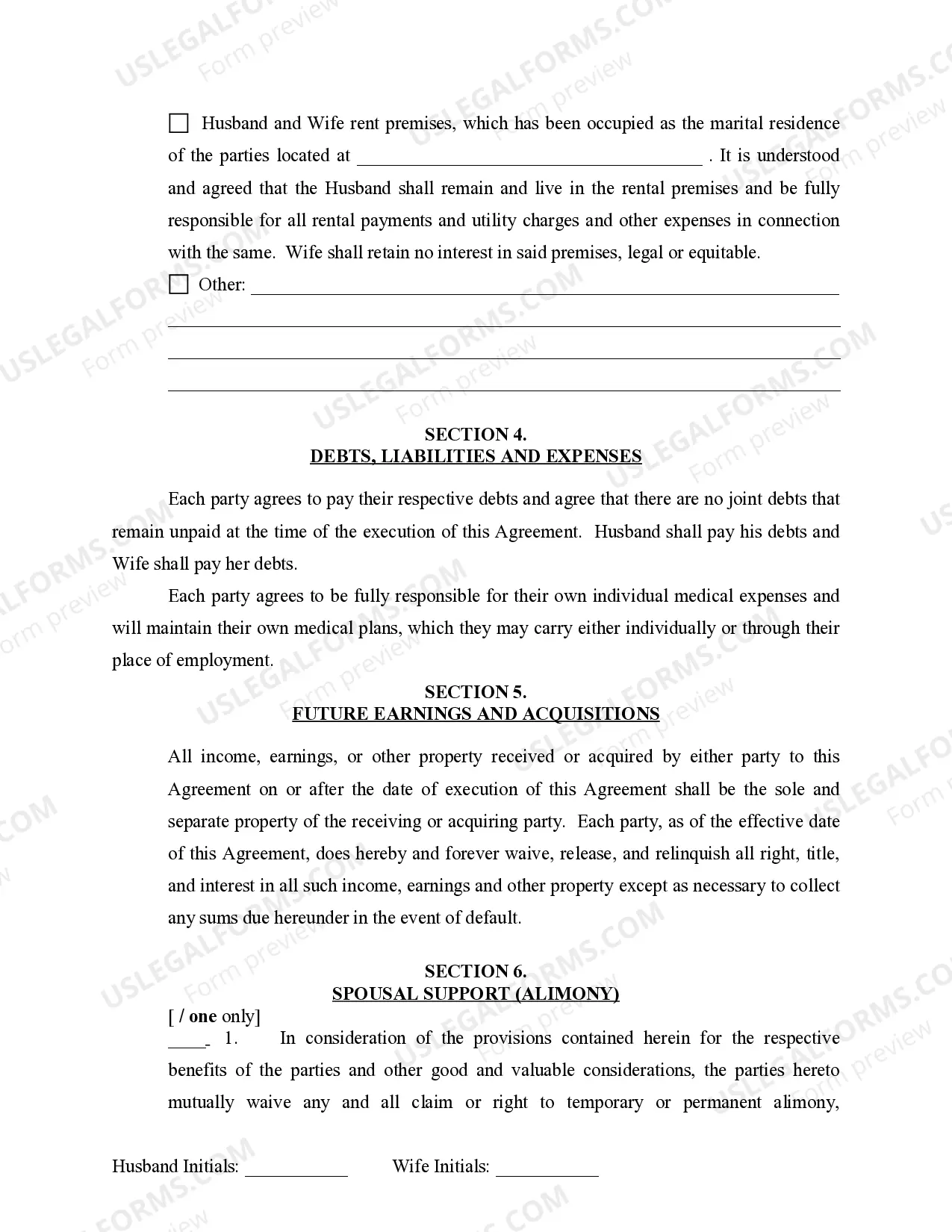
- Provisions regarding the waiver of spousal support (alimony).
- Details about the process for modifying the agreement if circumstances change.

When to use this form
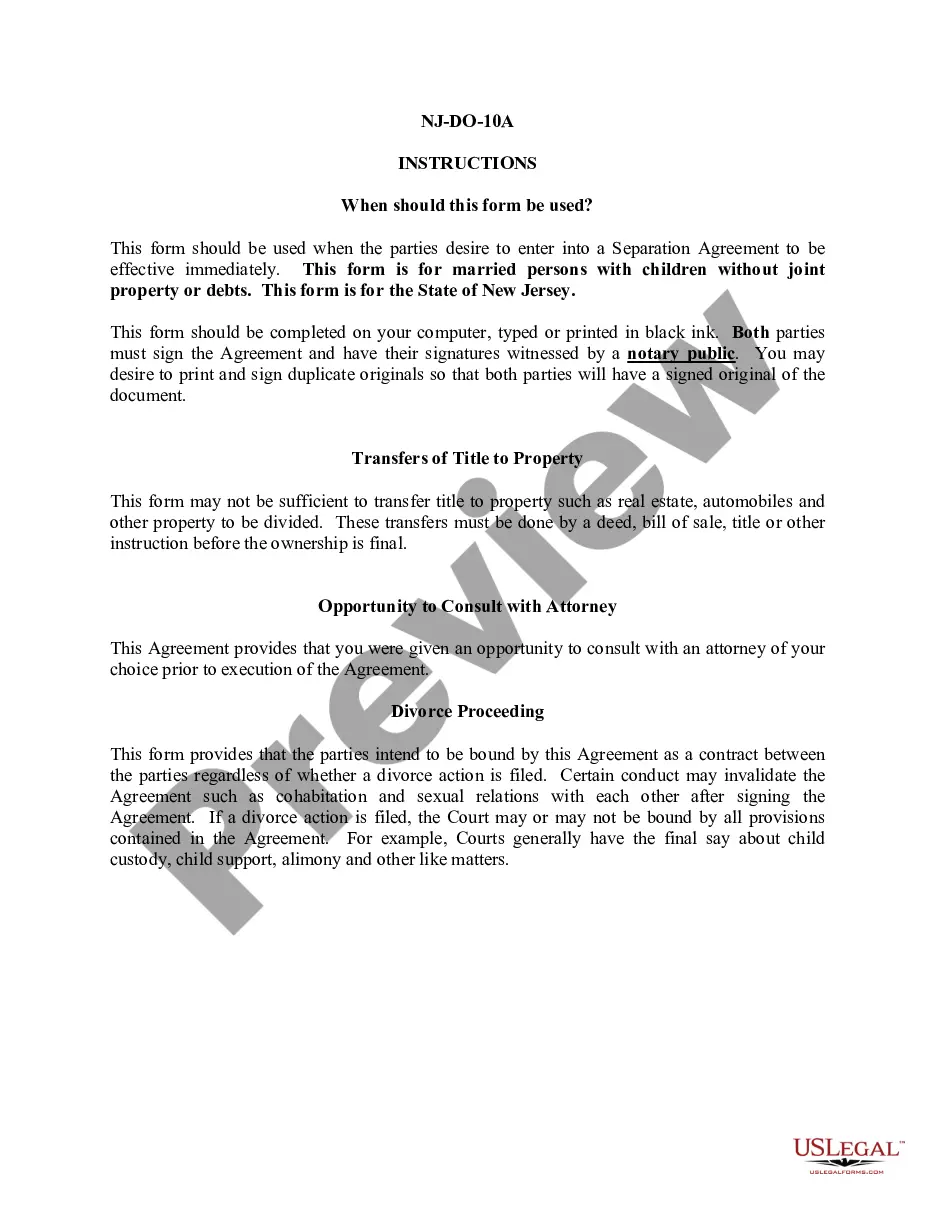
This form should be used when married individuals with minor children wish to separate immediately and do not have shared property or debts. Situations may include couples who have decided that their marriage cannot continue and require a formal agreement on child custody and support, while ensuring each parties' financial responsibilities are clearly defined. It is particularly useful for those seeking a straightforward, non-contentious separation without the complexities of joint property division.
Who can use this document
- Couples legally married in New Jersey who are separating.
- Parents with minor children seeking custody and support arrangements.
- Individuals without joint property or debts.
Instructions for completing this form
- Identify the parties involved: Clearly state the names and details of both spouses.
- Fill out the custody and visitation sections: Specify the arrangements for child custody and visitation rights.
- Enter child support obligations: Clearly outline the amount and frequency of child support payments.
- Complete financial disclosures: Ensure all assets and liabilities are accurately disclosed.
- Sign and date the agreement: Both parties must sign, and it should be notarized to ensure legal validity.
Is notarization required?
Yes, this form must be notarized to be legally valid. This ensures that the signatures are confirmed and the agreement is enforceable in court. US Legal Forms provides integrated online notarization services for your convenience, allowing you to complete the process securely from your home.
Get your form ready online
Our built-in tools help you complete, sign, share, and store your documents in one place.
Make edits, fill in missing information, and update formatting in US Legal Forms—just like you would in MS Word.
Download a copy, print it, send it by email, or mail it via USPS—whatever works best for your next step.
Sign and collect signatures with our SignNow integration. Send to multiple recipients, set reminders, and more. Go Premium to unlock E-Sign.
If this form requires notarization, complete it online through a secure video call—no need to meet a notary in person or wait for an appointment.
We protect your documents and personal data by following strict security and privacy standards.

Make edits, fill in missing information, and update formatting in US Legal Forms—just like you would in MS Word.

Download a copy, print it, send it by email, or mail it via USPS—whatever works best for your next step.

Sign and collect signatures with our SignNow integration. Send to multiple recipients, set reminders, and more. Go Premium to unlock E-Sign.

If this form requires notarization, complete it online through a secure video call—no need to meet a notary in person or wait for an appointment.

We protect your documents and personal data by following strict security and privacy standards.
Common mistakes to avoid
- Failing to fully disclose financial information, which can affect the agreementâs validity.
- Not specifying clear visitation schedules, leading to confusion later.
- Neglecting to have the document notarized, making it unenforceable.
- Overlooking the need for both parties to sign and retain copies of the agreement.
Advantages of online completion
- Immediate access to a professionally drafted legal document.
- Easy to fill out and review from the comfort of your home.
- Customizable fields that reflect your specific situation.
- Ensures compliance with New Jersey law for enforceability.
- Secure storage of your completed forms for future reference.
Summary of main points
- This agreement is for couples wishing to separate legally with minor children involved, without joint property or debt.
- It is vital for both parties to understand their rights and duties outlined in the agreement.
- Prior legal advice is recommended to ensure that the agreement meets legal standards.
- The document must be notarized to hold legal weight in New Jersey courts.
Looking for another form?
Form popularity
FAQ
#1. Start with the Basics. #2. Include the Details. #3. Confirm Your Agreement. #4. Identify and Divide Assets and Debts. #5. Create a Parenting Plan for Custody and Visitation. #6. Agree on Child Support and Spousal Support (Alimony) #7. Polishing Your Agreement. Conclusion.
Statutory Definition of Marital Property Under New Jersey law, marital property includes all property, both real and personal, which was legally and beneficially acquired by either of them during the marriage. This excludes any gifts (unless given to one spouse from the other) or inheritances.
There are many factors to consider, including assets, incomes, living expenses, inflation, alimony, child support, taxes, retirement plans, investments, medical expenses and health insurance costs, and child-related expenses such as education.
Your divorce settlement agreement should cover everything that is important to you, including custody of your children, child support payments, alimony, and the separation of your property, such as your family home, vehicles, and other assets.
Marital Settlement Agreements, reached between the parties in writing and signed by the parties, become legally binding when approved by the court at the time of the final court hearing.Once approved by the court, such post judgment stipulations do become legally binding and enforceable between the parties.
Community property states follow the rule that all assets acquired during the marriage are considered "community property." New Jersey is one of them.So any earnings or debts originating after this time will be separate property.
Enforcing an MSA must be done by filing a formal request or motion (legal paperwork) with the court. You will need to show the court how your ex-spouse failed to follow the terms of the agreement. There are many reasons you may need to ask the court to assist you with enforcing your agreement.
Once an agreement has been reached, both parties will sign the settlement, and it will be forwarded to a judge who will incorporate the agreement into the final divorce decree.Usually, an attorney will need to file a motion immediately, and present an argument to the court about why the agreement should be rescinded.
A Marital Settlement Agreement, written and signed by both spouses, is a contract that defines the terms of their divorce.The Marital Settlement Agreement assures each parent's continued right to access medical and health related records as well as school related records.