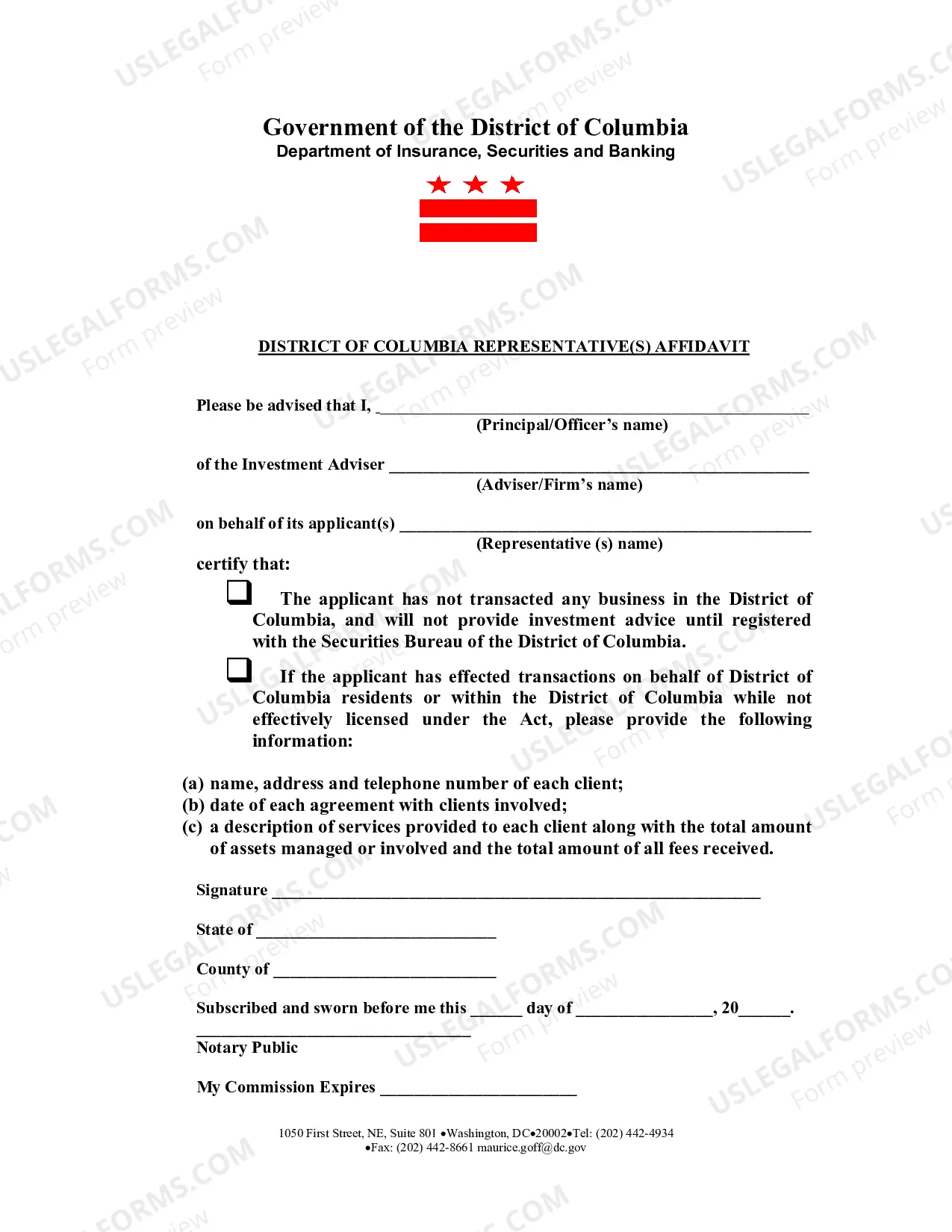
Checklist for Limited Security Offering
Overview of this form
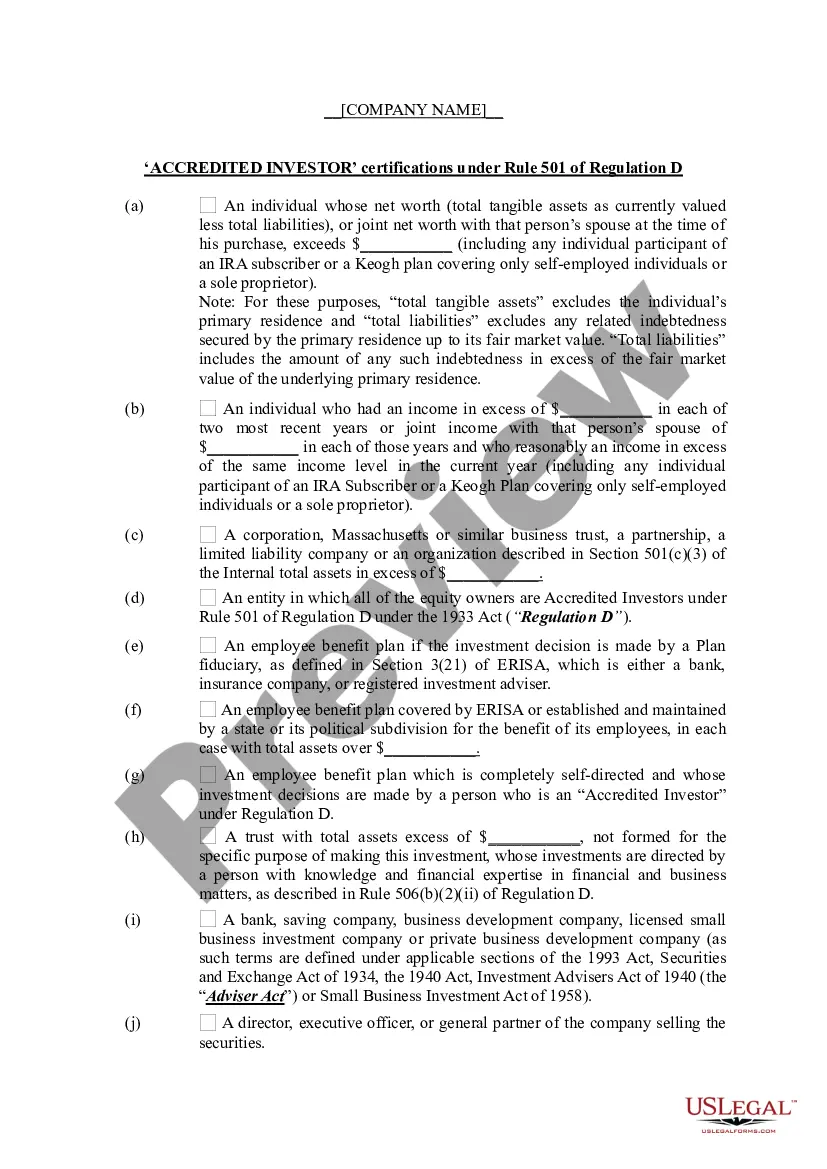
The Checklist for Limited Security Offering is a detailed guide for conducting a limited security offering, typically referred to as a private placement. This form outlines necessary steps and legal requirements to ensure compliance with federal and state securities laws. Unlike public offerings, which are subjected to extensive regulations, limited offerings have specific exemptions, especially for accredited investors. This checklist assists businesses in navigating the complexities of offering securities privately.
What’s included in this form
- Preliminary analysis, including exemption determination and aggregate offering price computation.
- Due diligence and corporate clean-up tasks.
- Preparation of state-specific corporate or partnership documents.
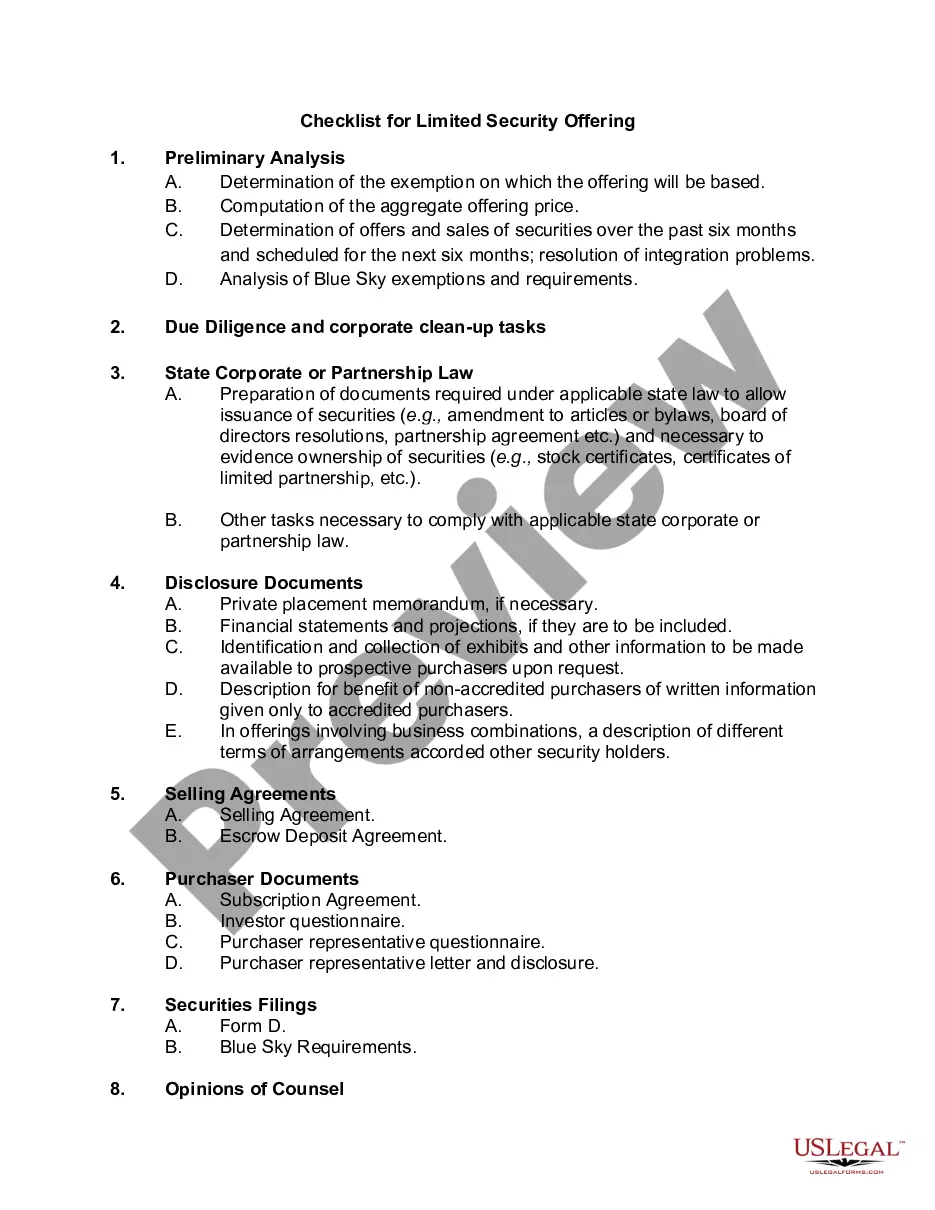
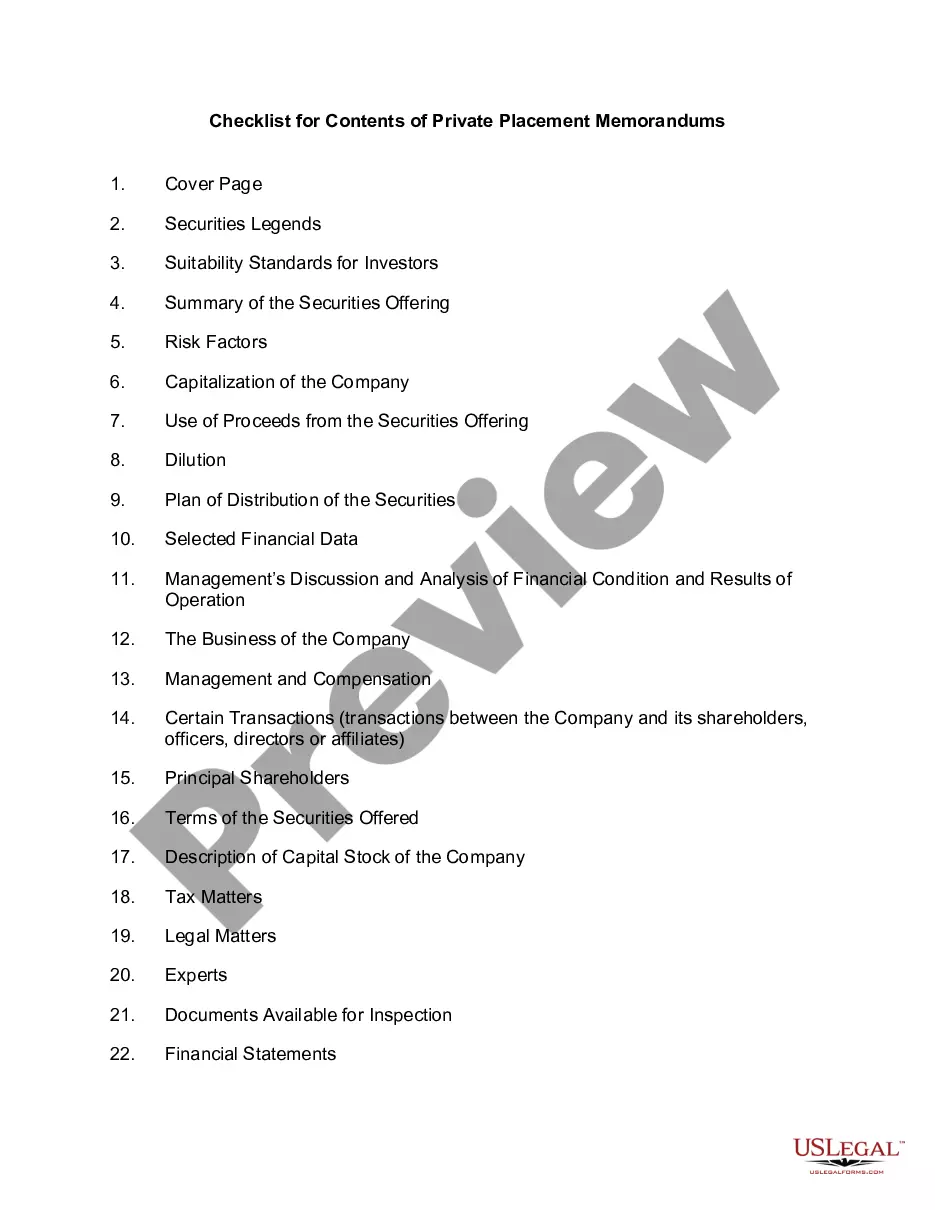
- Creation of necessary disclosure documents such as private placement memoranda and financial projections.
- Development of selling agreements and purchaser documents, like subscription agreements.
- Fulfillment of securities filings, including Form D and Blue Sky requirements.



Common use cases
This form is needed when a company intends to conduct a limited security offering. It is particularly relevant if the business plans to raise funds from accredited investors or wishes to benefit from specific exemptions under securities law. Utilize this checklist to ensure all legal documentation and compliance actions are addressed prior to launching your offering.
Who can use this document
- Businesses seeking to issue securities through a private placement.
- Corporate attorneys responsible for ensuring compliance with securities regulations.
- Financial professionals advising on investment opportunities.
How to prepare this document
- Identify and analyze the exemption under which the offering will be based.
- Calculate the total offering price and document recent securities transactions.
- Prepare necessary state-specific corporate documents, such as board resolutions and partnership agreements.
- Create and compile all required disclosure documents and exhibits for potential investors.
- Draft and finalize selling agreements and purchaser documents to facilitate the offering.
Is notarization required?
This form usually doesn’t need to be notarized. However, local laws or specific transactions may require it. Our online notarization service, powered by Notarize, lets you complete it remotely through a secure video session, available 24/7.
Get your form ready online
Our built-in tools help you complete, sign, share, and store your documents in one place.
Make edits, fill in missing information, and update formatting in US Legal Forms—just like you would in MS Word.
Download a copy, print it, send it by email, or mail it via USPS—whatever works best for your next step.
Sign and collect signatures with our SignNow integration. Send to multiple recipients, set reminders, and more. Go Premium to unlock E-Sign.
If this form requires notarization, complete it online through a secure video call—no need to meet a notary in person or wait for an appointment.
We protect your documents and personal data by following strict security and privacy standards.

Make edits, fill in missing information, and update formatting in US Legal Forms—just like you would in MS Word.

Download a copy, print it, send it by email, or mail it via USPS—whatever works best for your next step.

Sign and collect signatures with our SignNow integration. Send to multiple recipients, set reminders, and more. Go Premium to unlock E-Sign.

If this form requires notarization, complete it online through a secure video call—no need to meet a notary in person or wait for an appointment.

We protect your documents and personal data by following strict security and privacy standards.
Mistakes to watch out for
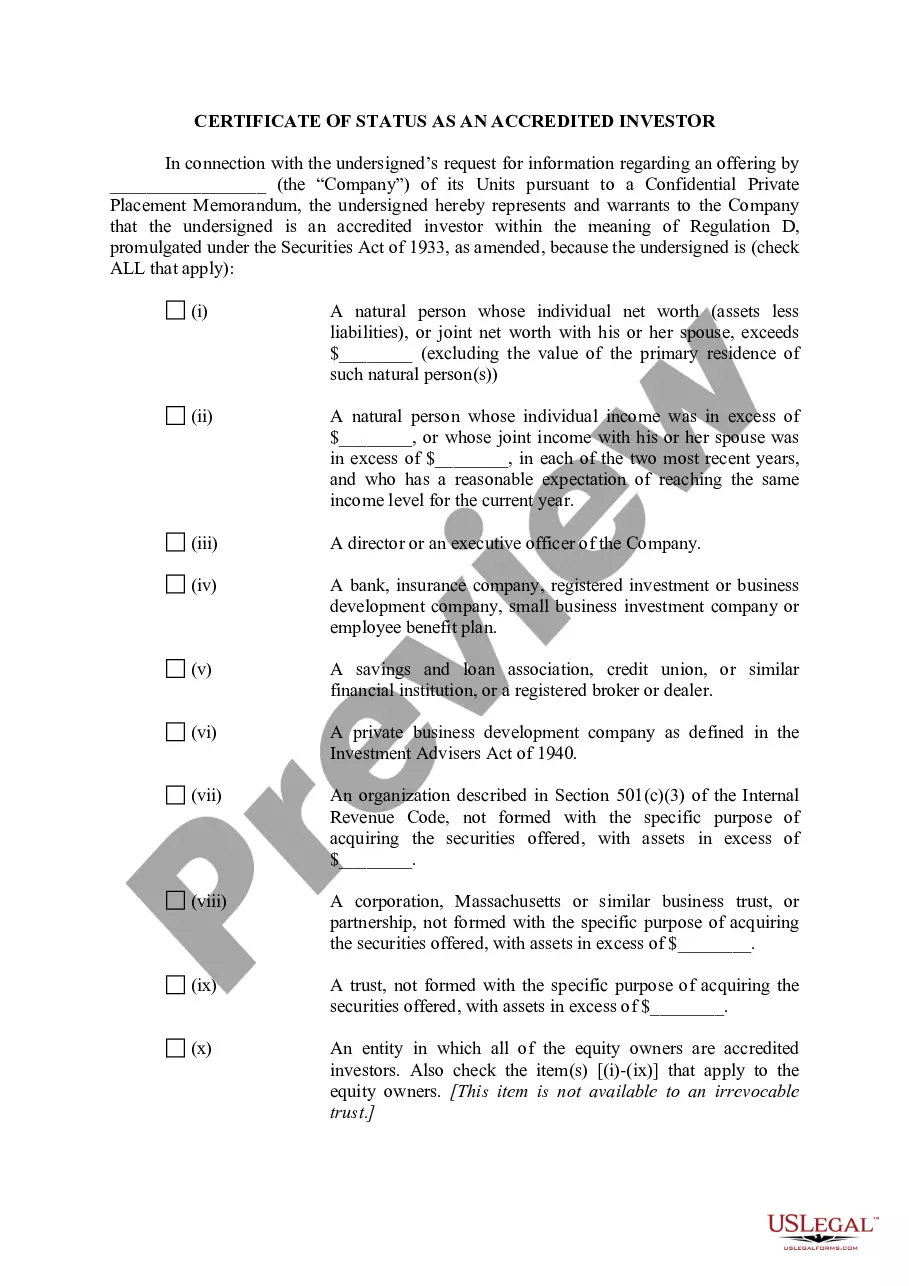
- Neglecting to verify investor accreditation status.
- Failing to comply with state-specific disclosure requirements.
- Omitting necessary documentation from the private placement memorandum.
Benefits of using this form online
- Convenient access, allowing for easy downloads and edits.
- Streamlined process to ensure compliance with legal requirements.
- Reliable templates drafted by licensed attorneys, reducing legal risks.
Looking for another form?

Form popularity
FAQ
A Regulation D offering is intended to make access to the capital markets possible for small companies that could not otherwise bear the costs of a normal SEC registration. Reg D may also refer to an investment strategy, mostly associated with hedge funds, based upon the same regulation.
Rule 144A was implemented to induce foreign companies to sell securities in the US capital markets.For firms registered with the SEC or a foreign company providing information to the SEC, financial statements need not be provided to buyers.
Government bonds, municipal bonds, and Small Business Investment Company issues are all exempt securities under the 1933 Act. Corporate bonds are non-exempt securities that must be registered with the SEC under the Securities Act of 1933.
Exempt securities are financial instruments that do not need to be registered with the Securities Exchange Commission (SEC). They are generally backed by the government and may carry a lesser risk than securities offered by public companies.
While there are some exceptions, in general, investment advisors with $100 million or greater in regulatory assets under management (AUM) must register with the SEC as Registered Investment Adviser (RIA).
Private offerings to a limited number of persons or institutions; Offerings of limited size; Intrastate offerings; and. Securities of municipal, state, and federal governments.
Any note, stock, treasury stock, security future, security-based swap, bond, debenture, evidence of indebtedness, certificate of interest or participation in any profit-sharing agreement, collateral-trust certificate, preorganization certificate or subscription, transferable share, investment contract, voting-trust
Rule 501: Definition of an Accredited Investor. Securities are exempt if sold to accredited investors, individuals or institutions with a lot of money and the financial wherewithal to invest in risky unregistered securities.
A Limited Offering includes any offer to you to purchase any Securities, whether stock, debt securities, or partnership interests, from any entity, unless those Securities are registered under the Securities Act of 1933 (that is, are publicly offered/publicly traded Securities).