Change Order
About this form
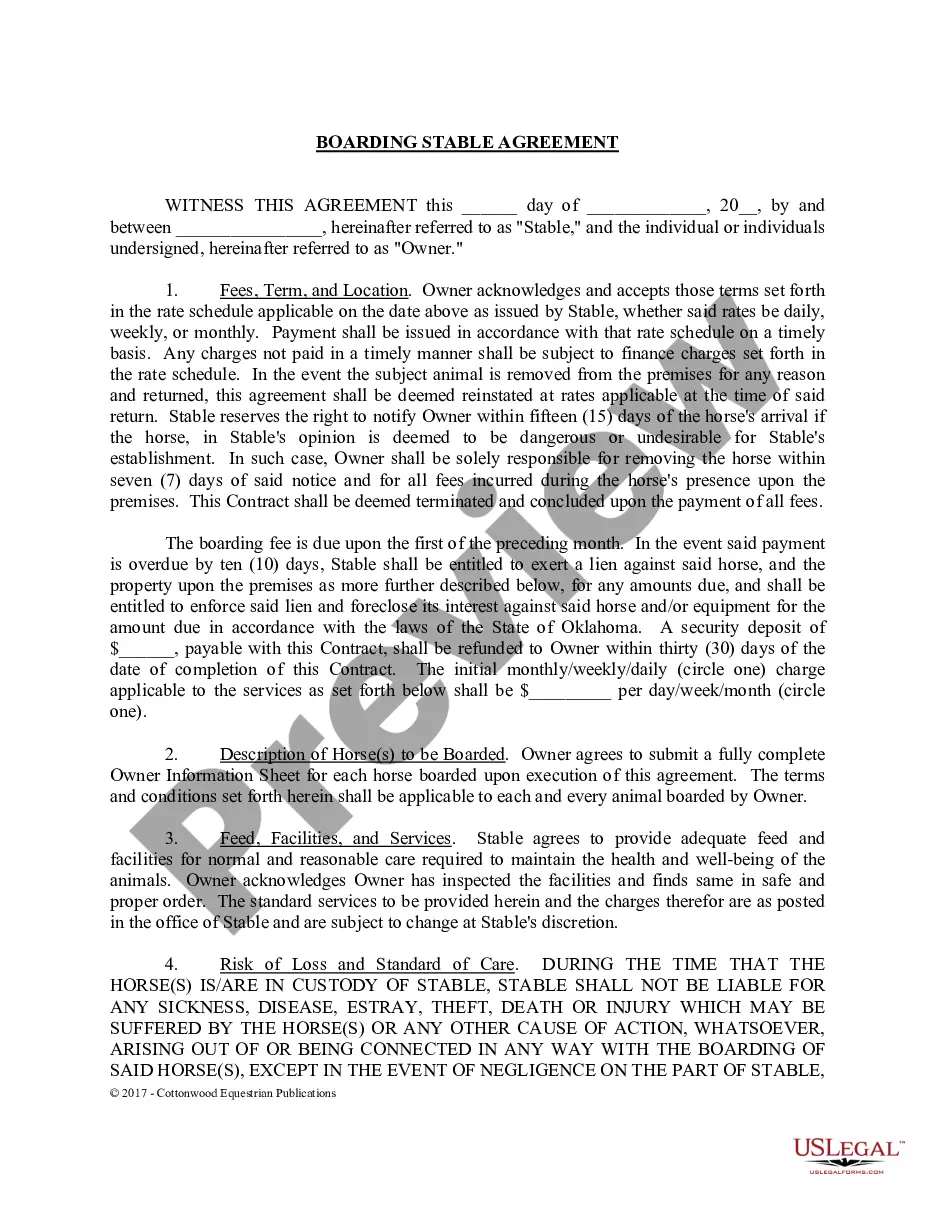
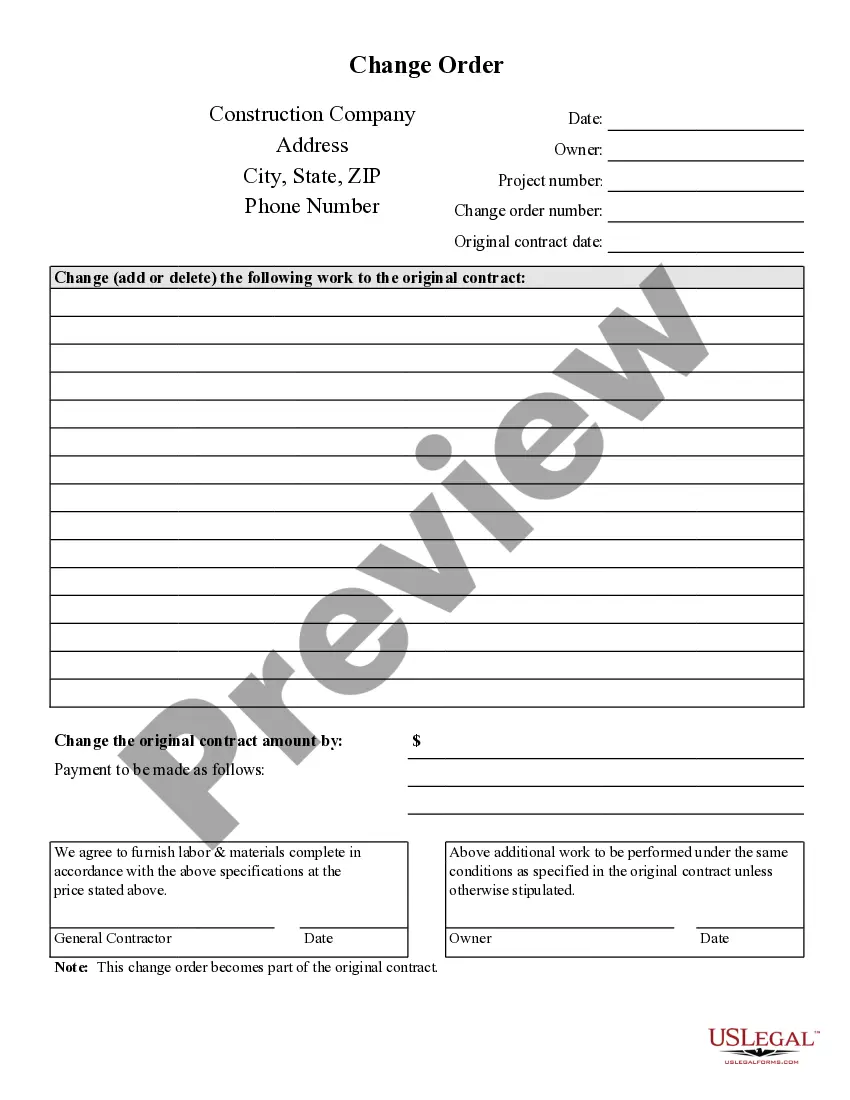
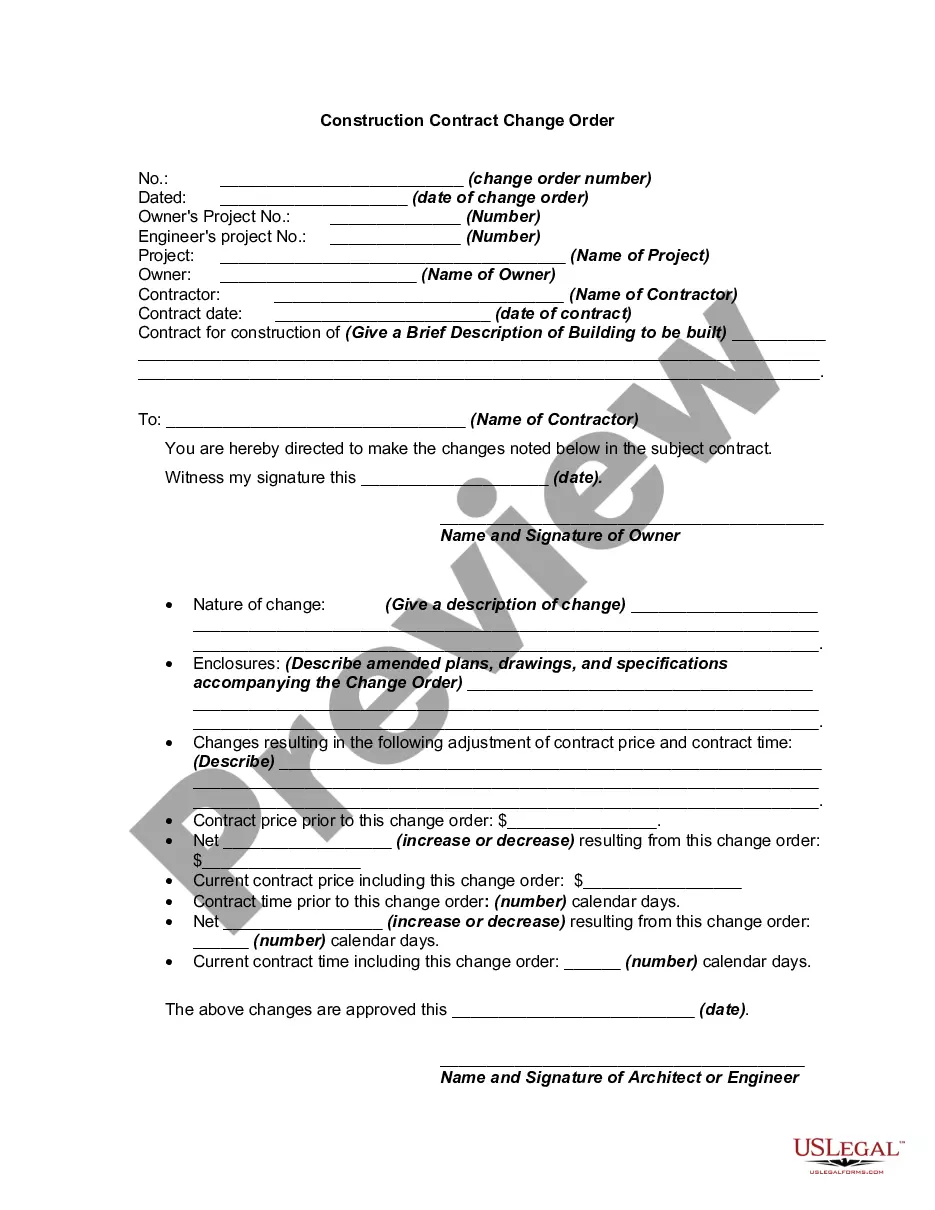
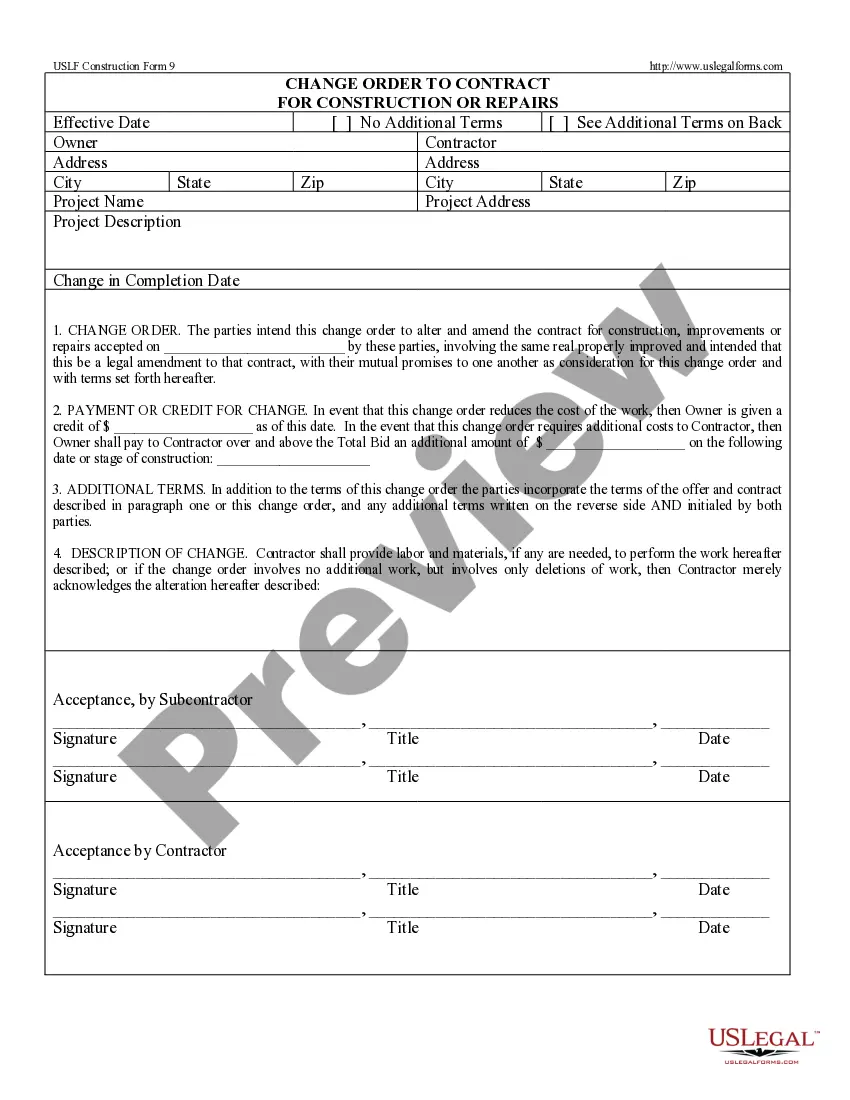
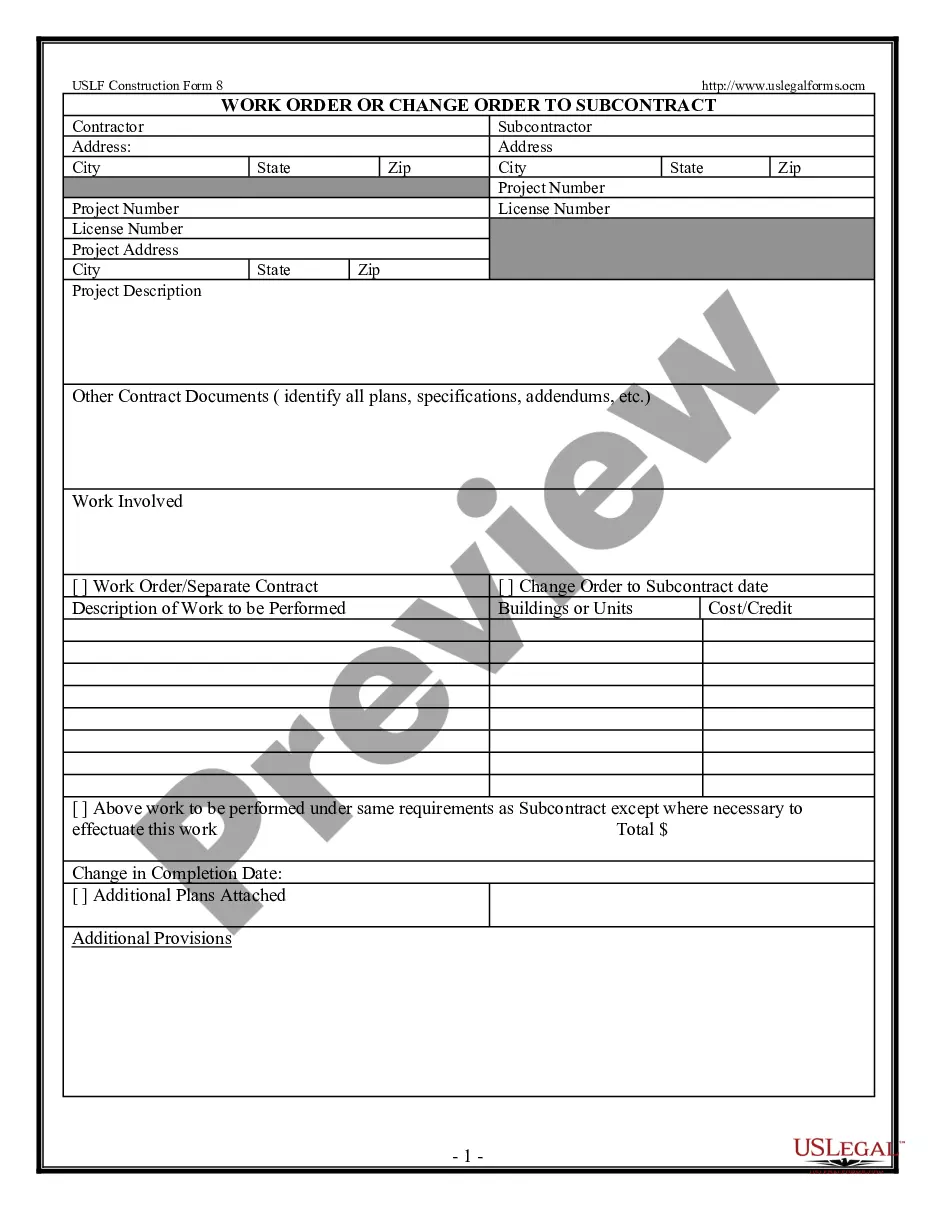
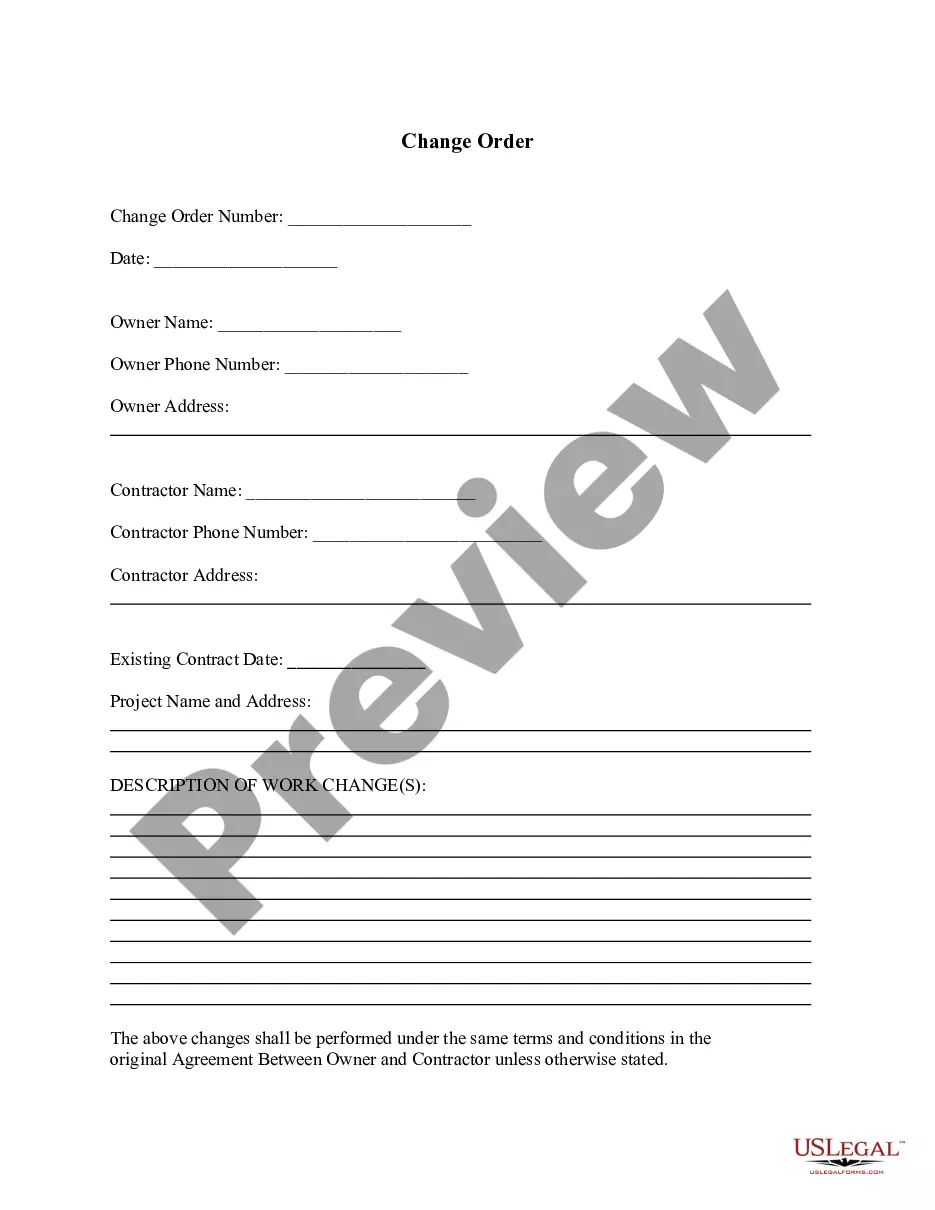
The Change Order form is a legal document that modifies an existing construction contract. It allows parties to formally agree on changes to the scope of work, the contract amount, or other conditions while preserving the original contract's integrity. Unlike other forms that might initiate new contracts or agreements, a Change Order specifically addresses modifications within the context of a previously established agreement.
What’s included in this form
- Address and contact information of the project owner.
- Project number associated with the contract.
- Change order number for tracking modifications.
- Date of the original contract.
- Description of work being added or deleted.
- New contract amount post-change.
- Payment terms related to the additional work.
- Signatures of the general contractor and the owner to confirm agreement.
Situations where this form applies
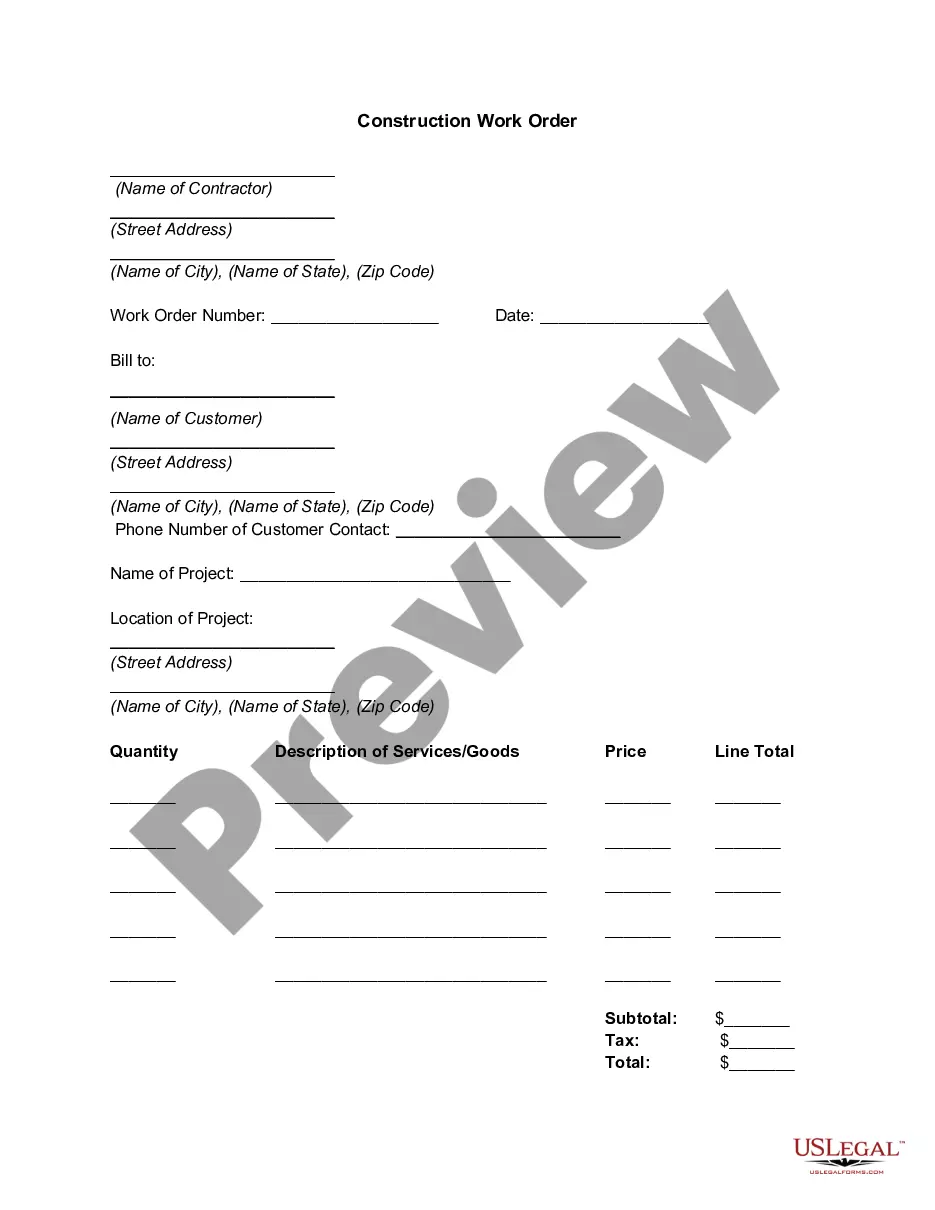
This form is essential when there are changes to the scope of work in a construction project. It's commonly used in scenarios where the project requirements evolve, such as adding new tasks, materials, or adjusting the completion timeline. Anytime the original contract needs amendment due to unforeseen circumstances or additional client requests, using the Change Order form ensures that all parties agree on the adjustments and their implications.
Who can use this document
- General contractors handling construction projects.
- Subcontractors looking to formally request changes.
- Project owners who want to ensure modifications are documented legally.
- Construction managers overseeing contractual agreements.
How to complete this form
- Input the project owner's address, city, state, and ZIP code.
- Enter the project number and the phone number where the owner can be reached.
- Specify the change order number and the date of the original contract.
- Clearly detail the work being added or deleted from the original contract.
- Update the contract amount to reflect any changes.
- Obtain signatures from both the general contractor and the owner to validate the changes.
Notarization requirements for this form
This form does not typically require notarization unless specified by local law. However, confirming any notarization requirements in your jurisdiction is advised to ensure legal validity.
Get your form ready online
Our built-in tools help you complete, sign, share, and store your documents in one place.
Make edits, fill in missing information, and update formatting in US Legal Forms—just like you would in MS Word.
Download a copy, print it, send it by email, or mail it via USPS—whatever works best for your next step.
Sign and collect signatures with our SignNow integration. Send to multiple recipients, set reminders, and more. Go Premium to unlock E-Sign.
If this form requires notarization, complete it online through a secure video call—no need to meet a notary in person or wait for an appointment.
We protect your documents and personal data by following strict security and privacy standards.

Make edits, fill in missing information, and update formatting in US Legal Forms—just like you would in MS Word.

Download a copy, print it, send it by email, or mail it via USPS—whatever works best for your next step.

Sign and collect signatures with our SignNow integration. Send to multiple recipients, set reminders, and more. Go Premium to unlock E-Sign.

If this form requires notarization, complete it online through a secure video call—no need to meet a notary in person or wait for an appointment.

We protect your documents and personal data by following strict security and privacy standards.
Mistakes to watch out for
- Failing to obtain signatures from both parties.
- Not specifying the changes clearly, leading to misunderstandings.
- Neglecting to update the project amount correctly.
- Using the form without verifying that the original contract allows for modifications.
Why complete this form online
- Instant access to customizable templates that save time.
- Easy to download and print, ensuring quick turnaround.
- Convenience of filling out forms at any time from anywhere.
- Reduced errors due to clear guidance on required fields.
Looking for another form?




Form popularity
FAQ
Job name, address and phone number. Owner's name. A complete description of new work to be performed. Total price for materials and labor to complete the change. Revised date of completion due to the change order. Signatures of the company representative.
Job name, address and phone number. Owner's name. A complete description of new work to be performed. Total price for materials and labor to complete the change. Revised date of completion due to the change order. Signatures of the company representative.
A description of the requested change compared to the original contract or bid. Itemized documentation of any subcontractor costs. A summary by the contractor of the total costs of the proposed change.
Change orders are often negotiated By submitting an aggressive price, when you need to discount your client, you're still profiting on the change order. Change Orders are often challenged They can be challenged because they believe the work is part of your contract.
First, let's start with the fact that there is no law that says that you have to have changes or change orders in a construction contract.Contractors are not banks, yet they are routinely used as such by owners who order changes, but refuse to execute change orders, which can then be billed.
7.2. 1 " A change order is written instrument prepared by the architect and signed by the owner, contractor, and architect..."
First, let's start with the fact that there is no law that says that you have to have changes or change orders in a construction contract.Contractors are not banks, yet they are routinely used as such by owners who order changes, but refuse to execute change orders, which can then be billed.
A change order is simply an addendum or amendment to the original construction contract and scope of work and can be initiated by the owner or the contractor.
A change order is work that is added to or deleted from the original scope of work of a contract, however, depending on the magnitude of the change, it may or may not alter the original contract amount and/or completion date. A change order may force a new project to handle significant changes to the current project.