Construction Contract for Repairs
Overview of this form
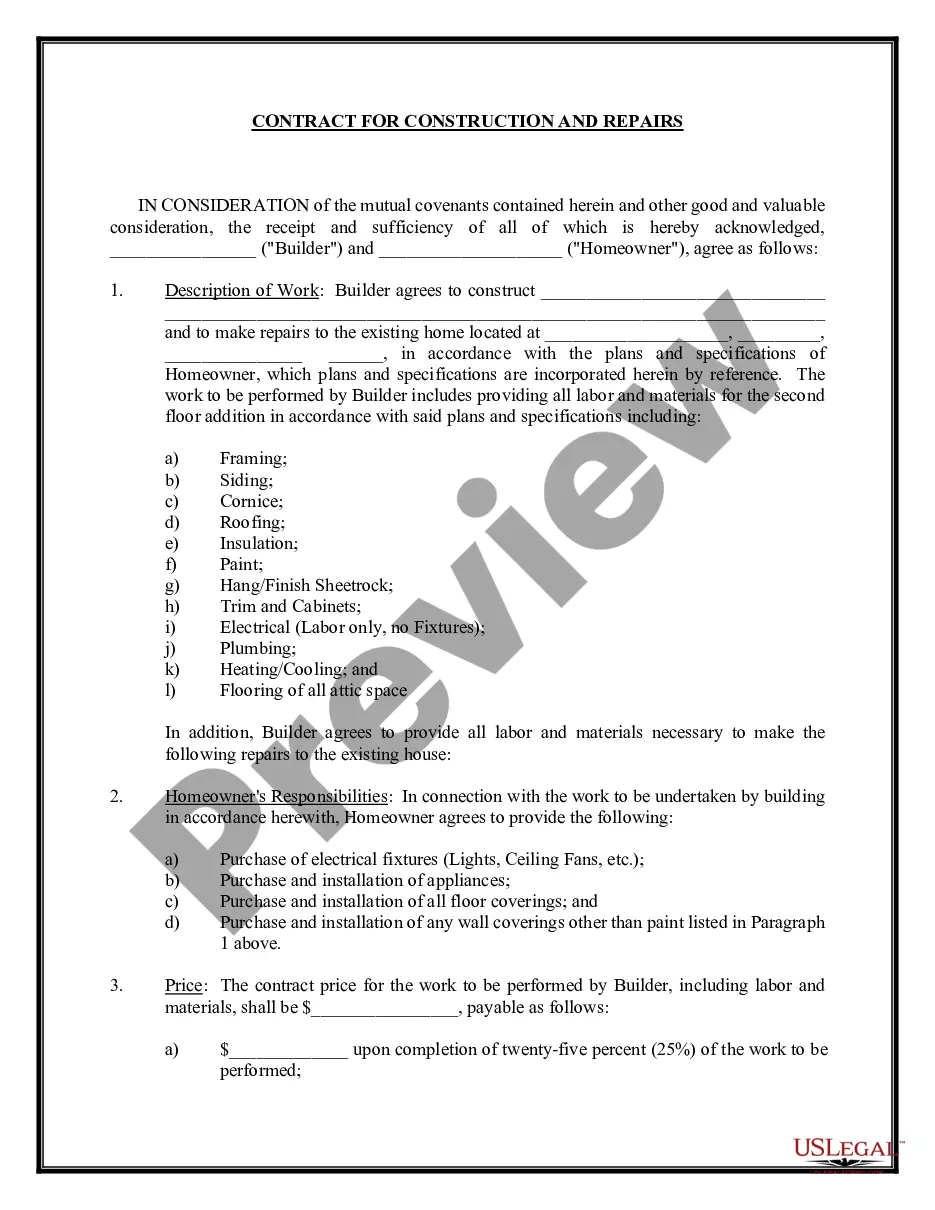
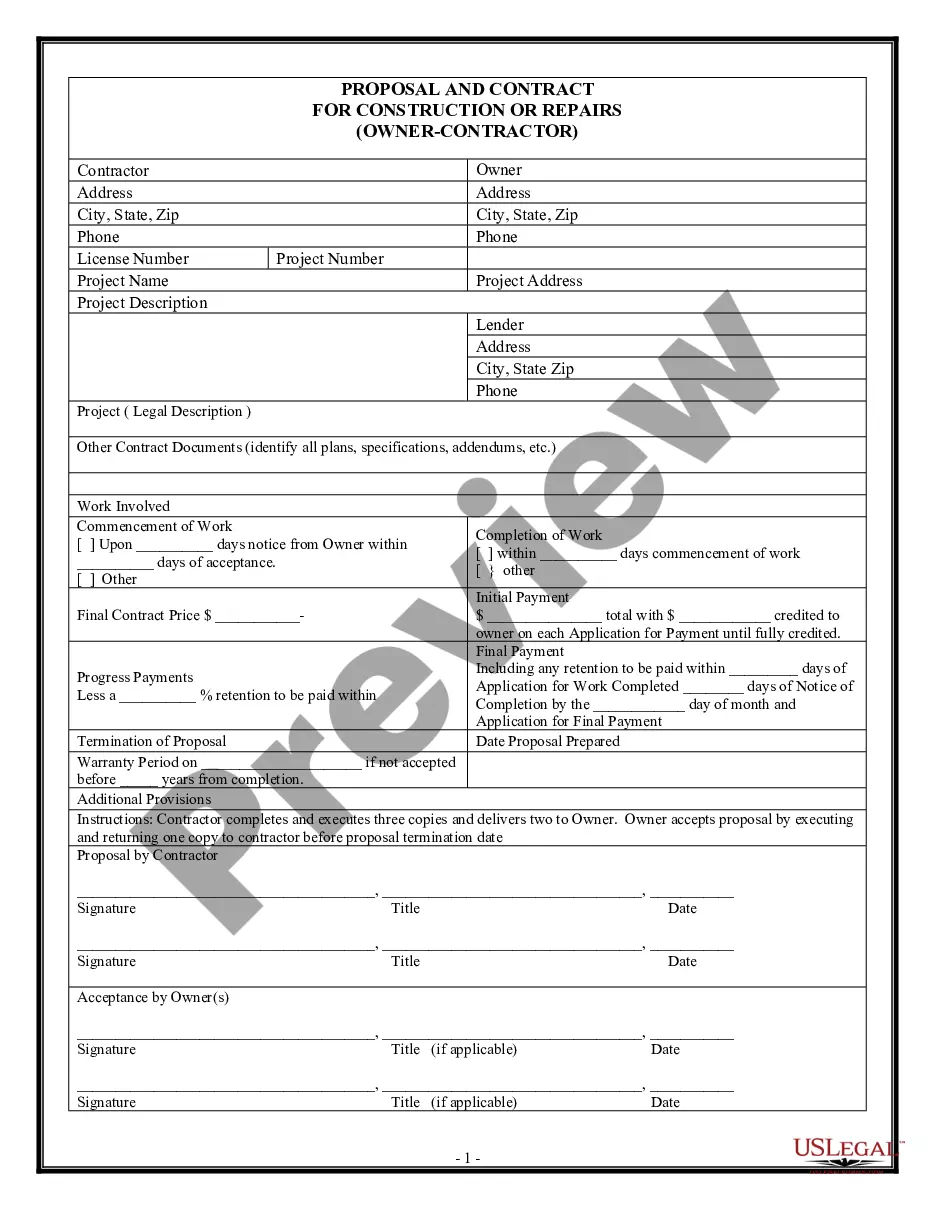
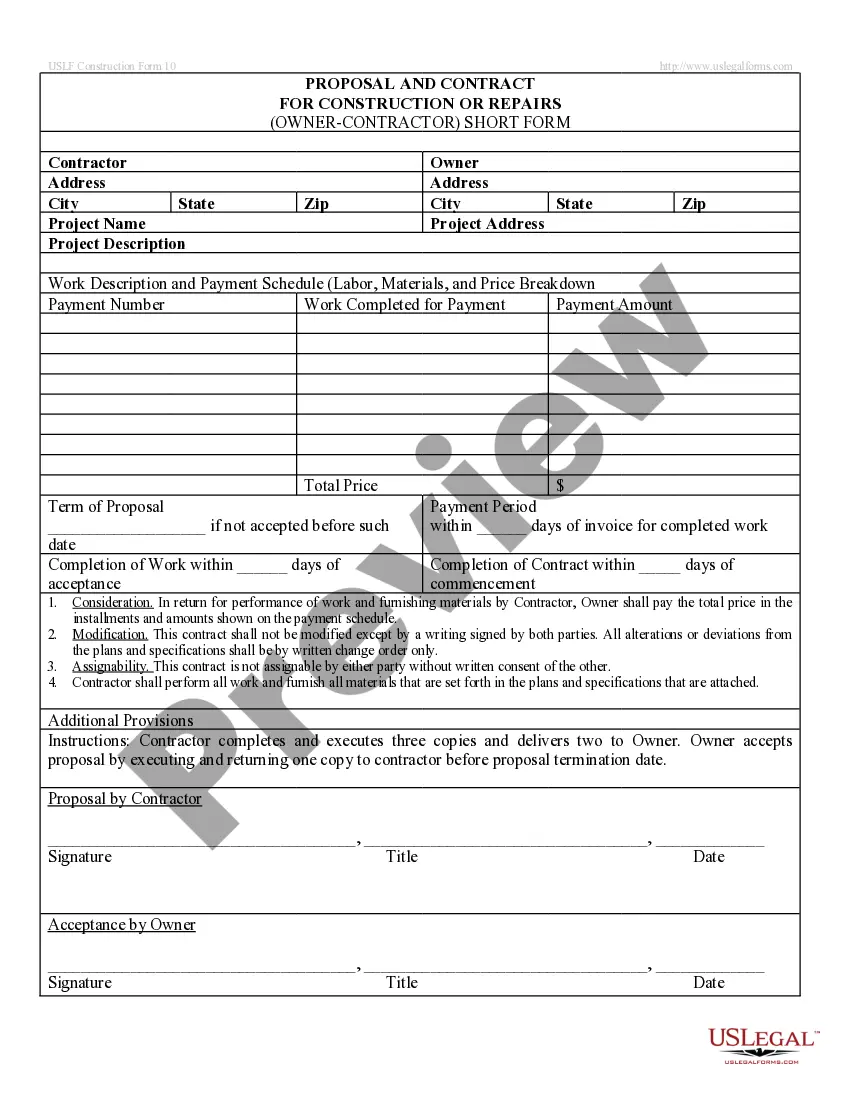
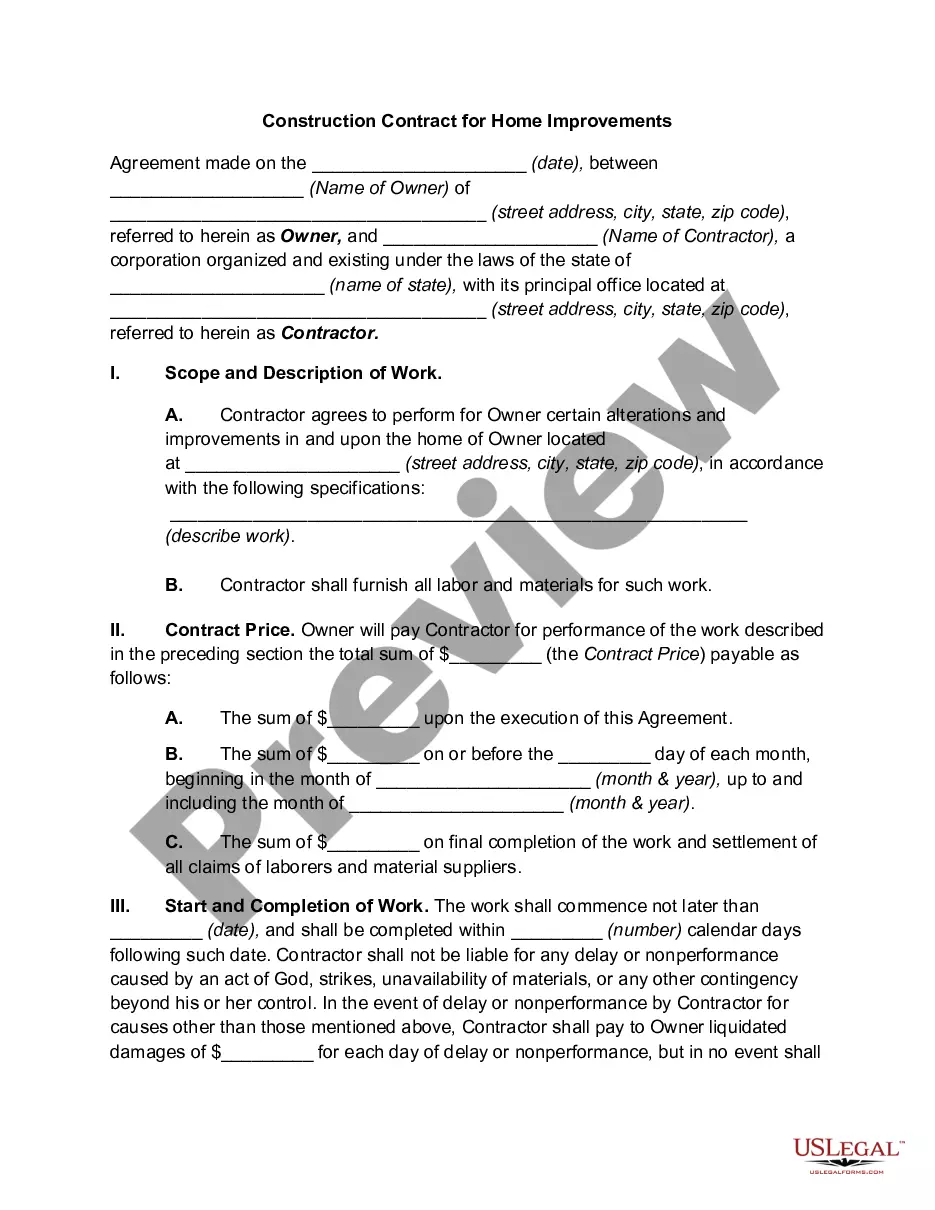
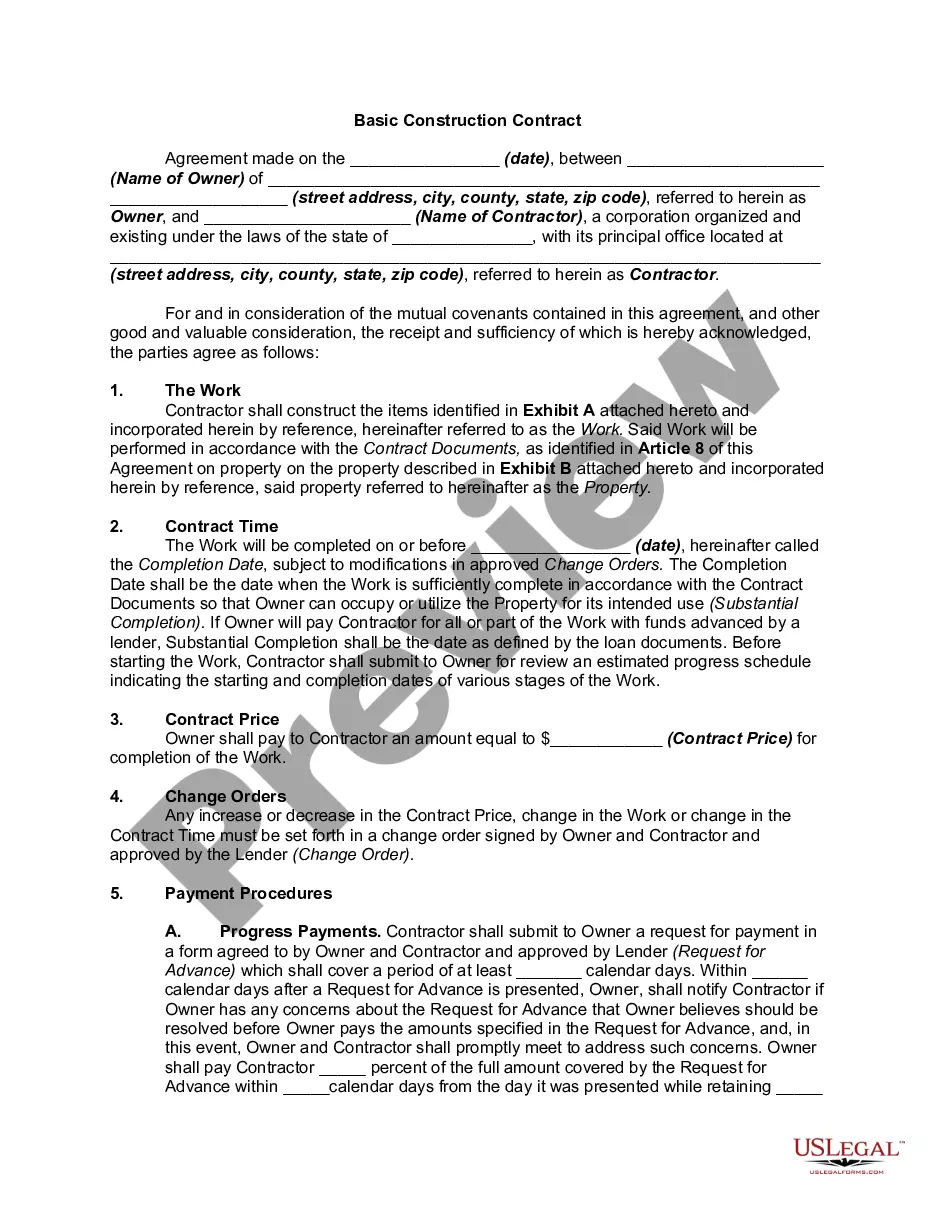
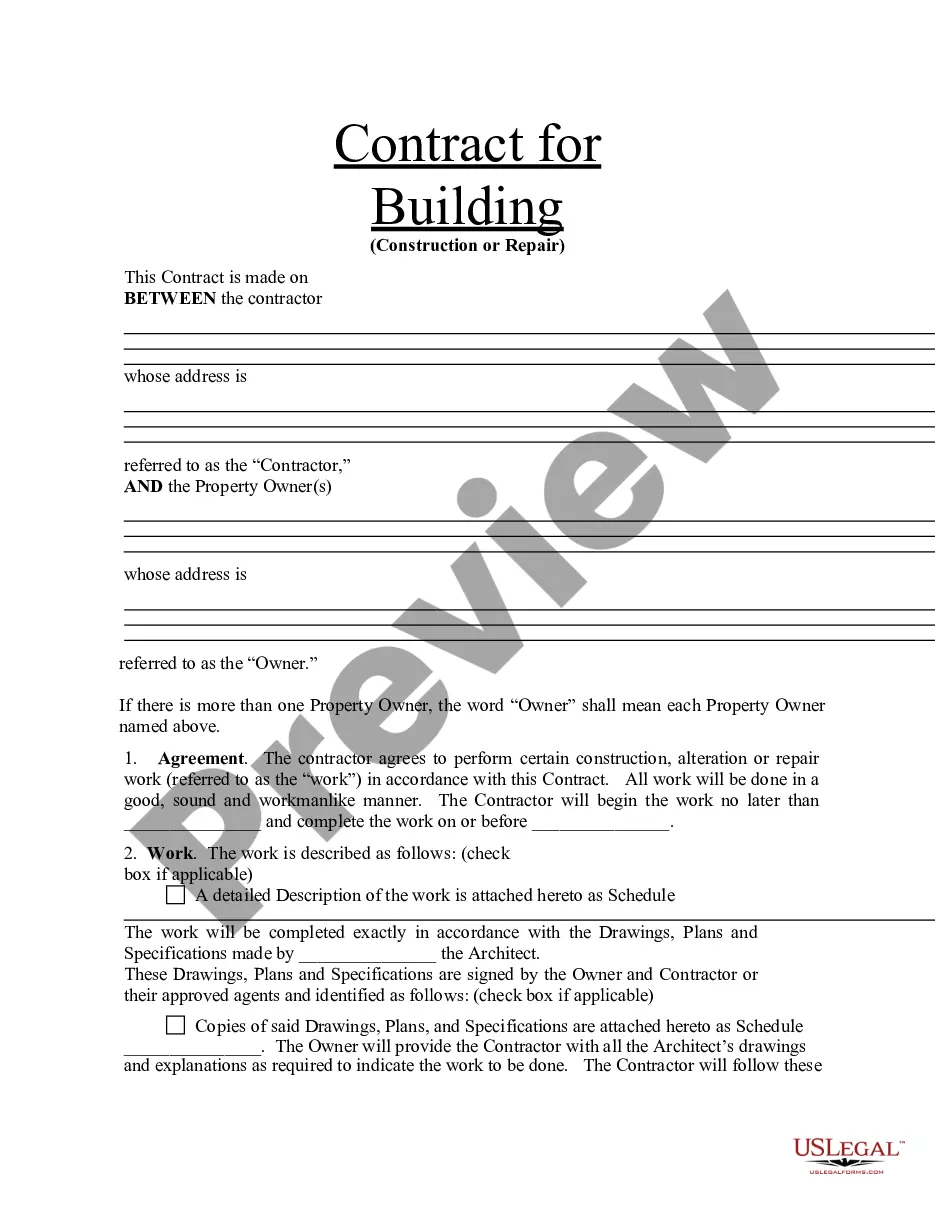
The Construction Contract for Repairs is a legal document used to outline the terms and conditions between a builder and a homeowner for repair and construction work. This form specifies the scope of the work, payment structure, responsibilities of both parties, and safeguards regarding insurance and liability. It is distinct from other construction contracts as it focuses specifically on repairs to existing structures, rather than new builds or alterations.
What’s included in this form
- Description of work detailing the project specifics and required repairs.
- Homeowner's responsibilities concerning the purchase of materials and fixtures.
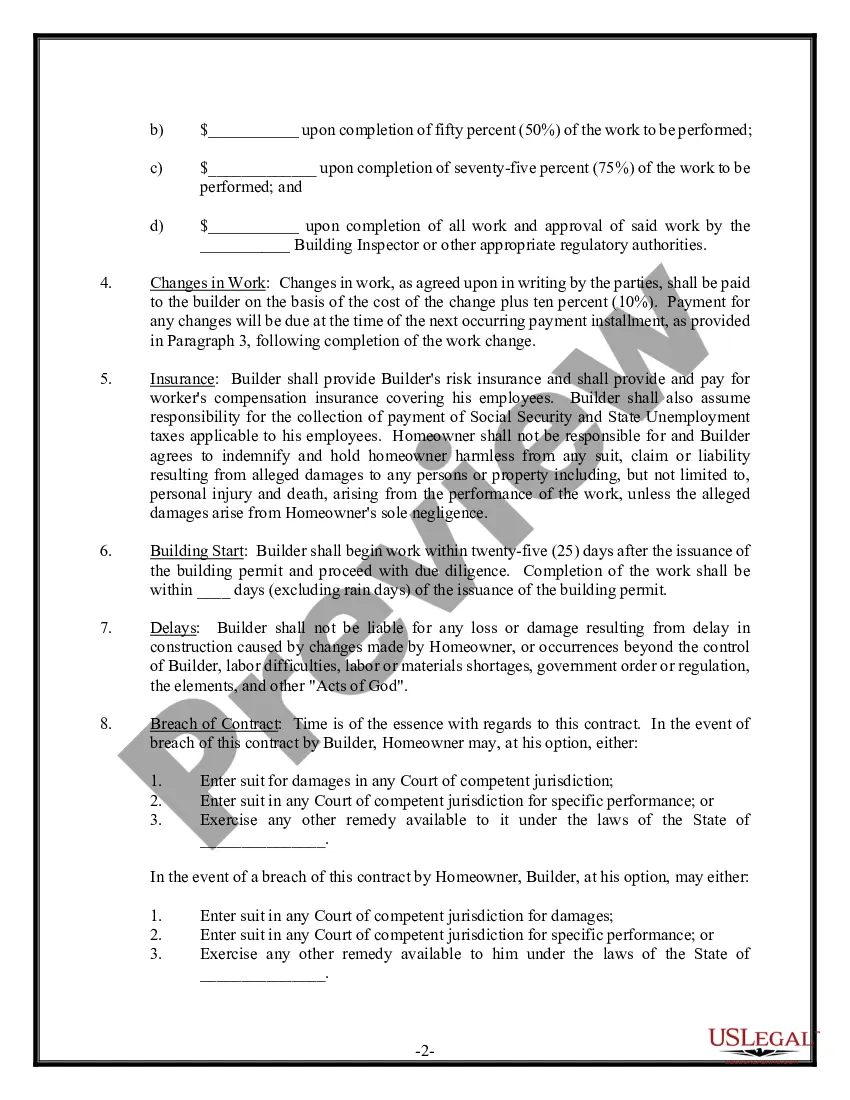
- Agreed price structure for construction work with payment milestones.
- Provisions for changes in work and alterations to the contract.
- Requirements for insurance coverage and liability protections.
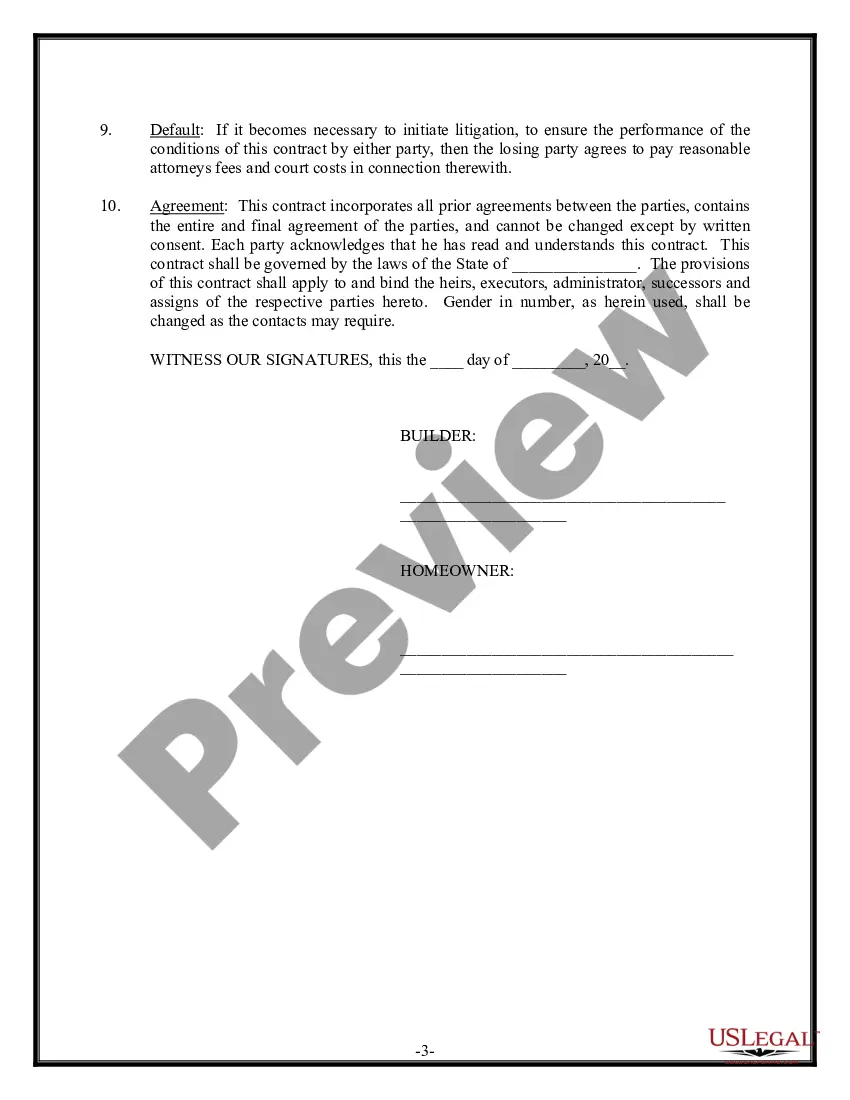
- Terms regarding delays, breach of contract, and default scenarios.
When to use this document
This form should be used when a homeowner wishes to hire a builder for repair work on a home. It is particularly useful for projects requiring significant repairs, such as additions, roofing, or renovations, where a clear agreement on the scope of work and payment schedule is essential for both parties.
Intended users of this form
- Homeowners looking to engage a builder for home repairs or renovations.
- Builders and contractors in need of a formalized contract to outline project specifics.
- Individuals with minimal legal experience seeking a straightforward construction contract template.
How to complete this form
- Identify the parties involved by entering the full names of the builder and homeowner.
- Clearly define the scope of work by outlining specific repairs and construction tasks in detail.
- Specify the contract price and include payment milestones based on progress percentages.
- Fill in the starting date of construction and anticipated completion time frame.
- Review and sign the contract, ensuring both parties understand and agree to all terms.
Notarization requirements for this form
This form does not typically require notarization to be legally valid. However, some jurisdictions or document types may still require it. US Legal Forms provides secure online notarization powered by Notarize, available 24/7 for added convenience.
Get your form ready online
Our built-in tools help you complete, sign, share, and store your documents in one place.
Make edits, fill in missing information, and update formatting in US Legal Forms—just like you would in MS Word.
Download a copy, print it, send it by email, or mail it via USPS—whatever works best for your next step.
Sign and collect signatures with our SignNow integration. Send to multiple recipients, set reminders, and more. Go Premium to unlock E-Sign.
If this form requires notarization, complete it online through a secure video call—no need to meet a notary in person or wait for an appointment.
We protect your documents and personal data by following strict security and privacy standards.

Make edits, fill in missing information, and update formatting in US Legal Forms—just like you would in MS Word.

Download a copy, print it, send it by email, or mail it via USPS—whatever works best for your next step.

Sign and collect signatures with our SignNow integration. Send to multiple recipients, set reminders, and more. Go Premium to unlock E-Sign.

If this form requires notarization, complete it online through a secure video call—no need to meet a notary in person or wait for an appointment.

We protect your documents and personal data by following strict security and privacy standards.
Common mistakes
- Failing to clearly outline the scope of work, leading to misunderstandings.
- Not specifying payment milestones or amounts, which can cause cash flow issues.
- Ignoring state-specific legal requirements related to construction contracts.
- Neglecting to review the contract for completeness before signing.
Why complete this form online
- Convenience of downloading and customizing the document at home.
- Editability allows for tailored agreements that reflect specific job requirements.
- Access to templates drafted by licensed attorneys for reliability and legal compliance.
- Quick turnaround for obtaining the forms without the need for in-person meetings.
Legal use & context
- This form is enforceable as a binding contract once signed by both parties.
- It is essential that both parties maintain clear communication regarding modifications to the scope of work.
- Understanding local construction laws is critical for avoiding disputes related to compliance and permitting.
Quick recap
- The Construction Contract for Repairs serves as a vital document to define responsibilities and expectations between homeowners and builders.
- Clear specifications and proper completion of the form help prevent disputes down the line.
- Utilizing this form can facilitate a smoother construction process, promoting transparency and accountability.
Looking for another form?
Form popularity
FAQ
Detailed Description of the Job. How Payments Will Be Made. Start and End Dates of the Project. How Changes to the Project Will Be Dealt With. Lien Waivers. Written Notice of Your Right to Cancel Without Penalty. Warranty. Signatures.
Identifying/Contact Information. Title and Description of the Project. Projected Timeline and Completion Date. Cost Estimate and Payment Schedule. Stop Work Clause and Stop Payment Clause. Act of God Clause. Change Order Agreement. Warranty.
Identify the customer and service provider. Describe the services being provided. Outline a payment schedule. Establish terms about confidentiality, non-solicitation, and non-competition. Address ownership of materials. Personalize your Service Agreement.
Define and describe the project in detail. Include what materials must be used; be as specific as possible. Include weight, brand name and other identifying features. Specify the work being performed and all equipment being used or installed.
Get it in writing. Keep it simple. Deal with the right person. Identify each party correctly. Spell out all of the details. Specify payment obligations. Agree on circumstances that terminate the contract. Agree on a way to resolve disputes.
Standard construction contracts should have the following information and clauses: Name of contractor and contact information. Include the contractor's license number along with phone number, email address, and company address. Name of homeowner and contact information.
Who the parties are. The description of the works in a concise summary. The documents that must be referred to. Any design responsibilities the contractor has. Any compliance requirements, such as from planning, building control, party walls and utility companies.
Timeframe or key milestones of the project; hours of work; deliverables of the project; and. way the business will pay the contractor for their services.
A description of the parties involved in the agreement. A description of the services to be performed. A description of fees and payment schedules. The effective date of the contract, when work will begin, and the terms under which it can be terminated. Include a place for signatures.
A description of the parties involved in the agreement. A description of the services to be performed. A description of fees and payment schedules. The effective date of the contract, when work will begin, and the terms under which it can be terminated. Include a place for signatures.