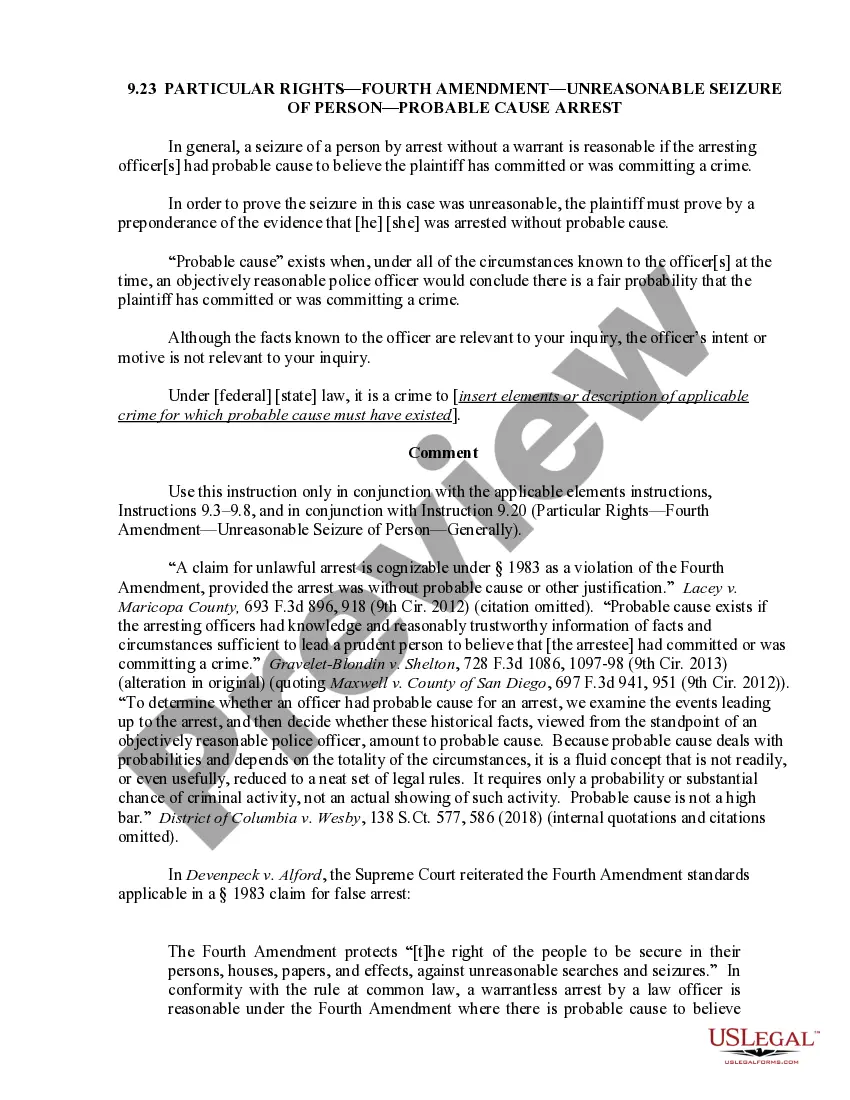
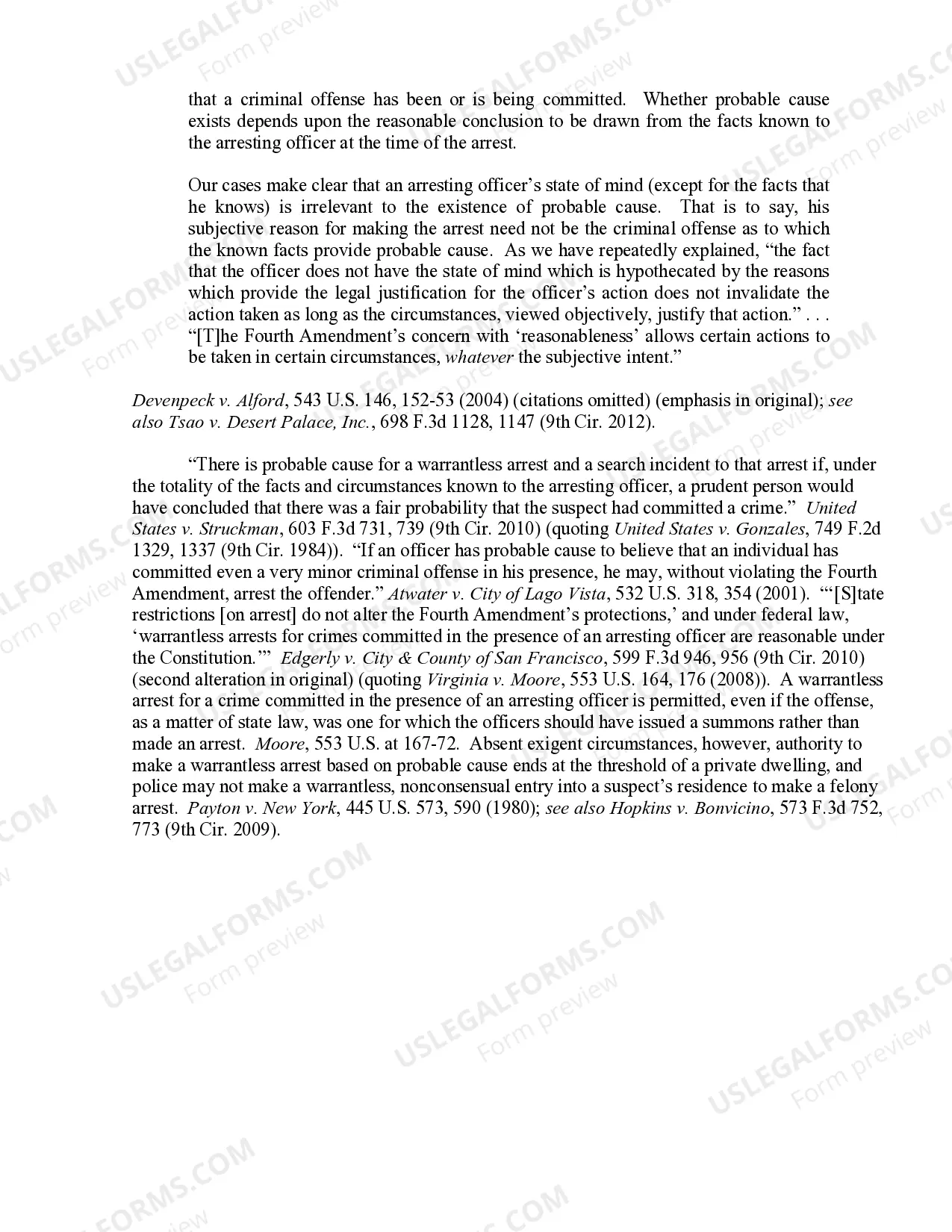
9.23 Particular Rights-Fourth Amendment-Unreasonable Seizure of Person-Probable Cause Arrest

Notarization guidance
Notarization is not commonly needed for this form. However, certain documents or local rules may make it necessary. Our notarization service, powered by Notarize, allows you to finalize it securely online anytime, day or night.
Get your form ready online
Our built-in tools help you complete, sign, share, and store your documents in one place.
Make edits, fill in missing information, and update formatting in US Legal Forms—just like you would in MS Word.
Download a copy, print it, send it by email, or mail it via USPS—whatever works best for your next step.
Sign and collect signatures with our SignNow integration. Send to multiple recipients, set reminders, and more. Go Premium to unlock E-Sign.
If this form requires notarization, complete it online through a secure video call—no need to meet a notary in person or wait for an appointment.
We protect your documents and personal data by following strict security and privacy standards.

Make edits, fill in missing information, and update formatting in US Legal Forms—just like you would in MS Word.

Download a copy, print it, send it by email, or mail it via USPS—whatever works best for your next step.

Sign and collect signatures with our SignNow integration. Send to multiple recipients, set reminders, and more. Go Premium to unlock E-Sign.

If this form requires notarization, complete it online through a secure video call—no need to meet a notary in person or wait for an appointment.

We protect your documents and personal data by following strict security and privacy standards.
Looking for another form?
Form popularity
FAQ
Fourth Amendment - Search and Seizure Constitution Center.
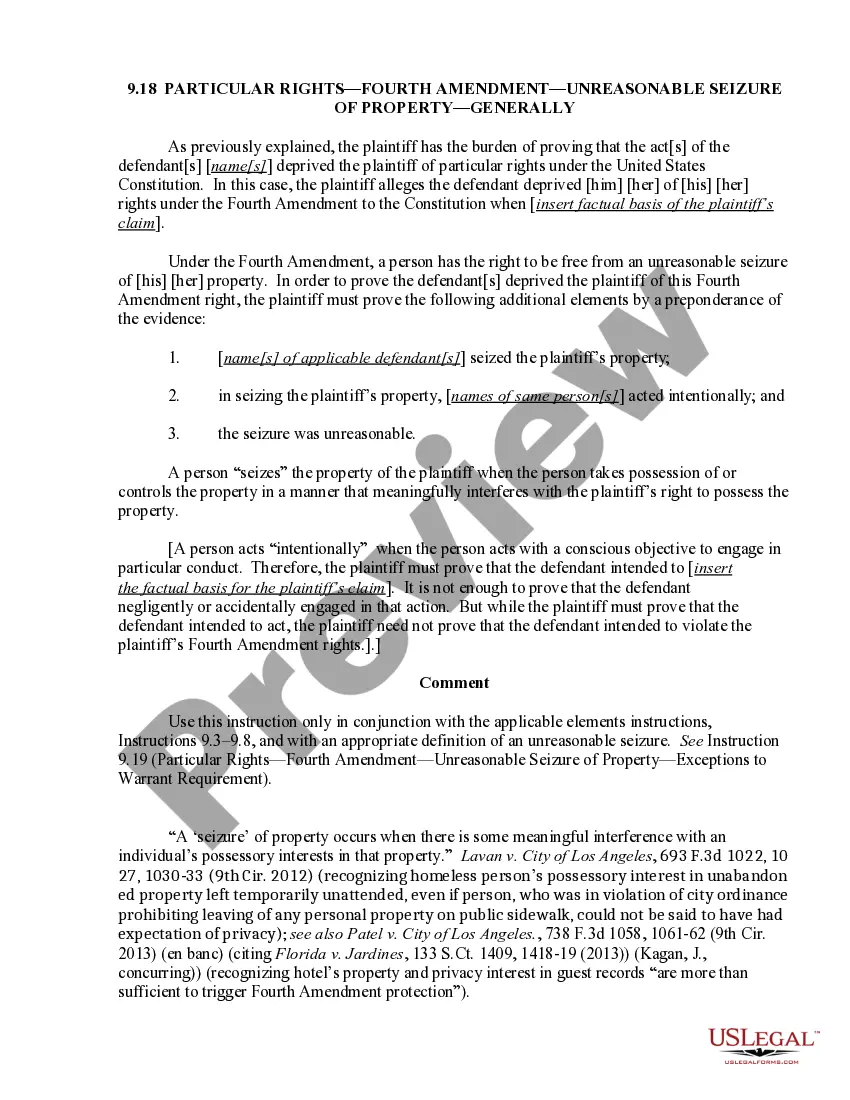
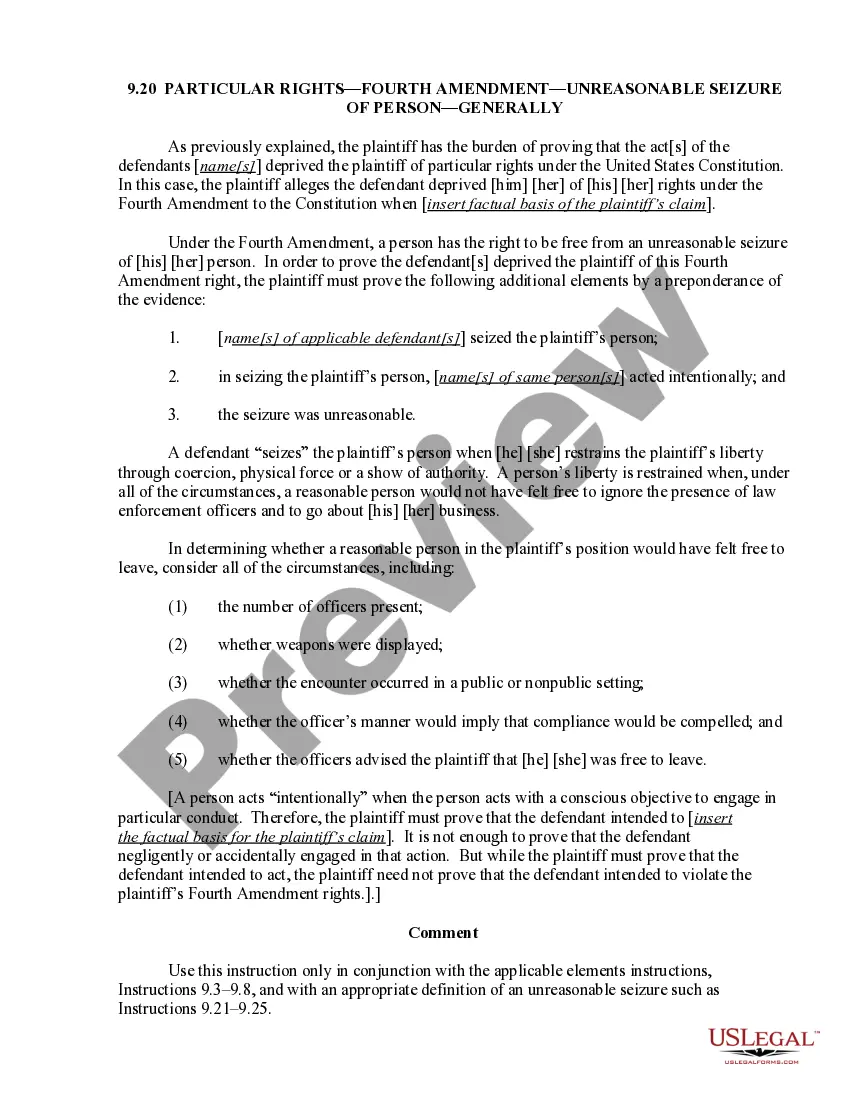
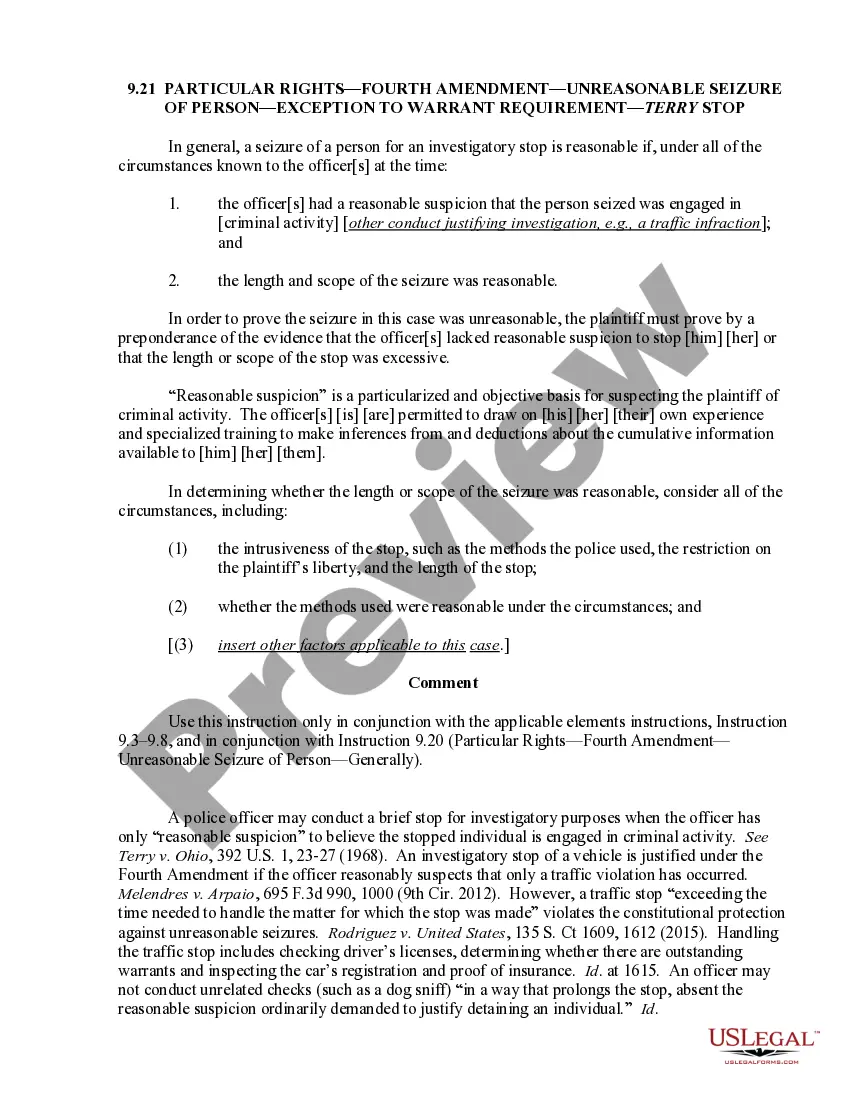
9.20 Particular Rights?Fourth Amendment?Unreasonable Seizure of Person?Generally. As previously explained, the plaintiff has the burden of proving that the acts of the defendants names deprived the plaintiff of particular rights under the United States Constitution.
The Constitution, through the Fourth Amendment, protects people from unreasonable searches and seizures by the government. The Fourth Amendment, however, is not a guarantee against all searches and seizures, but only those that are deemed unreasonable under the law.
The Constitution, through the Fourth Amendment, protects people from unreasonable searches and seizures by the government. The Fourth Amendment, however, is not a guarantee against all searches and seizures, but only those that are deemed unreasonable under the law.
?Probable cause exists if the arresting officers had knowledge and reasonably trustworthy information of facts and circumstances sufficient to lead a prudent person to believe that the arrestee had committed or was committing a crime.? Gravelet-Blondin v. Shelton, 728 F.
The Fourth Amendment prohibits the United States government from conducting ?unreasonable searches and seizures." In general, this means police cannot search a person or their property without a warrant or probable cause.
The Fourth Amendment to the U.S. Constitution protects personal privacy and every citizen's right to be free from unreasonable government intrusion into their persons, homes, businesses, and property -- whether through police stops of citizens on the street, arrests, or searches of homes and businesses.
For example, consider the following scenarios: An arrest is found to violate the Fourth Amendment because it was not supported by probable cause or a valid warrant. Any evidence obtained through that unlawful arrest, such as a confession, will be kept out of the case.