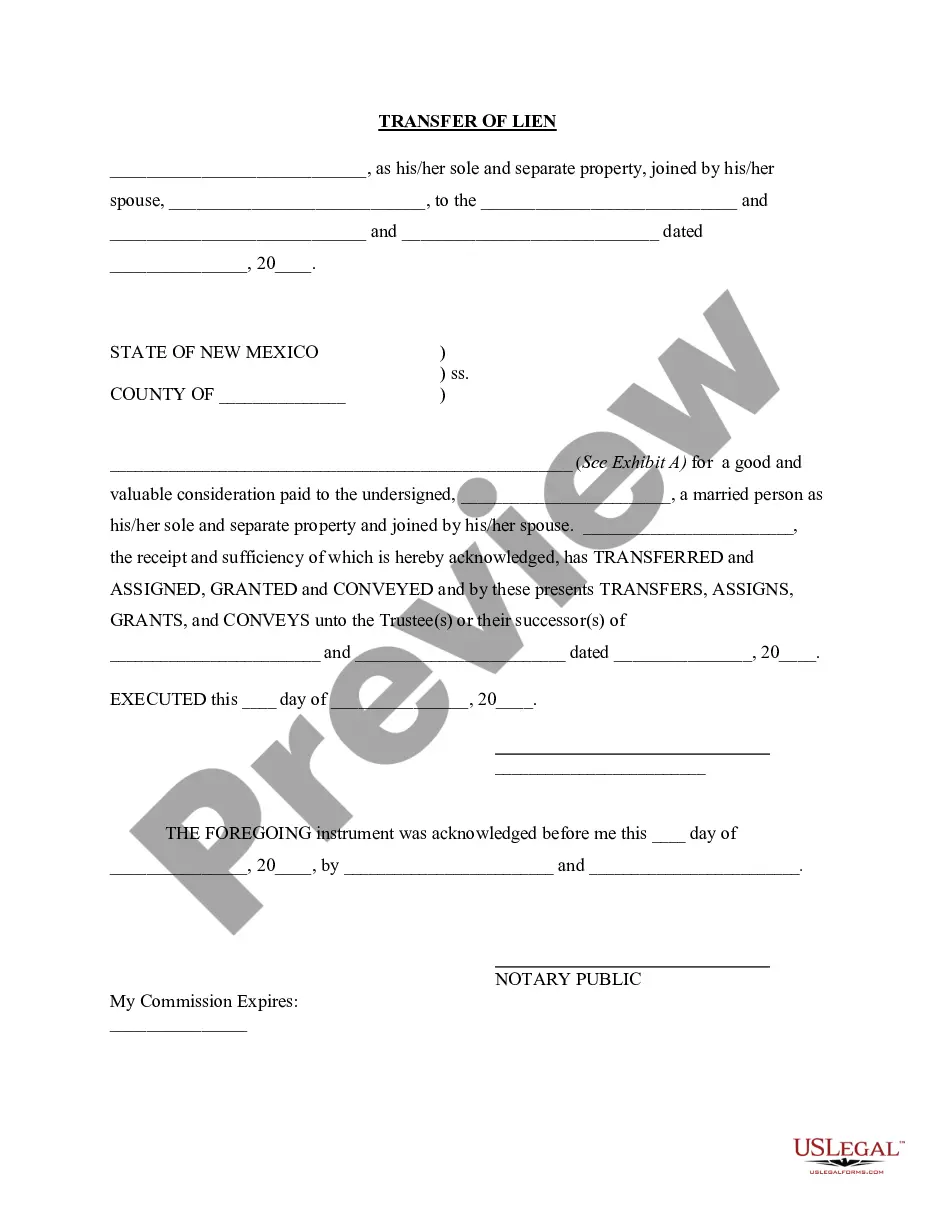
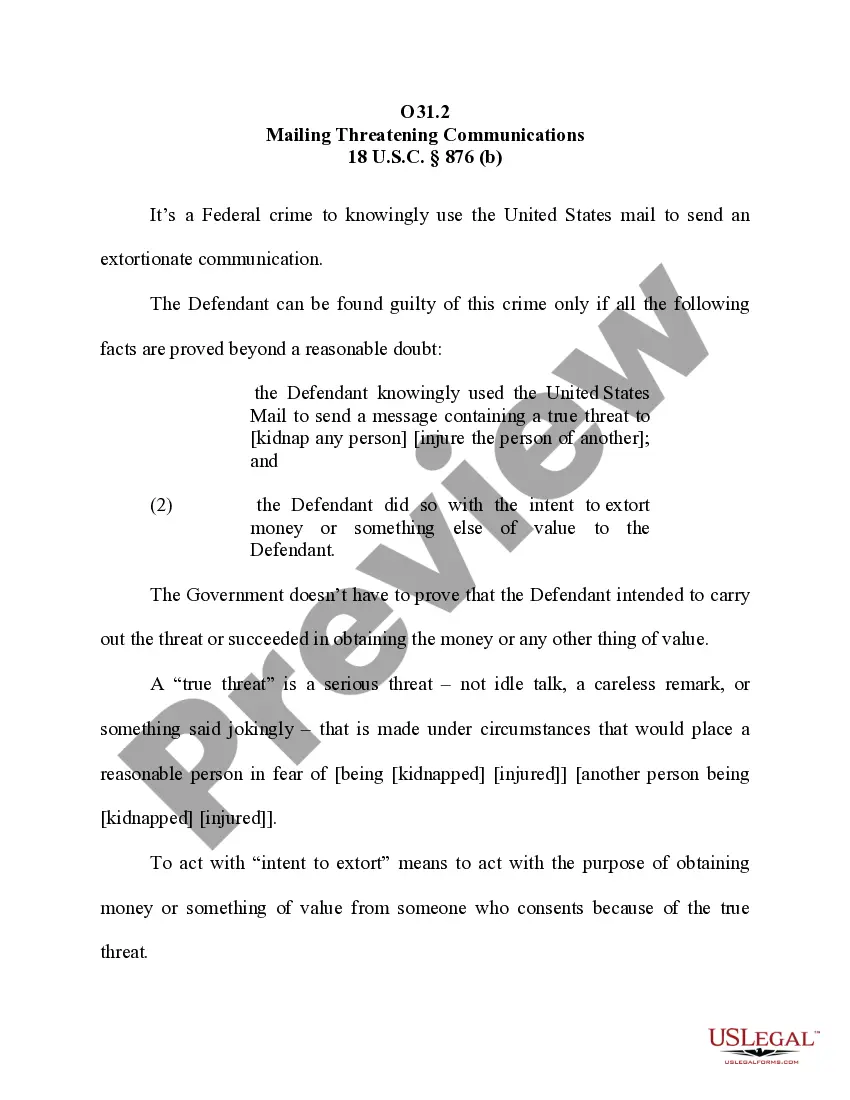
Mailing Threatening Communications 18 U.S.C. Sec. 876 (b)
What this document covers
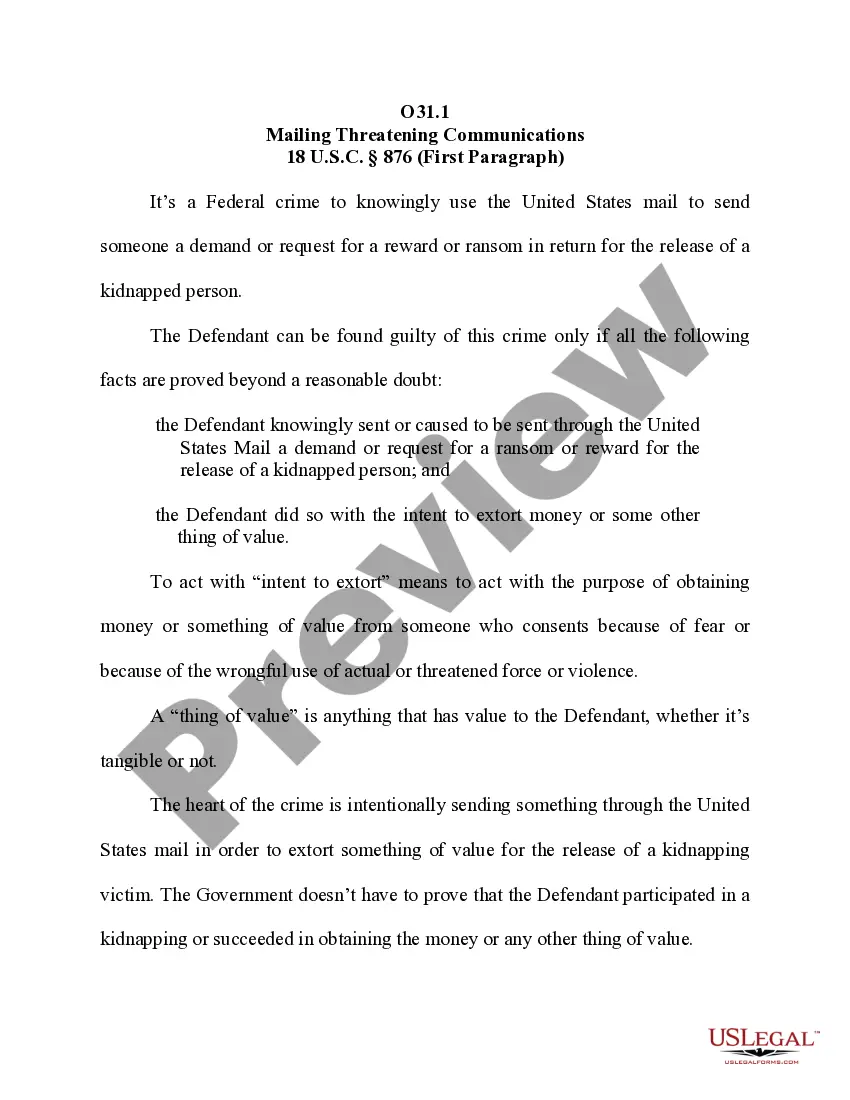
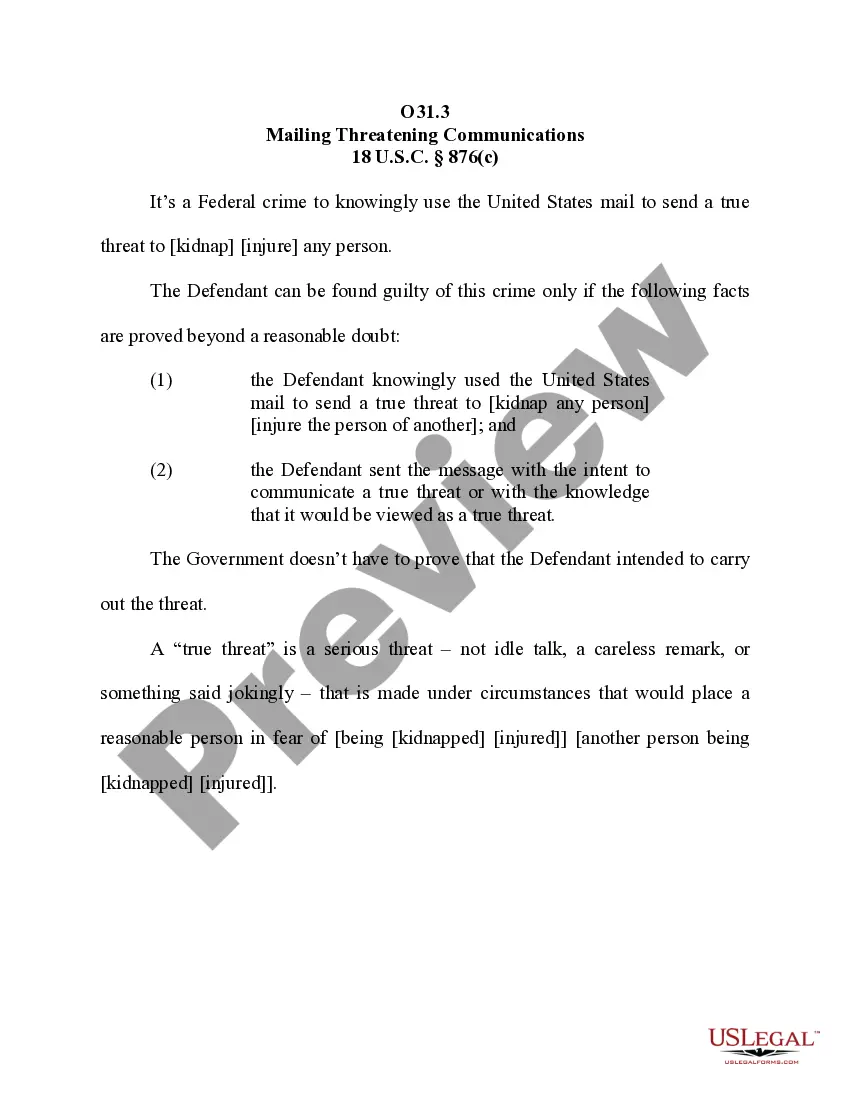
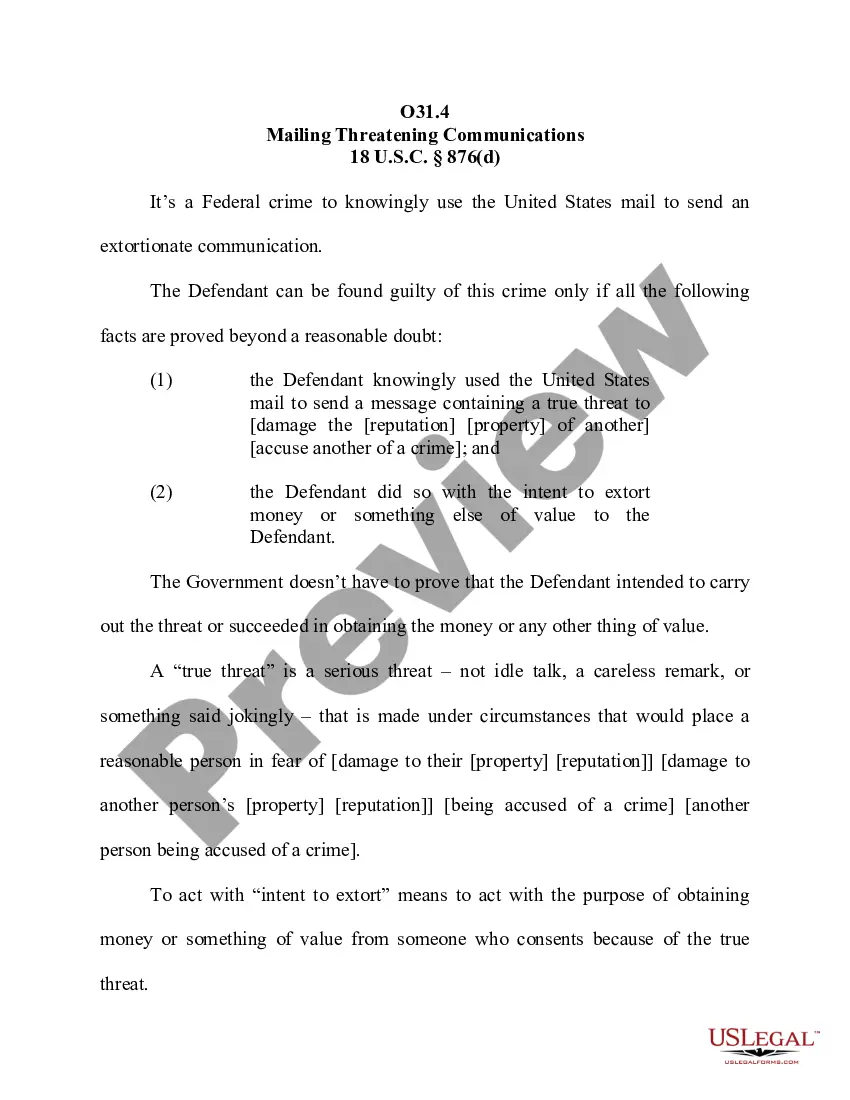
The Mailing Threatening Communications form is a legal document established under 18 U.S.C. § 876 (b). It details the federal crime of using the United States mail to send extortionate communications, including any threats to harm or kidnap individuals. This form serves to outline the elements required to prove this crime, distinguishing it from similar offenses that may not involve mail or extortion.
What’s included in this form
- A description of what constitutes a "true threat".
- Details on the specific intent needed to extort money or value.
- Clarification that the government need not prove whether the threat was carried out or if the extortion was successful.
- Definition of what constitutes a "thing of value".

When to use this form
This form may be necessary when an individual is accused of sending threatening or extortionate communications through the mail. It can be required in legal proceedings where such crimes are being prosecuted, and defendants need to understand the legal context regarding the threats made. Additionally, it can aid in preparing a defense by outlining what qualifies as a true threat under federal law.
Who needs this form
This form is intended for:
- Individuals facing charges related to mailing threatening communications.
- Legal professionals representing clients in federal cases involving extortion.
- Anyone seeking to understand their rights and obligations under 18 U.S.C. § 876 (b).
Steps to complete this form
- Understand the definition of a "true threat" in the context given.
- Ensure that the actions taken meet the criteria for mailing a threatening communication.
- Identify and clarify the intent to extort money or value through communication.
- Gather any evidence or documentation that supports your claim or defense regarding the charges.
Notarization guidance
This form does not typically require notarization unless specified by local law.
Get your form ready online
Our built-in tools help you complete, sign, share, and store your documents in one place.
Make edits, fill in missing information, and update formatting in US Legal Forms—just like you would in MS Word.
Download a copy, print it, send it by email, or mail it via USPS—whatever works best for your next step.
Sign and collect signatures with our SignNow integration. Send to multiple recipients, set reminders, and more. Go Premium to unlock E-Sign.
If this form requires notarization, complete it online through a secure video call—no need to meet a notary in person or wait for an appointment.
We protect your documents and personal data by following strict security and privacy standards.

Make edits, fill in missing information, and update formatting in US Legal Forms—just like you would in MS Word.

Download a copy, print it, send it by email, or mail it via USPS—whatever works best for your next step.

Sign and collect signatures with our SignNow integration. Send to multiple recipients, set reminders, and more. Go Premium to unlock E-Sign.

If this form requires notarization, complete it online through a secure video call—no need to meet a notary in person or wait for an appointment.

We protect your documents and personal data by following strict security and privacy standards.
Common mistakes
- Failing to recognize what constitutes a "true threat".
- Underestimating the seriousness of threats communicated via mail.
- Not understanding the legal implications of intent to extort.
Benefits of using this form online
- Convenience of accessing legal forms from anywhere.
- Editable templates allow for customization as needed.
- Reliable forms drafted by licensed attorneys.
Legal use & context
- Mailing threatening communications is a federal offense under 18 U.S.C. § 876 (b).
- A clear understanding of this form can aid in navigating legal proceedings.
Main things to remember
- This form outlines the specifics of mailing threats as a criminal offense.
- Understanding intent and what constitutes a true threat is crucial.
- This form is applicable at the federal level without state-specific variations.
Looking for another form?
Form popularity
FAQ
Threats or Intimidation Against Voters 18 U.S.C. § 241, which makes it unlawful to ?conspire to injure, oppress, threaten, or intimidate any person? exercising a constitutional right, including the right to vote; ? 18 U.S.C.
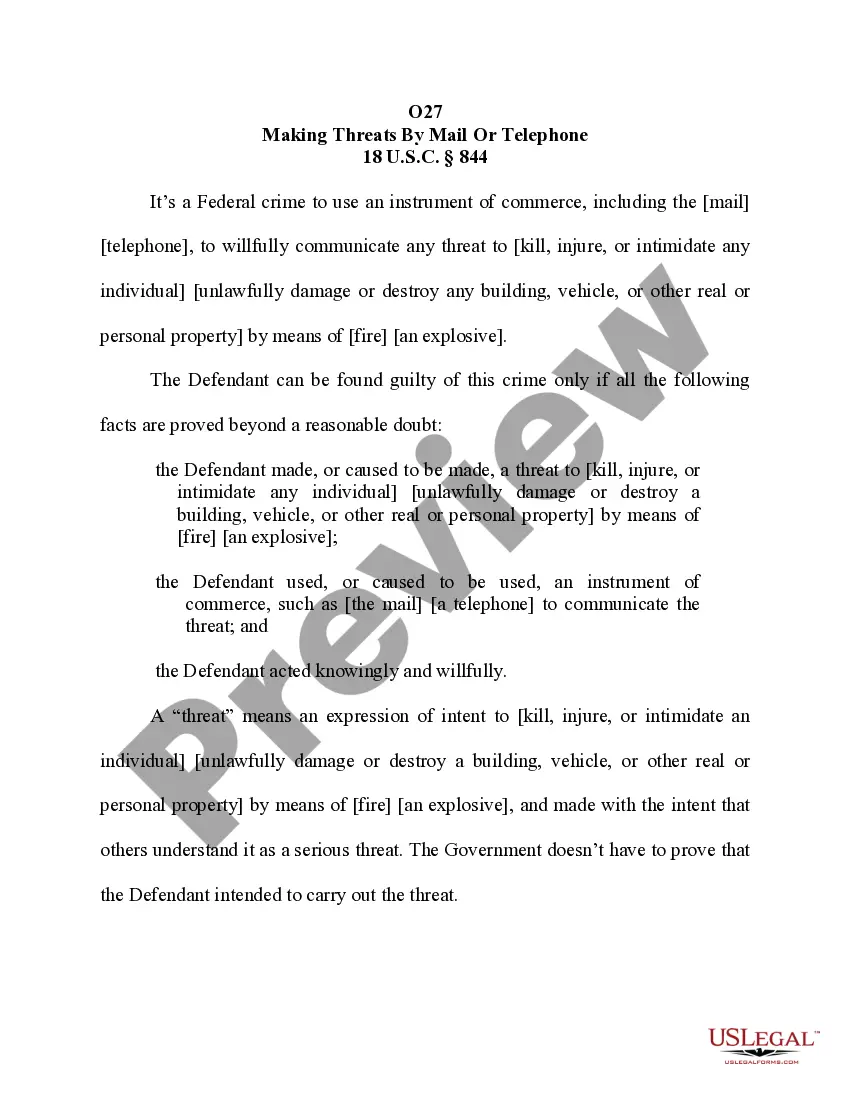
Threatening the government officials of the United States is a felony under federal law. Threatening the president of the United States is a felony under 18 U.S.C.
Whoever transmits in interstate or foreign commerce any communication containing any demand or request for a ransom or reward for the release of any kidnapped person, shall be fined under this title or imprisoned not more than twenty years, or both.
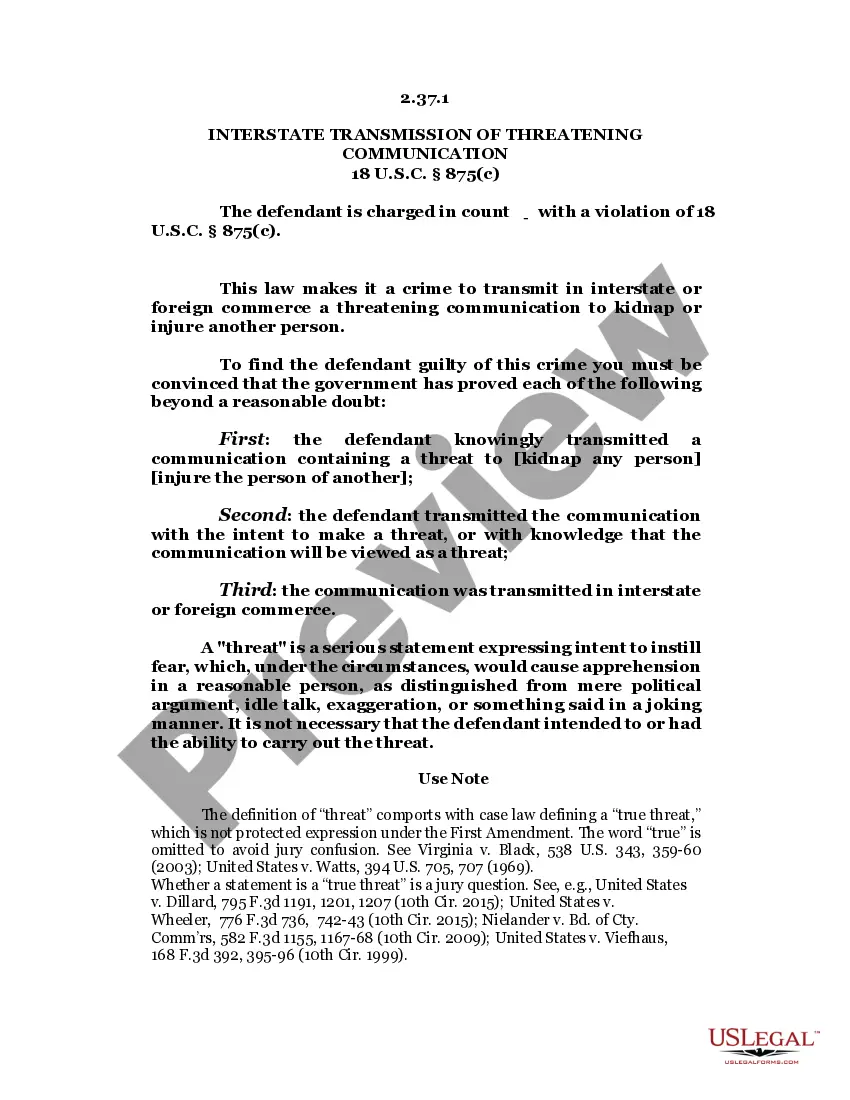
Section 875 of Title 18 prohibits the transmission in interstate or foreign commerce of: (1) any demand or request for ransom or reward for the release of any kidnapped person; (2) a threat to kidnap or injure any person, either with or without the intent to extort; or (3) with intent to extort, a threat to injure the
Whoever knowingly and willfully obstructs or retards the passage of the mail, or any carrier or conveyance carrying the mail, shall be fined under this title or imprisoned not more than six months, or both.
Whoever, under a threat of informing, or as a consideration for not informing, against any violation of any law of the United States, demands or receives any money or other valuable thing, shall be fined under this title or imprisoned not more than one year, or both.
875(c), which provides that any individual who "transmits in interstate or foreign commerce any communication containing any threat to ? injure the person of another" is guilty of a felony and faces up to five years in prison.