Making Threats By Mail Or Telephone
About this form
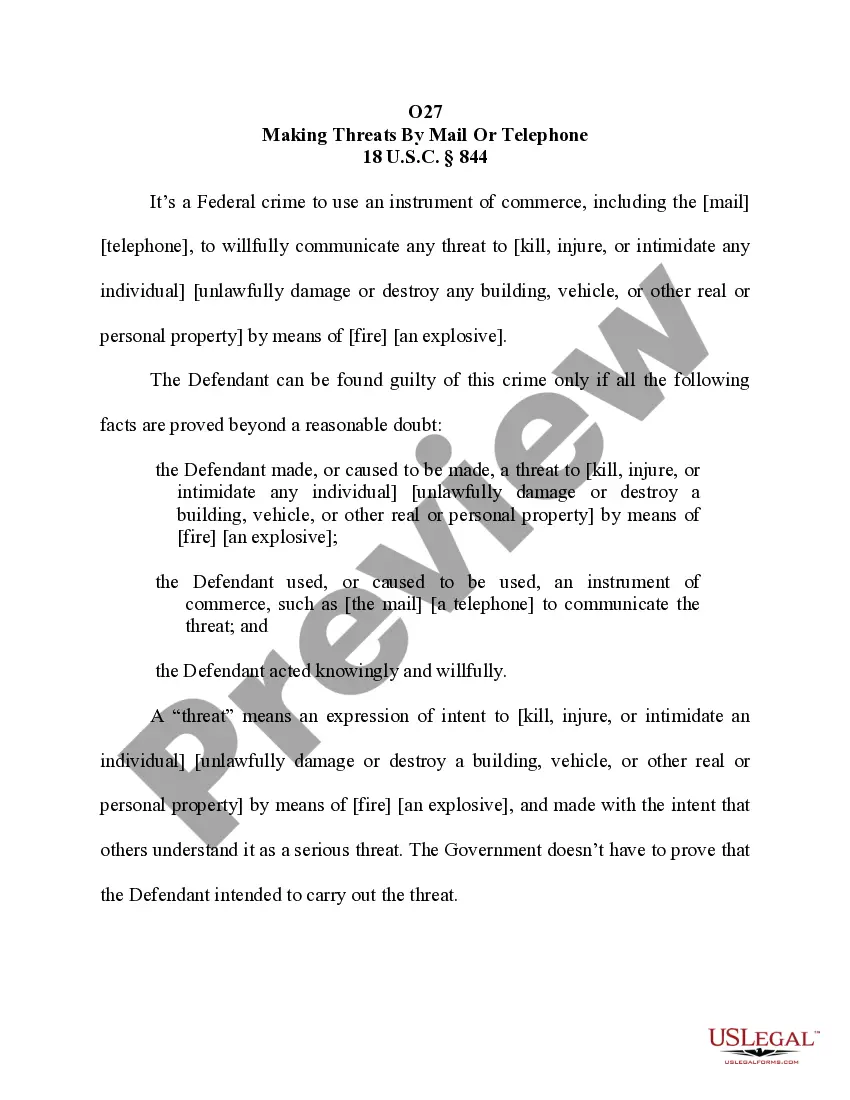
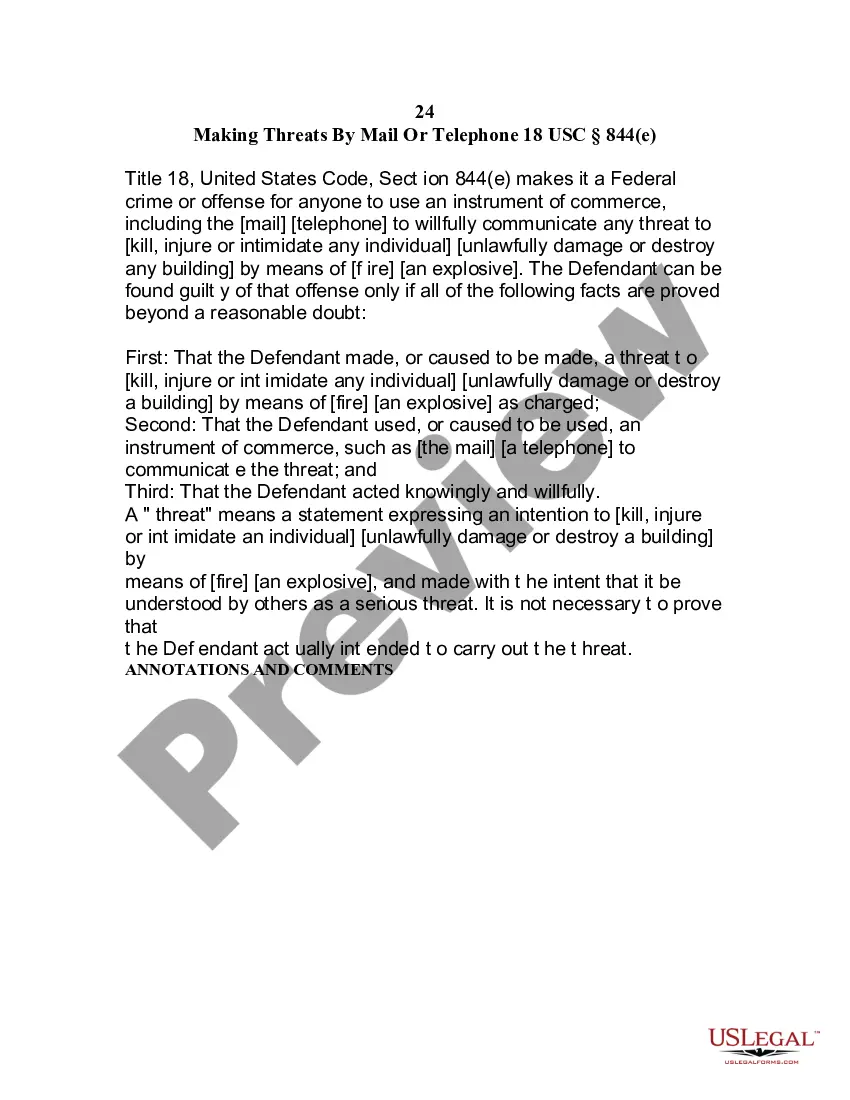
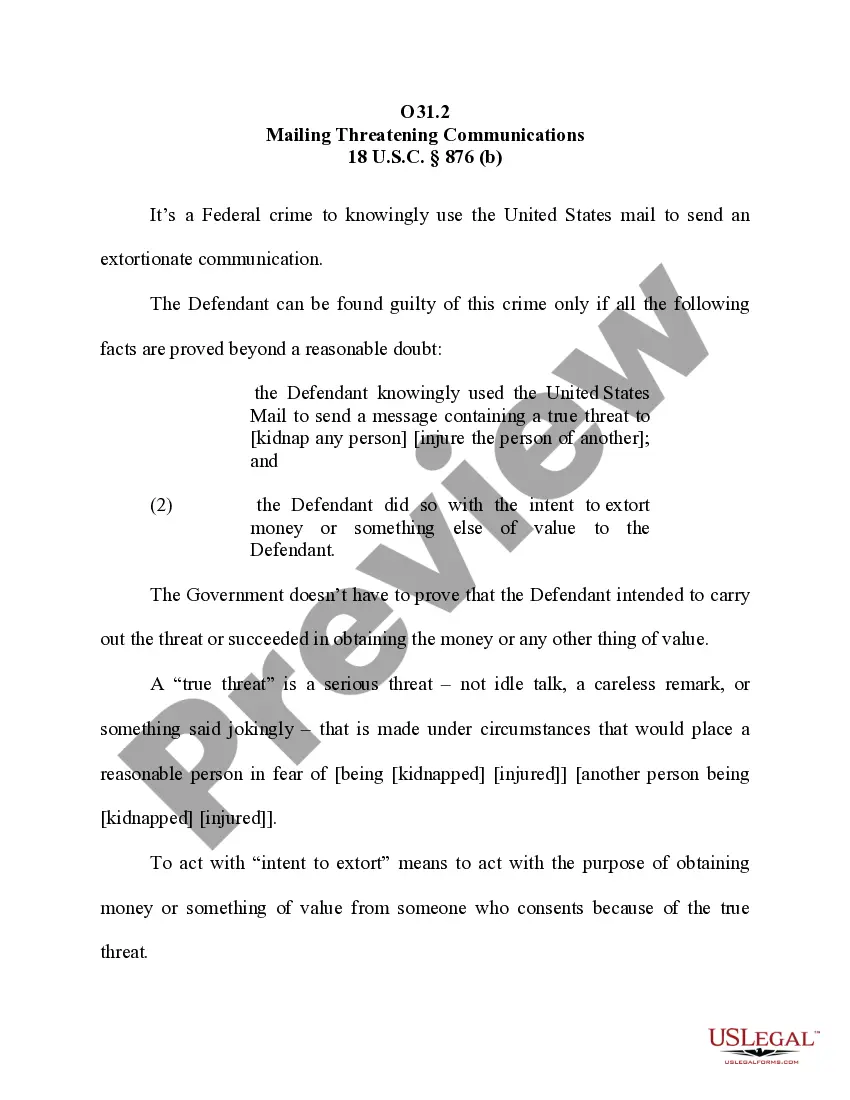
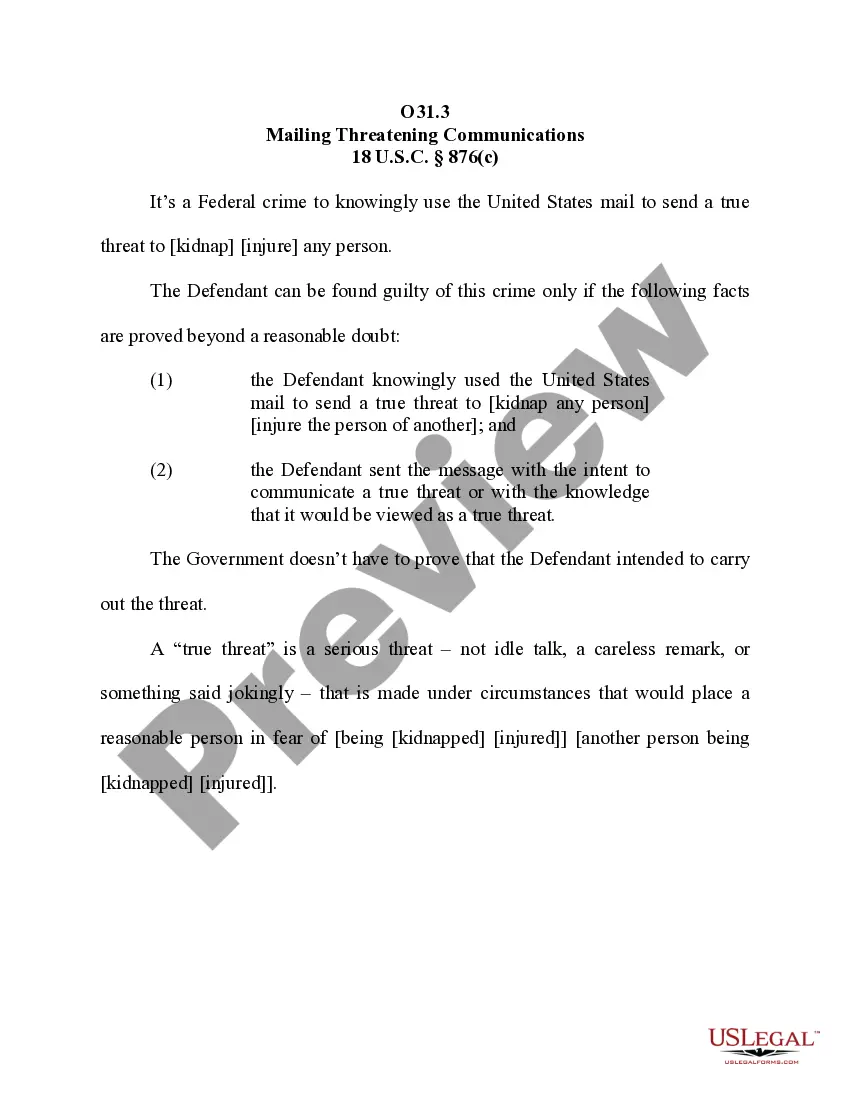
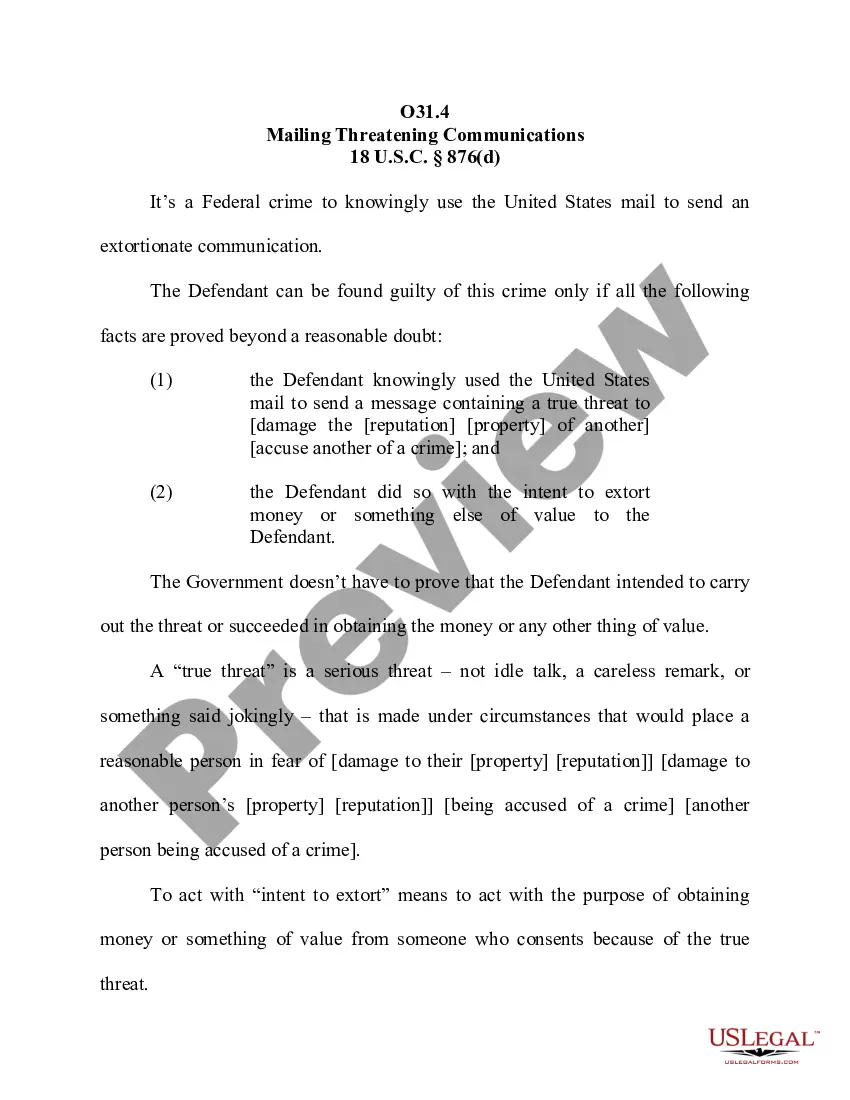
The Making Threats By Mail Or Telephone form outlines the federal law regarding the use of communication tools, like mail and telephone, to convey threats. This form is uniquely designed to help individuals understand the legal definitions and requirements associated with making threats that could result in severe criminal charges under 18 U.S.C. § 844. It differs from other legal documents by specifically addressing scenarios involving threats made through commerce-related communications.
Key components of this form
- The definition of a "threat" in a legal context.
- Requirements for proving the defendant acted knowingly and willfully.
- Clarification on what constitutes an instrument of commerce.
- The elements that need to be proved for a conviction.
- The implications of using certain means, such as fire or explosives, in the threat.
Common use cases
This form is crucial for situations where an individual may have received or sent a threat through mail or telephone that could lead to legal action. It is also applicable for legal defense teams preparing cases involving allegations of making threats through these communication channels. Understanding this form aids in navigating legal repercussions and ensuring compliance with federal laws.
Intended users of this form
This form is intended for the following individuals:
- Defendants accused of making threats via mail or telephone.
- Legal professionals seeking to comprehend the legal framework surrounding threat communications.
- Victims of threats wanting to understand their legal rights and the implications of such threats.
- Individuals involved in cases concerning alleged threats and needing to prepare for legal proceedings.
How to prepare this document
- Identify the specific threat made and ensure it aligns with the legal definitions provided.
- Gather evidence of communication methods used (e.g., copies of mail or call logs).
- Ensure understanding of the intent behind the message.
- Consult with legal counsel if necessary to clarify facts and contribute to a defense or prosecution.
- Document each element required for proving or defending against the charge based on the criteria outlined in the form.
Does this form need to be notarized?
Notarization is generally not required for this form. However, certain states or situations might demand it. You can complete notarization online through US Legal Forms, powered by Notarize, using a verified video call available anytime.
Get your form ready online
Our built-in tools help you complete, sign, share, and store your documents in one place.
Make edits, fill in missing information, and update formatting in US Legal Forms—just like you would in MS Word.
Download a copy, print it, send it by email, or mail it via USPS—whatever works best for your next step.
Sign and collect signatures with our SignNow integration. Send to multiple recipients, set reminders, and more. Go Premium to unlock E-Sign.
If this form requires notarization, complete it online through a secure video call—no need to meet a notary in person or wait for an appointment.
We protect your documents and personal data by following strict security and privacy standards.

Make edits, fill in missing information, and update formatting in US Legal Forms—just like you would in MS Word.

Download a copy, print it, send it by email, or mail it via USPS—whatever works best for your next step.

Sign and collect signatures with our SignNow integration. Send to multiple recipients, set reminders, and more. Go Premium to unlock E-Sign.

If this form requires notarization, complete it online through a secure video call—no need to meet a notary in person or wait for an appointment.

We protect your documents and personal data by following strict security and privacy standards.
Mistakes to watch out for
- Failing to fully understand what constitutes a threat according to federal law.
- Not adequately documenting all communication related to the threat.
- Assuming state laws are the same as federal laws without further verification.
- Neglecting to seek legal counsel when preparing for a case based on the form.
Why complete this form online
- Convenient access to legal documents from anywhere at any time.
- Editable templates that allow users to tailor forms to specific situations.
- Ensures that users have up-to-date legal information and language.
- Saves time and reduces the need for office visits with legal professionals.
Legal use & context
- This form is used within federal jurisdiction and is based on 18 U.S.C. § 844.
- Understanding the criteria for making threats is essential for navigating related legal situations.
- Legal definitions within the form help in understanding potential repercussions and defenses.
Key takeaways
- The Making Threats By Mail Or Telephone form addresses serious legal definitions regarding threats.
- Understanding federal law surrounding this form is crucial for anyone accused of such acts.
- Using this form can help individuals prepare for legal proceedings and understand their rights.
- Consulting legal professionals is advised if you're directly involved in a related case.
Looking for another form?


Form popularity
FAQ
Technically, you could be charged with a crime for verbally threatening someone. Making threats is a form of assault. You could face criminal charges for assault if it can be proven that you made a threat of violence and had the ability or intent to see it through. You may also face charges for written threats.
18 U.S.C. § 241 Section 241 makes it unlawful for two or more persons to agree to injure, threaten, or intimidate a person in the United States in the free exercise or enjoyment of any right or privilege secured by the Constitution or laws of the Unites States or because of his or her having exercised such a right.
Duress refers to a situation where one person makes unlawful threats or otherwise engages in coercive behavior that causes another person to commit acts that they would otherwise not commit.
Let's do it! Mail Harassment . Defined as sending e-mail in a manner or with content that is perceived as threatening or harassing to the intended or actual recipient. Letter Bombing: Defined as sending e-mail with content that will or could potentially harm the recipient's computer.
The short answer is yes, you can go to jail for threatening someone. If the threat is serious enough, and it is believed that you could actually carry out the threat, then you may be charged with a crime. Depending on the severity of the threat, you could be facing misdemeanor or felony charges.
A threat is a communication of intent to inflict harm or loss on another person. Intimidation is a tactic used between conflicting parties to make the other timid or psychologically insecure for coercion or control. The act of intimidation for coercion is considered as a threat.
An example of a verbal threat is an employee telling their boss they will strangle them if they don't receive a promotion. This is a verbal threat and may be deemed criminal by a court since it is specific and genuine.
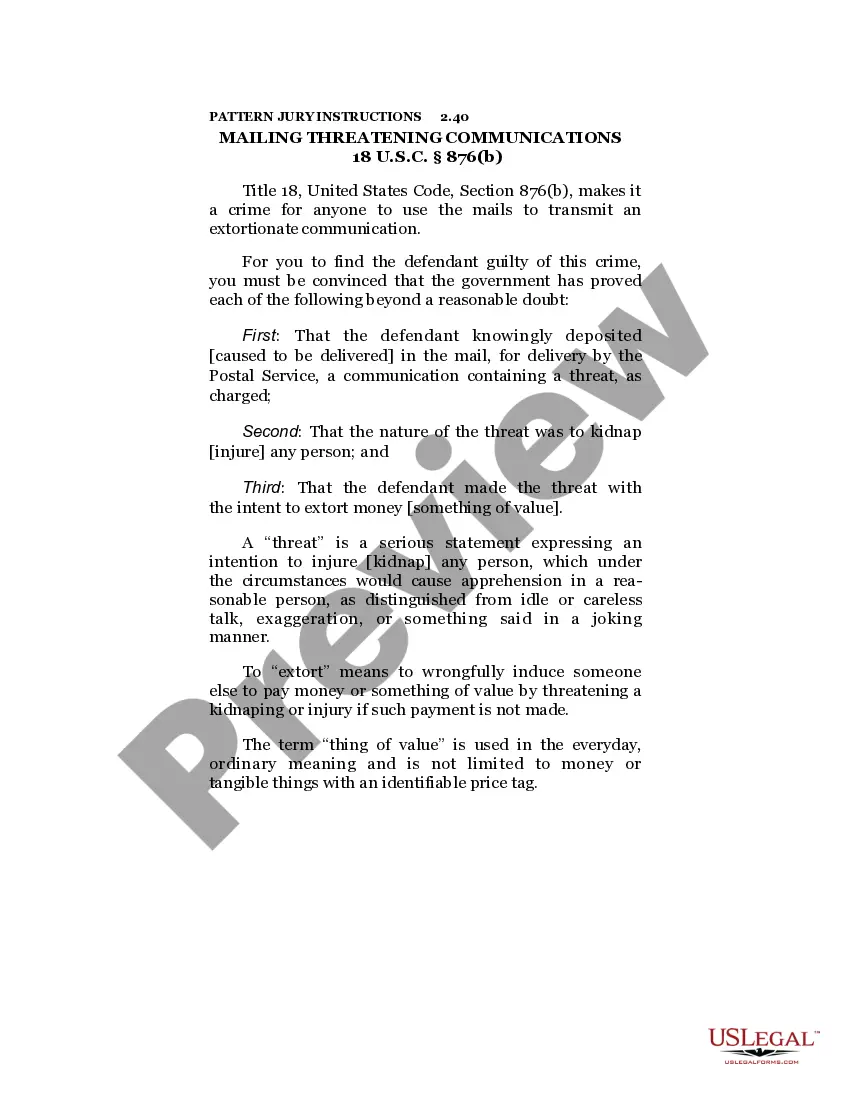
Whoever, under a threat of informing, or as a consideration for not informing, against any violation of any law of the United States, demands or receives any money or other valuable thing, shall be fined under this title or imprisoned not more than one year, or both.