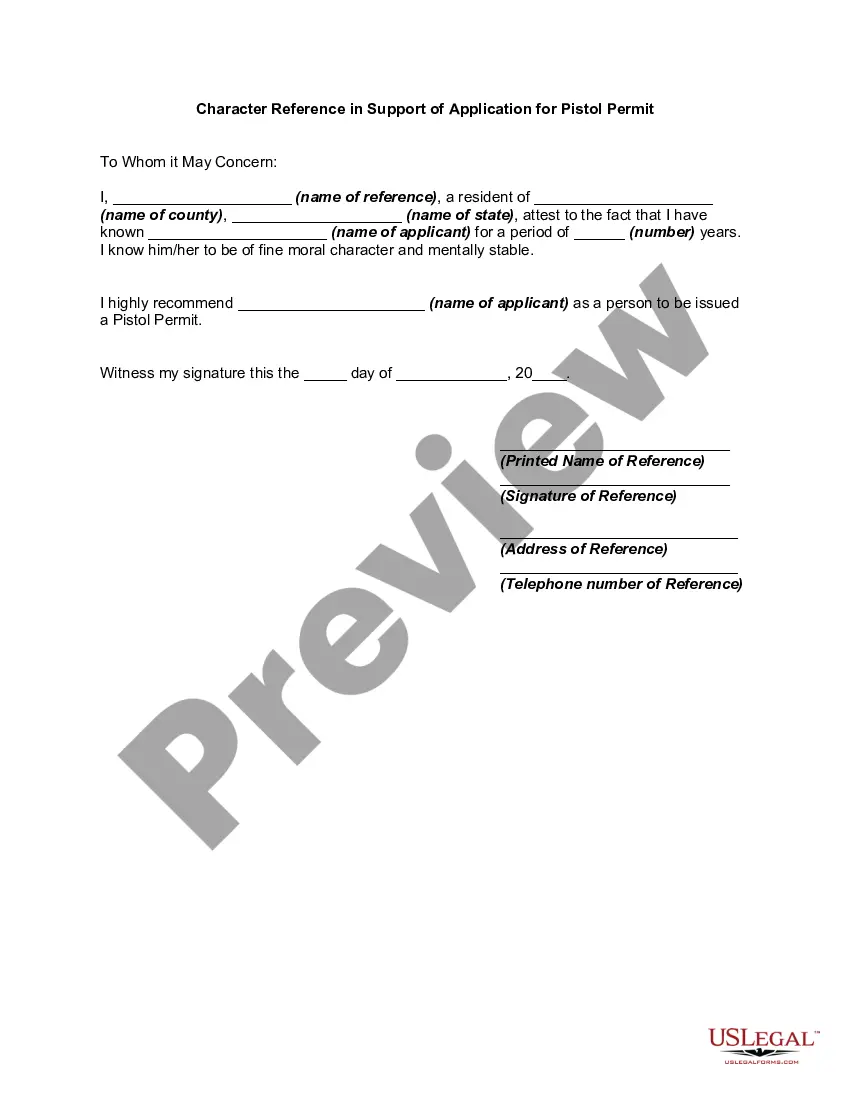
Character Reference in Support of Application for Pistol Permit
Understanding this form
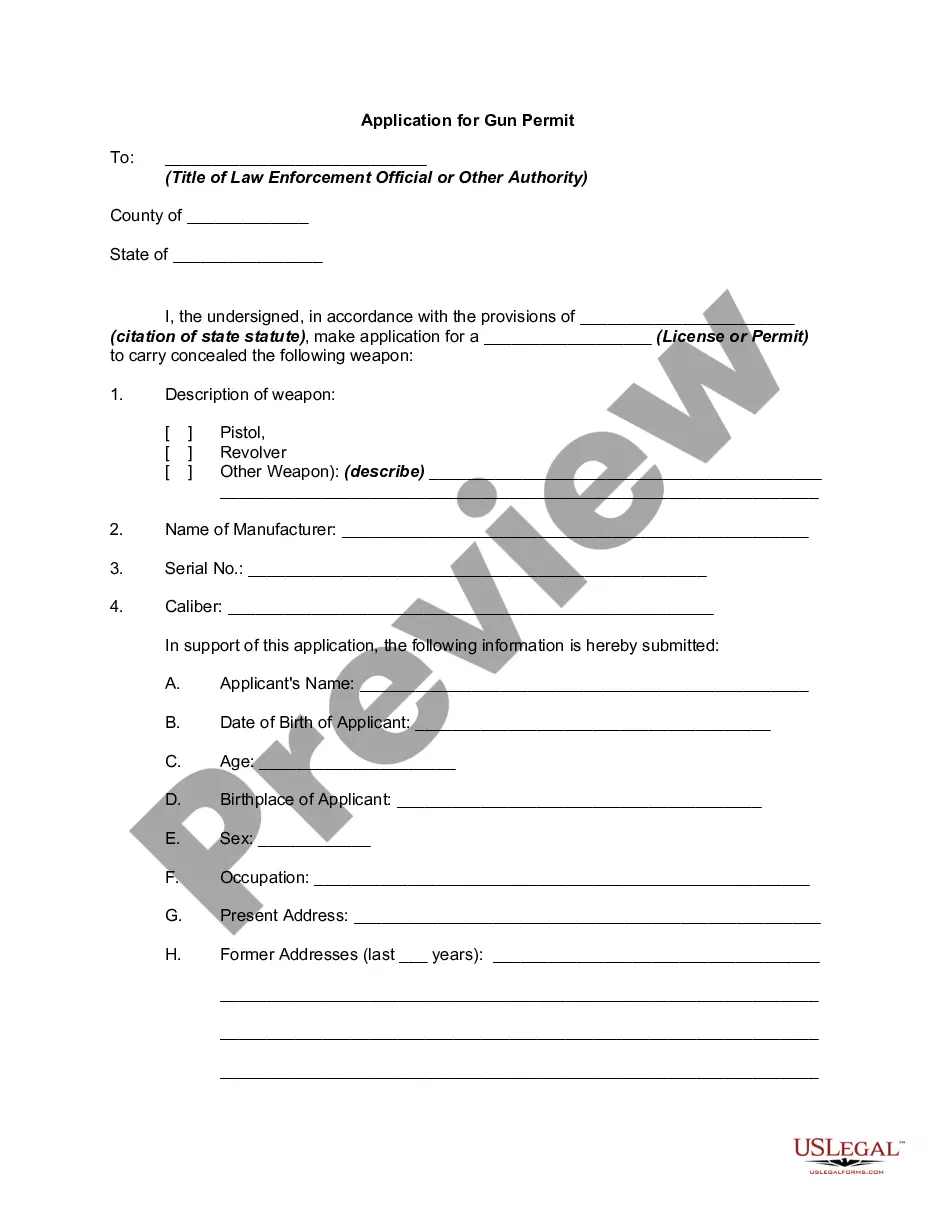
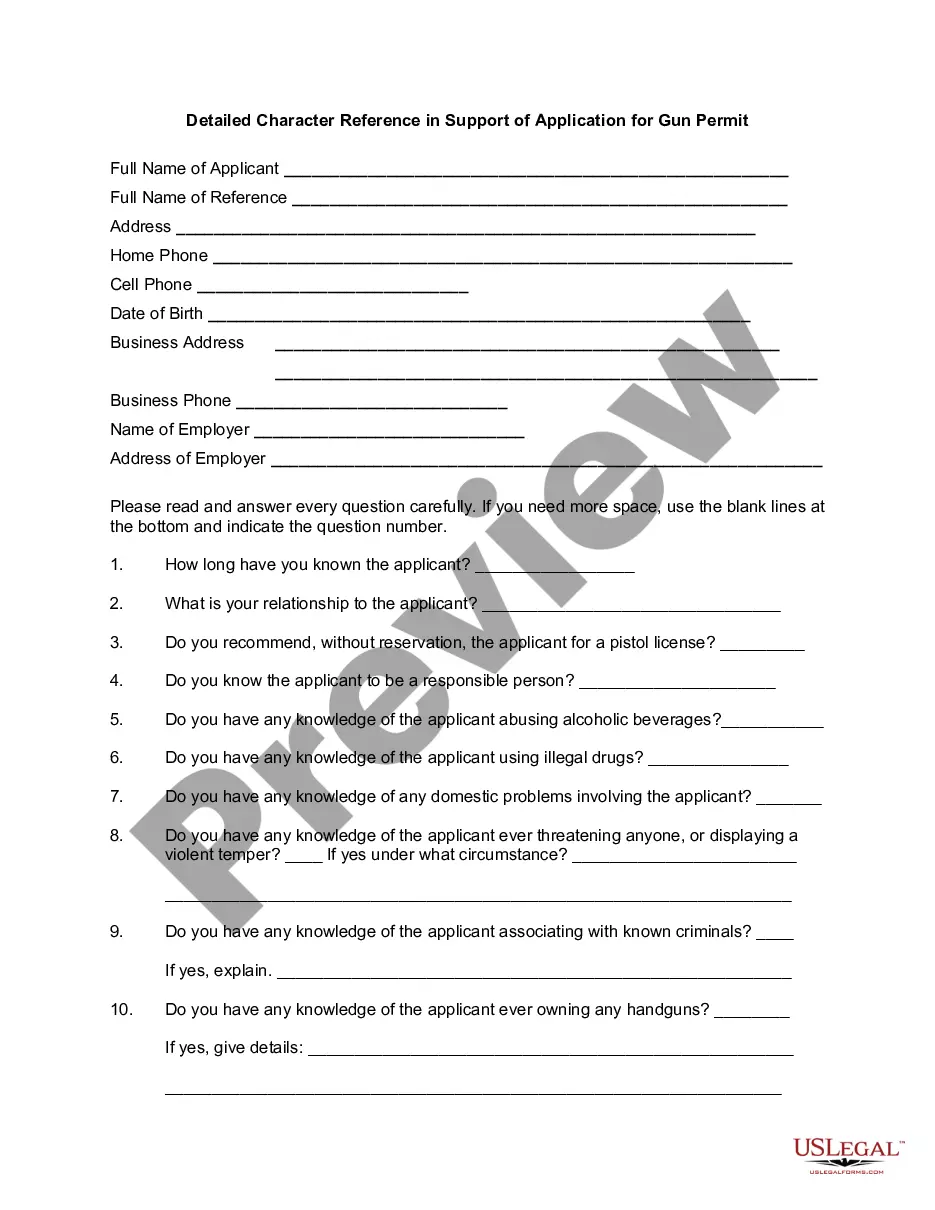
The Character Reference in Support of Application for Pistol Permit is a document used to provide a personal endorsement of an individual applying for a pistol permit. This form serves to convey the moral character and mental stability of the applicant, which are critical factors considered by licensing authorities. This form is distinct from other character reference letters as it specifically supports the issuance of a pistol permit.
Form components explained
- Name and information of the reference.
- Name and information of the applicant.
- Statement affirming the applicant's moral character and mental stability.
When to use this document
This form should be used when an individual is applying for a pistol permit and needs to provide a character reference. It is often required by state licensing authorities to demonstrate the applicant's qualifications. Situations may include applying for a permit for personal protection, participating in recreational shooting, or fulfilling specific job requirements that necessitate firearm ownership.
Who can use this document
- Individuals applying for a pistol permit.
- Friends, family members, or colleagues willing to endorse the applicant's character.
- References who have known the applicant for a significant period and can vouch for their moral character.
How to complete this form
- Identify yourself as the reference by filling in your name and contact information.
- Provide the applicantâs name and confirm the length of your acquaintance.
- Write a statement affirming that you believe the applicant is of fine moral character and mentally stable.
- Sign and date the form with the appropriate details.
- Ensure your address and telephone number are included for verification.
Notarization requirements for this form
This form does not typically require notarization unless specified by local law. However, consulting with local licensing authorities is advised to confirm specific requirements pertaining to your jurisdiction.
Get your form ready online
Our built-in tools help you complete, sign, share, and store your documents in one place.
Make edits, fill in missing information, and update formatting in US Legal Forms—just like you would in MS Word.
Download a copy, print it, send it by email, or mail it via USPS—whatever works best for your next step.
Sign and collect signatures with our SignNow integration. Send to multiple recipients, set reminders, and more. Go Premium to unlock E-Sign.
If this form requires notarization, complete it online through a secure video call—no need to meet a notary in person or wait for an appointment.
We protect your documents and personal data by following strict security and privacy standards.

Make edits, fill in missing information, and update formatting in US Legal Forms—just like you would in MS Word.

Download a copy, print it, send it by email, or mail it via USPS—whatever works best for your next step.

Sign and collect signatures with our SignNow integration. Send to multiple recipients, set reminders, and more. Go Premium to unlock E-Sign.

If this form requires notarization, complete it online through a secure video call—no need to meet a notary in person or wait for an appointment.

We protect your documents and personal data by following strict security and privacy standards.
Avoid these common issues
- Failing to provide complete and accurate personal information.
- Not clearly stating your relationship with the applicant or the length of time you have known them.
- Leaving out a signature or date, which can render the form invalid.
Why complete this form online
- Convenience of instant downloads, allowing immediate access to necessary documentation.
- Editability enables you to fill in the form accurately and ensure all details are correct before submission.
- Reliability of having a professionally drafted form that meets common legal standards.
Summary of main points
- The form is crucial for supporting an application for a pistol permit.
- Ensure accuracy and completeness to avoid delays in processing.
- Consult local regulations for any specific requirements regarding the character reference.
Looking for another form?
Form popularity
FAQ
A character reference (also known as a personal reference) is a letter written by someone who knows the job candidate and can speak to their character and abilities. Unlike professional references, the person writing the reference is not an employer.
Consider who to ask. Give the person an out. Provide information. Send a thank you note to the writer afterward. Think about it before you say yes. Request information. Explain your relationship. Be specific.
Start by explaining your relationship to the candidate. Include long you've known the candidate. Add positive personal qualities with specific examples. Close with a statement of recommendation. Offer your contact information.
Find a reputable person within your community. Like any reference, the power of its claims lies in the credibility of the writer. Give details about your situation. Draft the letter for them. Sign and Notarize letter. Attach letter to your application.
Start by explaining your relationship to the candidate. Include long you've known the candidate. Add positive personal qualities with specific examples. Close with a statement of recommendation. Offer your contact information.
Your relationship with the candidate. How long you've known them. Information and examples of their personality and work ethic. Your contact details.
Introduce yourself. State what your occupation is and any qualifications you hold. Outline your relationship with the person who is the subject of the legal proceedings. DO. Acknowledge the charges that have been brought against the person. DO. State your opinion of the person's general character. DO.
Keep It Short. Remind Them Who You Are. Make Your Request Assertive And Specific. Don't Assume Your Request Will Be Accepted. Use A Professional Subject Line. Use A Proper Salutation. Introduce Yourself And Refresh The Professor's Mind.
Weaknesses. This is the number one thing to avoid for a reason. Too much about yourself. It is important to present yourself with some amount of detail so that the reader knows what sort of credibility and relevance you have to the candidate. Aggressive opinions. Irrelevant qualities.