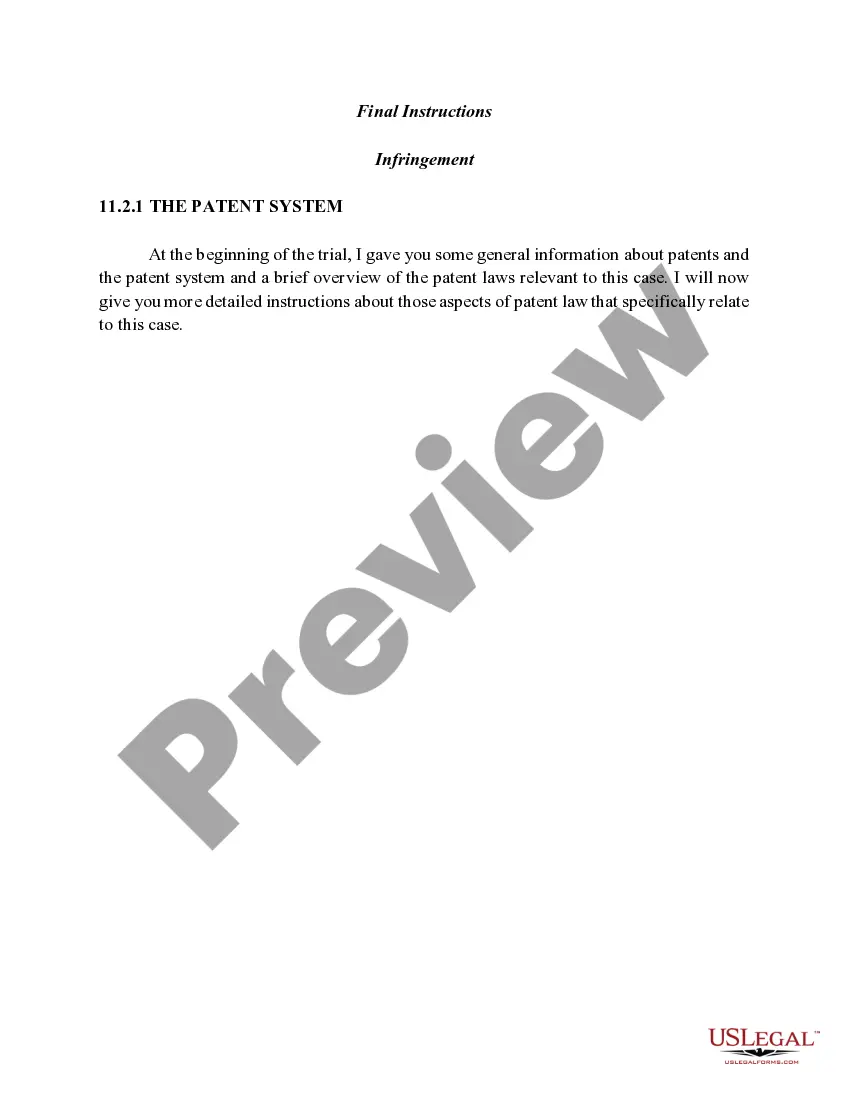
11.2.1 The Patent System
Understanding this form
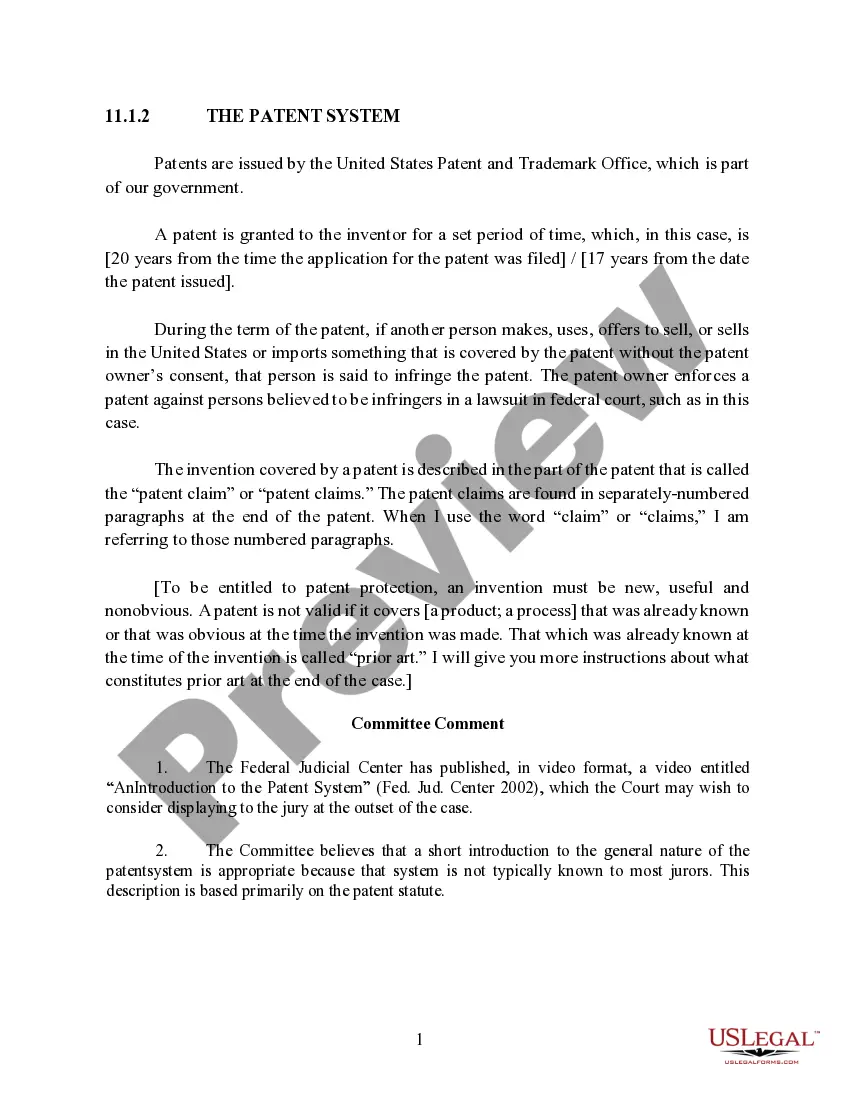
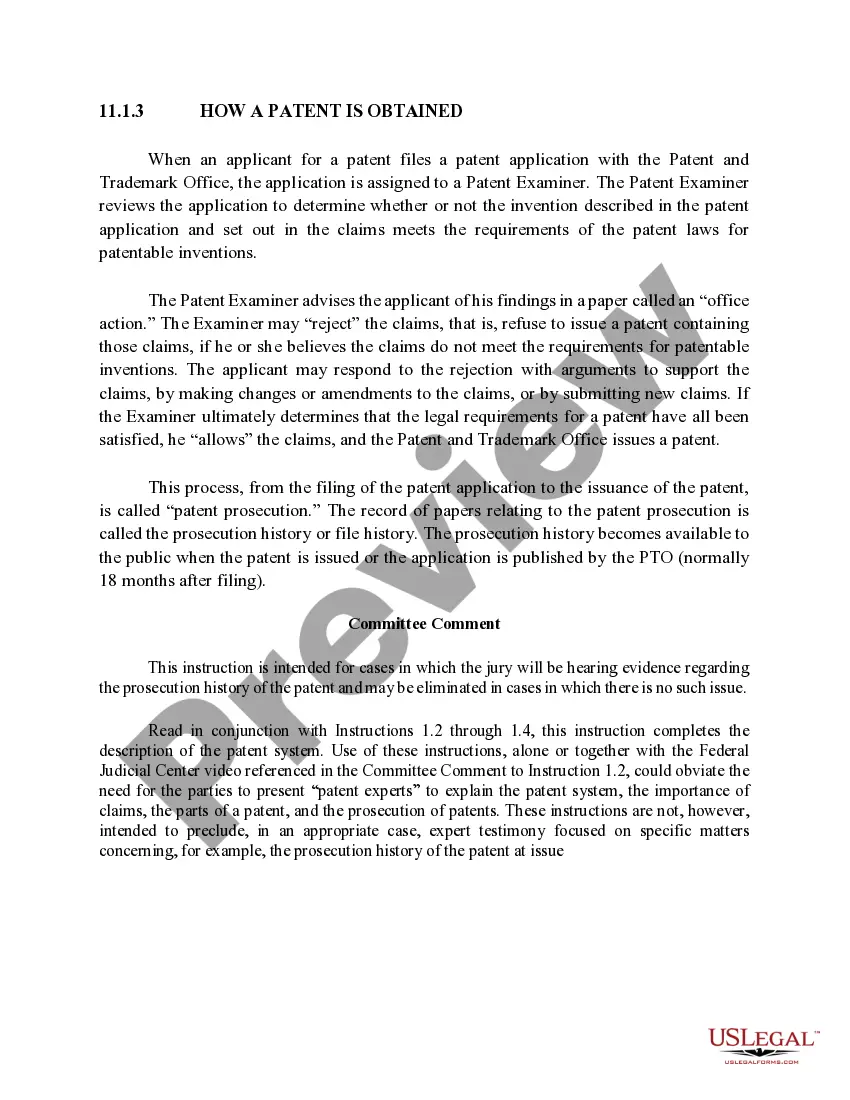
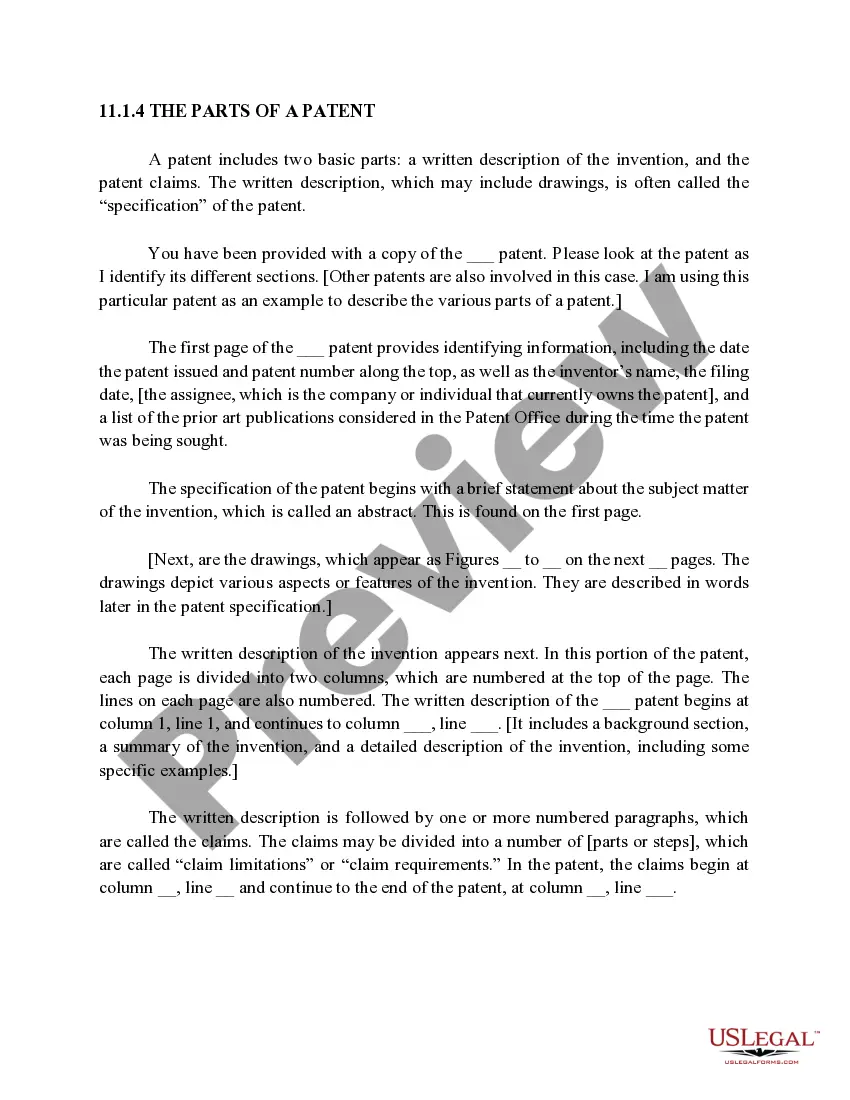
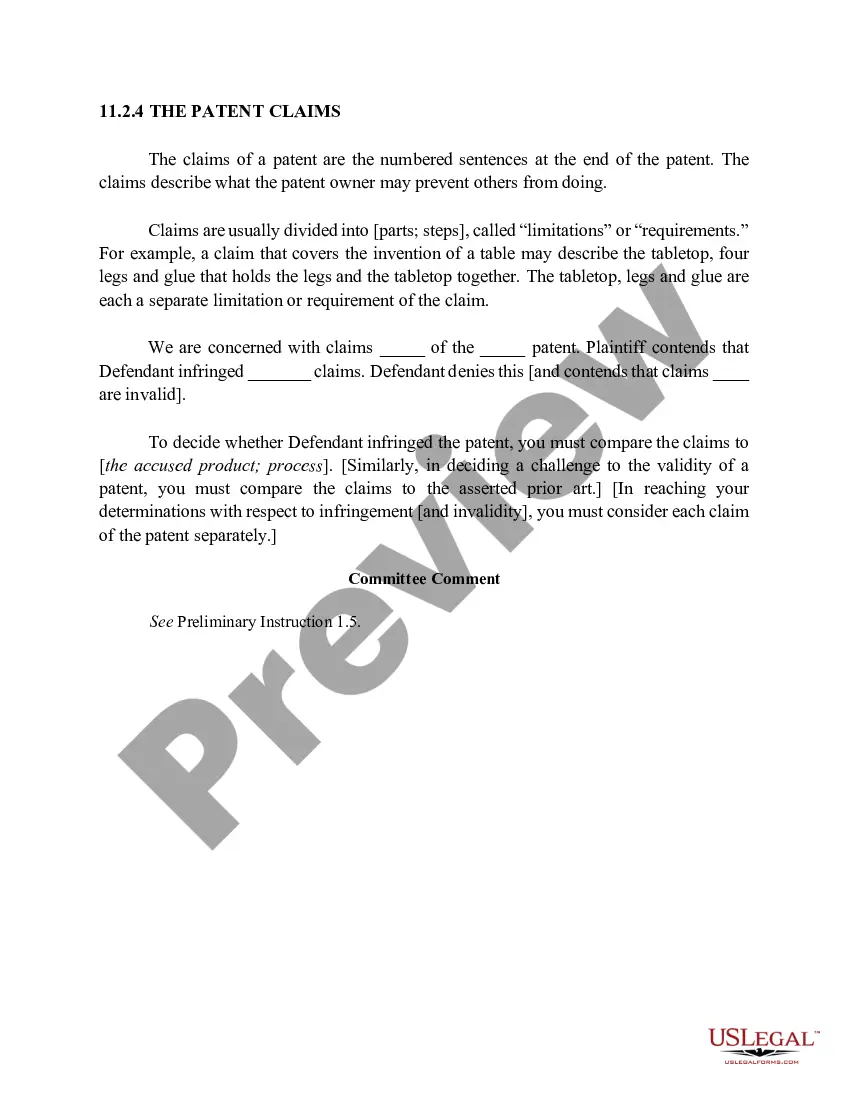
This form provides official jury instructions related to the patent system, specifically designed for use in federal courts under the jurisdiction of the 7th Circuit. The Patent System form ensures juries are well-informed about patent laws relevant to cases they are deliberating, which differs from general jury instructions by focusing solely on patent law and its applications in infringement cases.
Form components explained
- Introduction to patent law and the patent system.
- Detailed instructions on how patent applicable laws relate to infringement cases.
- Explanation of legal concepts crucial for jury understanding.
- Final instructions tailored to assist jurors in evaluating evidence based on patent laws.

Situations where this form applies
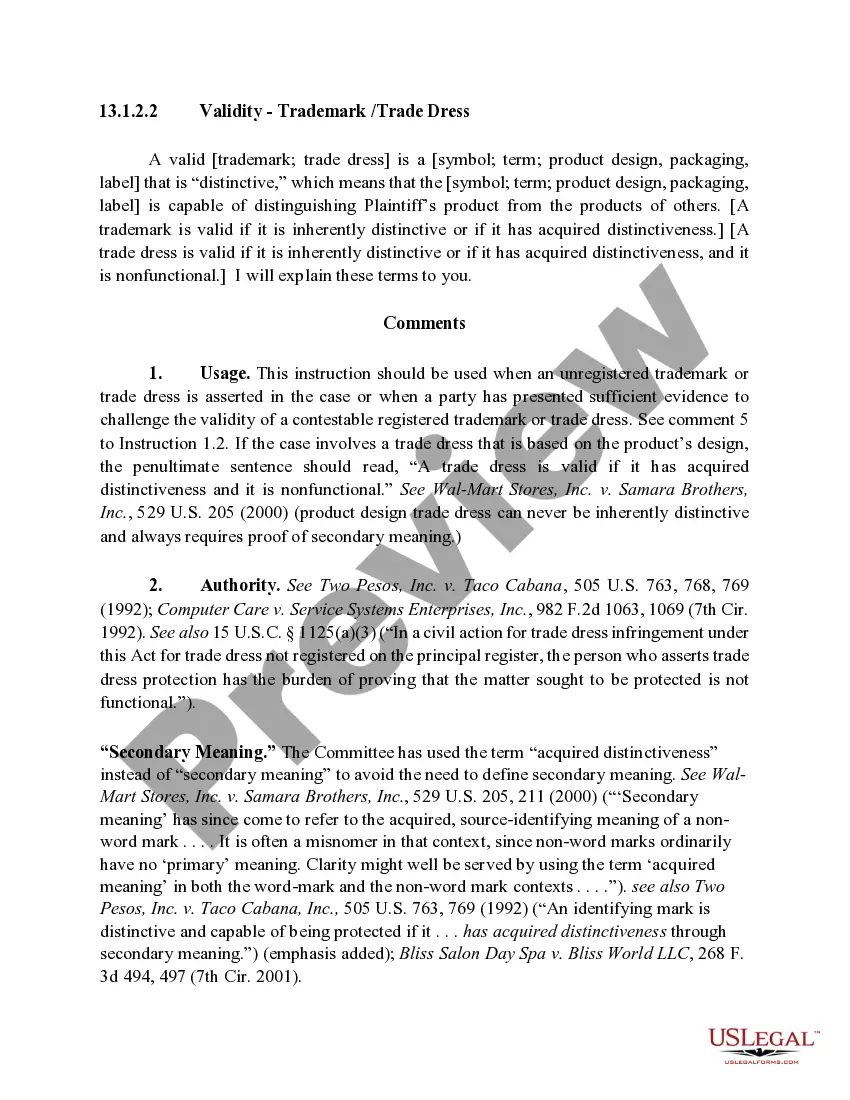
This form is essential when a case involves allegations of patent infringement. It is used during trials to guide jurors through complex patent law concepts, helping them assess whether the defendant has infringed upon a plaintiff's patent rights. Additionally, it is applicable in any situation where understanding the nuances of patent law is critical for reaching a verdict.
Who needs this form
- Judges presiding over patent infringement cases.
- Legal practitioners representing clients in patent disputes.
- Jurors selected for trials related to patent law.
- Legal educators and students studying intellectual property law.
How to complete this form
- Review the introductory instructions provided at the beginning of the trial.
- Familiarize yourself with the relevant laws concerning patents as outlined in the form.
- Pay attention to the detailed instructions that relate to the case's specific patent laws.
- Prepare to discuss the implications of patent law in your deliberations.
- Follow the final instructions to reach a verdict based on the evidence presented.
Does this document require notarization?
Notarization is generally not required for this form. However, certain states or situations might demand it. You can complete notarization online through US Legal Forms, powered by Notarize, using a verified video call available anytime.
Get your form ready online
Our built-in tools help you complete, sign, share, and store your documents in one place.
Make edits, fill in missing information, and update formatting in US Legal Forms—just like you would in MS Word.
Download a copy, print it, send it by email, or mail it via USPS—whatever works best for your next step.
Sign and collect signatures with our SignNow integration. Send to multiple recipients, set reminders, and more. Go Premium to unlock E-Sign.
If this form requires notarization, complete it online through a secure video call—no need to meet a notary in person or wait for an appointment.
We protect your documents and personal data by following strict security and privacy standards.

Make edits, fill in missing information, and update formatting in US Legal Forms—just like you would in MS Word.

Download a copy, print it, send it by email, or mail it via USPS—whatever works best for your next step.

Sign and collect signatures with our SignNow integration. Send to multiple recipients, set reminders, and more. Go Premium to unlock E-Sign.

If this form requires notarization, complete it online through a secure video call—no need to meet a notary in person or wait for an appointment.

We protect your documents and personal data by following strict security and privacy standards.
Avoid these common issues
- Failing to understand the technical language of patent law.
- Misinterpreting the legal definitions of infringement.
- Ignoring the importance of the instructions when deliberating the evidence.
- Not consulting the relevant laws provided in the jury instructions.
Why complete this form online
- Convenience of access from anywhere with an internet connection.
- Editability allows for modifications that suit specific case needs.
- Reliability with instructions from licensed attorneys ensuring compliance with legal standards.
- Easy download in Word format for immediate use in court settings.
Looking for another form?
Form popularity
FAQ
Patents have a positive effect on society because they promote innovation and help develop new products. They also protect intellectual property.
A patent for an invention is granted by government to the inventor, giving the inventor the right to stop others, for a limited period, from making, using or selling the invention without their permission.
Once a patent is granted, it should be administered and exploited. Patent administration deals primarily with the monitoring and execution of all actions that are necessary for the maintenance of the patent, including, in particular, the payment of any annual renewal fees.
A designation fee is a one-time fee for an attorney to designate an individual as an expert witness. Some believe that it compensates an expert for the use of his or her name, because the expert's name can gain leverage for the client and allows the case to settle more quickly.
Examples of inventions protected by utility patents are a microwave oven, genetically engineered bacteria for cleaning up oil spills, a computerized method of running cash management accounts, and a method for curing rubber.
Patents are granted by patent offices in exchange for a full disclosure of the invention. In general, the details of the invention are then published and made available to the public at large. It should be noted that publication can take place at various stages of the procedure.
The patent system grants and enforces temporal exclusive, transferrable, and licensable private rights on inventions ? that provide solutions to (mostly) technical problems in the area of products and processes ? in exchange for disclosure of the invention to the public at a level that can be understood by a person