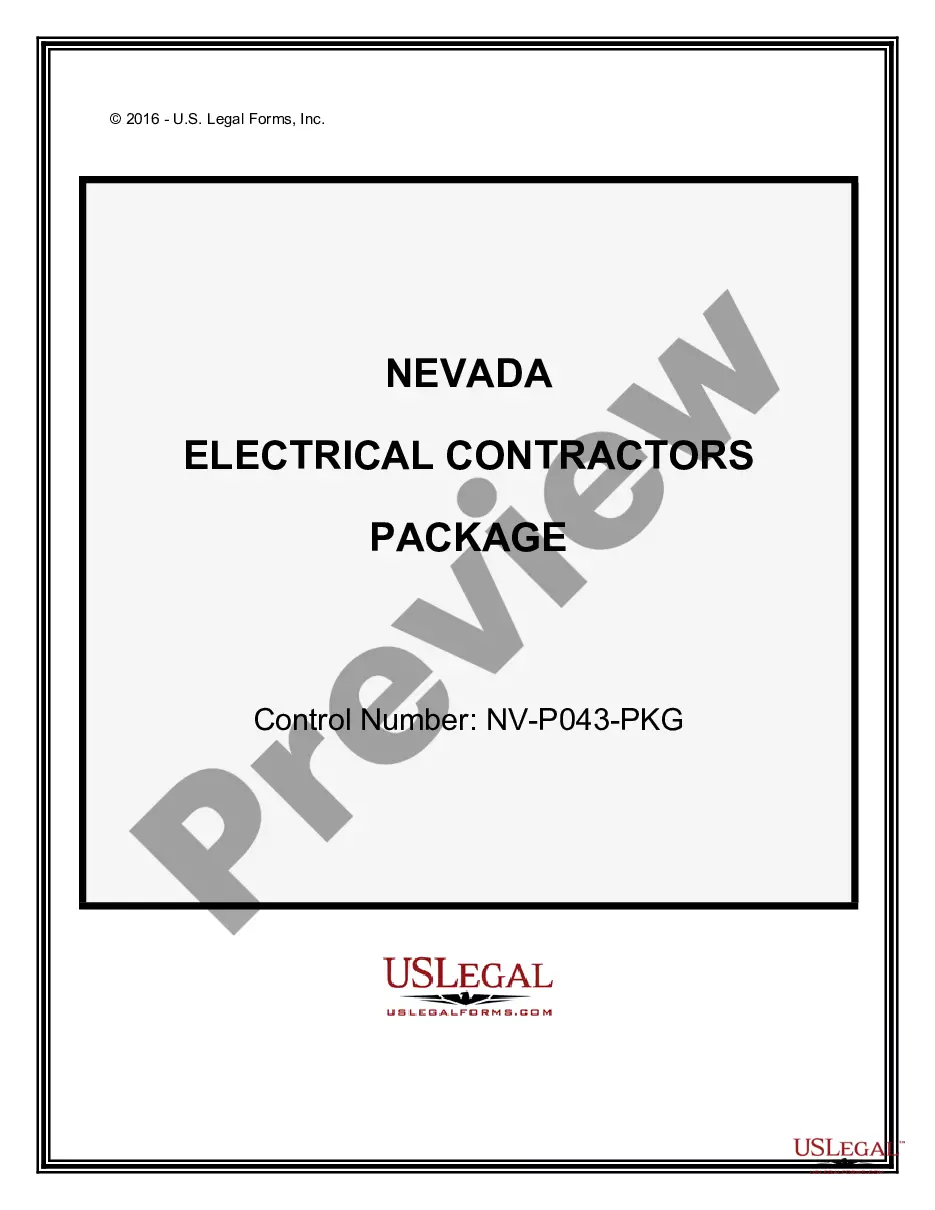
Nevada Electrical Contractor Package
Understanding this form package
The Nevada Electrical Contractor Package is a comprehensive set of legal forms tailored for electricians and electrical contractors working in Nevada. This package helps manage legal issues that may arise during electrical projects, whether related to new constructions or repairs. Unlike other general contractor packages, this collection includes state-specific forms, guaranteeing compliance with Nevada law, including a standard electrical contract.
Forms included in this package
- Electrical Contract for Contractor
- Contractor's Bid Log
- Contractor's Bid Follow Up Letter
- Contractor's Summary of an Estimate
- Contractor's Final Punch List
- Customer Satisfaction Survey
- Construction Company Evaluation by a Customer
- Construction Safety and Health Plan
- Change Order for Construction or Repairs by Contractor
- Certification of Completion by Contractor

Common use cases
This package is ideally used during various stages of an electrical project, such as:
- Before starting a new electrical installation or repair to set clear terms with clients.
- When submitting bids for electrical projects to keep track of pending offers and communications.
- To manage changes during construction with amendable change orders.
- At project completion to certify work and gather customer feedback effectively.
Who can use this document
- Licensed electrical contractors looking to formalize contracts and agreements.
- Property owners engaging contractors for electrical installations or repairs.
- Subcontractors involved in larger electrical projects needing formal documentation.
- Suppliers providing materials for electrical projects wanting clarity on agreements.
Steps to complete these forms
- Review the included forms to understand their purpose and requirements.
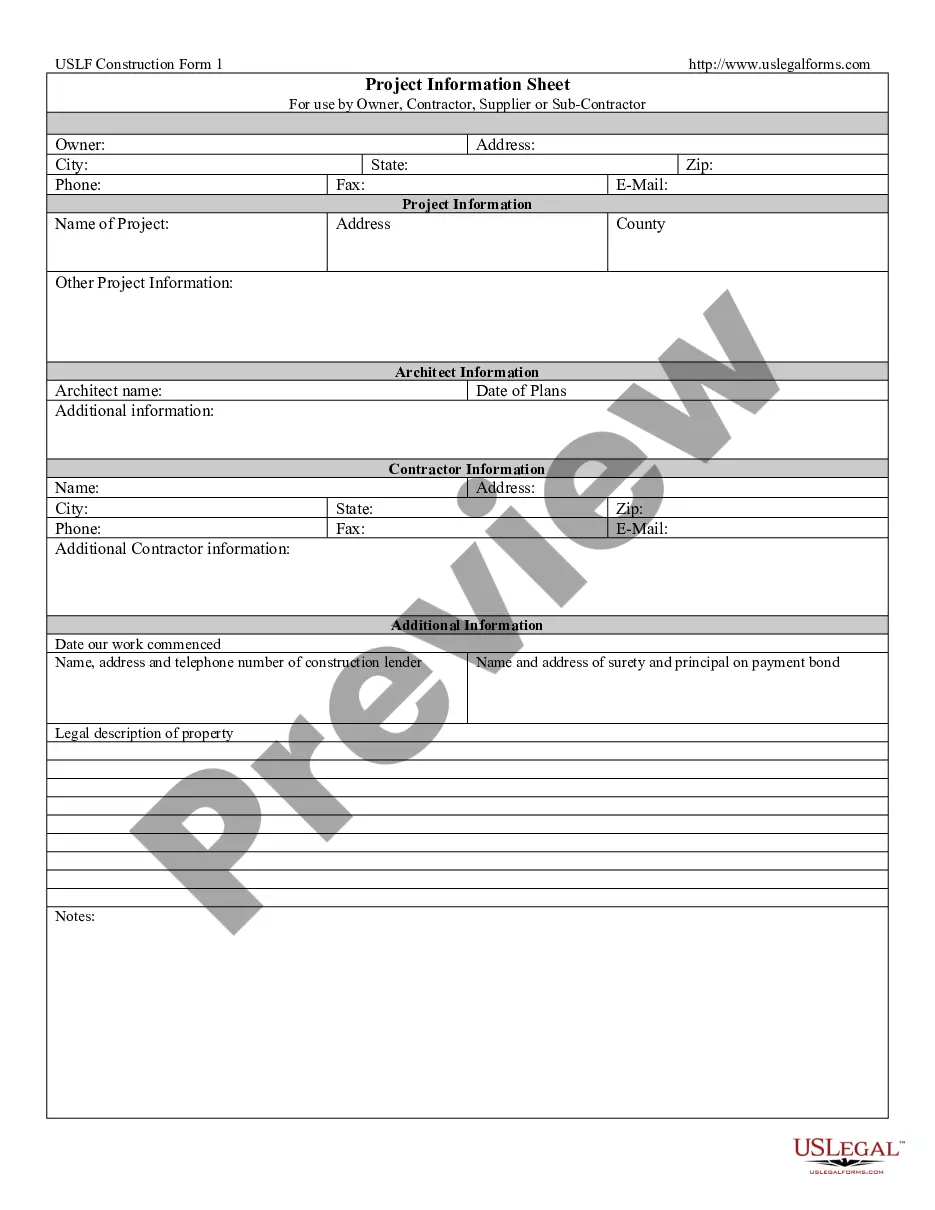
- Identify all parties involved in the electrical project, including contractors, subcontractors, and property owners.
- Fill out the Nevada electrical contract carefully, paying attention to terms and conditions.
- Use the bid log to track all submitted and outstanding bids during the project timeline.
- Collect customer feedback using the satisfaction survey upon project completion.
Do forms in this package need to be notarized?
Notarization is generally not required for forms in this package. However, specific circumstances or local laws may require it. You can complete notarization remotely through US Legal Forms, powered by Notarize, with 24/7 availability.
Get your form ready online
Our built-in tools help you complete, sign, share, and store your documents in one place.
Make edits, fill in missing information, and update formatting in US Legal Forms—just like you would in MS Word.
Download a copy, print it, send it by email, or mail it via USPS—whatever works best for your next step.
Sign and collect signatures with our SignNow integration. Send to multiple recipients, set reminders, and more. Go Premium to unlock E-Sign.
If this form requires notarization, complete it online through a secure video call—no need to meet a notary in person or wait for an appointment.
We protect your documents and personal data by following strict security and privacy standards.

Make edits, fill in missing information, and update formatting in US Legal Forms—just like you would in MS Word.

Download a copy, print it, send it by email, or mail it via USPS—whatever works best for your next step.

Sign and collect signatures with our SignNow integration. Send to multiple recipients, set reminders, and more. Go Premium to unlock E-Sign.

If this form requires notarization, complete it online through a secure video call—no need to meet a notary in person or wait for an appointment.

We protect your documents and personal data by following strict security and privacy standards.
Common mistakes to avoid
- Failing to customize the electrical contract to fit specific project needs.
- Not tracking bids accurately, leading to potential missed contracts.
- Ignoring safety plan requirements, which could result in workplace incidents.
Why use this package online
- Convenient access to downloadable forms that can be easily filled out digitally.
- Editability allows for quick adjustments to suit particular project needs.
- Reliability of attorney-drafted documents ensures compliance and legal validity.
Quick recap
- The Nevada Electrical Contractor Package provides essential legal forms for electrical projects.
- It is geared towards contractors, property owners, and subcontractors working within Nevada.
- Using these forms aids in managing projects effectively while ensuring compliance with state laws.
Looking for another form?

Form popularity
FAQ
All businesses or individuals who construct or alter any building, highway, road, parking facility, railroad, excavation, or other structure in Nevada must be licensed by the Nevada State Contractors Board. Contractors, including subcontractors and specialty contractors must be licensed before submitting bids.
Never pay the full amount up front for your swimming pool. According to the law, you should not pay more than 10% or $1,000; whichever is less, to get your project started.
To receive your contractor's license, you must take and pass the Business and Law exam and the trade exam for your classification of license. You'll schedule your test date after you submit your application and get approval from the Nevada State Contractors Board (NSCB).
In addition to the initial $300 application fee, you'll also be required to pay a biennial (every two years) $600 license fee if your application is approved.
Payment Schedule In Your Contract Before any work begins, a contractor will ask a homeowner to secure the job with a down payment. It shouldn't be more than 10-20 percent of the total cost of the job. Homeowners should never pay a contractor more than 10-20% before they've even stepped foot in their home.
In Nevada, you need to apply for a license and prove you have at least 4 years of experience or 3 years of education and a year of experience. There are also a number of fees and forms along the way. Becoming a Nevada licensed contractor requires a considerable commitment of time and money.
You shouldn't pay more than 10 percent of the estimated contract price upfront, according to the Contractors State License Board.
A: It's not uncommon for contractors to ask for a down payment up front to secure your spot on their schedule or purchase some of the job materials in advance. Asking for more than half of the project cost up front, though, is a big red flag.I recommend tying payments to progress made during the job.
If the contractor requests a large sum of money before work has begun, Mozen says you should ask specifically what types of work or materials those payments are covering.Contractors sometimes have other motives, other than purchasing materials, when they ask for large amounts of money in advance, Fowler says.