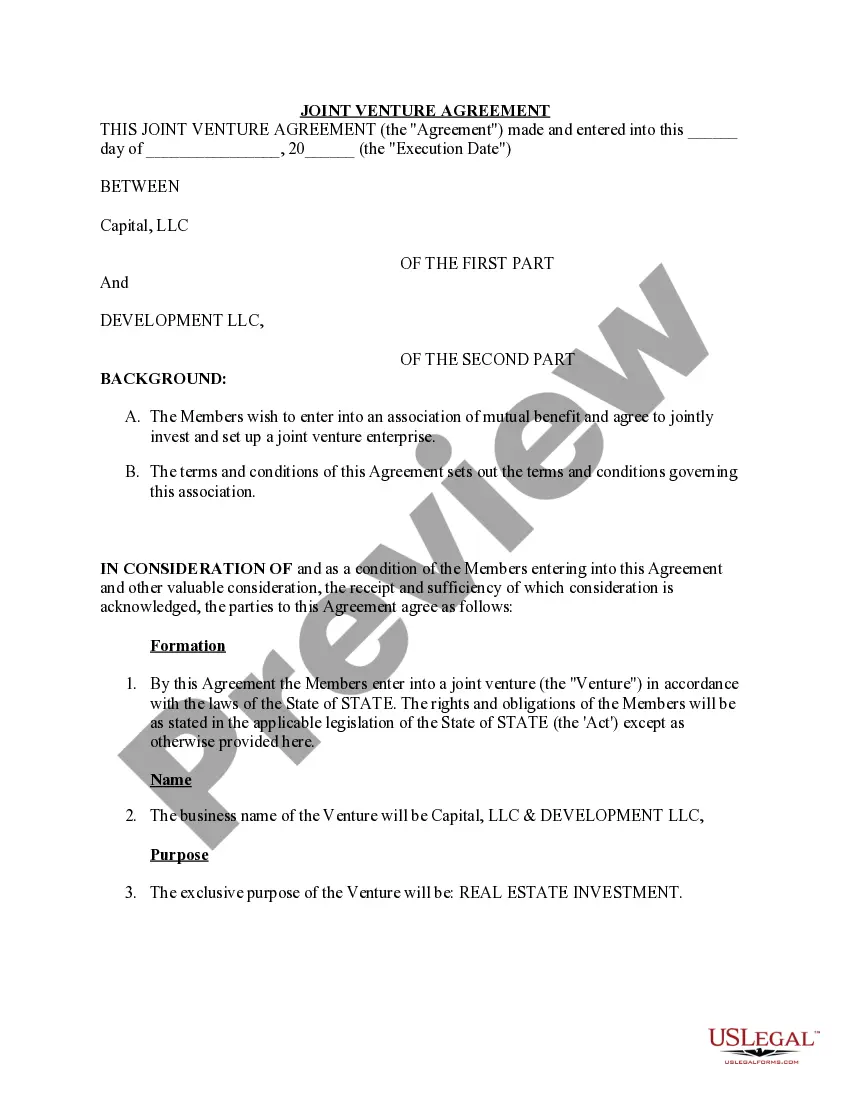
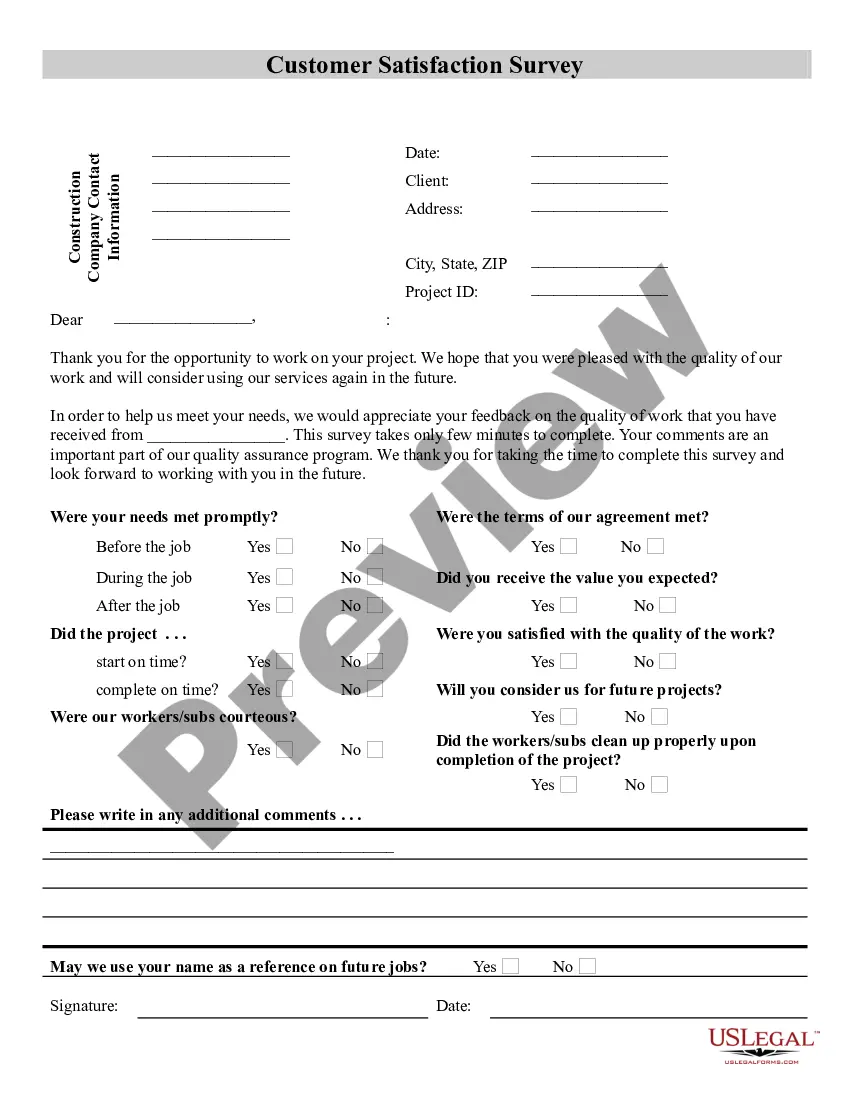
Customer Satisfaction Survey
What this document covers
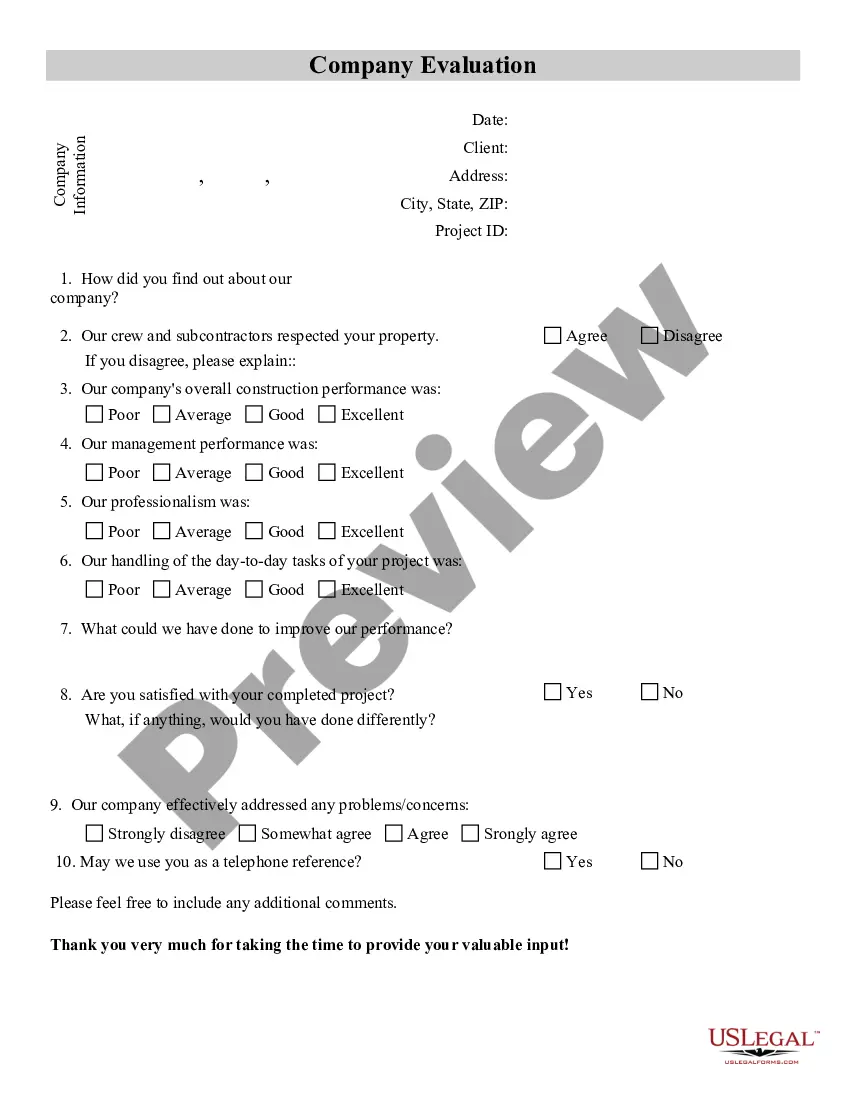
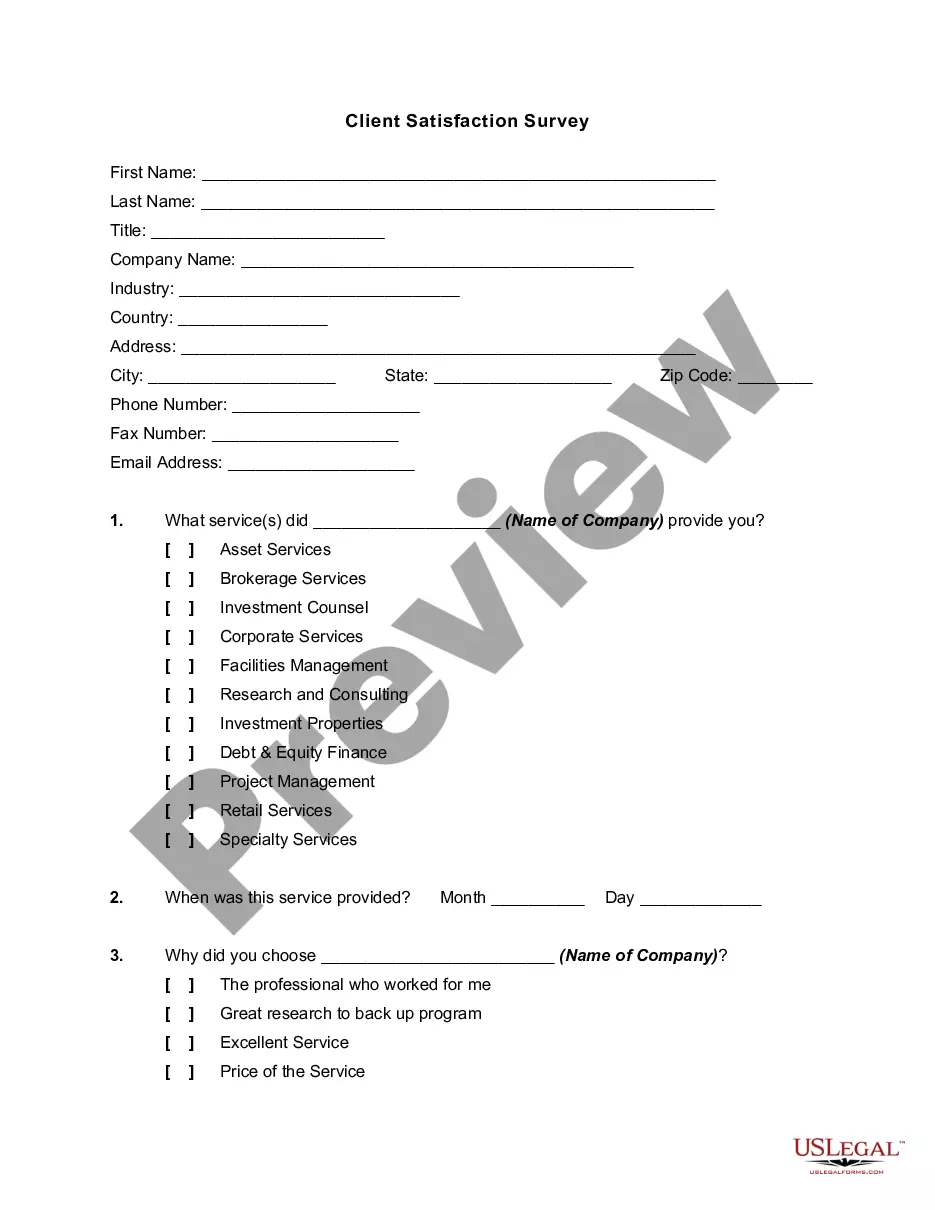
The Customer Satisfaction Survey is a legal form used by contractors to gather feedback from customers after completing a project. This form is designed to help contractors improve their services by understanding the client's experience. Unlike other evaluation forms, this survey specifically addresses customer sentiments regarding a specific job or service provided.
Key components of this form
- Customer Information: Section for the client's name and contact details.
- Project Details: Area to specify project name, location, and completion date.
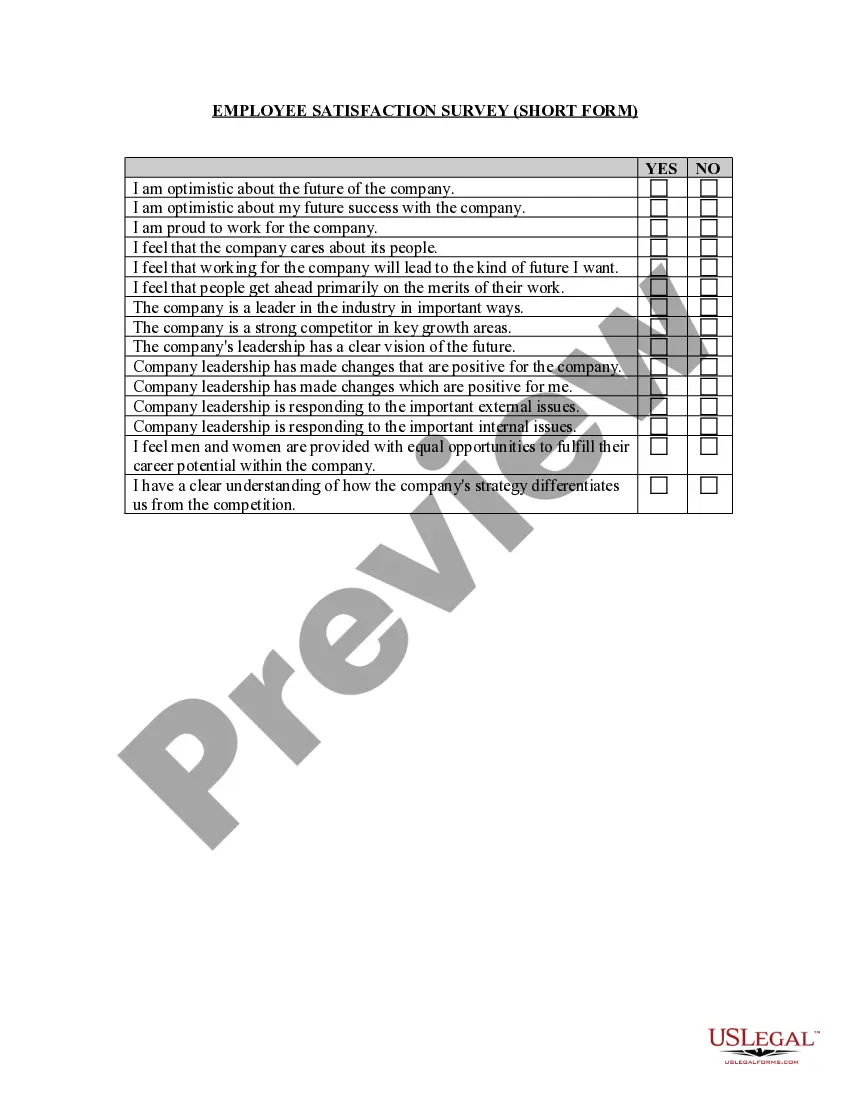
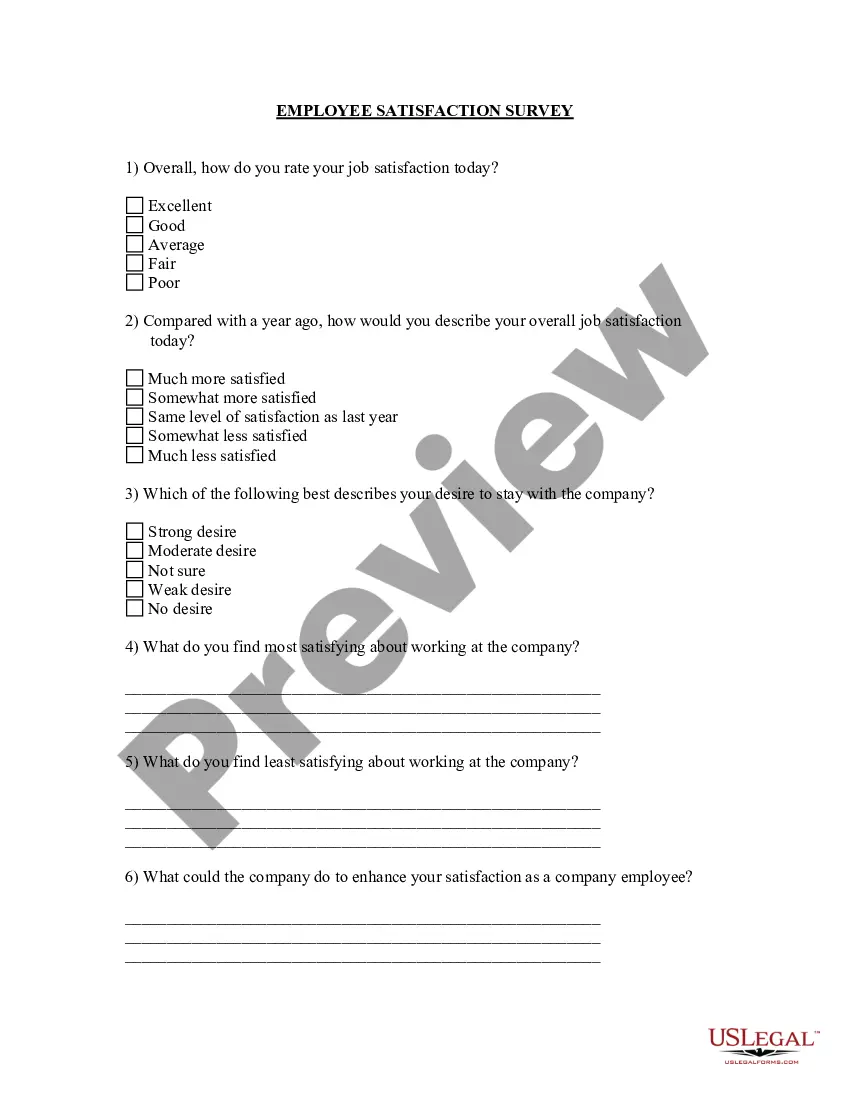
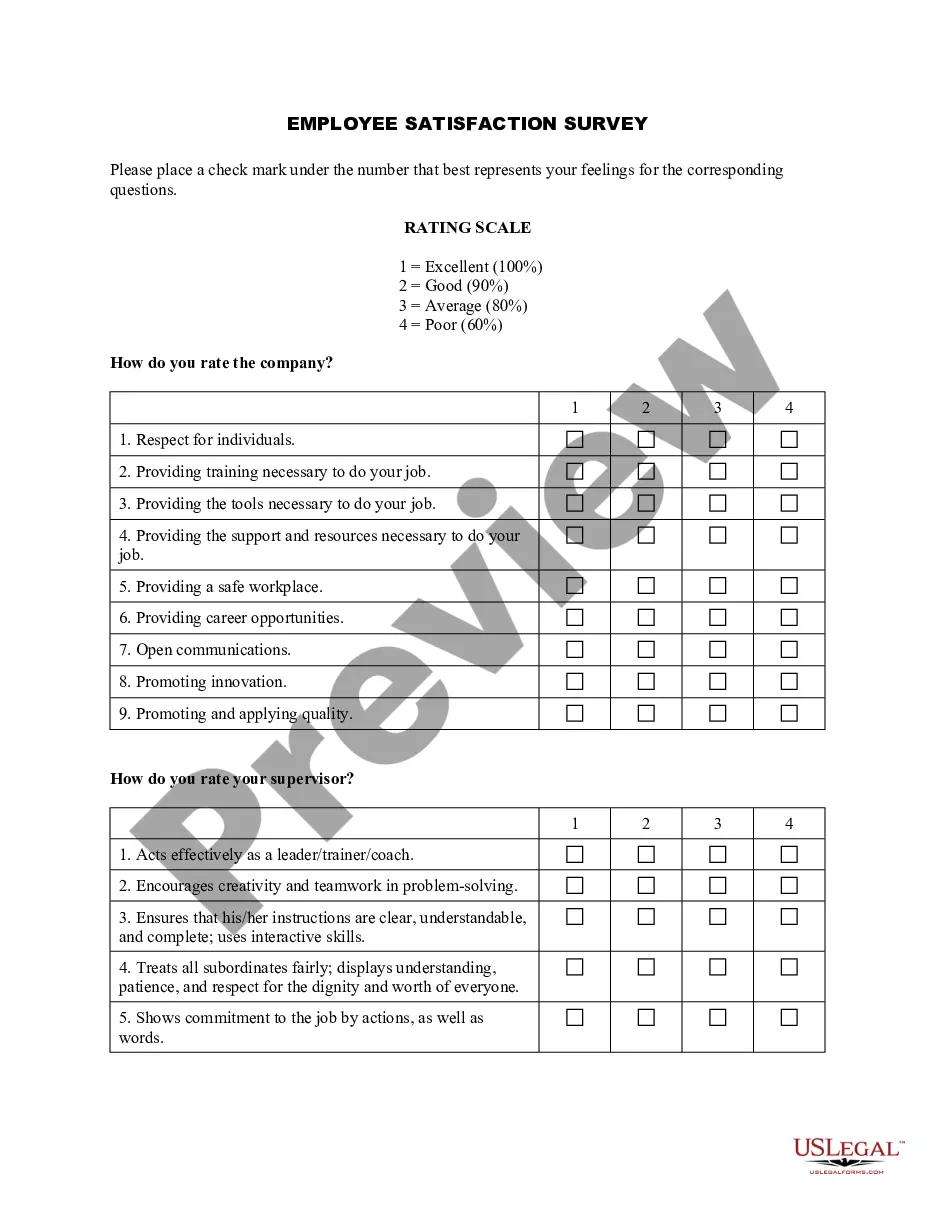
- Satisfaction Ratings: Likert scale questions to rate various aspects of service quality.
- Open-ended Questions: Space for additional comments and suggestions from the customer.
- Follow-up Section: Option for customers to indicate if they would like to be contacted for further discussion.
When this form is needed
This form is useful when a contractor completes a project and wishes to evaluate their performance through the client's perspective. It's ideal for use in various scenarios, including residential renovations, commercial construction projects, or service-related jobs where feedback is valuable for improving future work.
Who this form is for
Ideal users of the Customer Satisfaction Survey include:
- Contractors looking to improve service quality.
- Home improvement professionals seeking client feedback.
- Freelancers and service providers interested in gauging customer satisfaction.
- Businesses aiming to enhance client relationships and retention.
Steps to complete this form
- Identify the customer by entering their name and contact information.
- Specify details of the project, including the name, location, and completion date.
- Have the customer rate their satisfaction on the provided scale for different service aspects.
- Allow space for open-ended feedback by encouraging customers to write comments.
- Include a follow-up section to get consent for further communication if needed.
Does this form need to be notarized?
This form does not typically require notarization unless specified by local law.
Get your form ready online
Our built-in tools help you complete, sign, share, and store your documents in one place.
Make edits, fill in missing information, and update formatting in US Legal Forms—just like you would in MS Word.
Download a copy, print it, send it by email, or mail it via USPS—whatever works best for your next step.
Sign and collect signatures with our SignNow integration. Send to multiple recipients, set reminders, and more. Go Premium to unlock E-Sign.
If this form requires notarization, complete it online through a secure video call—no need to meet a notary in person or wait for an appointment.
We protect your documents and personal data by following strict security and privacy standards.

Make edits, fill in missing information, and update formatting in US Legal Forms—just like you would in MS Word.

Download a copy, print it, send it by email, or mail it via USPS—whatever works best for your next step.

Sign and collect signatures with our SignNow integration. Send to multiple recipients, set reminders, and more. Go Premium to unlock E-Sign.

If this form requires notarization, complete it online through a secure video call—no need to meet a notary in person or wait for an appointment.

We protect your documents and personal data by following strict security and privacy standards.
Mistakes to watch out for
- Failing to collect complete customer information.
- Not encouraging detailed feedback in open-ended questions.
- Overlooking the importance of follow-up communication options.
Why complete this form online
- Convenient access for both contractors and customers.
- Editability allows for easy customization to fit specific projects.
- Reliable collection of feedback in a structured format.
Main things to remember
- The Customer Satisfaction Survey helps contractors gather essential feedback.
- Understanding client satisfaction is crucial for service improvement.
- The form is easy to complete electronically or by hand.
Looking for another form?




Form popularity
FAQ
The Customer Satisfaction Survey is a construction-focused form contractors use after completing a project to gather feedback from clients. It captures customer information, project details, and client sentiments through Likert-scale ratings and open-ended questions, with an optional follow-up section to request further discussion. It helps contractors identify strengths and areas for improvement on a specific job.
After finishing a construction project, the Customer Satisfaction Survey is filled out to capture the client's perspective on that exact job. It guides users to complete Customer Information and Project Details, provide Satisfaction Ratings on service aspects, add Open-ended Comments, and indicate if a Follow-up contact is desired. This helps contractors assess performance for that specific project.
Good questions align with the form’s structure: gather quick judgments on service quality using the Satisfaction Ratings (Likert scale) and invite detailed input in Open-ended Questions. Focus on aspects like communication, workmanship, timeliness, and responsiveness, plus space for any additional comments about that particular construction project.
The form collects Customer Information (the client’s name and contact details) and Project Details (project name, location, and completion date). This structure ties feedback to a specific customer and job, supporting targeted improvements for future projects.
It uses Satisfaction Ratings with a Likert scale to quantify opinions on various service aspects. The Open-ended Questions collect qualitative feedback, and the optional Follow-up Section indicates whether the client wants to be contacted for more discussion. Together, these elements measure satisfaction and guide improvements for the project.
This form is tailored to a specific job or service in construction, tying feedback to a defined project via Project Details and Customer Information. It also includes a Follow-up Section to arrange further discussion, making it more actionable for construction contractors than generic feedback forms.