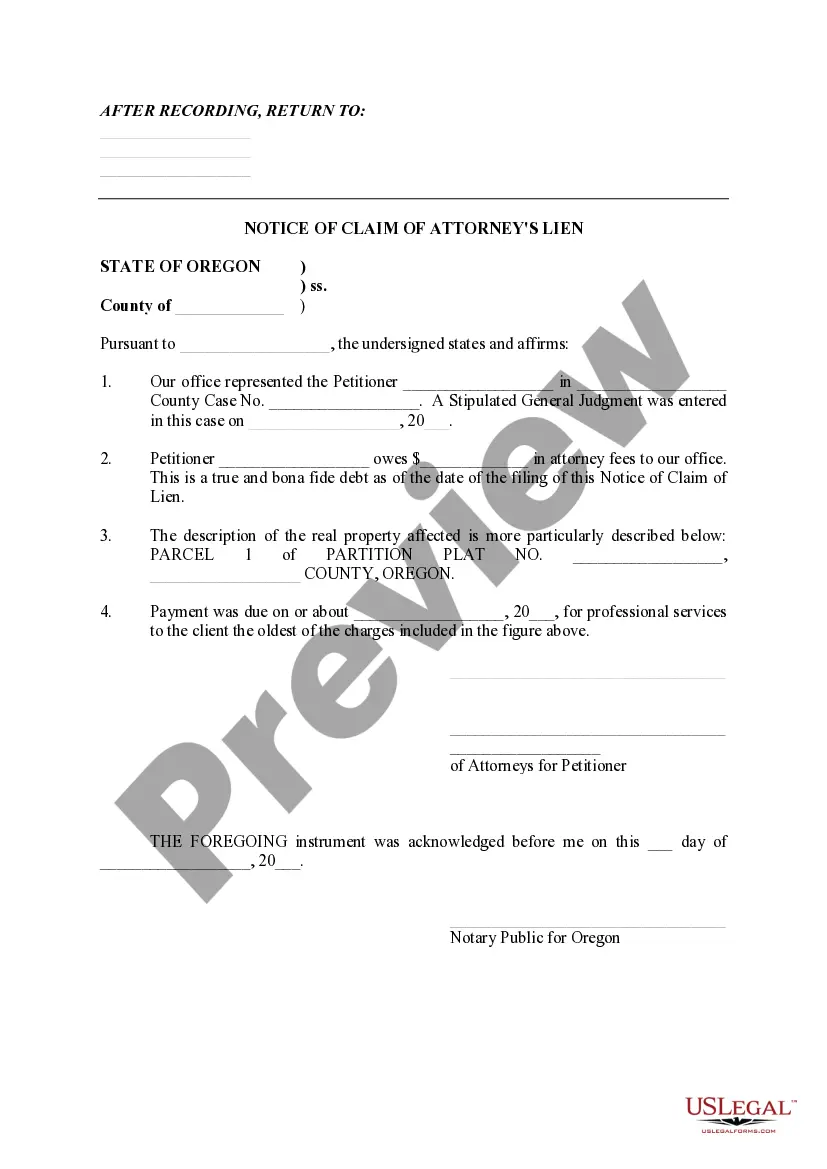
Exhibit B to Operating Agreement - Form of Lease
Understanding this form
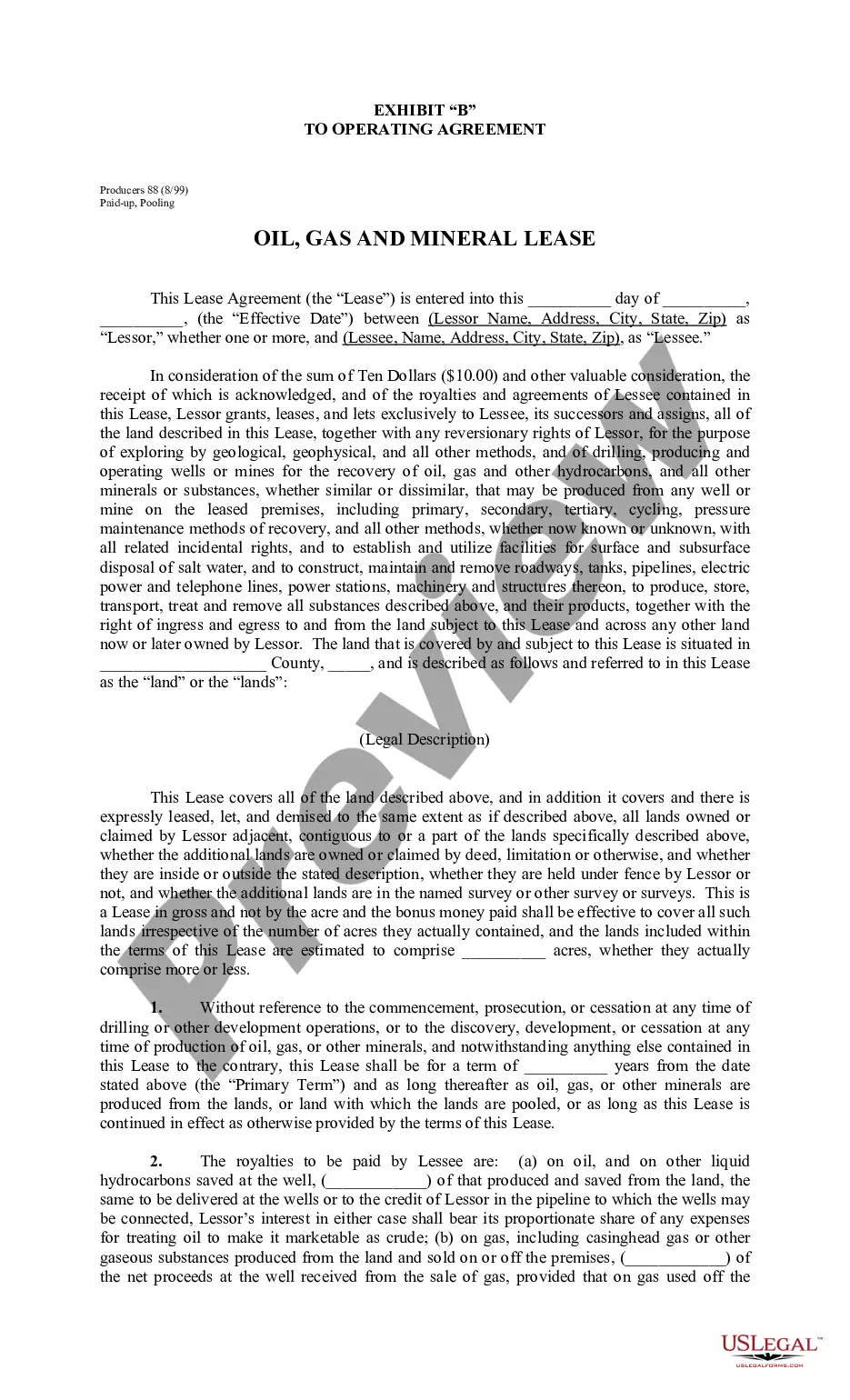
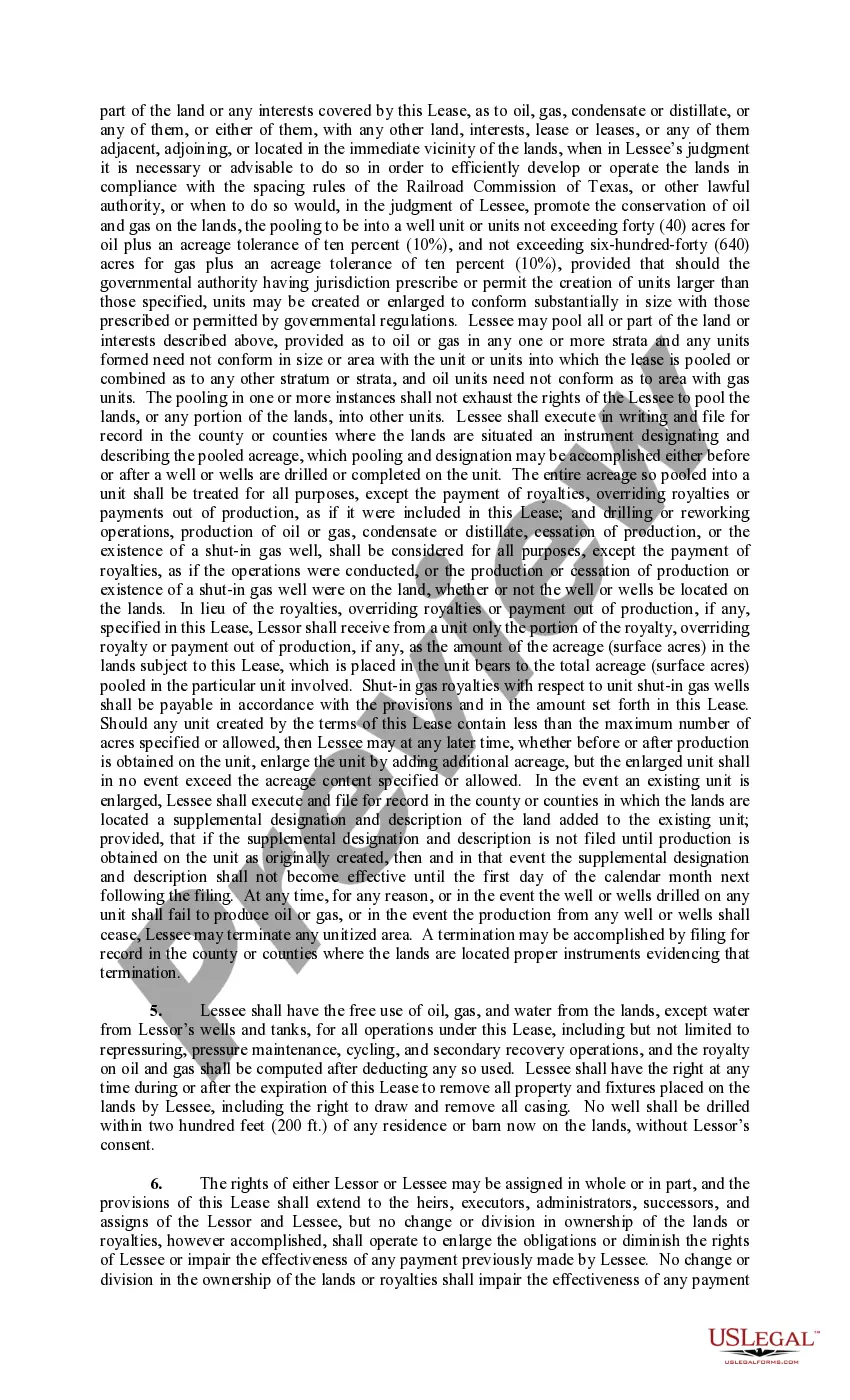
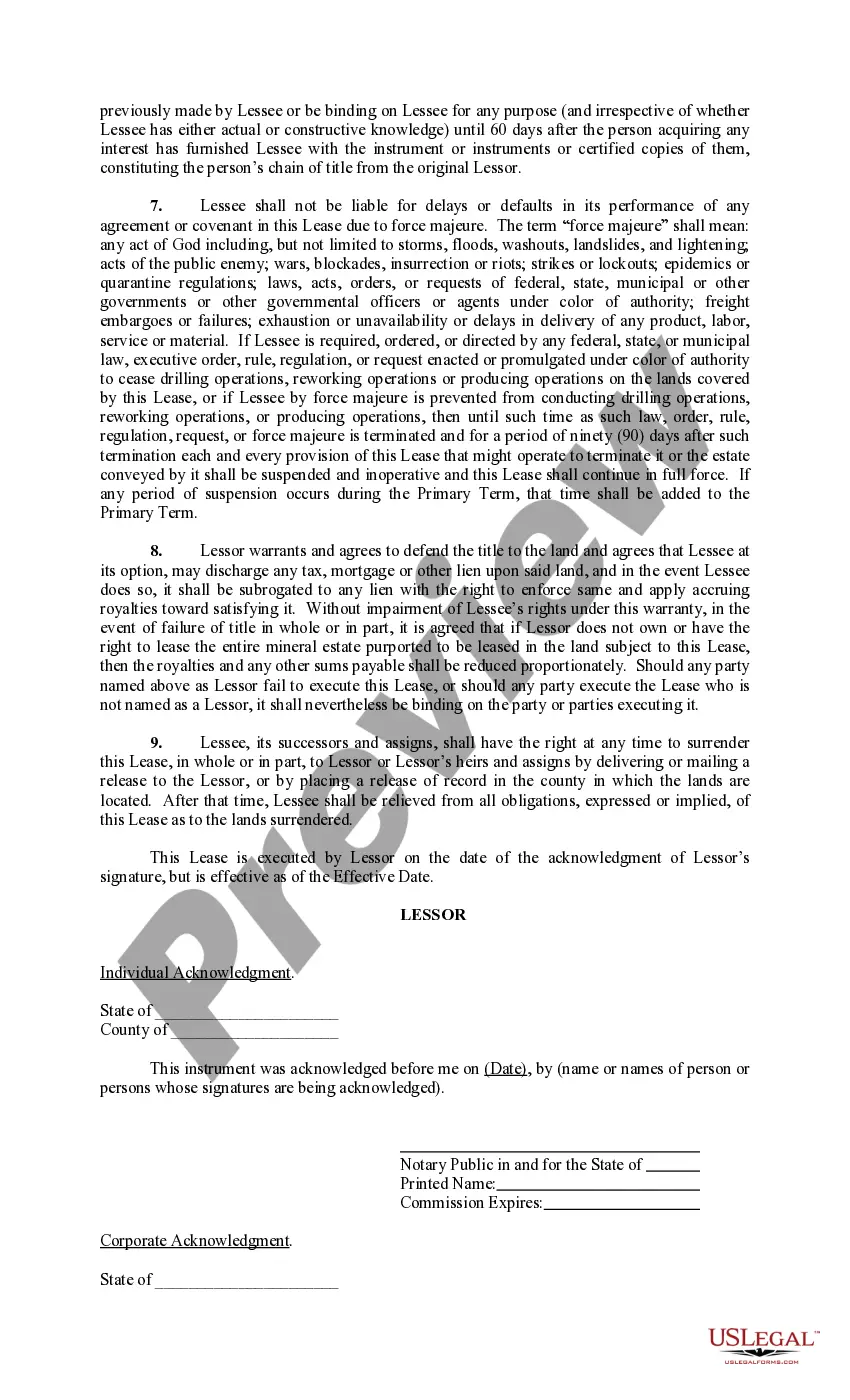
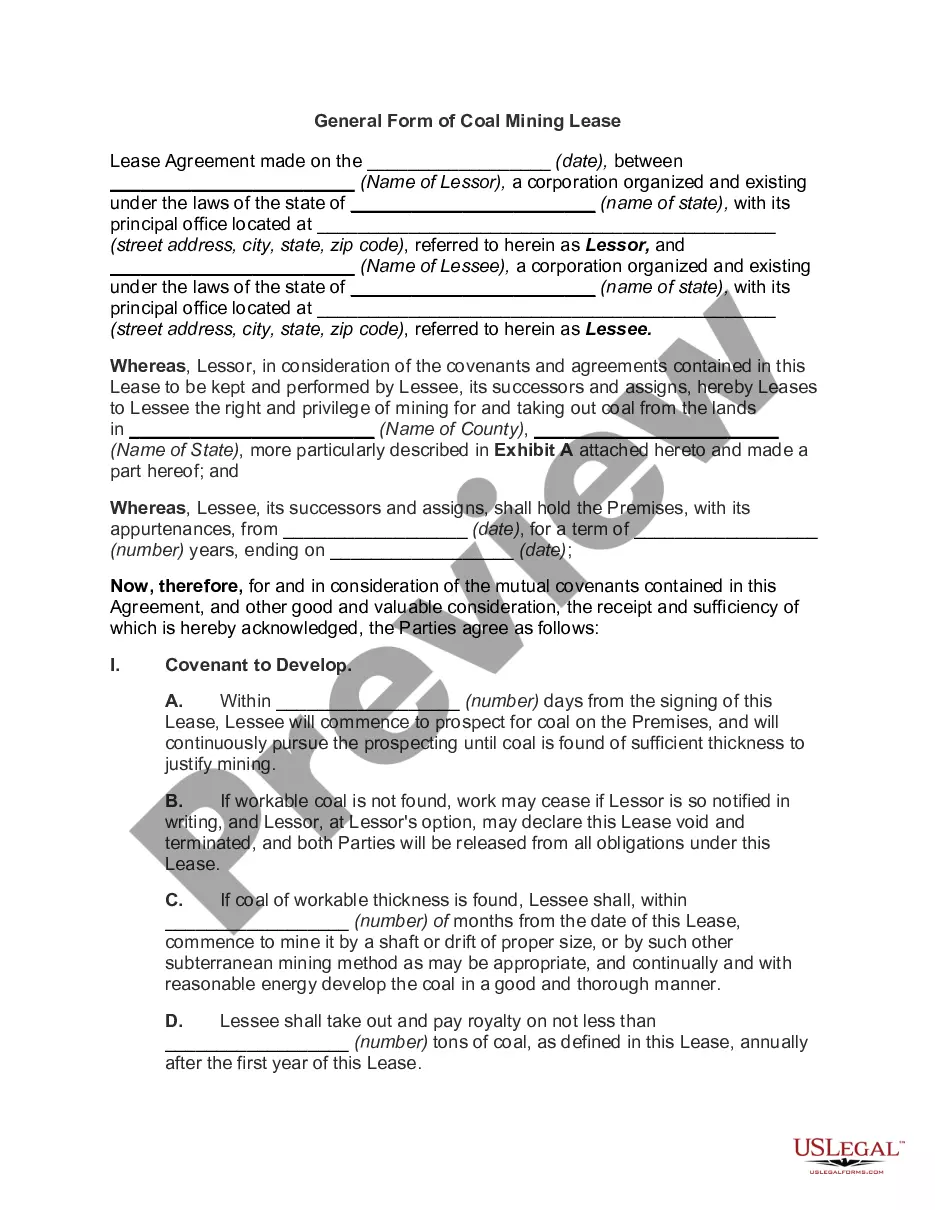
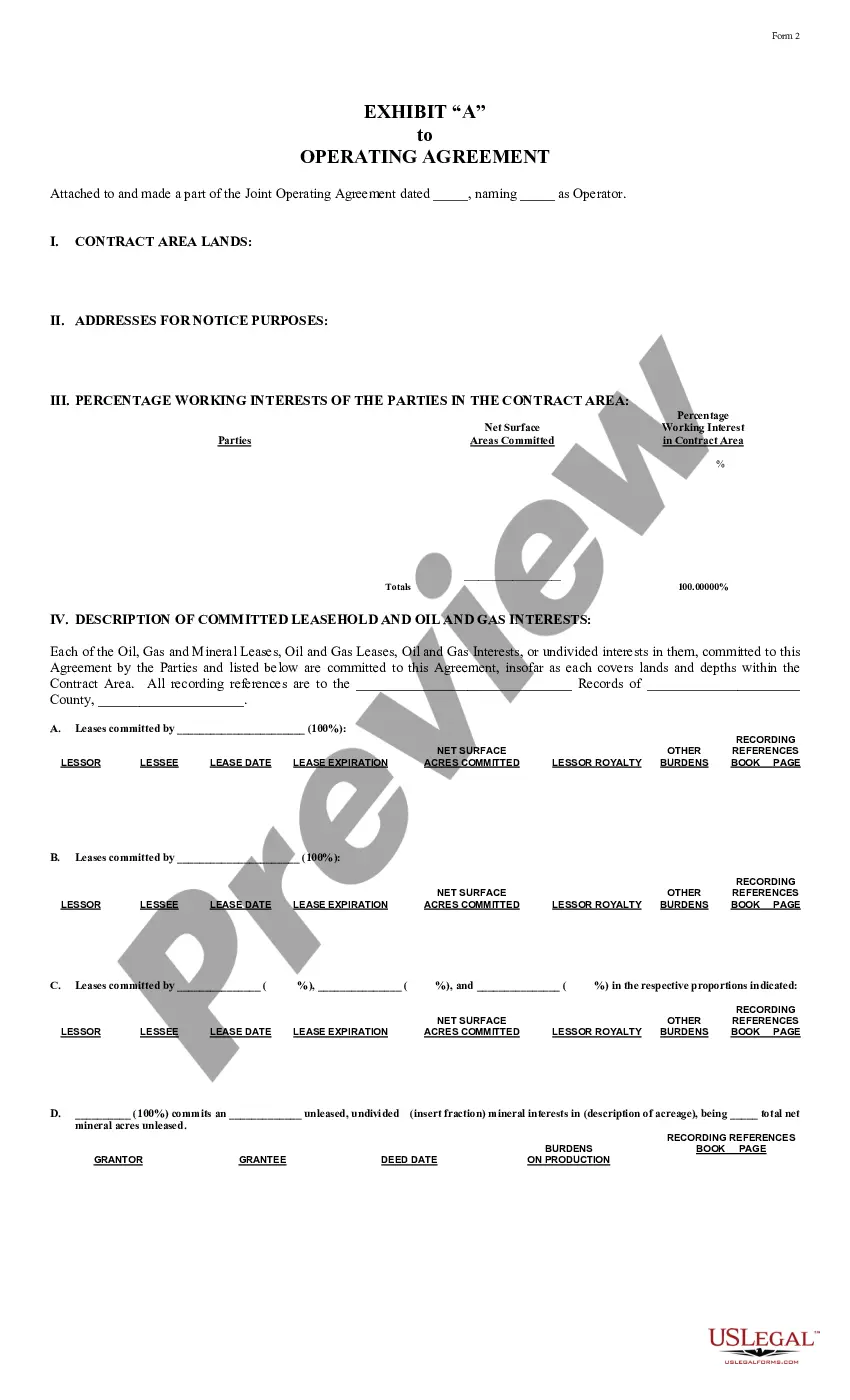
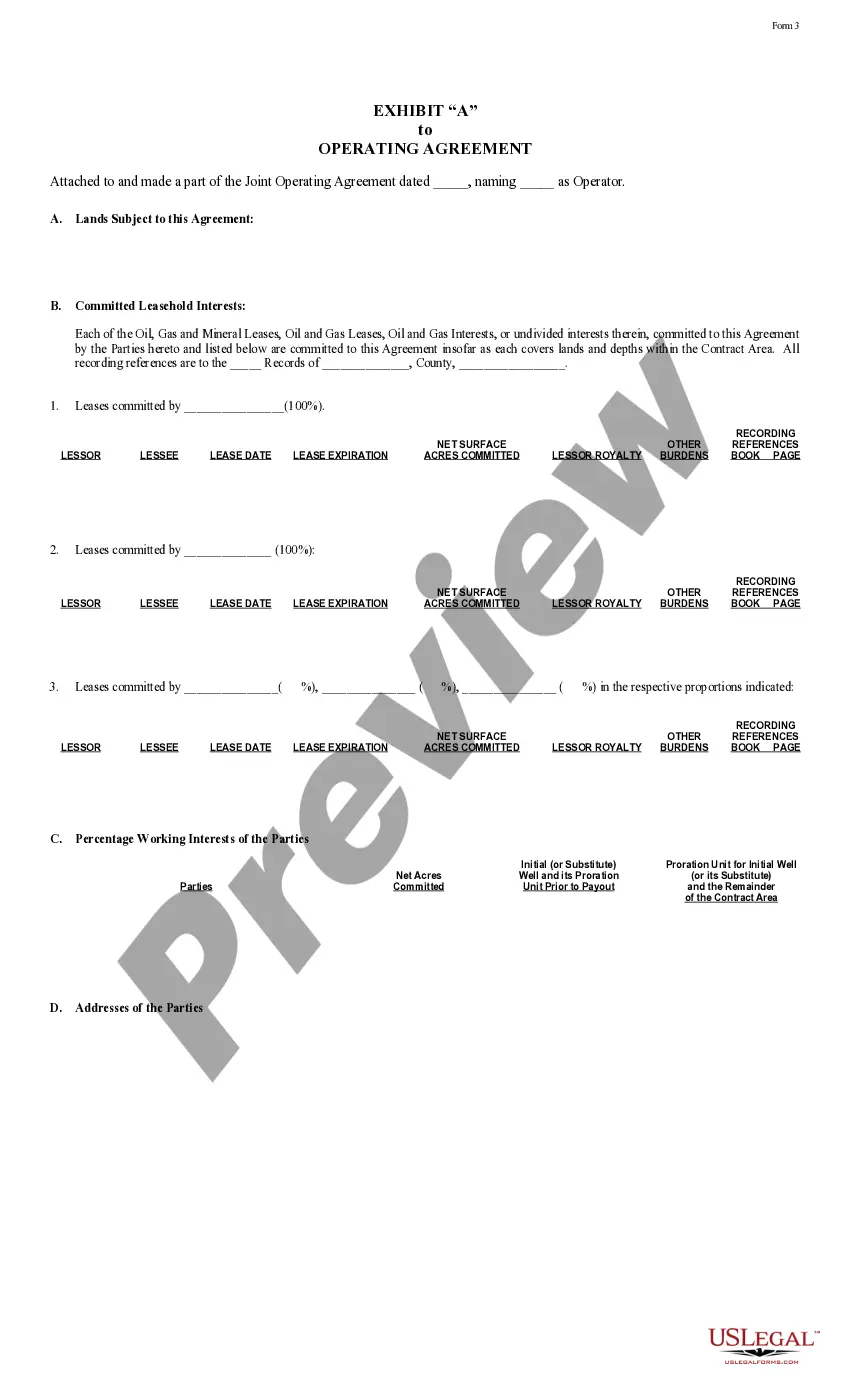
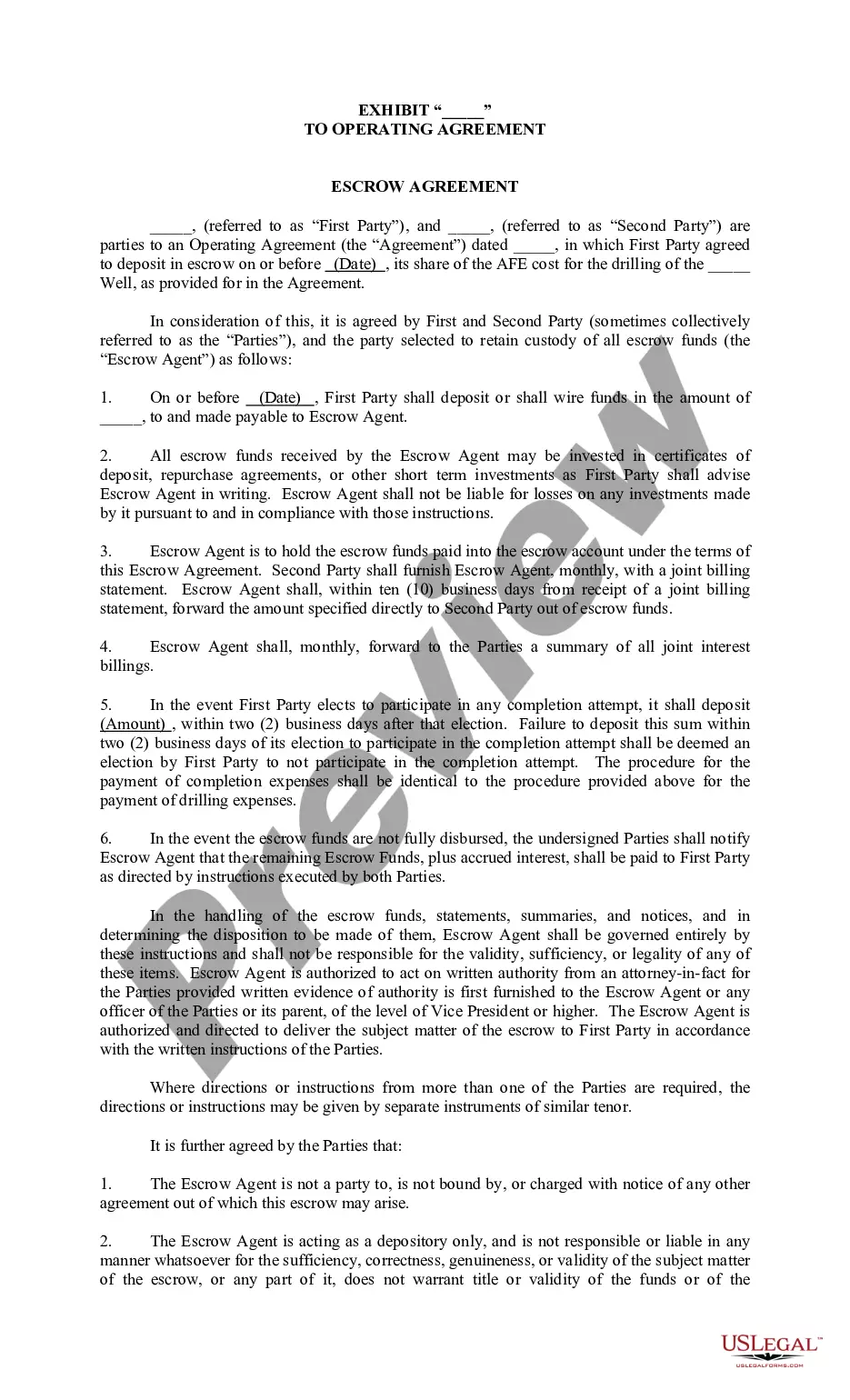
The Exhibit B to Operating Agreement - Form of Lease is a legal document that serves as an Oil, Gas, and Mineral Lease. This form outlines the terms under which a landowner (Lessor) grants a lessee the right to explore and produce oil, gas, and other minerals from a specified property. Unlike other lease forms, this document is specifically tailored for the oil and gas industry and includes detailed provisions regarding royalties, property usage, and the duration of the lease.
Key components of this form
- Effective Date: The commencement date of the lease agreement.
- Parties Involved: Identification of the Lessor and Lessee, including addresses.
- Leased Property: Detailed legal description of the land being leased.
- Primary Term: Duration of the lease and conditions for renewal based on production.
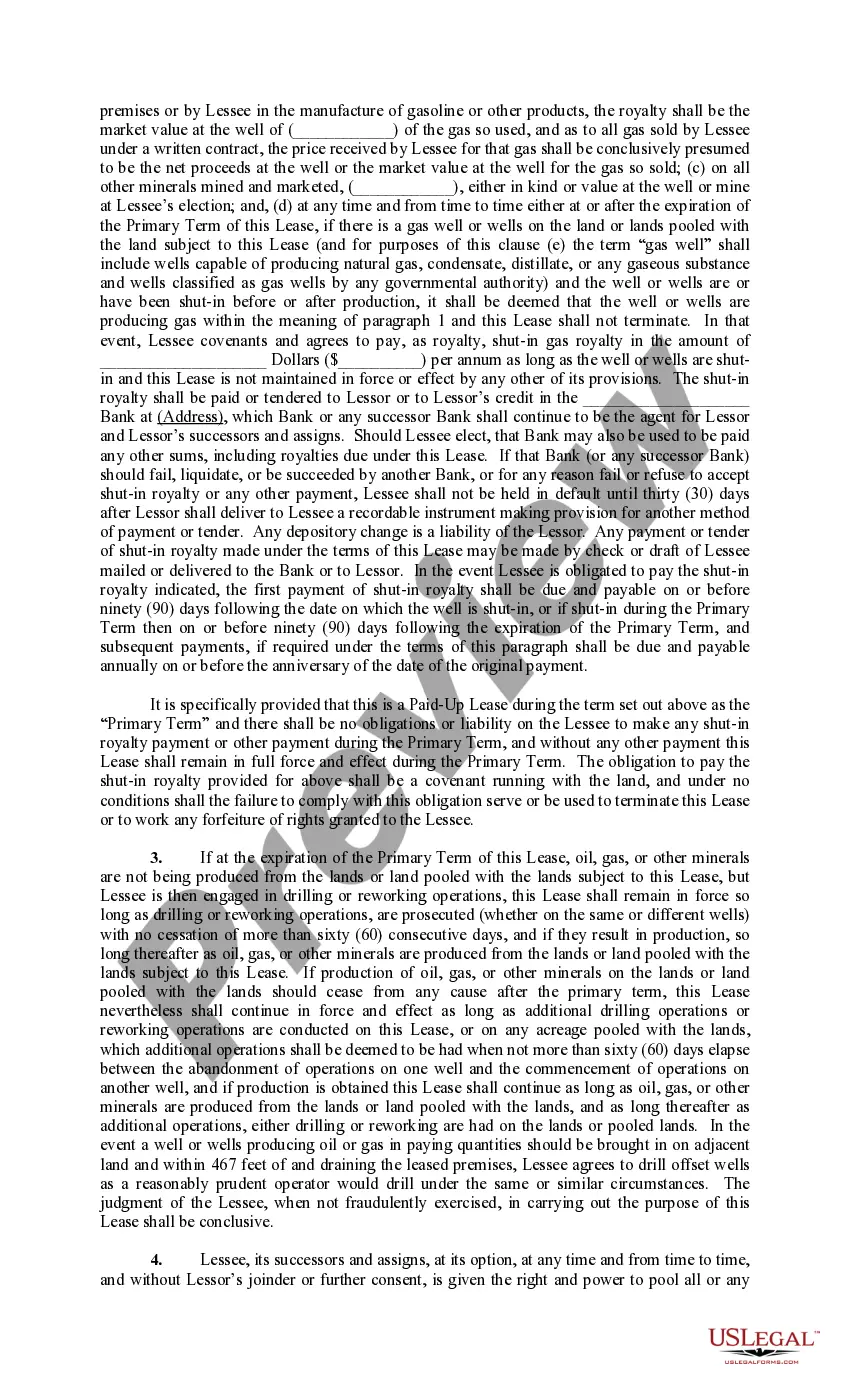
- Royalty Payments: Detailed descriptions of royalty calculations for oil, gas, and other minerals produced.
- Shut-in Provisions: Terms related to payment for non-producing gas wells.
When to use this document
This form should be used when a landowner leases their property for the exploration and production of oil, gas, or minerals. It is particularly relevant when the landowner wants to ensure that their rights and royalties are clearly defined and that the lessee is obligated to properly develop and manage the resources on the land. Situations may include negotiations with oil and gas companies, or if resource extraction activities are planned on the property.
Who this form is for
- Landowners seeking to lease their property for oil, gas, or mineral extraction.
- Energy companies or individuals acting as lessees looking to secure rights for resource exploration.
- Real estate professionals involved in oil and gas leasing.
- Attorneys specializing in energy or property law.
Completing this form step by step
- Identify the parties: Fill in the names and addresses of the Lessor and Lessee.
- Specify the property: Include the legal description of the land to be leased.
- Enter the effective date: Provide the date the lease agreement becomes active.
- Determine the primary term: Specify the duration of the lease, including any renewal conditions.
- Calculate royalty percentages: Clearly state the agreed-upon royalty rates for oil, gas, and minerals.
Is notarization required?
Notarization is required for this form to take effect. Our online notarization service, powered by Notarize, lets you verify and sign documents remotely through an encrypted video session, available 24/7.
Get your form ready online
Our built-in tools help you complete, sign, share, and store your documents in one place.
Make edits, fill in missing information, and update formatting in US Legal Forms—just like you would in MS Word.
Download a copy, print it, send it by email, or mail it via USPS—whatever works best for your next step.
Sign and collect signatures with our SignNow integration. Send to multiple recipients, set reminders, and more. Go Premium to unlock E-Sign.
If this form requires notarization, complete it online through a secure video call—no need to meet a notary in person or wait for an appointment.
We protect your documents and personal data by following strict security and privacy standards.

Make edits, fill in missing information, and update formatting in US Legal Forms—just like you would in MS Word.

Download a copy, print it, send it by email, or mail it via USPS—whatever works best for your next step.

Sign and collect signatures with our SignNow integration. Send to multiple recipients, set reminders, and more. Go Premium to unlock E-Sign.

If this form requires notarization, complete it online through a secure video call—no need to meet a notary in person or wait for an appointment.

We protect your documents and personal data by following strict security and privacy standards.
Common mistakes
- Failing to provide an accurate legal description of the property.
- Omitting essential details regarding royalty calculations.
- Not clearly specifying the effective date or term of the lease.
- Neglecting to sign or improperly executing the lease document.
Why complete this form online
- Convenient download and printing options allow for immediate access to the form.
- Editability ensures that the specific terms can be easily customized to suit individual requirements.
- Access to professionally drafted content increases reliability and legal compliance.
Looking for another form?
Form popularity
FAQ
When you hire a lawyer in the Priori network, drafting an operating agreement typically costs anywhere from $350-$1000 for a single-member operating agreement and from $750-$5000 for a multi-member operating agreement.
An operating agreement is a key document used by LLCs because it outlines the business' financial and functional decisions including rules, regulations and provisions. The purpose of the document is to govern the internal operations of the business in a way that suits the specific needs of the business owners.
There is no requirement that the operating agreement is notarized. Even without being notarized, the document is still considered legally enforceable among the parties.
An operating agreement is mandatory as per laws in only 5 states: California, Delaware, Maine, Missouri, and New York. LLCs operating without an operating agreement are governed by the state's default rules contained in the relevant statute and developed through state court decisions.
Most states do not require LLCs to have this document, so many LLCs choose not to draft one. While it may not be a requirement to have an operating agreement, it's actually in the best interest of an LLC to draft one.However, a written operating agreement defines in writing how the LLC is run.
The requirement of an operating agreement depends on the state it was formed in. While many states do not require operating agreements, some, such as Missouri and New York. This information can generally be found on your secretary of state website.
You can use online services to create an operating agreement, but you are better served by getting the help of an attorney. Your attorney can make sure all the relevant clauses are included, and he or she can tailor the document to the requirements of your state.