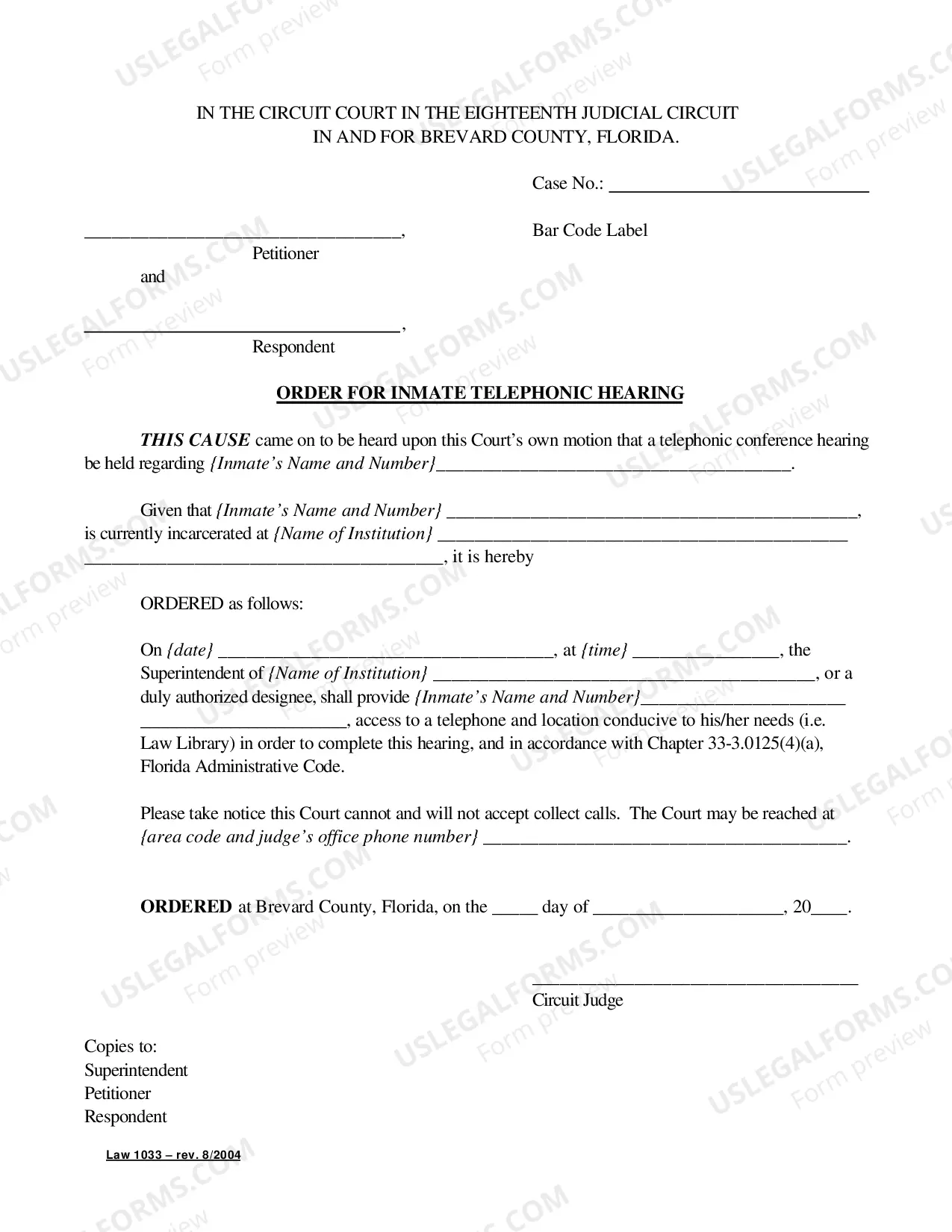
Oregon Deed of Trust on Residential Property Securing Loan Made by an Individual to Another Individual or Individuals
Understanding this form
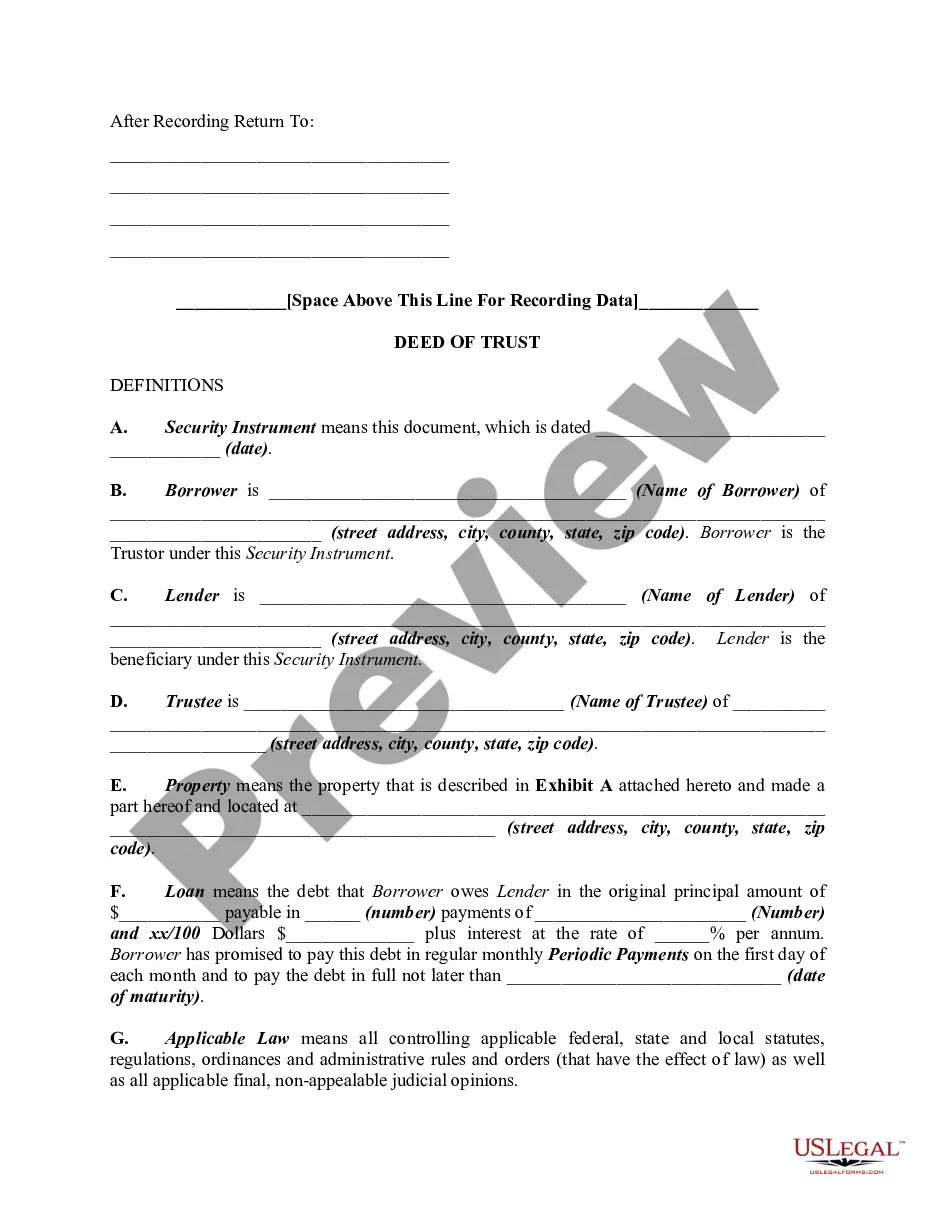
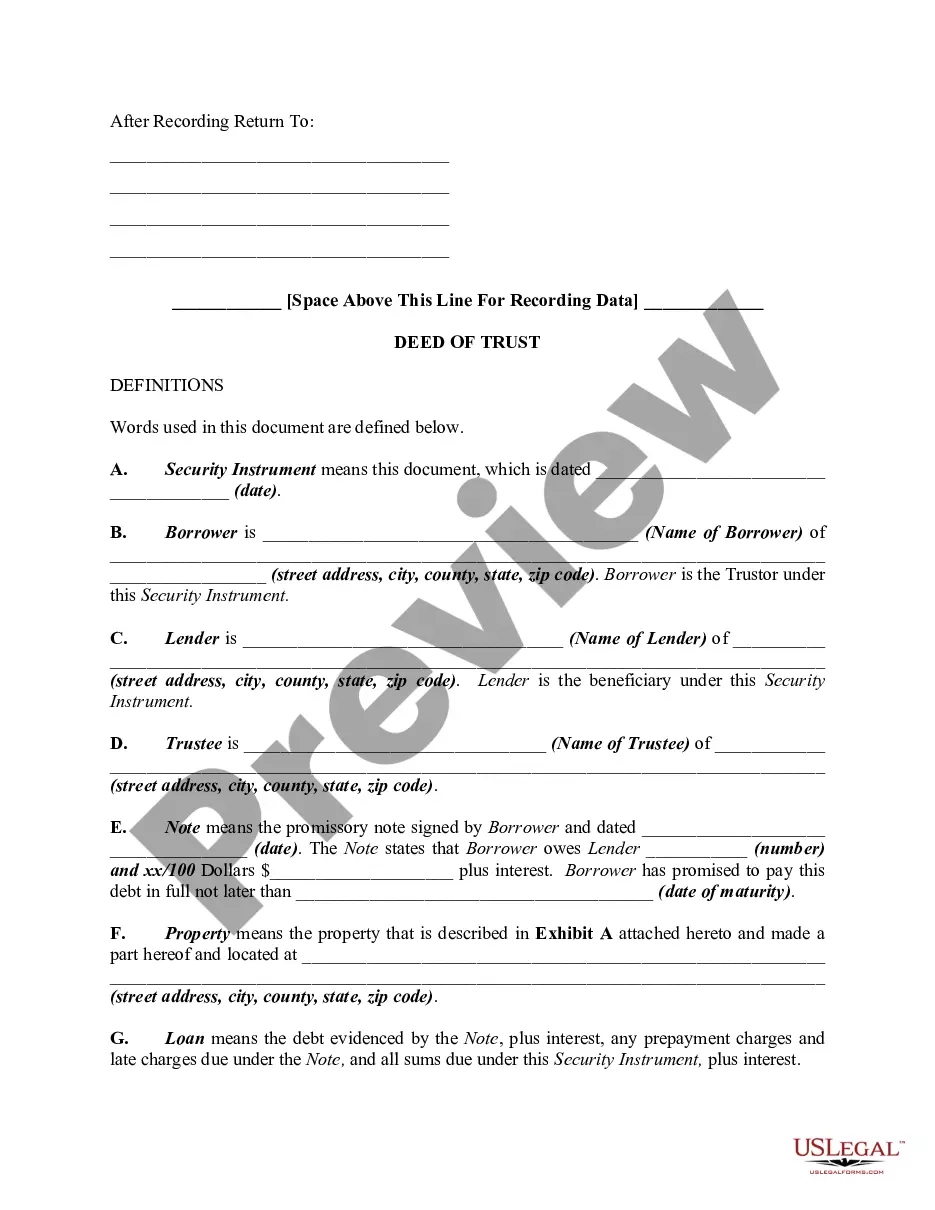
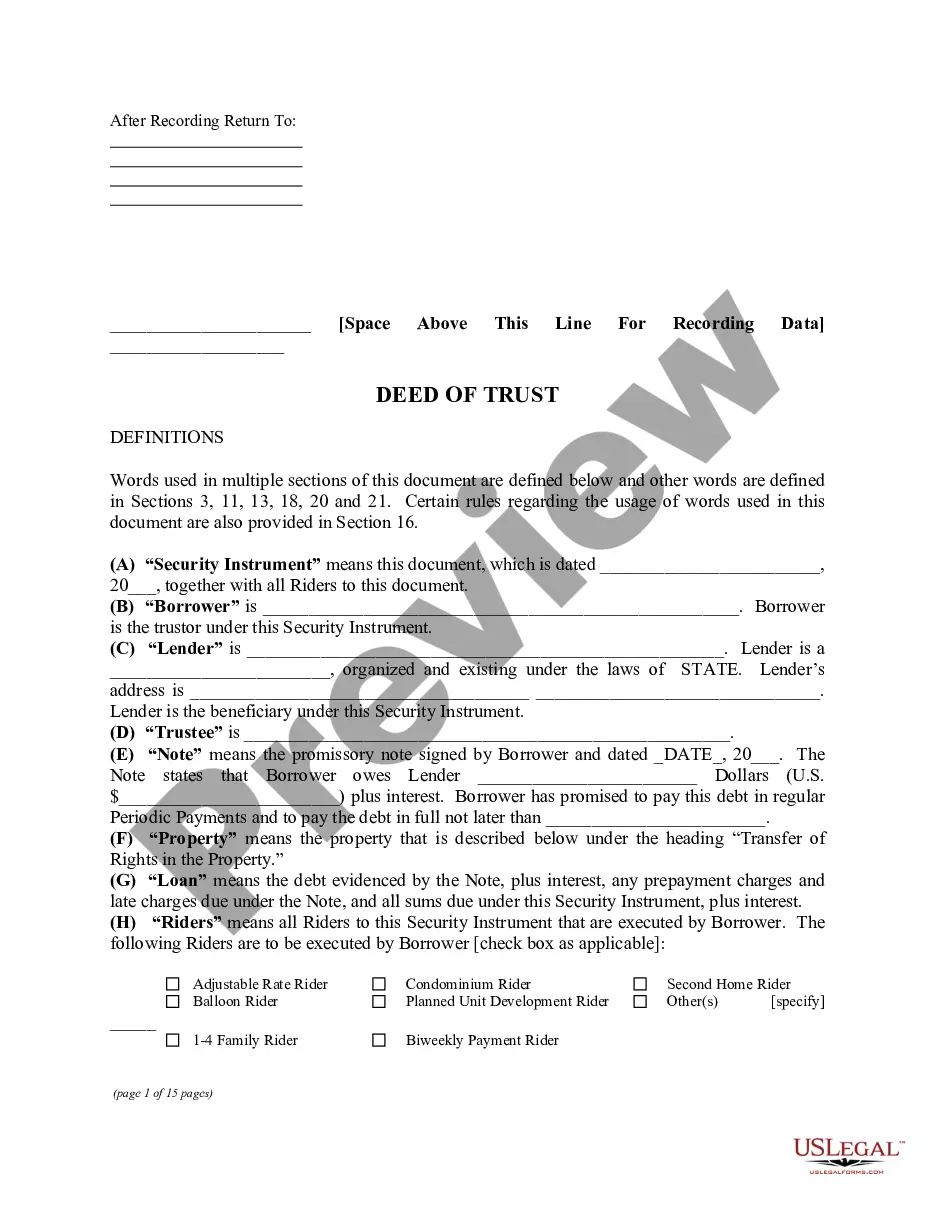
The Deed of Trust on Residential Property Securing Loan Made by an Individual to Another Individual is a legal document that establishes a trust agreement between a borrower (Trustor), a lender (Beneficiary), and a trustee. This document secures a loan made by an individual to another individual for the purchase or refinancing of a residential property. Unlike a mortgage, a deed of trust involves three parties and provides a quicker process for foreclosures in case of default.
Key parts of this document
- Definitions of key parties involved: Borrower, Lender, and Trustee.
- Details of the property being financed, including the address.
- Loan terms, including principal amount, payment schedule, and interest rate.
- Borrower's obligations, including payment responsibilities and property maintenance.
- Conditions under which the lender can enforce rights and initiate foreclosure.




When to use this document
This form is used when an individual lends money to another individual for the purchase or refinancing of a home. It is appropriate in situations where the borrower needs to secure the loan against the residential property, providing assurance to the lender that they have a claim to the property in case of default. It is often utilized in private lending arrangements between family members, friends, or other private parties.
Intended users of this form
- Individuals acting as borrowers seeking financing for a residential property.
- Individuals offering loans to others for home purchases or refinancing.
- Trustees assigned to manage the trust on behalf of the lender.
Completing this form step by step
- Identify the parties: Fill in the names and addresses of the Borrower, Lender, and Trustee.
- Specify the property: Enter the complete address and any legal descriptions as needed.
- Detail the loan terms: Include the loan amount, payment schedule, and interest rate.
- Add signatures: Ensure all parties sign the deed of trust and have it notarized if required.
- Record the document: Submit the completed deed of trust to the appropriate county office for recording.
Does this document require notarization?
This document requires notarization to meet legal standards. US Legal Forms provides secure online notarization powered by Notarize, allowing you to complete the process through a verified video call, available 24/7.
Get your form ready online
Our built-in tools help you complete, sign, share, and store your documents in one place.
Make edits, fill in missing information, and update formatting in US Legal Forms—just like you would in MS Word.
Download a copy, print it, send it by email, or mail it via USPS—whatever works best for your next step.
Sign and collect signatures with our SignNow integration. Send to multiple recipients, set reminders, and more. Go Premium to unlock E-Sign.
If this form requires notarization, complete it online through a secure video call—no need to meet a notary in person or wait for an appointment.
We protect your documents and personal data by following strict security and privacy standards.

Make edits, fill in missing information, and update formatting in US Legal Forms—just like you would in MS Word.

Download a copy, print it, send it by email, or mail it via USPS—whatever works best for your next step.

Sign and collect signatures with our SignNow integration. Send to multiple recipients, set reminders, and more. Go Premium to unlock E-Sign.

If this form requires notarization, complete it online through a secure video call—no need to meet a notary in person or wait for an appointment.

We protect your documents and personal data by following strict security and privacy standards.
Common mistakes to avoid
- Failing to accurately identify all parties involved.
- Omitting key property details or legal descriptions.
- Neglecting to sign or notarize the document when required.
- Not recording the deed of trust with the county office.
Advantages of online completion
- Convenience of downloading and using the form at your own pace.
- Editability allows users to customize fields before finalizing.
- Access to reliable templates drafted by licensed attorneys.
Legal use & context
- This deed of trust serves as a binding contract that outlines the relationship between a borrower and a lender using real property as collateral.
- It is enforceable under state law, thus providing legal recourse in case of default or disputes.
- Understanding the terms of the deed of trust is essential to ensure compliance and protection for both parties.
Summary of main points
- The deed of trust is a crucial document for securing loans with real estate.
- It involves multiple parties: borrower, lender, and trustee, each with distinct roles and responsibilities.
- Proper completion and understanding of this form can prevent legal issues and disputes.
- Consulting with legal experts can ensure local laws and requirements are met.
Looking for another form?



Form popularity
FAQ
The person who owns the property usually signs a promissory note and a deed of trust. The deed of trust does not have to be recorded to be valid.
In real estate in the United States, a deed of trust or trust deed is a legal instrument which is used to create a security interest in real property wherein legal title in real property is transferred to a trustee, which holds it as security for a loan (debt) between a borrower and lender.
In a deed of trust, the borrower is called the trustor and the lender is the beneficiary. The trustee holds title to the property until the trustor has fully repaid the loan to the beneficiary, at which time the lender notifies the trustee, who then transfers full title of the property to the trustor.
Yes, there are key differences between the two. With a deed, you transfer the ownership of the property to one party. In contrast, a deed of trust does not mean the holder owns the property. In an arrangement involving a deed of trust, the borrower signs a contract with the lender with details regarding the loan.
The lender is the person or legal entity providing the loan to the borrower. The trustee is a neutral third-party who holds the legal title to a property until the borrower pays off the loan in full. They're called a trustee because they hold the property in trust for the lender.
Party information: names and addresses of the trustor(s), trustee(s), beneficiary(ies), and guarantor(s) (if applicable) Property details: full address of the property and its legal description (which can be obtained from the County Recorder's Office)
Some owners are put off using solicitors duke to the deed of trust cost. Individuals can write out their own, and use someone else as a witness. However, this may have errors or not be a legally binding document. The investment of getting a deed of trust when buying a property is often worth it in the long term.
Trust deeds and mortgages are both used in bank and private loans for creating liens on real estate, and both are typically recorded as debt in the county where the property is located.
Some states have laws governing who may or may not serve as a trustee in a deed of trust. Generally, the trustee must be an attorney, title insurance company, trust company, bank, savings and loan, credit union, or other company specifically authorized by law to serve as a trustee.