Oregon Deed of Trust on Residential Property Securing Loan made by One Individual to Another Individual
Overview of this form
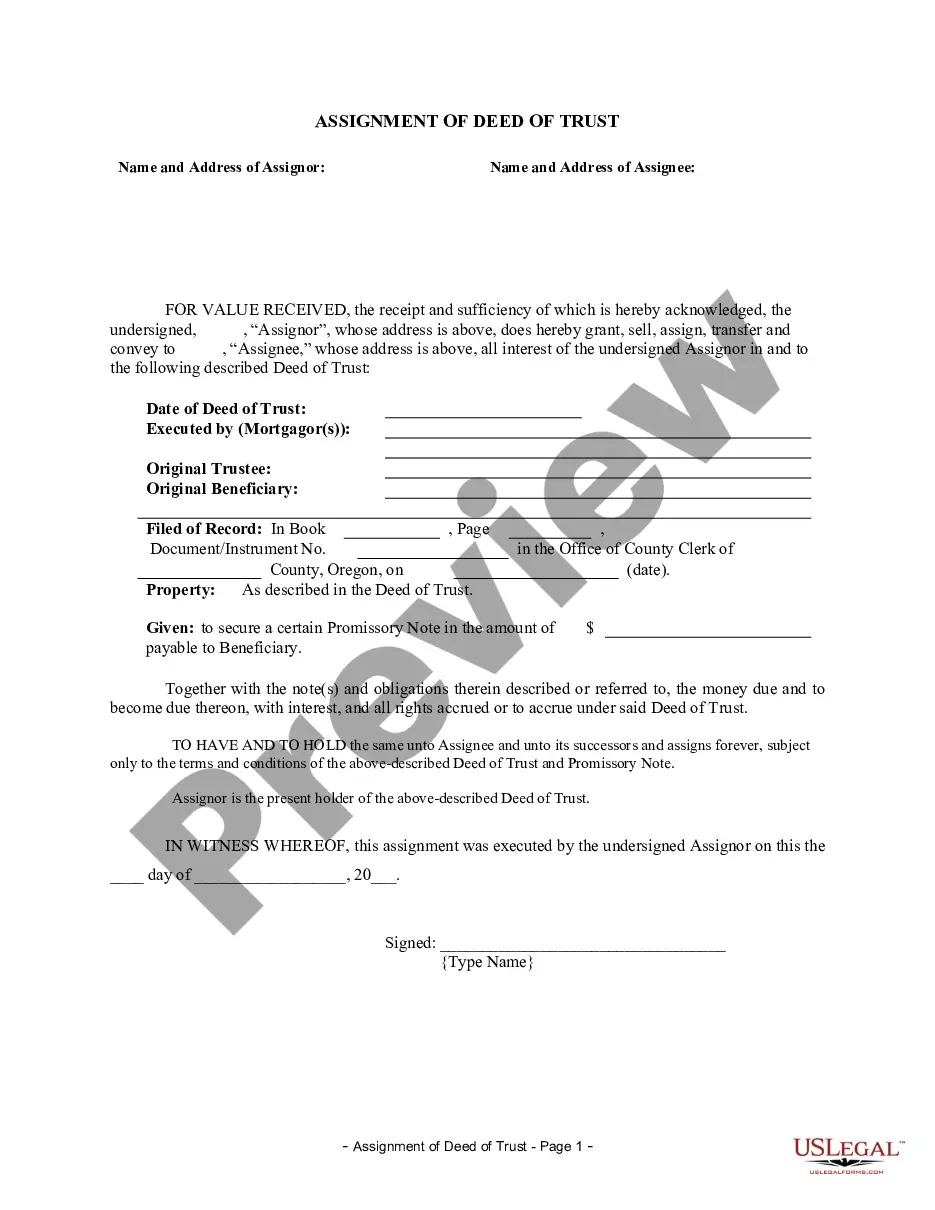
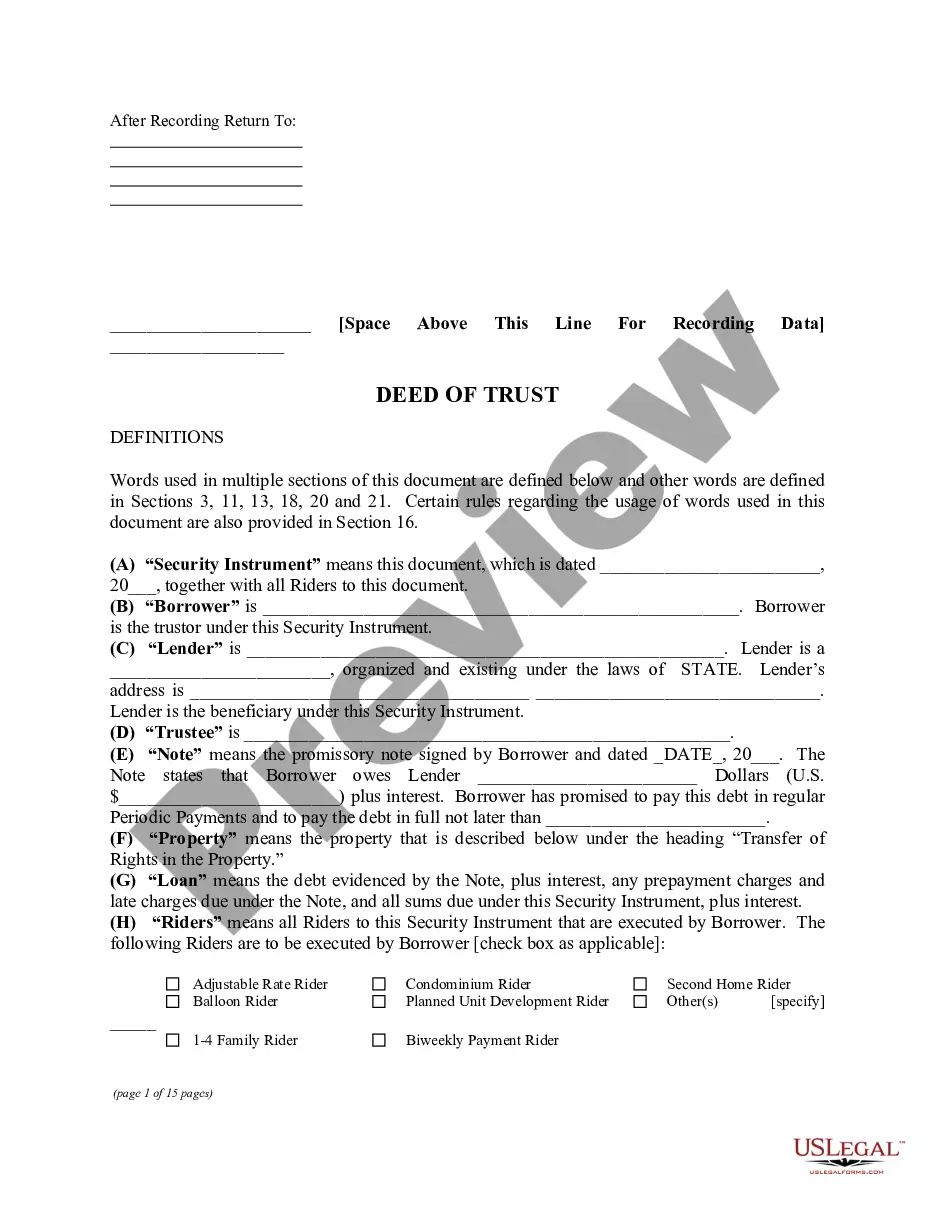
The Deed of Trust on Residential Property Securing Loan made by One Individual to Another Individual is a legal document used to secure a loan through the transfer of property rights. This form establishes a trust relationship where the Borrower (Trustor) conveys the property to a Trustee as security for the loan held by the Lender (Beneficiary). Unlike a mortgage, a deed of trust involves three parties and provides a different process for foreclosure and loan repayment. This form ensures that the loan is properly documented and protects the interests of all parties involved.
What’s included in this form
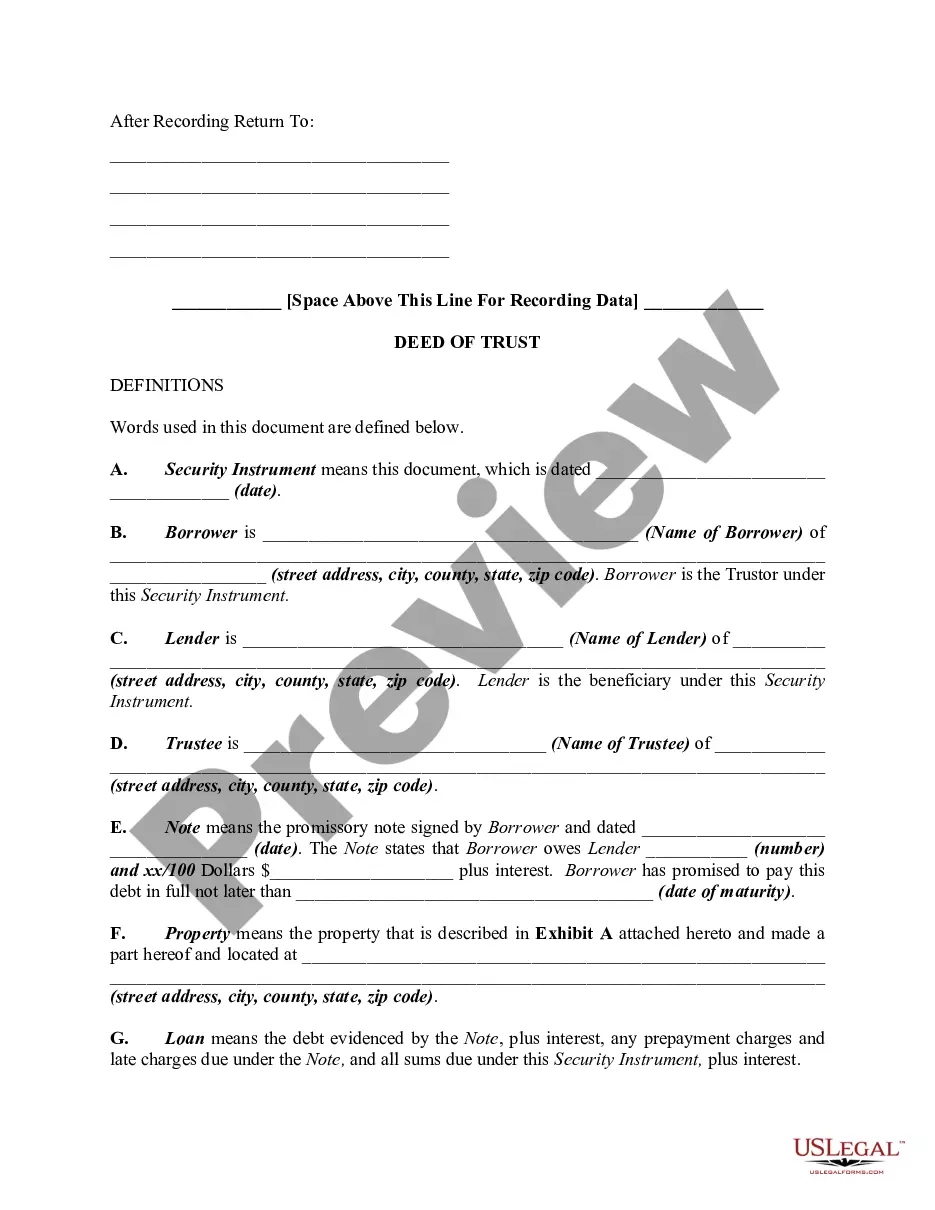
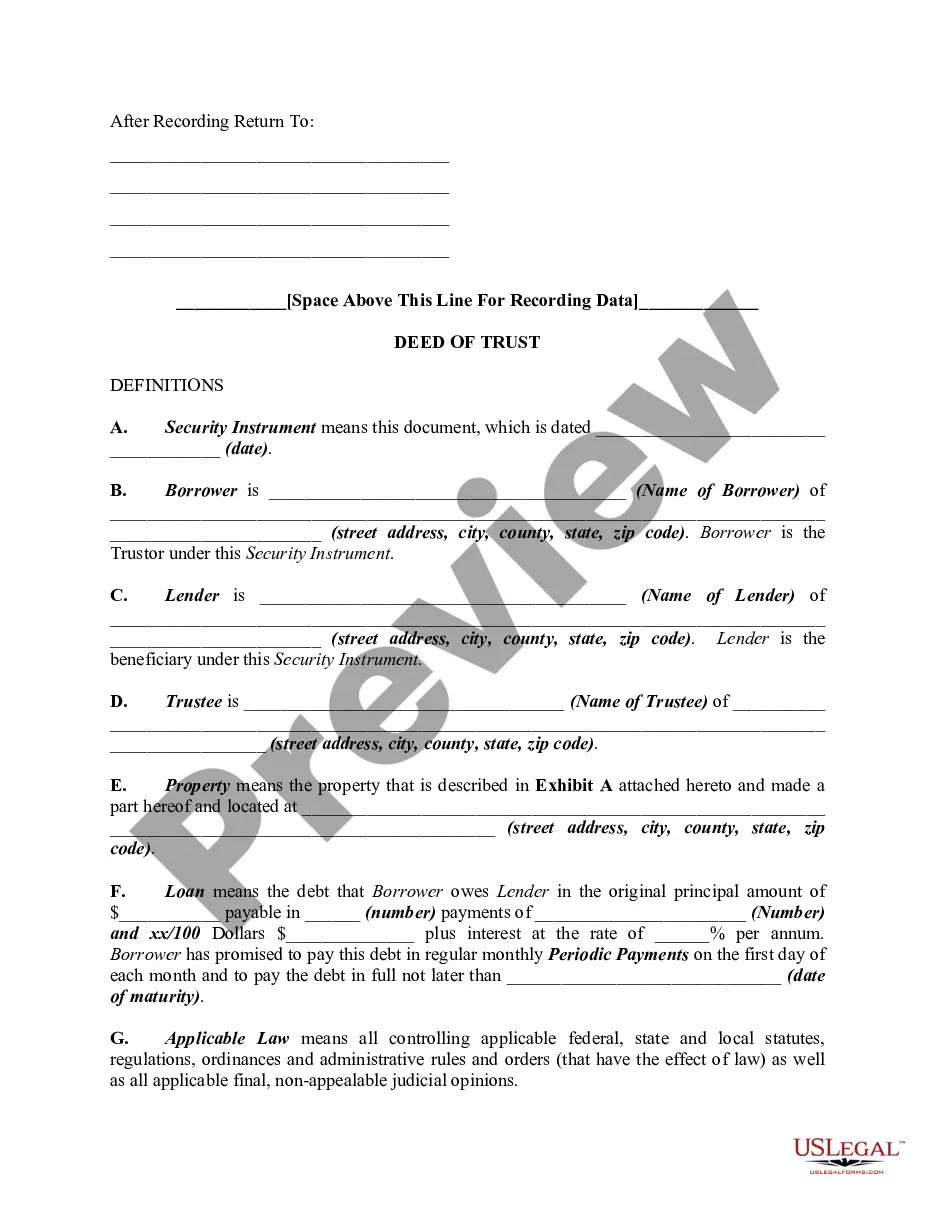
- Definition of parties: Identifies the Borrower, Lender, and Trustee involved in the transaction.
- Description of the property: Specific address and legal description of the property securing the loan.
- Loan details: Specifies the amount borrowed, interest rate, payment schedule, and loan maturity date.
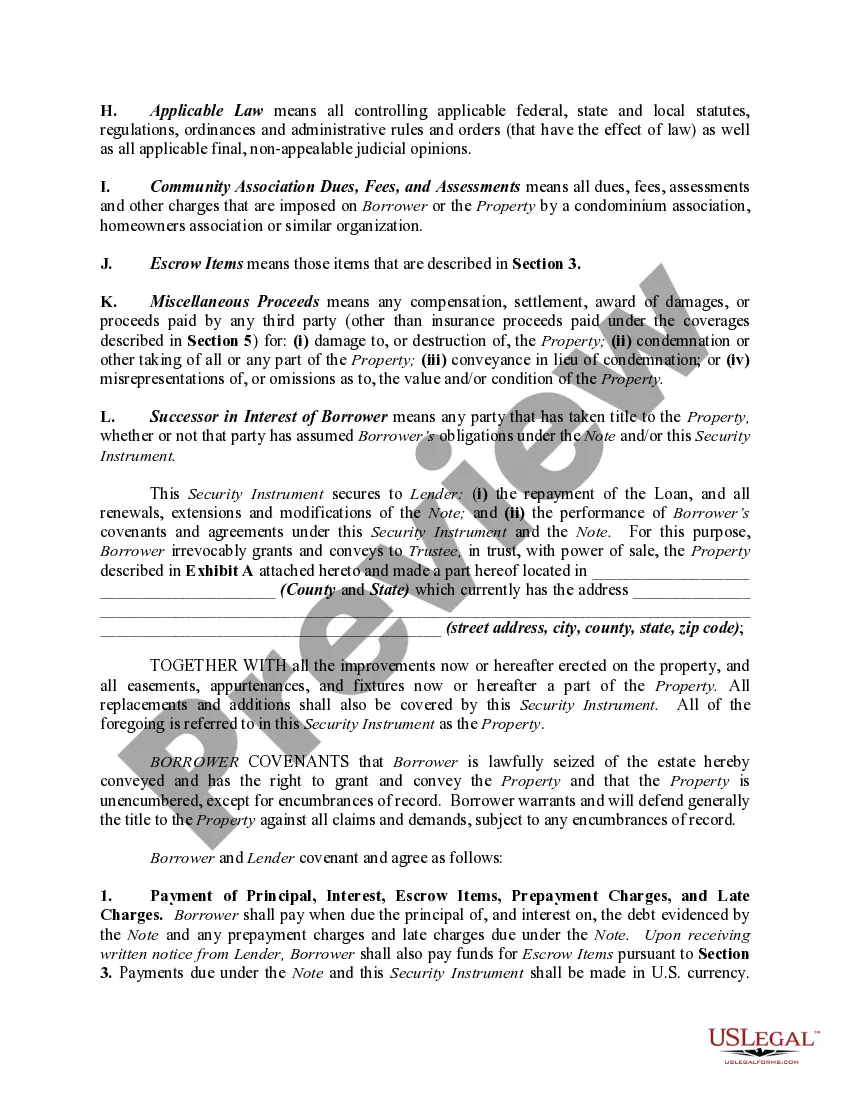
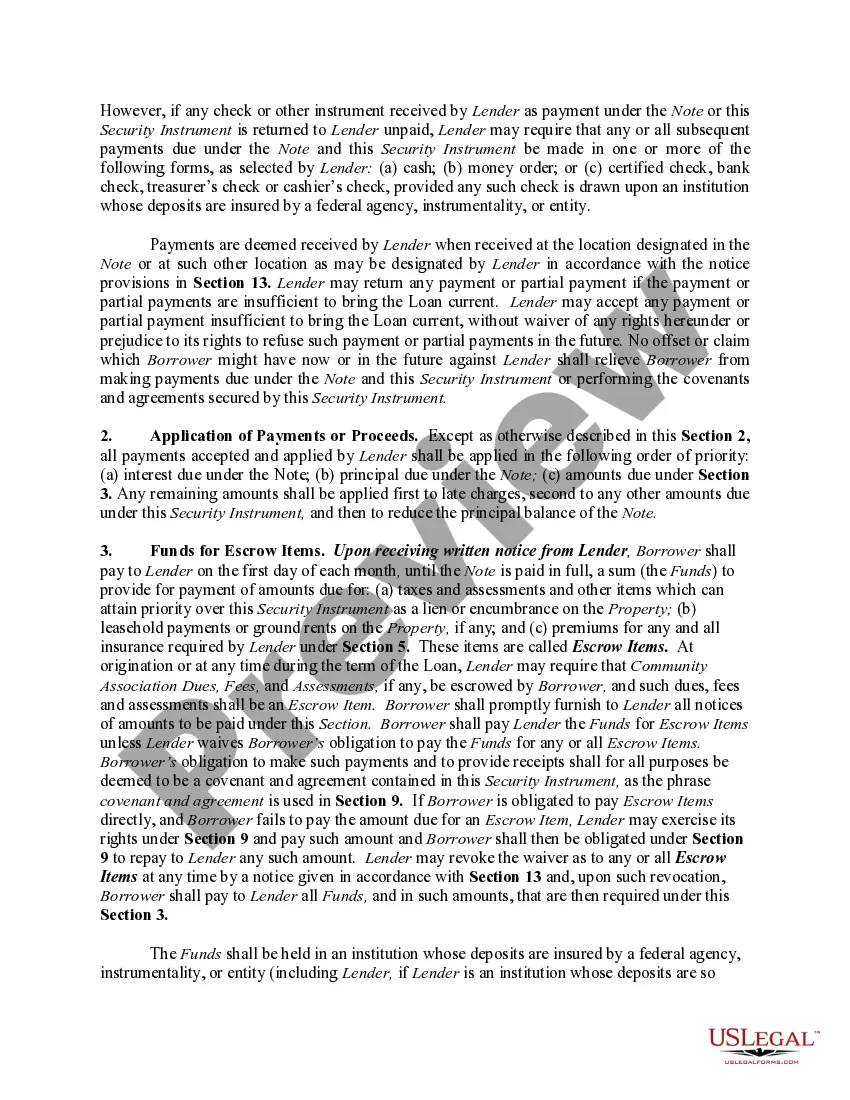
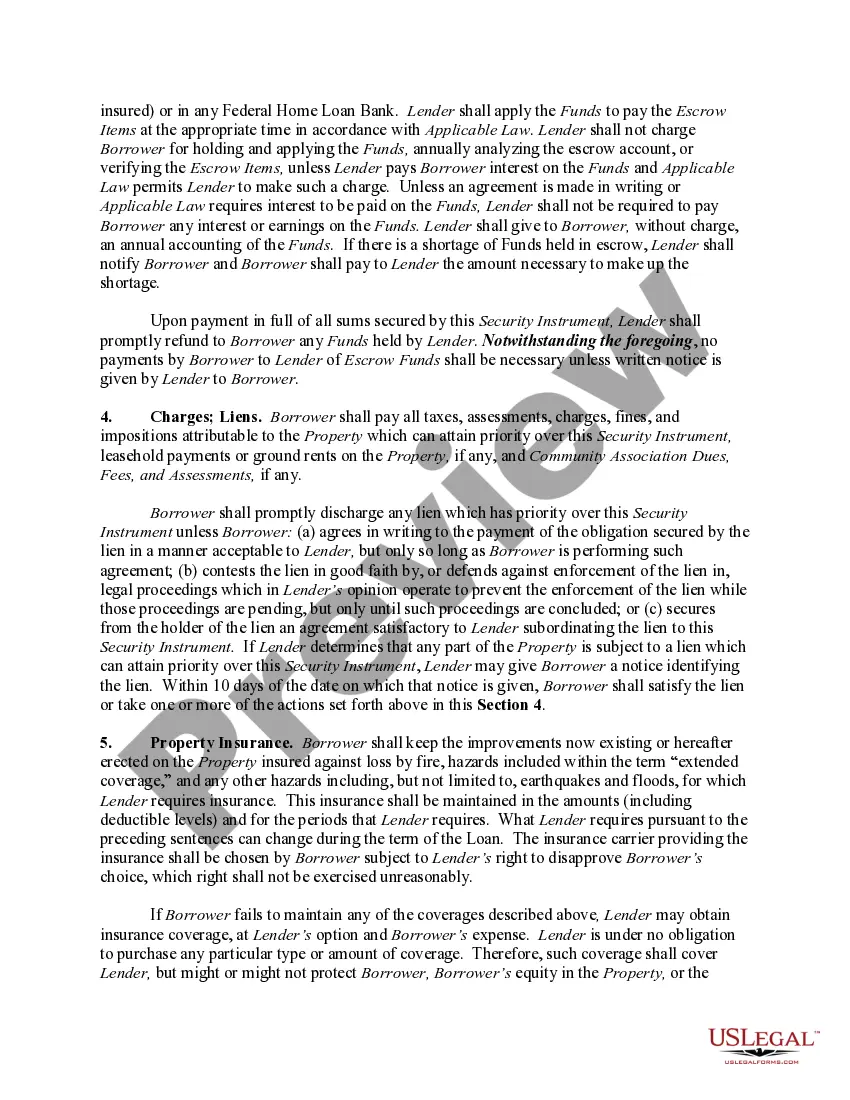
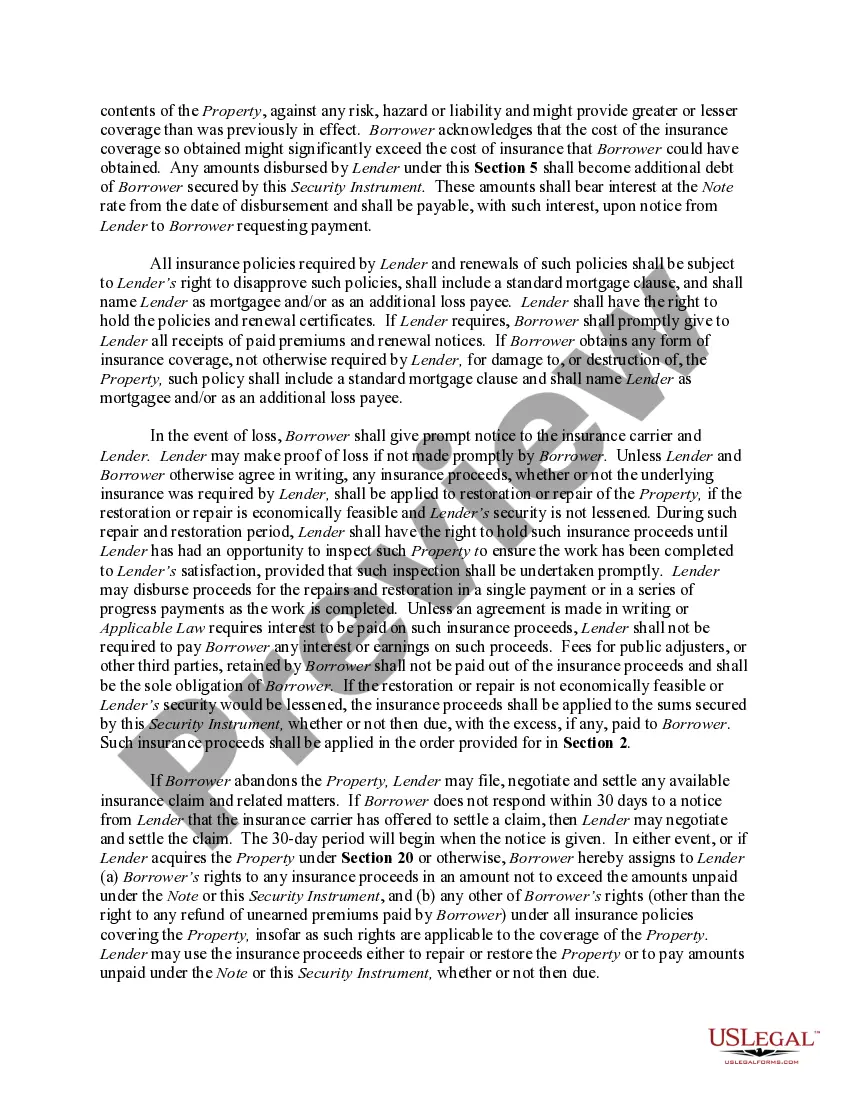
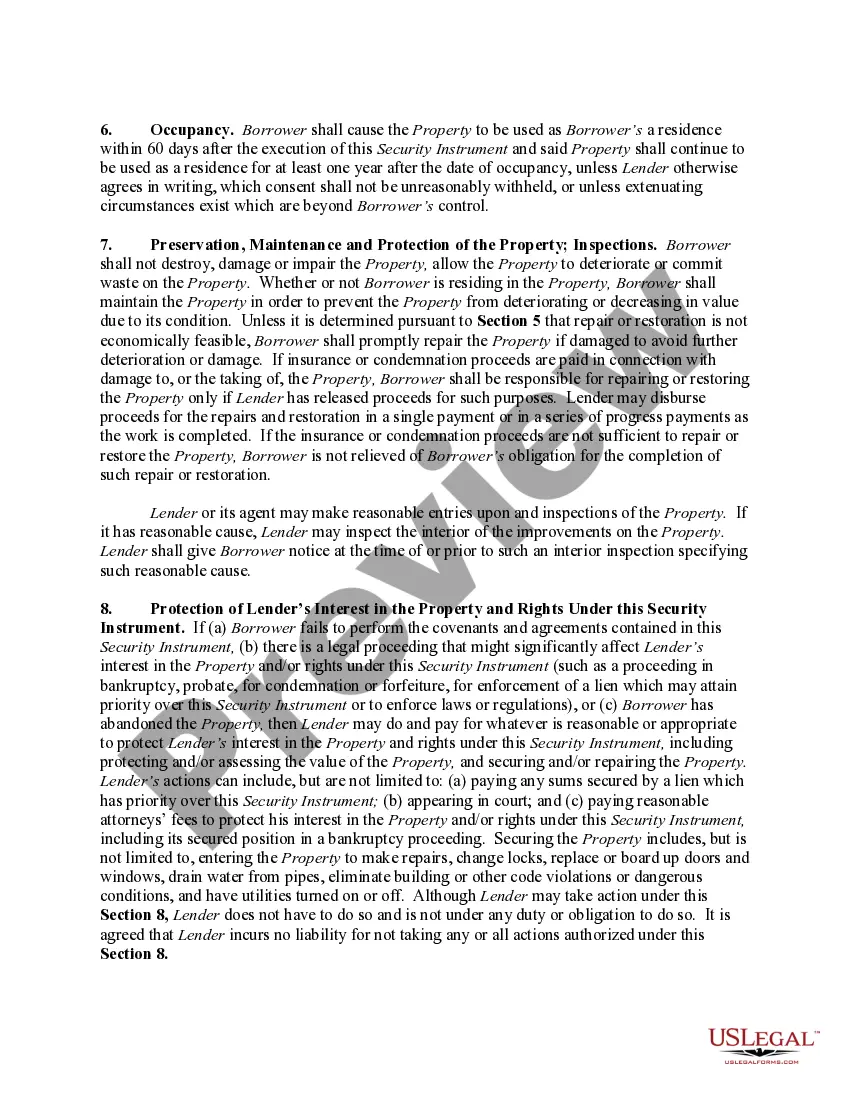
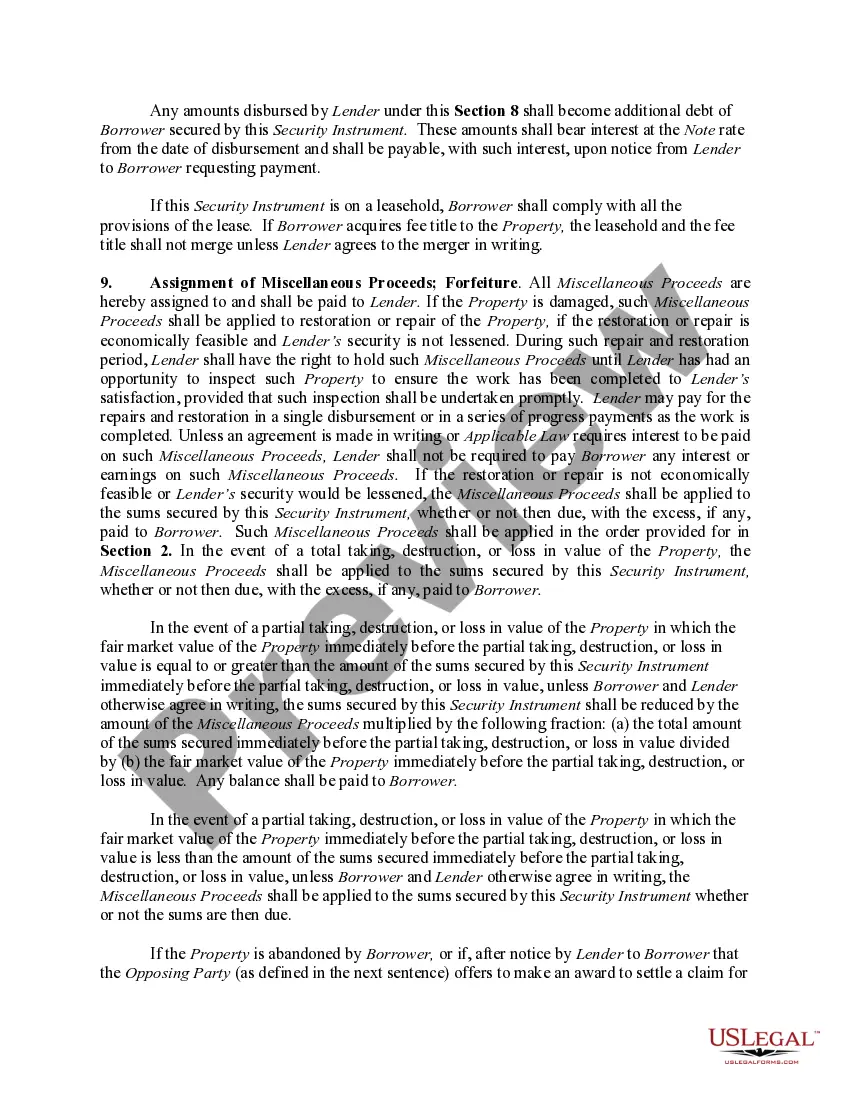
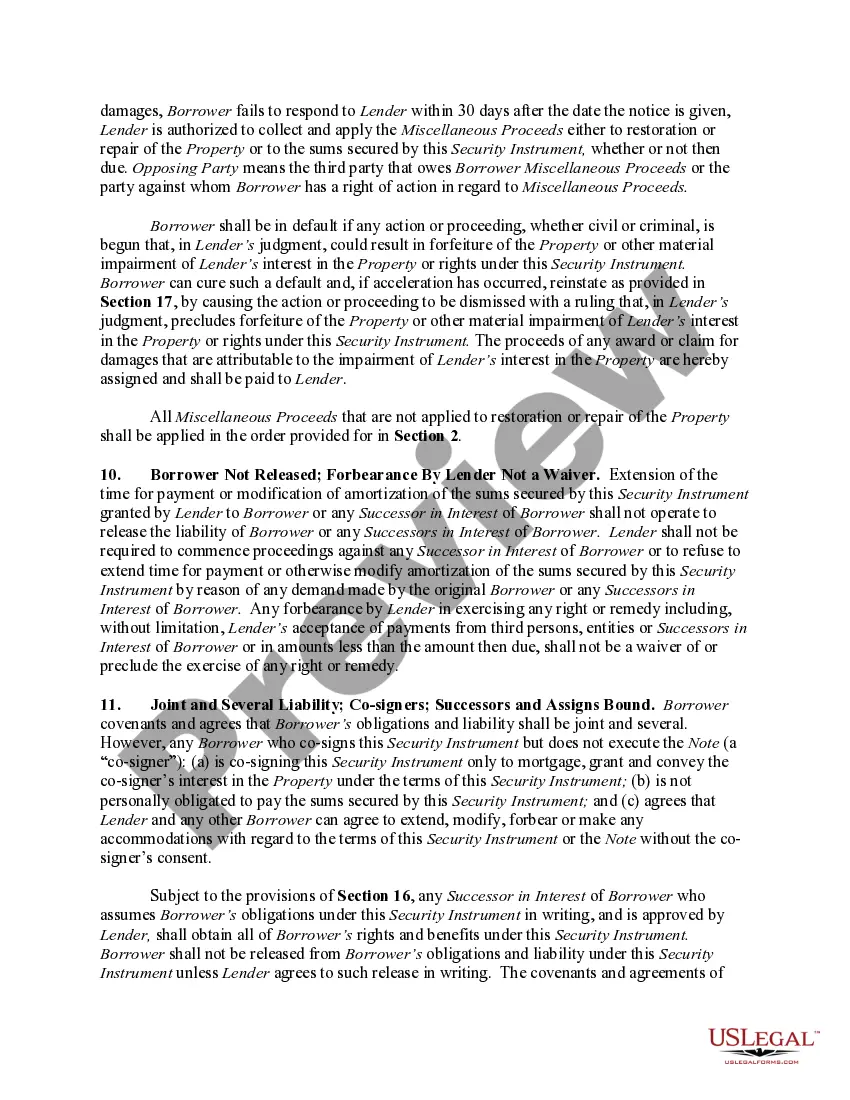
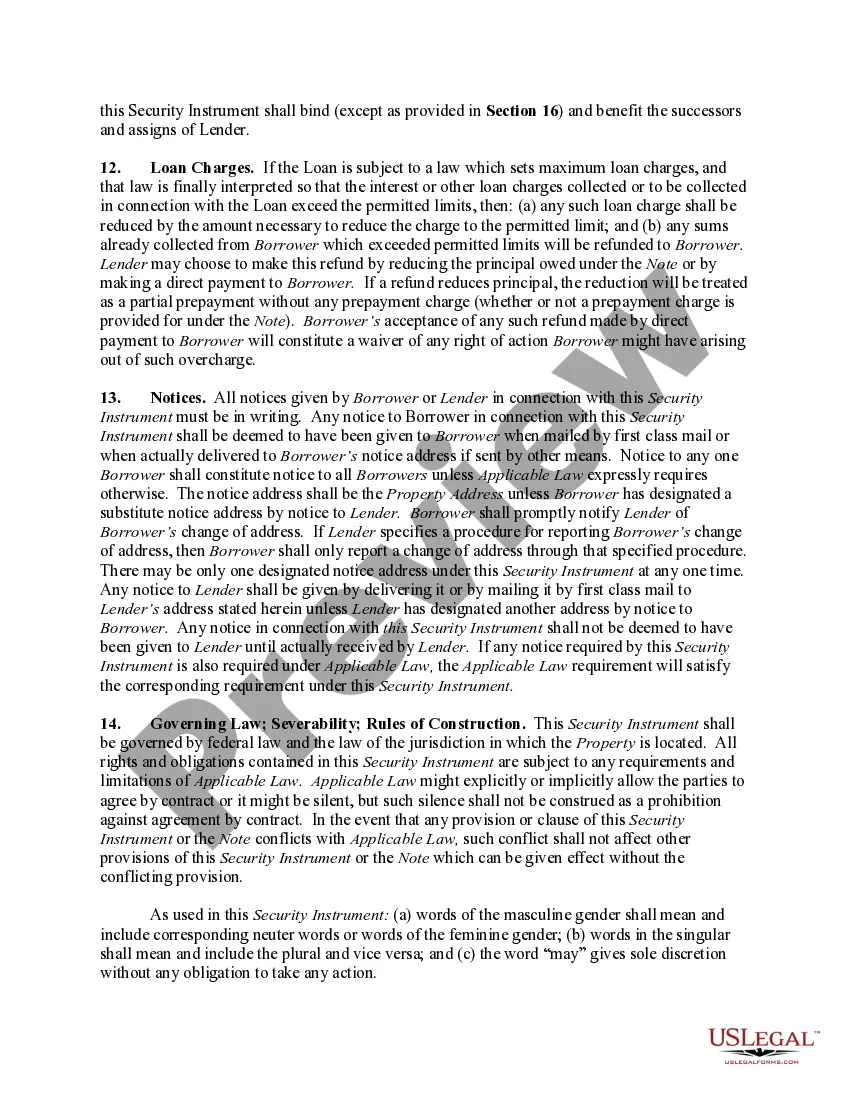
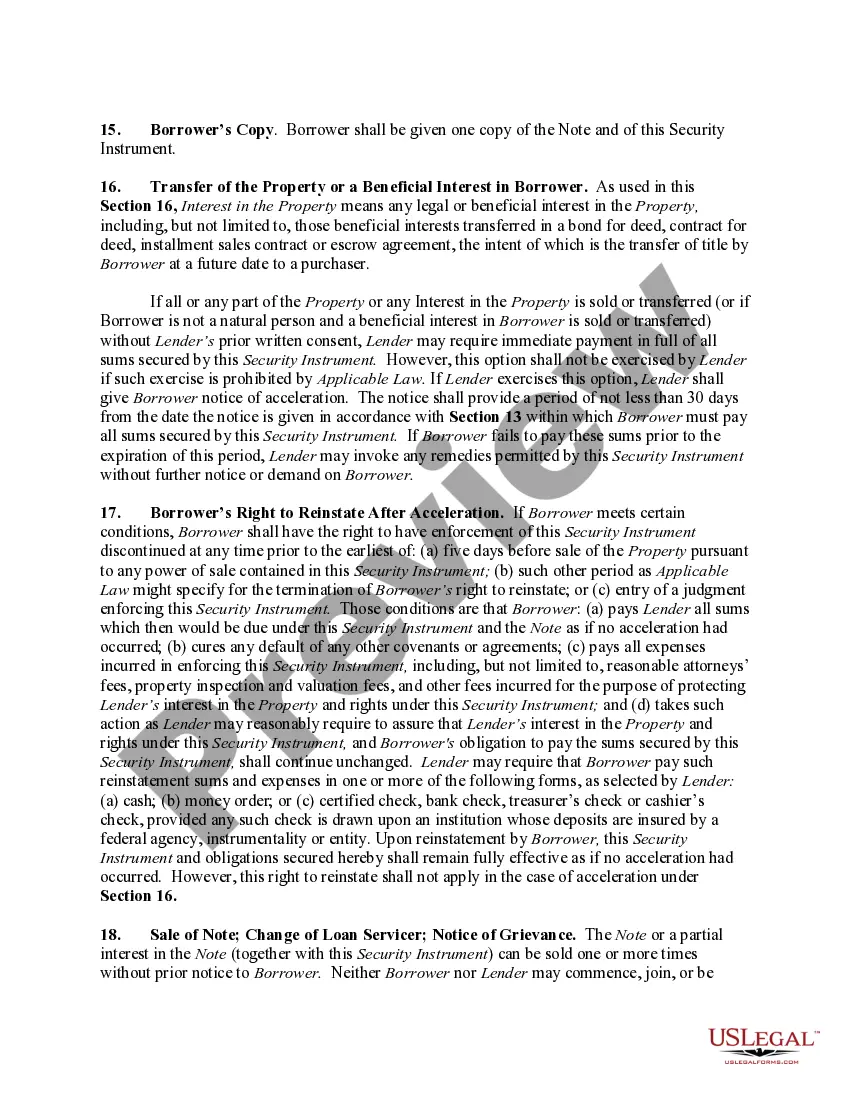
- Covenants and agreements: Outlines obligations regarding payments, property maintenance, and insurance requirements.
- Default and remedies: Details the consequences of a default and the rights of the Lender to enforce the agreement.



When this form is needed
This form is needed when one individual provides a loan to another and wishes to secure it with residential property as collateral. Examples include personal loans between family members or friends, where the Lender wants to ensure a legal right to the property in case of default. It is also applicable when the Borrower needs to formalize the loan and its terms to avoid misunderstandings or legal disputes in the future.
Who this form is for
- Individuals lending money for residential purchases or refinancing.
- Borrowers who are seeking secure loans backed by real estate.
- Trustees appointed to manage the loan agreement until it is fulfilled.
- Anyone involved in a personal loan transaction where real property is used as collateral.
Completing this form step by step
- Identify the parties involved: Fill in the names and addresses of the Borrower, Lender, and Trustee.
- Enter loan details: Specify the loan amount, interest rate, maturity date, and payment schedule.
- Describe the property: Include the complete address and legal description of the residential property secured by the loan.
- Sign the document: All parties must sign the deed of trust in the presence of a notary public.
- Record the form: File the completed deed of trust with the appropriate county recorder's office to make it legally enforceable.
Notarization guidance
Yes, this form must be notarized to be legally valid. During the process, all parties involved need to sign the document in the presence of a notary public. US Legal Forms offers integrated online notarization services, allowing you to complete this step securely and conveniently from home.
Get your form ready online
Our built-in tools help you complete, sign, share, and store your documents in one place.
Make edits, fill in missing information, and update formatting in US Legal Forms—just like you would in MS Word.
Download a copy, print it, send it by email, or mail it via USPS—whatever works best for your next step.
Sign and collect signatures with our SignNow integration. Send to multiple recipients, set reminders, and more. Go Premium to unlock E-Sign.
If this form requires notarization, complete it online through a secure video call—no need to meet a notary in person or wait for an appointment.
We protect your documents and personal data by following strict security and privacy standards.

Make edits, fill in missing information, and update formatting in US Legal Forms—just like you would in MS Word.

Download a copy, print it, send it by email, or mail it via USPS—whatever works best for your next step.

Sign and collect signatures with our SignNow integration. Send to multiple recipients, set reminders, and more. Go Premium to unlock E-Sign.

If this form requires notarization, complete it online through a secure video call—no need to meet a notary in person or wait for an appointment.

We protect your documents and personal data by following strict security and privacy standards.
Common mistakes to avoid
- Failing to properly identify all parties involved in the loan transaction.
- Not providing a complete legal description of the property.
- Omitting important loan details such as the interest rate or repayment terms.
- Forget to have the document notarized, impacting its enforceability.
- Neglecting to record the deed of trust with the county, potentially leading to disputes.
Benefits of completing this form online
- Convenience: Download and complete the form from home without the need for in-person meetings.
- Editability: Easily modify the document to fit specific terms and conditions before finalizing it.
- Guidance: Access to attorney-drafted templates ensures compliance with legal standards.
- Time-saving: Instant access allows for quicker loan processing and arrangements.
Legal use & context
- The Deed of Trust serves as a legally binding agreement between the borrower and lender.
- It allows the lender to take possession of the property if the borrower defaults on payments.
- This document protects both parties by clearly outlining obligations and remedies.
Key takeaways
- The Deed of Trust creates a secure loan arrangement between private individuals.
- It involves three parties: the borrower, lender, and trustee.
- Proper completion of the form is essential for legal protection.
- State laws may affect the formâs requirements and enforceability.
Looking for another form?

Form popularity
FAQ
Party information: names and addresses of the trustor(s), trustee(s), beneficiary(ies), and guarantor(s) (if applicable) Property details: full address of the property and its legal description (which can be obtained from the County Recorder's Office)
A Deed of Trust is essentially an agreement between a lender and a borrower to give the property to a neutral third party who will serve as a trustee. The trustee holds the property until the borrower pays off the debt.
Some owners are put off using solicitors duke to the deed of trust cost. Individuals can write out their own, and use someone else as a witness. However, this may have errors or not be a legally binding document. The investment of getting a deed of trust when buying a property is often worth it in the long term.
The property's title remains in the trust until the loan is paid off, or satisfied, then it is released from the trust. To complete the release, the lender prepares a deed of reconveyance. This document states that the conditions of the loan have been met and you have no further financial obligations to the lender.
The borrower may pay the judgment and reclaim the property under equitable rights of redemption. When a borrower pays off a note that was secured by a deed of trust, then: the lender issues a release deed to the borrower. the borrower receives a document called a satisfaction piece.
Trust deeds and mortgages are both used in bank and private loans for creating liens on real estate, and both are typically recorded as debt in the county where the property is located.
Yes, there are key differences between the two. With a deed, you transfer the ownership of the property to one party. In contrast, a deed of trust does not mean the holder owns the property. In an arrangement involving a deed of trust, the borrower signs a contract with the lender with details regarding the loan.
In a deed of trust, the borrower is called the trustor and the lender is the beneficiary. The trustee holds title to the property until the trustor has fully repaid the loan to the beneficiary, at which time the lender notifies the trustee, who then transfers full title of the property to the trustor.
The person who owns the property usually signs a promissory note and a deed of trust. The deed of trust does not have to be recorded to be valid.