Employment Offer Letter Exempt or Non-Exempt
Overview of this form
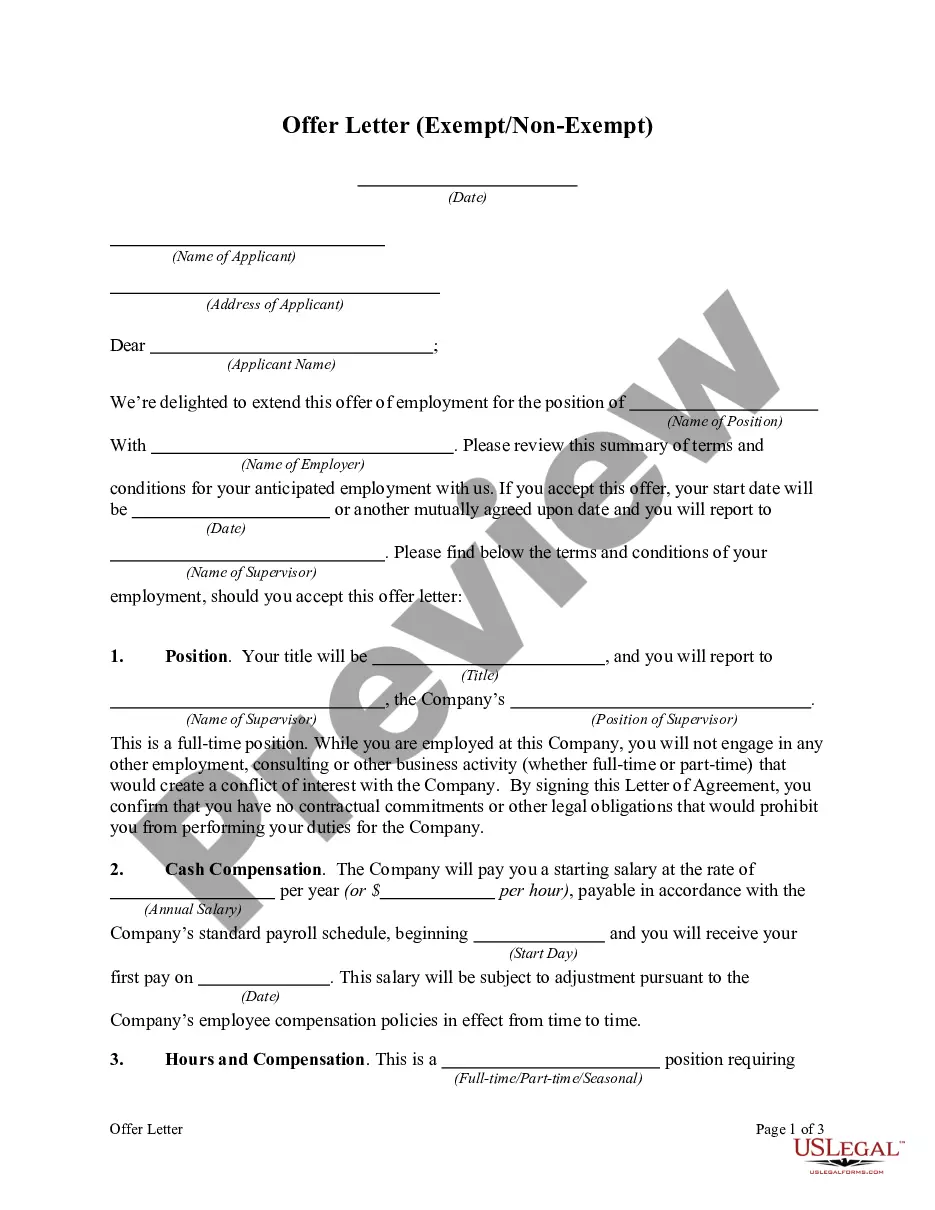
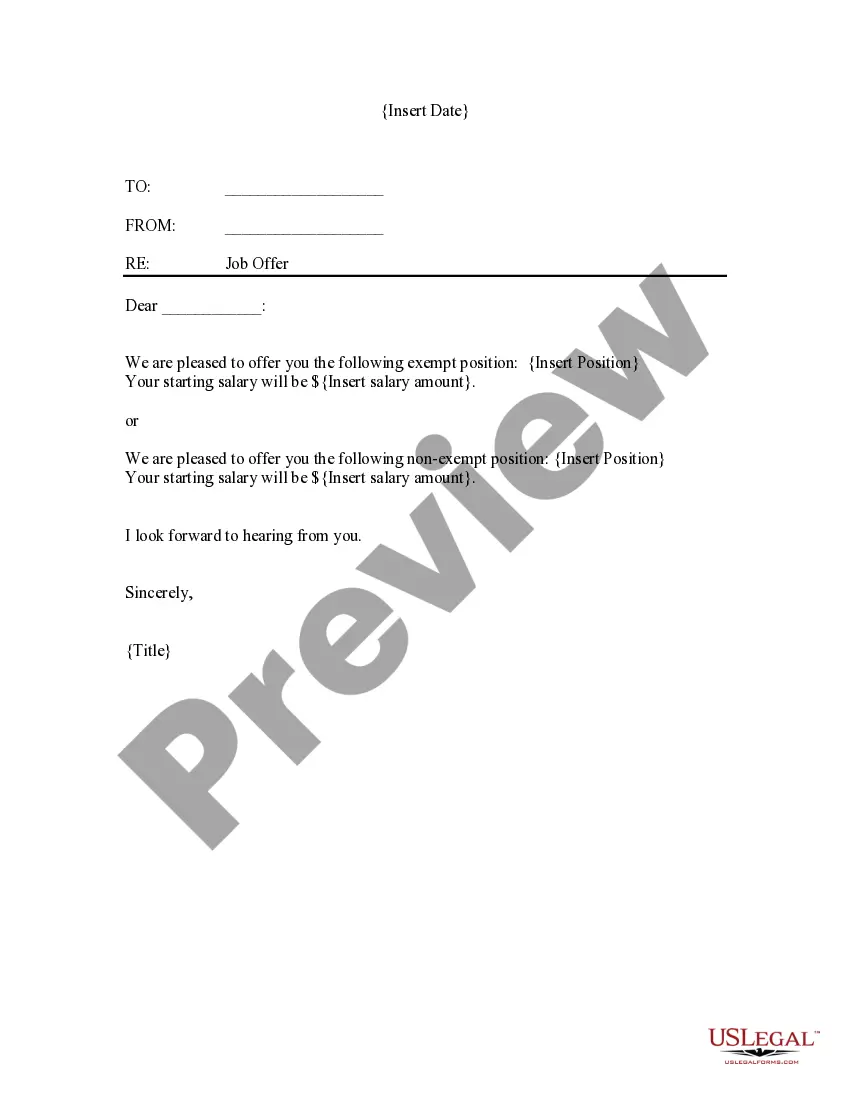
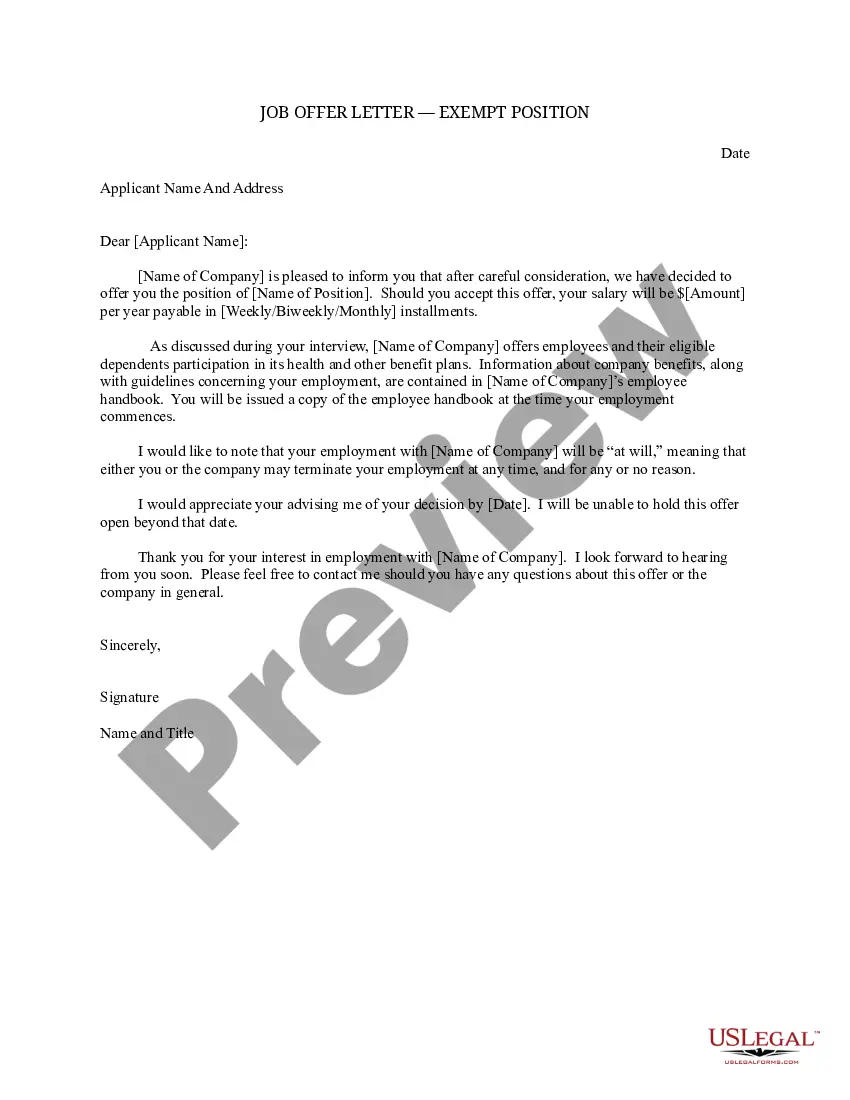
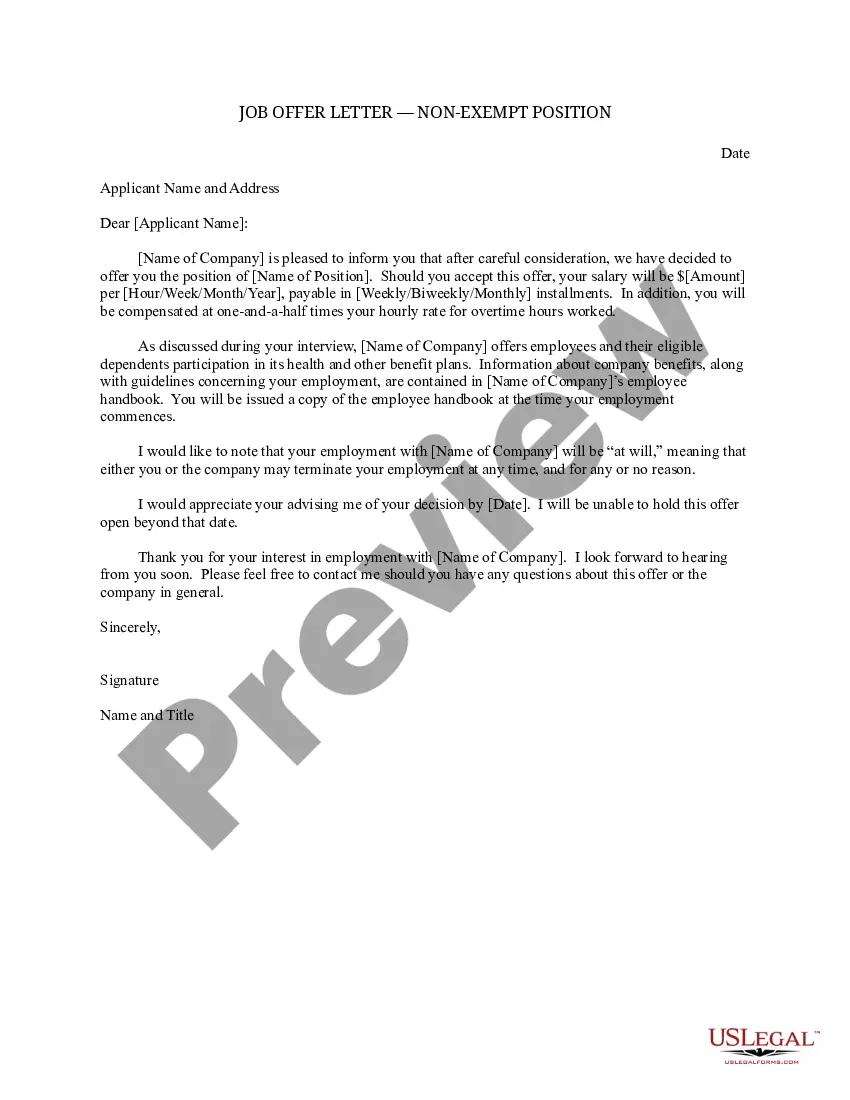
The Employment Offer Letter Exempt or Non-Exempt is a formal document used by employers to extend a job offer to a successful candidate for a full-time position. This letter specifies key elements of the job offer, including the position title, salary, hours of work, and benefits. It serves as both a clear communication tool for the employer and a record for the employee, distinguishing it from similar forms like job confirmations or offer emails.
Form components explained
- Position: Clearly states the job title and responsibilities.
- Cash compensation: Details the starting salary and payment frequency.
- Hours of work: Specifies expected working hours and days.
- Benefits: Outlines any health, retirement, or other benefits offered.
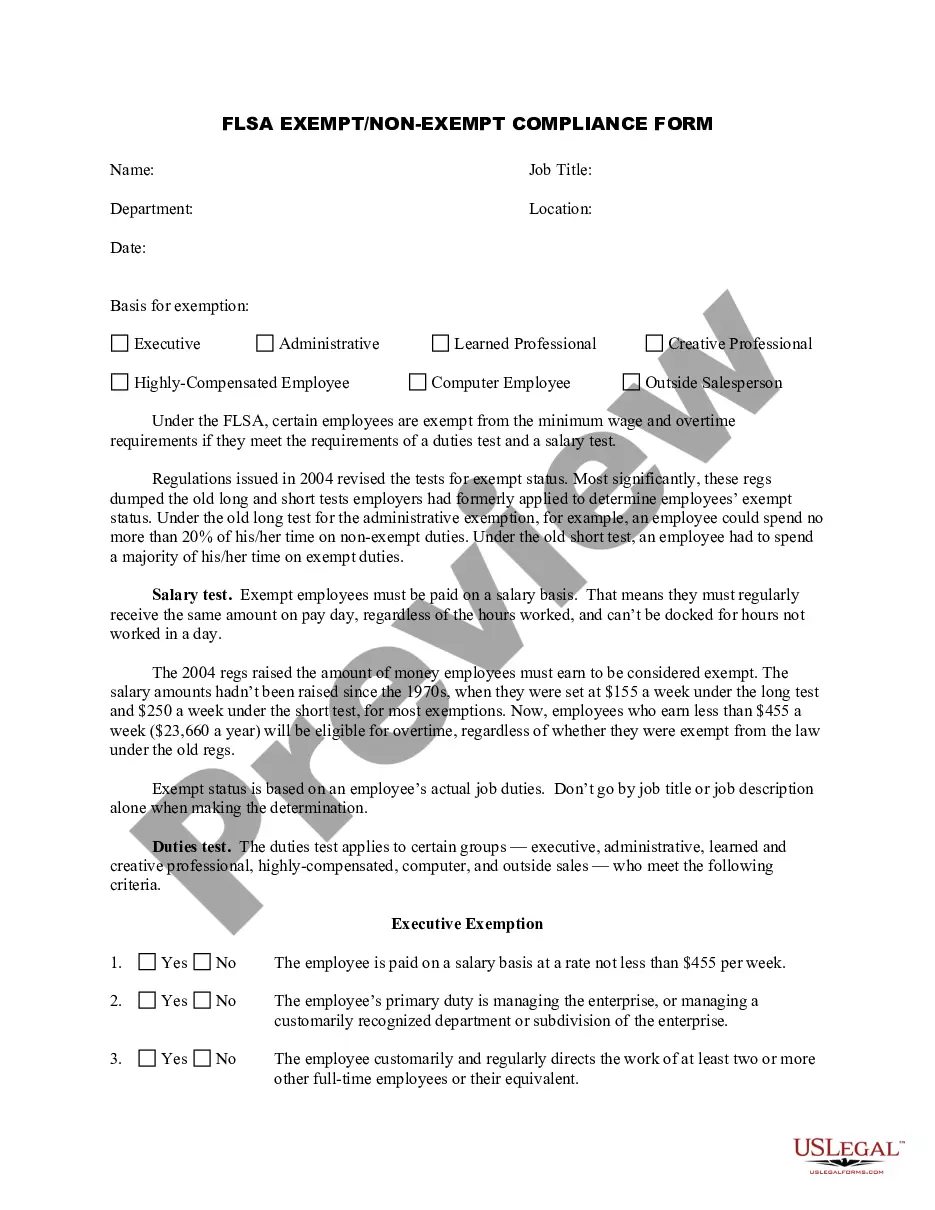
- Employment classification: Indicates if the position is exempt or non-exempt under the Fair Labor Standards Act.


When this form is needed
This form is used when an employer wishes to formally offer a job to a candidate who has successfully gone through the hiring process. It is essential when clarifying the terms of employment, particularly regarding salary, working hours, and benefits. Use this letter when hiring full-time employees who are classified as exempt or non-exempt to ensure compliance with labor laws.
Who should use this form
- Employers looking to hire full-time employees.
- HR professionals responsible for drafting employment documents.
- Business owners who need to formalize employment offers for new hires.
- Recruiting managers who require a structured format for job offers.
Completing this form step by step
- Enter the candidate's name and address at the top of the letter.
- Clearly specify the position title and primary job responsibilities.
- State the cash compensation along with payment schedule and any bonuses.
- Detail the working hours and any specific schedules to be followed.
- Outline the benefits offered to the employee, if any.
- Sign and date the letter before sending it to the candidate.
Is notarization required?
This form does not typically require notarization to be legally valid. However, some jurisdictions or document types may still require it. US Legal Forms provides secure online notarization powered by Notarize, available 24/7 for added convenience.
Get your form ready online
Our built-in tools help you complete, sign, share, and store your documents in one place.
Make edits, fill in missing information, and update formatting in US Legal Forms—just like you would in MS Word.
Download a copy, print it, send it by email, or mail it via USPS—whatever works best for your next step.
Sign and collect signatures with our SignNow integration. Send to multiple recipients, set reminders, and more. Go Premium to unlock E-Sign.
If this form requires notarization, complete it online through a secure video call—no need to meet a notary in person or wait for an appointment.
We protect your documents and personal data by following strict security and privacy standards.

Make edits, fill in missing information, and update formatting in US Legal Forms—just like you would in MS Word.

Download a copy, print it, send it by email, or mail it via USPS—whatever works best for your next step.

Sign and collect signatures with our SignNow integration. Send to multiple recipients, set reminders, and more. Go Premium to unlock E-Sign.

If this form requires notarization, complete it online through a secure video call—no need to meet a notary in person or wait for an appointment.

We protect your documents and personal data by following strict security and privacy standards.
Mistakes to watch out for
- Failing to specify whether the position is exempt or non-exempt.
- Not including pay frequency or salary details.
- Leaving out important employee benefits or terms of employment.
- Using vague language that may lead to misunderstandings.
Why use this form online
- Convenient access for both employers and candidates to complete or review the document.
- Editable templates allow for easy customization of the offer letter.
- Reliable format ensures that all necessary information is included.
Legal use & context
- The offer letter is a binding agreement if accepted by the candidate.
- It should clearly outline the terms to avoid future disputes.
- Understand local and federal employment laws that may affect the offer and employment terms.
Summary of main points
- The Employment Offer Letter specifies essential terms for full-time employment.
- It is important for clarifying roles, compensation, and benefits.
- Ensure compliance with state laws regarding employment classification and terms.
Looking for another form?
Form popularity
FAQ
The Employment Offer Letter Exempt or Non-Exempt is a formal document employers use to offer a full-time job and set the terms of employment. It lists the position title, starting cash compensation, expected hours, benefits, and a dedicated employment classification indicating exempt or non-exempt status under the Fair Labor Standards Act. It should be used when formalizing a full-time offer across states.
Exempt status is determined by the job duties and salary under the FLSA. This form includes an employment classification that states whether the offered position is exempt or non-exempt, helping document the classification in the offer and align pay and overtime expectations.
Non-exempt means the employee is eligible for overtime pay under the Fair Labor Standards Act, and wage calculations must follow overtime rules. In this offer letter, the Hours of work and Employment classification sections specify non-exempt status to ensure clarity on overtime eligibility and pay timing.
Which status is better depends on the role and compensation structure. Exempt positions typically do not receive overtime, while nonexempt employees are eligible for overtime. This form names the classification for the offered position, clarifying rights and obligations and supporting compliance across states; for specific cases, consult a licensed attorney.
In an offer letter, nonexempt indicates the position is covered by wage-and-hour protections under the FLSA. The letter’s Hours of work and Cash compensation terms accompany the classification to clarify overtime eligibility and pay timing; for precise guidance, consult a licensed attorney.
This form explicitly includes an employment classification (exempt or non-exempt) alongside position, cash compensation, hours, and benefits. By documenting FLSA status, it helps ensure overtime eligibility is clear and compliant in multi-state hiring, which a generic offer letter may not do.