Voting Trust Agreement
Overview of this form
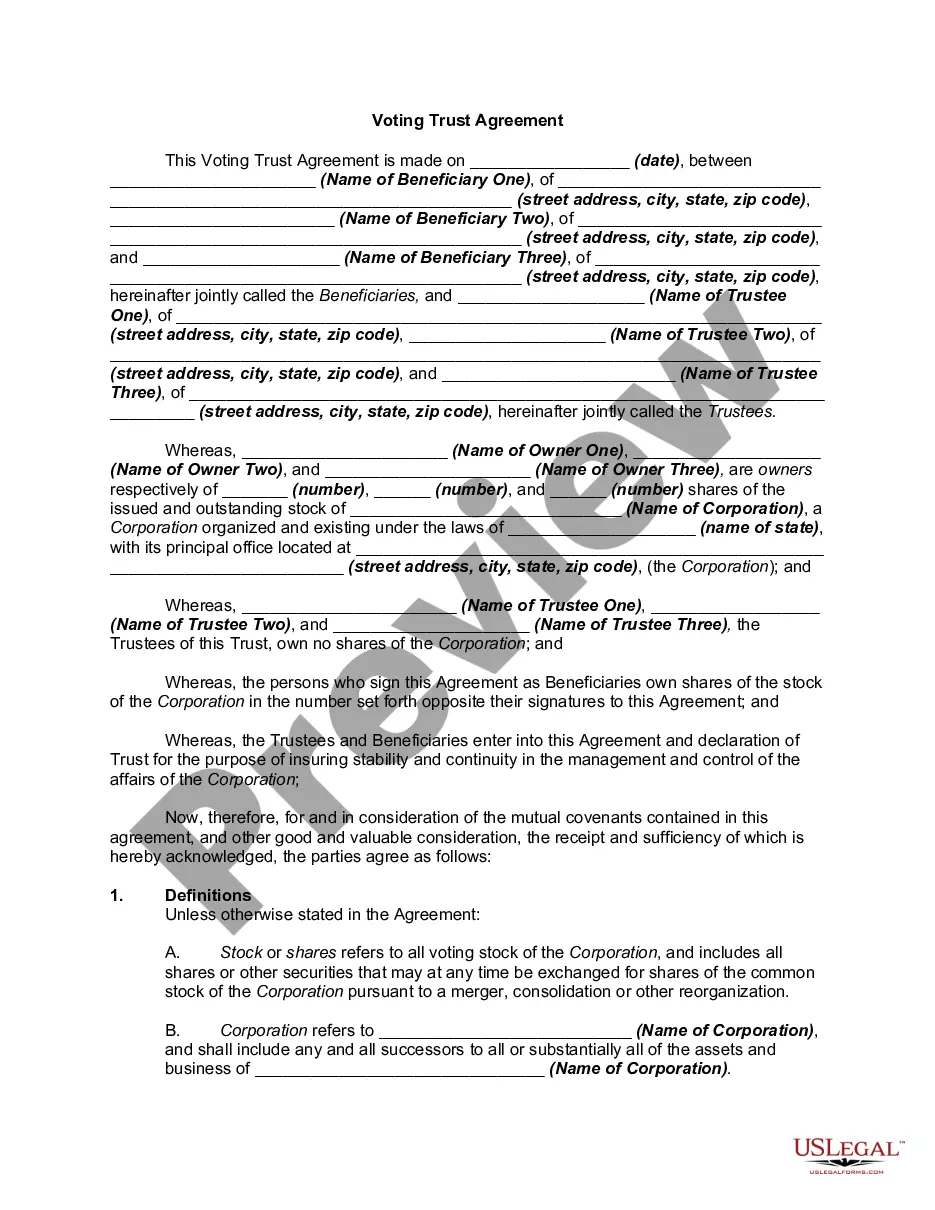
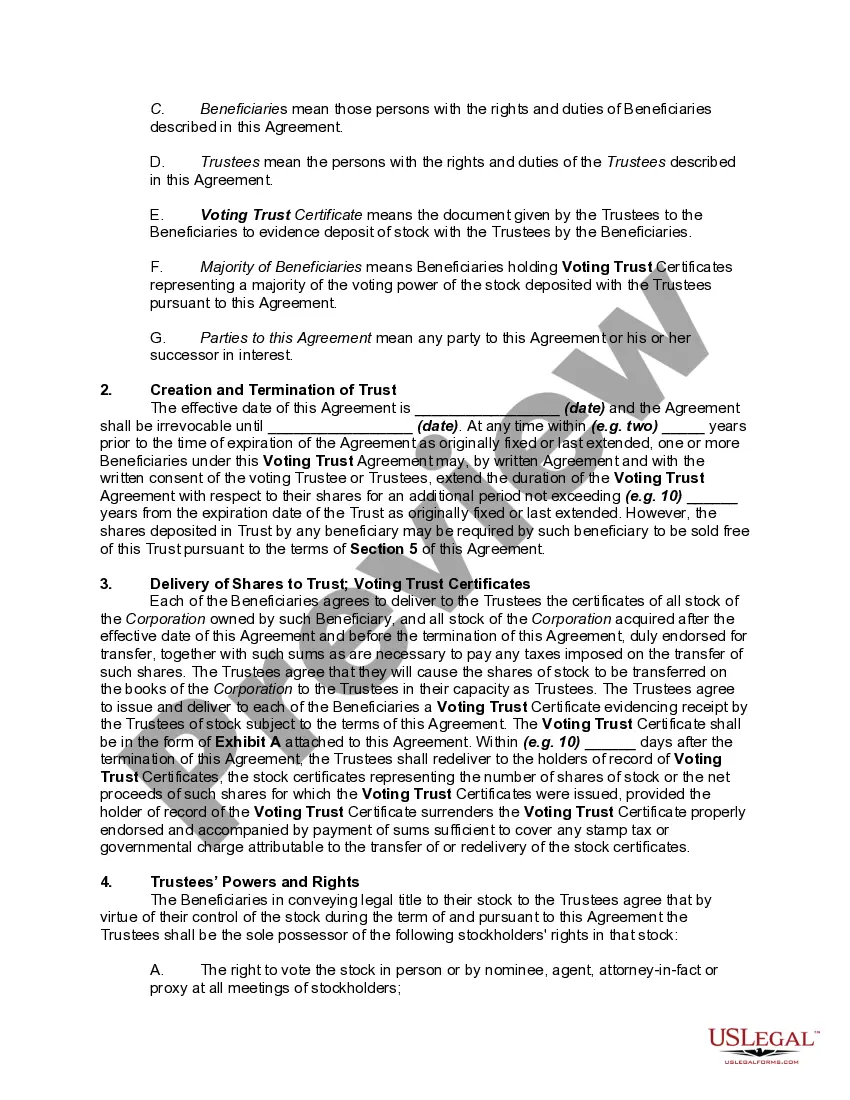
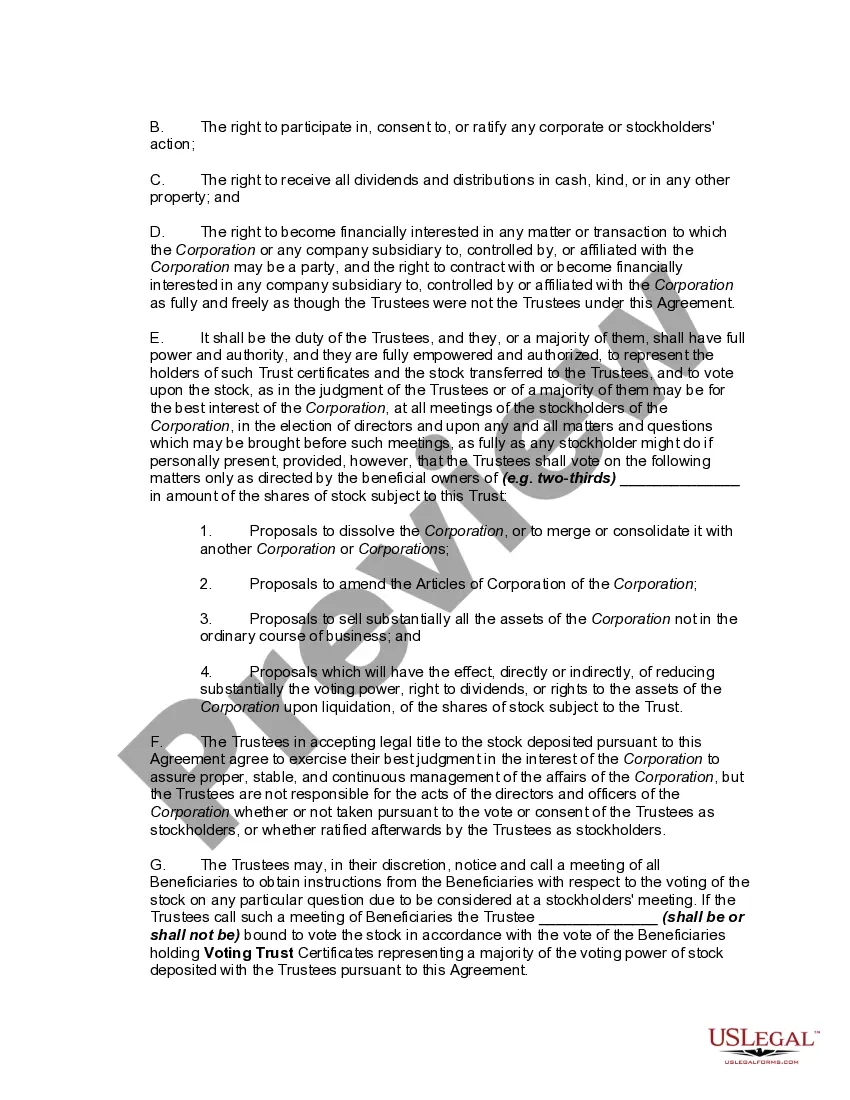
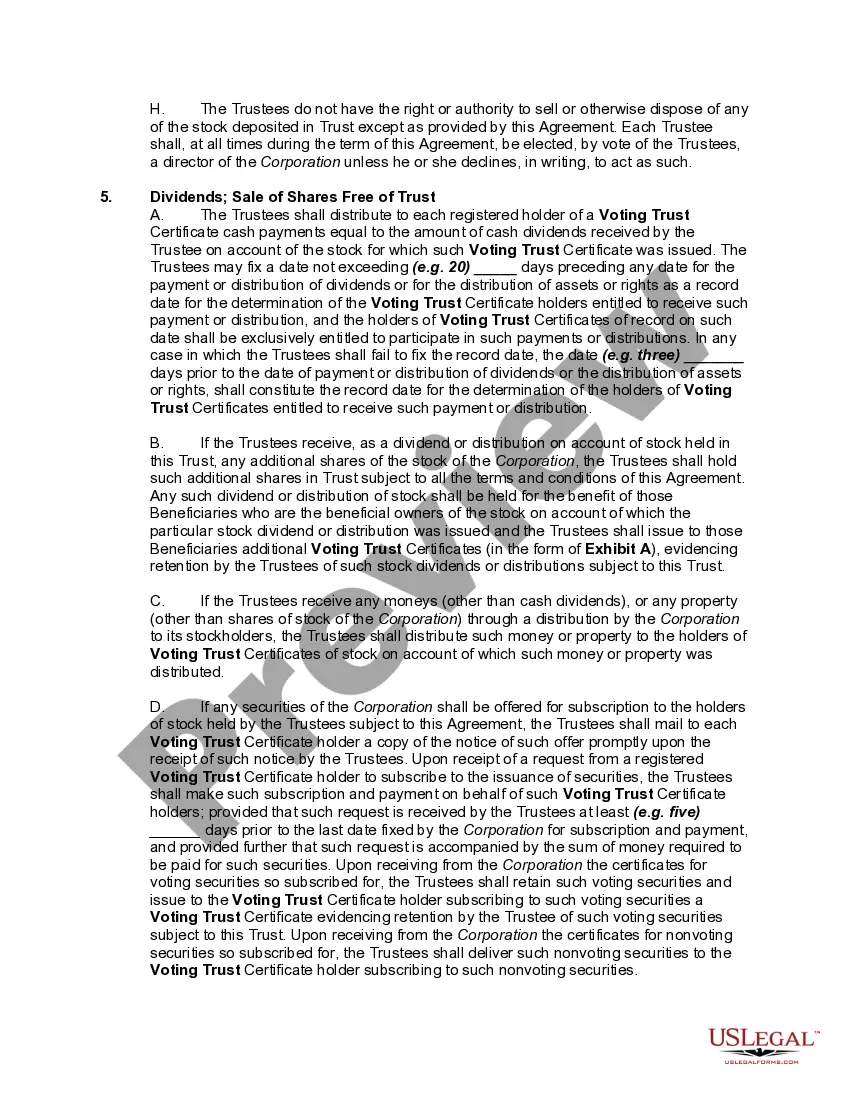
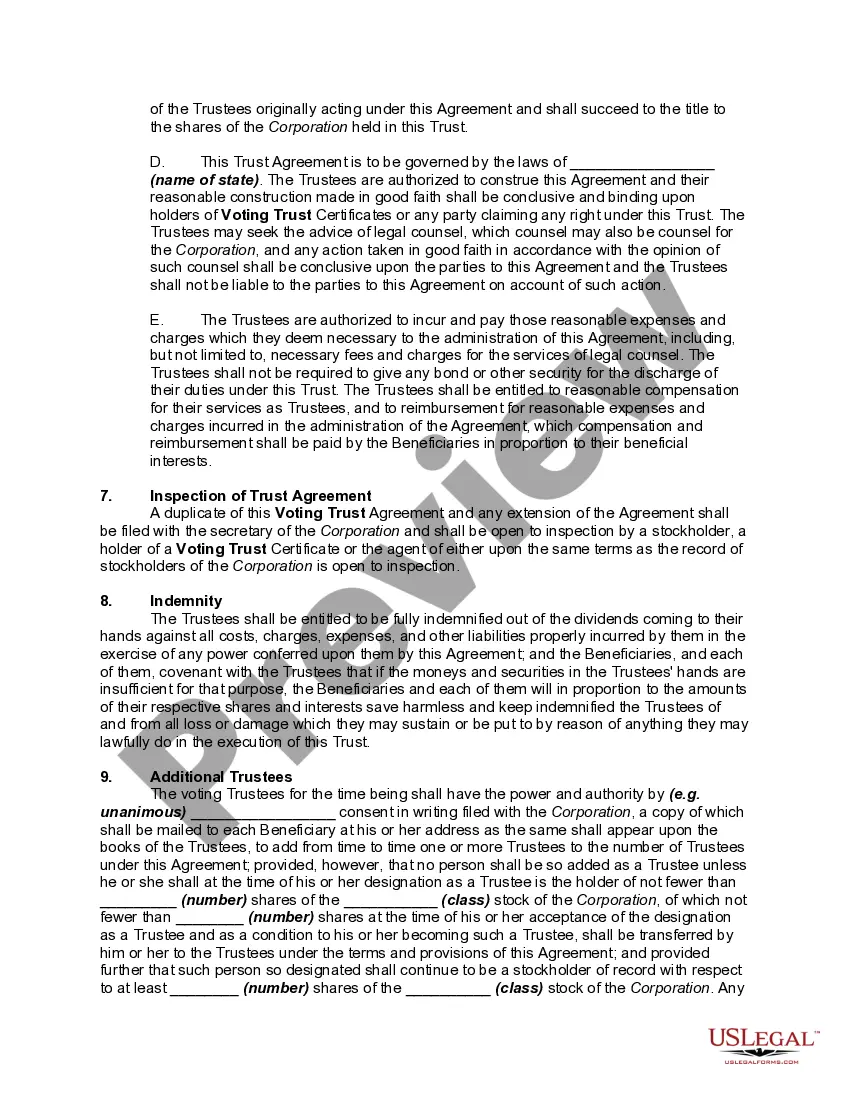
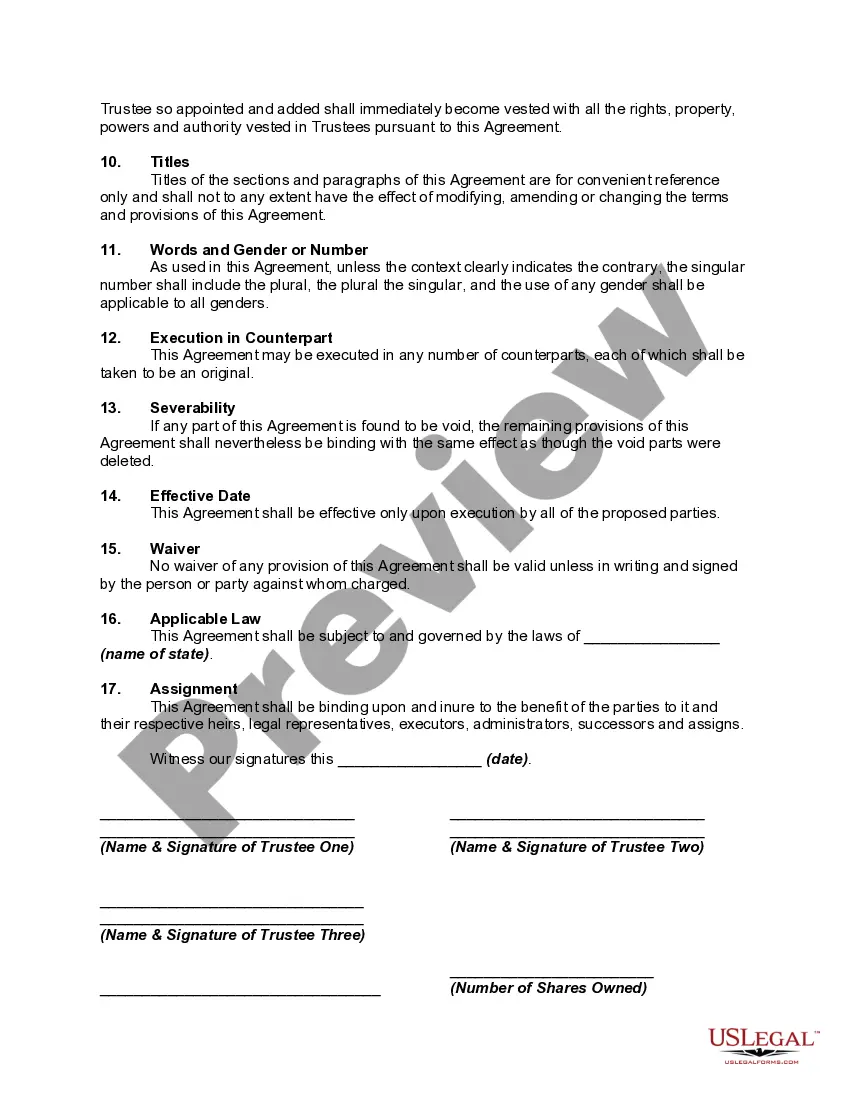
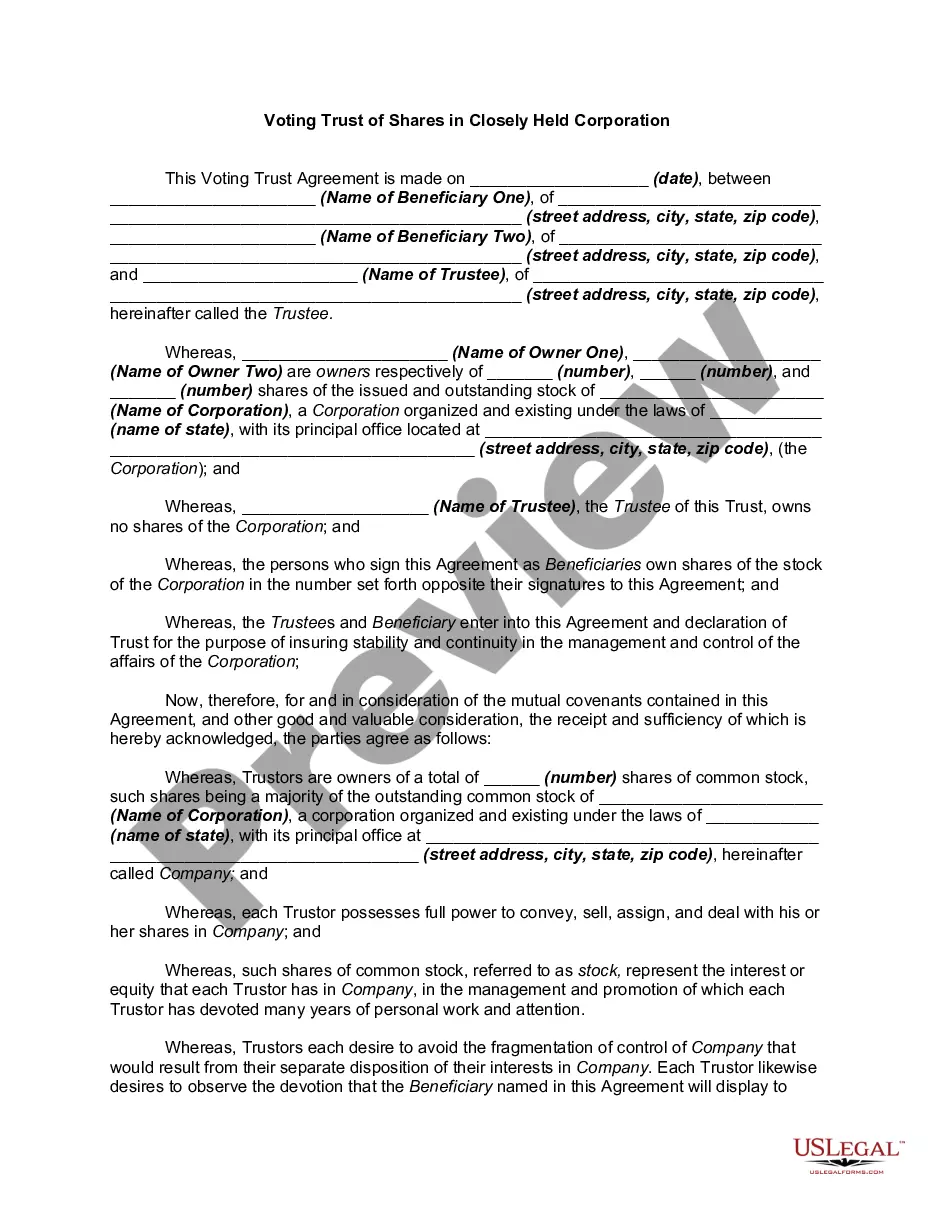
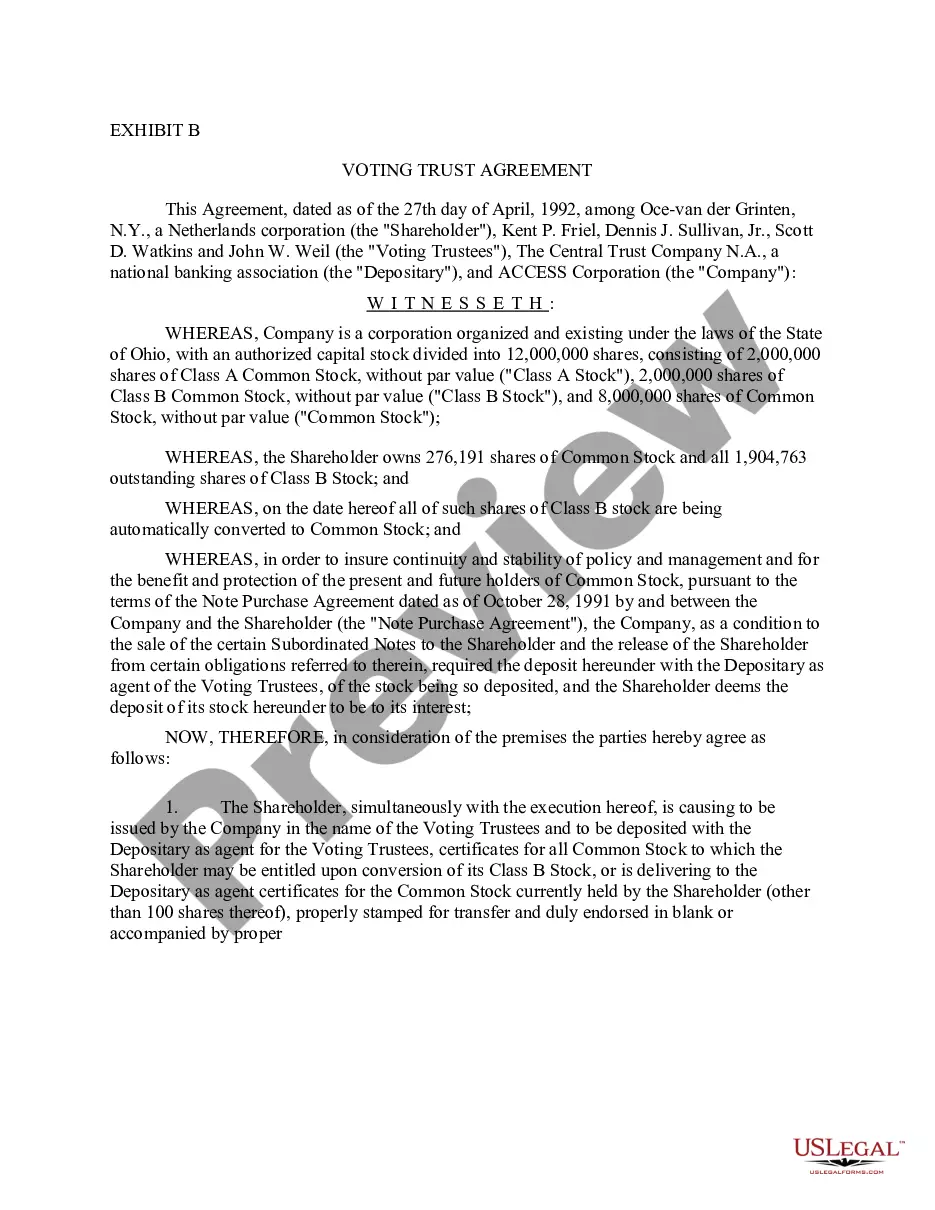
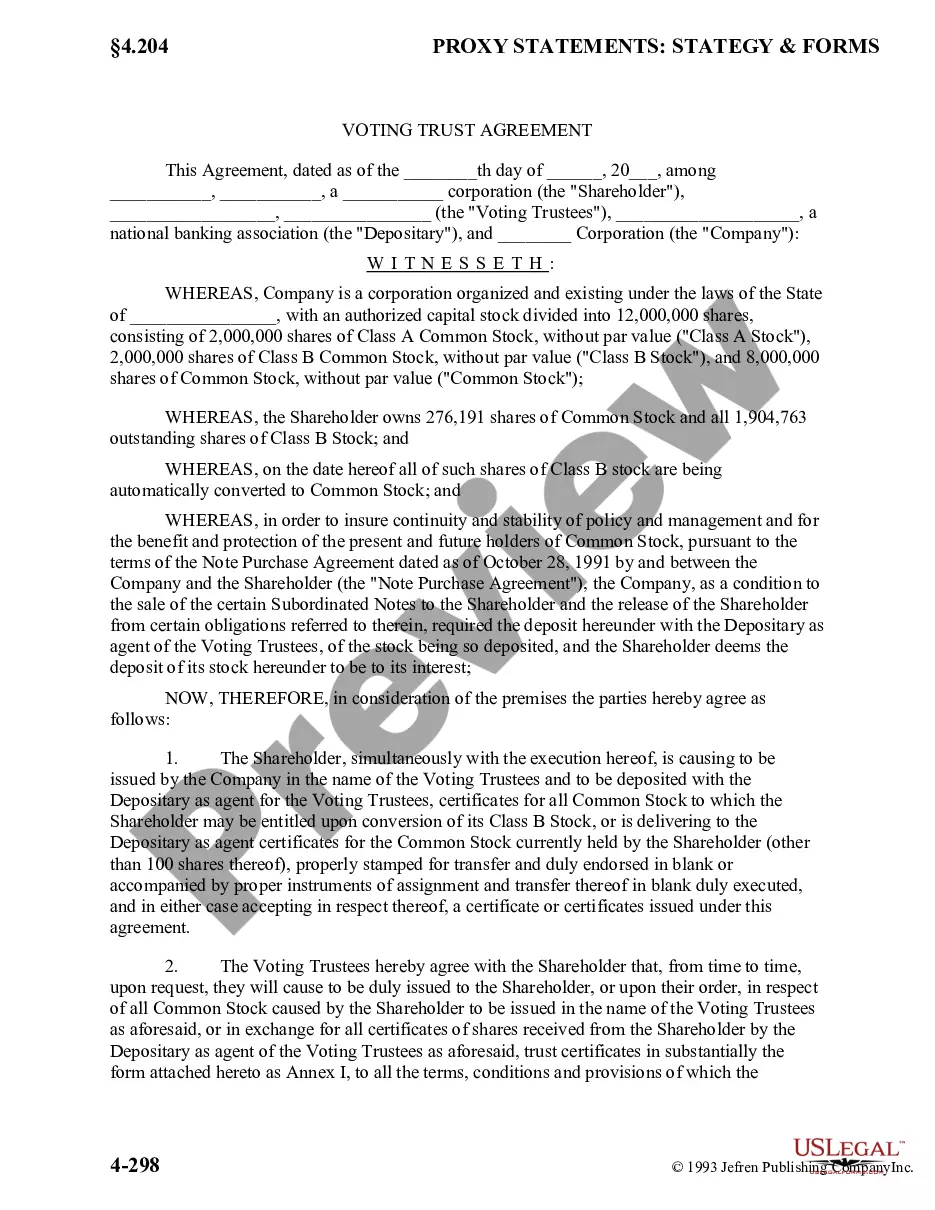
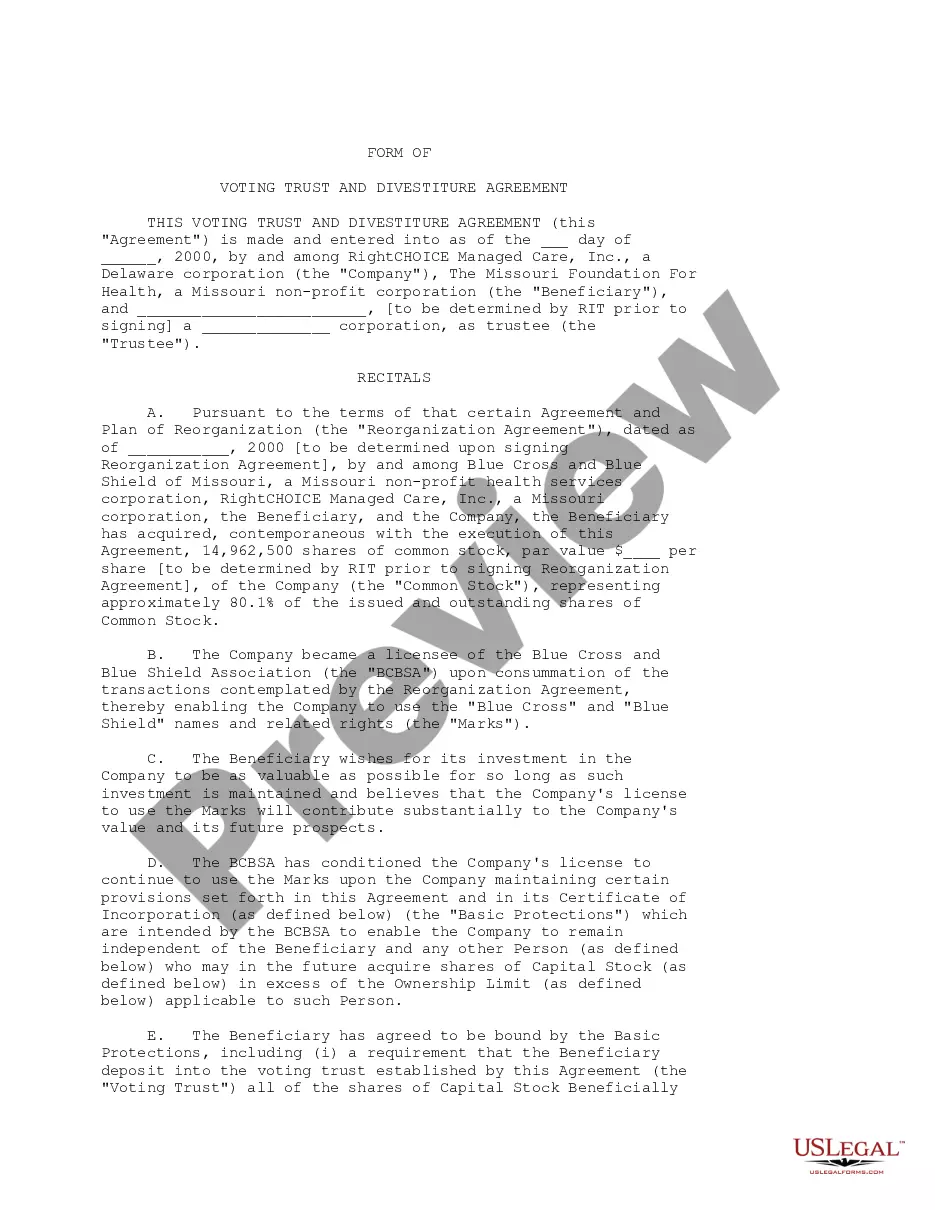
A Voting Trust Agreement is a legal document that establishes a trust for voting shares in a corporation. This agreement is made between beneficiaries, who own shares, and trustees, who manage those shares for a specified period. The primary purpose of this agreement is to provide stability and continuity in corporate governance by ensuring that the voting rights associated with the shares are exercised in a unified manner. Unlike general stockholder agreements, a Voting Trust allows shareholders to transfer their voting rights to the trustees, who will vote on behalf of the beneficiaries, making it well-suited for managing control in family businesses or closely-held corporations.
Form components explained
- Identification of beneficiaries and trustees along with their addresses.
- Definition section clarifying terms related to stock, corporation, beneficiaries, and trustees.
- Provisions for the creation, duration, and termination of the Voting Trust.
- Instructions for the delivery of shares and issuance of Voting Trust Certificates.
- Trustees' powers and duties regarding the management of shares and voting rights.
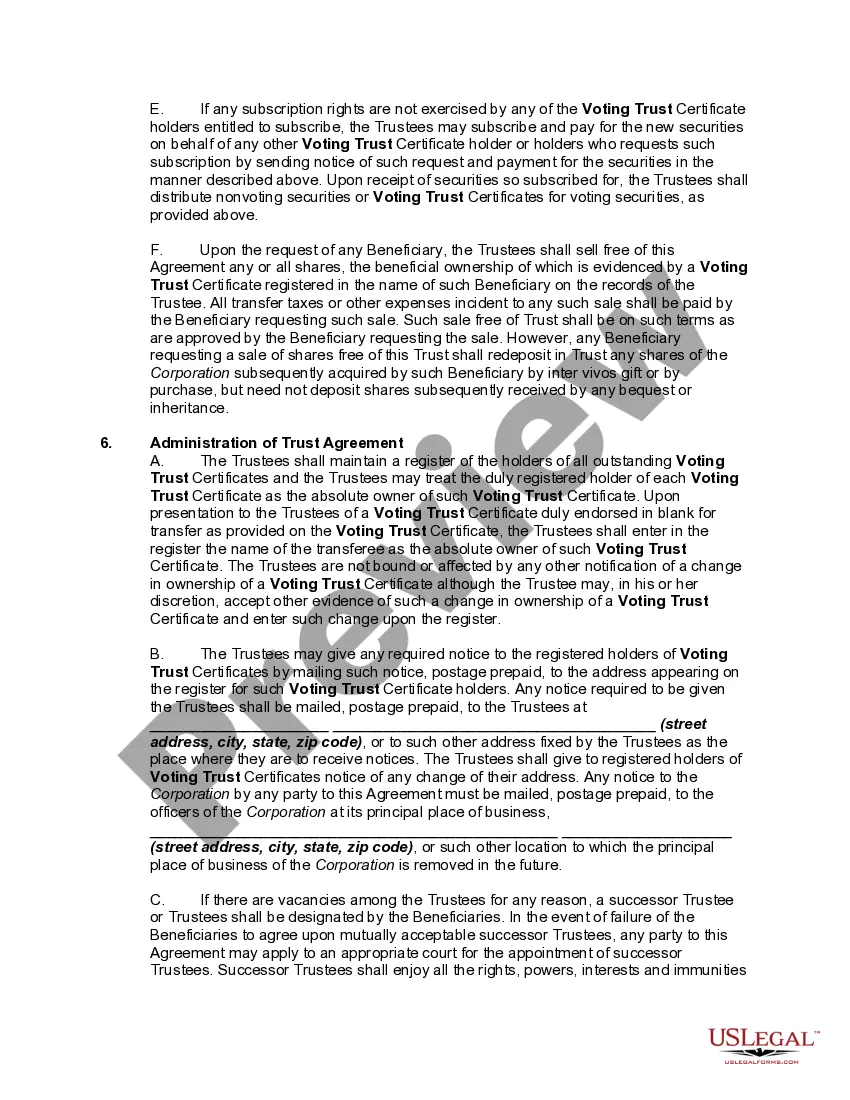
- Details on the administration of the trust, including the maintenance of records and communication procedures.
When to use this document
This form is typically used when a group of shareholders wishes to consolidate their voting rights for effective control over corporate decisions. Scenarios include family-owned businesses wanting to maintain ownership within the family, situations where investors seek to ensure consistent voting on corporate matters, or any context where shareholders aim for stability amidst changes in management or ownership.
Who can use this document
- Shareholders of a corporation who wish to appoint trustees to manage their voting rights.
- Investors looking for a structured approach to corporate governance.
- Individuals in family businesses aiming to keep decision-making among a designated group.
- Parties interested in ensuring that their shares are voted consistently during corporate elections and decisions.
Completing this form step by step
- Identify and list all beneficiaries along with their full names and addresses.
- Designate the trustees who will manage the voting shares, including their names and addresses.
- Specify the effective date of the agreement and the duration of the trust.
- Outline the number of shares owned by each beneficiary and the name of the corporation.
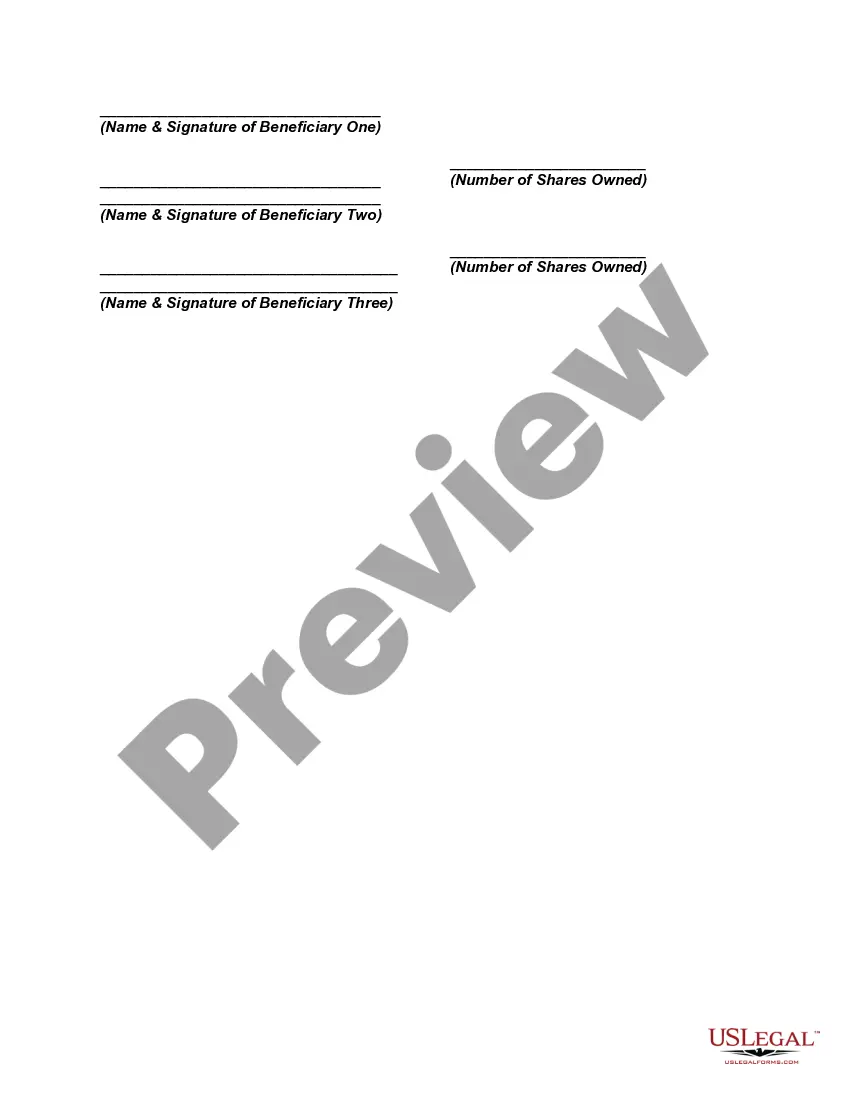
- Ensure all parties sign the agreement to validate it.
Notarization guidance
This form does not typically require notarization unless specified by local law. However, it is advisable to check state-specific regulations to confirm the requirements in your jurisdiction.
Get your form ready online
Our built-in tools help you complete, sign, share, and store your documents in one place.
Make edits, fill in missing information, and update formatting in US Legal Forms—just like you would in MS Word.
Download a copy, print it, send it by email, or mail it via USPS—whatever works best for your next step.
Sign and collect signatures with our SignNow integration. Send to multiple recipients, set reminders, and more. Go Premium to unlock E-Sign.
If this form requires notarization, complete it online through a secure video call—no need to meet a notary in person or wait for an appointment.
We protect your documents and personal data by following strict security and privacy standards.

Make edits, fill in missing information, and update formatting in US Legal Forms—just like you would in MS Word.

Download a copy, print it, send it by email, or mail it via USPS—whatever works best for your next step.

Sign and collect signatures with our SignNow integration. Send to multiple recipients, set reminders, and more. Go Premium to unlock E-Sign.

If this form requires notarization, complete it online through a secure video call—no need to meet a notary in person or wait for an appointment.

We protect your documents and personal data by following strict security and privacy standards.
Mistakes to watch out for
- Failing to ensure all beneficiaries understand their rights under the agreement.
- Neglecting to properly endorse stock certificates for transfer to the trust.
- Not specifying an expiration date for the trust, which can lead to legal ambiguities.
- Omitting required signatures, which invalidates the agreement.
Benefits of completing this form online
- Convenience of downloading and completing the form at your own pace.
- Editability allows users to customize the agreement to fit their specific situation.
- Access to legal forms prepared by licensed attorneys, ensuring reliability and accuracy.
Looking for another form?
Form popularity
FAQ
A trust agreement is a document that allows you (the trustor) to legally transfer the ownership of specific assets to another person (trustee) to be held for the trustor's beneficiaries.
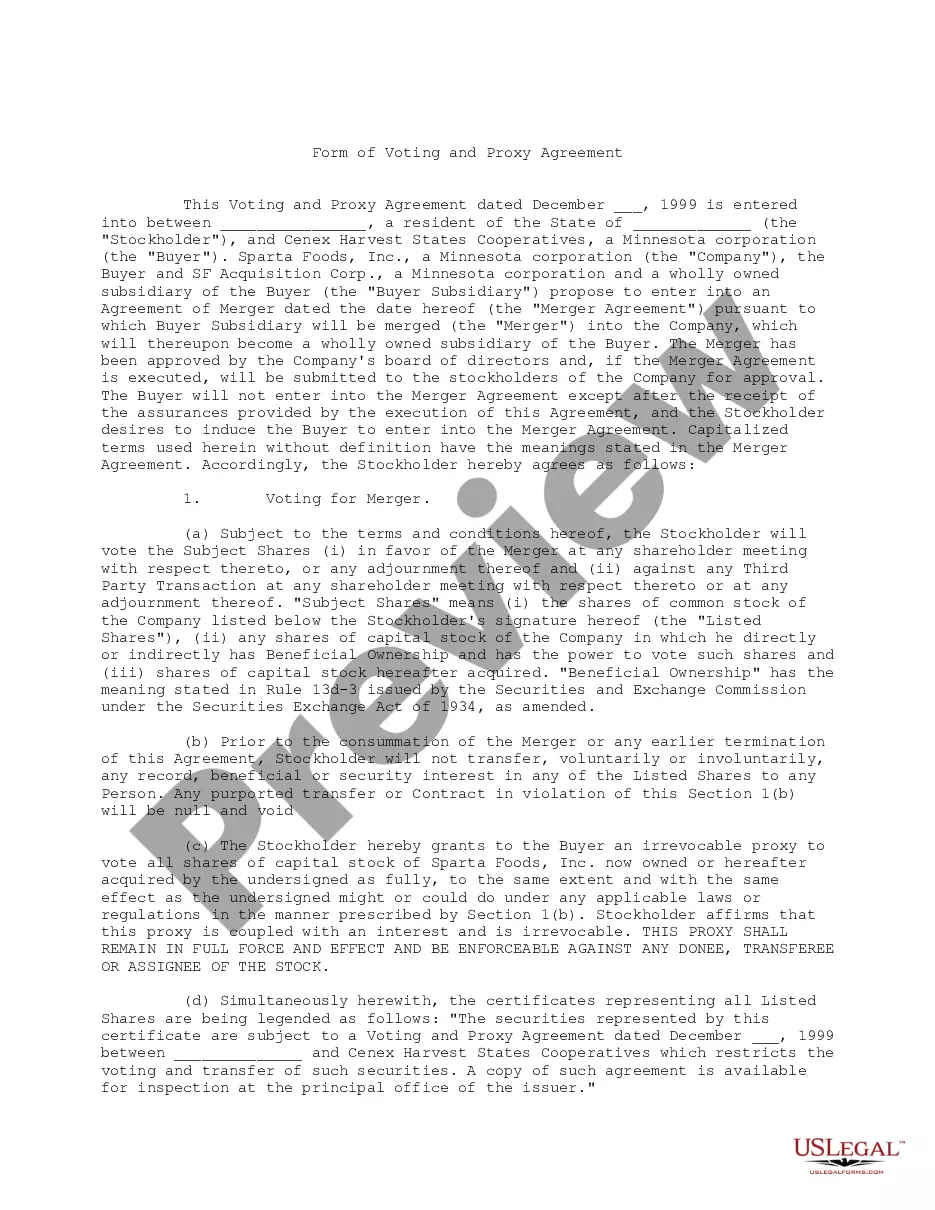
By Practical Law Corporate & Securities. Maintained 2022 USA (National/Federal) A voting agreement to be used in connection with the acquisition of a public company. This agreement sets out the terms and conditions by which a target company's stockholder agrees to vote in favor of a merger transaction.
A voting trust is a contract between shareholders in which their shares and voting rights are temporarily transferred to a trustee. A voting agreement is a contract in which shareholders agree to vote a certain way on specific issues without giving up their shares or voting rights.
A "shareholder trust" is a trust which holds shares in a corporation.Any fiduciary duties that might otherwise exist between those in control of the entity and other interest holders such as the shareholder trust may run only to the trust.
A voting trust certificate is issued to a stockholder in exchange for his or her common stock, and represents all of the normal rights of a shareholder (e.g., receiving dividends) except the right to vote.
A trust is a legal agreement that allows you (the trustor) to transfer property and assets for the benefit of someone else (the beneficiaries).You place your assets under control of a trustee, an individual or organization that manages and distributes the assets as set out in a trust document specifying your wishes.
A trust agreement is a document that spells out the rules that you want followed for property held in trust for your beneficiaries. Common objectives for trusts are to reduce the estate tax liability, to protect property in your estate, and to avoid probate.
Personal trusts are further divided into either 1) Under Declaration of Trust (U/D/T) meaning the grantor and the trustee are the same person and the grantor controls the trust assets, and 2) Trust Under Agreement (U/A) meaning the grantor and the trustee are different persons and the trustee controls the trust assets.