Georgia Deed of Gift
Overview of this form
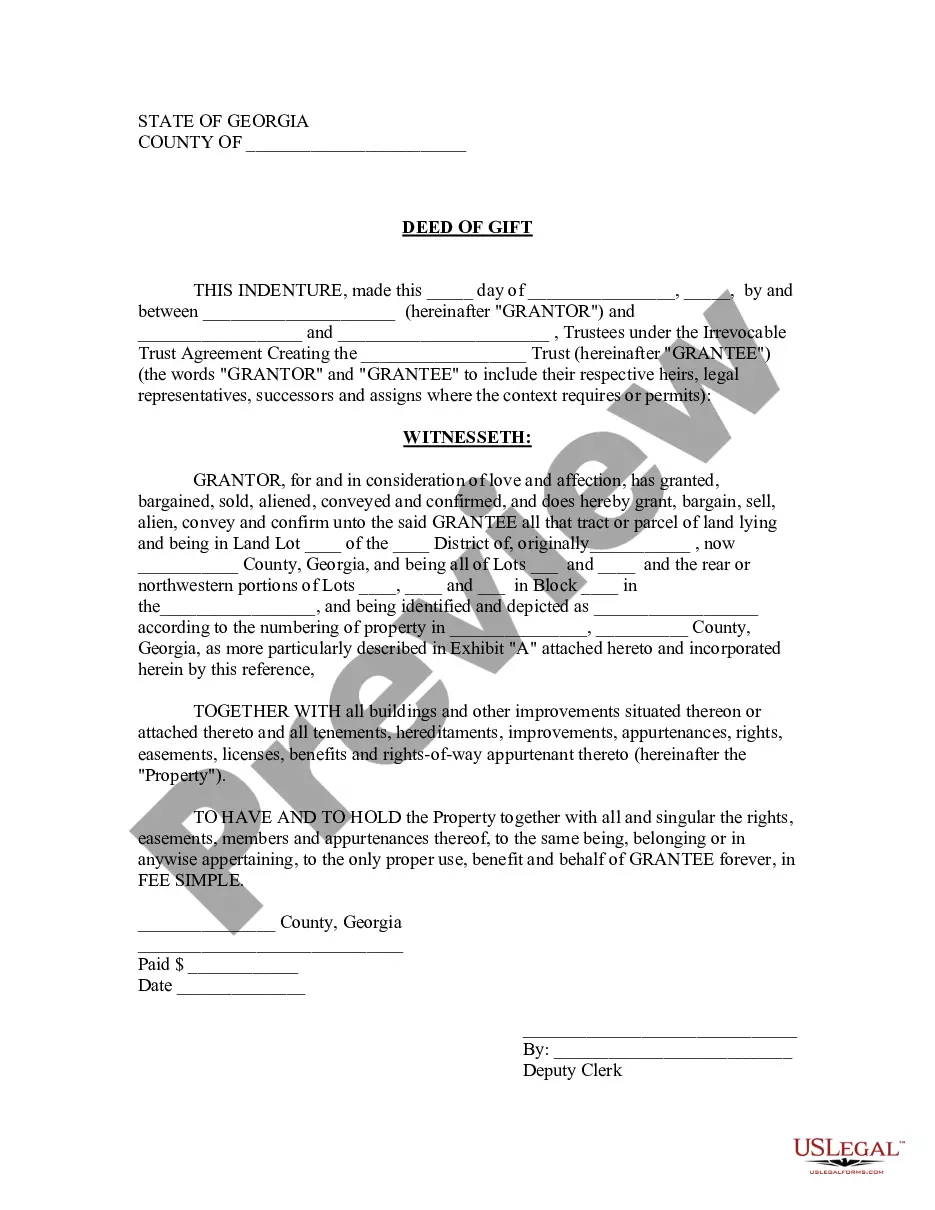
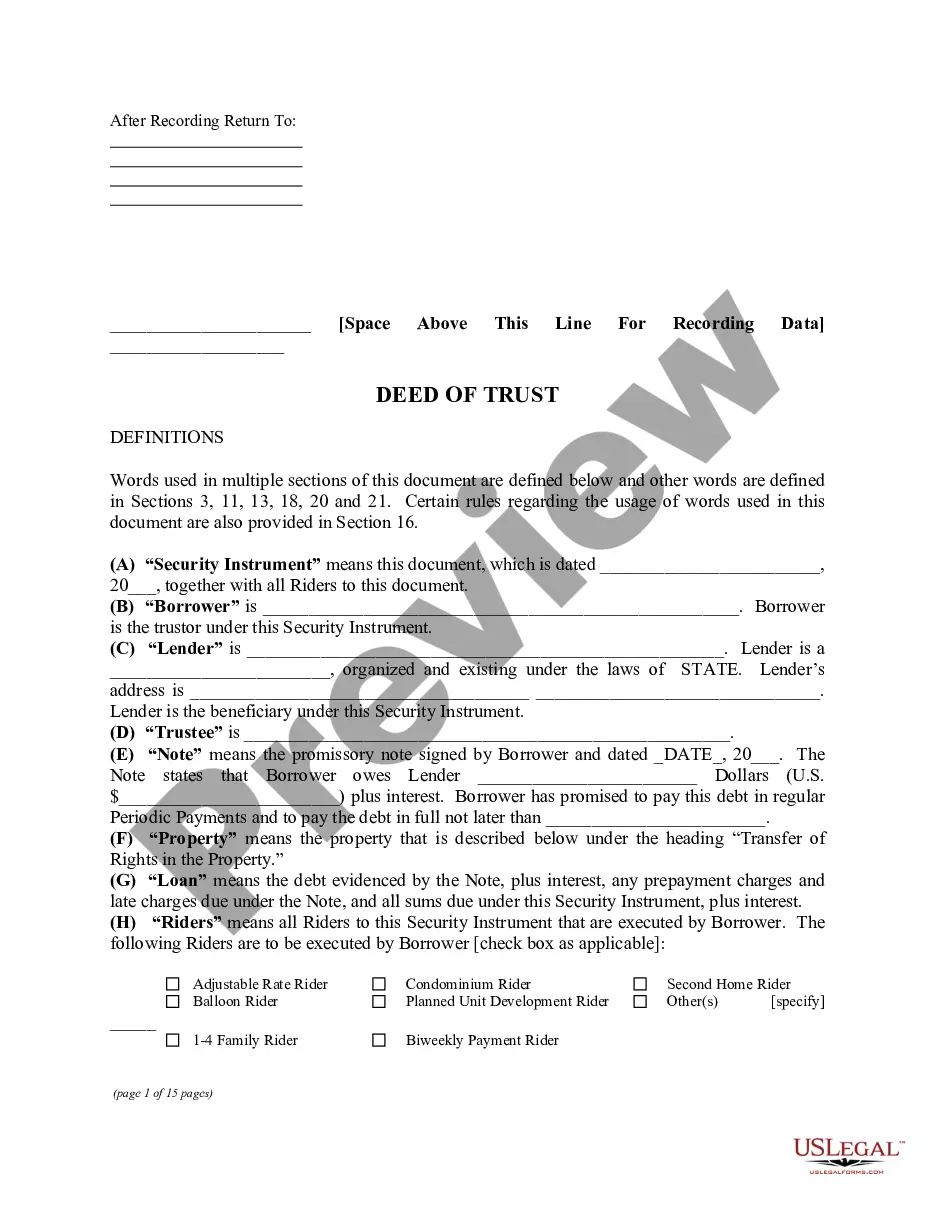
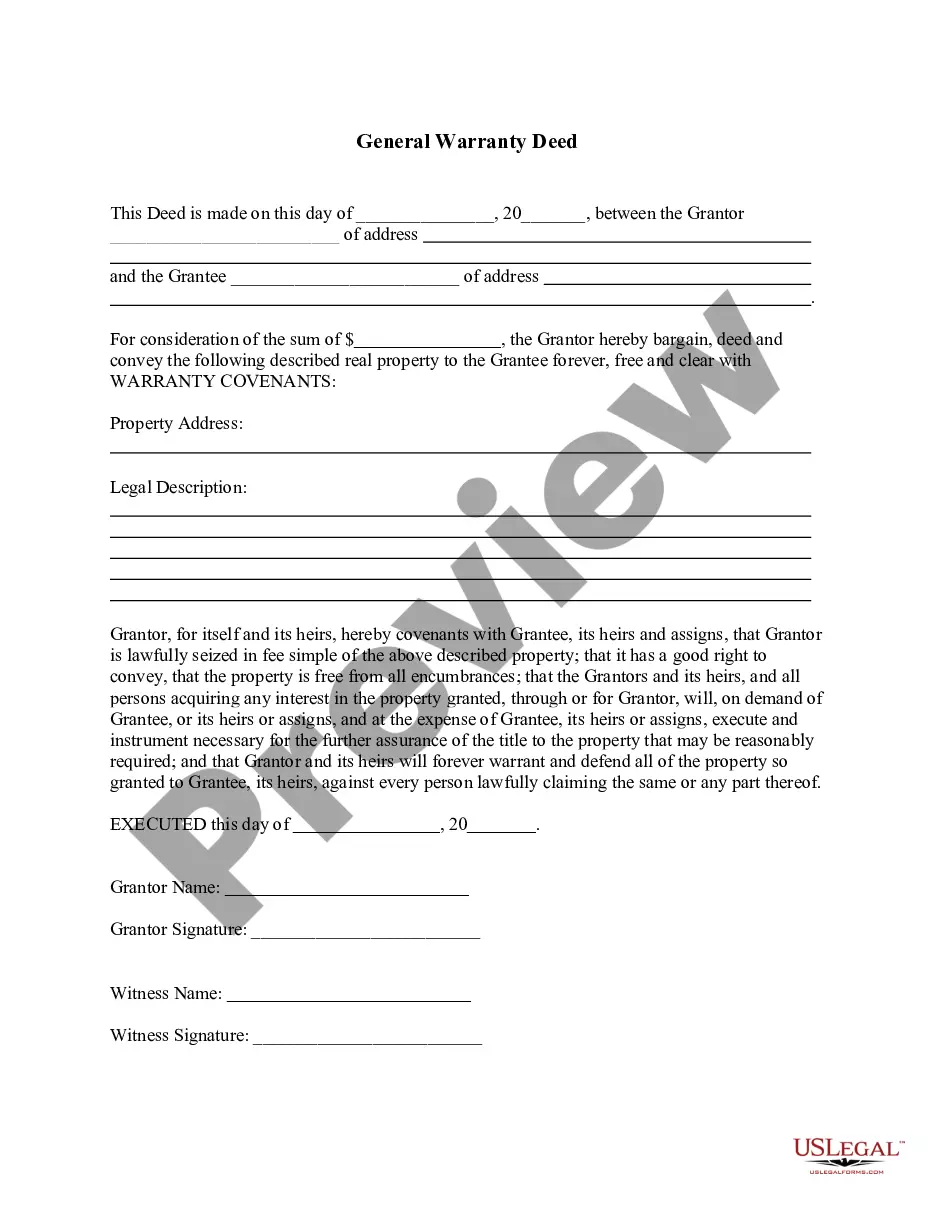
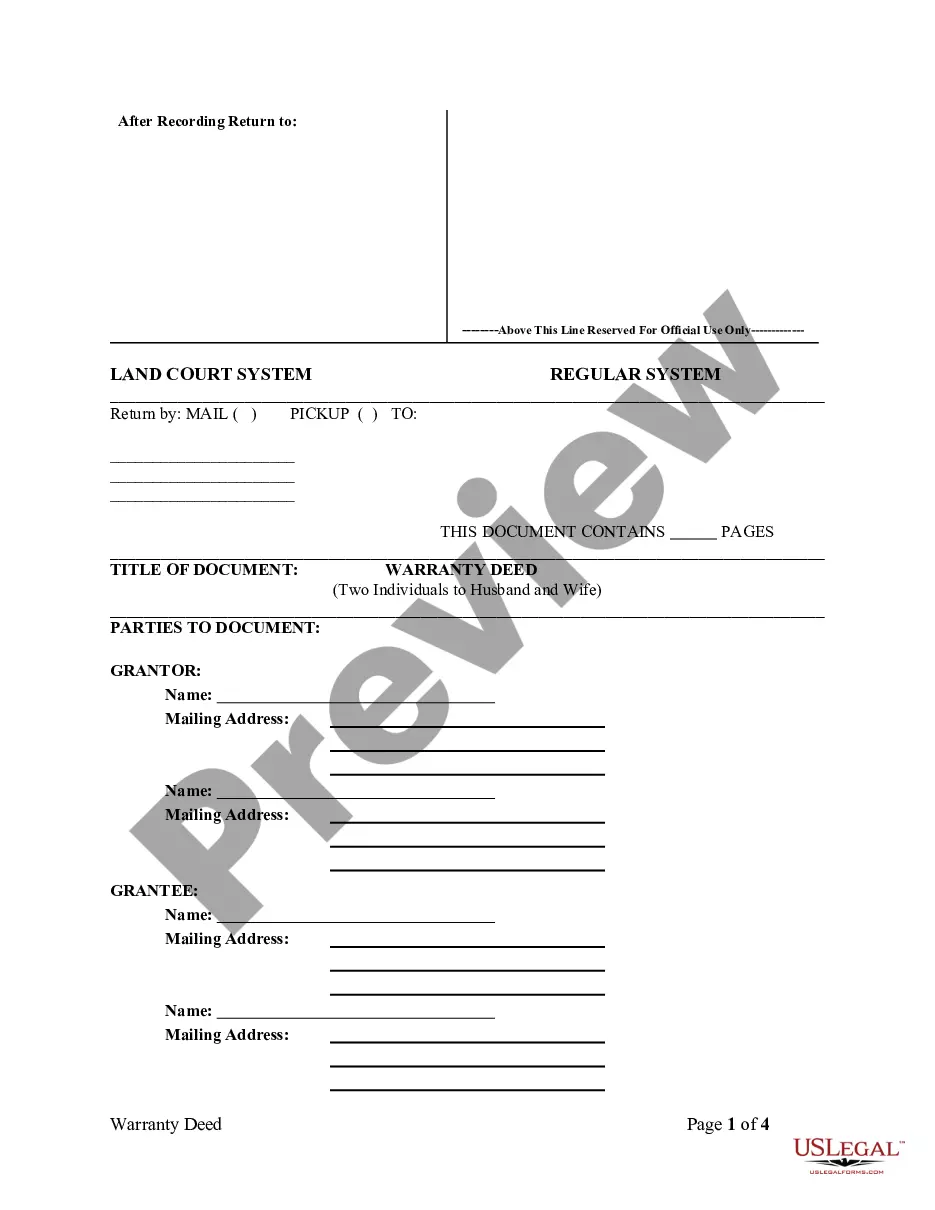
The Deed of Gift is a legal document used to transfer ownership of property from one party to another without any monetary exchange. This form serves as an official record of the transfer and specifies the details of the property being gifted. Unlike a sale, a Deed of Gift is based on a relationship of love and affection between the donor and the recipient, making it a vital tool for personal property transactions.
Main sections of this form
- Grantor: The person giving the gift of the property.
- Grantee: The person receiving the gifted property, often a trustee in the case of an irrevocable trust.
- Description of Property: A detailed account of the parcel of land being transferred.
- Consideration: The reason for the gift, typically stated as love and affection.
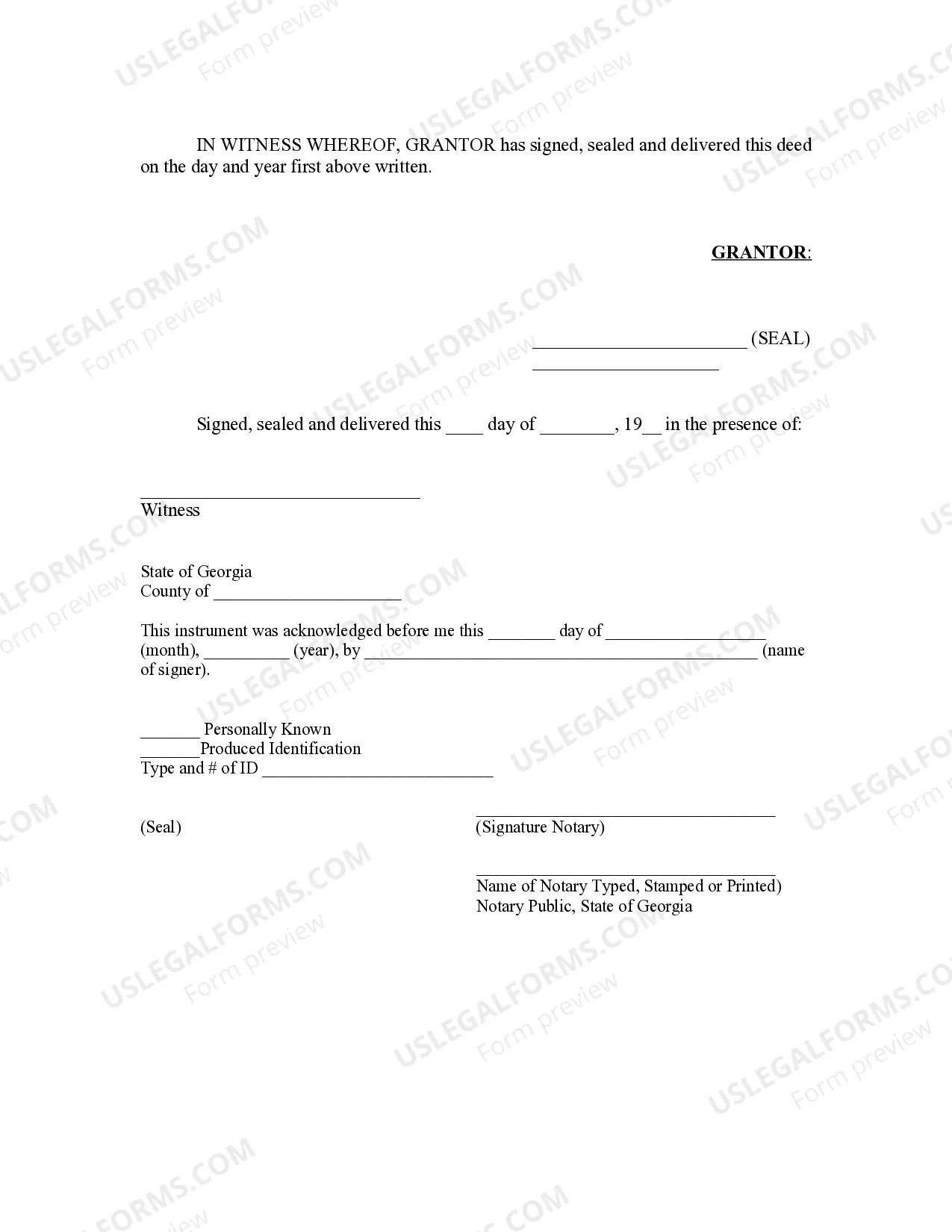
- Signatures: Required signatures of the Grantor and witnesses to validate the document.
- Notary section: Certification by a notary public, if required.


Situations where this form applies
This form is commonly used in situations where you wish to gift real estate to family members, friends, or charitable organizations. For instance, if you own a piece of land and want to transfer it to a relative without any exchange of money, you would use a Deed of Gift. Additionally, this document can be helpful in estate planning to simplify the transfer of property before passing away.
Who should use this form
- Individuals wishing to gift property to family or friends.
- Property owners looking to transfer assets as part of estate planning.
- Trustees managing property transfers under an irrevocable trust.
- Individuals familiar with local property transfer laws.
Steps to complete this form
- Identify the parties: Fill in the names of the Grantor and Grantee.
- Specify the property: Clearly describe the property being gifted, including boundaries and identifiers.
- Enter consideration: State the reason for the gift, typically "for love and affection."
- Insert date: Add the date of the transfer.
- Sign the document: Ensure the Grantor and witnesses sign in the required areas.
- Notarize, if necessary: Consult with a notary public to complete the certification.
Does this form need to be notarized?
This form must be notarized to be legally valid. US Legal Forms provides secure online notarization powered by Notarize, allowing you to complete the process through a verified video call.
Get your form ready online
Our built-in tools help you complete, sign, share, and store your documents in one place.
Make edits, fill in missing information, and update formatting in US Legal Forms—just like you would in MS Word.
Download a copy, print it, send it by email, or mail it via USPS—whatever works best for your next step.
Sign and collect signatures with our SignNow integration. Send to multiple recipients, set reminders, and more. Go Premium to unlock E-Sign.
If this form requires notarization, complete it online through a secure video call—no need to meet a notary in person or wait for an appointment.
We protect your documents and personal data by following strict security and privacy standards.

Make edits, fill in missing information, and update formatting in US Legal Forms—just like you would in MS Word.

Download a copy, print it, send it by email, or mail it via USPS—whatever works best for your next step.

Sign and collect signatures with our SignNow integration. Send to multiple recipients, set reminders, and more. Go Premium to unlock E-Sign.

If this form requires notarization, complete it online through a secure video call—no need to meet a notary in person or wait for an appointment.

We protect your documents and personal data by following strict security and privacy standards.
Common mistakes
- Omitting detailed property description, which can lead to confusion about what is gifted.
- Failing to sign and date the form properly, which can invalid the deed.
- Neglecting to include witnesses, if required by state law.
- Using outdated or incorrect forms that do not comply with local laws.
- Forgetting to notarize the deed if your state requires notarization.
Benefits of using this form online
- Convenience: Download and complete the form from anywhere at any time.
- Editability: Customize the form to fit your specific needs easily.
- Legal reliability: Access forms created by licensed attorneys to ensure compliance with legal standards.
What to keep in mind
- A Deed of Gift is essential for legally transferring property without payment.
- Ensure the property description is accurate and complete to avoid future disputes.
- Notarization adds legitimacy to the document and may be required under state law.
- This form can help facilitate smooth property transitions, especially in familial situations.
Looking for another form?
Form popularity
FAQ
You should record a deed of gift in Georgia promptly after its execution. While there is no strict deadline, delaying the recording may expose your ownership to disputes or claims from other parties. Recording the deed quickly solidifies your ownership and protects you against potential problems. If you need guidance on how to complete and record your Georgia Deed of Gift effectively, US Legal Forms can provide the resources you need.
Yes, you should always keep a copy of your house deed, including your Georgia Deed of Gift, for your records. This document serves as proof of your property ownership and may be needed for various legal purposes, such as selling or refinancing your home. Having a copy readily available simplifies future transactions. Always store important documents securely to protect them from loss or damage.
To record a deed in Georgia, you need to first prepare the deed document, such as a Georgia Deed of Gift, ensuring it is properly signed and notarized. Afterward, visit the appropriate County Clerk's office and submit your deed along with any required fees. The clerk will then record your deed in the public records, making your ownership official. For comprehensive assistance with the recording process, consider using US Legal Forms.
In Georgia, a deed, including a Georgia Deed of Gift, must be recorded in the county where the property is located. Recording the deed at the County Clerk's office ensures the transfer of property is public and protects your rights as the new owner. This step is crucial for establishing ownership. By recording your deed, you help avoid future disputes regarding property ownership.
In Georgia, while it is not a strict requirement for an attorney to prepare a Georgia Deed of Gift, it is highly advisable. A knowledgeable attorney can ensure that the deed meets all legal standards and includes necessary provisions. By consulting a legal expert, you can avoid potential issues related to title transfer and ensure the document is properly executed. Ultimately, having professional assistance can provide peace of mind during the gifting process.
The primary purpose of a Georgia Deed of Gift is to formally document the voluntary transfer of property from one individual to another. It acts as a legal declaration that makes the transfer unquestionable and binding. Utilizing a deed of gift is particularly helpful for estate planning, allowing for smooth transitions of assets during a person's lifetime.
Yes, a Georgia Deed of Gift typically supersedes a will regarding the property that has been gifted. When you execute a gift deed, the transfer is immediate and legally binding. Thus, any mention of that property in your will will not hold if you have already effectively gifted it to someone.
Gifting a house using a Georgia Deed of Gift can provide immediate benefits, such as eliminating probate, but it also means you lose the property rights. Conversely, inheriting a house can come with a step-up in property basis, which can reduce tax liabilities. Weighing emotional and financial factors is critical in deciding whether to gift or inherit property.
Using a Georgia Deed of Gift allows you to transfer property during your lifetime, which can help avoid probate. However, the potential downside includes losing control of the property once the gift is made. In contrast, a will keeps the property within your control until your passing, but it requires probate, which can be time-consuming and costly.
A quitclaim deed transfers ownership from one party to another without any guarantees. In contrast, a Georgia Deed of Gift serves a specific purpose, where one person gives property to another without expecting payment in return. The primary distinction lies in the intent: a quitclaim deed conveys rights, while a gift deed conveys ownership as an outright gift.