Agreement between Owner and Municipality to Change Zone
Overview of this form
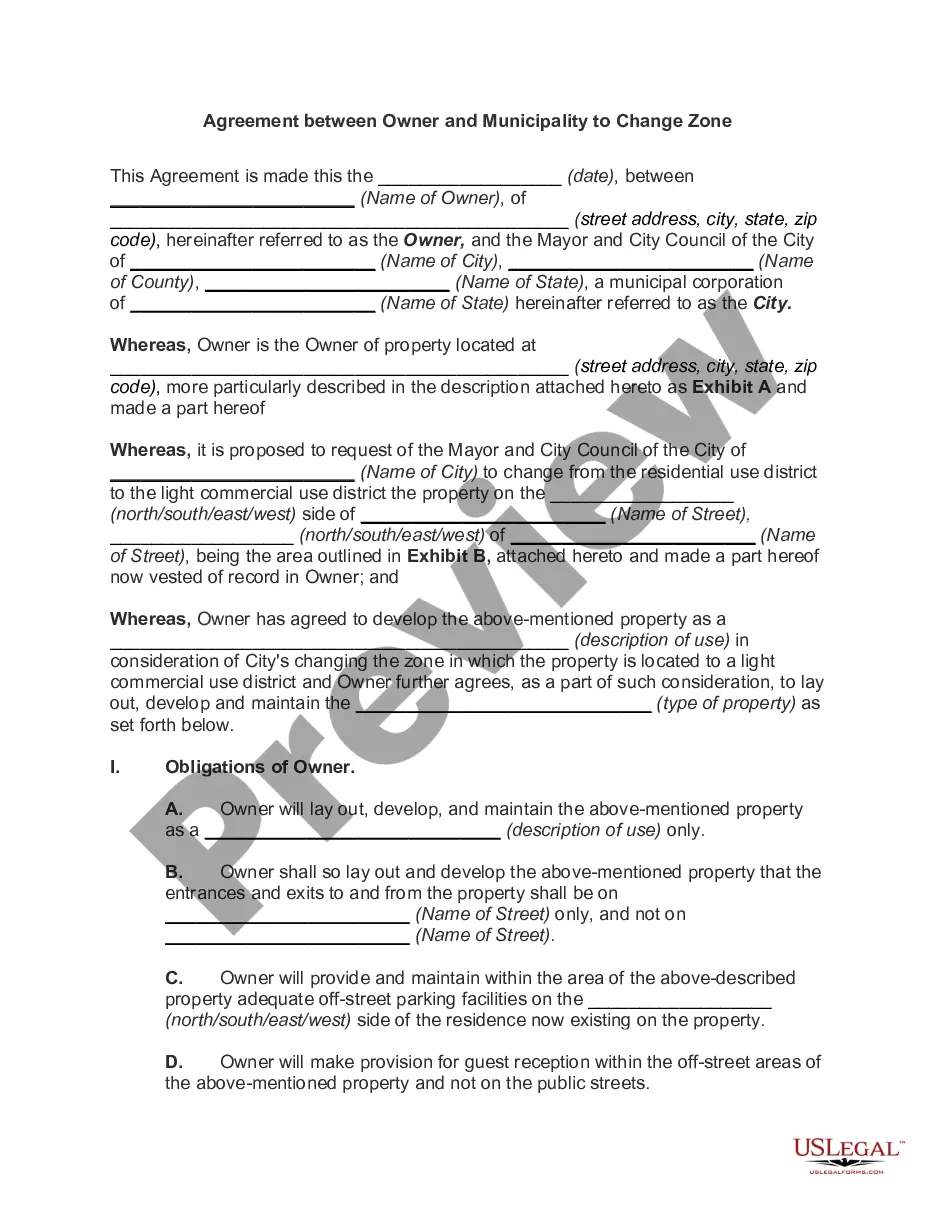
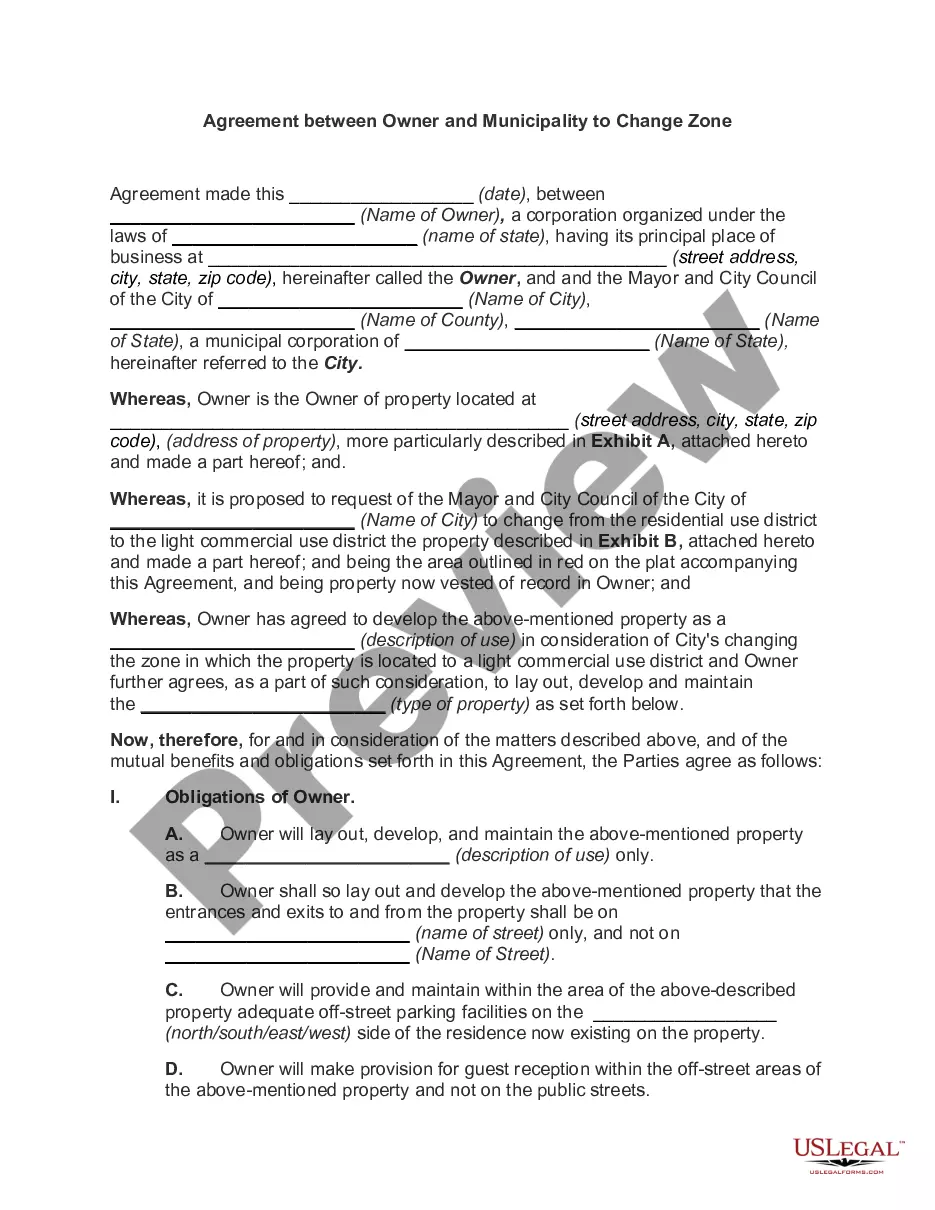
An Agreement between Owner and Municipality to Change Zone is a legal document showing an understanding between a property owner and the local government to change the zoning classification of a specific property. This agreement outlines the terms under which the property will be converted from a residential use to a light commercial use zone, detailing obligations, conditions, and potential consequences if those conditions are not met. It is essential for ensuring compliance with local zoning laws and facilitating property development legally and efficiently.
Key components of this form
- Identification of the parties involved (Owner and City).
- Description of the property being zoned.
- Obligations of the Owner regarding property development and maintenance.
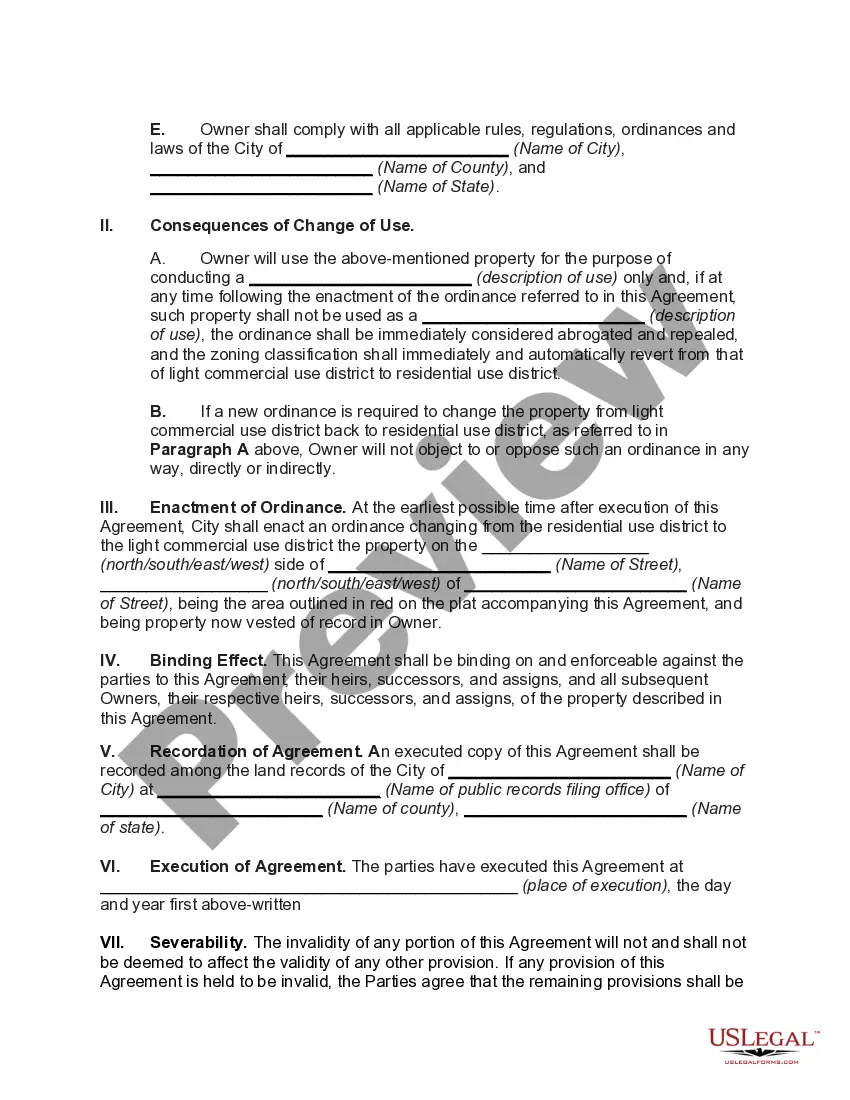
- Consequences of non-compliance with agreed use of zoning.
- Procedures for the enactment of the zoning ordinance.
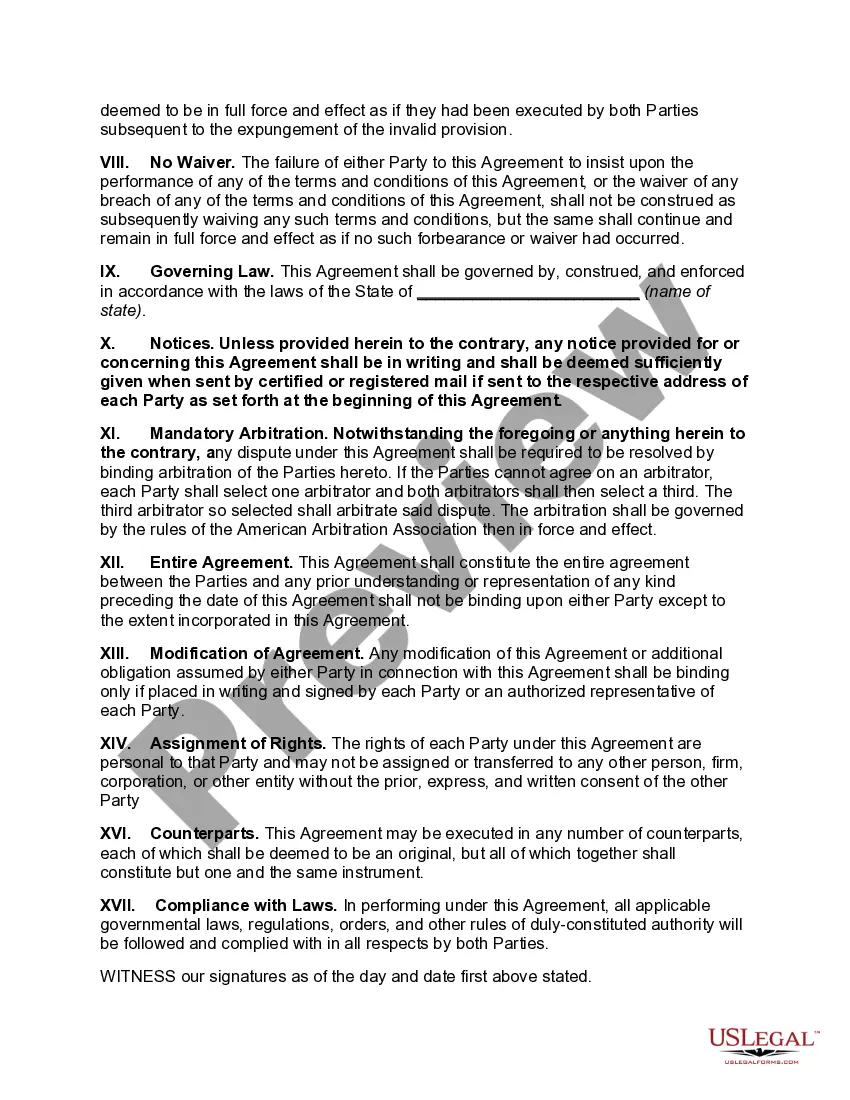
- Provisions for recordation and binding effect of the agreement.
Common use cases
This form is necessary when a property owner wishes to change the zoning designation of their property from residential to light commercial. Situations that may necessitate this agreement include plans to establish a new business or development in a previously residential area, compliance with municipal regulations, or engaging in real estate development projects that require specific zoning classifications.
Who should use this form
- Property owners seeking to modify the zoning of their land.
- Real estate developers planning projects in residential zones.
- Municipal officials involved in zoning and land use decisions.
- Legal professionals advising clients on zoning matters.
How to complete this form
- Identify and enter the date of the agreement at the top of the document.
- Clearly state the name and address of the property owner and the municipality.
- Describe the property in detail, including location and zoning change request.
- Specify the obligations of the Owner concerning property use and development.
- Ensure all required signatures are obtained from both parties.
Does this form need to be notarized?
This form does not typically require notarization unless specified by local law. However, it is advisable to verify local regulations as some jurisdictions may have different requirements regarding the execution of agreements.
Get your form ready online
Our built-in tools help you complete, sign, share, and store your documents in one place.
Make edits, fill in missing information, and update formatting in US Legal Forms—just like you would in MS Word.
Download a copy, print it, send it by email, or mail it via USPS—whatever works best for your next step.
Sign and collect signatures with our SignNow integration. Send to multiple recipients, set reminders, and more. Go Premium to unlock E-Sign.
If this form requires notarization, complete it online through a secure video call—no need to meet a notary in person or wait for an appointment.
We protect your documents and personal data by following strict security and privacy standards.

Make edits, fill in missing information, and update formatting in US Legal Forms—just like you would in MS Word.

Download a copy, print it, send it by email, or mail it via USPS—whatever works best for your next step.

Sign and collect signatures with our SignNow integration. Send to multiple recipients, set reminders, and more. Go Premium to unlock E-Sign.

If this form requires notarization, complete it online through a secure video call—no need to meet a notary in person or wait for an appointment.

We protect your documents and personal data by following strict security and privacy standards.
Mistakes to watch out for
- Not providing a detailed property description or accurate zoning request.
- Failing to include signatures from all relevant parties.
- Omitting attachments such as plats that are essential to the agreement.
- Neglecting to finalize any required local government approvals.
Benefits of using this form online
- Convenient download and print options for immediate use.
- Editability to customize the form to fit specific property and agreement details.
- Access to forms drafted by licensed attorneys, ensuring legal compliance.
Looking for another form?
Form popularity
FAQ
Contract zoning is prohibited by common law. It prohibits a city from agreeing to zone a property in a certain way in exchange for some act or omission of the property owner?a quid pro quo, if you will.
The development services agreement is a contract between the client and the service provider. It outlines all of the responsibilities each party has, including payments for work completed and termination procedures if necessary. A development services agreement is sometimes called a DSA.
A Website Design/Development Agreement is a document through which two parties - the web professional (the individual designing and/or developing the website) and the client - can create a business relationship between them for the provision of services for a website.
A development agreement is a voluntary contract between a local jurisdiction and a person who owns or controls property within the jurisdiction, detailing the obligations of both parties and specifying the standards and conditions that will govern development of the property.
A land use agreement is a legal document that governs the terms and conditions of a property owner leasing out their property for use by a tenant or development by a company. Sometimes a land use agreement is referred to as a surface use agreement.
Allows developer to obtain ?vested rights? protected from any changes to existing zoning or land use laws during the term of the agreement.
A property covenant is an agreement between two or more parties regarding certain use of a piece of real property. The covenant will either benefit or burden the landowner. A covenant that burdens the landowner is also called a restrictive covenant.
A development agreement may include: Rules and regulations for development of a property. Commitments and policies related to development of the property. Specific time frames for development of the property.