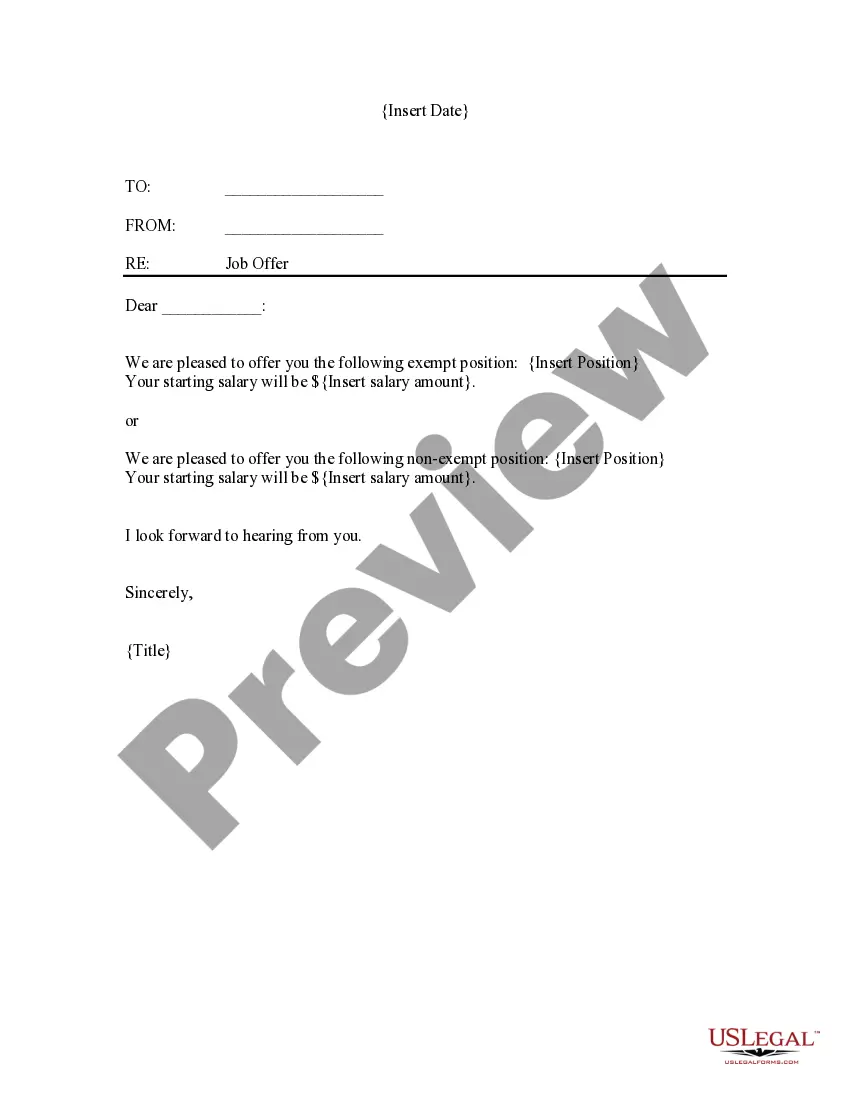
Job Offer Letter - Exempt or Nonexempt Position
What this document covers
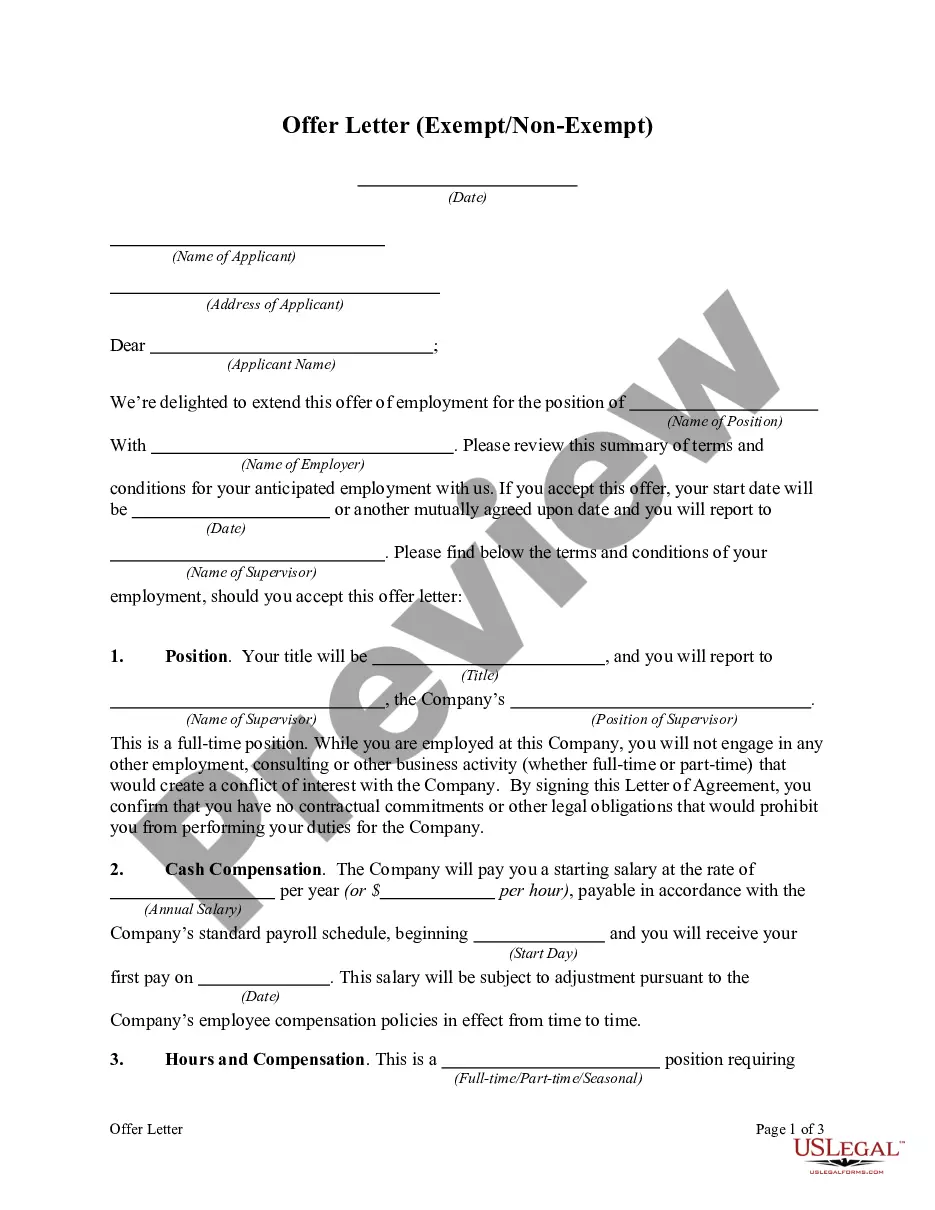
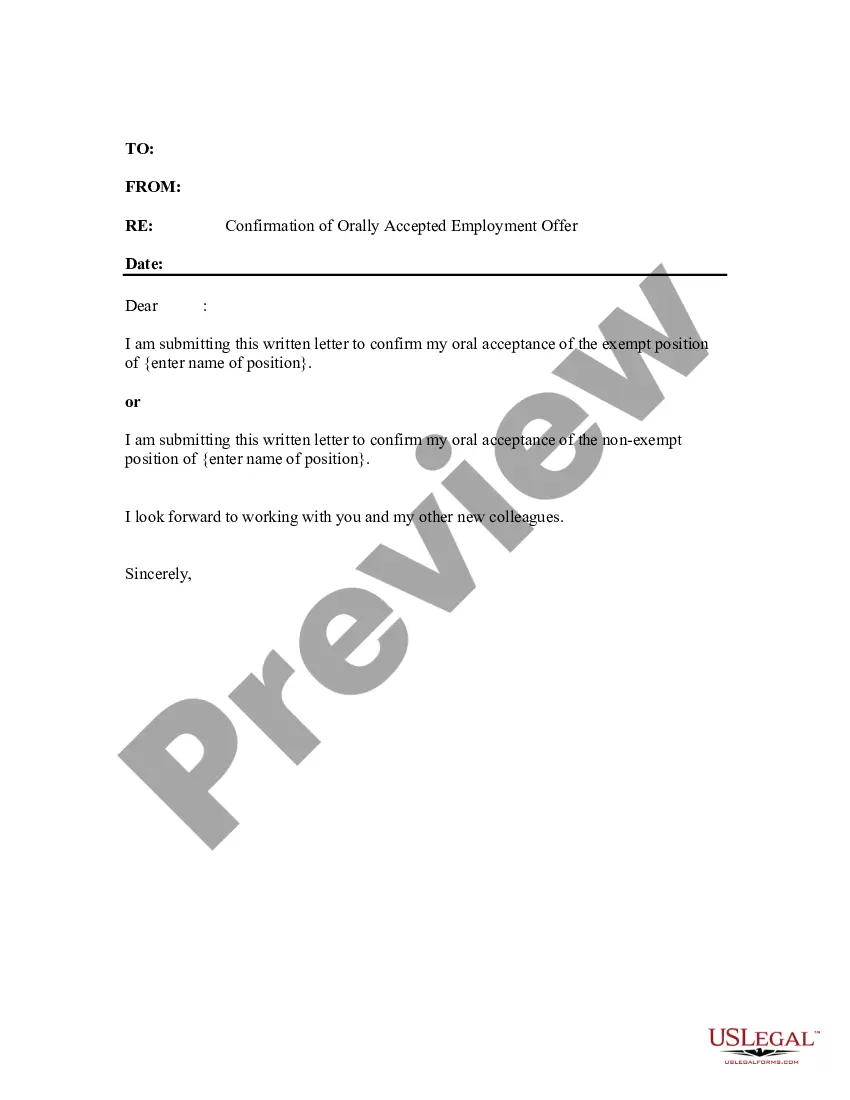
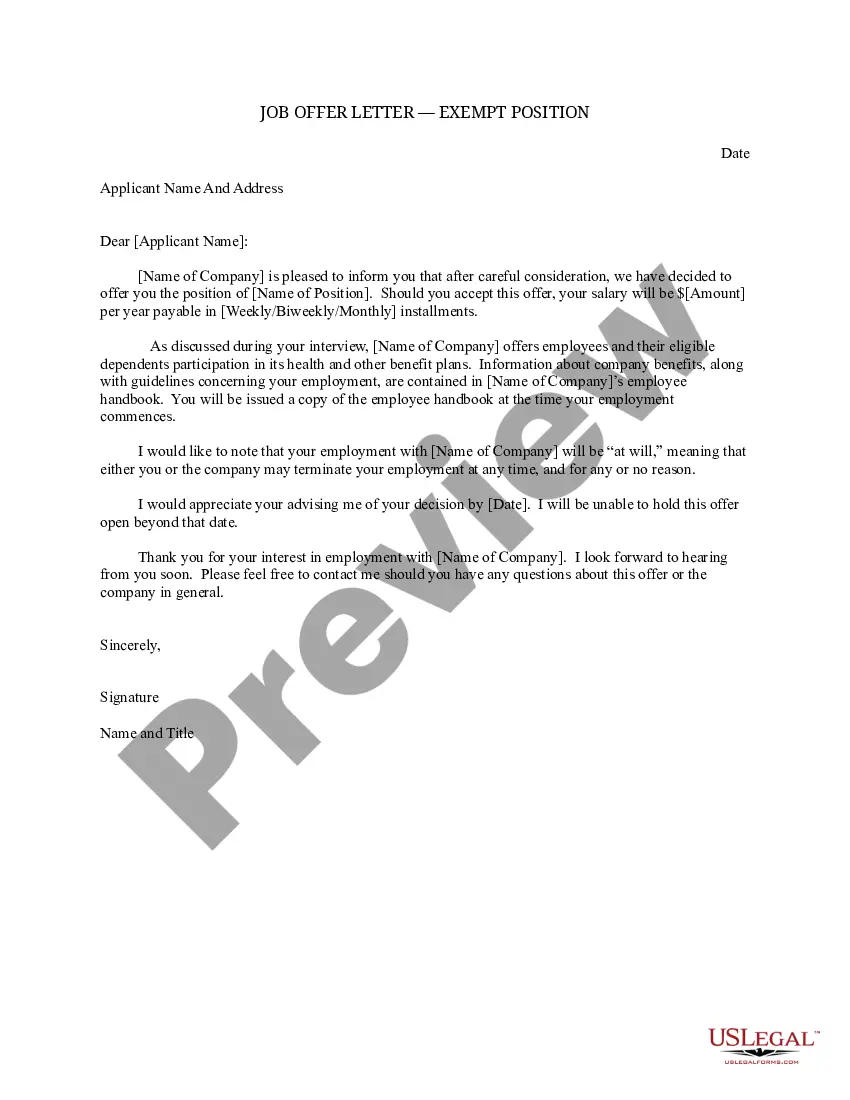
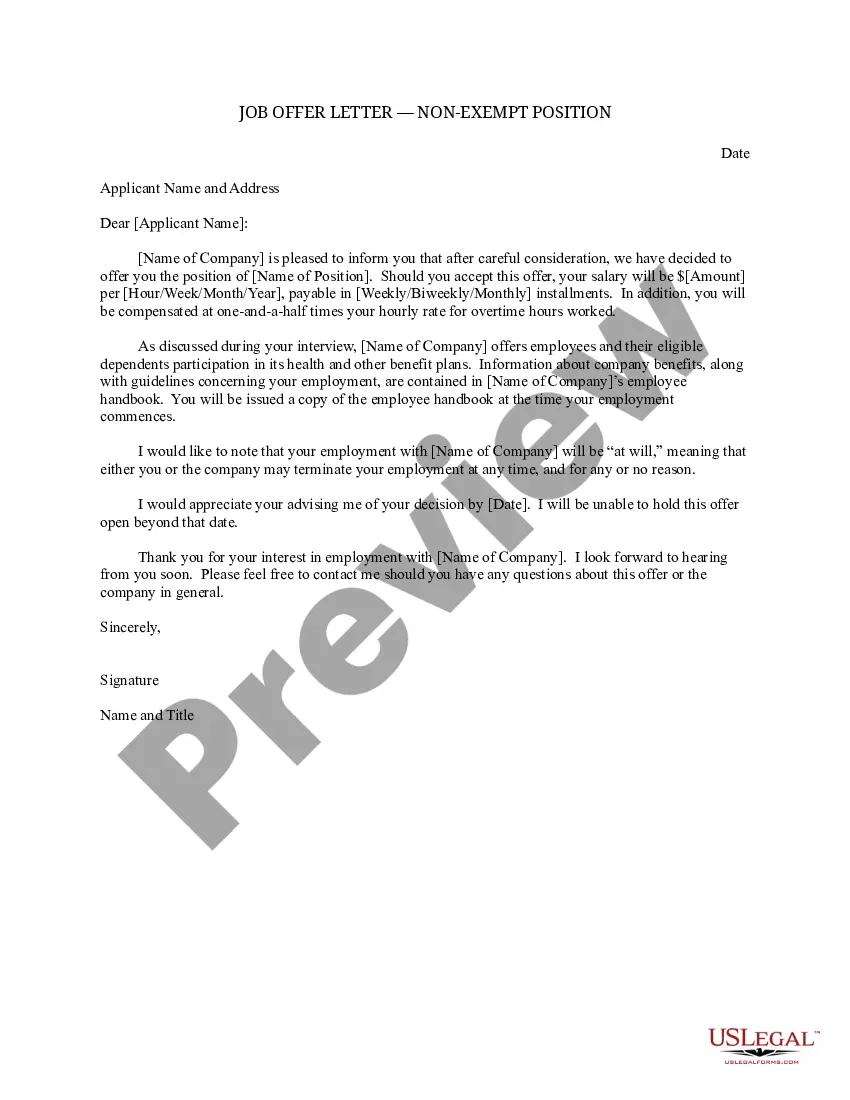
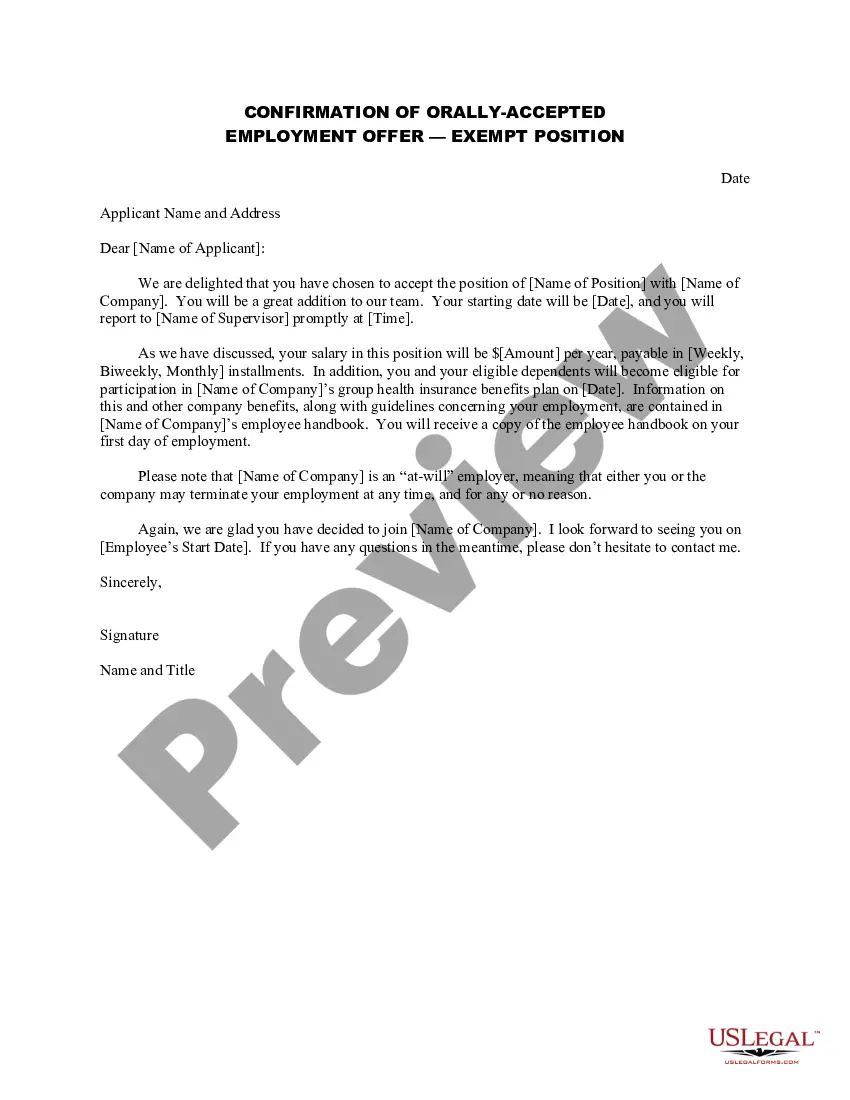
The Job Offer Letter - Exempt or Nonexempt Position is a formal document used by employers to offer a job to a candidate. This letter differs from other employment offer letters by specifying whether the position is exempt or non-exempt according to labor laws. It includes key details such as the job title and starting salary, ensuring clarity regarding the terms of employment.
Key parts of this document
- Recipient's name and address
- Sender's name and title
- Job title (exempt or non-exempt)
- Starting salary or wage amount
- Signature section
When to use this form
This form should be used when an employer is formally offering a job to a candidate. It is especially relevant in situations where the employer needs to clarify the employment status of the position as exempt or non-exempt, which can affect pay rates, overtime eligibility, and compliance with labor laws.
Who should use this form
- Employers looking to hire new employees
- HR professionals managing job offers
- Small business owners making job offers
- Recruiters in charge of staffing and hiring processes
Completing this form step by step
- Identify the recipient by filling in their name and address.
- Complete the sender's information, including name and title.
- Specify the job title and indicate whether it is an exempt or non-exempt position.
- Enter the starting salary or wage amount.
- Sign the letter and include the date.
Is notarization required?
Notarization is not commonly needed for this form. However, certain documents or local rules may make it necessary. Our notarization service, powered by Notarize, allows you to finalize it securely online anytime, day or night.
Get your form ready online
Our built-in tools help you complete, sign, share, and store your documents in one place.
Make edits, fill in missing information, and update formatting in US Legal Forms—just like you would in MS Word.
Download a copy, print it, send it by email, or mail it via USPS—whatever works best for your next step.
Sign and collect signatures with our SignNow integration. Send to multiple recipients, set reminders, and more. Go Premium to unlock E-Sign.
If this form requires notarization, complete it online through a secure video call—no need to meet a notary in person or wait for an appointment.
We protect your documents and personal data by following strict security and privacy standards.

Make edits, fill in missing information, and update formatting in US Legal Forms—just like you would in MS Word.

Download a copy, print it, send it by email, or mail it via USPS—whatever works best for your next step.

Sign and collect signatures with our SignNow integration. Send to multiple recipients, set reminders, and more. Go Premium to unlock E-Sign.

If this form requires notarization, complete it online through a secure video call—no need to meet a notary in person or wait for an appointment.

We protect your documents and personal data by following strict security and privacy standards.
Typical mistakes to avoid
- Failing to specify whether the position is exempt or non-exempt.
- Omitting the starting salary information.
- Addressing the letter incorrectly or leaving out the recipient's name.
Advantages of online completion
- Convenient access to legal document templates.
- Editable fields that allow customization based on specific job offers.
- Reliability from professionally drafted templates by licensed attorneys.
Quick recap
- This form provides clarity in job offers by distinguishing between exempt and non-exempt positions.
- Employers should ensure all relevant details are included for legal compliance.
- Using an official job offer letter template can streamline the hiring process.
Looking for another form?
Form popularity
FAQ
An offer letter is comprised of the most important details of the role and company that a candidate considers when accepting a job offer.Job title. Start date and work Schedule. Compensation and benefits.
The term exempt employee refers to a category of employees set out in the Fair Labor Standards Act (FLSA). Exempt employees do not receive overtime pay, nor do they qualify for the minimum wage. When an employee is exempt, it primarily means that they are exempt from receiving overtime pay.
Nonexempt: An individual who is not exempt from the overtime provisions of the FLSA and is therefore entitled to overtime pay for all hours worked beyond 40 in a workweek (as well as any state overtime provisions). Nonexempt employees may be paid on a salary, hourly or other basis.
An exempt employee is not entitled overtime pay by the Fair Labor Standards Act (FLSA). These salaried employees receive the same amount of pay per pay period, even if they put in overtime hours. A nonexempt employee is eligible to be paid overtime for work in excess of 40 hours per week, per federal guidelines.
The offer letter should provide details on the salary and pay periods. Employee compensation should be stated in an hourly, a weekly or a per-pay-period salary amount to avoid the expectation of receiving the full annual salary if the employee is terminated midyear.
And a job offer letter is proof only that you have a job offer, not a job.If you have accepted the job, then your new employer should be able to provide you with a letter stating that you are actually employed, your start date, salary etc., as well as contact information for the employer.
An exempt employee is a term that refers to a category of employees set out in the Fair Labor Standards Act (FLSA). Exempt employees do not receive overtime pay nor do they qualify for minimum wage. When an employee is "exempt" it primarily means that they are exempt from receiving overtime pay.
What exactly is an offer letter?An offer letter is any notice in written form that informs a candidate that they have been selected for employment. It's a formal letter that often includes the details of employment, from the start date, to benefits and, most importantly, the terms of employment.
Job offers typically contain the details of the employment offer, including salary, benefits, job responsibilities, and the reporting manager's name and title. The offer letter may also cover the expected work hours, the desired start date, and additional details that are important for the prospective employee to know.