Landlord Bankruptcy Clause
Understanding this form
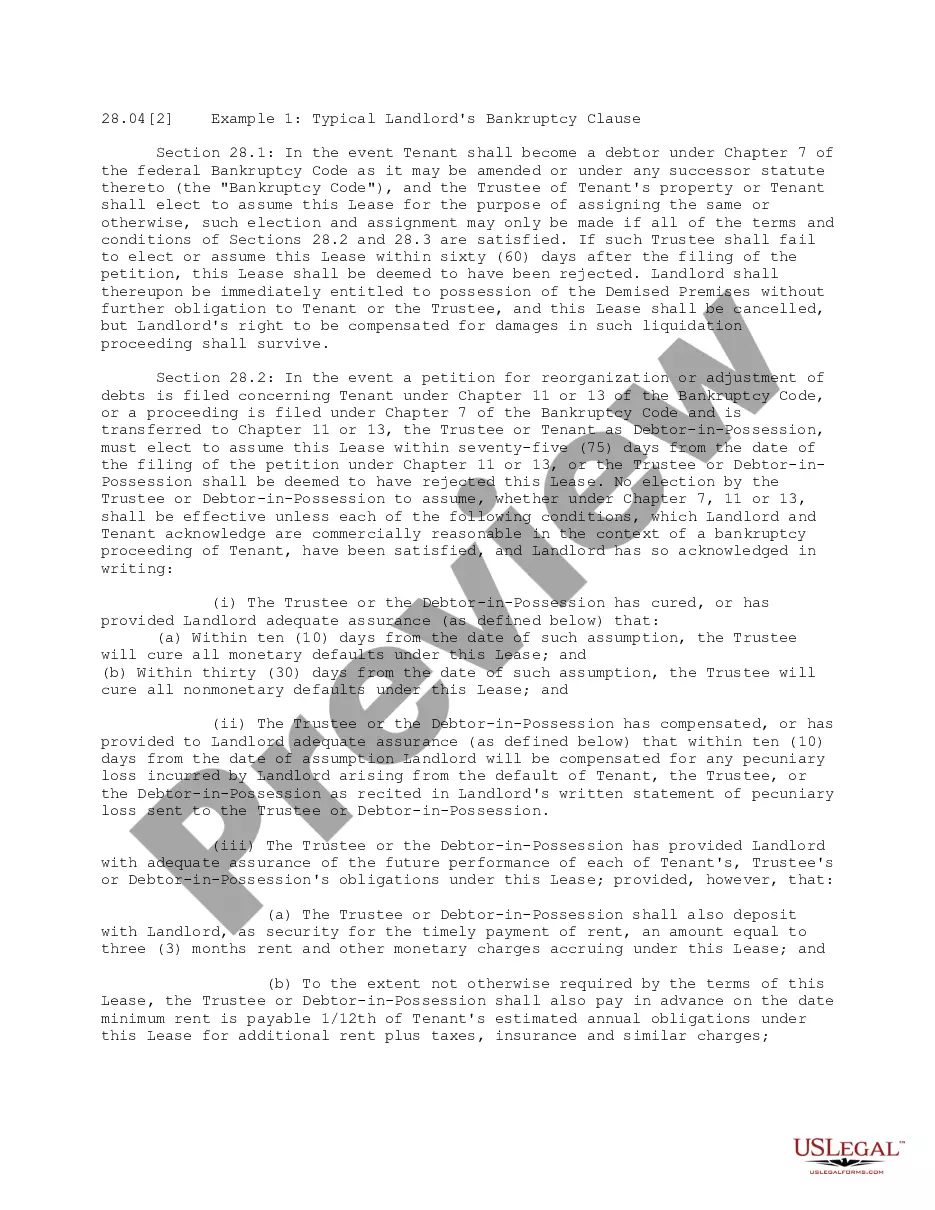
The Landlord Bankruptcy Clause is a legal form that outlines the specific terms regarding a lease in the event that a tenant declares bankruptcy under Chapter 7 of the federal Bankruptcy Code. This clause helps landlords protect their rights and provides clarity on the conditions under which a lease may be assumed or rejected during bankruptcy proceedings. Unlike standard lease agreements, this clause includes stipulations that prioritize the landlord's interests in preserving the property and ensuring that any debts owed are addressed promptly.
Form components explained
- Provisions for the tenant's election to assume the lease during bankruptcy proceedings.
- Timeframes for the assumption of the lease to prevent indefinite liabilities.
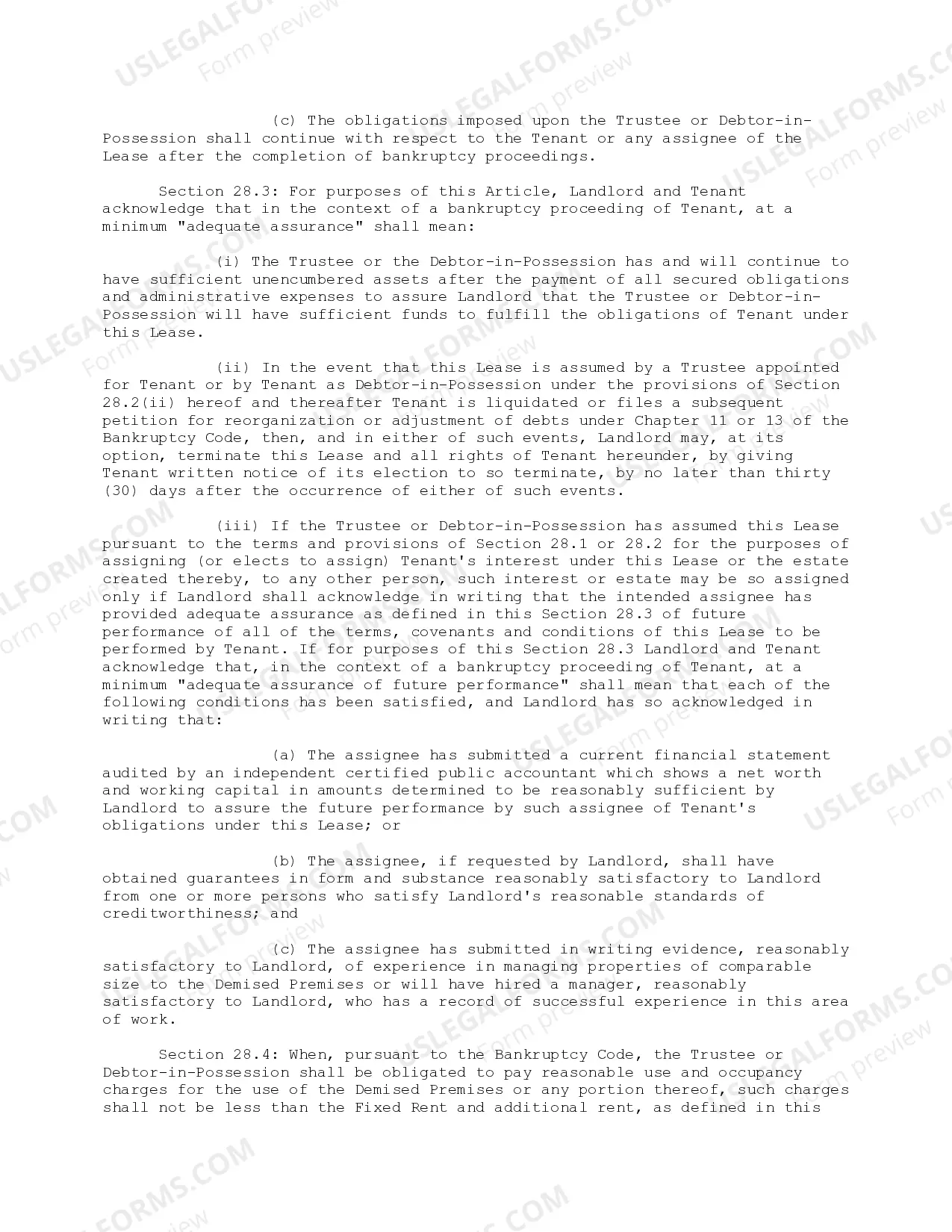
- Conditions that must be met for the lease to be assumed, including curing monetary and non-monetary defaults.
- Requirements for providing adequate assurance of future lease performance.
- Clauses addressing compensation for the landlord in the event of tenant default.

When to use this document
This form is essential for landlords who want to safeguard their interests when a tenant faces bankruptcy. It should be used when a tenant files for bankruptcy under Chapter 7, Chapter 11, or Chapter 13, allowing the landlord to understand their rights and obligations regarding the lease and the property. If you anticipate that your tenant may experience financial distress, having this clause in place can provide crucial protections for your investment.
Who needs this form
- Landlords of commercial properties who lease out space to tenants.
- Property managers responsible for overseeing tenant agreements.
- Real estate investors looking to secure their leases against potential tenant bankruptcies.
Instructions for completing this form
- Identify the landlord and tenant parties involved in the lease.
- Clearly outline the terms of the lease and the specific lease obligations required from the tenant.
- Incorporate clauses that specify the time frames for lease assumption and the conditions that must be met.
- Include provisions for adequate assurance and compensation obligations to the landlord.
- Sign and date the form to make it legally binding.
Does this form need to be notarized?
Notarization is not commonly needed for this form. However, certain documents or local rules may make it necessary. Our notarization service, powered by Notarize, allows you to finalize it securely online anytime, day or night.
Get your form ready online
Our built-in tools help you complete, sign, share, and store your documents in one place.
Make edits, fill in missing information, and update formatting in US Legal Forms—just like you would in MS Word.
Download a copy, print it, send it by email, or mail it via USPS—whatever works best for your next step.
Sign and collect signatures with our SignNow integration. Send to multiple recipients, set reminders, and more. Go Premium to unlock E-Sign.
If this form requires notarization, complete it online through a secure video call—no need to meet a notary in person or wait for an appointment.
We protect your documents and personal data by following strict security and privacy standards.

Make edits, fill in missing information, and update formatting in US Legal Forms—just like you would in MS Word.

Download a copy, print it, send it by email, or mail it via USPS—whatever works best for your next step.

Sign and collect signatures with our SignNow integration. Send to multiple recipients, set reminders, and more. Go Premium to unlock E-Sign.

If this form requires notarization, complete it online through a secure video call—no need to meet a notary in person or wait for an appointment.

We protect your documents and personal data by following strict security and privacy standards.
Typical mistakes to avoid
- Failing to specify timeframes for lease assumption, leading to potential disputes.
- Not including adequate assurance requirements, which can leave the landlord vulnerable.
- Ignoring local laws that may affect lease agreements and bankruptcy procedures.
Benefits of completing this form online
- Convenient access to legal templates created by licensed attorneys.
- Editability allows landlords to customize the clause to fit specific lease agreements.
- Prompt availability ensures landlords can act quickly in response to tenant bankruptcies.
Legal use & context
- This clause is legally enforceable as part of the lease agreement under the Bankruptcy Code regulations.
- Landlords must ensure compliance with both federal and state bankruptcy laws for enforceability.
- Including this clause helps mitigate financial risks associated with tenant defaults due to bankruptcy.
Looking for another form?
Form popularity
FAQ
Whether or not you filed for bankruptcy does not necessarily affect your ability to pay your rent, but the amount of income you have to put toward your rent does. If you're earning enough to pay your rent, a landlord is less likely to consider your bankruptcy, especially if your income has increased since you filed.
Rejection of a lease means that the lease is breached, the debtor tenant has to vacate the property, and the landlord can file a claim against the debtor's estate for the amount of any past or future rent.
Prepare your profile by adding a letter outlining your current financial circumstances, especially if you know your credit score may hamper your rental approval. Be businesslike in the letter and offer a clear explanation of the circumstances that led to your financial difficulties.
If your rental payments are current, getting debt relief by filing bankruptcy will not affect your lease agreement.
Tell the landlord why you filed for bankruptcy, if a bankruptcy appears on your record. If it was a result of a failing business or unexpected medical expenses, the landlord might take this into account if in the meantime you've attempted to repair your credit by paying all your bills on time.
If the debtor files while the lease is unexpired, then the bankruptcy court can deal with it; otherwise, it can't. If a lease has terminated by its terms before the bankruptcy filing, then there is nothing to assume (or reject).
Failure to pay the rent on time and in full. Allowing more than the stated maximum number of occupants to live in the property. Sub-letting a room or the entire property without the landlord's permission. Decorating or conducting building works at the property without the landlord's permission.
Your landlord will be notified of your case, but it should not affect your lease. To learn more about how leases are handled in a Chapter 7 bankruptcy, check out our Guide to Leases in Bankruptcy.
A lease is automatically void when it is against the law, such as a lease for an illegal purpose. In other circumstances, like fraud or duress, a lease can be declared void at the request of one party but not the other.