Authorization to purchase corporation's outstanding common stock
Understanding this form
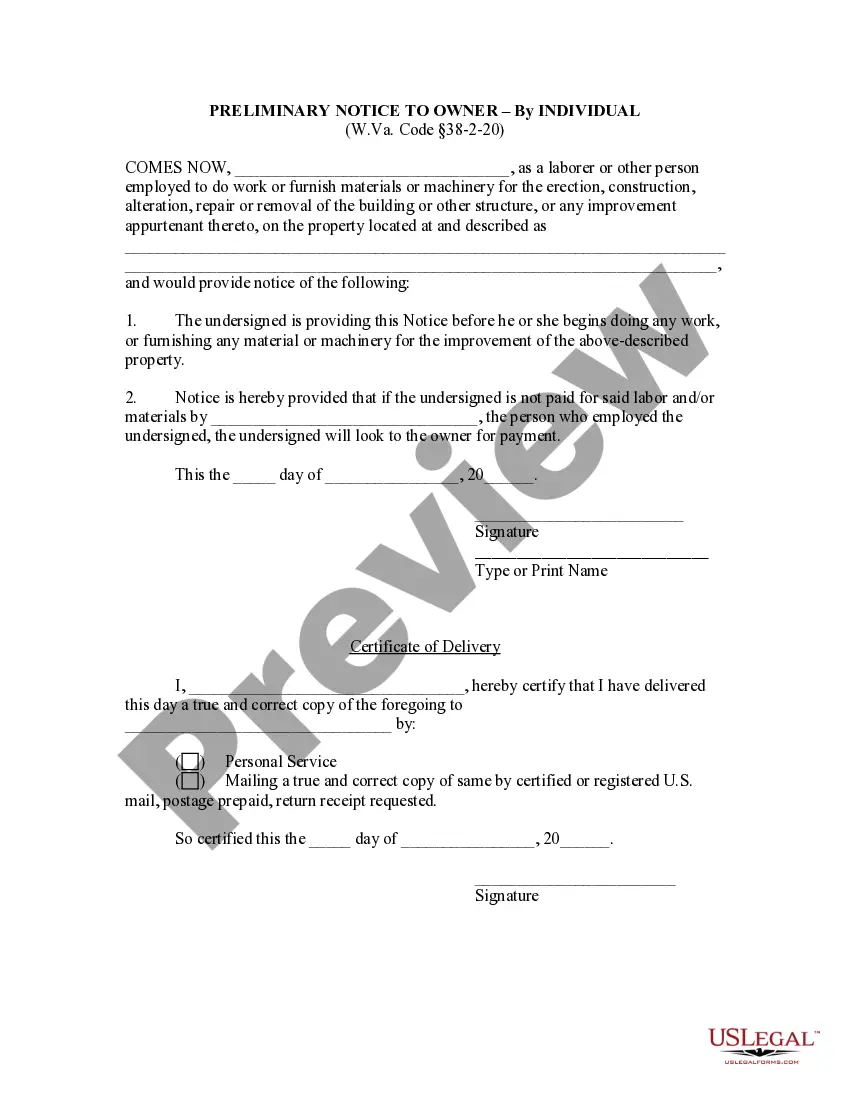
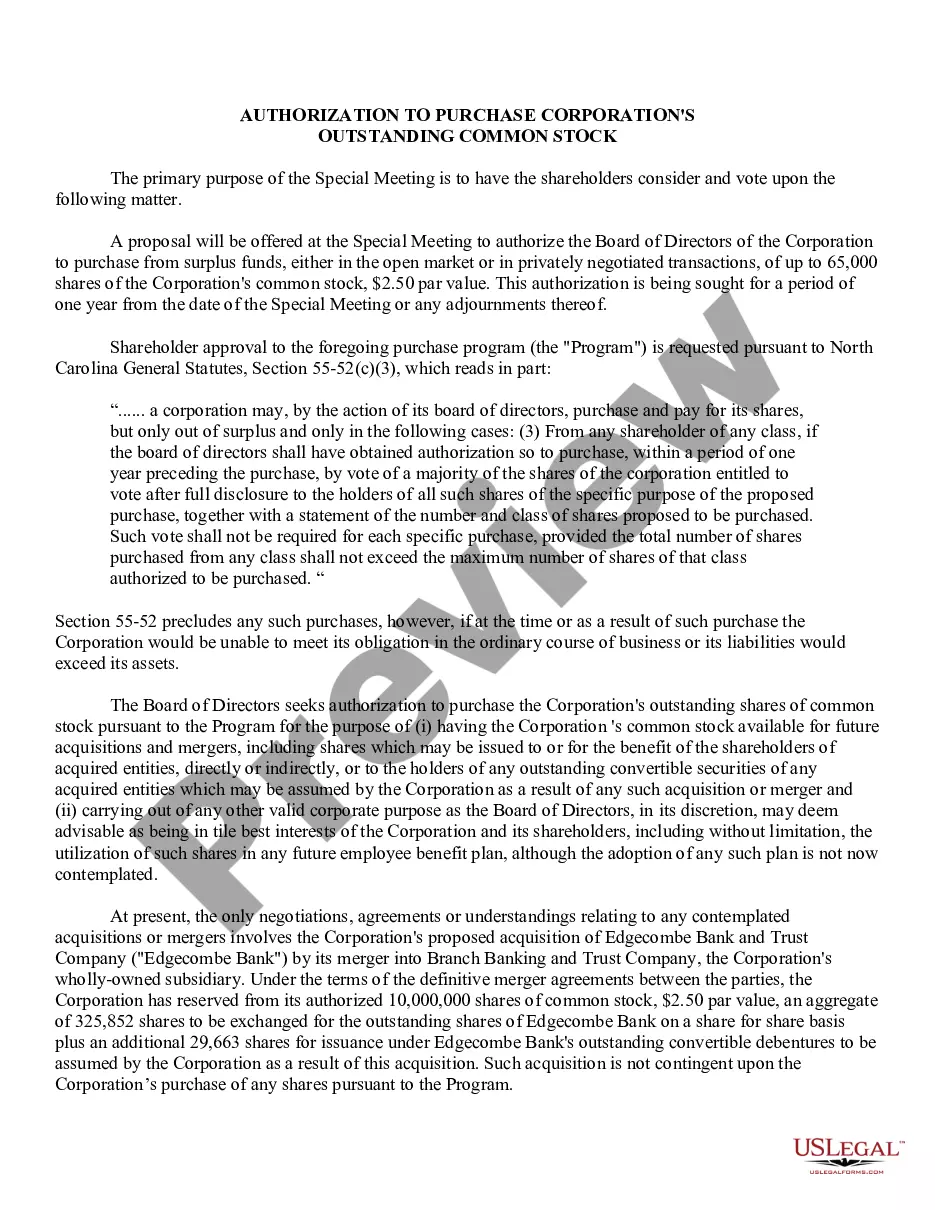
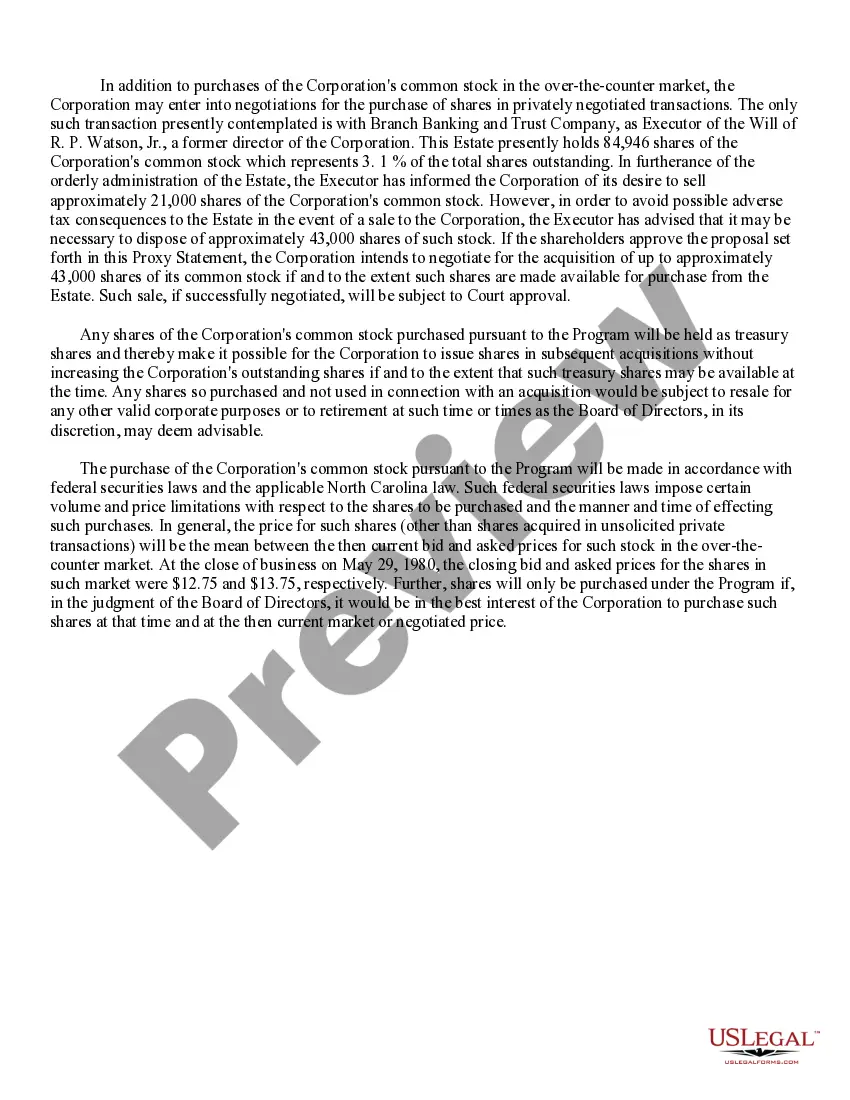
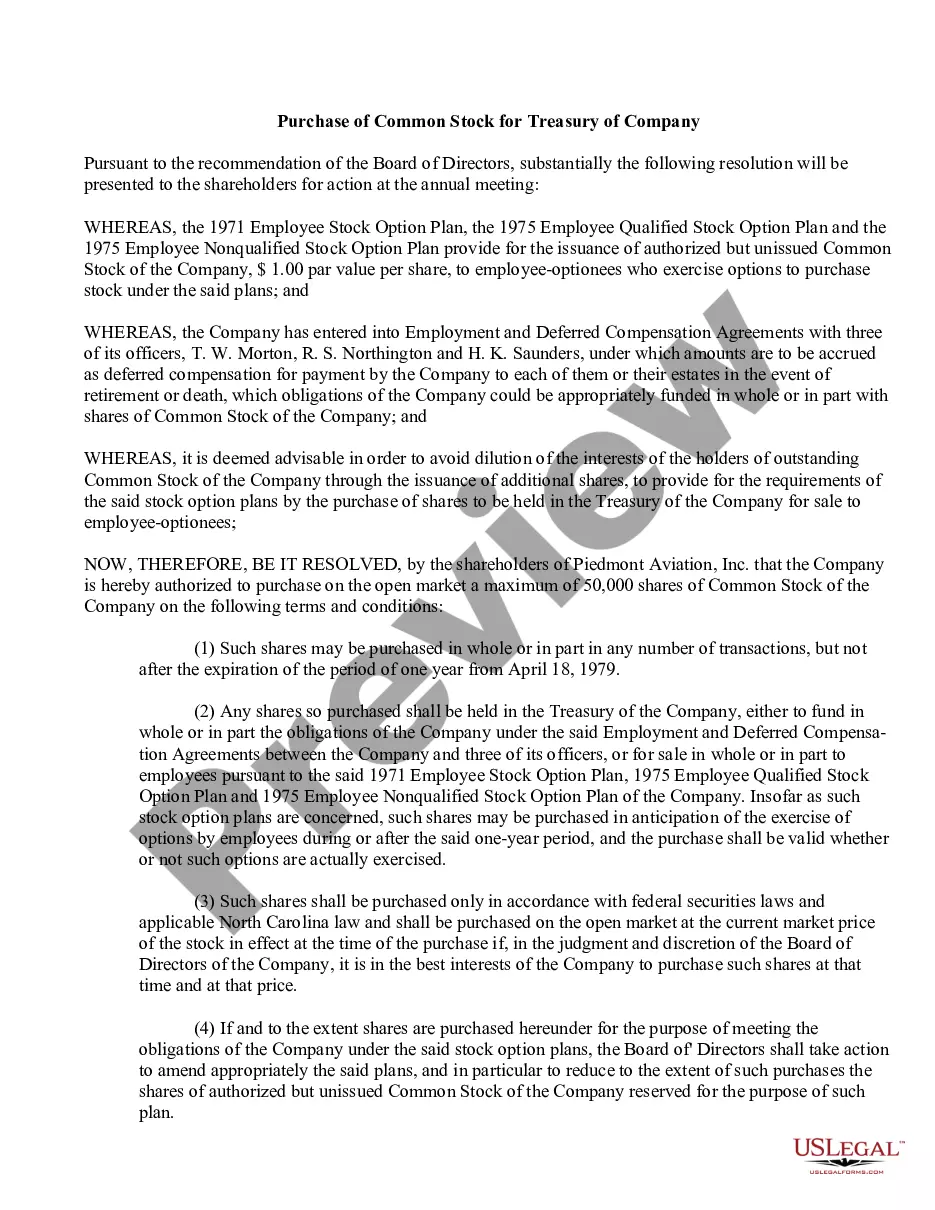
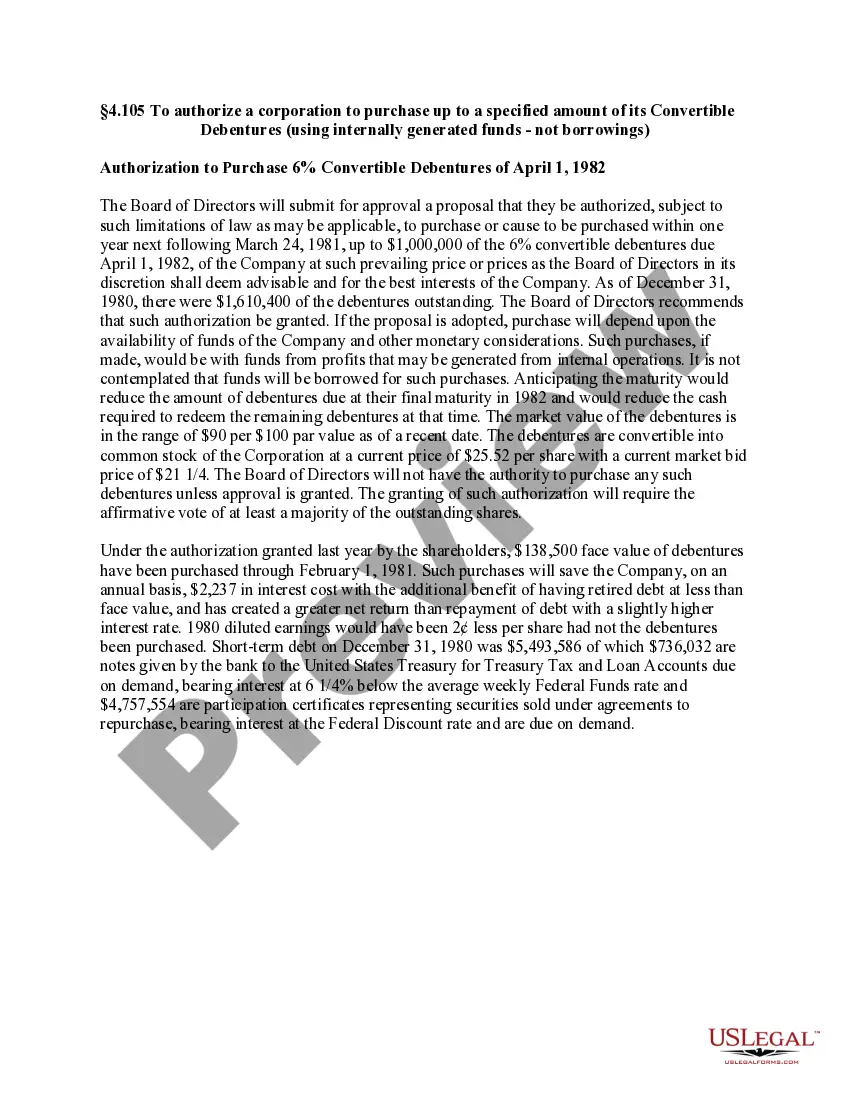
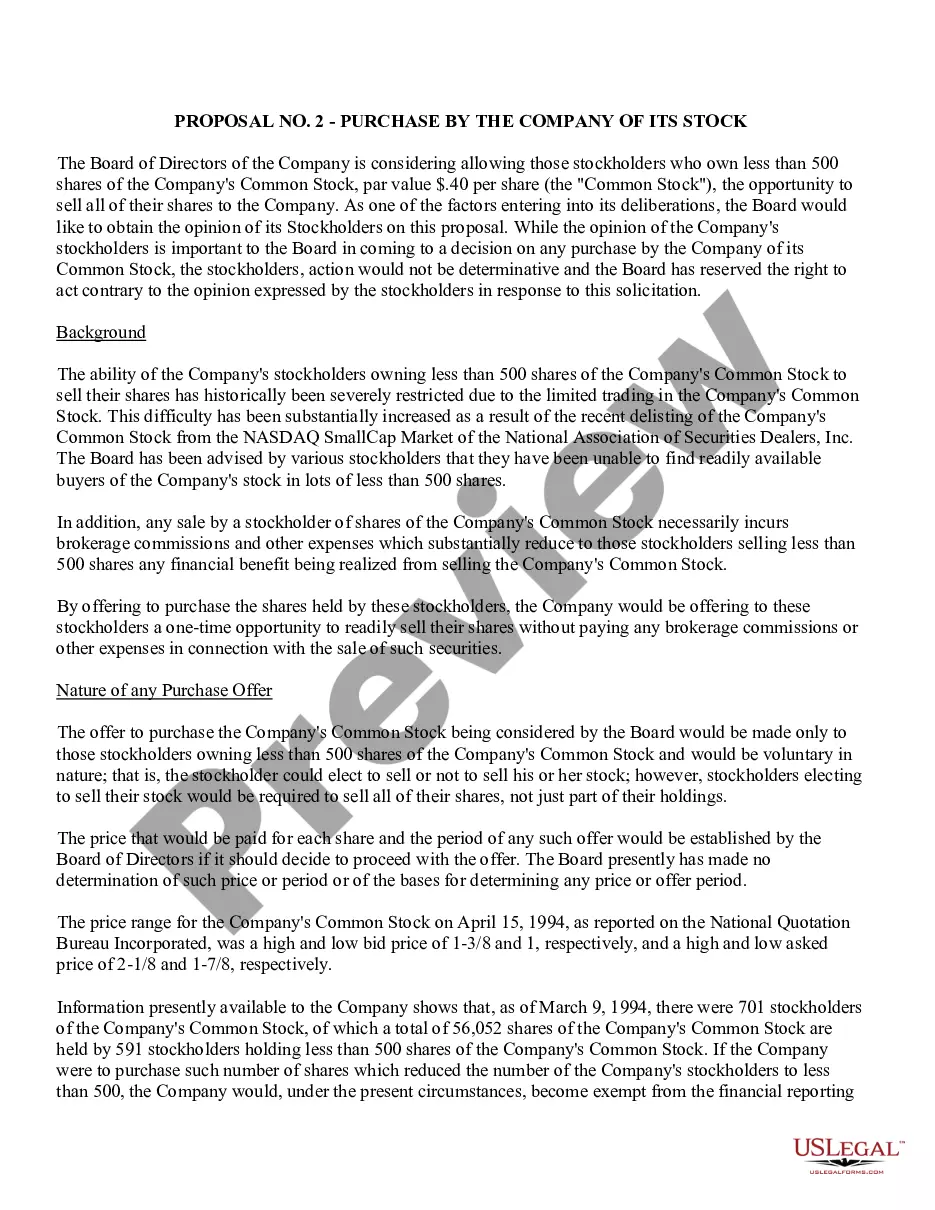
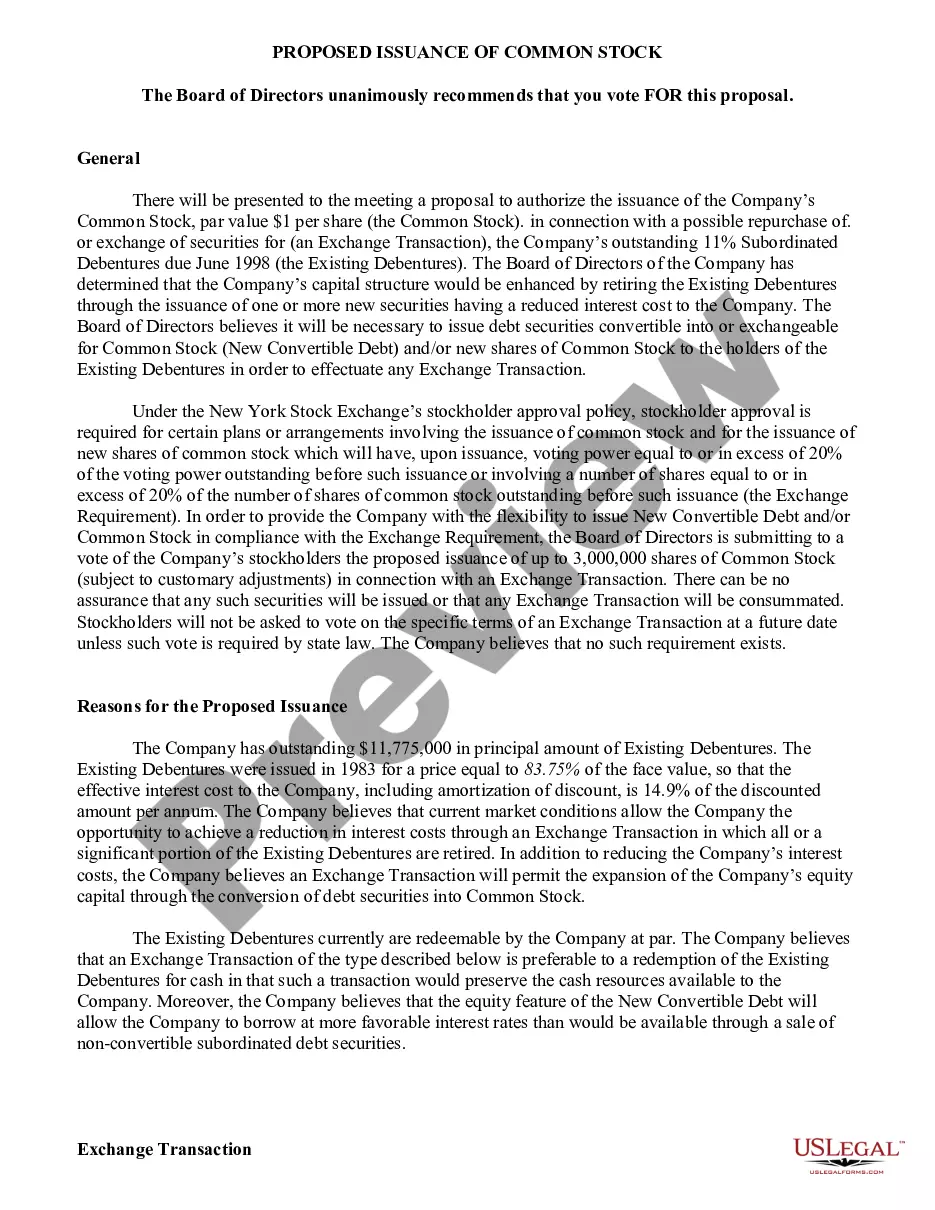
The Authorization to purchase corporation's outstanding common stock is a legal document that allows a corporation's Board of Directors to buy back its own shares of common stock. This form is specifically designed to seek shareholder approval for such transactions, which can occur in the open market or through private negotiations. It differs from other corporate forms by focusing solely on the buyback process, detailing the maximum shares to be purchased, the purposes of the buyback, and the legal compliance needed under state statutes.
Form components explained
- Purpose of the Special Meeting: Outlines the main agenda for shareholder consideration.
- Authorization Details: Specifies the number of shares to be purchased and the timeframe for the authorization.
- Compliance with Legal Standards: References the relevant North Carolina General Statutes that govern share buybacks.
- Future Use of Shares: Explains how repurchased shares may be utilized for acquisitions, mergers, or employee benefit plans.
- Negotiation Descriptions: Describes any current or anticipated negotiations related to share purchases.
- Market Conditions: States how share prices will be determined for the buyback process.
Common use cases
This form should be used when a corporation intends to buy back its own common stock and seeks approval from its shareholders. Scenarios include plans to acquire another company, restructure equity, or create an employee benefit plan. It is essential when the corporation has surplus funds and wishes to maintain or adjust its capital structure.
Who should use this form
- Corporations looking to buy back their outstanding common stock.
- Board of Directors seeking shareholder approval for stock purchases.
- Shareholders who wish to understand and approve or disapprove of proposed stock repurchase programs.
- Legal representatives involved in corporate governance or advisory roles.
How to complete this form
- Identify the corporation involved, including its name and address.
- Specify the number of shares authorized for repurchase and the timeframe for the buyback.
- Include the legal reference to the applicable state statute for the authorization.
- Detail any current negotiations or agreements related to the stock repurchase.
- Provide a notice to shareholders about the purpose and implications of the meeting.
Does this form need to be notarized?
In most cases, this form does not require notarization. However, some jurisdictions or signing circumstances might. US Legal Forms offers online notarization powered by Notarize, accessible 24/7 for a quick, remote process.
Get your form ready online
Our built-in tools help you complete, sign, share, and store your documents in one place.
Make edits, fill in missing information, and update formatting in US Legal Forms—just like you would in MS Word.
Download a copy, print it, send it by email, or mail it via USPS—whatever works best for your next step.
Sign and collect signatures with our SignNow integration. Send to multiple recipients, set reminders, and more. Go Premium to unlock E-Sign.
If this form requires notarization, complete it online through a secure video call—no need to meet a notary in person or wait for an appointment.
We protect your documents and personal data by following strict security and privacy standards.

Make edits, fill in missing information, and update formatting in US Legal Forms—just like you would in MS Word.

Download a copy, print it, send it by email, or mail it via USPS—whatever works best for your next step.

Sign and collect signatures with our SignNow integration. Send to multiple recipients, set reminders, and more. Go Premium to unlock E-Sign.

If this form requires notarization, complete it online through a secure video call—no need to meet a notary in person or wait for an appointment.

We protect your documents and personal data by following strict security and privacy standards.
Typical mistakes to avoid
- Failing to secure proper authorization from shareholders before proceeding with any buyback.
- Not specifying the maximum number of shares to be repurchased.
- Overlooking legal compliance with state statutes, which could invalidate the transaction.
- Neglecting to disclose sufficient details about negotiations or related transactions to shareholders.
Why use this form online
- Convenience: Complete and download the form at your own pace without needing to schedule appointments.
- Editable: Customize the form to suit specific corporate needs easily.
- Reliable: Access forms created by licensed attorneys ensuring legal accuracy.
Legal use & context
- The form facilitates compliance with state laws regarding corporate stock repurchases.
- It establishes a clear record of shareholder approval and corporate intentions.
- Validates the legitimacy of the buyback program in potential legal or financial audits.
Key takeaways
- The form authorizes a corporation to repurchase its shares with shareholder approval.
- It is important for managing corporate funds and stock levels.
- Thorough understanding of state laws is crucial for effective completion and compliance.
Looking for another form?

Form popularity
FAQ
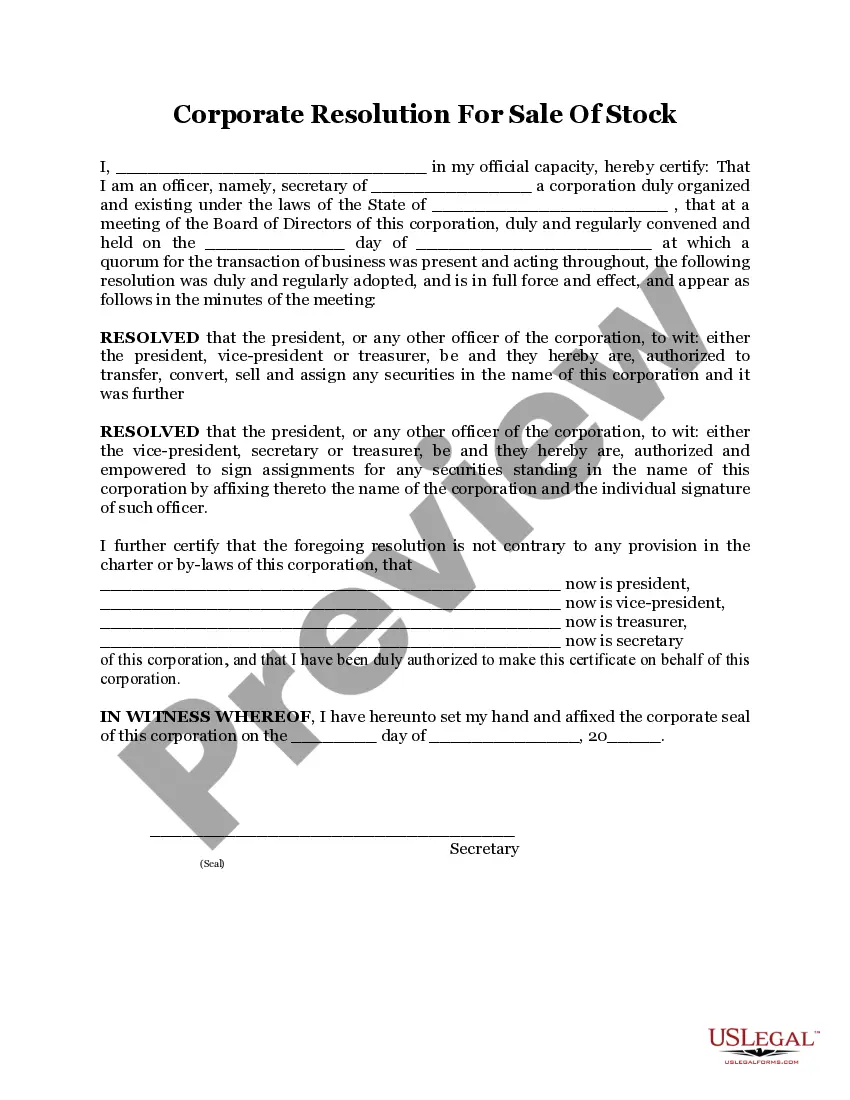
A corporate resolution is the legal document that provides the rules and framework as to how the board can act under various circumstances. Corporate resolutions provide a paper trail of the decisions made by the board and the executive management team.
The proper signature is "John Smith, Manager, ABC Company, LLC." Since companies cannot sign for themselves, this signature identifies the person signing, the title and authority of the person, and the name of the contracting party.
Authorizing Resolution means a resolution adopted by the Board of Directors or by an Officer or committee of Officers pursuant to Board delegation authorizing a Series of Securities.An Authorizing Resolution shall be so adopted by both the Company and the Guarantor.
Corporate Authorization means to include an authorization, resolution, power of attorney and such other corporate action granting authority to the Client to undertake the activities contemplated under the Terms and Conditions.
Also authorised signatory. A legal power that is designated upon various positions of organisation and control such as secretary or president.
Usually, an officer of the corporation and others authorized to sign contracts can legally sign documents on behalf of the corporation. For a contract to legally bind a corporation, the board of directors must provide authorization.
Most companies put their top-level executives, such as the chief executive officer (CEO), chief financial officer (CFO), and so on, on their bank accounts as signers, even though these individuals rarely sign checks.
The corporate resolution for signing authority is a specific corporate resolution that authorizes specific corporate officers with the legal standing to sign contracts on behalf of the corporation.For example, the director of Human Resources may be given the authority to enter into employment contracts with employees.
Signing authority often lies with the company's chief executive officer (CEO) or president. If an individual signs on behalf of a corporation and they have not been given the authority to do so, the corporation will not be bound to the contract. Limited liability company (LLC).