Hold Harmless Agreement for Contractors
What is this form?
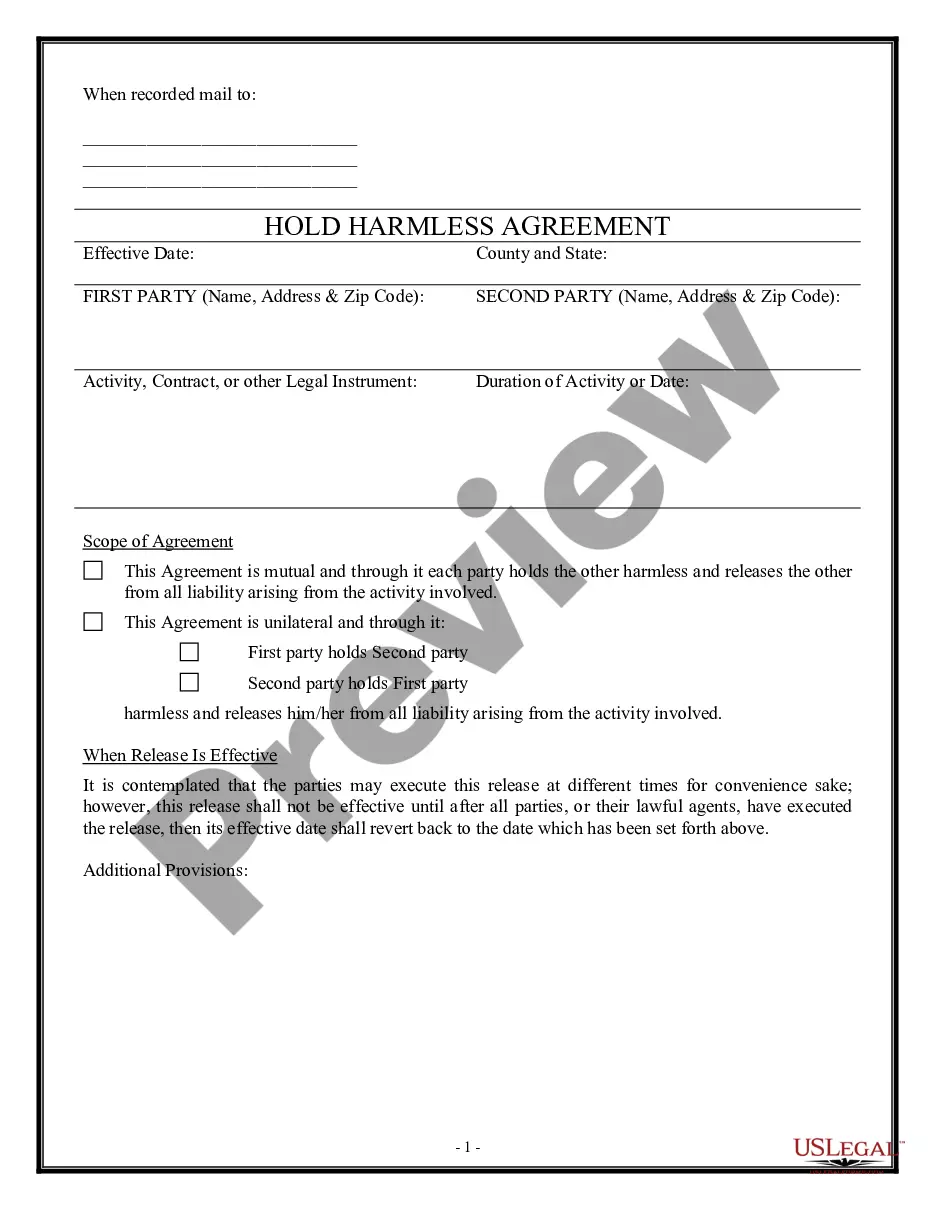
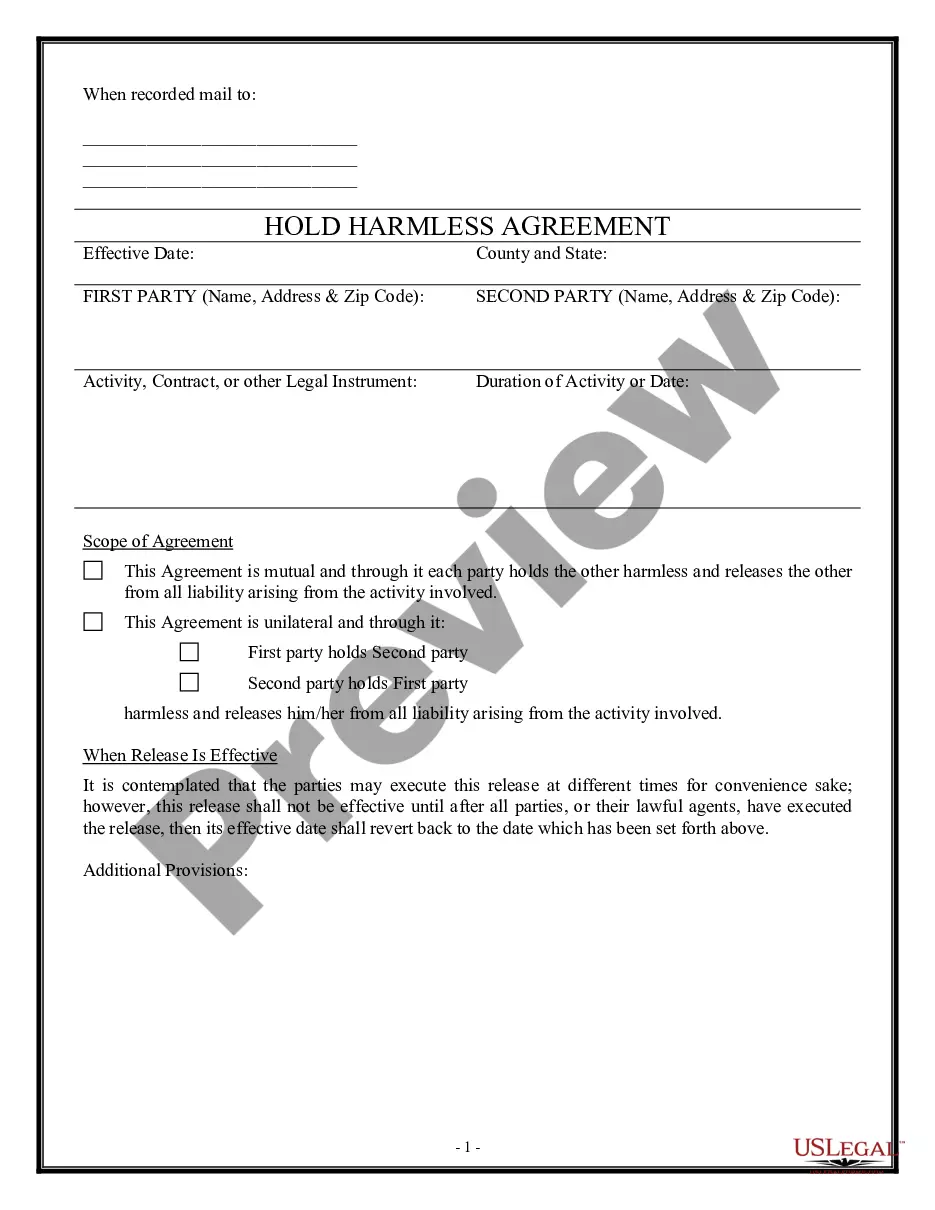
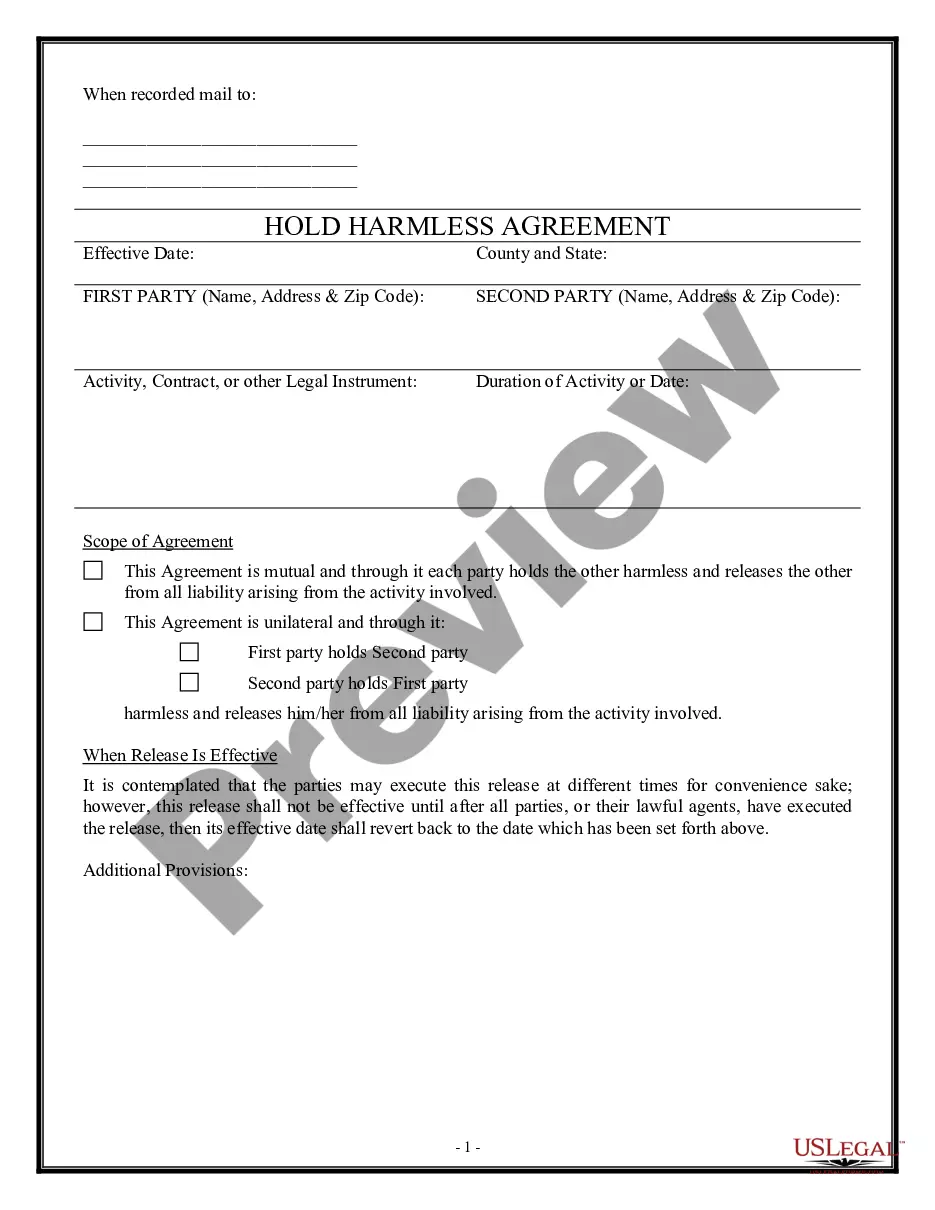
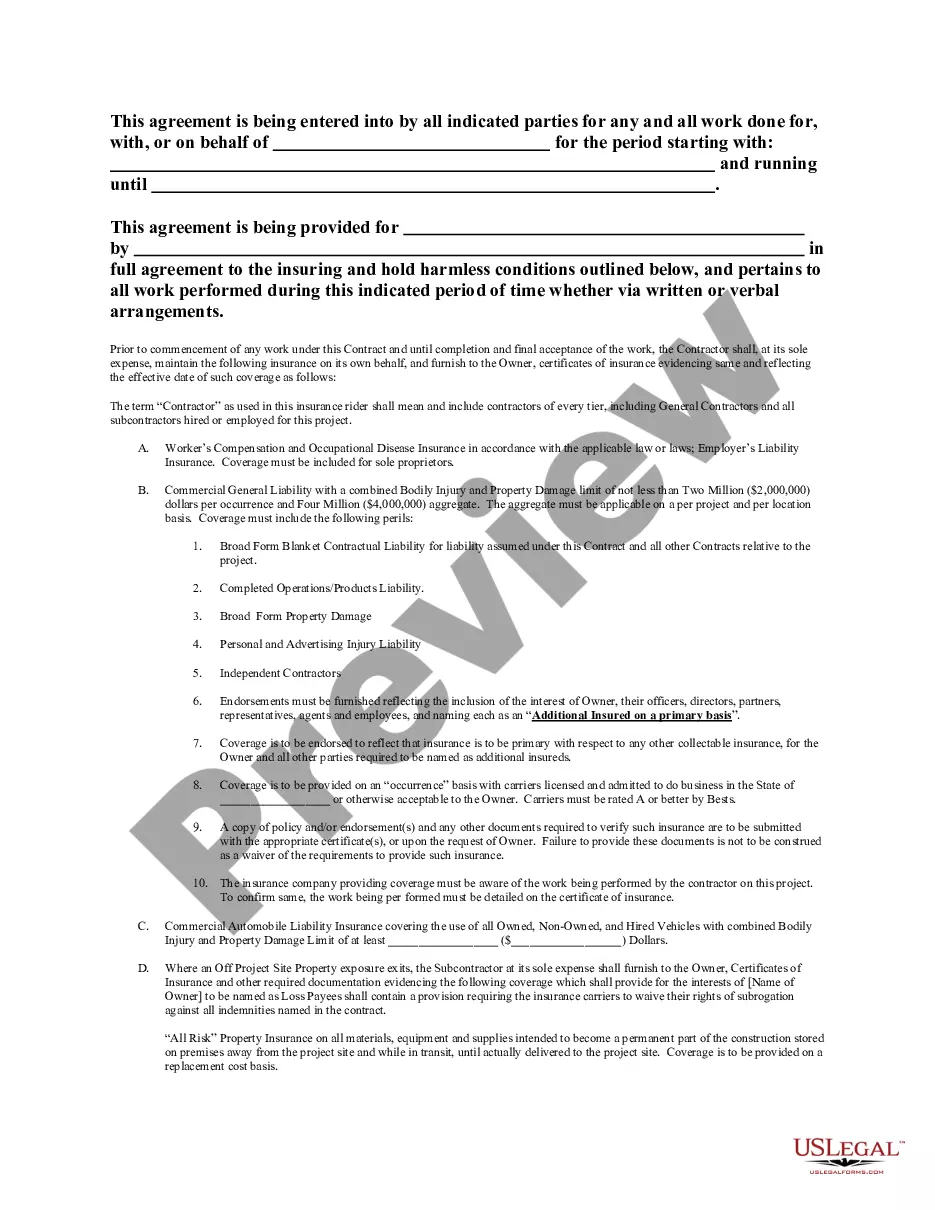
The Hold Harmless Agreement for Contractors is a legal document that outlines the mutual agreement between two parties to release each other from liability related to specific activities. Unlike other agreements, it explicitly states that both parties agree to hold each other harmless, ensuring protection against claims related to the task at hand. This form is particularly useful in construction and contractor services where risks may arise during job execution.
Key components of this form
- Identification of the parties involved in the agreement.
- Mutual release of liability for specified activities.
- Conditions under which the release is applicable.
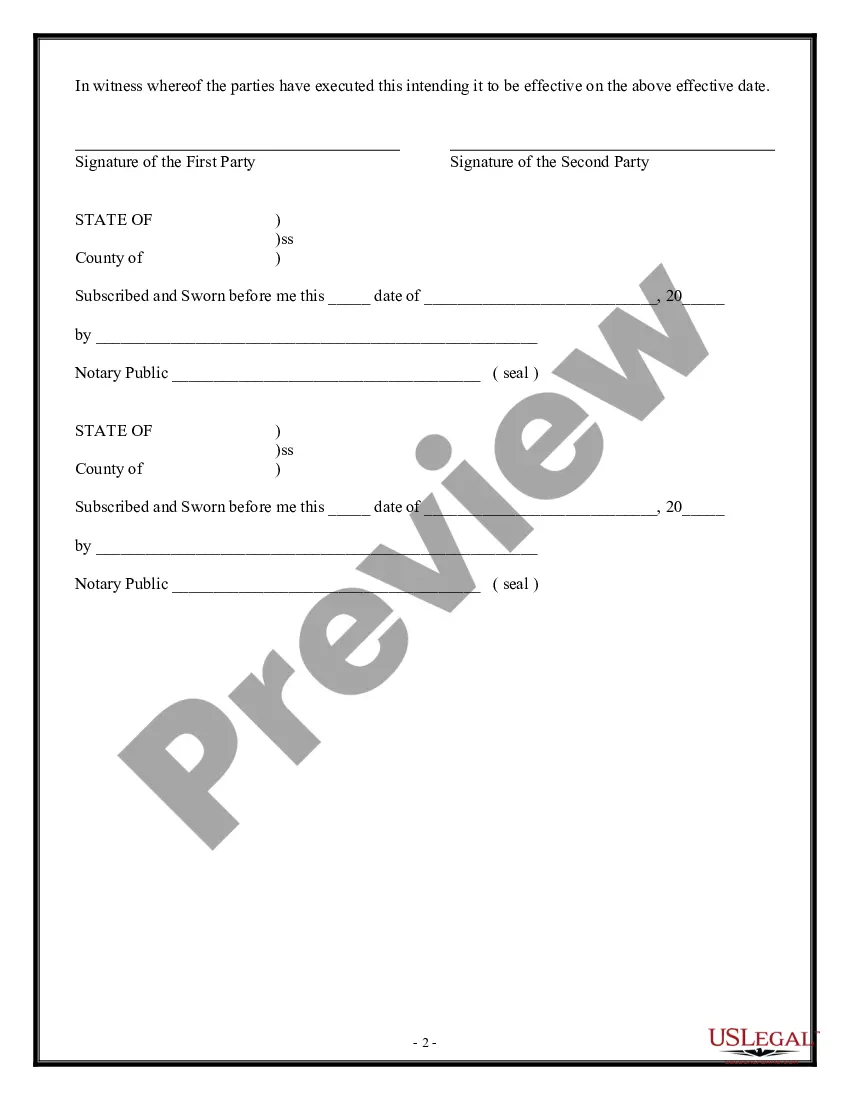
- Signature fields for both parties to authorize the agreement.
- Notary public acknowledgment for validation.
When this form is needed
This form should be used when contractors or service providers engage in activities for which they want to ensure that neither party will hold the other liable for potential damages or injuries. It is especially important in high-risk environments, such as construction projects, where accidents may occur. Utilizing this agreement helps clarify responsibility and reduces the likelihood of disputes over liability after the work is complete.
Who this form is for
- Contractors looking to protect themselves from liability claims.
- Clients or property owners engaging independent contractors.
- Parties involved in work that carries inherent risks or potential hazards.
- Businesses that regularly hire contractors for services.
Completing this form step by step
- Identify the first party and second party by entering their names and contact information.
- Clearly outline the specific activity that warrants the hold harmless agreement.
- Specify any conditions that must be met under the agreement.
- Both parties should read the terms carefully before signing the document.
- Obtain notarization to validate the agreement as required.
Notarization guidance
This form does not typically require notarization unless specified by local law. However, obtaining notarization can add an extra layer of legitimacy to the agreement, especially in dispute situations.
Get your form ready online
Our built-in tools help you complete, sign, share, and store your documents in one place.
Make edits, fill in missing information, and update formatting in US Legal Forms—just like you would in MS Word.
Download a copy, print it, send it by email, or mail it via USPS—whatever works best for your next step.
Sign and collect signatures with our SignNow integration. Send to multiple recipients, set reminders, and more. Go Premium to unlock E-Sign.
If this form requires notarization, complete it online through a secure video call—no need to meet a notary in person or wait for an appointment.
We protect your documents and personal data by following strict security and privacy standards.

Make edits, fill in missing information, and update formatting in US Legal Forms—just like you would in MS Word.

Download a copy, print it, send it by email, or mail it via USPS—whatever works best for your next step.

Sign and collect signatures with our SignNow integration. Send to multiple recipients, set reminders, and more. Go Premium to unlock E-Sign.

If this form requires notarization, complete it online through a secure video call—no need to meet a notary in person or wait for an appointment.

We protect your documents and personal data by following strict security and privacy standards.
Common mistakes to avoid
- Failing to clearly define the activities covered by the agreement.
- Not including all parties involved, resulting in incomplete liability coverage.
- Skipping the notarization step if it is required for legal enforcement.
- Not keeping a signed copy for personal records; always store documents securely.
Benefits of using this form online
- Convenient access to templates drafted by licensed attorneys.
- Edit the form to meet your specific needs quickly and easily.
- Download and use the form at your convenience without delays.
- Ensure reliability with documents that adhere to current legal standards.
Looking for another form?



Form popularity
FAQ
A hold harmless clause is used to protect a party in a contract from liability for damages or losses. In signing such a clause, the other party accepts responsibility for certain risks involved in contracting for the service.
A hold harmless agreement (HHA) is a contract that prevents one party from being liable to the other if there are injuries or damages. Contracts are either unilateral, meaning the contract protects only one party, or reciprocal, where both parties waive liability against each other.
Executing Your Hold Harmless Agreement Once the hold harmless agreement has been completed, simply have all parties sign and date to complete the document. Although not required, it is always a good idea to have the document notarized for extra protection.
A hold harmless clause is used to protect a party in a contract from liability for damages or losses. In signing such a clause, the other party accepts responsibility for certain risks involved in contracting for the service. In some states, the use of a hold harmless clause is prohibited in certain construction jobs.
By signing a broad form hold harmless agreement you are possibly exposing your company to uninsurable risk. Contractual Liability Coverage for sole or gross negligent acts of your client is excluded is y most liability policies.As with all contracts, it is best to have legal counsel review prior to signing.
A hold harmless agreement (HHA) is a contract that prevents one party from being liable to the other if there are injuries or damages. Contracts are either unilateral, meaning the contract protects only one party, or reciprocal, where both parties waive liability against each other.
Enforceability of Hold Harmless Agreements The general answer is yes, that these documents signing away your right to sue for negligence are legally enforceable.