Hold Harmless Agreement for Real Estate
About this form
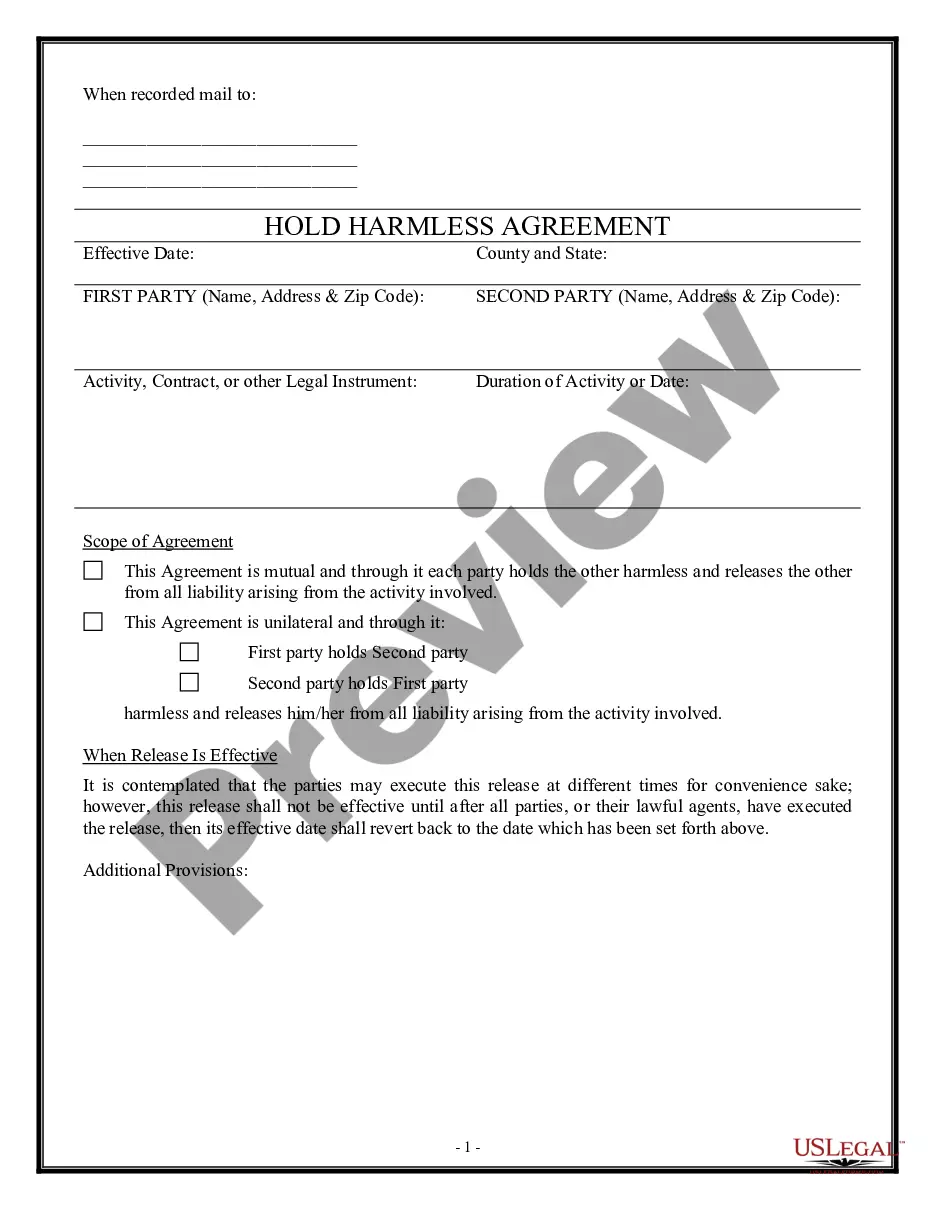
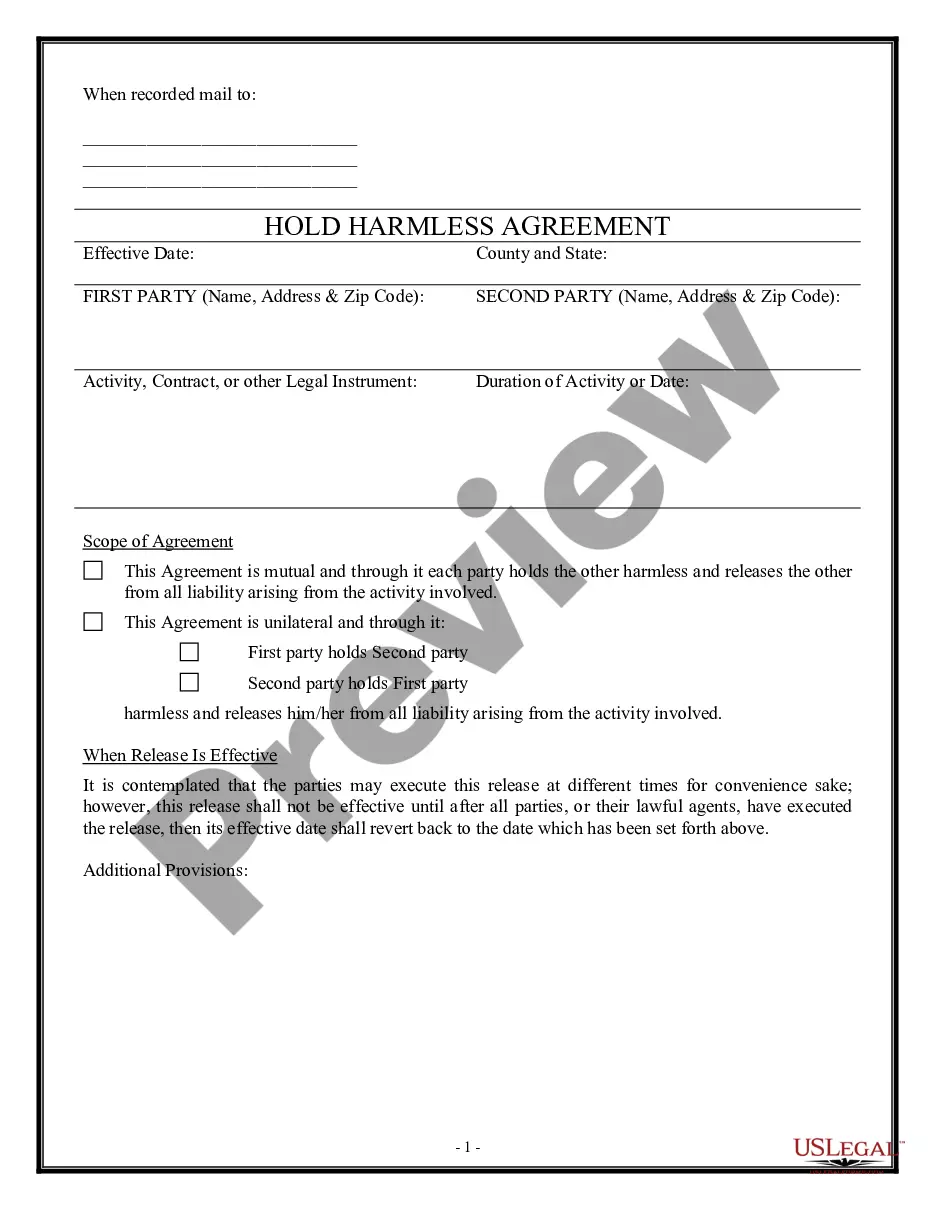
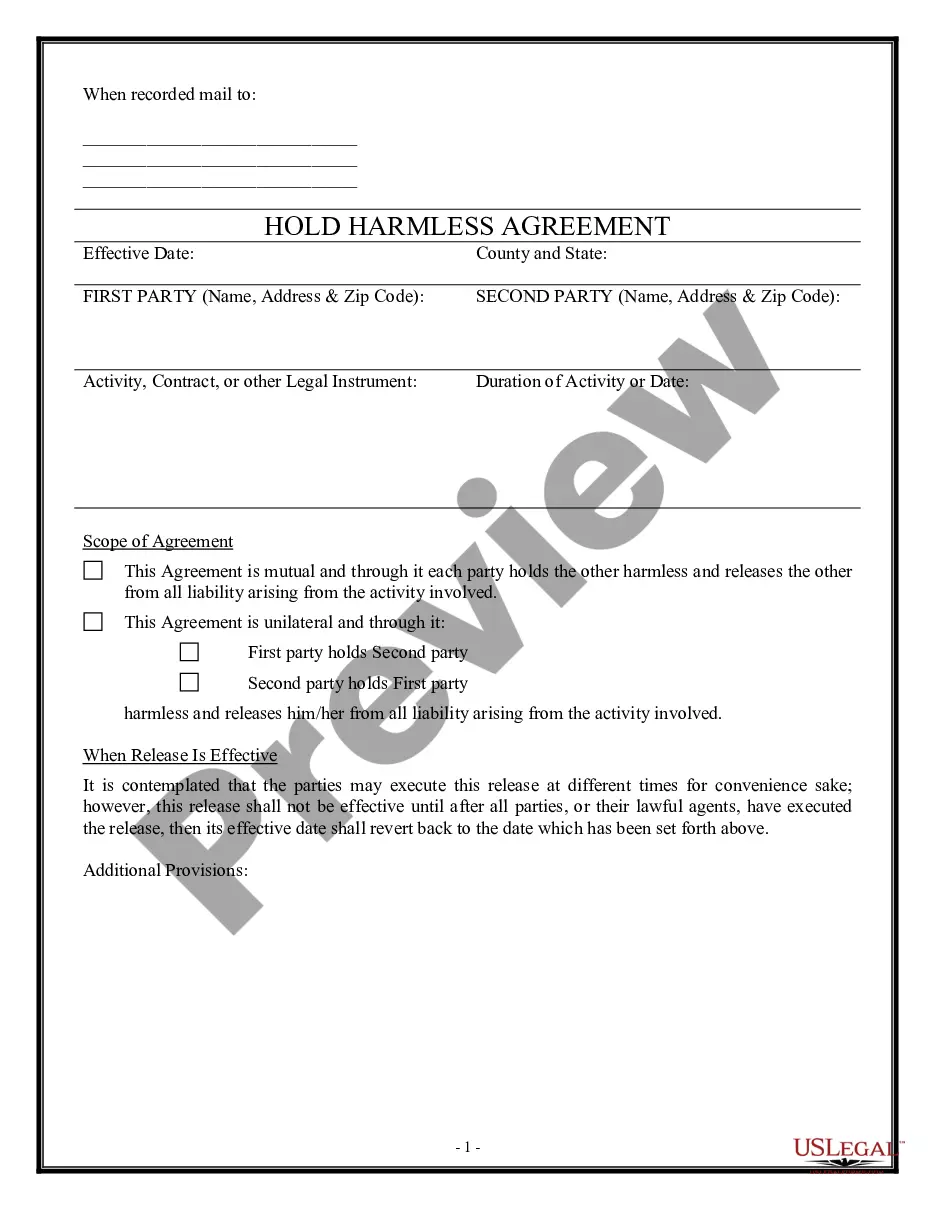
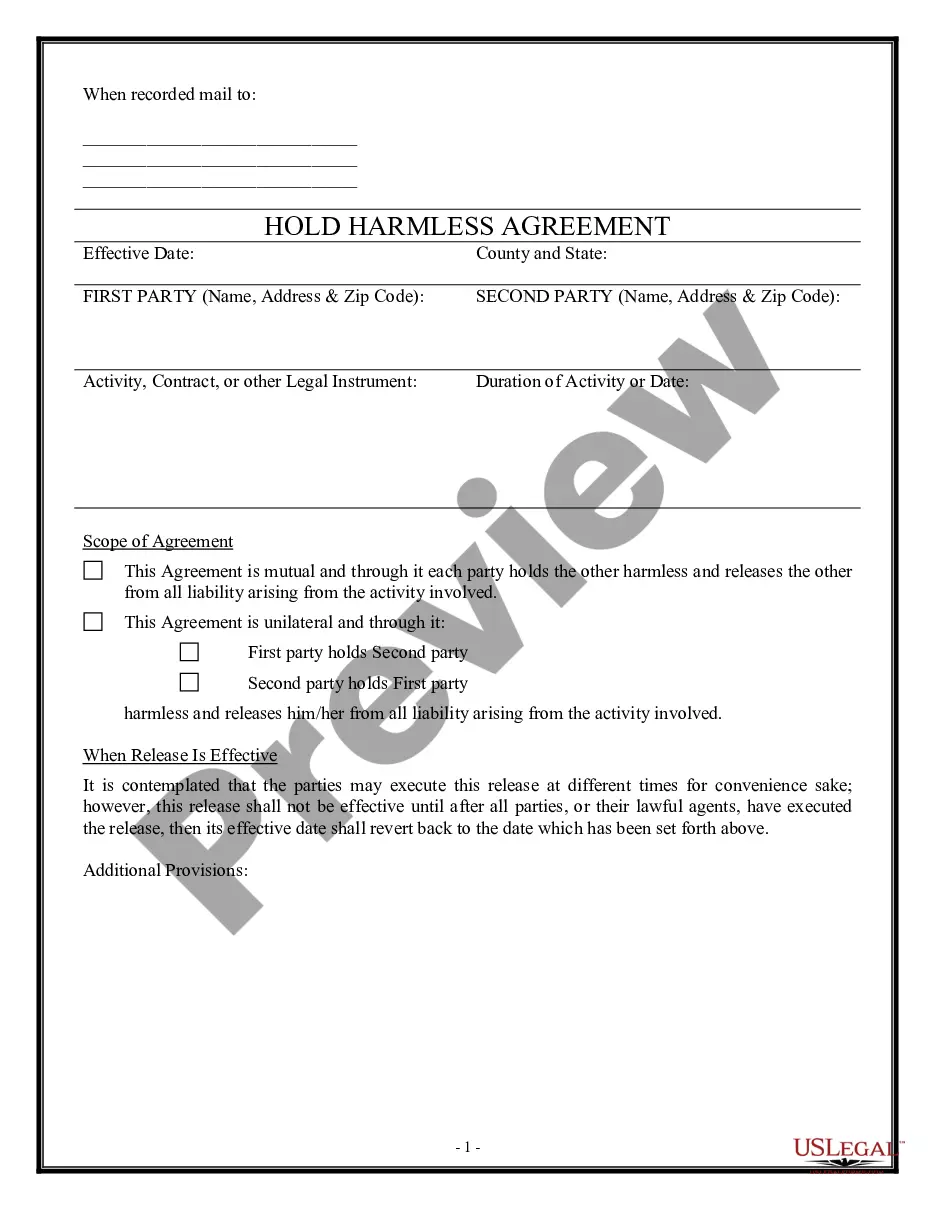
The Hold Harmless Agreement for Real Estate is a legal document that protects one party from liability arising from an activity associated with real estate transactions or events. This agreement serves as a mutual release of liability between parties, differing from other liability waivers due to its specific context in real estate dealings. It fosters trust by clarifying that both parties hold each other harmless from potential legal claims related to the specified activities.
Form components explained
- Identification of parties involved: Clearly names the First party and Second party.
- Mutual release clause: Ensures both parties agree to hold each other harmless.
- Nature of the activity: States the specific activity associated with the real estate transaction.
- Effective date of release: Specifies when the release of liability is considered effective.
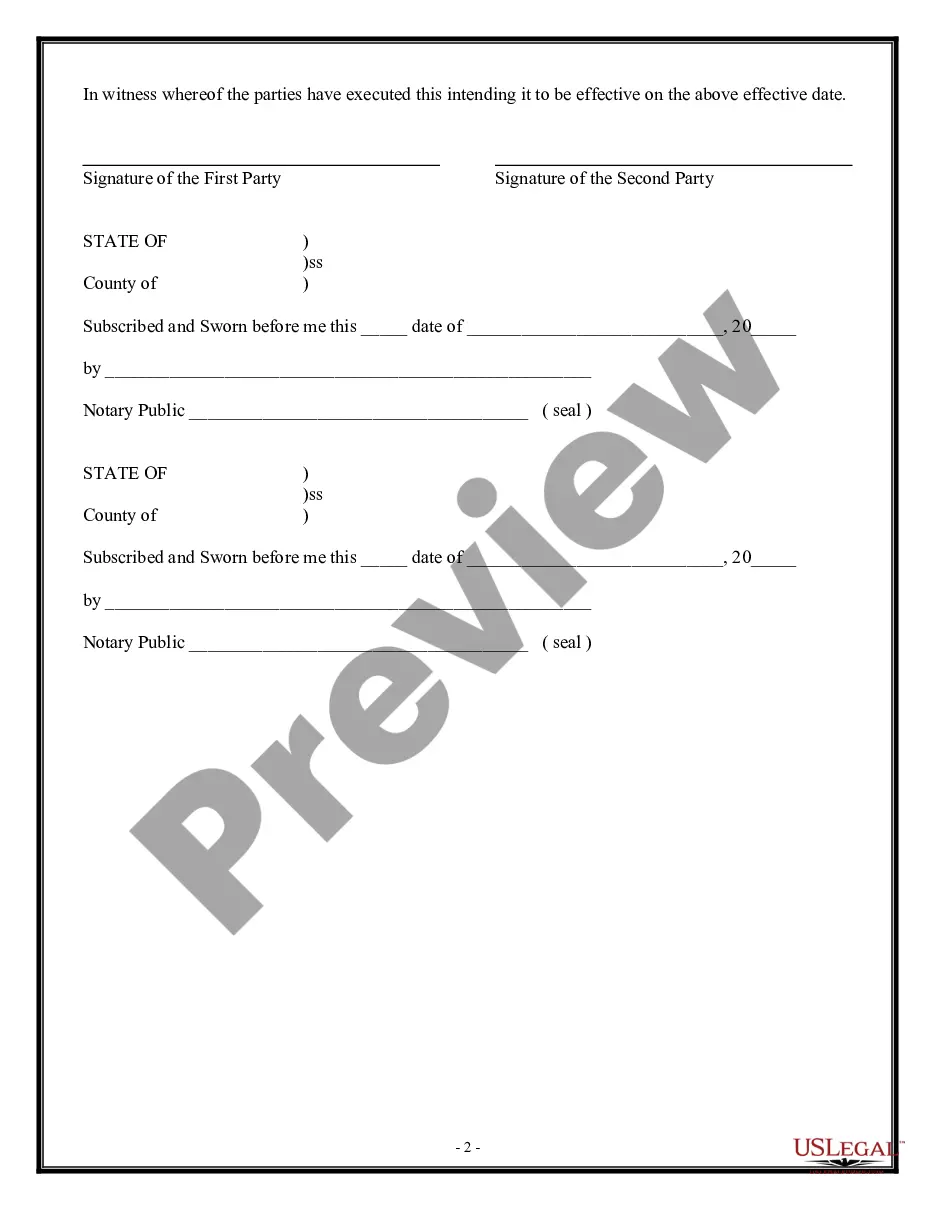
- Notary section: Requires signature and seal from a notary public to validate the agreement.
When to use this document
This form is essential when engaging in real estate transactions where there may be risks involved. For example, it should be used when conducting property inspections, open houses, or similar activities where liability could arise. It is also useful when landlords and tenants need to clarify liability during lease signings or property maintenance agreements.
Who should use this form
- Property owners and landlords looking to protect themselves from liability.
- Tenants or involved parties engaging in real estate activities.
- Real estate agents facilitating transactions and inspections.
- Individuals participating in property management or rental transactions.
Instructions for completing this form
- Identify the parties: Clearly write the names and addresses of the First party and Second party.
- Specify the activity: Clearly outline the specific real estate activity that is being covered by the agreement.
- Enter the effective date: Indicate the date when the release of liability will take effect.
- Sign the form: Both parties should sign the agreement in the presence of a notary.
- Notarization: Have the document notarized to ensure it is legally binding.
Notarization guidance
Yes, this form must be notarized to be legally valid. US Legal Forms offers integrated online notarization services, available 24/7, allowing you to complete notarization through secure video calls without the need for travel.
Get your form ready online
Our built-in tools help you complete, sign, share, and store your documents in one place.
Make edits, fill in missing information, and update formatting in US Legal Forms—just like you would in MS Word.
Download a copy, print it, send it by email, or mail it via USPS—whatever works best for your next step.
Sign and collect signatures with our SignNow integration. Send to multiple recipients, set reminders, and more. Go Premium to unlock E-Sign.
If this form requires notarization, complete it online through a secure video call—no need to meet a notary in person or wait for an appointment.
We protect your documents and personal data by following strict security and privacy standards.

Make edits, fill in missing information, and update formatting in US Legal Forms—just like you would in MS Word.

Download a copy, print it, send it by email, or mail it via USPS—whatever works best for your next step.

Sign and collect signatures with our SignNow integration. Send to multiple recipients, set reminders, and more. Go Premium to unlock E-Sign.

If this form requires notarization, complete it online through a secure video call—no need to meet a notary in person or wait for an appointment.

We protect your documents and personal data by following strict security and privacy standards.
Mistakes to watch out for
- Failing to clearly identify all parties involved.
- Not specifying the exact activity being covered by the agreement.
- Neglecting to date the agreement properly.
- Forgetting to have the document notarized, if required.
- Using vague language that can lead to misinterpretation.
Benefits of completing this form online
- Convenience: Easily download and complete your form from anywhere.
- Editability: Make changes without hassle to suit your specific situation.
- Reliability: Forms are drafted by licensed attorneys to ensure legal compliance.
Looking for another form?
Form popularity
FAQ
It's still your business decision whether you sign them or not, but you should do so only where it is a critical contract that you have no way of modifying or negotiating changes. In contrast, the best kind of Indemnity Agreement is commonly called a Mutual Indemnity Agreement or a Mutual Hold Harmless Provision.
A Hold Harmless Agreement is a legal agreement that states that one party will not hold another party liable for risk, often physical risk or damage. The Hold Harmless Clause can be one-way (unilateral) or two-way (reciprocal) agreements and can be signed before or after an activity takes place.
A Hold Harmless Agreement is a legal agreement that states that one party will not hold another party liable for risk, often physical risk or damage. The Hold Harmless Clause can be one-way (unilateral) or two-way (reciprocal) agreements and can be signed before or after an activity takes place.
A hold harmless clause is used to protect a party in a contract from liability for damages or losses. In signing such a clause, the other party accepts responsibility for certain risks involved in contracting for the service.
Executing Your Hold Harmless Agreement Once the hold harmless agreement has been completed, simply have all parties sign and date to complete the document. Although not required, it is always a good idea to have the document notarized for extra protection.
A hold harmless agreement (HHA) is a contract that prevents one party from being liable to the other if there are injuries or damages. Contracts are either unilateral, meaning the contract protects only one party, or reciprocal, where both parties waive liability against each other.
When Is a Hold Harmless Agreement a Good Idea? A hold harmless agreement (also known as an indemnity agreement or waiver of liability) is a good idea any time you want to shift risk from one party to another. You can protect other people from being sued by taking on the liability yourself as well.
By signing a broad form hold harmless agreement you are possibly exposing your company to uninsurable risk. Contractual Liability Coverage for sole or gross negligent acts of your client is excluded is y most liability policies.As with all contracts, it is best to have legal counsel review prior to signing.