Hold Harmless Agreement for Rental Property
About this form
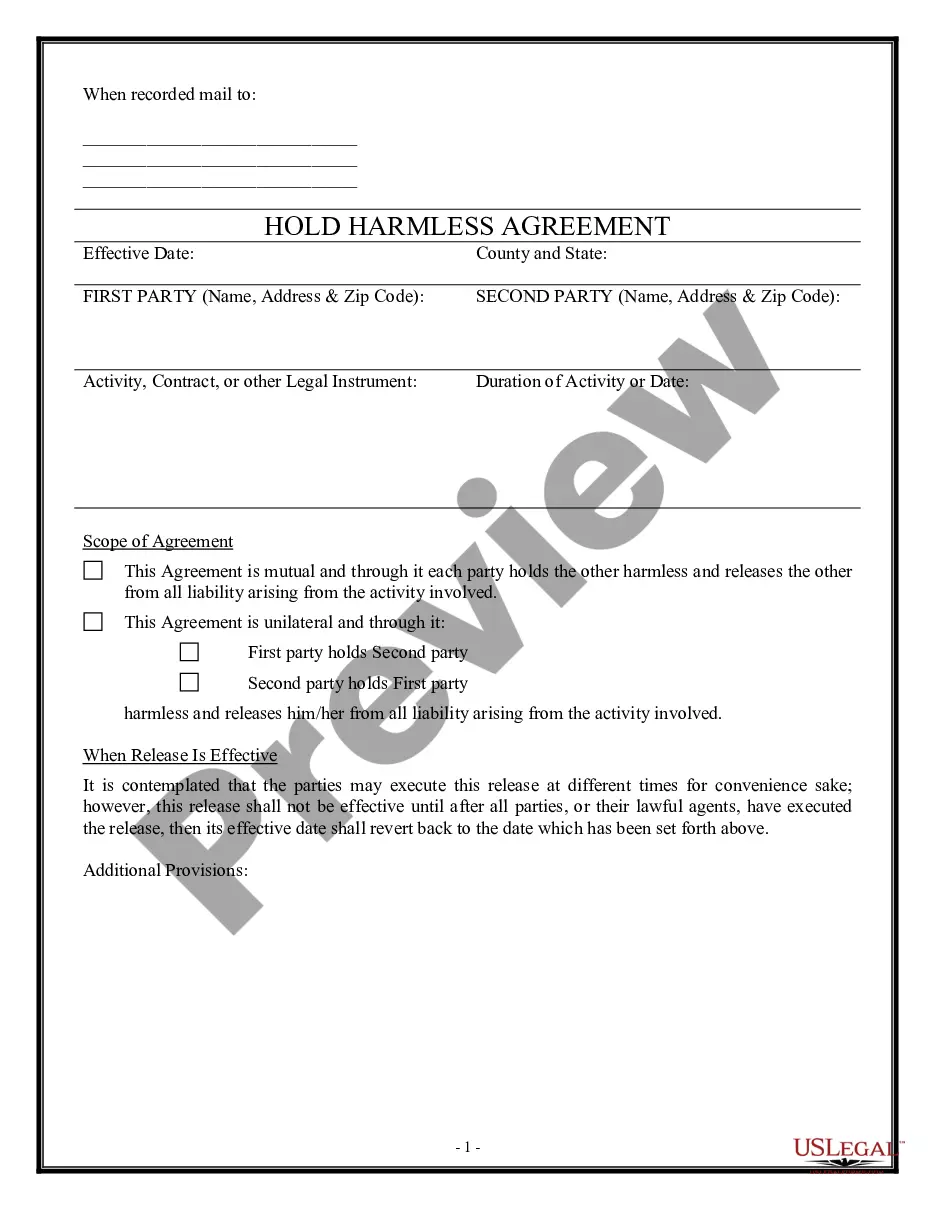
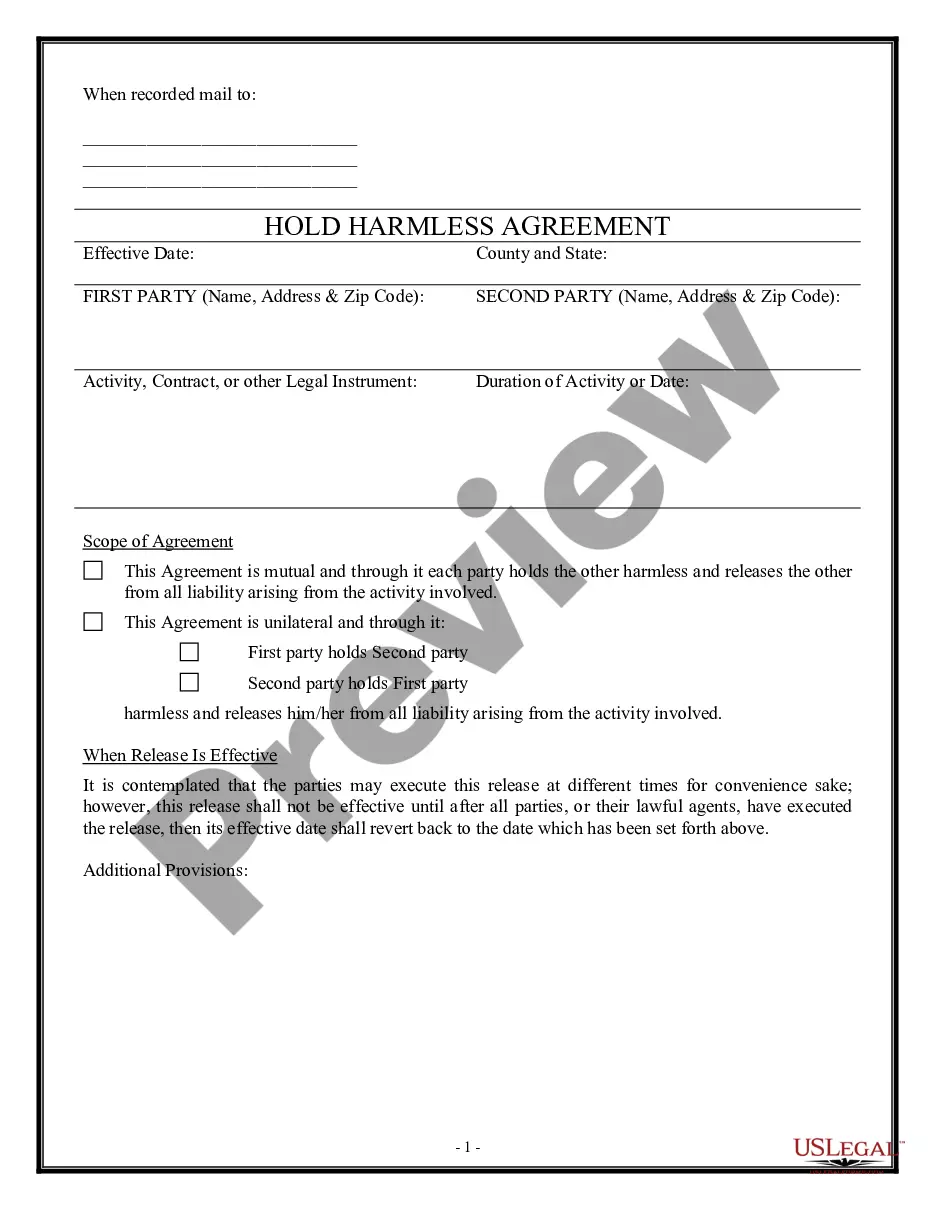
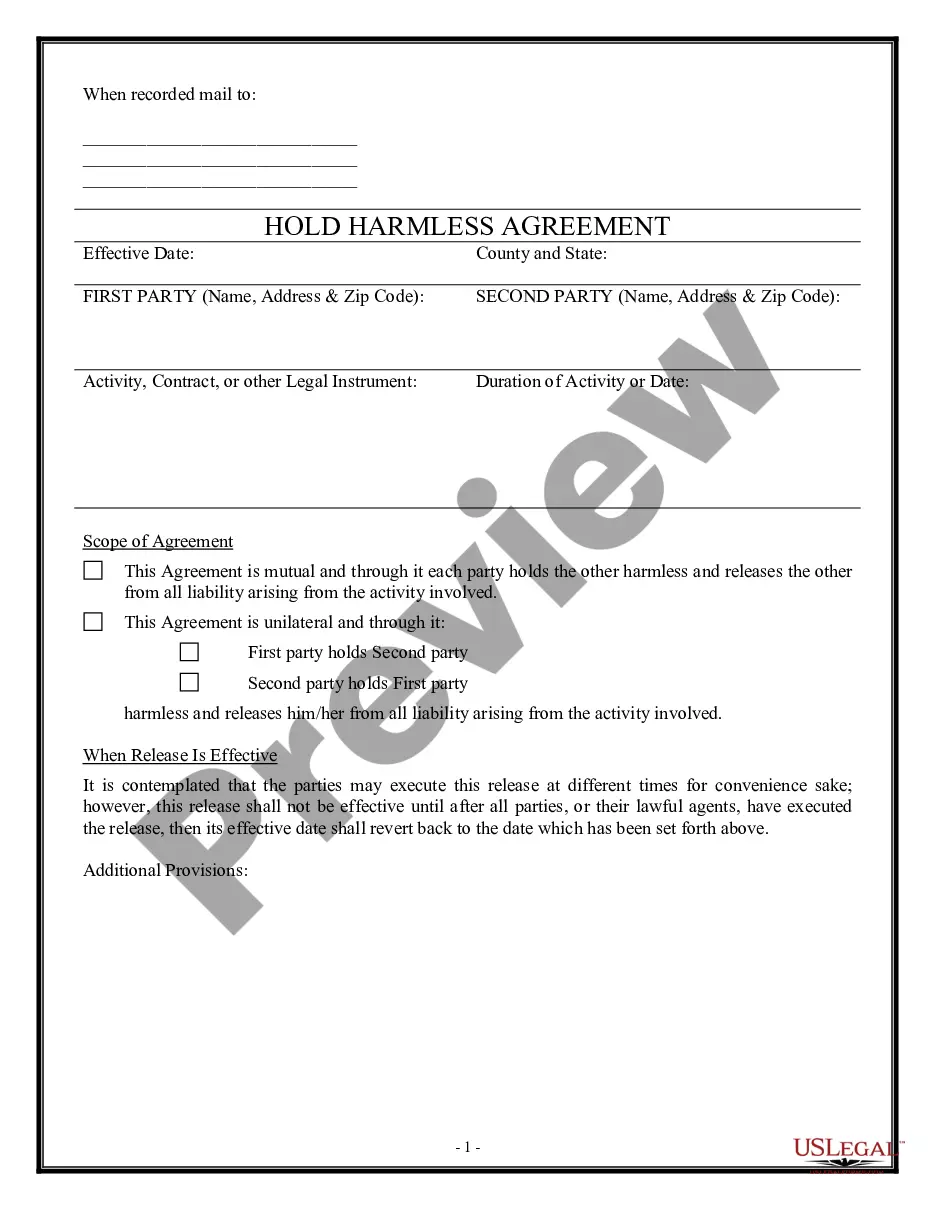
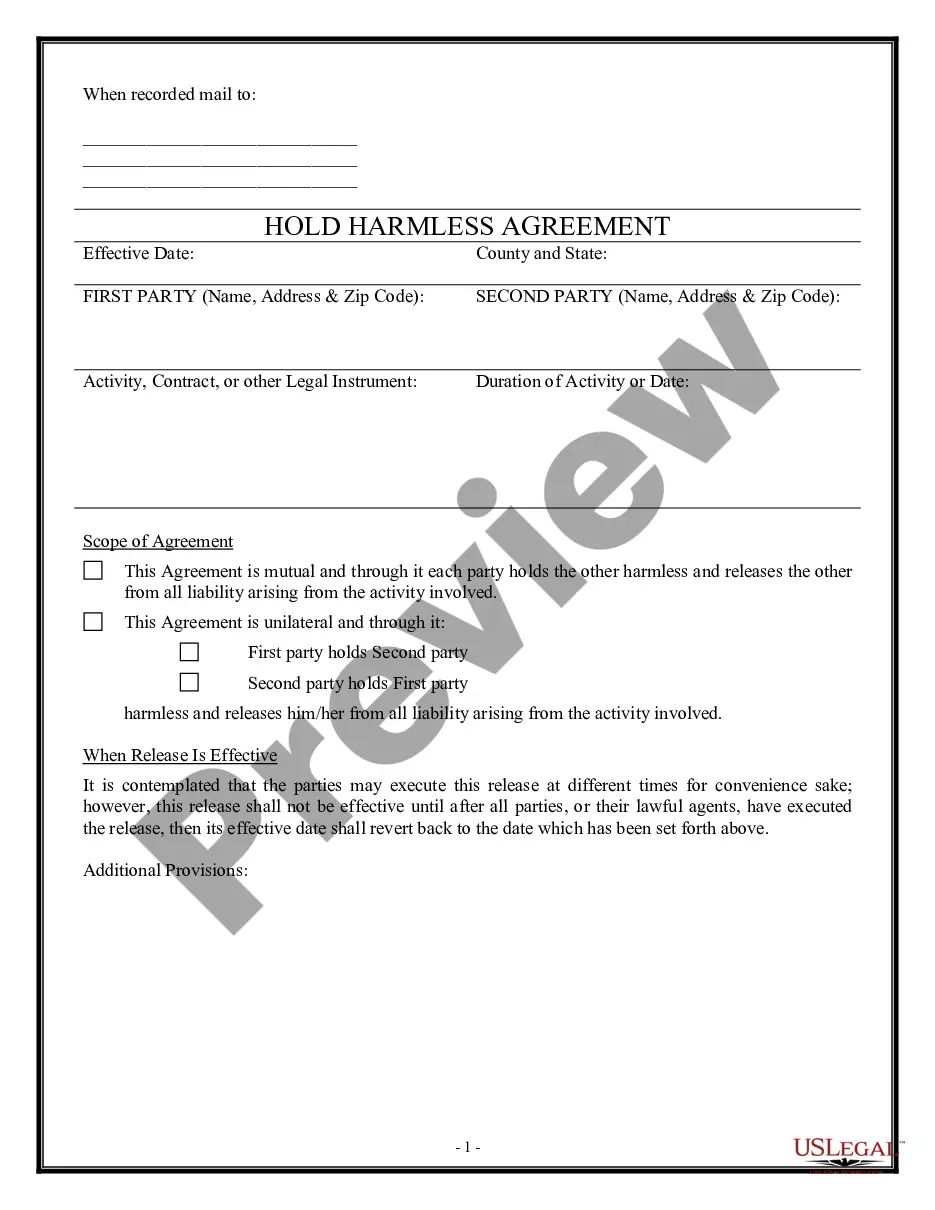
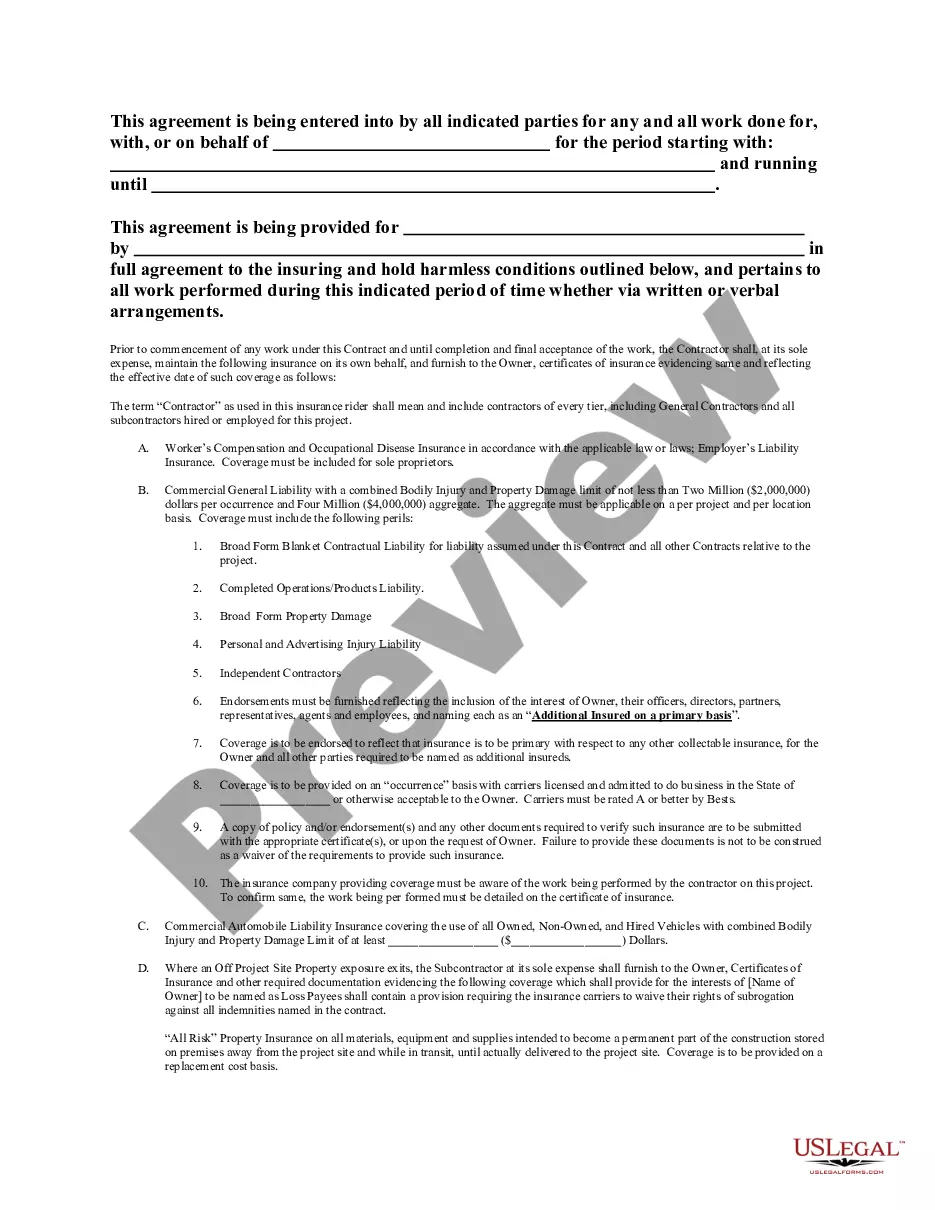
A Hold Harmless Agreement for Rental Property is a legal document that protects both landlords and tenants from liability associated with property use. This agreement ensures that both parties agree to hold each other harmless in the event of injuries or damages occurring on the rental property. Unlike other rental agreements, a Hold Harmless Agreement specifically addresses issues of liability, making it an essential document for rental transactions where risks might arise.
Main sections of this form
- Parties involved: Identifies the first party (landlord) and the second party (tenant).
- Liability release: Each party releases the other from any claims arising from activities on the rental property.
- Effective date: Specifies when the hold harmless agreement takes effect.
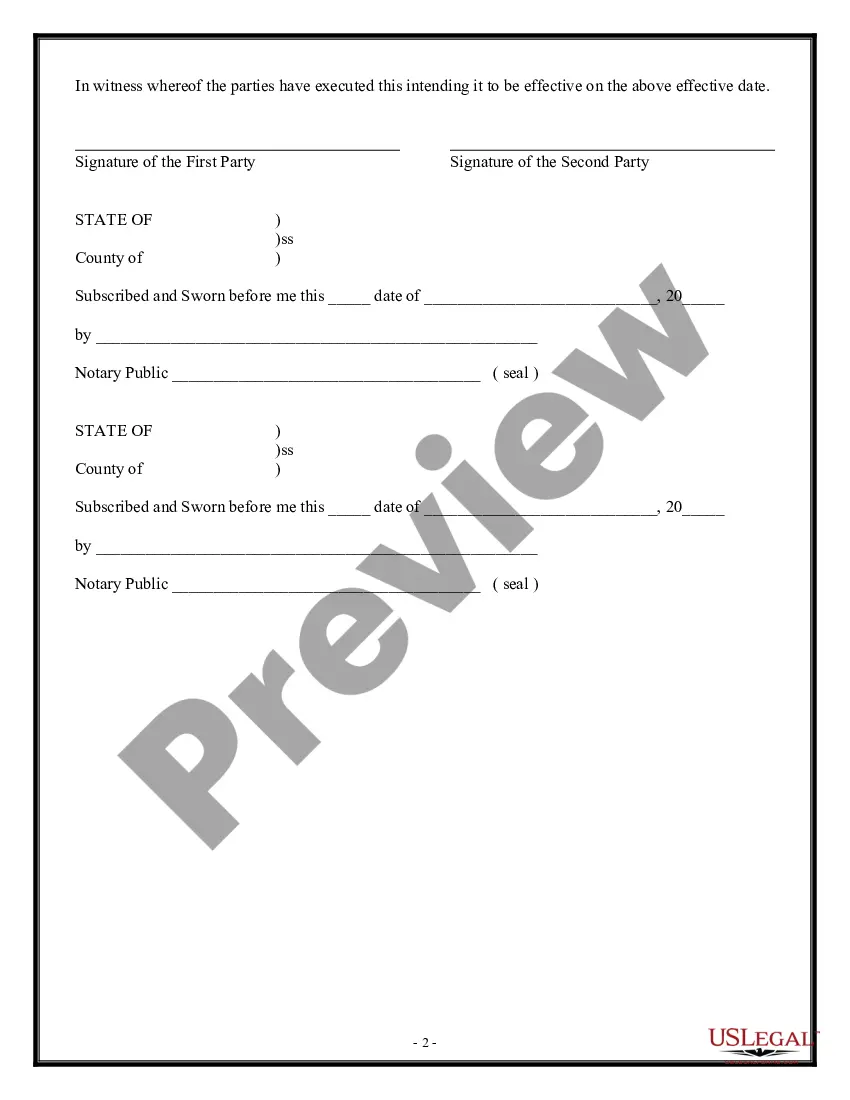
- Notary section: Provides space for acknowledgment by a notary public.
When to use this form
This form should be used in scenarios such as when a landlord wants to protect themselves from claims arising from tenant activities, or when tenants are engaging in activities that may pose a risk of injury or damage on the property. It is especially relevant for short-term rentals, party venues, or properties with shared facilities.
Who this form is for
This form is suitable for:
- Landlords who wish to limit their liability related to tenant activities.
- Tenants who want to engage in activities on rented property that may involve risks.
- Property managers overseeing rental arrangements that involve potentially hazardous situations.
Steps to complete this form
- Identify the parties: Fill in the names and addresses of the landlord and tenant.
- Specify the property: Clearly describe the rental property involved in the agreement.
- Enter the effective date: Indicate when the agreement will start to take effect.
- Review liability clauses: Ensure both parties understand and agree to the liability releases.
- Sign and notarize: Both parties should sign the document in the presence of a notary public.
Notarization requirements for this form
Yes, this form must be notarized to be legally valid. This process confirms the identities of the signatories and ensures that consent was given freely. US Legal Forms provides integrated online notarization services available twenty-four hours a day via secure video calls, ensuring legal equivalence without the need for travel.
Get your form ready online
Our built-in tools help you complete, sign, share, and store your documents in one place.
Make edits, fill in missing information, and update formatting in US Legal Forms—just like you would in MS Word.
Download a copy, print it, send it by email, or mail it via USPS—whatever works best for your next step.
Sign and collect signatures with our SignNow integration. Send to multiple recipients, set reminders, and more. Go Premium to unlock E-Sign.
If this form requires notarization, complete it online through a secure video call—no need to meet a notary in person or wait for an appointment.
We protect your documents and personal data by following strict security and privacy standards.

Make edits, fill in missing information, and update formatting in US Legal Forms—just like you would in MS Word.

Download a copy, print it, send it by email, or mail it via USPS—whatever works best for your next step.

Sign and collect signatures with our SignNow integration. Send to multiple recipients, set reminders, and more. Go Premium to unlock E-Sign.

If this form requires notarization, complete it online through a secure video call—no need to meet a notary in person or wait for an appointment.

We protect your documents and personal data by following strict security and privacy standards.
Mistakes to watch out for
- Failing to include clear descriptions of the rental property.
- Not specifying the effective date of the agreement.
- Omitting signatures or notarization, which may affect enforceability.
- Neglecting to review liability clauses, leading to misunderstandings.
Benefits of completing this form online
- Convenience: Easily access and download the form anytime, anywhere.
- Editability: Customize the template to fit specific rental arrangements.
- Reliability: Assurance that the forms are drafted by licensed attorneys to meet legal standards.
Legal use & context
- This agreement is enforceable in situations where both parties have voluntarily agreed to the terms.
- It may not hold if local laws or property-specific regulations impose greater liability on landlords or tenants.
- Always consult with a legal professional to ensure compliance with any jurisdiction-specific rules.
Key takeaways
- A Hold Harmless Agreement protects both landlords and tenants from liability issues.
- It is essential for scenarios involving potential risks on rental properties.
- Ensure proper completion and notarization for legal validity.
Looking for another form?
Form popularity
FAQ
Enforceability of Hold Harmless Agreements The general answer is yes, that these documents signing away your right to sue for negligence are legally enforceable.
A hold harmless clause is used to protect a party in a contract from liability for damages or losses. In signing such a clause, the other party accepts responsibility for certain risks involved in contracting for the service.
When Is a Hold Harmless Agreement a Good Idea? A hold harmless agreement (also known as an indemnity agreement or waiver of liability) is a good idea any time you want to shift risk from one party to another. You can protect other people from being sued by taking on the liability yourself as well.
Most rental agreements are short-term agreements, such as month-to-month tenancies, while lease agreements are usually for longer rental periods, such as six months, a year, or more.
Executing Your Hold Harmless Agreement Once the hold harmless agreement has been completed, simply have all parties sign and date to complete the document. Although not required, it is always a good idea to have the document notarized for extra protection.
By signing a broad form hold harmless agreement you are possibly exposing your company to uninsurable risk. Contractual Liability Coverage for sole or gross negligent acts of your client is excluded is y most liability policies.As with all contracts, it is best to have legal counsel review prior to signing.
A Hold Harmless Agreement is a legal agreement that states that one party will not hold another party liable for risk, often physical risk or damage. The Hold Harmless Clause can be one-way (unilateral) or two-way (reciprocal) agreements and can be signed before or after an activity takes place.