This Failure of Landlord to Return All Prepaid but Unearned Rent, and Security Deposit
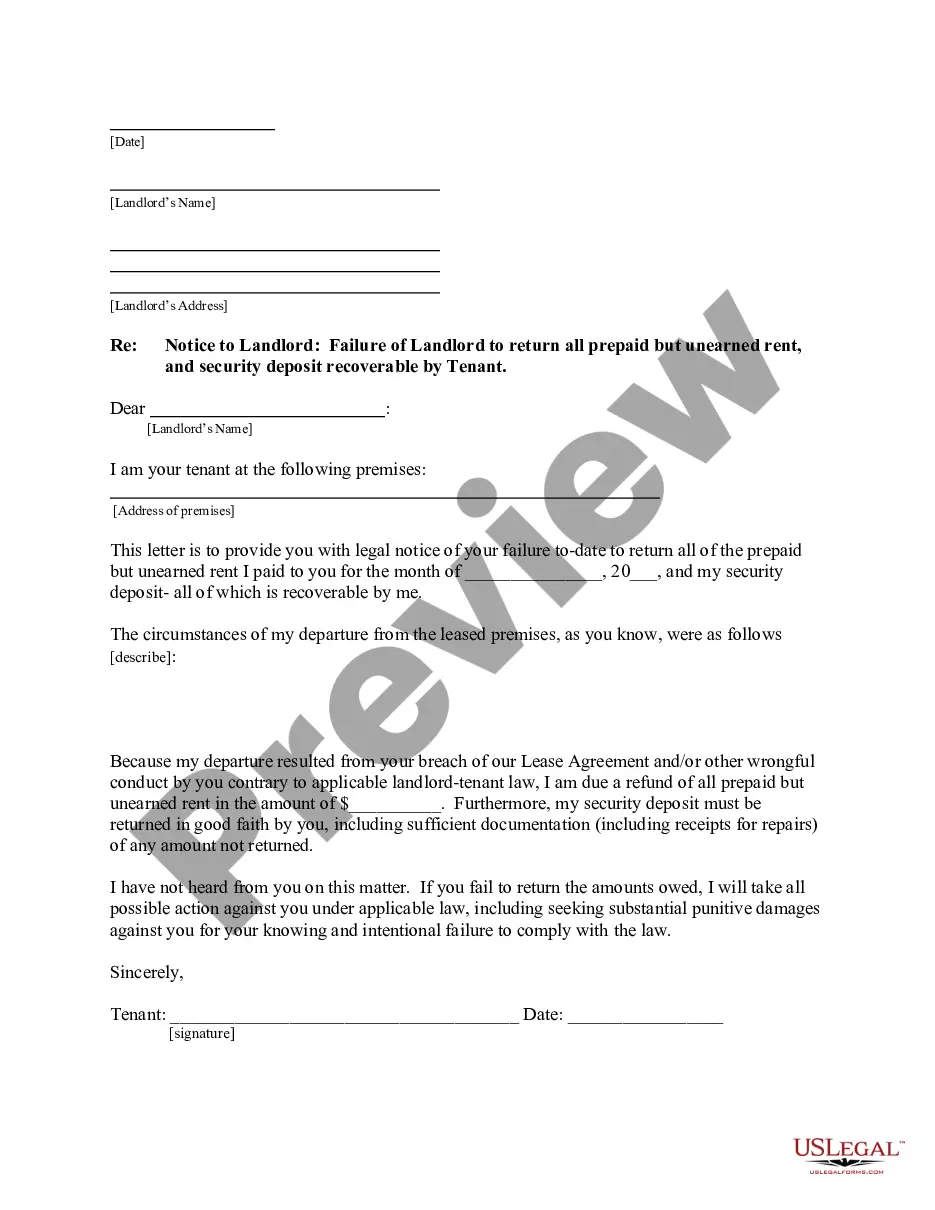
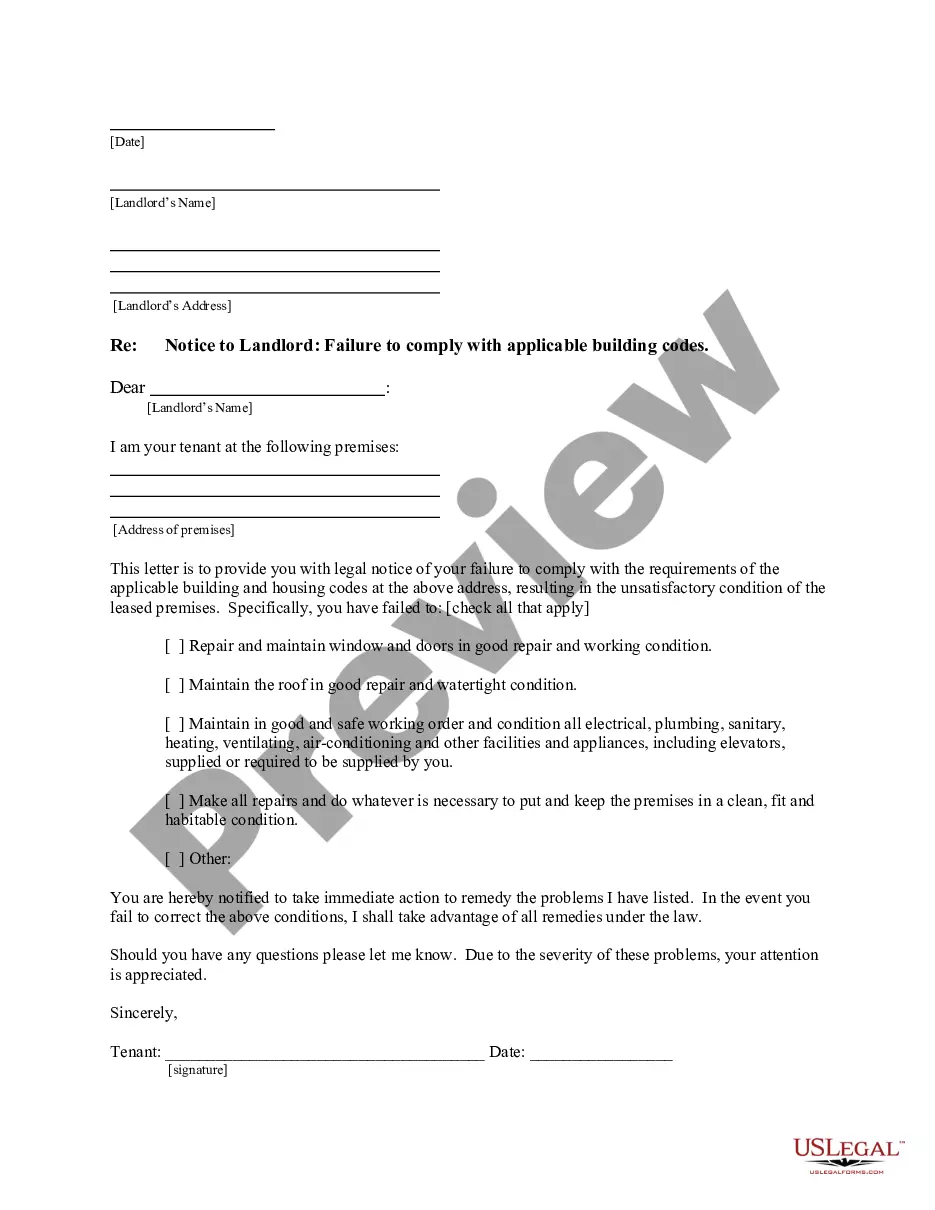
Recoverable by Tenant form is from a Tenant to Landlord providing Landlord with legal notice of his/her failure to-date to return all of the prepaid but unearned rent. Because Tenant's departure resulted from Landlord's breach of Lease Agreement and/or other wrongful conduct contrary to applicable landlord-tenant law, Tenant is demanding a refund of all prepaid but unearned rent.
Alabama Letter from Tenant to Landlord for Failure of Landlord to return all prepaid and unearned rent and security recoverable by Tenant
Category:
State:
Alabama
Control #:
AL-1038LT
Format:
Word;
Rich Text
Instant download
Description
Free preview

How to fill out Alabama Letter From Tenant To Landlord For Failure Of Landlord To Return All Prepaid And Unearned Rent And Security Recoverable By Tenant?
Employing Alabama Letter from Tenant to Landlord regarding Landlord's failure to refund all prepaid and unearned rent and security recoverable by Tenant templates designed by qualified attorneys allows you to avert complications when submitting paperwork.
Simply download the form from our website, complete it, and request a legal expert to verify it. Doing so can conserve you significantly more time and expenses than asking an attorney to draft a document entirely from the ground up to match your requirements.
If you’ve already purchased a US Legal Forms subscription, just Log In to your account and navigate back to the sample page. Locate the Download button next to the template you are reviewing. After downloading a document, you will find all your saved templates in the My documents section.
Begin with your credit card or PayPal. Choose a file format and download your document. After you have completed all the aforementioned actions, you will be able to fill out, print, and sign the Alabama Letter from Tenant to Landlord regarding Landlord's failure to refund all prepaid and unearned rent and security recoverable by Tenant template. Ensure to double-check all entered information for accuracy before submitting it or sending it out. Minimize the time spent on completing documents with US Legal Forms!
- When you don't hold a subscription, that's not an issue.
- Simply follow the steps below to register for your account online, obtain, and complete your Alabama Letter from Tenant to Landlord regarding Landlord's failure to refund all prepaid and unearned rent and security recoverable by Tenant template.
- Verify and ensure that you are retrieving the correct state-specific form.
- Utilize the Preview function and examine the description (if provided) to determine if you require this particular template, and if so, just click Buy Now.
- Look for another document using the Search field if necessary.
- Select a subscription that corresponds with your requirements.
Form popularity
FAQ
Alabama state law limits how much a landlord can charge for a security deposit (one month's rent), when it must be returned (within 35 days after a tenant moves), and sets other restrictions on deposits.
You should usually get your deposit back within 10 days of agreeing on the amount with your landlord. It can take a lot longer if you and your landlord disagree on the amount that's being taken off.
Damage to the Property: A landlord can sue a tenant if the tenant has caused damage to the property.To Recover Lost Rent From an Illegal Move Out: If the tenant moved out before their lease was actually up, you can take them to court to recover the rent they owed for the remaining time on their lease.
Landlord Rights When Tenant Destroys PropertyIf the tenant is evicted or already abandoned the property the landlord can deduct money from the security deposit. If the damages exceed the funds in the security deposit the landlord can sue the tenant in small claims court.
Tenants in the state of Alabama have the right to freedom from discrimination in housing-related activities. However, unlike most states, there is no statewide fair housing law that specifically protects tenants in Alabama. Instead, Alabama tenants must rely on protection under the Federal Fair Housing Act.
When damages or issues affect a rental unit's liveability, it is the landlord's responsibility to fix these damages at no cost to the tenant. Landlords are also responsible for repairing (and sometimes replacing) damaged items or appliances that are in the lease agreement.
If your tenant damages your rental property, your landlord insurance may cover that damage, depending on your policy and the type and extent of the damage. There are three types of tenant damage: accidental, intentional and normal wear and tear. Accidental damage Sometimes covered by landlord insurance.
In a nutshell, basic tenancy laws state that property damage related to fair wear and tear is the landlord's responsibility while accidental or malicious damage caused by the tenant (or their houseguests) is the tenant's responsibility.
In most cases when a rental property is damaged, you have the right to keep all or part of the security deposit to offset the repair costs. But again, security deposits are heavily regulated by the landlord-tenant laws in your location.