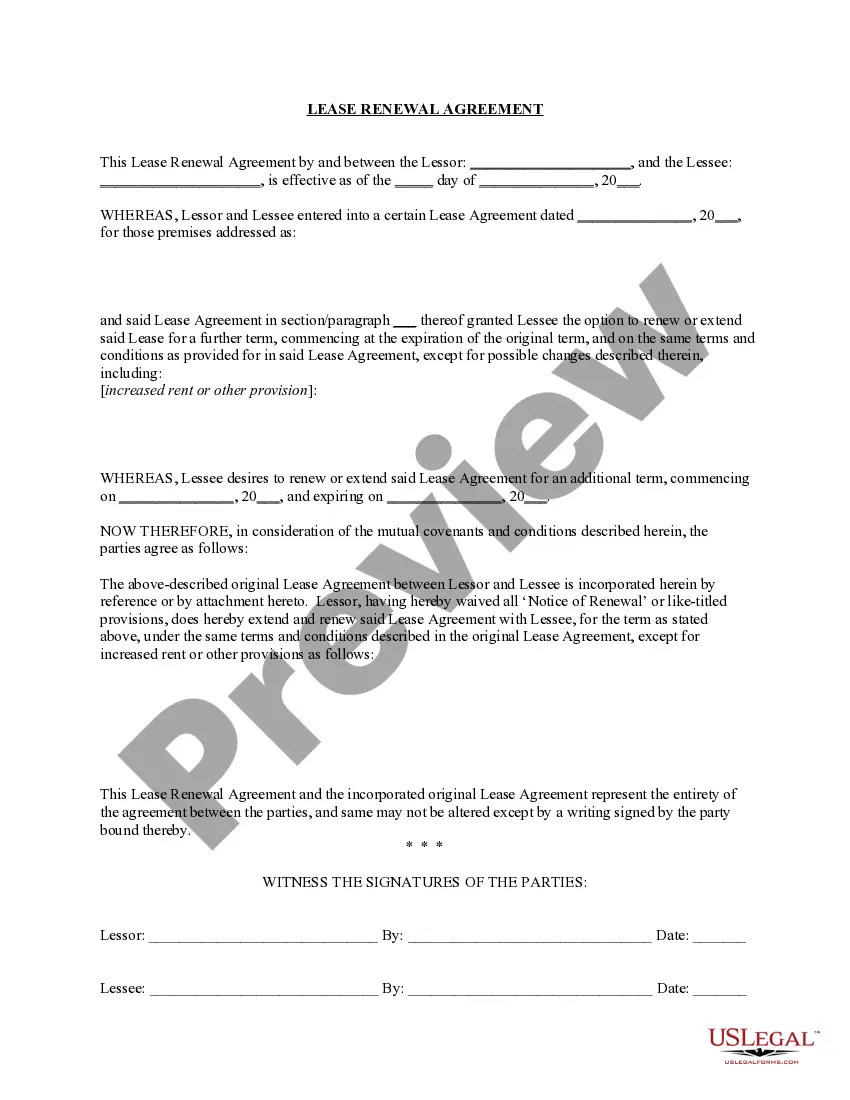
Hold Harmless Agreement for Volunteers
About this form
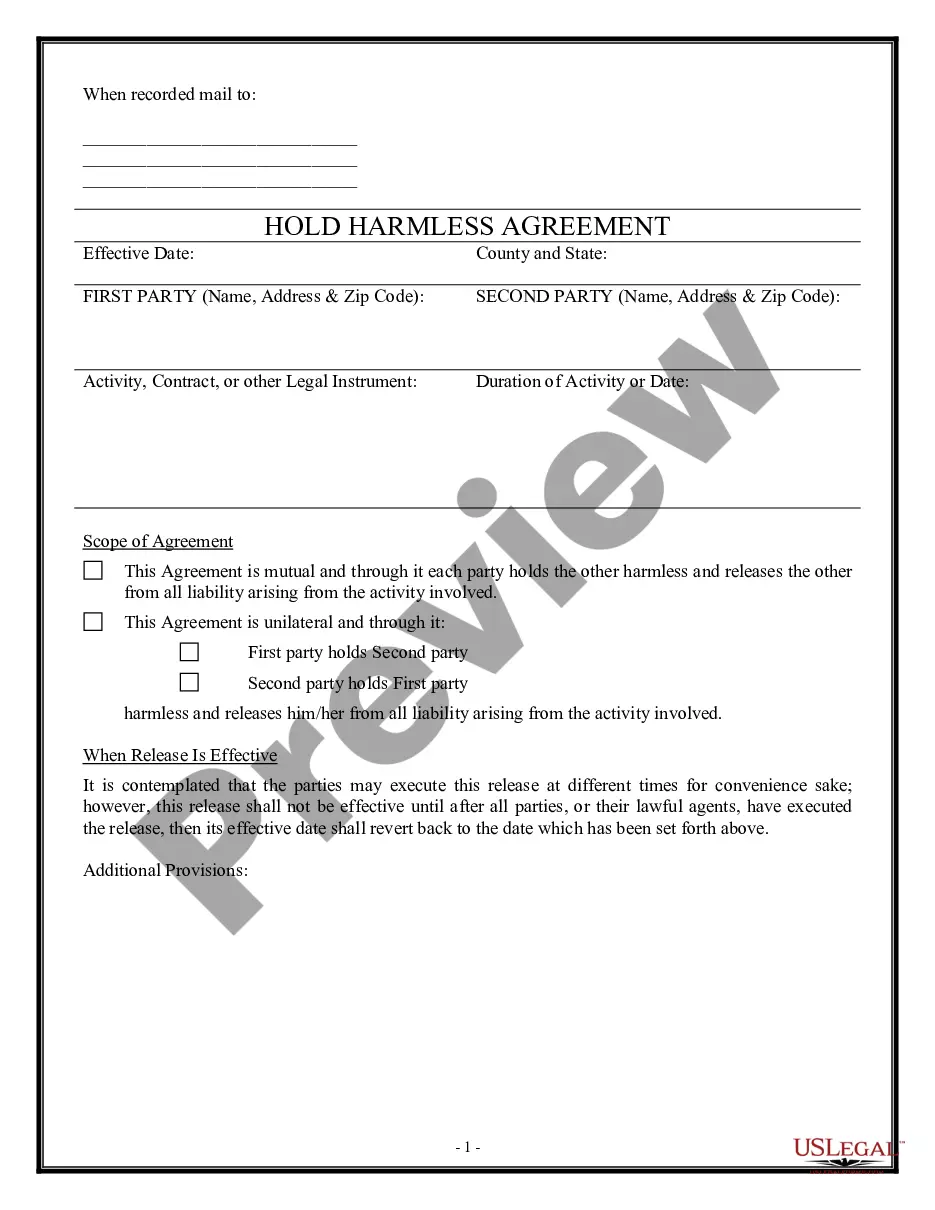
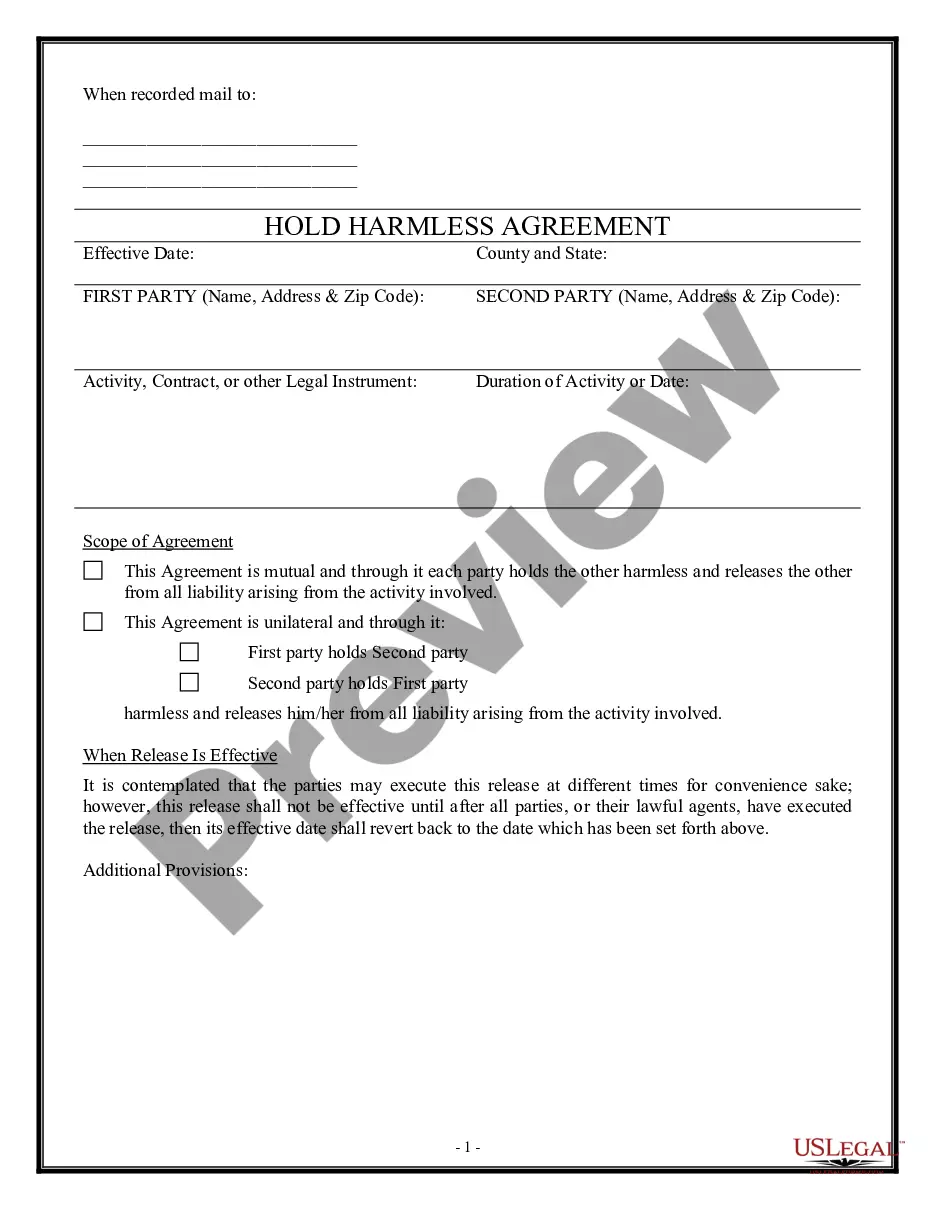
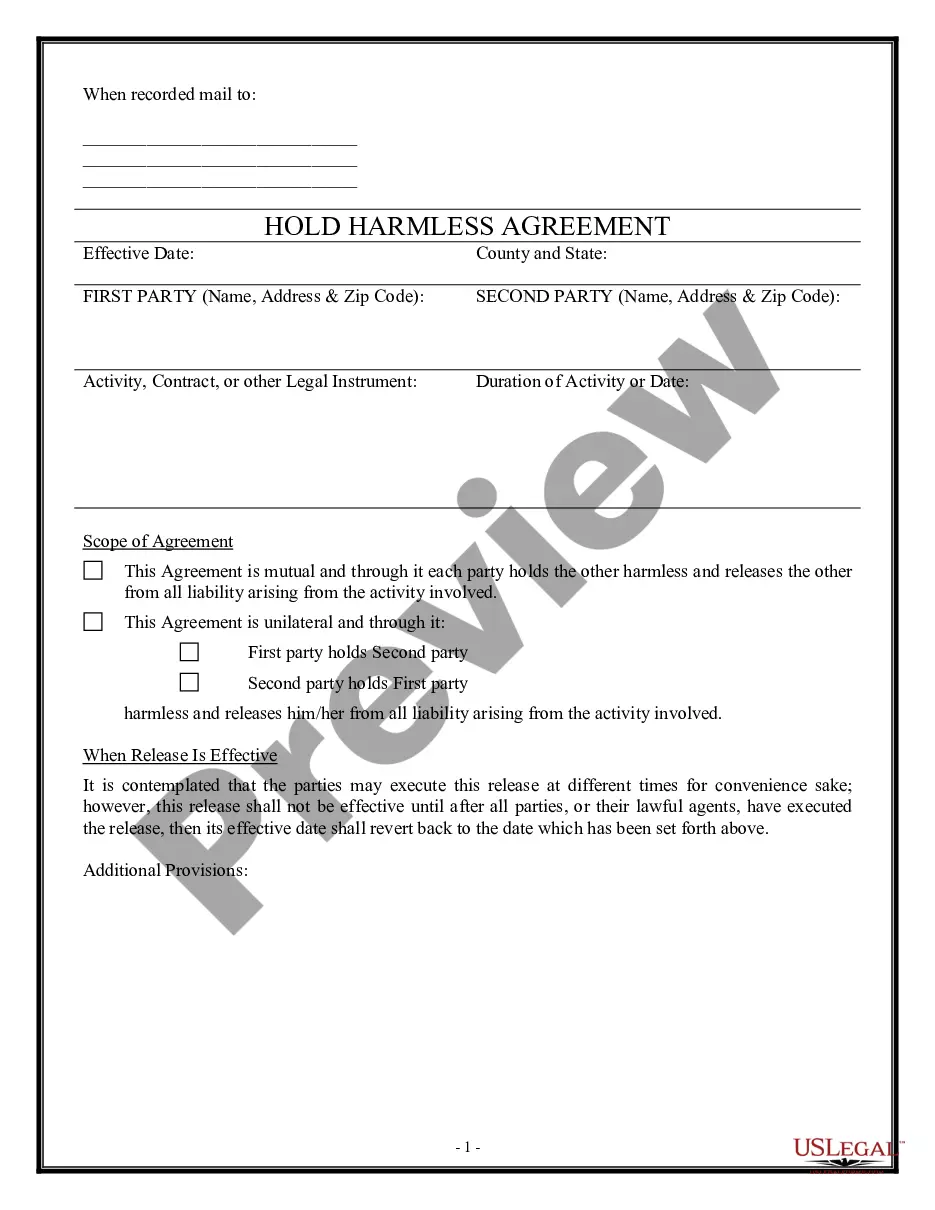
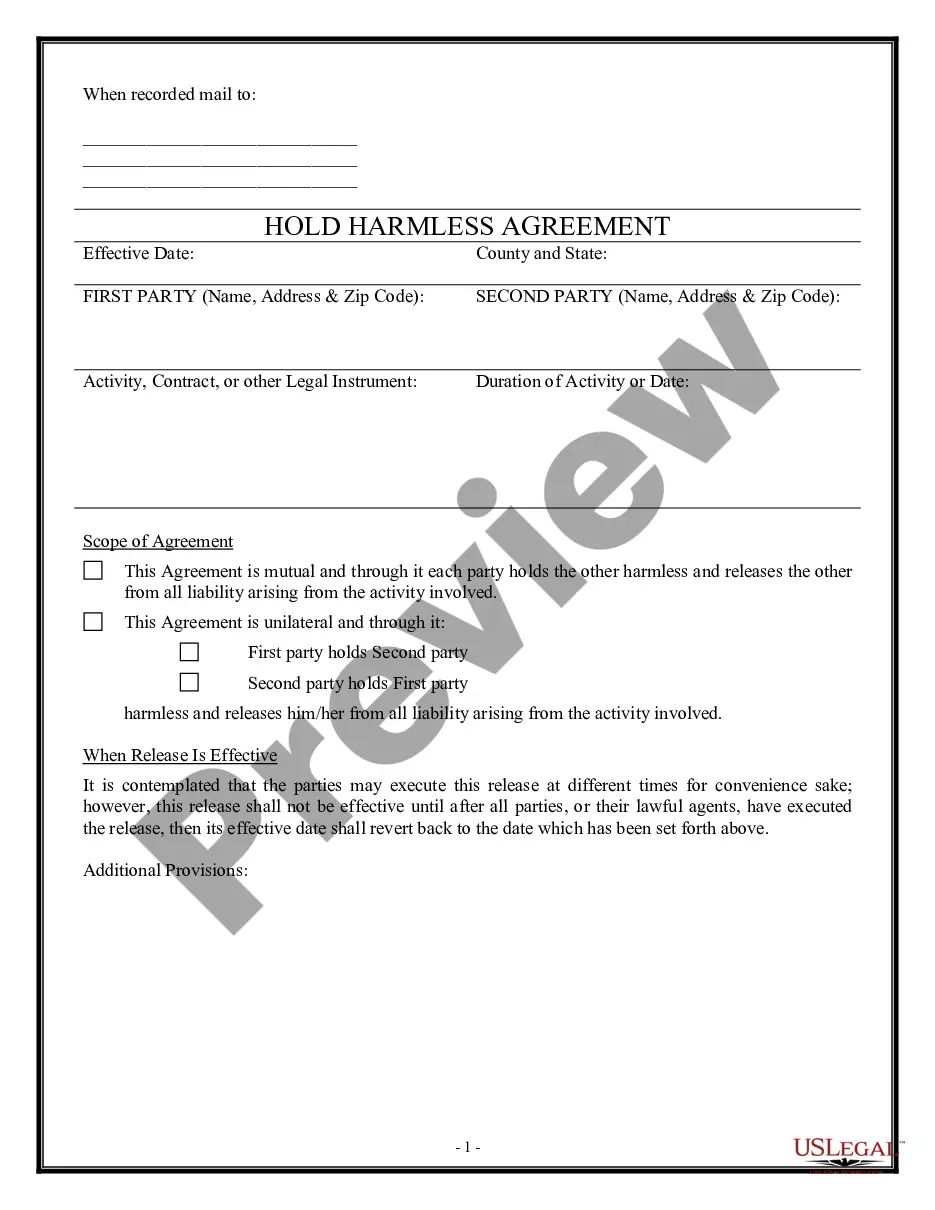
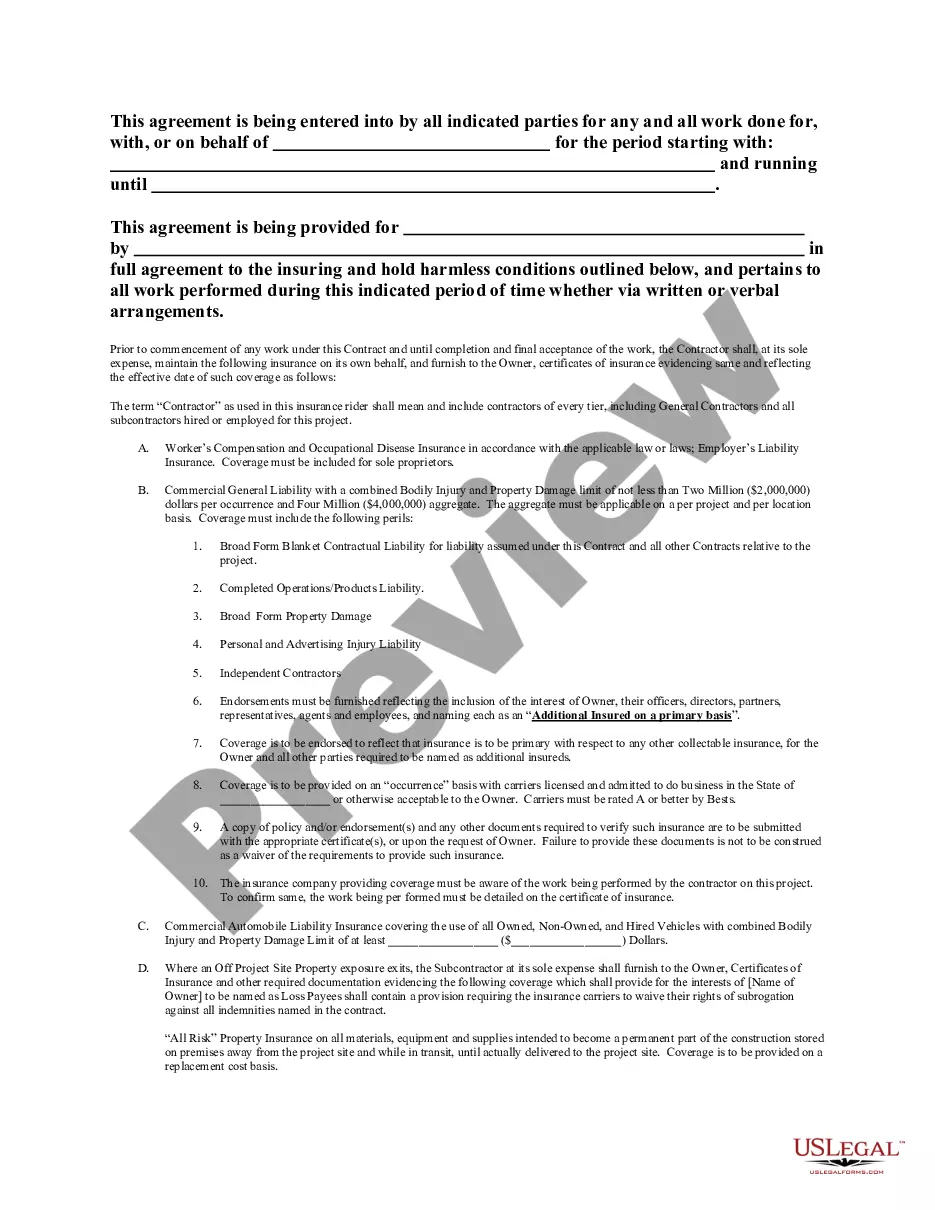
The Hold Harmless Agreement for Volunteers is a legal document designed to protect both parties from liability associated with volunteer activities. This form specifically establishes that both parties agree to hold each other harmless, which means that they will not hold the other responsible for any injuries or damages that may arise during the activity. This agreement is particularly useful in situations where volunteers are involved in potentially risky activities, as it clarifies the liability expectations and mitigates legal risks for both parties.
Main sections of this form
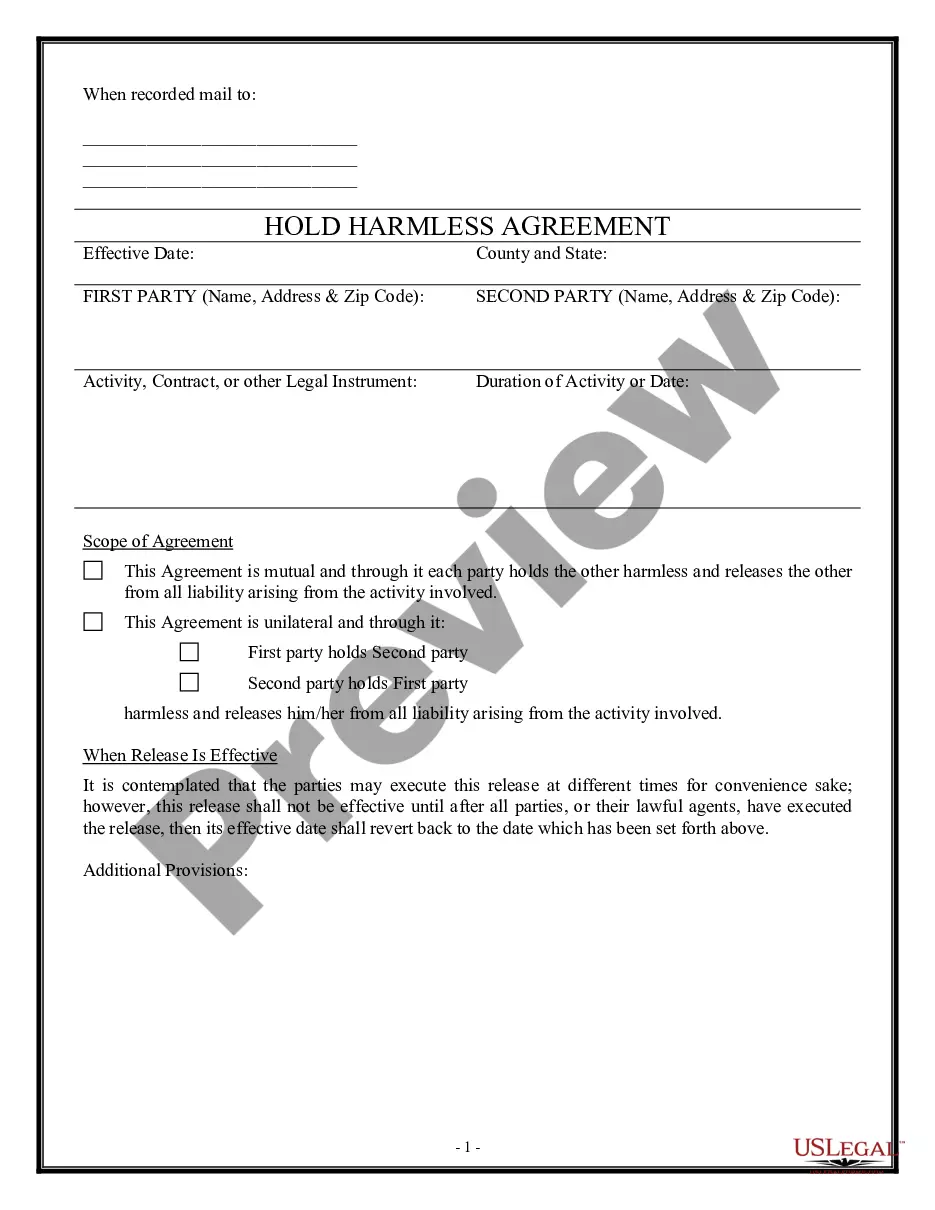
- Identification of the First Party and Second Party involved in the agreement.
- Statement of mutual agreement to hold each other harmless from liability.
- Effective date of the release of liability, ensuring clarity on timeframes.
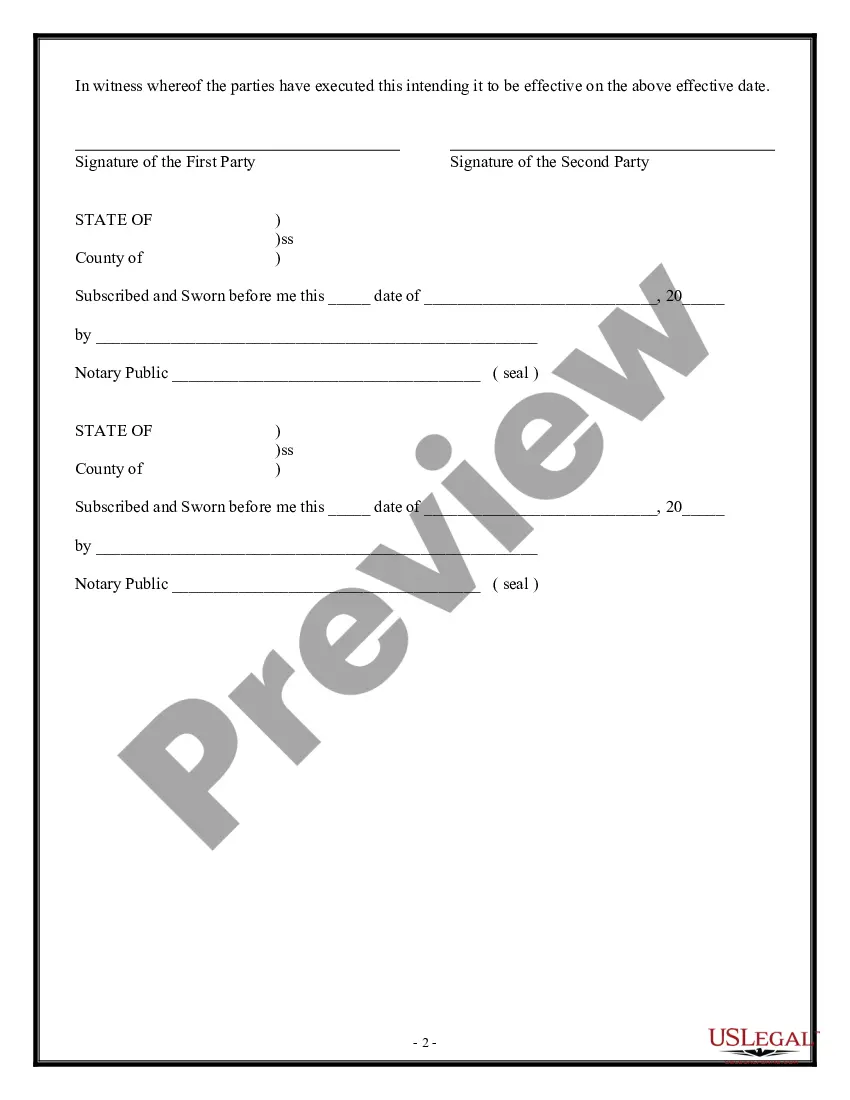
- Signature lines for both parties, confirming their consent to the agreement.
- Notary public acknowledgment to validate the agreement.
Common use cases
The Hold Harmless Agreement for Volunteers should be used in situations where volunteers engage in activities that may involve risk, such as community service projects, events, or programs. It is beneficial for nonprofit organizations, schools, or any group that relies on volunteers to clarify liability issues and protect both parties from potential legal claims arising from accidents or injuries during these activities.
Who needs this form
- Nonprofit organizations utilizing volunteers for events or programs.
- Schools organizing volunteer activities for students and parents.
- Community groups or clubs that rely on volunteers for their operations.
- Individuals acting as volunteer coordinators or event organizers.
Completing this form step by step
- Identify the First Party and Second Party by providing their full names and contact information.
- Clearly state the activities for which the agreement applies.
- Specify the effective date of the release clause.
- Have both parties sign the document to signify their agreement.
- Obtain notarization if required, ensuring the notary public adds their signature and seal.
Is notarization required?
This form typically does not require notarization unless specified by local law. It is advisable to check local regulations to ensure compliance, as notarization can lend additional credibility to the agreement.
Get your form ready online
Our built-in tools help you complete, sign, share, and store your documents in one place.
Make edits, fill in missing information, and update formatting in US Legal Forms—just like you would in MS Word.
Download a copy, print it, send it by email, or mail it via USPS—whatever works best for your next step.
Sign and collect signatures with our SignNow integration. Send to multiple recipients, set reminders, and more. Go Premium to unlock E-Sign.
If this form requires notarization, complete it online through a secure video call—no need to meet a notary in person or wait for an appointment.
We protect your documents and personal data by following strict security and privacy standards.

Make edits, fill in missing information, and update formatting in US Legal Forms—just like you would in MS Word.

Download a copy, print it, send it by email, or mail it via USPS—whatever works best for your next step.

Sign and collect signatures with our SignNow integration. Send to multiple recipients, set reminders, and more. Go Premium to unlock E-Sign.

If this form requires notarization, complete it online through a secure video call—no need to meet a notary in person or wait for an appointment.

We protect your documents and personal data by following strict security and privacy standards.
Common mistakes
- Failing to include all parties' names, which can invalidate the agreement.
- Not specifying the activities covered, leading to ambiguity.
- Missing signatures, which is essential for the agreement to be valid.
- Overlooking notarization requirements specific to local laws.
Why complete this form online
- Convenience of downloading and completing the form anytime.
- Editable format allows for customization to meet specific needs.
- Access to legal templates drafted by licensed attorneys, ensuring reliability.
Looking for another form?
Form popularity
FAQ
A waiver is a legally binding provision where either party in a contract agrees to voluntarily forfeit a claim without the other party being liable. Waivers can either be in written form or some form of action.
You can work on saying no to make it easier for the volunteers. Explain your reasons and work to maintain the relationship. Give them feedback on how they can better improve their odds to help out next time. Just because you said no this one time, doesn't mean you will say no every time.
Volunteers are legally responsible for their own acts or omissions and can face civil tort liability or criminal penalty. Immunity is a legal protection against liability and may be asserted as a defense against liability claims.
Volunteers are legally responsible for their own acts or omissions and can face civil tort liability or criminal penalty. Immunity is a legal protection against liability and may be asserted as a defense against liability claims.
Volunteers can be disciplined or terminated appropriately, for reasons such as shirking one's duties, driving negativity and conflict among coworkers, or blatantly disregarding critical policies around workplace safety, anti-harassment, anti-discrimination, and the like.
In California, a liability waiver must be clear, unambiguous, and explicit. In other words, waivers cannot be printed in faded ink, in small font, on the back of a paper, or in an otherwise ambiguous form. If the waiver that you sign is not represented clearly, it may not hold up in the event of a lawsuit.
7) How to Let a Volunteer Go Inform your supervisor of the situation and the rationale for action. Remember that the time has passed for negotiation. Write up a script if needed. At the meeting, state the reasons for dismissal and present them in writing.
Tell the person he or she is being fired, list the reasons, and provide the written evidence and any other documentation you collected to prepare for the termination. You want to give the volunteer feedback, but focus the feedback on performance and actions, listing specific incidents when possible.
While it's a fulfilling and generous use of time, volunteering still requires imperfect people who can get upset, have a bad days, and get overloaded and stressed (it's part of being human!). Ensure you delegate appropriately. Mitigate event-day stress through providing adequate training. Show appreciation at all times.