California Agreement for Alternative Workweek Schedule
About this form
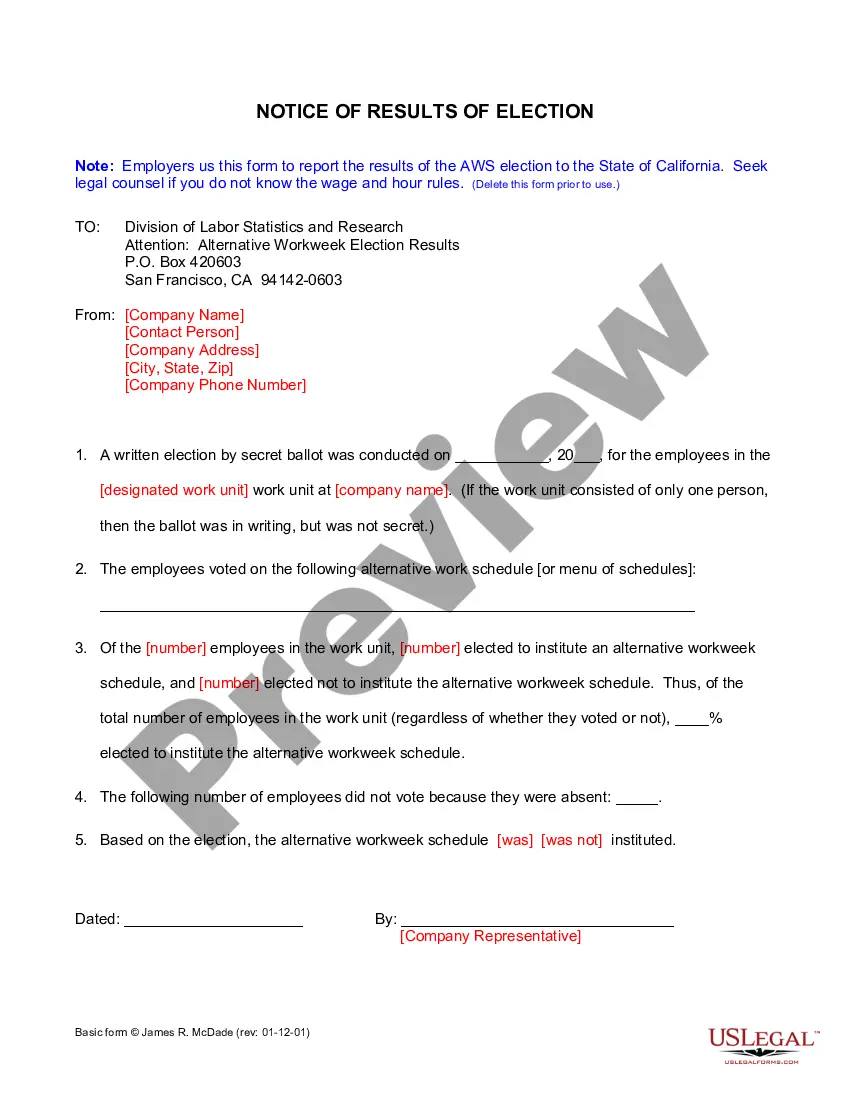
The Agreement for Alternative Workweek Schedule is a legal document that allows employers and employees to enter into an agreement to adopt a modified work schedule. This form differs from standard work agreements by specifically outlining alternative schedules that can give employees more flexible hours, often resulting in a longer workweek with fewer workdays.
What’s included in this form
- Company details: Identifies the employer and the specific work unit involved.
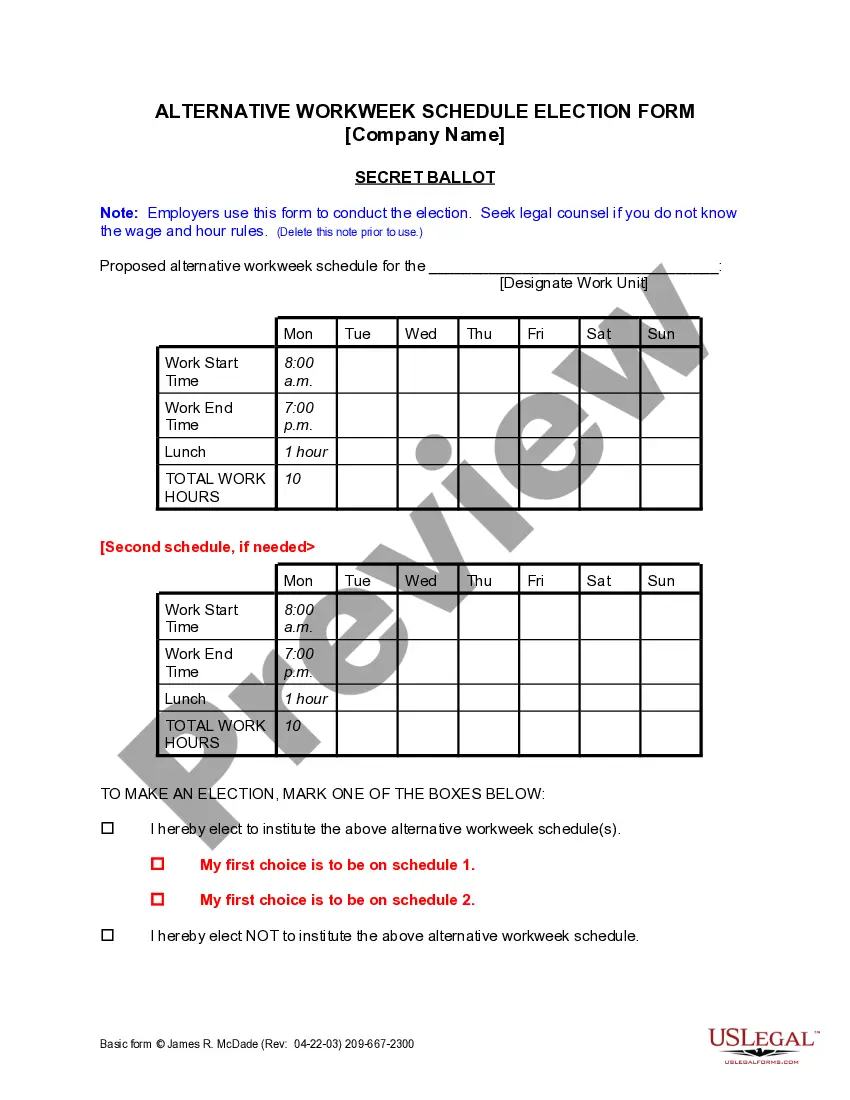
- Election outcome: Documents the secret ballot results that approved the alternative schedule.
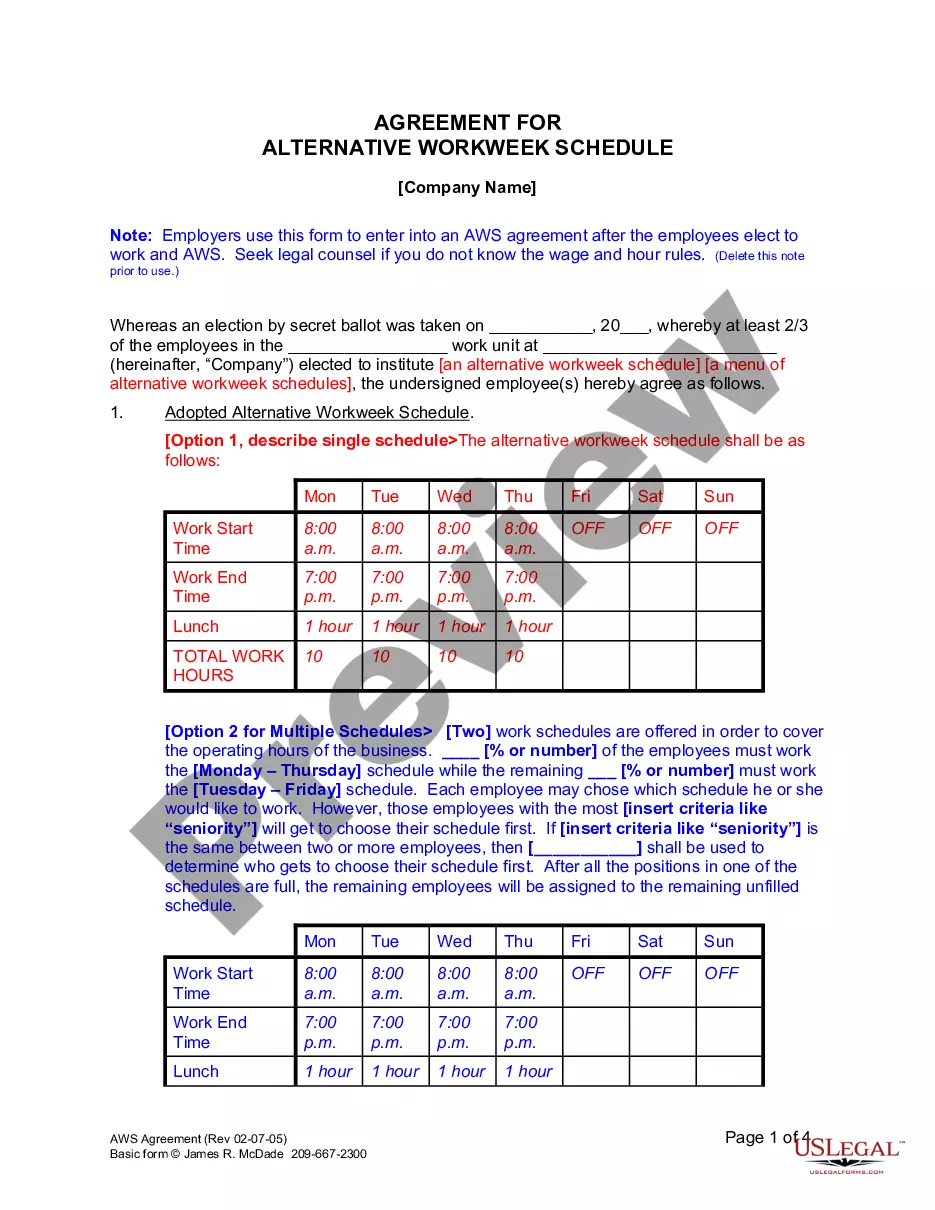
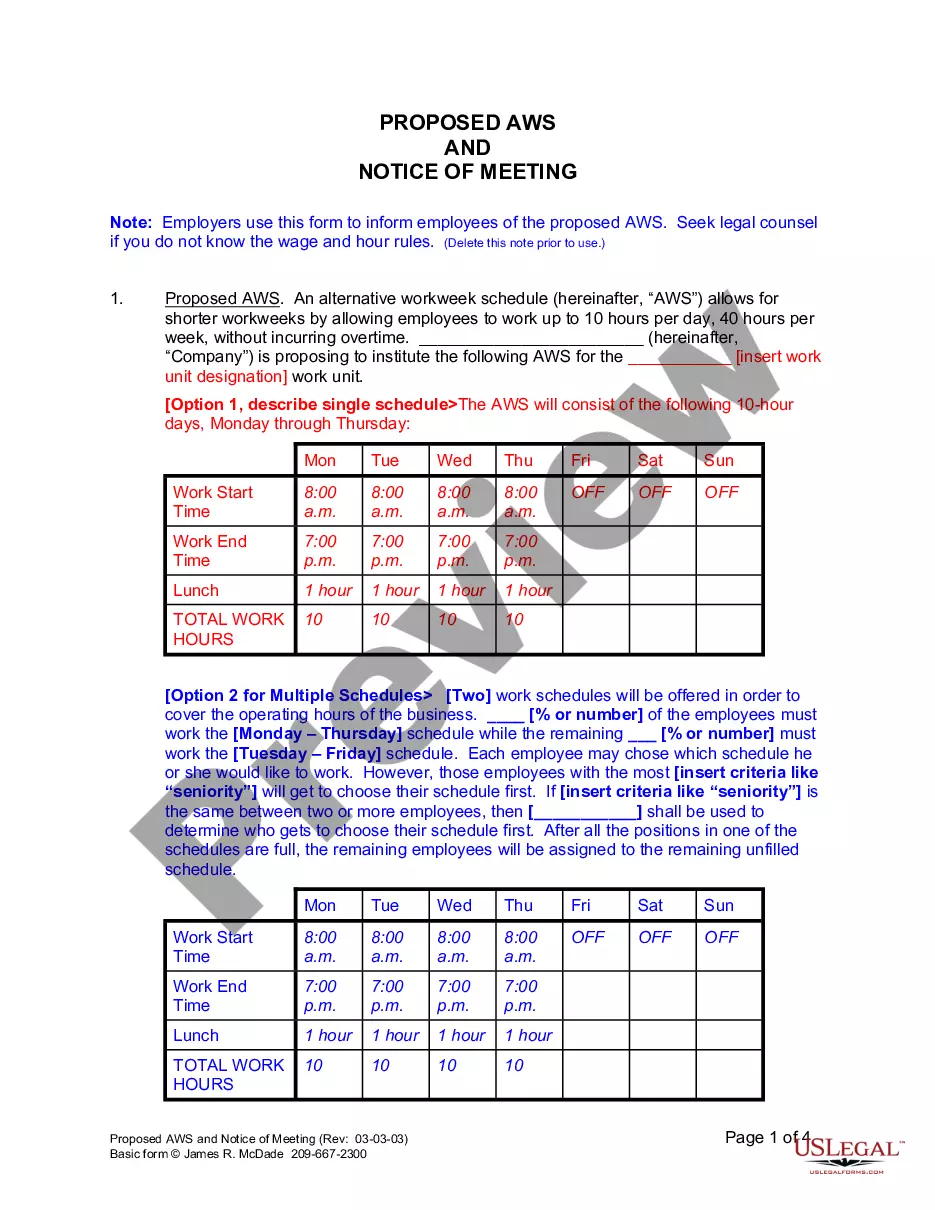
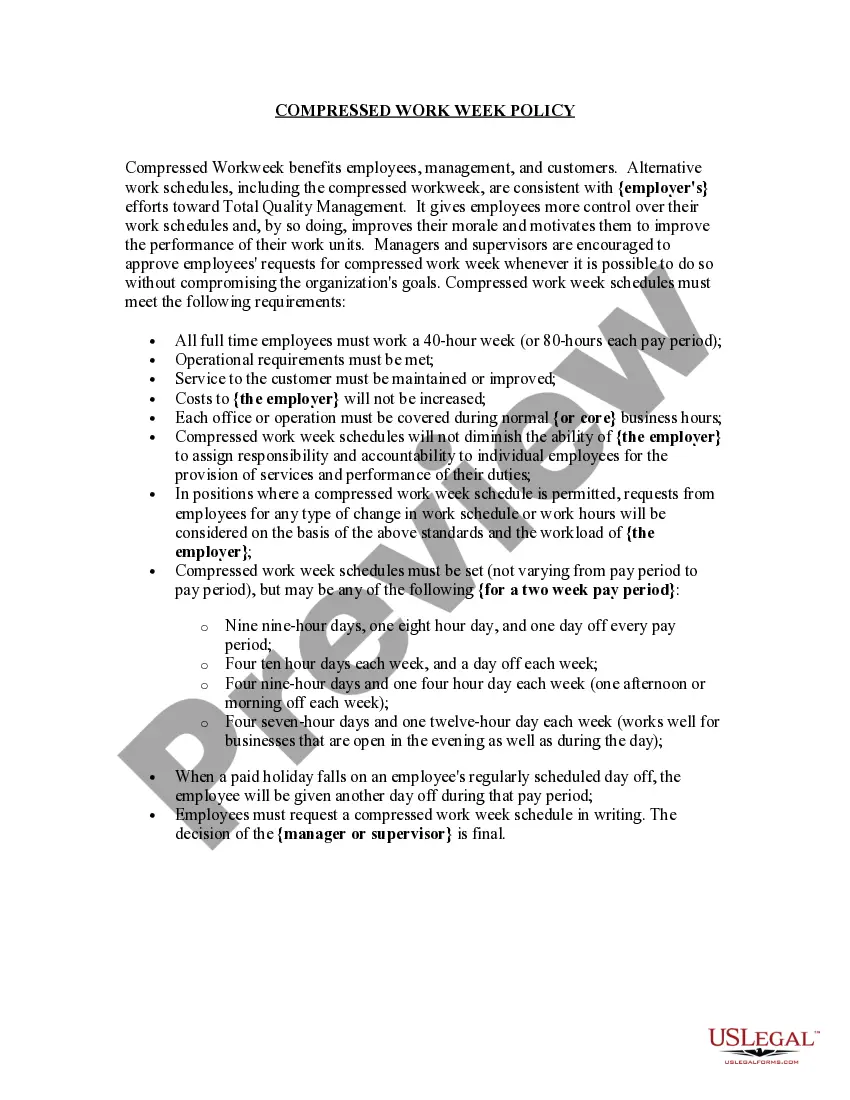
- Work schedule options: Provides details on the adopted work hours for both single and multiple schedules.
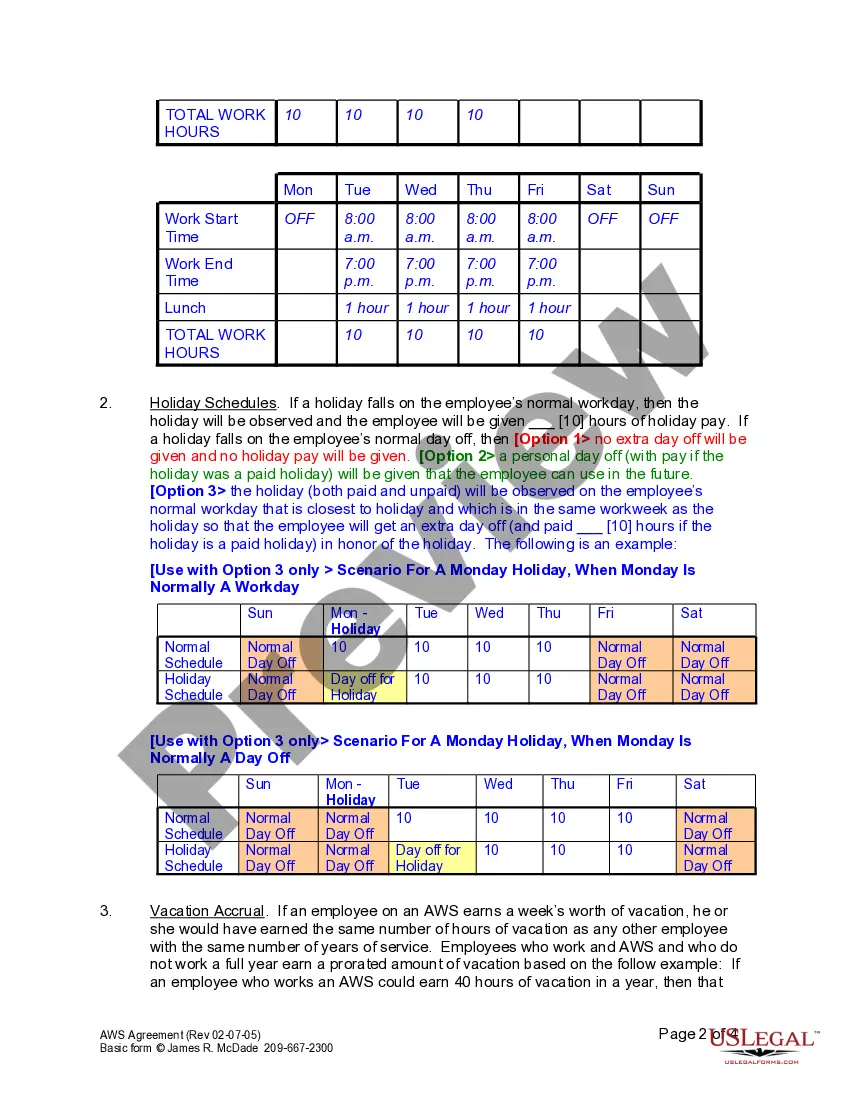
- Holiday and vacation policies: Clarifies how holidays and vacation time are managed under the alternative schedule.
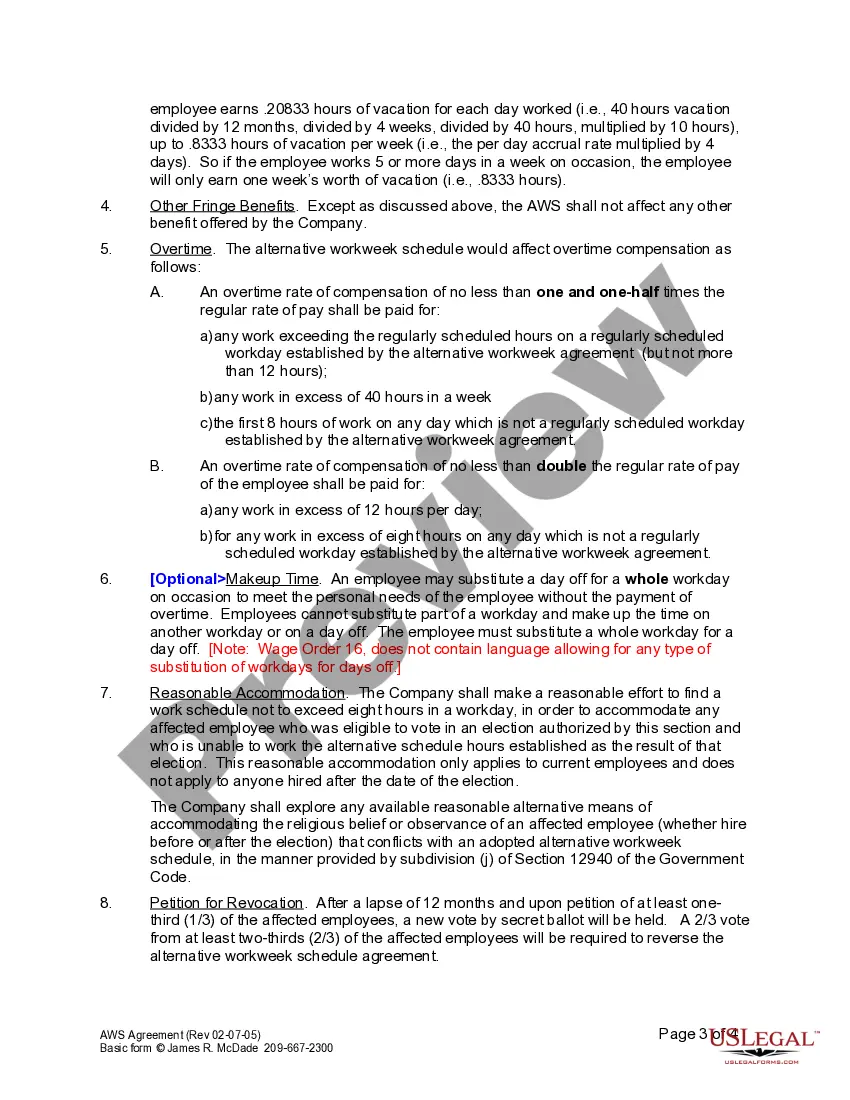
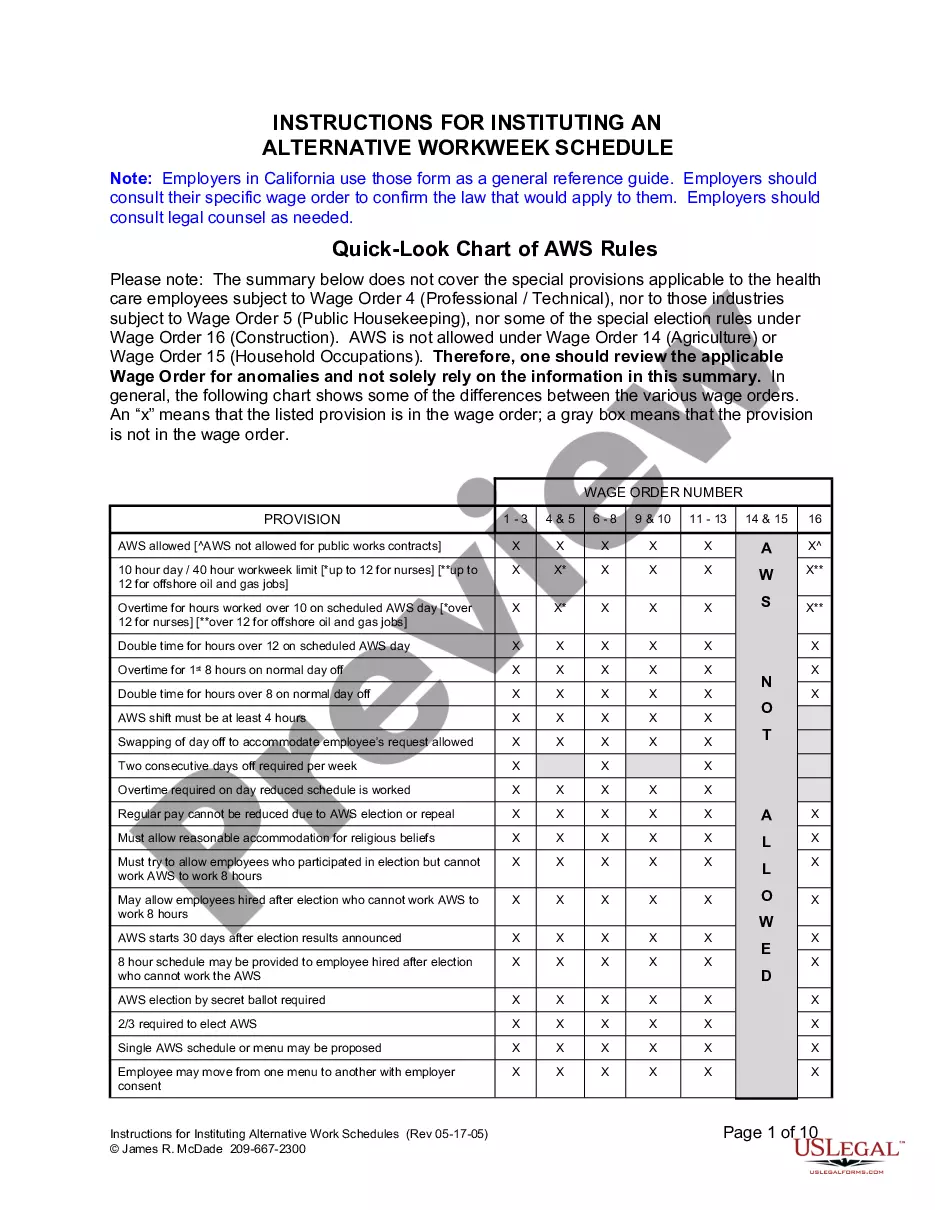
- Overtime compensation guidelines: Specifies overtime rates for hours worked beyond the regular schedule.
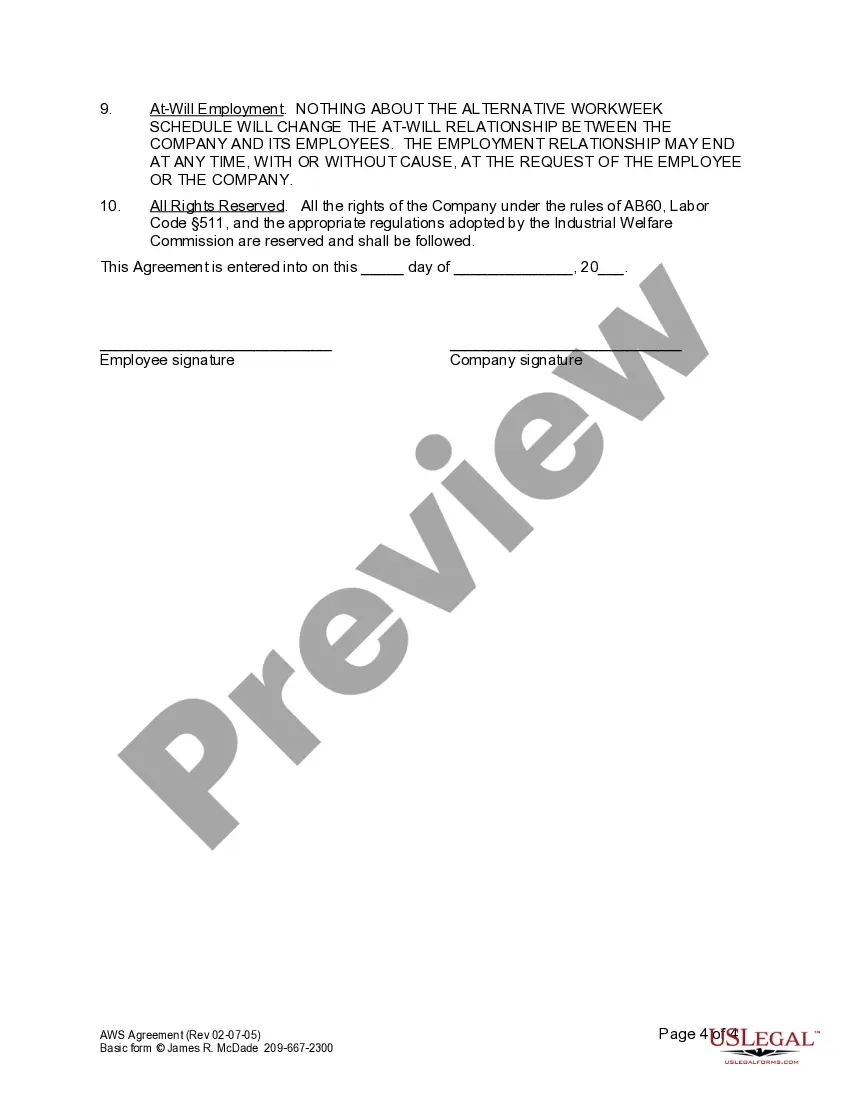
- Petition for revocation: Outlines the process for employees to petition a new vote to change the work schedule.
When this form is needed
This form should be used when employers wish to implement an alternative workweek schedule after employees have voted in favor of it. Common scenarios for usage include when a business seeks greater operational flexibility, reduced workdays while maintaining full-time hours, or addressing employee preferences for longer but fewer workdays.
Who can use this document
- Employers looking to implement an alternative workweek schedule for their employees.
- Employees who prefer flexible work options and are interested in participating in a new work schedule.
- HR professionals who need to formalize the terms of the alternative workweek within their organization.
How to prepare this document
- Identify the company name and the work unit that will implement the alternative workweek schedule.
- Document the date of the employee election and ensure that the results indicate support from at least two-thirds of affected employees.
- Define the adopted work schedule, including start and end times for each workday.
- Specify holiday observance procedures and how vacation accrual will be managed under the new schedule.
- Include signatures from both the employees agreeing to the new schedule and a representative from the company to formalize the agreement.
Does this form need to be notarized?
This form usually doesn’t need to be notarized. However, local laws or specific transactions may require it. Our online notarization service, powered by Notarize, lets you complete it remotely through a secure video session, available 24/7.
Get your form ready online
Our built-in tools help you complete, sign, share, and store your documents in one place.
Make edits, fill in missing information, and update formatting in US Legal Forms—just like you would in MS Word.
Download a copy, print it, send it by email, or mail it via USPS—whatever works best for your next step.
Sign and collect signatures with our SignNow integration. Send to multiple recipients, set reminders, and more. Go Premium to unlock E-Sign.
If this form requires notarization, complete it online through a secure video call—no need to meet a notary in person or wait for an appointment.
We protect your documents and personal data by following strict security and privacy standards.

Make edits, fill in missing information, and update formatting in US Legal Forms—just like you would in MS Word.

Download a copy, print it, send it by email, or mail it via USPS—whatever works best for your next step.

Sign and collect signatures with our SignNow integration. Send to multiple recipients, set reminders, and more. Go Premium to unlock E-Sign.

If this form requires notarization, complete it online through a secure video call—no need to meet a notary in person or wait for an appointment.

We protect your documents and personal data by following strict security and privacy standards.
Avoid these common issues
- Failing to ensure a proper ballot process to confirm employee agreement.
- Not clearly defining work hours and schedule options, leading to confusion among employees.
- Neglecting to adhere to state regulations on alternative workweek agreements.
Advantages of online completion
- Convenience: Download and fill out the form at your own pace.
- Editability: Easily modify the form as needed to fit your specific situation.
- Reliability: Access legal forms drafted by licensed attorneys, ensuring compliance and reducing errors.
Legal use & context
- The form serves as an official document for establishing alternative workweek schedules and outlines the rights and responsibilities of both employers and employees.
- It is essential for reducing misunderstandings regarding work hours, pay, and schedules, thus reinforcing a transparent workplace environment.
Quick recap
- The Agreement for Alternative Workweek Schedule formalizes modified work hours for eligible employees.
- Employers must ensure compliance with local and state laws when implementing alternative schedules.
- Clear communication and documentation, as facilitated by this form, prevent confusion about work expectations among staff.
Looking for another form?

Form popularity
FAQ
While California law mandates a 7-day notice for work schedules, best practices suggest posting them at least two weeks in advance. This approach not only meets legal requirements but also enhances employee engagement and morale. Adhering to the principles of the California Agreement for Alternative Workweek Schedule, your business can cultivate a respectful and organized work atmosphere.
In California, employers are required to post work schedules at least 7 days in advance. This law ensures that employees have sufficient notice of their working hours and can prepare accordingly. By posting schedules early, you comply with legal standards established under the California Agreement for Alternative Workweek Schedule and foster transparency within the workplace.
It's a best practice to have a work schedule available at least two weeks in advance. This timeframe allows your employees to plan their personal lives while ensuring that your business operations run smoothly. In accordance with the California Agreement for Alternative Workweek Schedule, providing adequate notice contributes to a positive work environment and helps maintain employee satisfaction.
The 4 hour rule in California states that any employee who works more than four hours in a day is entitled to a meal break. This requirement is crucial for maintaining employee well-being and productivity. When setting work schedules under the California Agreement for Alternative Workweek Schedule, it is essential to structure shifts to comply with this rule, promoting a balanced work experience for your team.
The 7 minute rule in California refers to a policy that allows employers to adjust timekeeping records by increments of up to seven minutes at the start and end of shifts. This means that if an employee works less than seven minutes beyond their scheduled time, it may not be compensated. This rule is part of the broader framework established under the California Agreement for Alternative Workweek Schedule, helping to ensure clarity and fairness in time tracking.
In California, the rules for alternative work schedules are defined by the California Agreement for Alternative Workweek Schedule. This agreement allows employers to establish a workweek that does not adhere to the traditional 40-hour model. Employees can agree to alternative schedules, such as four 10-hour days, as long as the requirements for employee notice and approval are met. Understanding these regulations can help you create a flexible and compliant work environment.
A 5 4 9 work schedule is a specific type of alternative workweek where employees work nine-hour days for five days and enjoy a four-day workweek every other week. This structure not only helps in reducing commute time but also provides employees with extended time off. Implementing a California Agreement for Alternative Workweek Schedule with this model can lead to happier, more focused employees and improved business outcomes.
An alternative work schedule refers to any work arrangement that differs from the standard full-time, 40-hour week. This can include flexible hours, part-time work, or compressed schedules. A California Agreement for Alternative Workweek Schedule offers businesses the ability to create tailored solutions that align with their operations while allowing employee flexibility.
An example of an alternative work schedule includes flexible hours, compressed workweeks, or job sharing. These arrangements aim to adapt traditional 9-to-5 routines to better fit both employee and employer needs. If you're looking into a California Agreement for Alternative Workweek Schedule, consider various options for your team to increase engagement and efficiency.
A 5 4 rotating schedule is a work model where employees alternate between working five days one week and four days the next. This schedule gives workers longer weekends and greater time for personal activities. If you're considering a California Agreement for Alternative Workweek Schedule, a 5 4 rotating format might be an excellent choice to enhance employee satisfaction and productivity.