Put and Call Option Agreement
Overview of this form
The Put and Call Option Agreement is a legal document that outlines the rights of shareholders in a company to either sell (put option) or buy (call option) shares under specific conditions. This agreement is essential for managing shareholder relationships and ensuring the orderly transfer of stock ownership, distinguishing it from standard stock purchase agreements by emphasizing mutual rights and responsibilities related to share transactions.
What’s included in this form
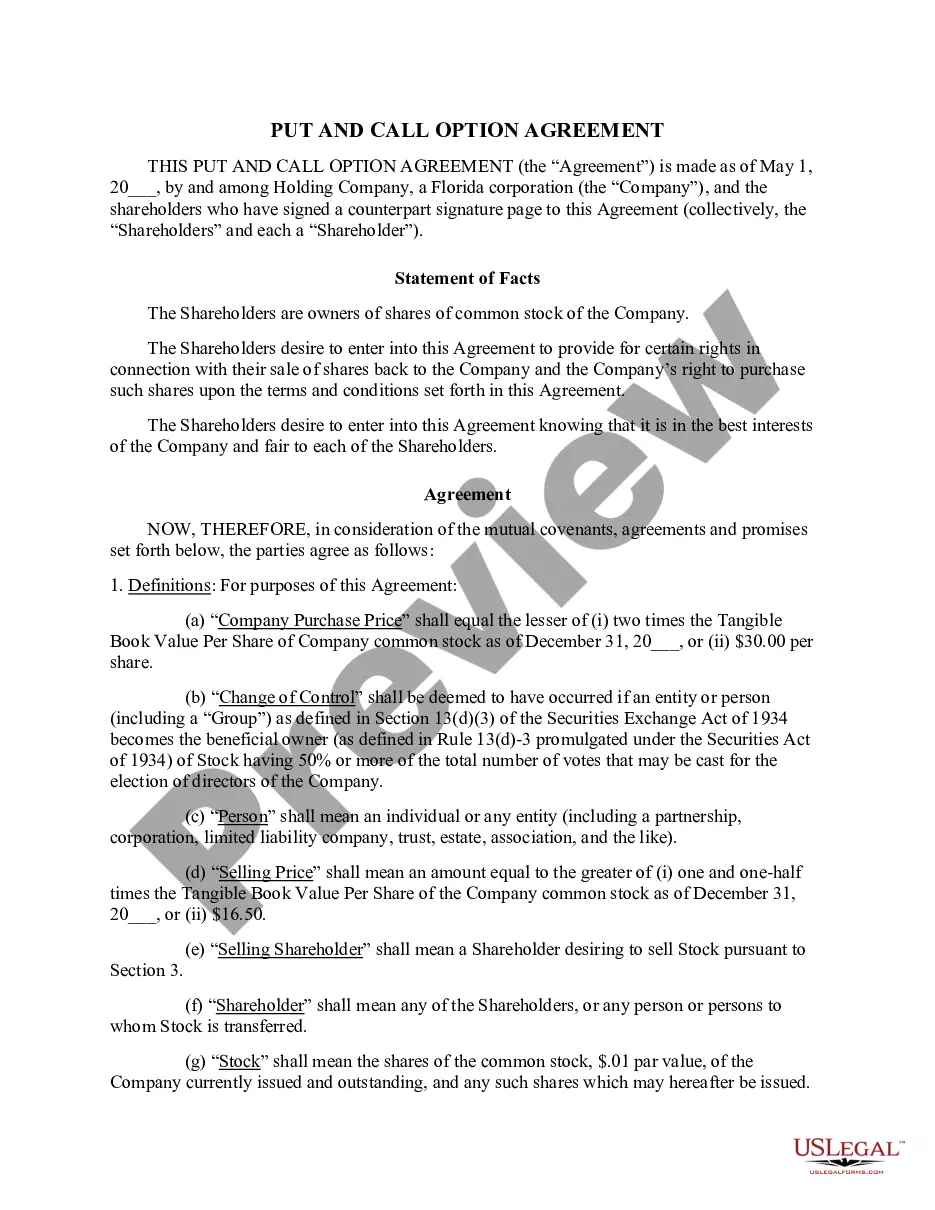
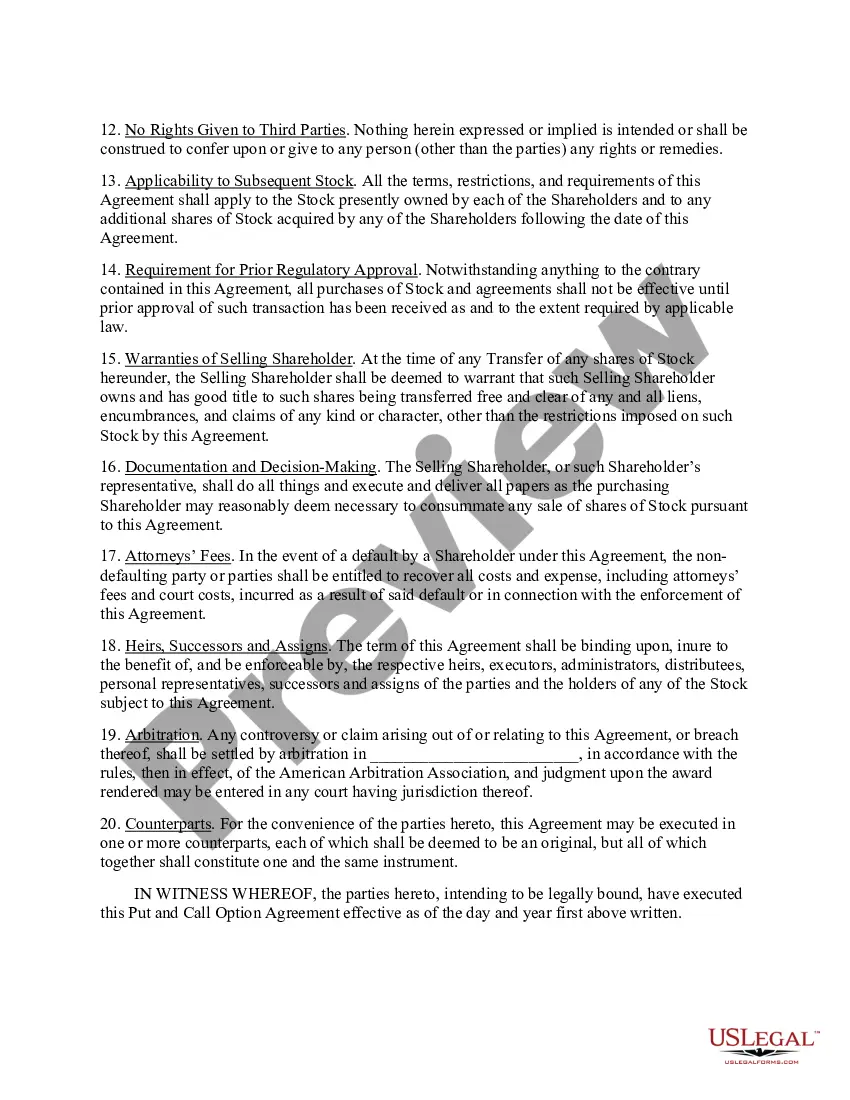
- Definitions: Clarifies key terms such as Company Purchase Price, Selling Price, and Stock.
- Transfers: Establishes rules regarding the transfer of shares and conditions under which transfers can occur.
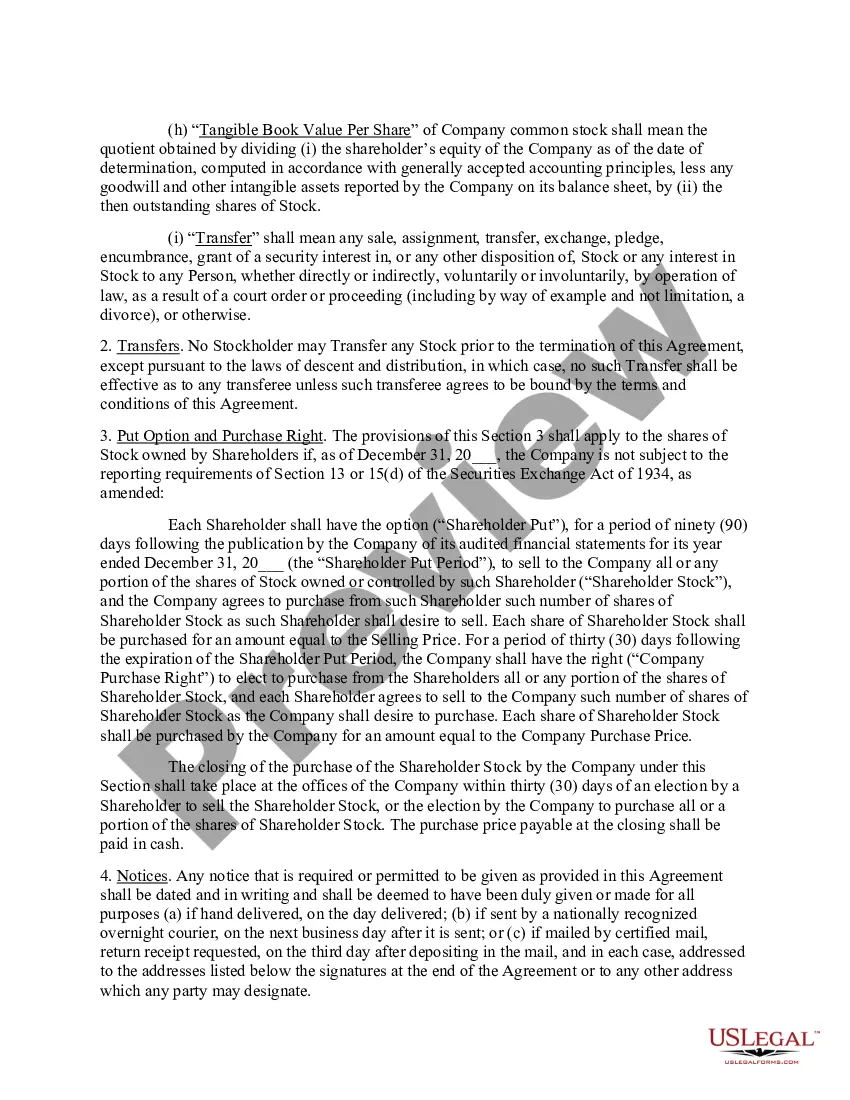
- Put Option and Purchase Right: Details the rights of shareholders to sell shares back to the company, including pricing mechanisms.
- Notices: Outlines requirements for giving notices between parties.
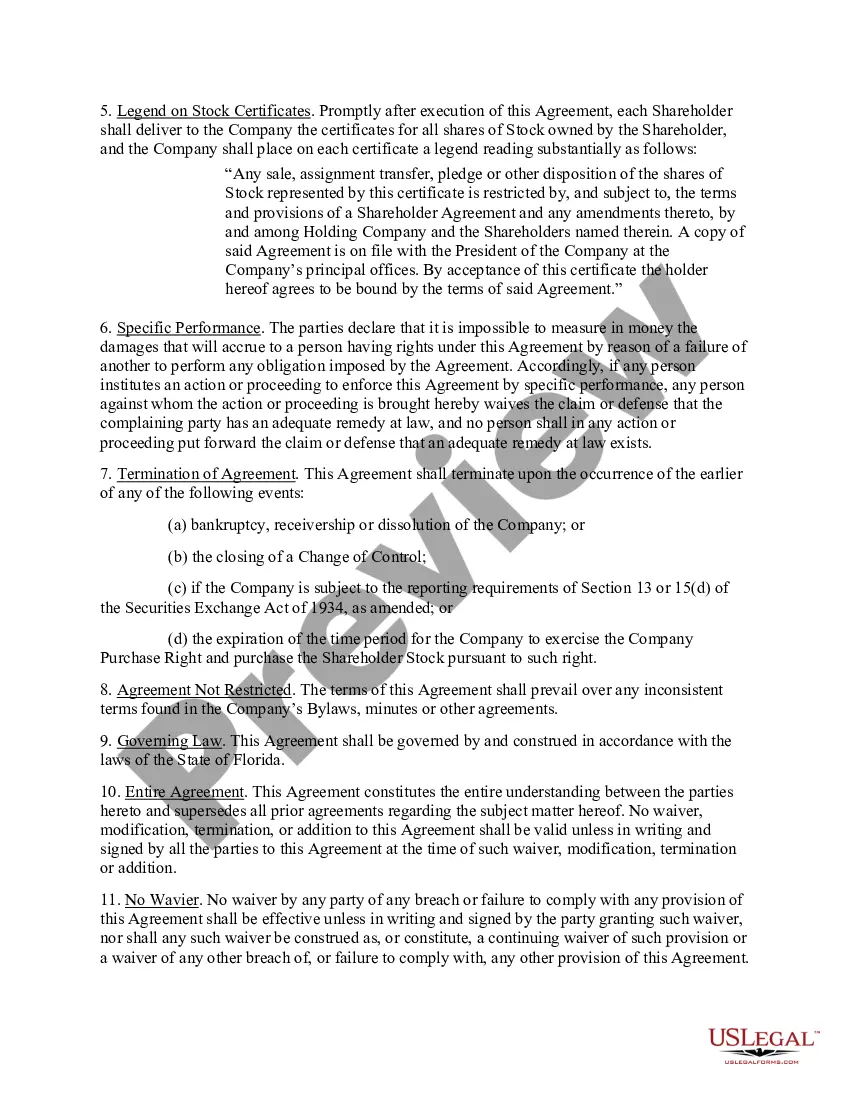
- Termination of Agreement: Lists events that could lead to the termination of the agreement.
- Arbitration: Specifies how disputes related to the agreement will be resolved.
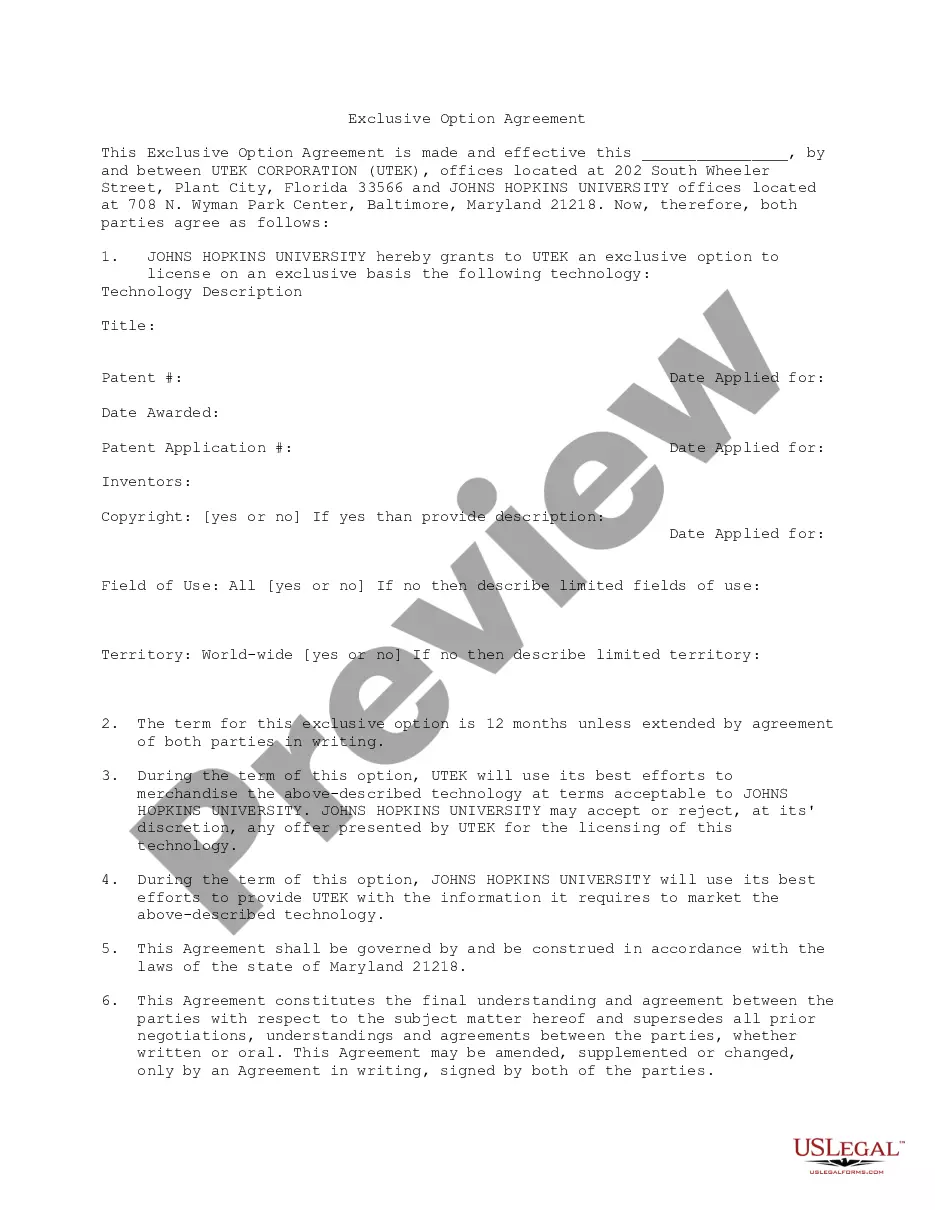
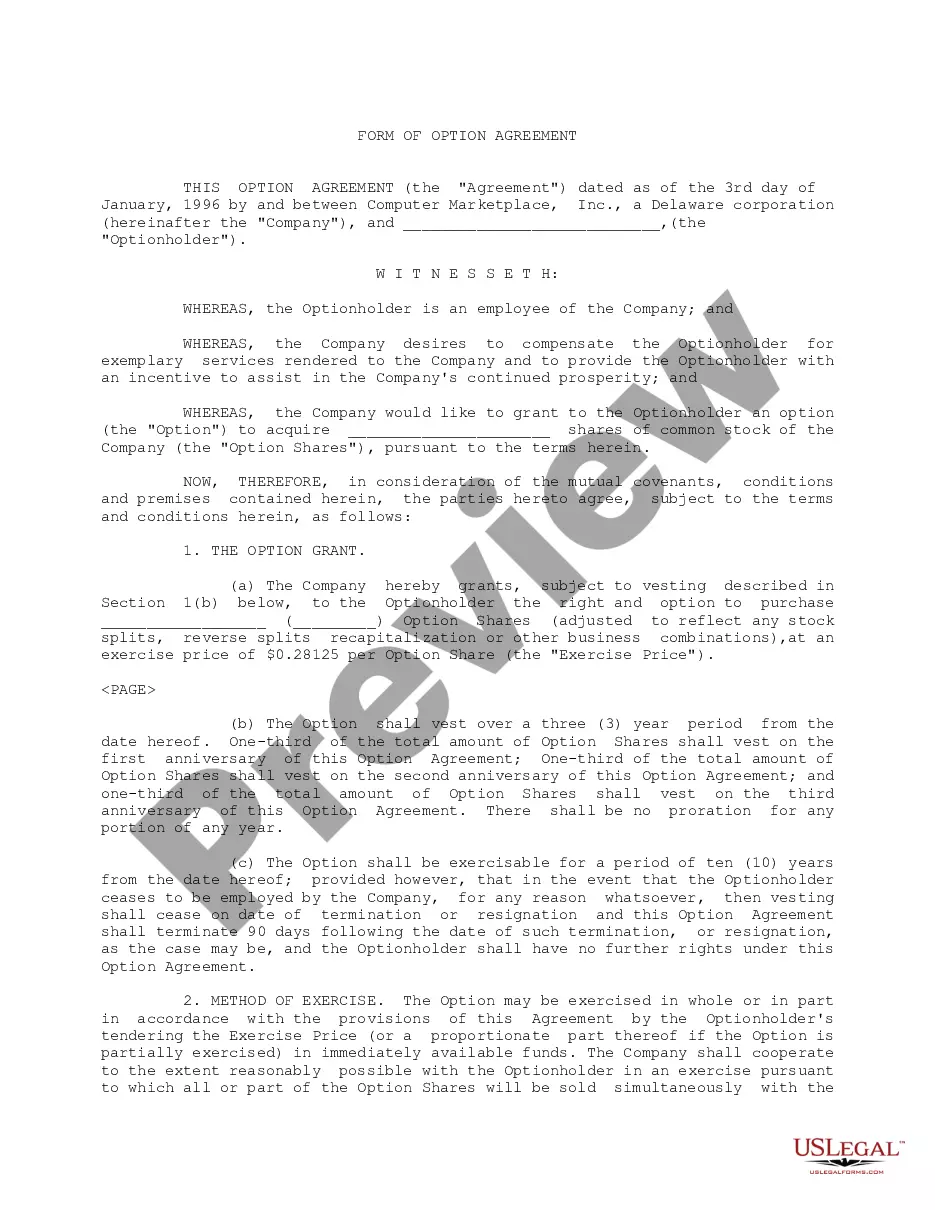
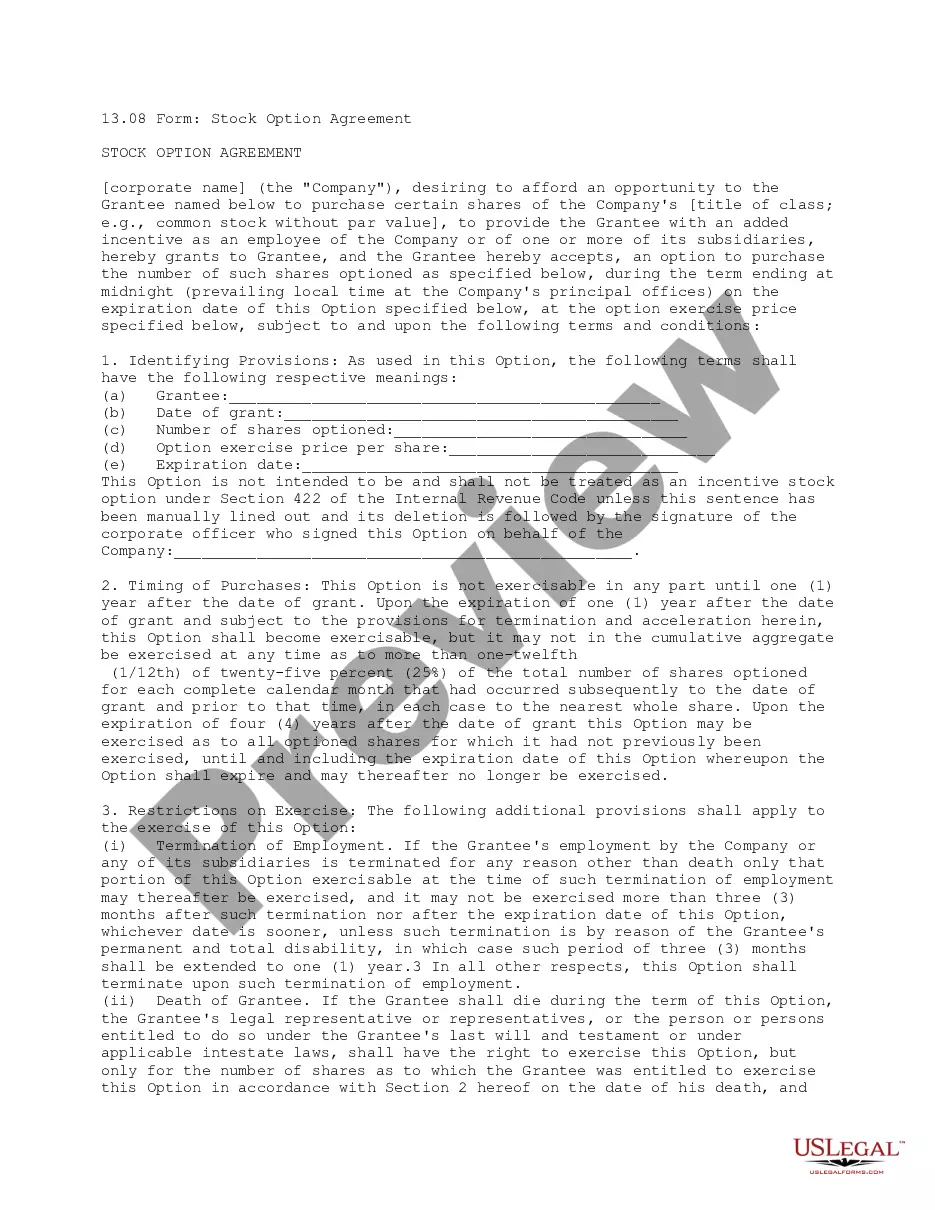
When to use this form
This form should be used when shareholders of a company wish to formalize their rights to sell shares back to the company or for the company to buy shares. It is particularly relevant during financial audits or events affecting share valuation, ensuring clarity in ownership transfer and valuation of stock during these times.
Who should use this form
Eligible users of this agreement include:
- Shareholders of the company seeking to establish stock sale rights.
- Companies wanting to protect their interests in share transactions.
- Legal professionals assisting clients with corporate governance matters.
Steps to complete this form
To effectively complete this form, follow these steps:
- Identify the parties involved, including the holding company and all shareholders.
- Specify the relevant dates, including the effective date of the agreement.
- Clearly define key terms such as Company Purchase Price and Selling Price as indicated in the document.
- Complete the sections on transfer restrictions and rights regarding share sales.
- Ensure all parties sign the agreement and provide necessary documentation.
Does this form need to be notarized?
This form does not typically require notarization unless specified by local law. However, having a notary can provide additional validation and assurance of the parties' identities when signing.
Get your form ready online
Our built-in tools help you complete, sign, share, and store your documents in one place.
Make edits, fill in missing information, and update formatting in US Legal Forms—just like you would in MS Word.
Download a copy, print it, send it by email, or mail it via USPS—whatever works best for your next step.
Sign and collect signatures with our SignNow integration. Send to multiple recipients, set reminders, and more. Go Premium to unlock E-Sign.
If this form requires notarization, complete it online through a secure video call—no need to meet a notary in person or wait for an appointment.
We protect your documents and personal data by following strict security and privacy standards.

Make edits, fill in missing information, and update formatting in US Legal Forms—just like you would in MS Word.

Download a copy, print it, send it by email, or mail it via USPS—whatever works best for your next step.

Sign and collect signatures with our SignNow integration. Send to multiple recipients, set reminders, and more. Go Premium to unlock E-Sign.

If this form requires notarization, complete it online through a secure video call—no need to meet a notary in person or wait for an appointment.

We protect your documents and personal data by following strict security and privacy standards.
Avoid these common issues
- Failing to define key terms clearly, leading to ambiguity in rights.
- Neglecting to include all shareholders in the agreement.
- Inaccurate calculation of the selling price or company purchase price.
- Not updating the agreement upon significant company changes or shareholder transitions.
Why complete this form online
- Convenience of online access and immediate download for quick use.
- Editability allows for customization based on specific needs.
- Reliability due to compliance with applicable legal standards and best practices.
- Time-saving as the form can be filled out and signed electronically.
Quick recap
- The Put and Call Option Agreement is crucial for defining share transaction rights between shareholders and the company.
- Understanding the specific definitions and rights outlined in the agreement is essential for proper execution.
- Users should ensure the form reflects their specific circumstances and complies with state laws.
Looking for another form?
Form popularity
FAQ
A call option is a right to buy an underlying asset or contract at a fixed price at a future date but at a price that is decided today. On the other hand, the put option is the right to sell an underlying asset or contract at a fixed price at a future date but at a price that is decided today.
A Put and Call Option Agreement is an agreement between a potential seller and a potential buyer. It is not an agreement to buy / sell a property, rather it is a precursor to such an agreement under which: the buyer is given the option to require the seller to sell the property to them (?Call Option?); and.
A put option agreement is a type of contract in which the holder has the right, but not the obligation, to sell a specified amount of an underlying security at a predetermined price (the strike price) within a certain time period.
A call option allows a potential purchaser the right to compel the vendor to sell the property at an agreed price. A put option allows the owner of the property the right to compel the proposed purchaser to buy the property at an agreed price.
A put and call option may achieve the same effect as a conventional contract of sale as either party has a right to bind the other to either purchase or sell the property.
A call option gives the holder the right to buy a stock and a put option gives the holder the right to sell a stock. Think of a call option as a down payment on a future purchase. Options involve risks and are not suitable for everyone. Options trading can be speculative in nature and carry a substantial risk of loss.
> CALL Option: Gives the owner the right, but not the obligation, to buy a particular asset at a specific price, on or before a certain time. > PUT Option: Gives the owner the right, but not the Obligation, to sell a particular asset at a specific price, on or before a certain time.
A put and call option may achieve the same effect as a conventional contract of sale as either party has a right to bind the other to either purchase or sell the property.