Mississippi Amended Counterclaim
What this document covers
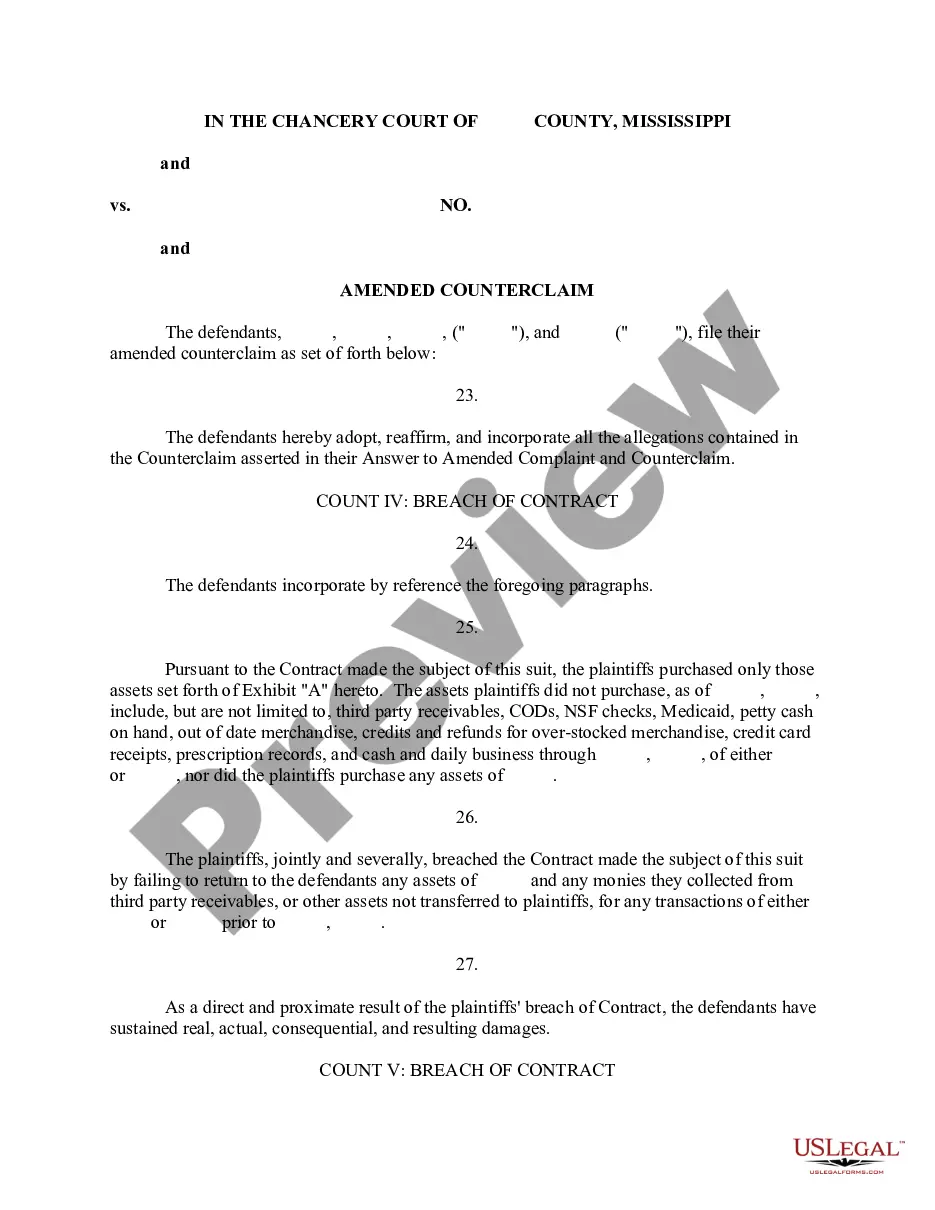
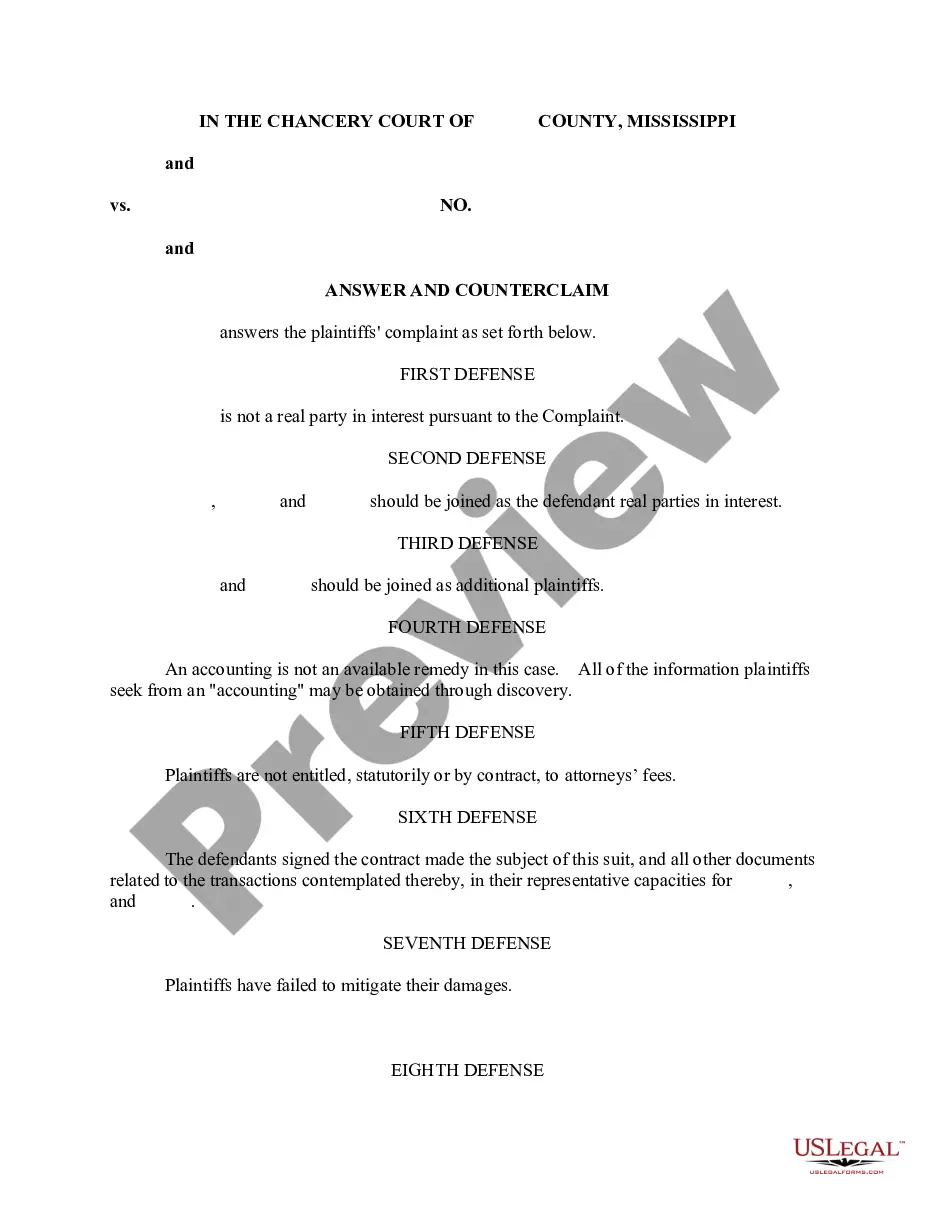
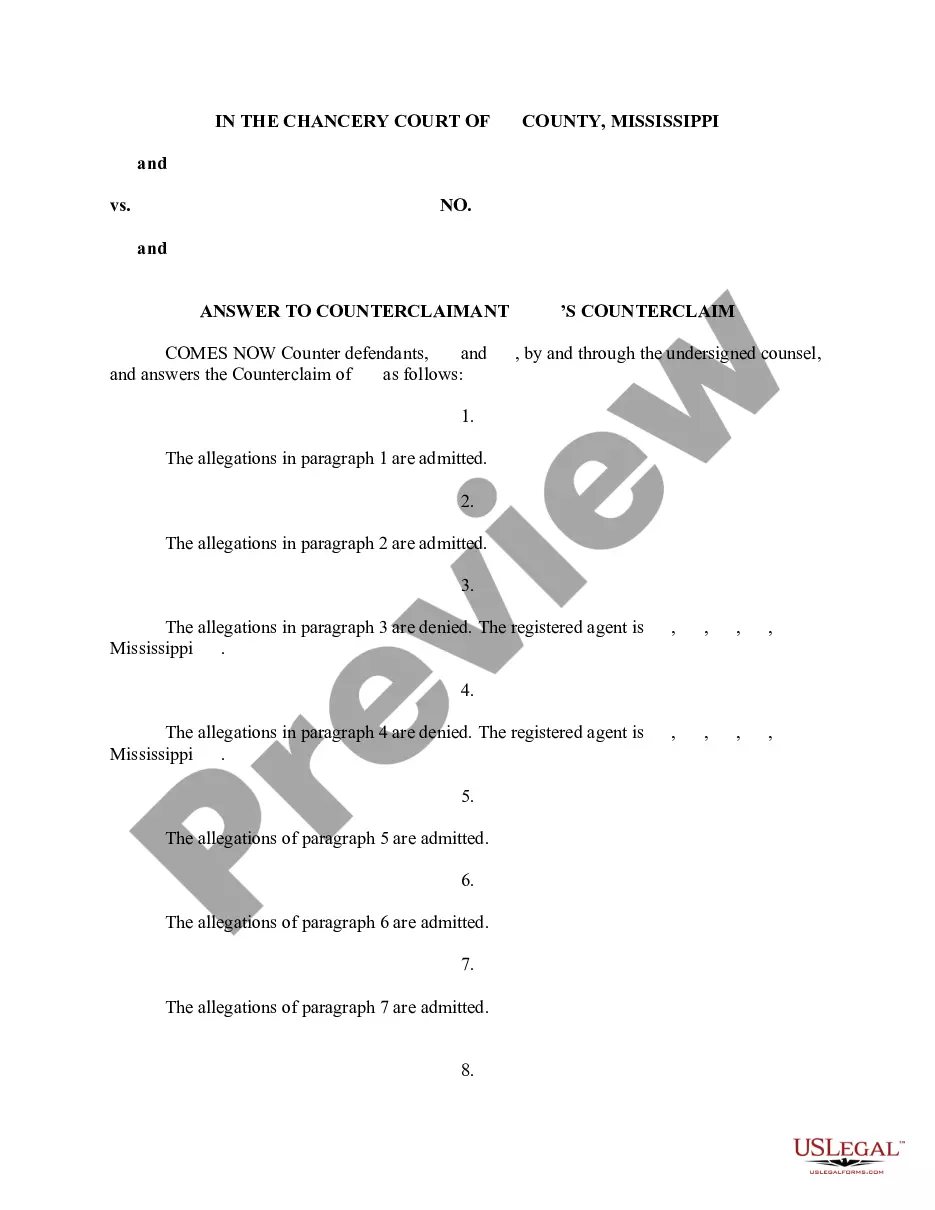
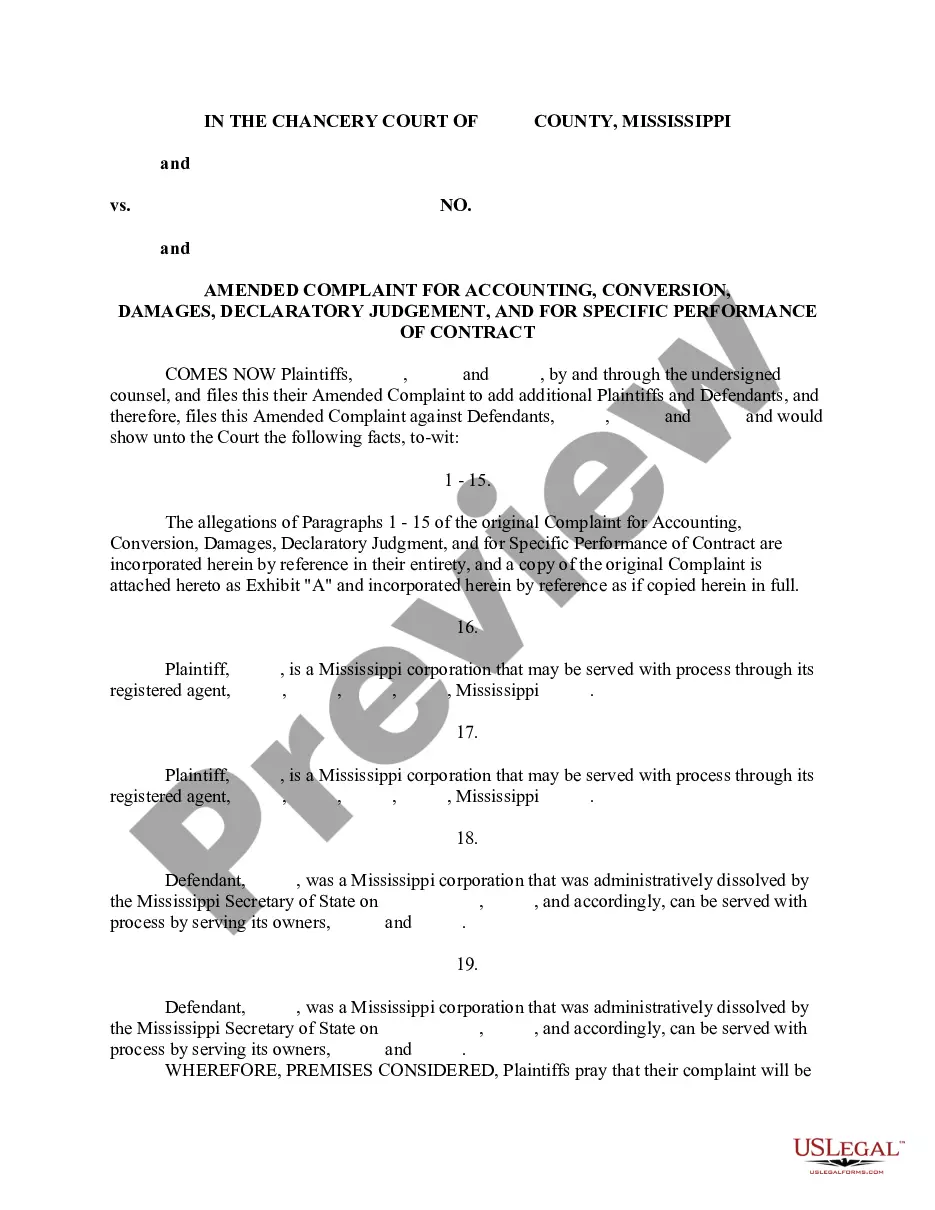
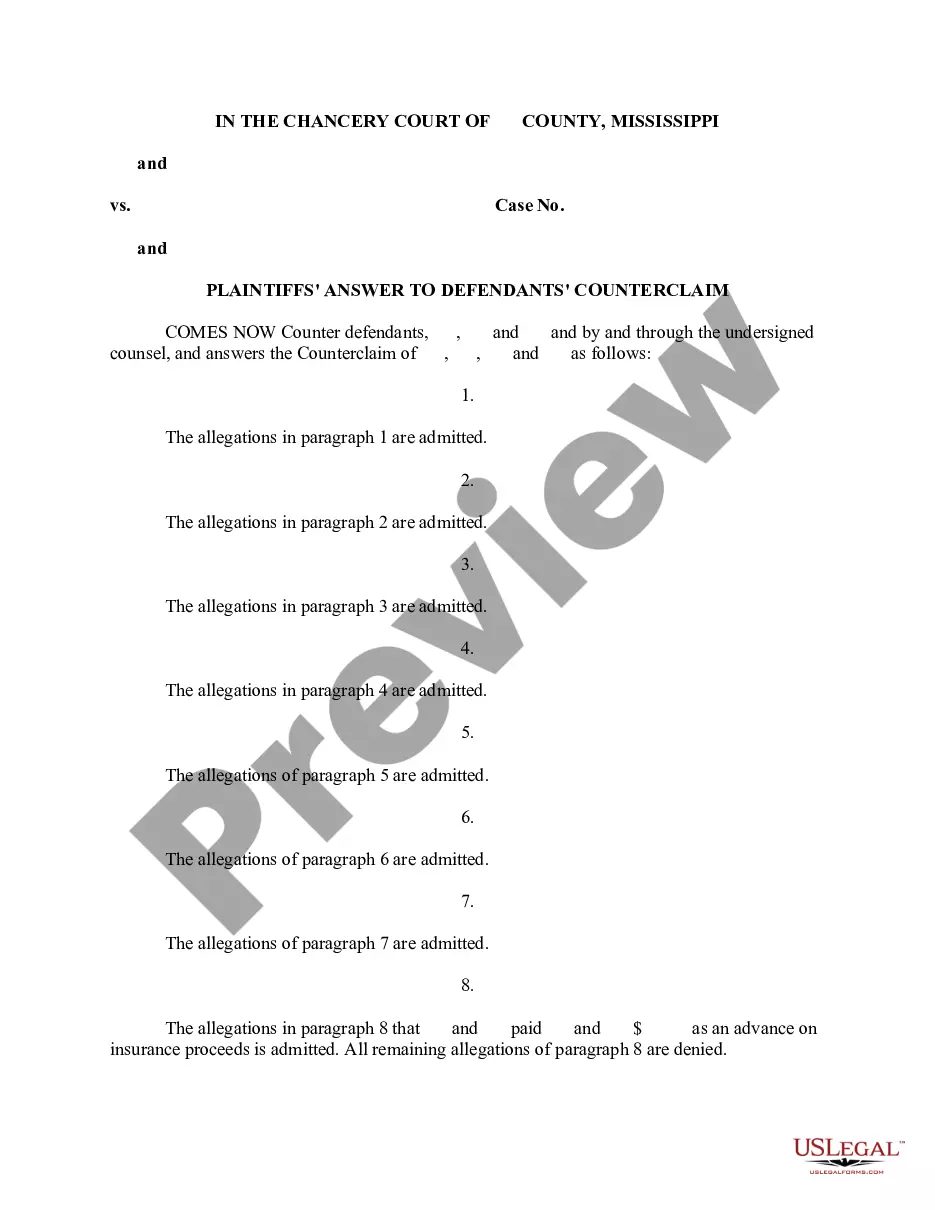
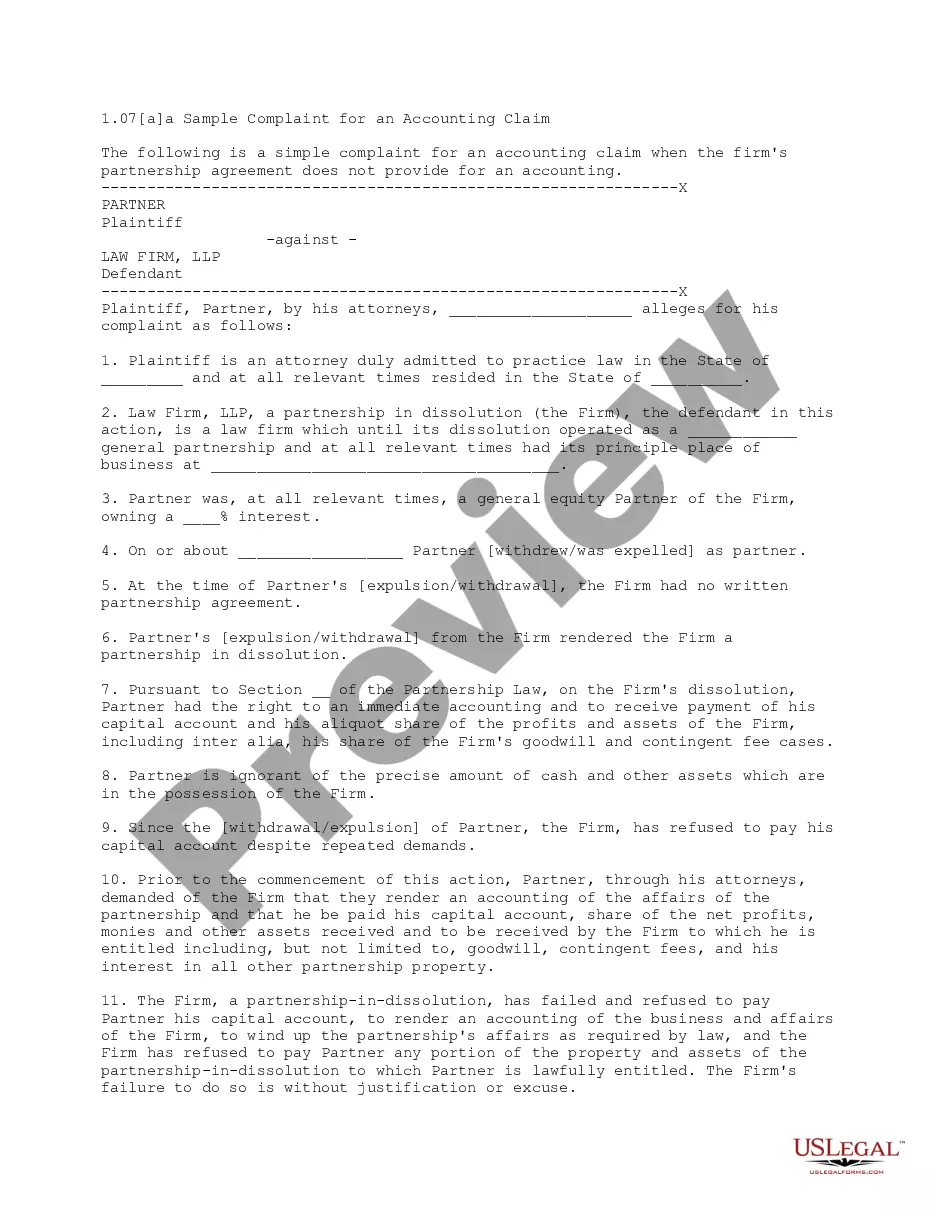
An Amended Counterclaim is a legal document that a defendant files in response to a plaintiff's Complaint, which initiates a lawsuit. This particular form serves to amend an earlier filed Counterclaim, stating that the defendant believes they have their own claim against the plaintiff. It is different from a standard Counterclaim, as it allows for the incorporation of new facts or changes to the existing claim. This document is essential for defendants to assert their rights and claims within the legal process.
Key parts of this document
- Incorporation of previous allegations: The defendants recap earlier paragraphs to support their claims.
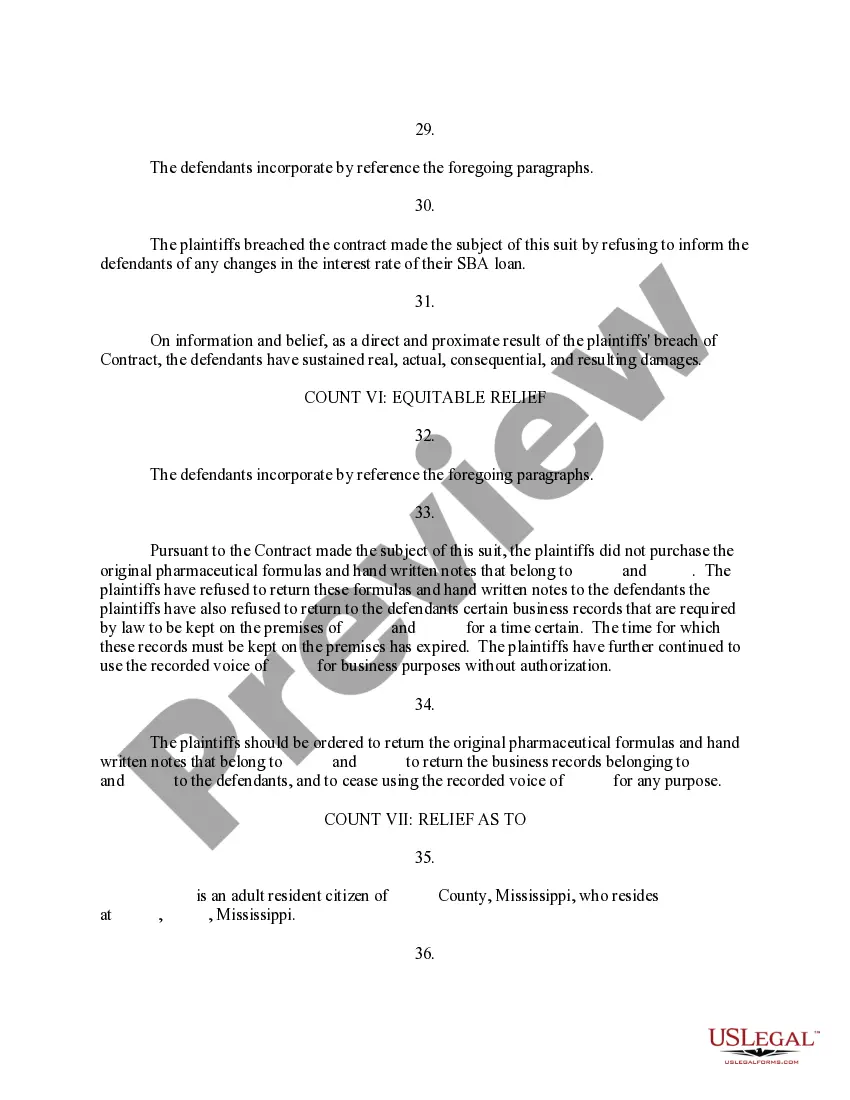
- Breach of contract claim: Details on how the plaintiff allegedly breached the contract related to the lawsuit.
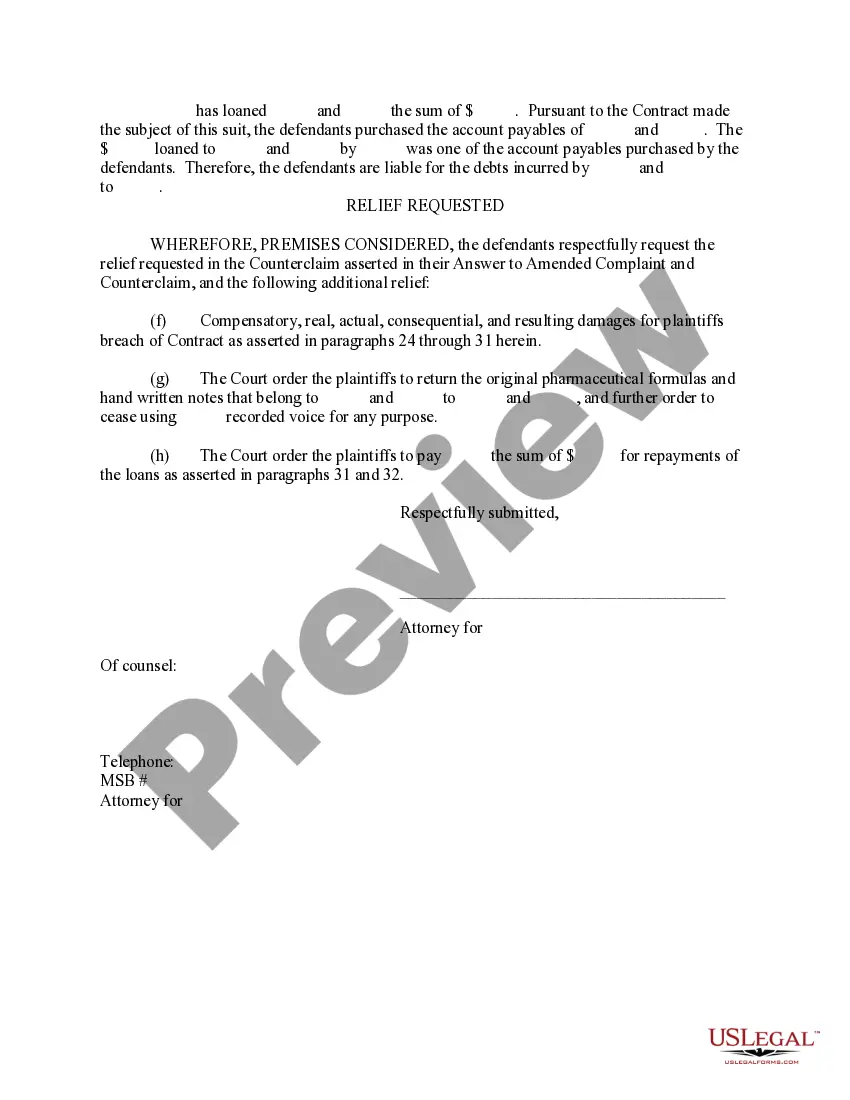
- Specification of damages: Clear outlining of real, actual, consequential, and resulting damages attributed to the breach of contract.
- Equitable relief request: Information on the type of relief sought by the defendants as a result of the breach.
Common use cases
This form is useful when a defendant in a lawsuit needs to amend their Counterclaim to reflect new facts or legal arguments. It can be used when the defendant believes they have sustained damages due to the plaintiff's actions, particularly in cases involving breach of contract or other claims. Utilizing this form ensures that any new information is officially incorporated into the legal proceedings.
Who should use this form
- Defendants in a lawsuit who have previously filed a Counterclaim.
- Individuals or businesses seeking to assert their own claims against a plaintiff while responding to a lawsuit.
- Those who have new evidence or claims that need to be included in their legal argument.
How to complete this form
- Identify the parties involved in the lawsuit and ensure their details are accurate.
- Incorporate prior claims or allegations by referencing specific paragraphs in the initial Counterclaim.
- Clearly state the breach of contract and provide details on how it occurred.
- List the damages incurred as a result of the breach, supported by evidence if available.
- Sign and date the amended Counterclaim to ensure it is legally valid.
Does this form need to be notarized?
This form does not typically require notarization unless specified by local law. However, it is advisable to check local requirements for any specific filings related to court documents to ensure compliance.
Get your form ready online
Our built-in tools help you complete, sign, share, and store your documents in one place.
Make edits, fill in missing information, and update formatting in US Legal Forms—just like you would in MS Word.
Download a copy, print it, send it by email, or mail it via USPS—whatever works best for your next step.
Sign and collect signatures with our SignNow integration. Send to multiple recipients, set reminders, and more. Go Premium to unlock E-Sign.
If this form requires notarization, complete it online through a secure video call—no need to meet a notary in person or wait for an appointment.
We protect your documents and personal data by following strict security and privacy standards.

Make edits, fill in missing information, and update formatting in US Legal Forms—just like you would in MS Word.

Download a copy, print it, send it by email, or mail it via USPS—whatever works best for your next step.

Sign and collect signatures with our SignNow integration. Send to multiple recipients, set reminders, and more. Go Premium to unlock E-Sign.

If this form requires notarization, complete it online through a secure video call—no need to meet a notary in person or wait for an appointment.

We protect your documents and personal data by following strict security and privacy standards.
Common mistakes to avoid
- Failing to incorporate all relevant previous claims or evidence into the amended Counterclaim.
- Not specifying the exact damages clearly or providing insufficient evidence to support claims.
- Missing deadlines for filing amendments to the Counterclaim.
Benefits of completing this form online
- Convenient access to the form allows for easy completion and downloading.
- Editable formats make it possible to customize the document to reflect specific circumstances.
- Reliability of documents drafted by licensed attorneys ensures legal validity and effectiveness.
Legal use & context
- The Amended Counterclaim serves to properly articulate all claims in the litigation process.
- This document, if filed correctly, helps preserve a Defendant's right to seek damages.
- Legal representation is recommended to navigate the complexities of amending claims.
Main things to remember
- An Amended Counterclaim is crucial for adding or refining claims in a lawsuit.
- Ensure all necessary details and reference paragraphs are accurately included.
- Understand your stateâs specific requirements to avoid legal pitfalls.
Looking for another form?
Form popularity
FAQ
(Entry 1 of 2) : an opposing claim especially : a claim brought by a defendant against a plaintiff in a legal action.
If a defendant does raise counterclaims in her answer, the plaintiff must respond to those counterclaims with a pleading called an "answer to a counterclaim." The form and content of an "answer to a counterclaim" is similar to that of an answer.
Definition. A claim for relief filed against an opposing party after the original claim is filed. Most commonly, a claim by the defendant against the plaintiff.
A claim is the main argument. A counterclaim is the opposite of the claim, or argument.
Counterclaim. A counterclaim is a claim by a defendant against a plaintiff. The responsive pleading to the complaint may include a counter-claim. There is no filing fee to file a counter-claim.
What is the difference between a "counterclaim" and a "cross claim"?Also called a counterclaim, this is a direct claim back against the person who has initiated the lawsuit. A cross claim, on the other hand, is against someone who is a co-defendant or co-plaintiff.
The rule differentiates counterclaim and crossclaim. While they are both independent actions, counterclaim is only brought by the defendant against the plaintiff, crossclaim can be brought by the defendant against a co-party or by a plaintiff against a co-party.
Examples of counterclaims include:After a bank has sued a customer for an unpaid debt, the customer counterclaims (sues back) against the bank for fraud in procuring the debt. The court will sort out the different claims in one lawsuit (unless the claims are severed).