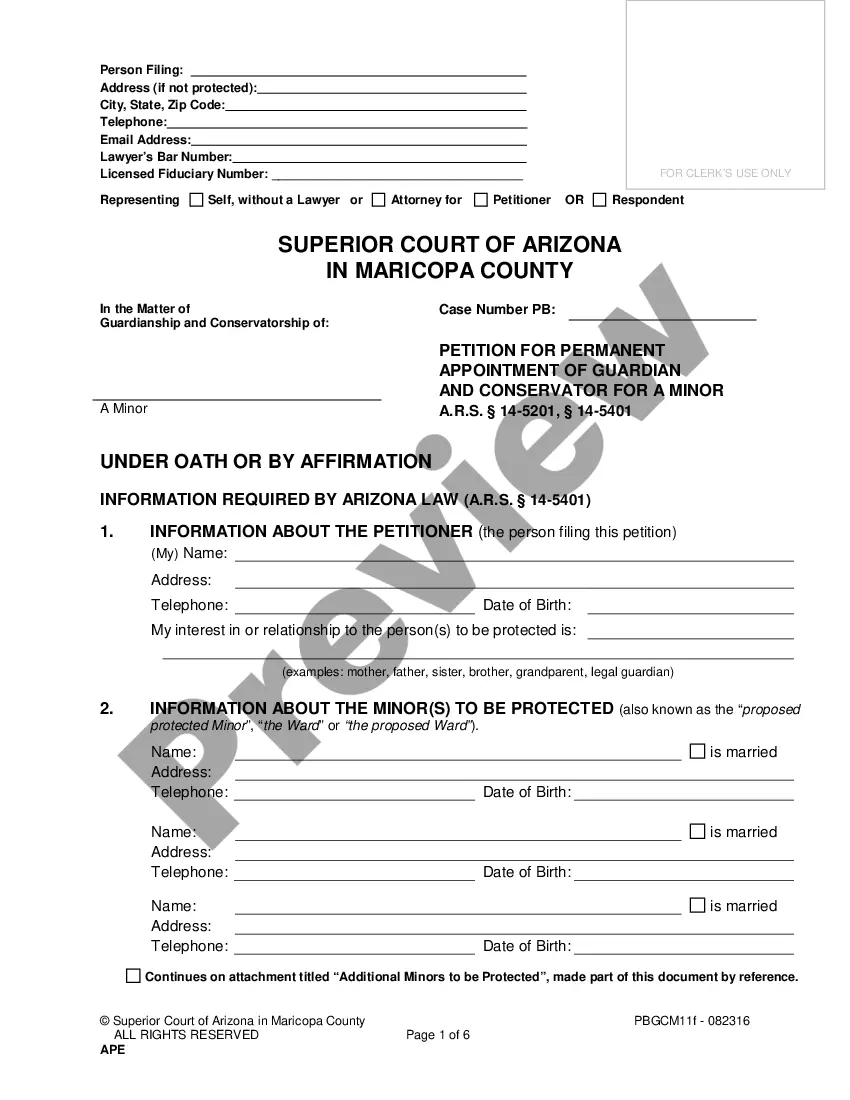
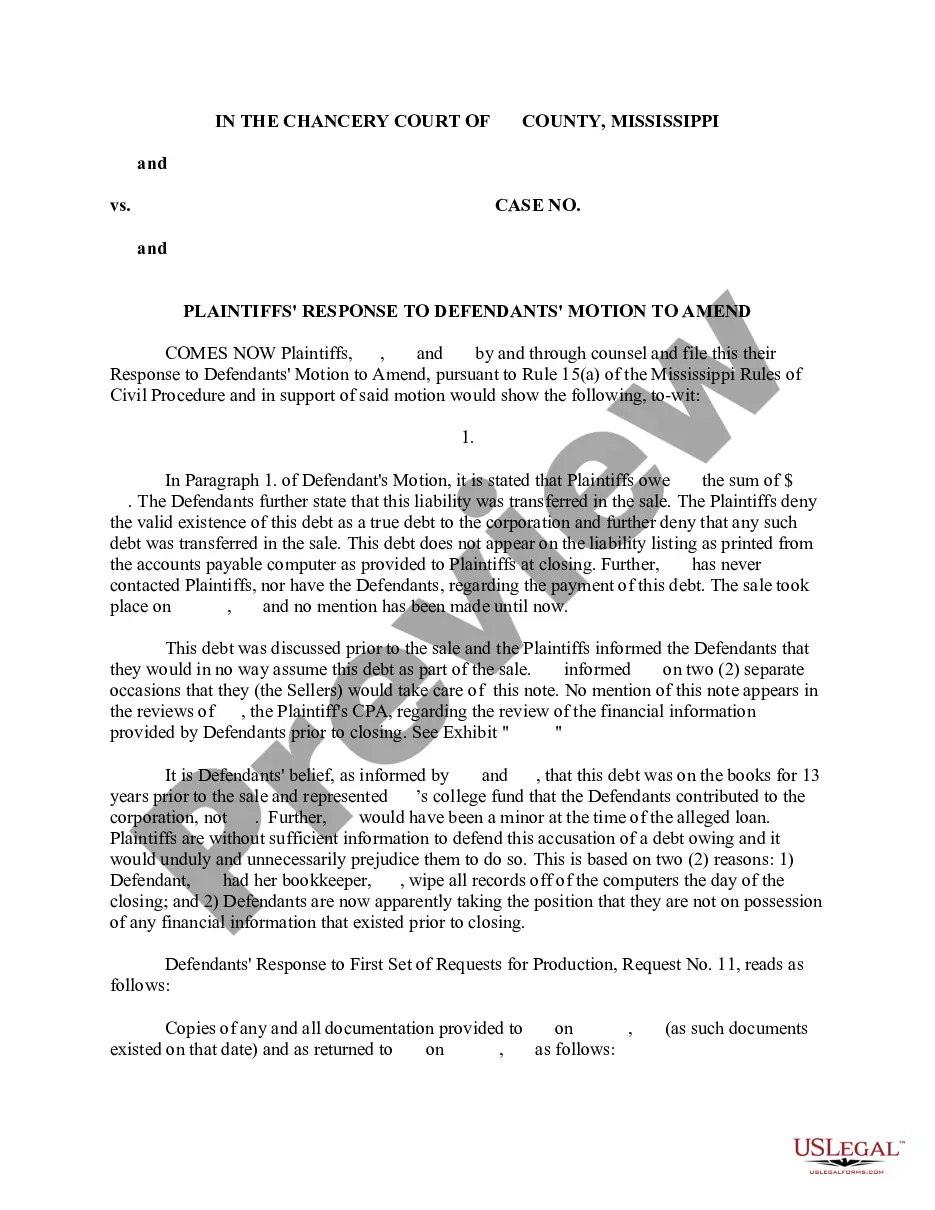
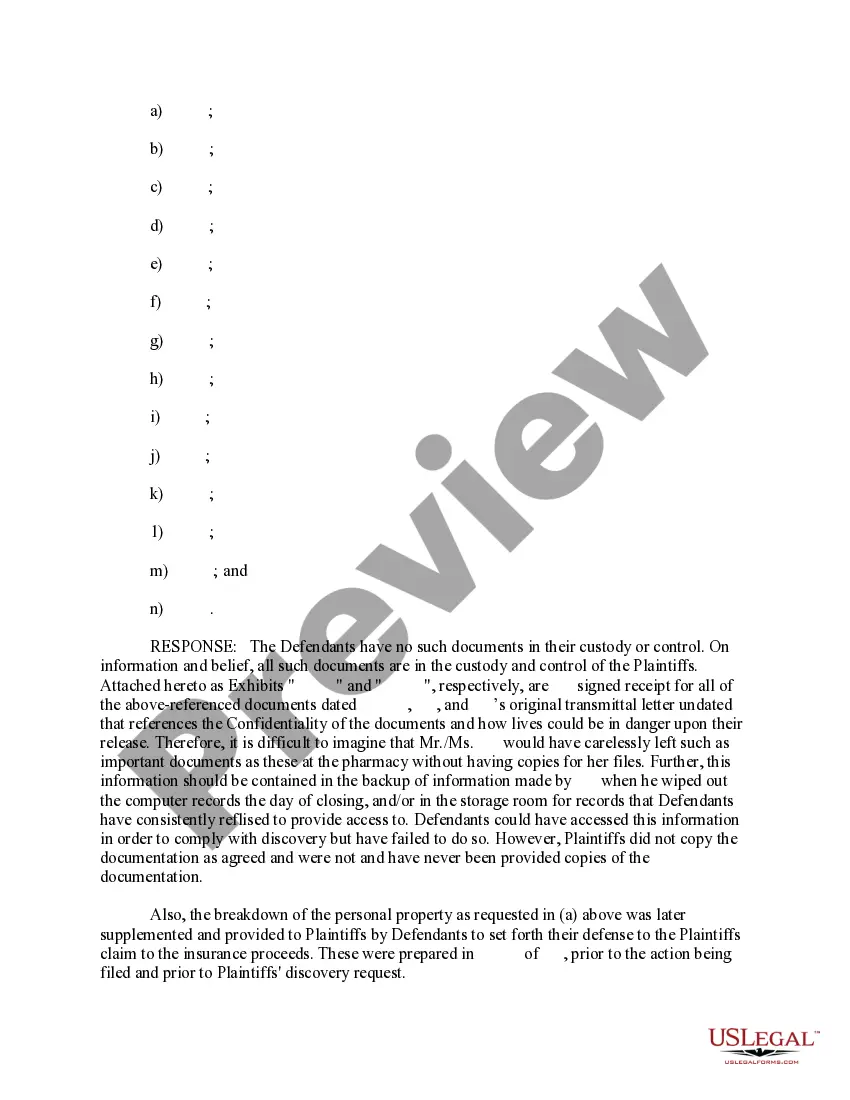
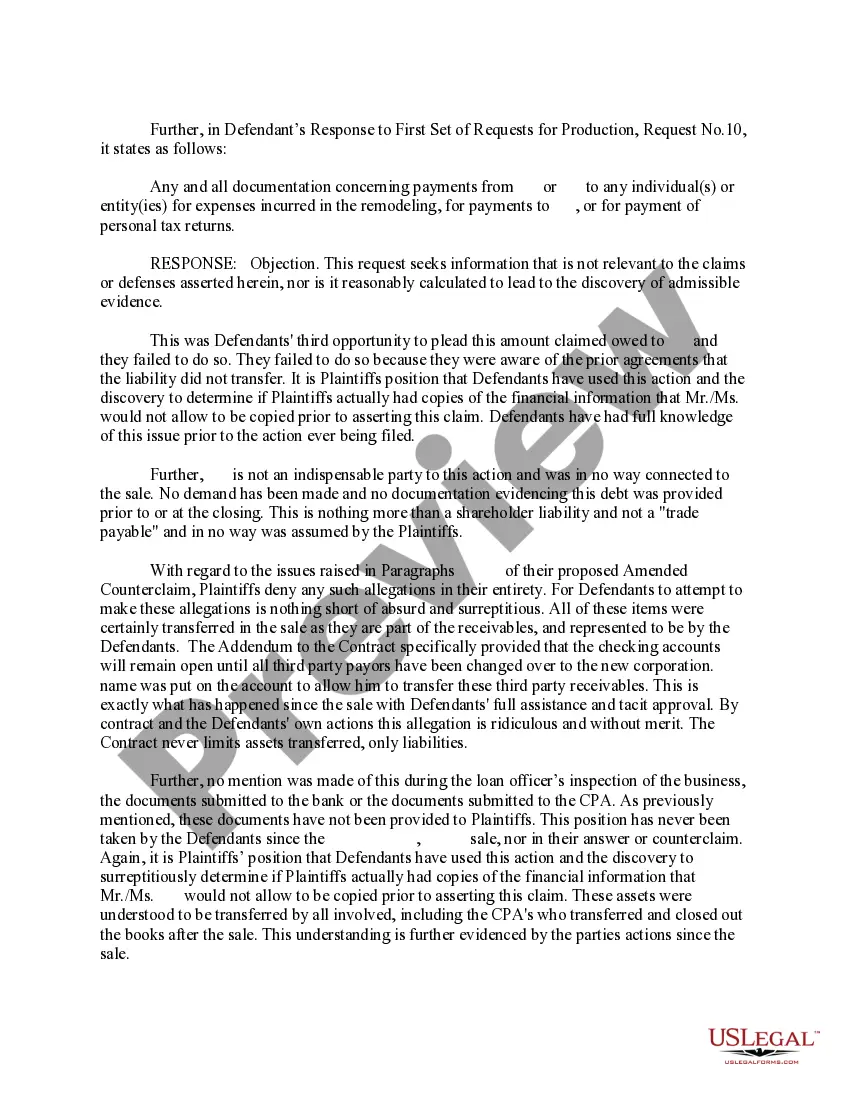
Mississippi Plaintiffs' Response to Defendants' Motion to Amend
Understanding this form
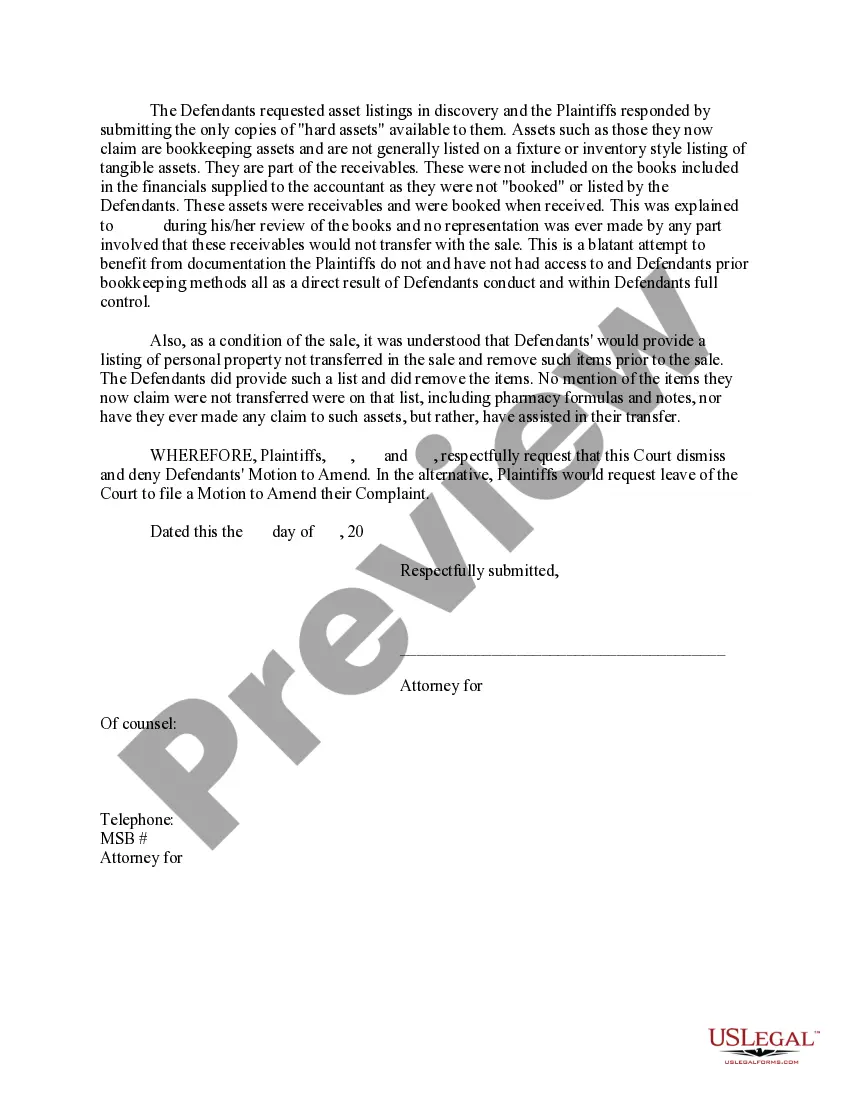
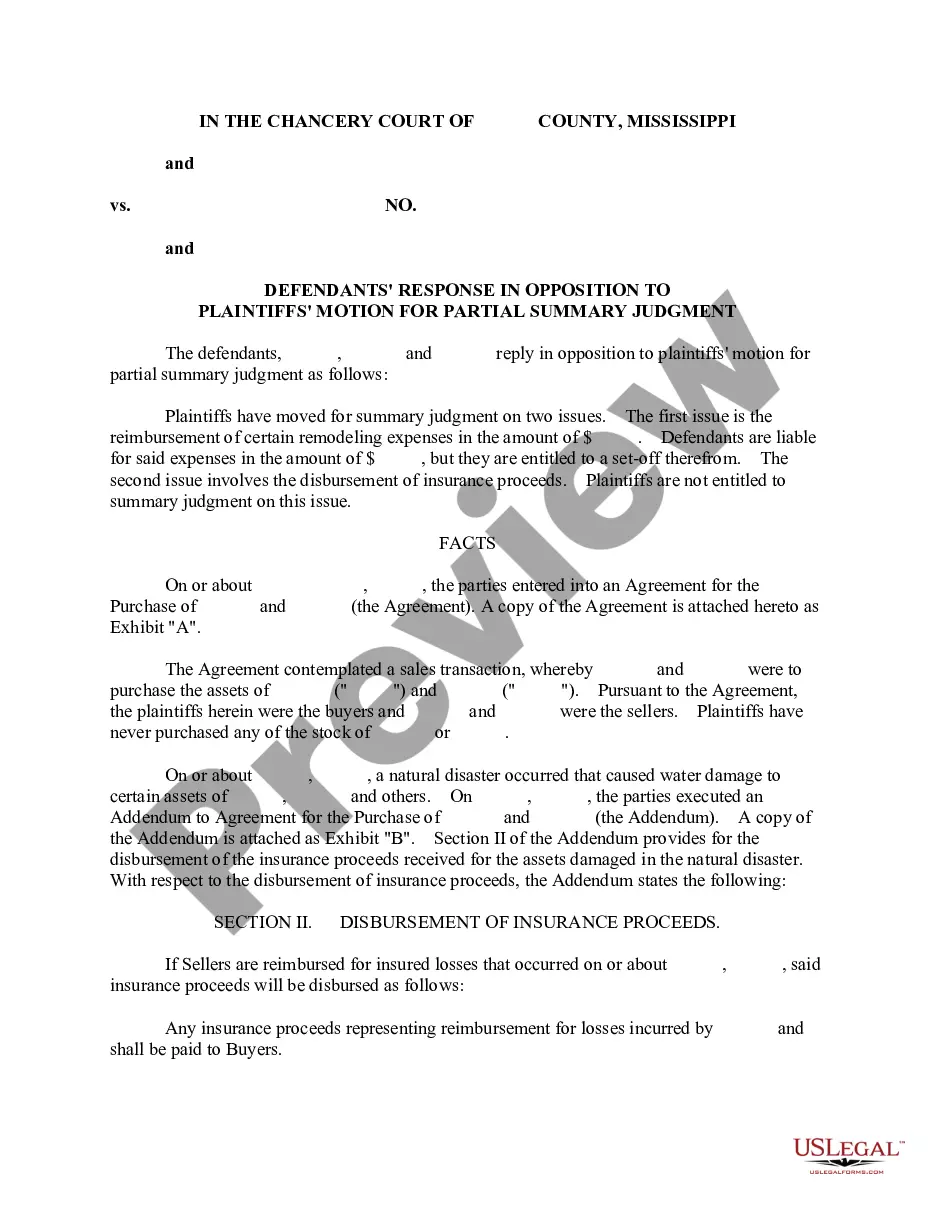
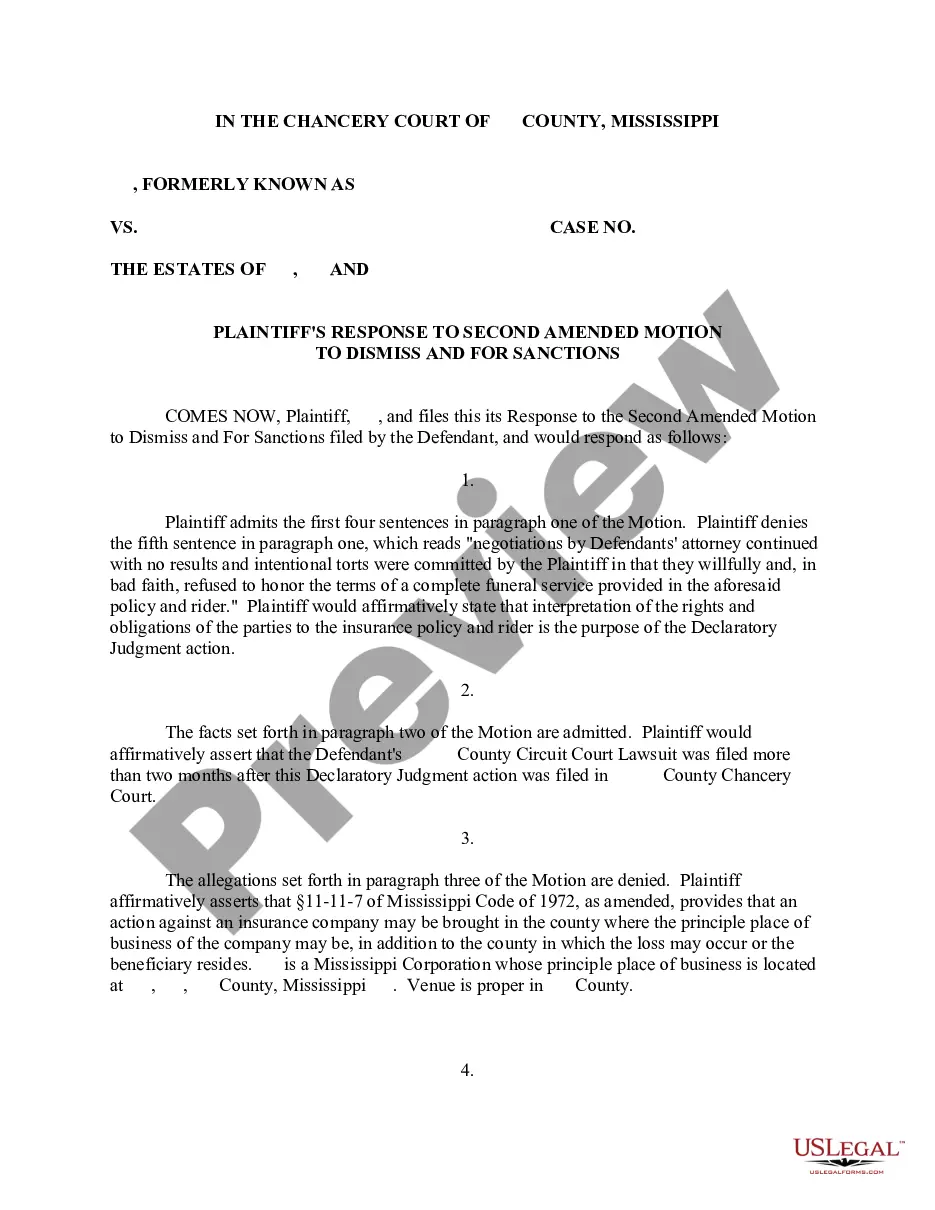
The Plaintiffs' Response to Defendants' Motion to Amend is a legal document used by plaintiffs to formally reply to a motion filed by defendants seeking to change or modify previous pleadings in a lawsuit. This response allows plaintiffs to outline their objections to the motion, clarify their positions, and request that the court deny or dismiss the motion. It is particularly important in maintaining the integrity of the original claims and ensuring that any amendments do not prejudice the plaintiffs' case.
Main sections of this form
- Identification of the parties involved in the case.
- Brief summary of the defendants' motion prompting the response.
- Specific objections to the motion based on legal grounds.
- Statement of facts supporting the plaintiffs' position.
- Request for relief from the court, including any alternative motions if applicable.
- Date of submission and signature of the plaintiffs.
When this form is needed
This form should be used when defendants in a legal case file a motion to amend their previous complaints or answers, and the plaintiffs wish to contest those changes. It is essential in situations where amendments are believed to be legally unfounded or where they could affect the plaintiffs' interests or case strategy. Responding promptly to such motions can be critical in ensuring that the plaintiffs' rights are protected throughout the litigation process.
Who this form is for
- Plaintiffs who have received a motion from defendants seeking to amend their legal pleadings.
- Individuals or entities involved in litigation and need to respond to procedural changes initiated by the opposing party.
- Legal representatives or attorneys handling cases where such motions may affect their clients' rights or claims.
How to complete this form
- Identify the parties involved, including the plaintiffs and defendants.
- Summarize the motion filed by the defendants clearly and concisely.
- State any objections to the motion, detailing your legal reasoning.
- Provide factual context that supports your position against the motion.
- Include a request for specific actions you wish the court to take regarding the motion.
- Sign and date the document before submission to the court.
Notarization requirements for this form
Notarization is generally not required for this form. However, certain states or situations might demand it. You can complete notarization online through US Legal Forms, powered by Notarize, using a verified video call available anytime.
Get your form ready online
Our built-in tools help you complete, sign, share, and store your documents in one place.
Make edits, fill in missing information, and update formatting in US Legal Forms—just like you would in MS Word.
Download a copy, print it, send it by email, or mail it via USPS—whatever works best for your next step.
Sign and collect signatures with our SignNow integration. Send to multiple recipients, set reminders, and more. Go Premium to unlock E-Sign.
If this form requires notarization, complete it online through a secure video call—no need to meet a notary in person or wait for an appointment.
We protect your documents and personal data by following strict security and privacy standards.

Make edits, fill in missing information, and update formatting in US Legal Forms—just like you would in MS Word.

Download a copy, print it, send it by email, or mail it via USPS—whatever works best for your next step.

Sign and collect signatures with our SignNow integration. Send to multiple recipients, set reminders, and more. Go Premium to unlock E-Sign.

If this form requires notarization, complete it online through a secure video call—no need to meet a notary in person or wait for an appointment.

We protect your documents and personal data by following strict security and privacy standards.
Mistakes to watch out for
- Failing to address all points raised in the defendants' motion.
- Not supporting objections with sufficient legal reasoning or evidence.
- Missing the filing deadline for the response.
- Omitting essential details, such as case number or parties' identifiers.
- Submitting the document without proper signatures or dates.
Advantages of online completion
- Immediate access to a professionally drafted template that can be tailored to your needs.
- Editable format allows for easy customization to fit specific case requirements.
- Convenient download options in multiple formats to suit your preferences.
- Secure storage of your documents ensures you can retrieve them anytime you need.
Legal use & context
- This form serves as a formal legal response and must be completed accurately to ensure its enforceability.
- Responses to motions are typically governed by procedural rules which may vary by jurisdiction.
- Failure to submit this response could result in the court granting the defendants' motion without consideration of the plaintiffs' position.
Looking for another form?

Form popularity
FAQ
Amend. v. to alter or change by adding, subtracting, or substituting. One can amend a statute, a contract or a written pleading filed in a law -suit. The change is usually called an amendment.
2021 California Rules of Court (2) "Amended pleading" means a pleading that completely restates and supersedes the pleading it amends for all purposes.A supplement to a pleading may add information to or may correct omissions in the modified pleading.
Amended complaint. n. what results when the party suing (plaintiff or petitioner) changes the complaint he/she has filed. It must be in writing, and can be done before the complaint is served on any defendant, by agreement between the parties (usually their lawyers), or upon order of the court.
(e) (1) In response to a demurrer and prior to the case being at issue, a complaint or cross-complaint shall not be amended more than three times, absent an offer to the trial court as to such additional facts to be pleaded that there is a reasonable possibility the defect can be cured to state a cause of action.
It means to change the basis for the case in some way. A motion to amend a complaint is the formal way of asking the court for permission to change the original complaint.
The court should freely give leave when justice so requires. (3) Time to Respond. Unless the court orders otherwise, any required response to an amended pleading must be made within the time remaining to respond to the original pleading or within 14 days after service of the amended pleading, whichever is later.
The defendant shall answer the amendments, or the complaint as amended, within 30 days after service thereof, or such other time as the court may direct, and judgment by default may be entered upon failure to answer, as in other cases.
Amendment to Pleading 21d2 1. the Court may at any stage of the proceedings allow either party to alter or amend his pleadings in such manner and on such terms as may be just, and all such amendments shall be made as may be necessary for the purpose of determining the real questions in controversy between the parties.
TIME TO RESPOND In addition, a party must respond to a counterclaim or cross-claim within 21 days of being served with the pleading that states the claim(s) (FRCP 12(a)(1)(B)).