Mississippi Plaintiffs' Response to Second Amended Motion to Dismiss and for Sanctions
Understanding this form
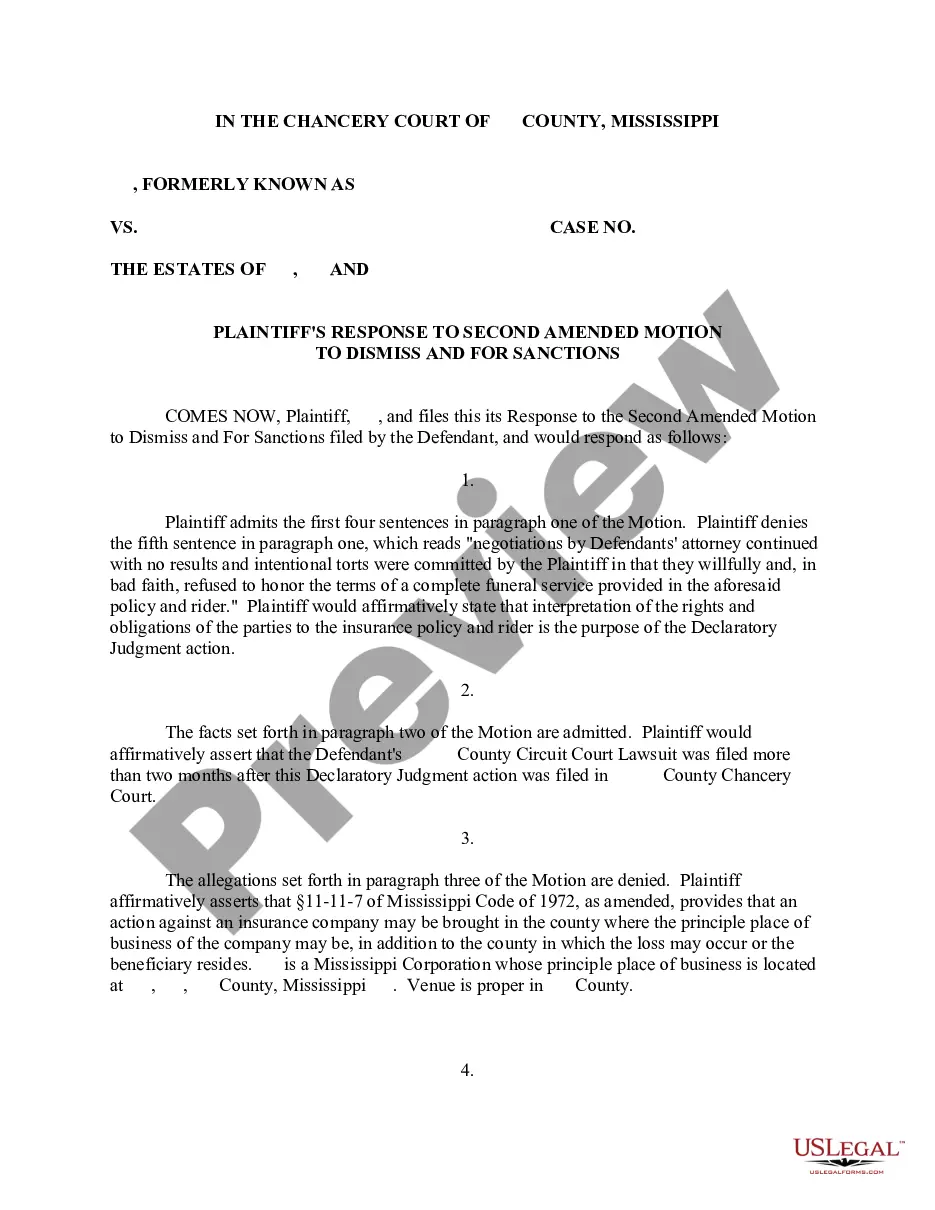
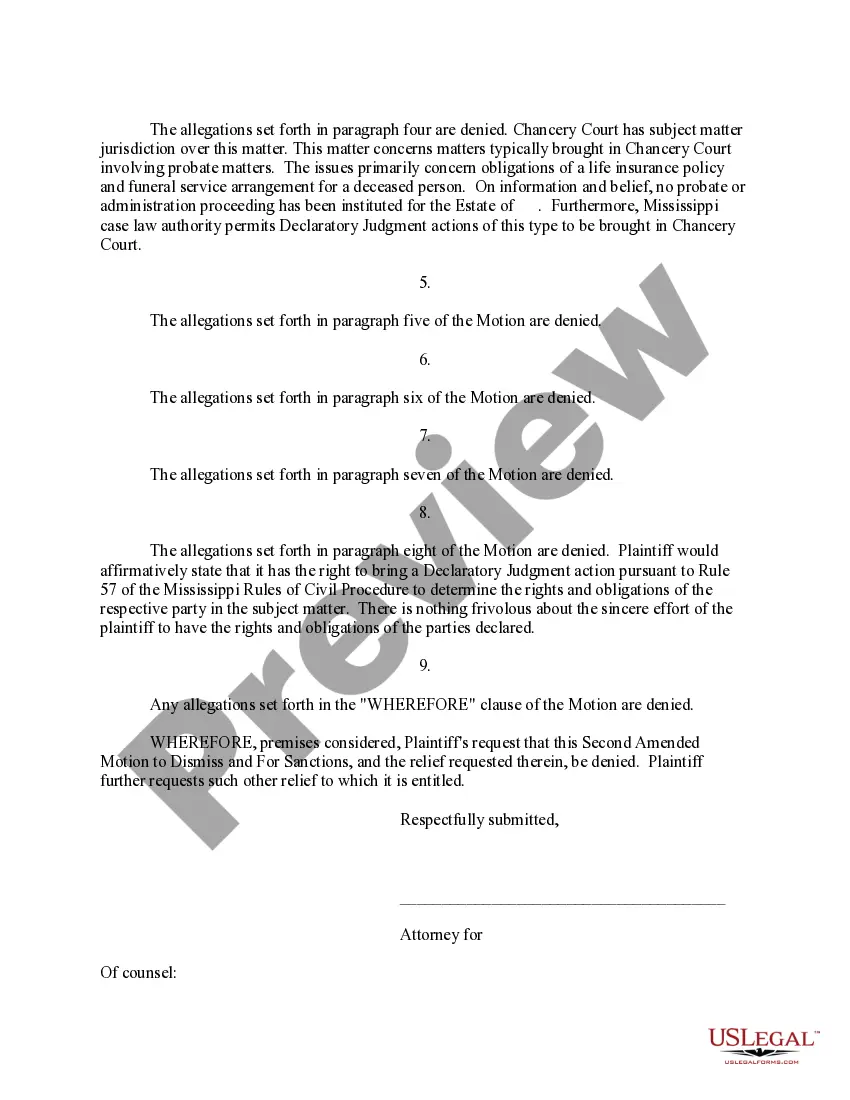
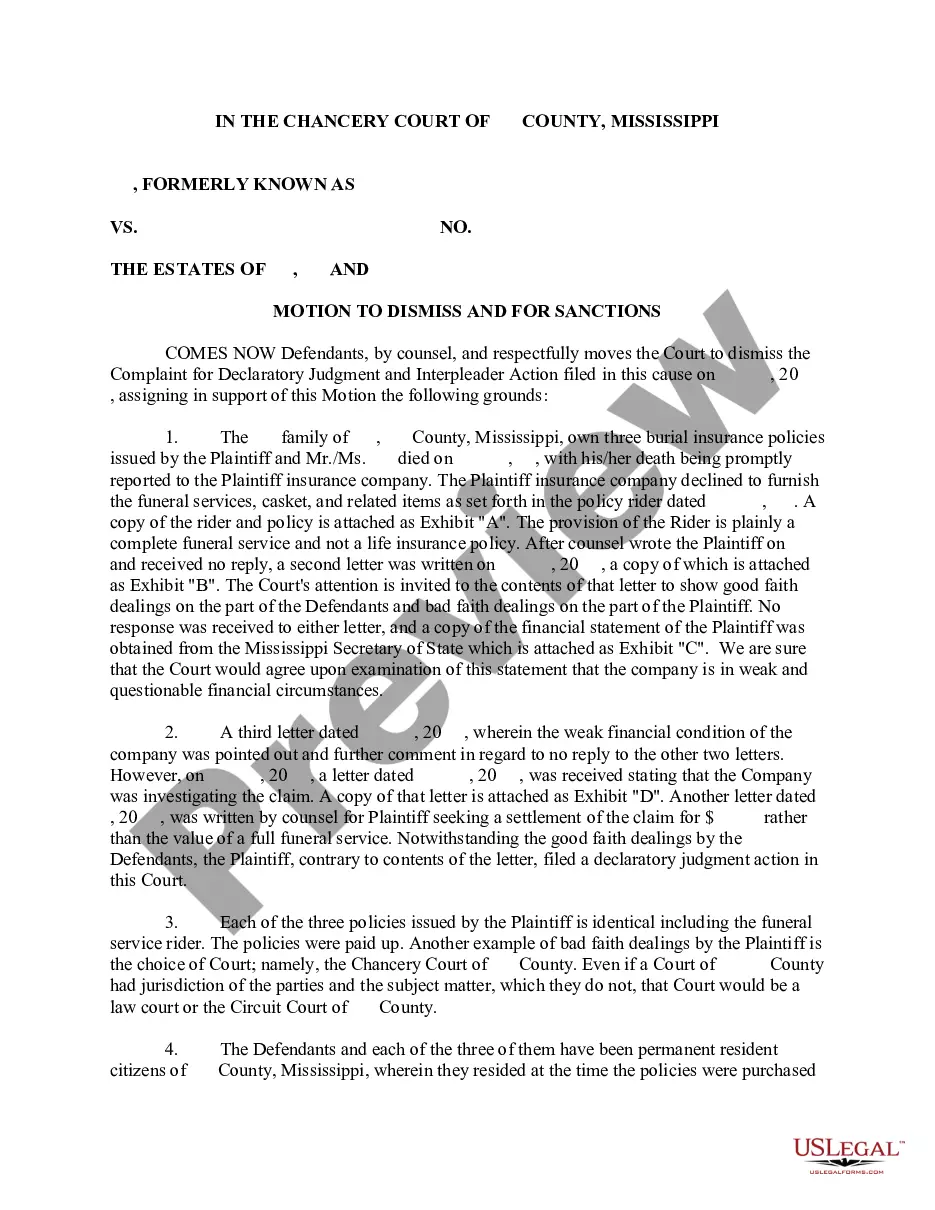
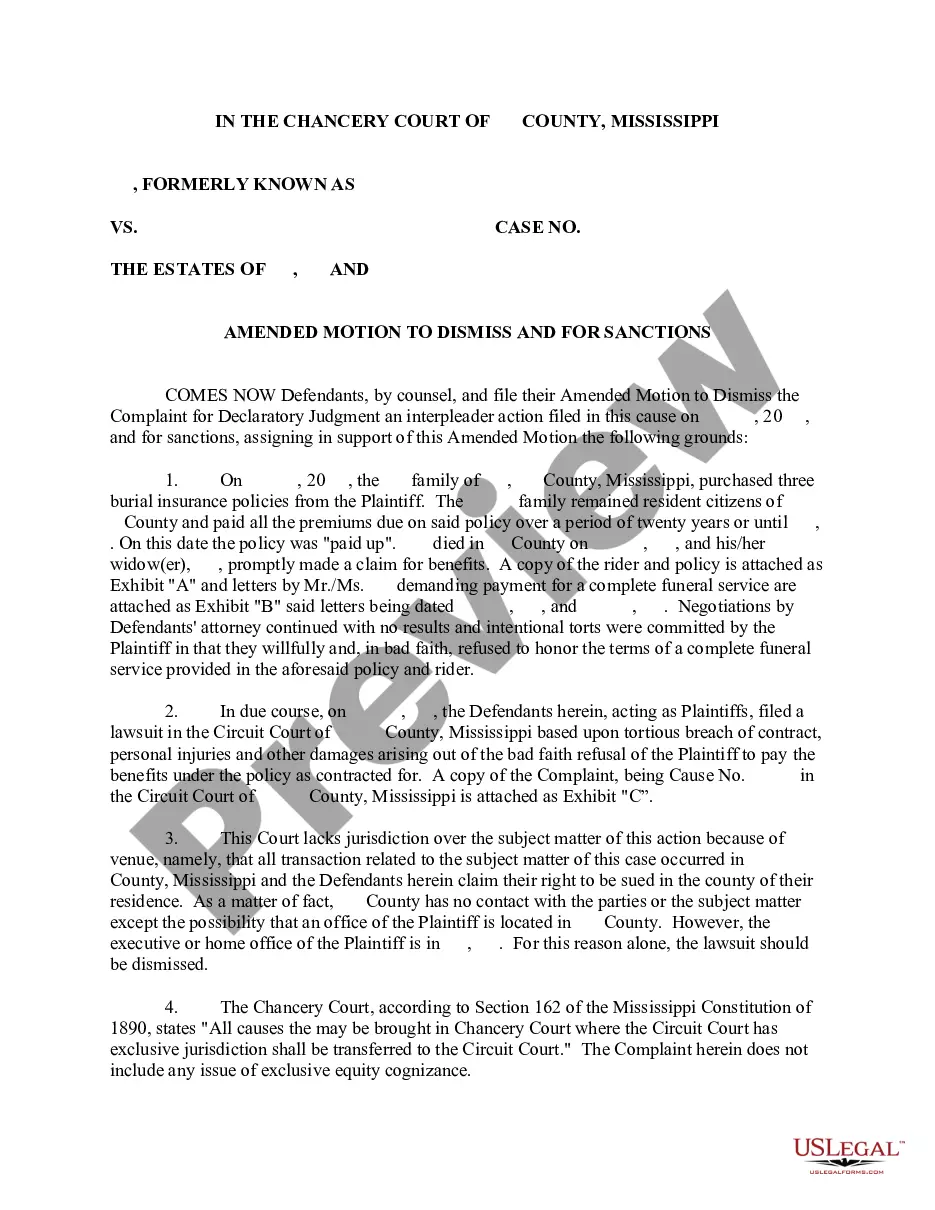
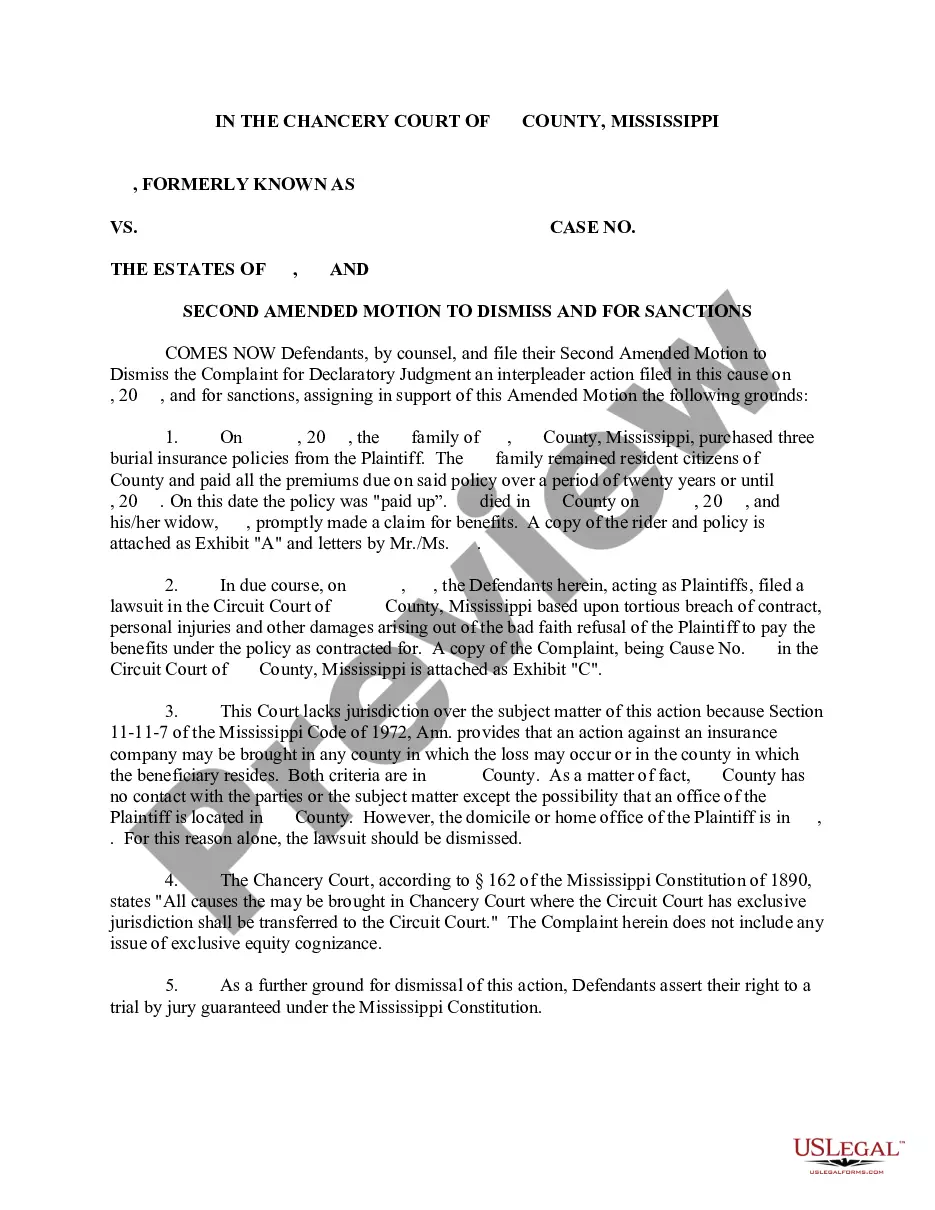
The Plaintiffs' Response to Second Amended Motion to Dismiss and for Sanctions is a legal document that allows plaintiffs to formally respond to a motion filed by defendants seeking dismissal of a case and imposition of sanctions. This response is crucial for plaintiffs to ensure their side of the story is acknowledged and to provide evidence against the claims made in the motion. It serves a distinct purpose in legal proceedings by allowing the plaintiff to address the specific allegations raised by the defendant.
Key parts of this document
- Identification of the Plaintiff and the Defendant.
- Admission or denial of claims made in the defendant's motion.
- Detailed responses to each paragraph in the defendant's motion.
- Legal basis for the claims, including references to applicable laws and jurisdiction.
- A conclusion that refutes the motion and asserts the plaintiff's rights to pursue the case.

When this form is needed
This form should be used when a defendant files a Second Amended Motion to Dismiss and seeks sanctions against the plaintiff. If you are a plaintiff facing such a motion, it's essential to respond to protect your case and position. This response is particularly relevant in civil cases involving disputes over insurance policies, as it addresses the rights and obligations of the parties involved.
Who should use this form
This form is intended for:
- Plaintiffs involved in civil litigation.
- Individuals or parties responding to a motion for dismissal and sanctions.
- Attorneys representing clients in insurance-related disputes.
How to prepare this document
- Identify the parties involved (e.g., plaintiff and defendant).
- Review each paragraph of the defendant's motion and determine which claims to admit or deny.
- Clearly state your responses for each paragraph, providing explanations and any supporting evidence.
- Include the legal basis for your rights as a plaintiff, referring to applicable rules or case law.
- Conclude with a statement reaffirming your position in the case and your right to continue litigation.
Is notarization required?
This form usually doesn’t need to be notarized. However, local laws or specific transactions may require it. Our online notarization service, powered by Notarize, lets you complete it remotely through a secure video session, available 24/7.
Get your form ready online
Our built-in tools help you complete, sign, share, and store your documents in one place.
Make edits, fill in missing information, and update formatting in US Legal Forms—just like you would in MS Word.
Download a copy, print it, send it by email, or mail it via USPS—whatever works best for your next step.
Sign and collect signatures with our SignNow integration. Send to multiple recipients, set reminders, and more. Go Premium to unlock E-Sign.
If this form requires notarization, complete it online through a secure video call—no need to meet a notary in person or wait for an appointment.
We protect your documents and personal data by following strict security and privacy standards.

Make edits, fill in missing information, and update formatting in US Legal Forms—just like you would in MS Word.

Download a copy, print it, send it by email, or mail it via USPS—whatever works best for your next step.

Sign and collect signatures with our SignNow integration. Send to multiple recipients, set reminders, and more. Go Premium to unlock E-Sign.

If this form requires notarization, complete it online through a secure video call—no need to meet a notary in person or wait for an appointment.

We protect your documents and personal data by following strict security and privacy standards.
Common mistakes to avoid
- Failing to address each allegation in the motion specifically.
- Using ambiguous language instead of clear admissions or denials.
- Neglecting to provide legal justifications for the plaintiff's position.
- Missing deadlines for filing the response.
Why complete this form online
- Convenient access to legal templates that can be easily downloaded.
- Editability allows for customization to fit specific case details.
- Reliability of forms drafted by licensed attorneys ensures legal accuracy.
Looking for another form?


Form popularity
FAQ
As a response to the Stamp Act Congress resolutions where representatives of the colonies questioned Britain's right to tax them without representation, members of the Imperial Parliament declared their right to legislate the colonies stating a virtual representation as they were part of the British Empire.
Basically, the Declaratory Act laid the groundwork for future laws that would lead the colonists to say that enough was enough and take on the massive British Empire in a war that would redefine the world.
Declaratory Act, (1766), declaration by the British Parliament that accompanied the repeal of the Stamp Act. It stated that the British Parliament's taxing authority was the same in America as in Great Britain. Parliament had directly taxed the colonies for revenue in the Sugar Act (1764) and the Stamp Act (1765).
Declaratory Act, (1766), declaration by the British Parliament that accompanied the repeal of the Stamp Act. It stated that the British Parliament's taxing authority was the same in America as in Great Britain. Parliament had directly taxed the colonies for revenue in the Sugar Act (1764) and the Stamp Act (1765).
This angered the colonists because they thought that they deserve to be able to colonize wherever they want.Act passed in 1766 after the repeal of the stamp act; stated that Parliament had authority over the the colonies and the right to tax.
Basically, the Declaratory Act laid the groundwork for future laws that would lead the colonists to say that enough was enough and take on the massive British Empire in a war that would redefine the world.
In the colonies, leaders had been glad when the Stamp Act was repealed, but the Declaratory Act was a new threat to their independence. It was 1766, and to most colonists, the ability of England to tax the colonies without giving them representation in Parliament was seen as disgraceful.
The Stamp Act was passed by the British Parliament on March 22, 1765 and was set to go into effect on November 1st of that year. To the surprise of Parliament, the colonists rose up in one accord and protested against its implementation.
Colonists celebrated the repeal of the Stamp Act; they relaxed the boycott, but ignored the Declaratory Act. Colonists in New York Violently refused to comply.