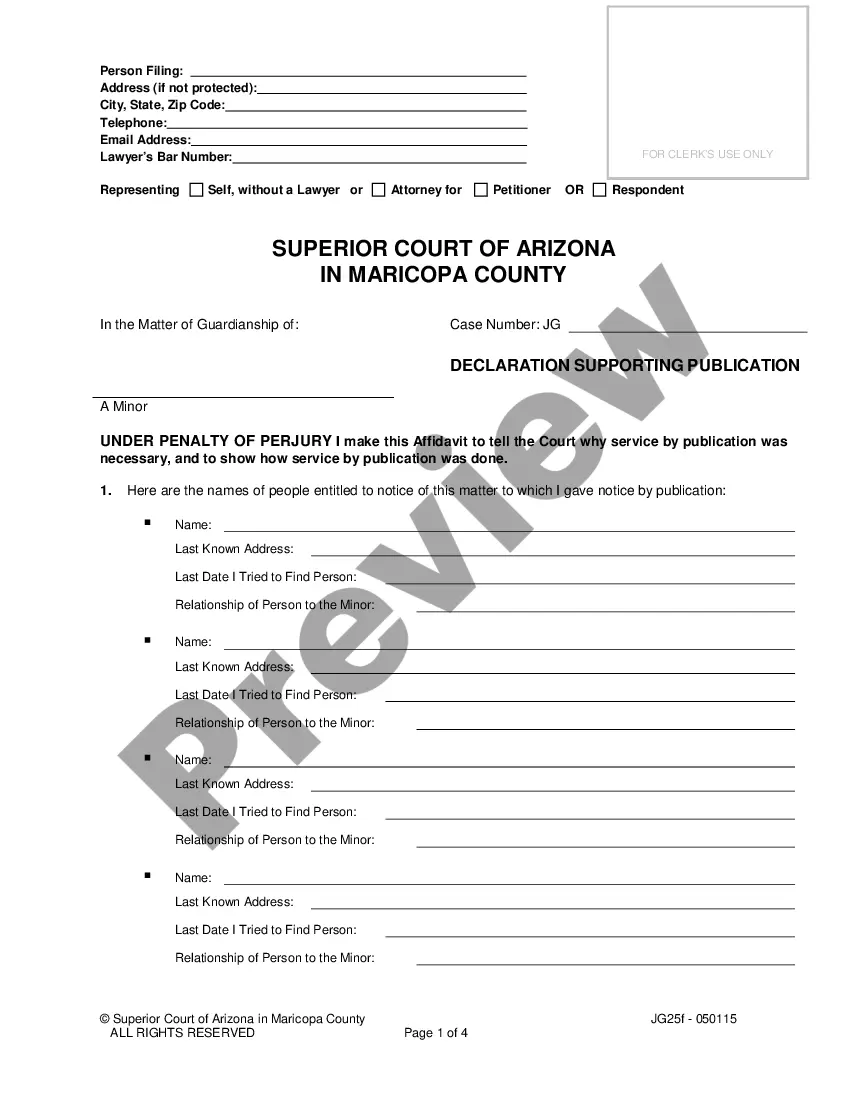
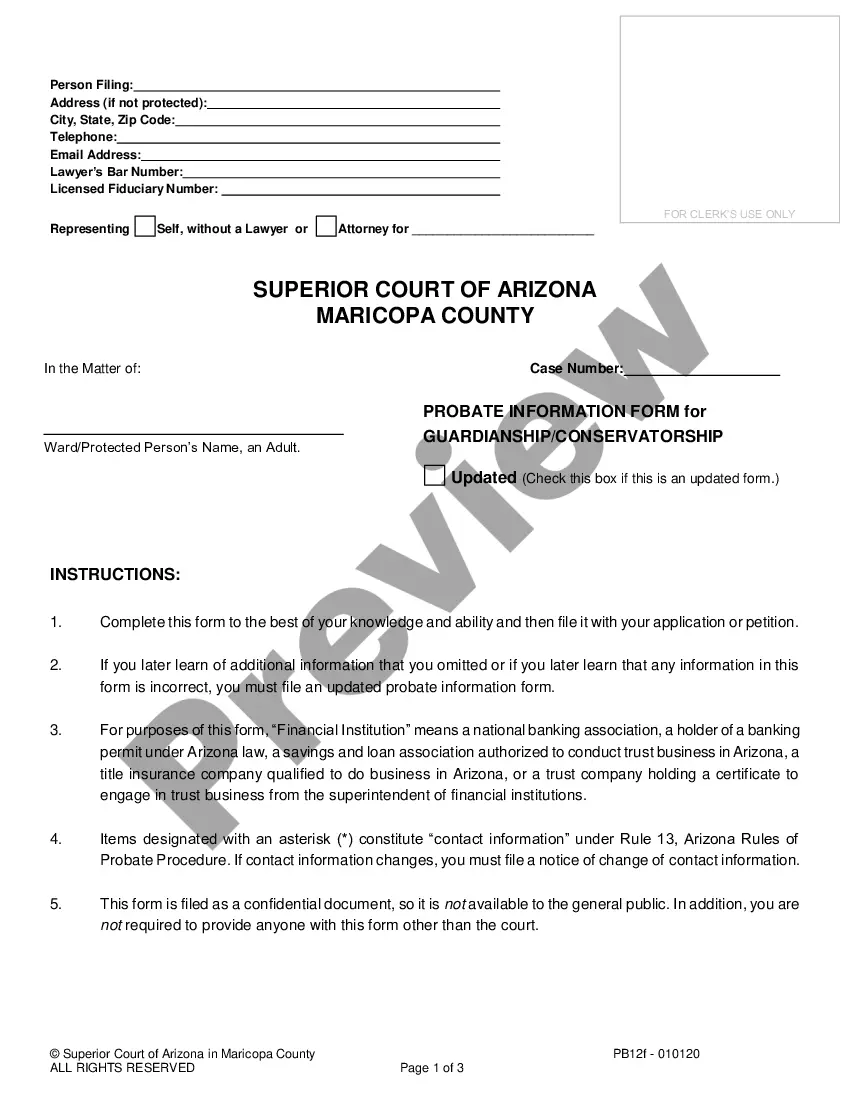
Mississippi Second Amended Motion to Dismiss and for Sanctions
Overview of this form
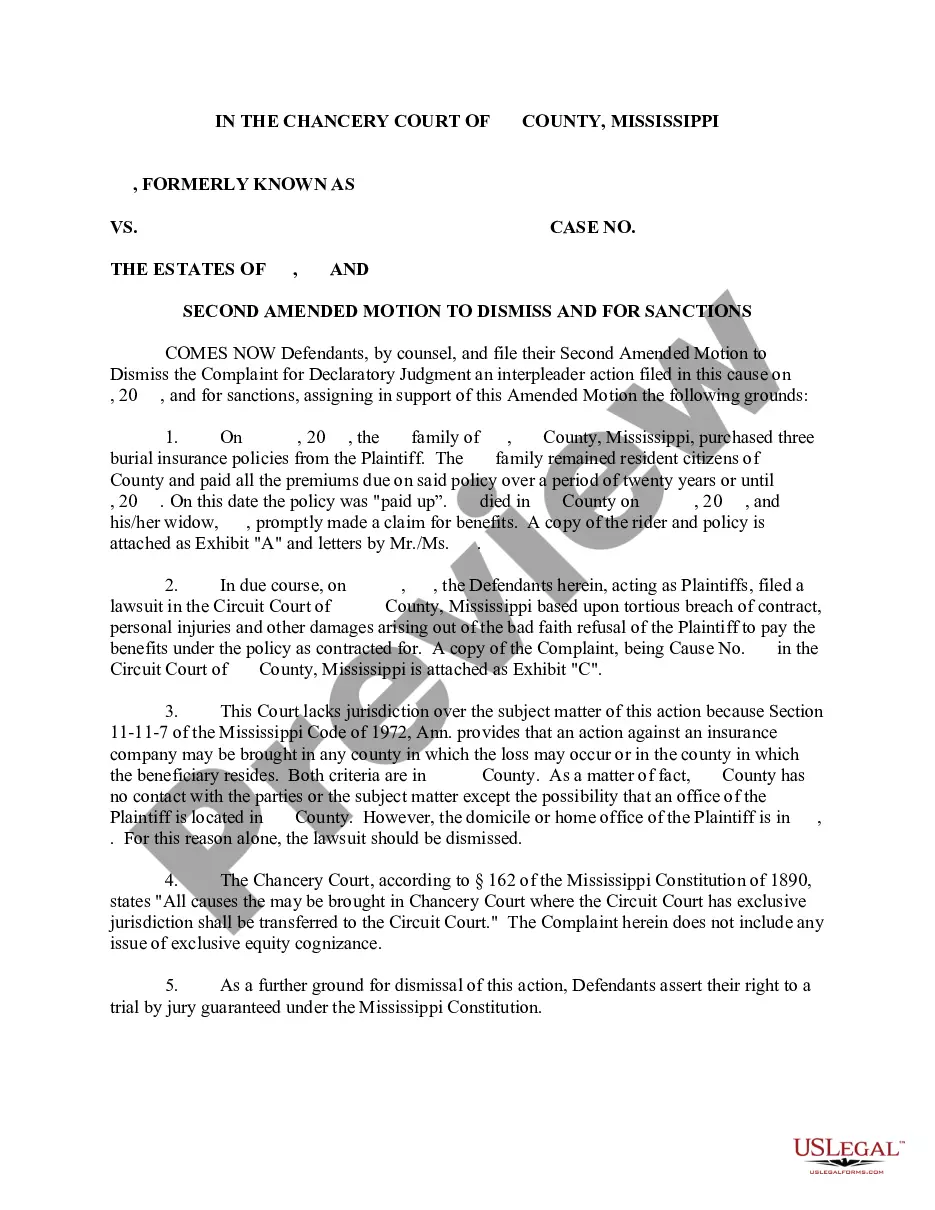
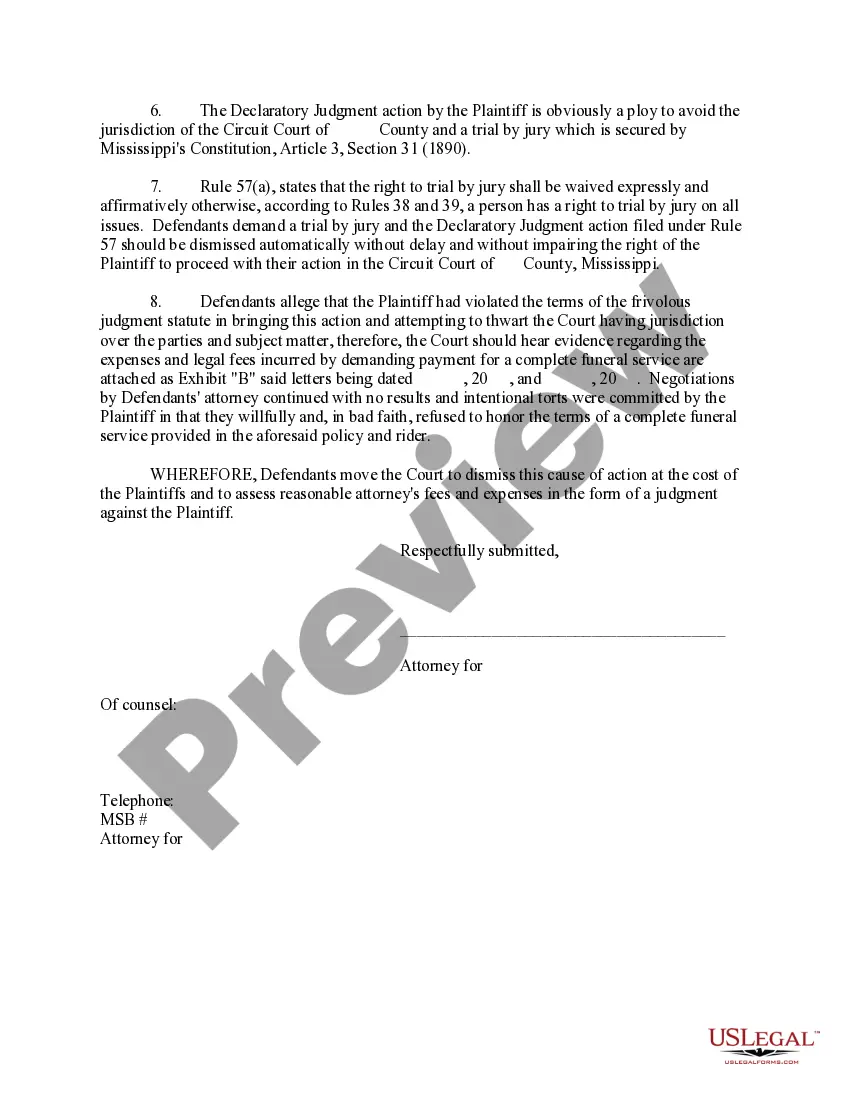
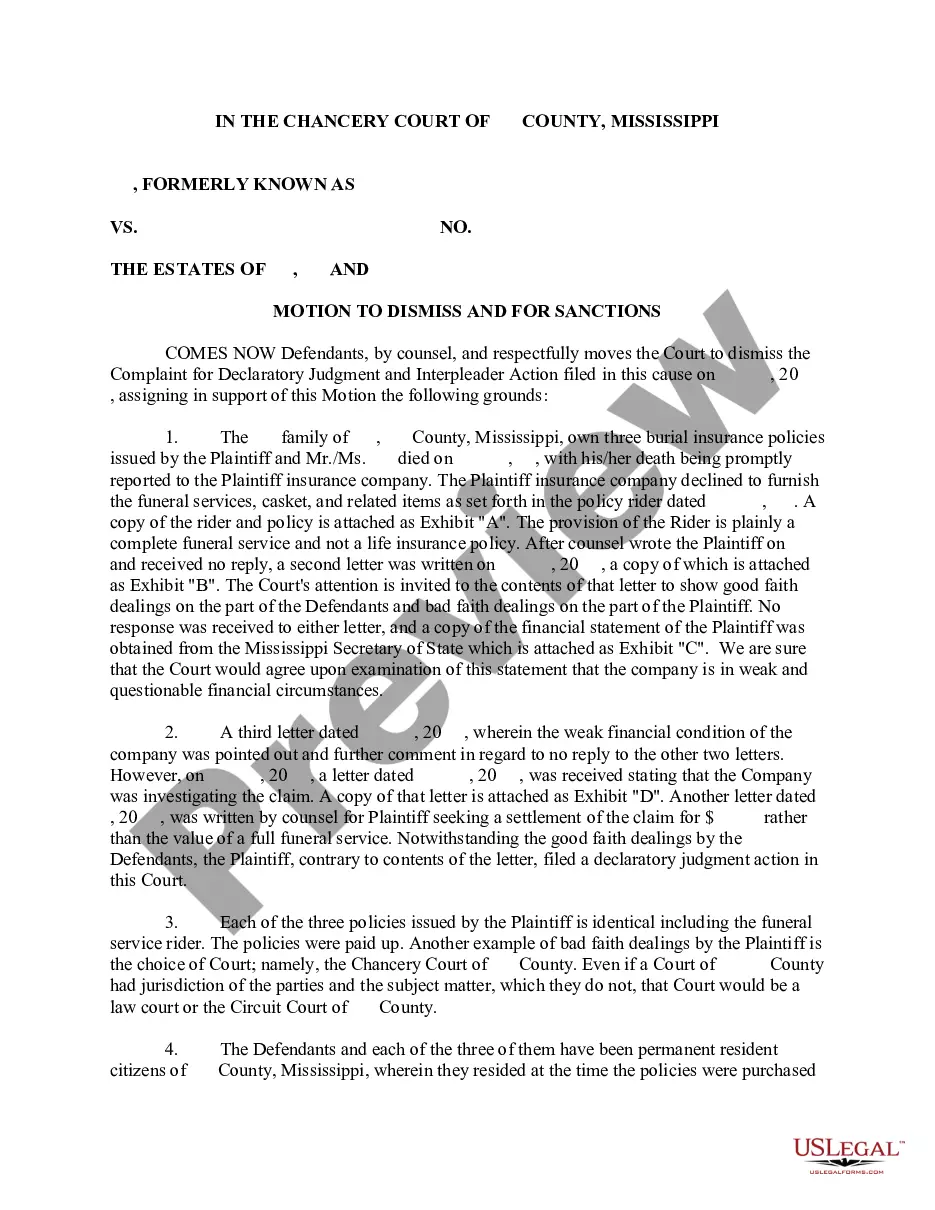
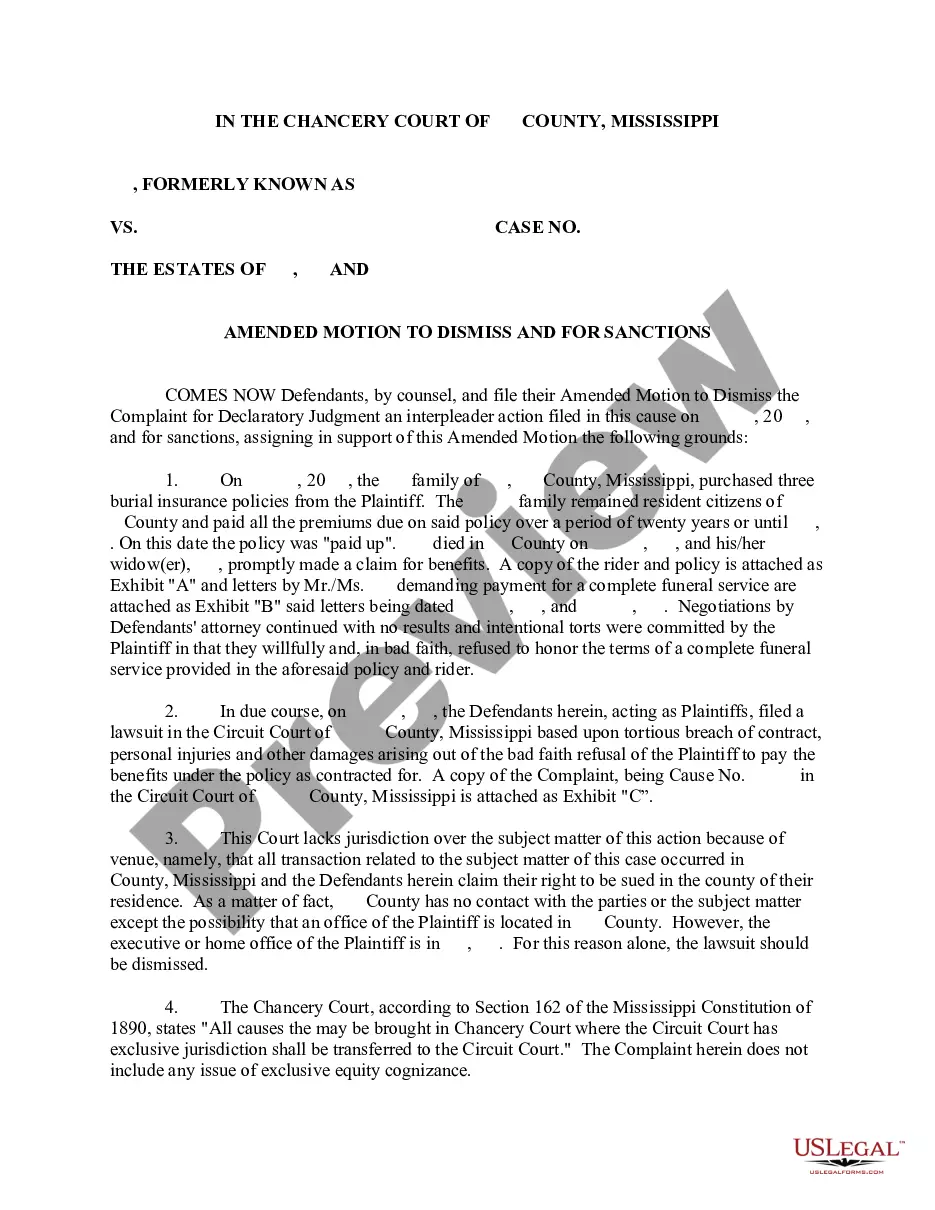
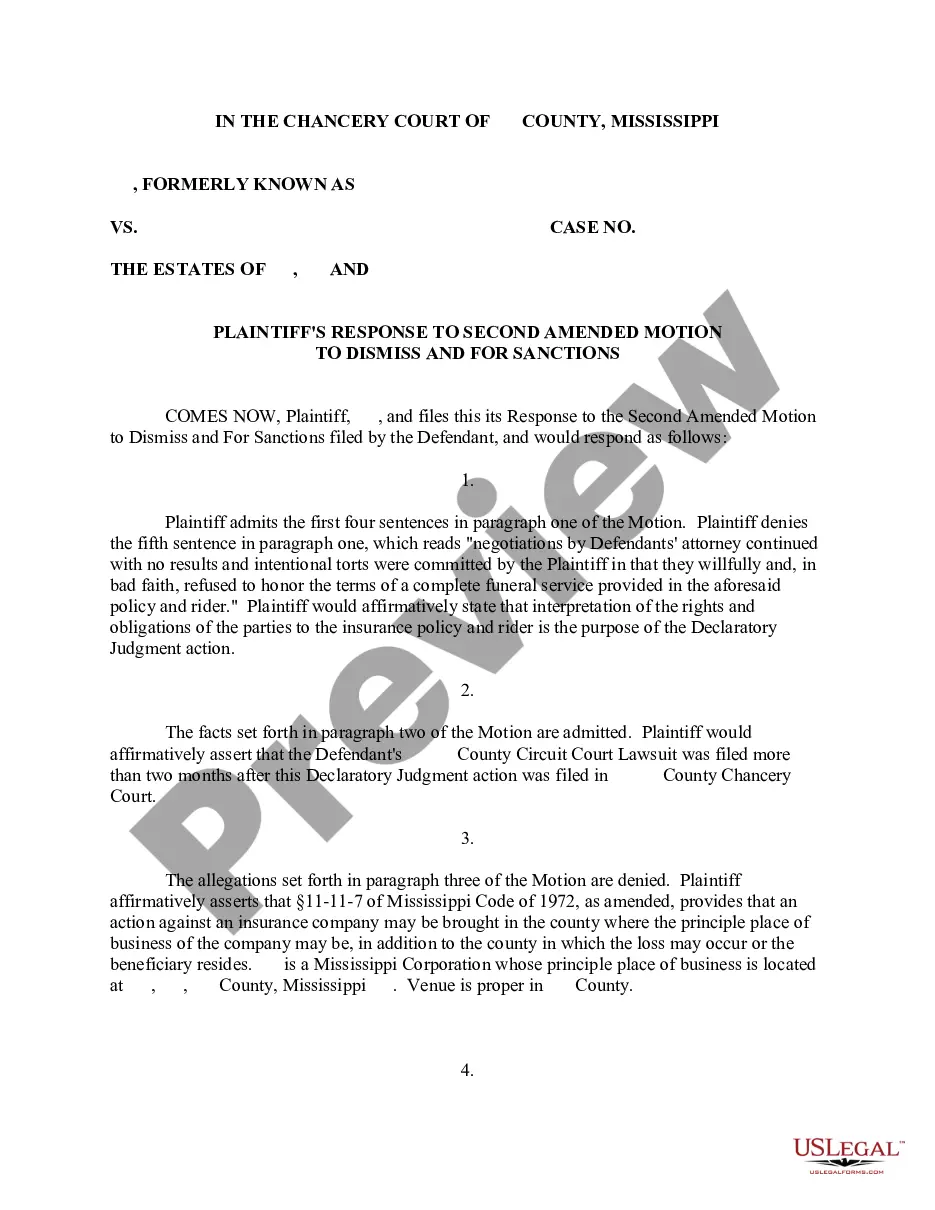
The Second Amended Motion to Dismiss and for Sanctions is a legal document used to request the dismissal of a case and seek sanctions against the opposing party. This motion is specific to situations in which an interpleader action is involved and is tailored to the laws governing the jurisdiction of the case. Unlike a standard motion to dismiss, this form addresses additional claims, including the request for sanctions due to frivolous actions. This form helps establish the grounds for the motion based on legal provisions and is adaptable to your specific circumstances.
What’s included in this form
- Parties involved: Identification of the defendants and plaintiff in the case.
- Grounds for dismissal: Detailed reasons supporting the dismissal of the complaint.
- Request for sanctions: Specific claims for sanctions against the plaintiff.
- Legal statutes referenced: Inclusions of relevant laws, such as Rule 57 and the Mississippi Constitution.
- Exhibits: Attachments that support the claims made in the motion, including documentation of negotiations.
When this form is needed
This form should be used when a party wishes to formally contest an interpleader action by filing a motion to dismiss the case. It is particularly relevant in situations where the case lacks merit or is deemed frivolous under jurisdictional laws. Common scenarios include disputes over jurisdiction or compliance with legal statutes that warrant the dismissal of claims against the defendants.
Who can use this document
- Defendants involved in an interpleader action seeking to dismiss the complaint.
- Individuals or entities that believe they have been unjustly targeted in a legal action.
- Parties seeking to recover costs or seek sanctions against another party for frivolous claims.
Instructions for completing this form
- Identify the parties: Fill in the names and details of the defendants and the plaintiff involved in the case.
- State the grounds: Clearly articulate the reasons for seeking dismissal of the complaint.
- Request sanctions: Specify the nature of the sanctions being requested against the plaintiffs.
- Attach exhibits: Include any relevant documentation or correspondence that supports the claims made in the motion.
- Sign and date: Ensure the motion is signed by the defendants or their counsel and dated appropriately.
Does this form need to be notarized?
In most cases, this form does not require notarization. However, some jurisdictions or signing circumstances might. US Legal Forms offers online notarization powered by Notarize, accessible 24/7 for a quick, remote process.
Get your form ready online
Our built-in tools help you complete, sign, share, and store your documents in one place.
Make edits, fill in missing information, and update formatting in US Legal Forms—just like you would in MS Word.
Download a copy, print it, send it by email, or mail it via USPS—whatever works best for your next step.
Sign and collect signatures with our SignNow integration. Send to multiple recipients, set reminders, and more. Go Premium to unlock E-Sign.
If this form requires notarization, complete it online through a secure video call—no need to meet a notary in person or wait for an appointment.
We protect your documents and personal data by following strict security and privacy standards.

Make edits, fill in missing information, and update formatting in US Legal Forms—just like you would in MS Word.

Download a copy, print it, send it by email, or mail it via USPS—whatever works best for your next step.

Sign and collect signatures with our SignNow integration. Send to multiple recipients, set reminders, and more. Go Premium to unlock E-Sign.

If this form requires notarization, complete it online through a secure video call—no need to meet a notary in person or wait for an appointment.

We protect your documents and personal data by following strict security and privacy standards.
Common mistakes to avoid
- Failing to properly identify all parties involved in the case.
- Omitting key legal statutes that support the motion.
- Not including necessary exhibits that substantiate claims made in the motion.
- Incorrectly formatting the motion according to court requirements.
Why use this form online
- Convenience: Easily access and download the form from anywhere at any time.
- Editability: Customize the form to fit your specific case and circumstances before printing.
- Reliability: Forms are prepared by licensed attorneys, ensuring compliance with legal standards.
Looking for another form?

Form popularity
FAQ
You cannot file a second motion dismiss. You have to raise it as an affirmative defense in your answer and present it with evidence at summary judgement or trial...
Some have allowed defendants to file a simultaneous motion and an answer, and some have allowed defendants to file a post-answer 12(b)(6) motion as long as the defendant raised the defense in its answer.
Unless the requirements of Code of Civil Procedure 437c, subdivision (f)(2), are met a party may not file a second summary judgment motion.
To survive a motion to dismiss, a lawsuit must contain sufficient factual matter to state a claim to relief that is plausible on its face. Ashcroft v. Iqbal, 556 U.S. 662, 678 (2009).
When a judge denies a defendant's motion to dismiss, the case will continue because defendant did not convince the judge to terminate the case.When students read a U.S. court decision where a judge denies a motion to dismiss, it may appear that the judge is ruling that the plaintiff won her case.
Defendants may move to dismiss some or all claims but can only make one motion to dismiss, asserting all defenses (other than those in FRCP 8(c)) that were available when the motion was made (FRCP 12(g)).
No, because "for the purposes of Rule 15(a), a Rule 12(b)(6) motion to dismiss is not a responsive pleading and thus does not itself terminate plaintiff's unconditional right to amend a complaint under Rule 15(a)." Op.
Check that the statute of limitations hasn't expired. Find what you forgot to allege in your original complaint.
21 provides that misjoinder of parties is not ground for dismissal of an action, and that parties may be dropped or added by court order on motion of any party or of the court's own initiative at any stage in the action and on such terms as are just.