Mississippi Amended Motion to Dismiss and for Sanctions
What this document covers
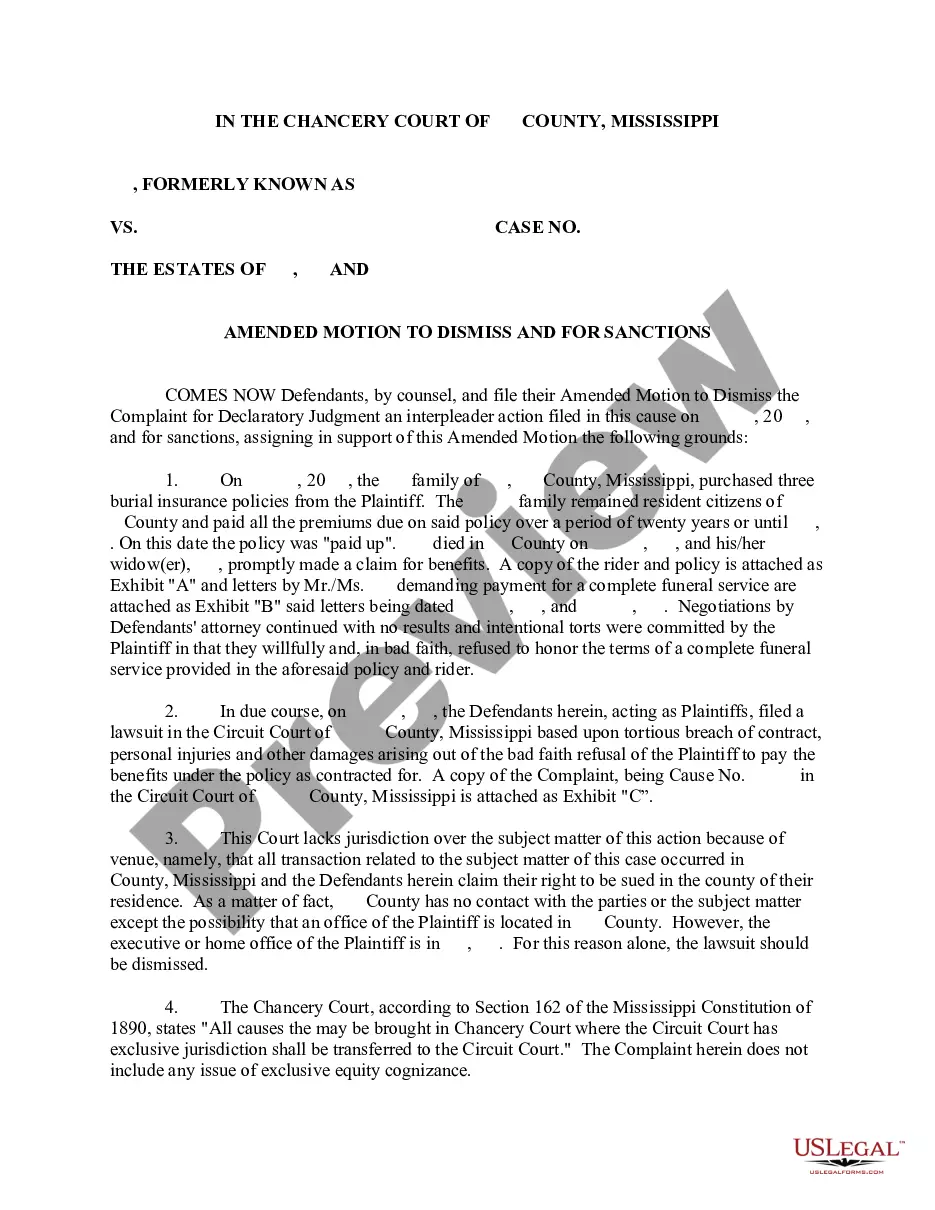
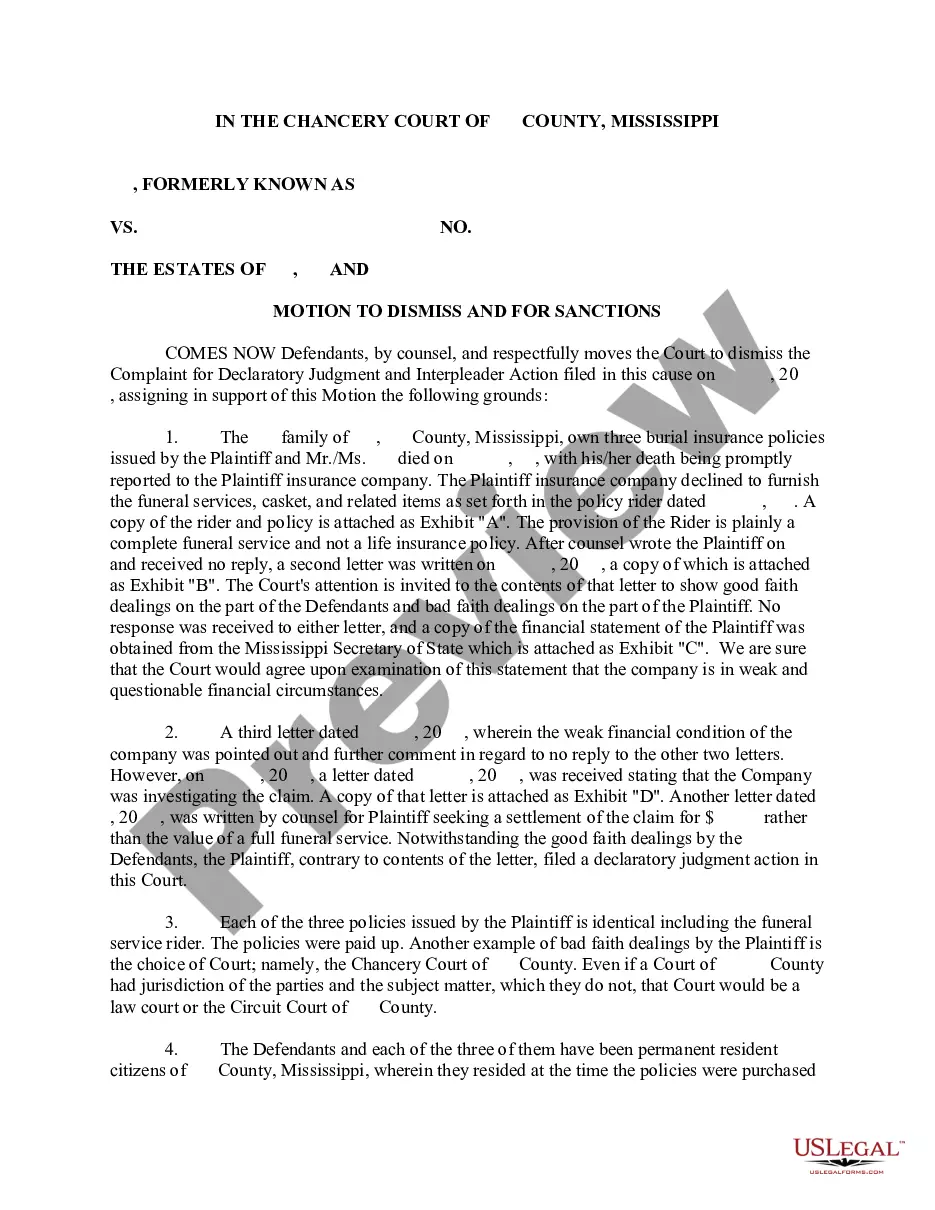
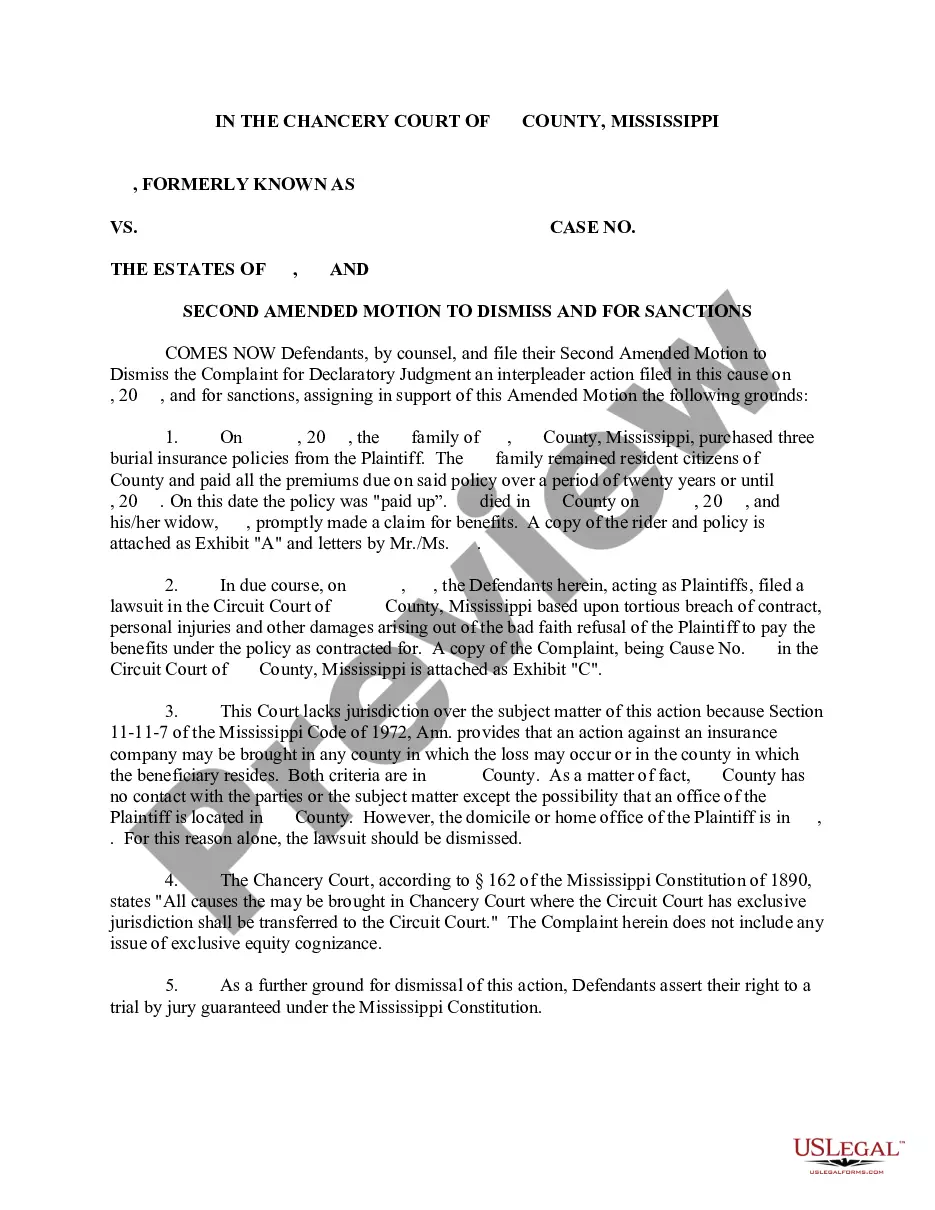
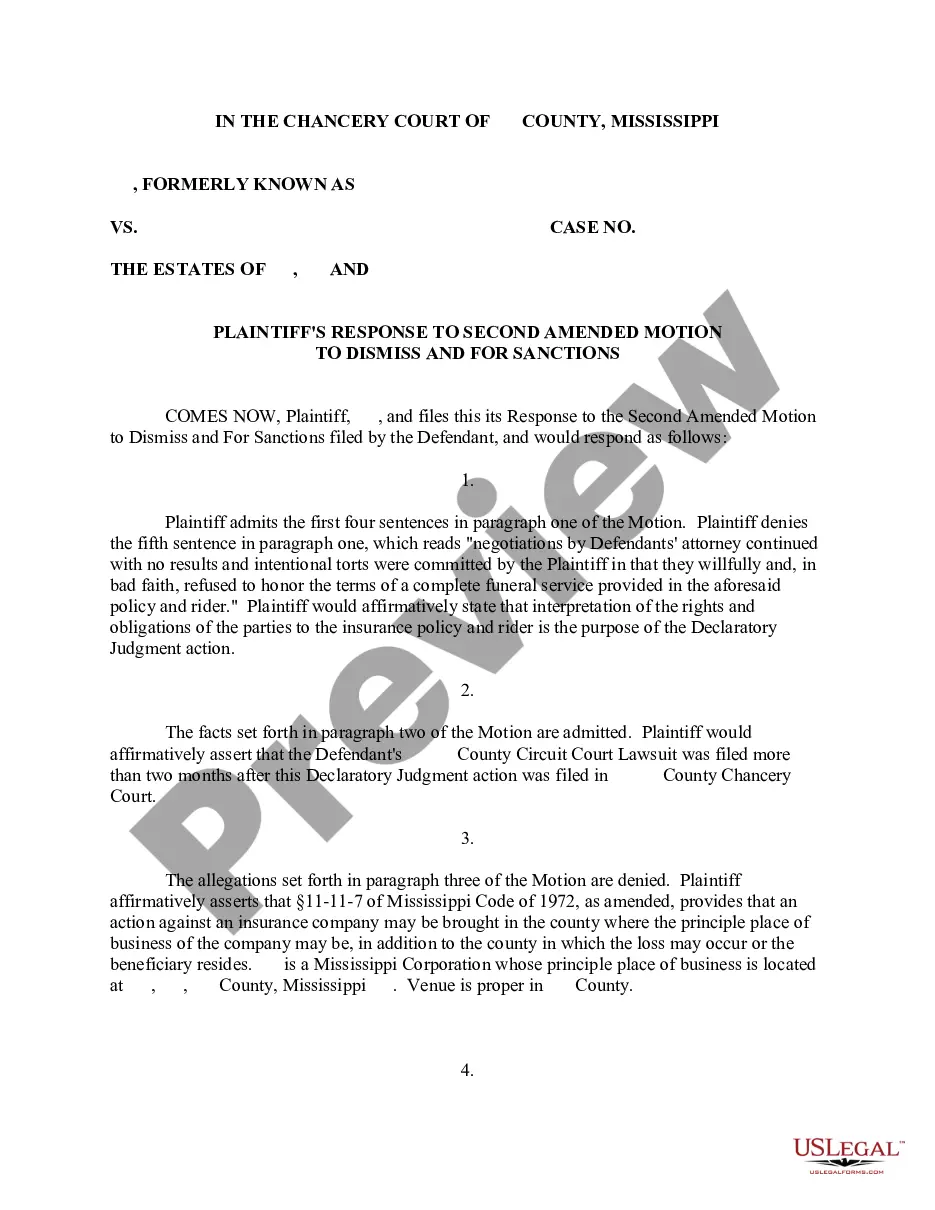
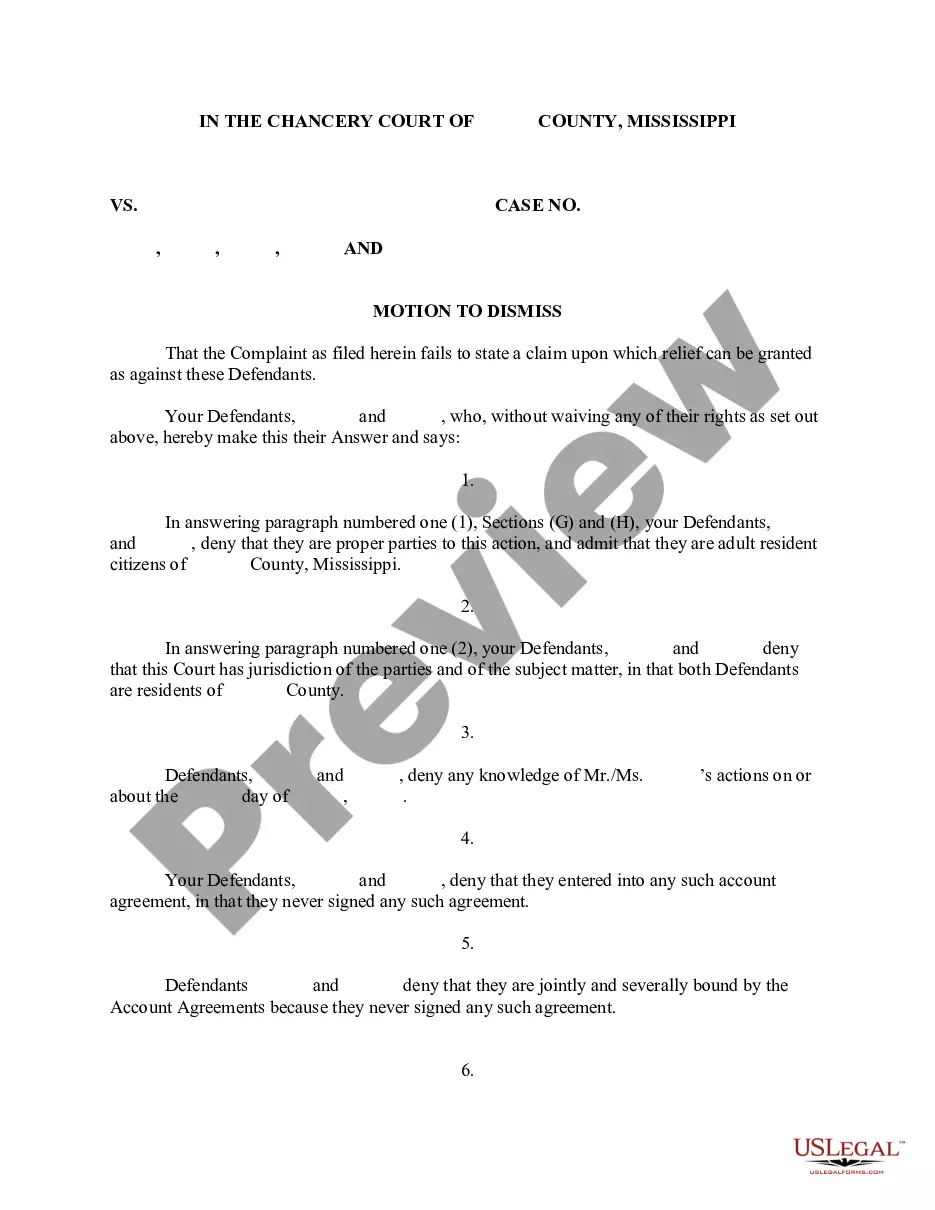
The Amended Motion to Dismiss and for Sanctions is a legal document used to formally request that a court dismiss a complaint while also seeking sanctions against the opposing party. This form differs from other motions by combining both a request for dismissal and a request for penalties, making it a critical tool in cases where a party believes the complaint lacks merit or has been filed inappropriately. This document is essential for defendants looking to challenge the validity of a legal action based on specific grounds.
Key parts of this document
- Caption: Includes the case title and court information.
- Statement of grounds: Details the legal basis for requesting dismissal.
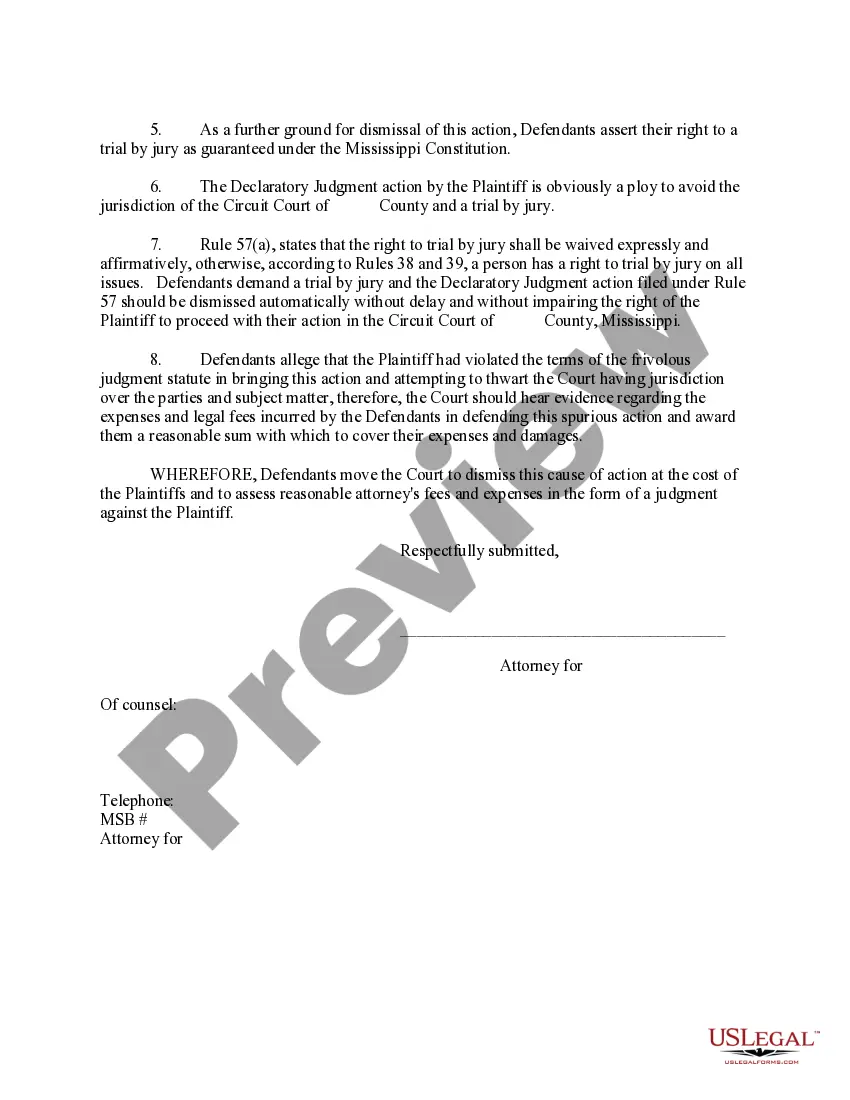
- Request for sanctions: Specifies the penalties sought against the plaintiff.
- Signature line: Indicates where the attorney or defendant must sign.
- Date: Required for filing the motion with the court.
When to use this form
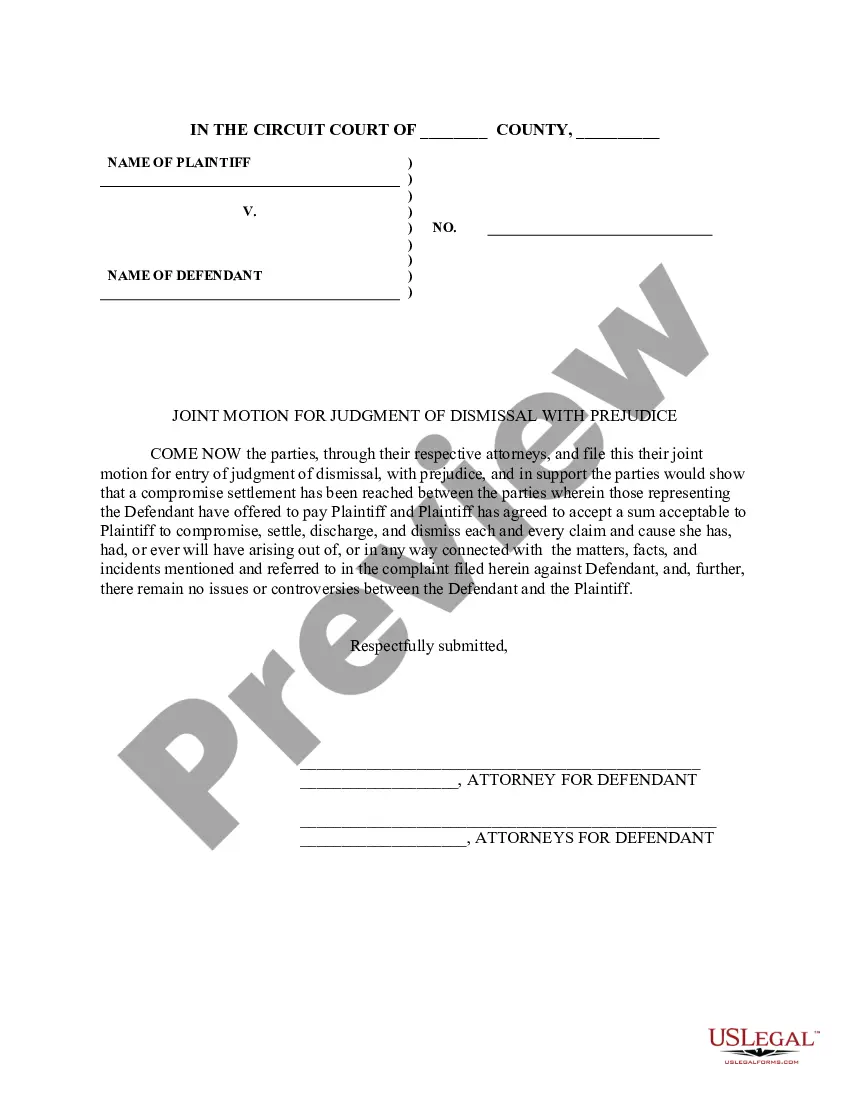
This form is used when a defendant believes that a complaint filed against them is without merit or was improperly filed, and they wish to seek dismissal of the case. It is particularly useful in interpleader actions or cases involving declaratory judgments, where the defendant may have valid legal grounds to argue for dismissal.
Intended users of this form
- Defendants in civil lawsuits seeking to dismiss a claim against them.
- Legal representatives of defendants, including attorneys or licensed counsel.
- Individuals involved in interpleader actions or declaratory judgments.
- Parties who believe that the opposing side's complaint should be dismissed for specific legal reasons.
Steps to complete this form
- Begin by entering the case title and court information at the top of the document.
- Clearly state the grounds for dismissal in the designated section.
- Specify any sanctions sought against the plaintiff in the appropriate area.
- Enter the date when the motion is being filed.
- Sign the form where indicated, including any titles or roles if applicable.
Notarization requirements for this form
In most cases, this form does not require notarization. However, some jurisdictions or signing circumstances might. US Legal Forms offers online notarization powered by Notarize, accessible 24/7 for a quick, remote process.
Get your form ready online
Our built-in tools help you complete, sign, share, and store your documents in one place.
Make edits, fill in missing information, and update formatting in US Legal Forms—just like you would in MS Word.
Download a copy, print it, send it by email, or mail it via USPS—whatever works best for your next step.
Sign and collect signatures with our SignNow integration. Send to multiple recipients, set reminders, and more. Go Premium to unlock E-Sign.
If this form requires notarization, complete it online through a secure video call—no need to meet a notary in person or wait for an appointment.
We protect your documents and personal data by following strict security and privacy standards.

Make edits, fill in missing information, and update formatting in US Legal Forms—just like you would in MS Word.

Download a copy, print it, send it by email, or mail it via USPS—whatever works best for your next step.

Sign and collect signatures with our SignNow integration. Send to multiple recipients, set reminders, and more. Go Premium to unlock E-Sign.

If this form requires notarization, complete it online through a secure video call—no need to meet a notary in person or wait for an appointment.

We protect your documents and personal data by following strict security and privacy standards.
Avoid these common issues
- Neglecting to provide sufficient legal grounds for the motion.
- Failing to sign the form before submission.
- Omitting the date, which is essential for processing.
- Using outdated or incorrect court information in the caption.
Benefits of using this form online
- Immediate access to a professionally drafted template.
- Easy customization to fit individual case details.
- Secure download for safe storage and easy retrieval.
- Time-saving compared to manually drafting the document.
Looking for another form?

Form popularity
FAQ
A dismissed case means that a lawsuit is closed with no finding of guilt and no conviction for the defendant in a criminal case by a court of law. Even though the defendant was not convicted, a dismissed case does not prove that the defendant is factually innocent for the crime for which he or she was arrested.
In California, the process of expunging or clearing a criminal record is usually called "dismissal." For legal purposes, if your conviction is dismissed, it is as though you never committed the crime.
A request for involuntary dismissal can be made by a defendant through a motion for dismissal, on grounds that the other party is not prosecuting the case, is not complying with a court order, or to comply with the Federal Rules of Civil Procedure.
When a small claims case is dismissed, the court terminates the case without a trial and prior to the case's completion. A dismissal, in effect, denies the plaintiff's claim to the money requested in the Small Claims Complaint (or a counterclaim), even though the merits of the case have never been heard by the court.
Dismissal of Actions (a) Voluntary Dismissal. But if the plaintiff previously dismissed any federal- or state-court action based on or including the same claim, a notice of dismissal operates as an adjudication on the merits.
An order to dismiss a case can occur when the appellate court, having reversed the conviction on the grounds of a bad search or arrest, examines what's left of the case and determines that there is not enough evidence to warrant another trial.
The ruling by a judge that all or a portion (one or more of the causes of action) of the plaintiff's lawsuit is terminated (thrown out) at that point without further evidence or testimony.A defendant may be "dismissed" from a lawsuit, meaning the suit is dropped against that party.
If prosecutors dismissed the case without prejudice, they can refile charges any time before the statute of limitations has expired that is, they can reopen it if they are able to overcome whatever caused the dismissal in the first place. If the case is dismissed with prejudice, the case is over permanently.
A motion to dismiss can be a first appearance for a corporation, but it is not "always" a first appearance. The first appearance for any party, whether corporate or individual, will be the first time the party appears in the case by filing...