Mississippi Motion to Dismiss and For Sanctions
About this form
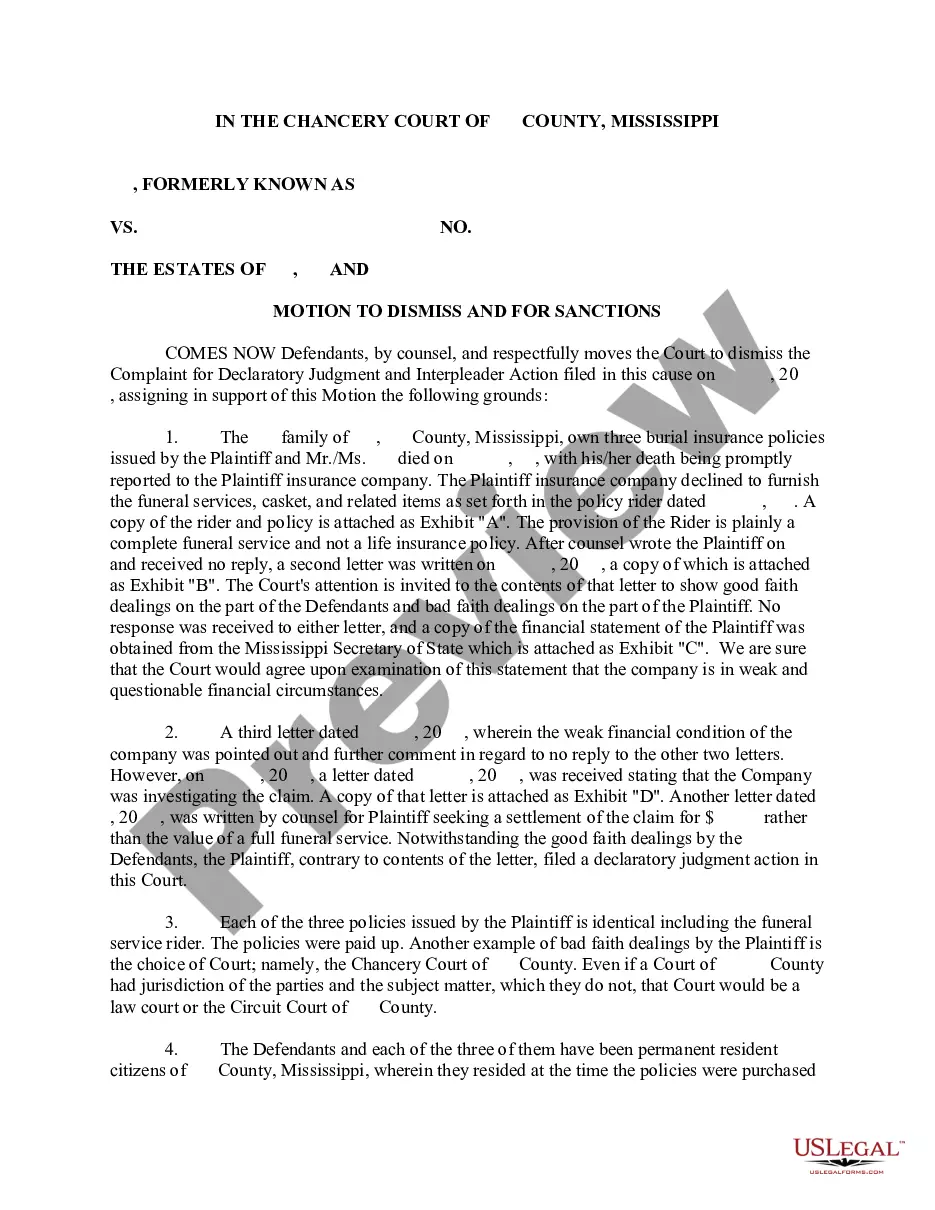
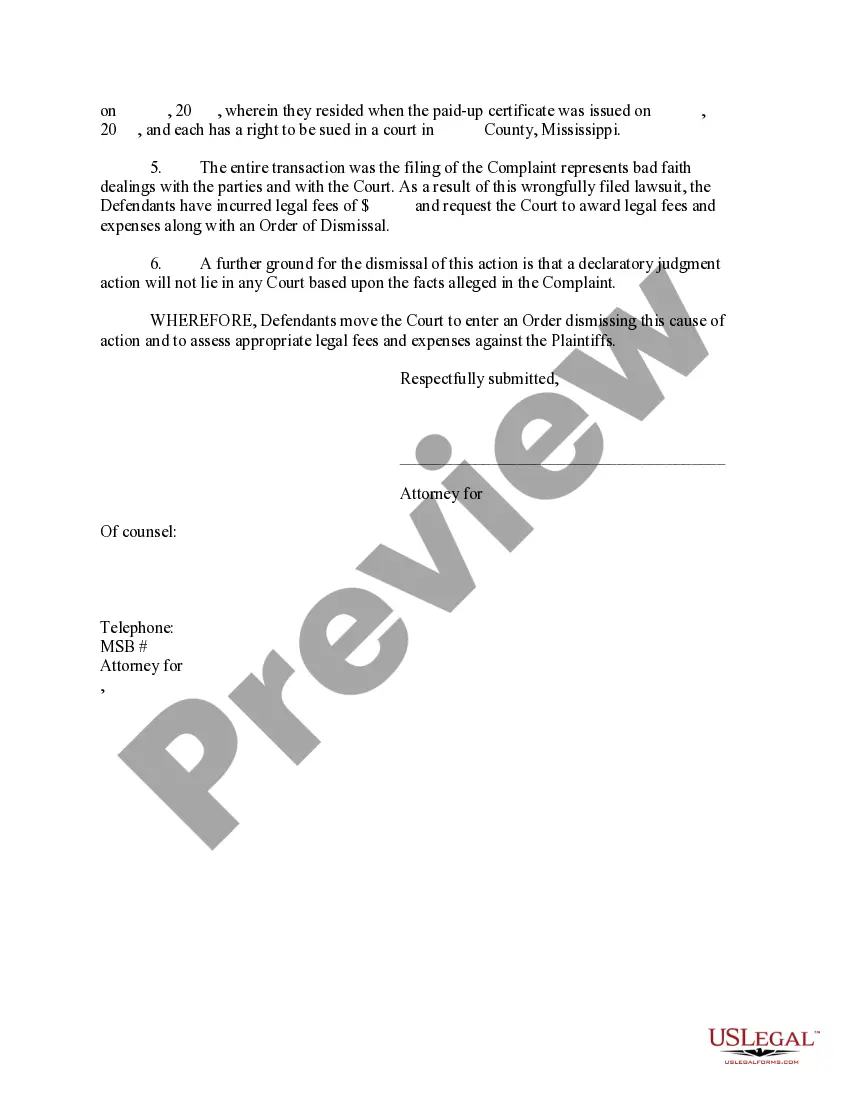
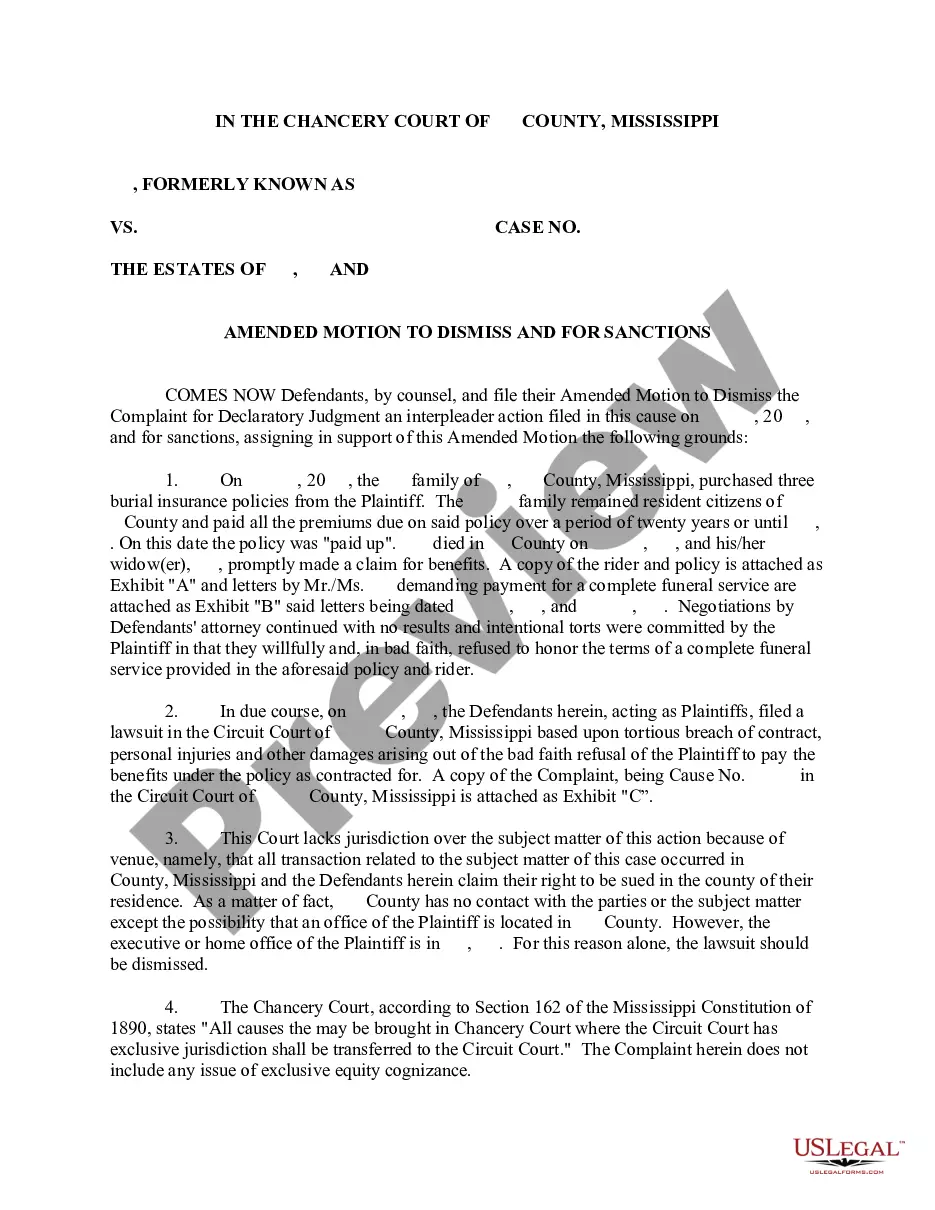
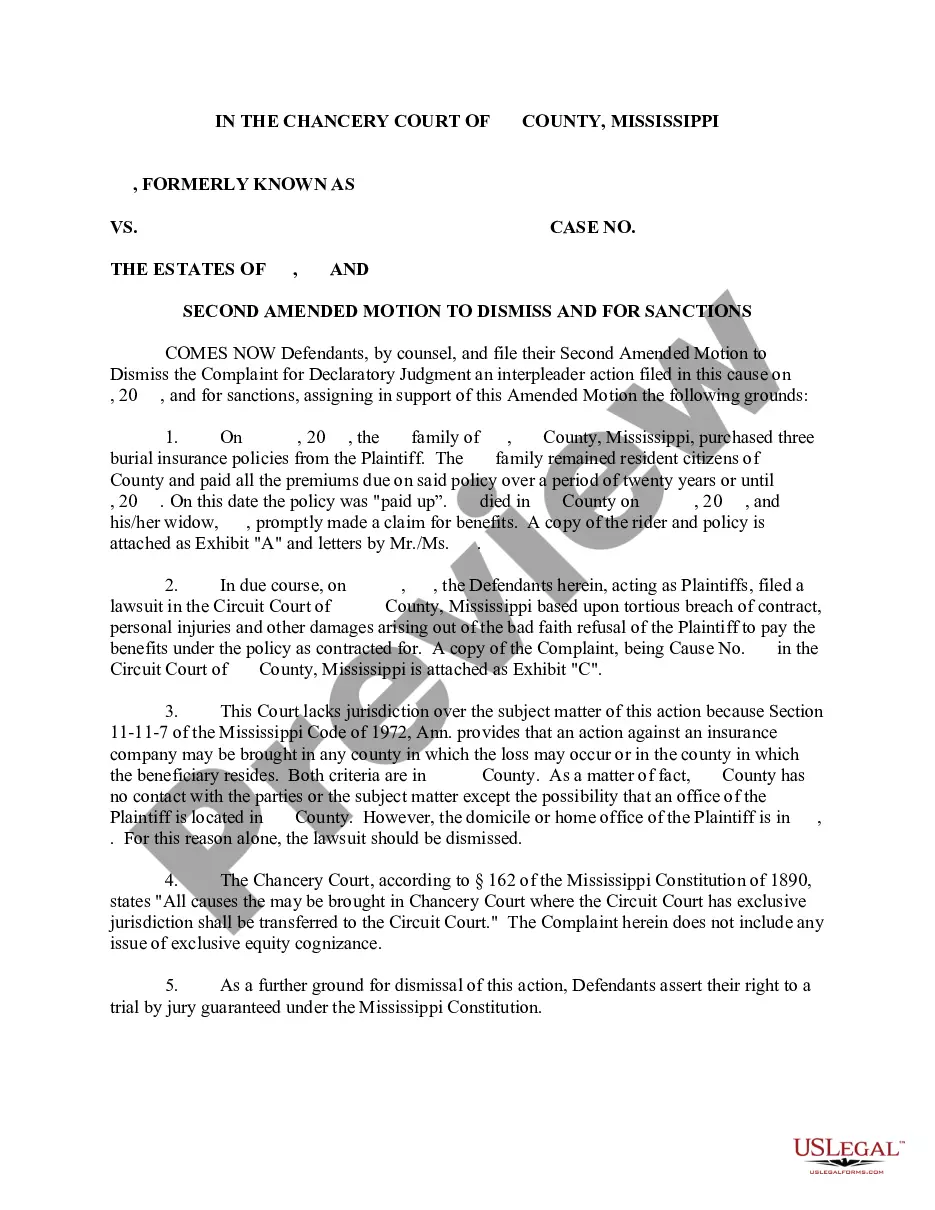
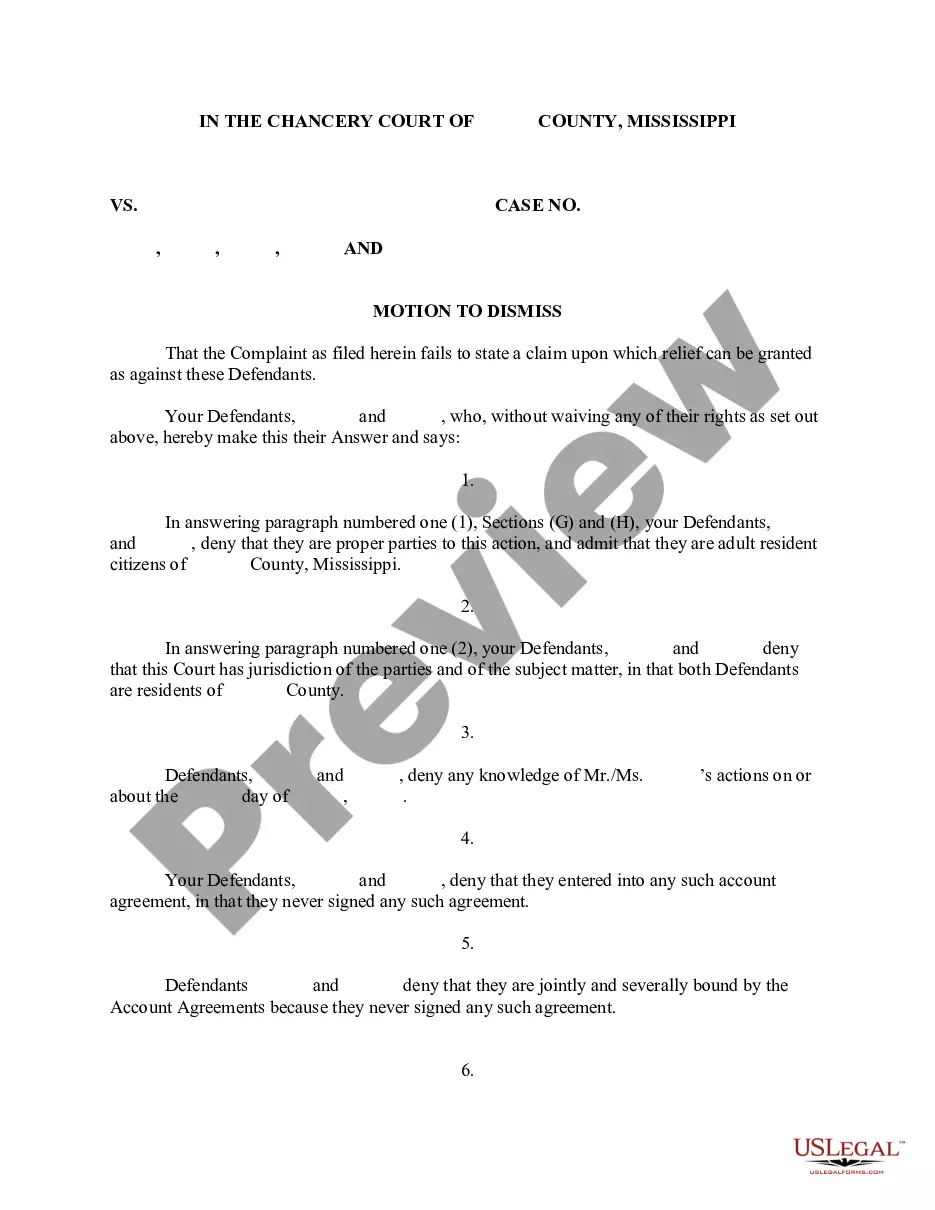
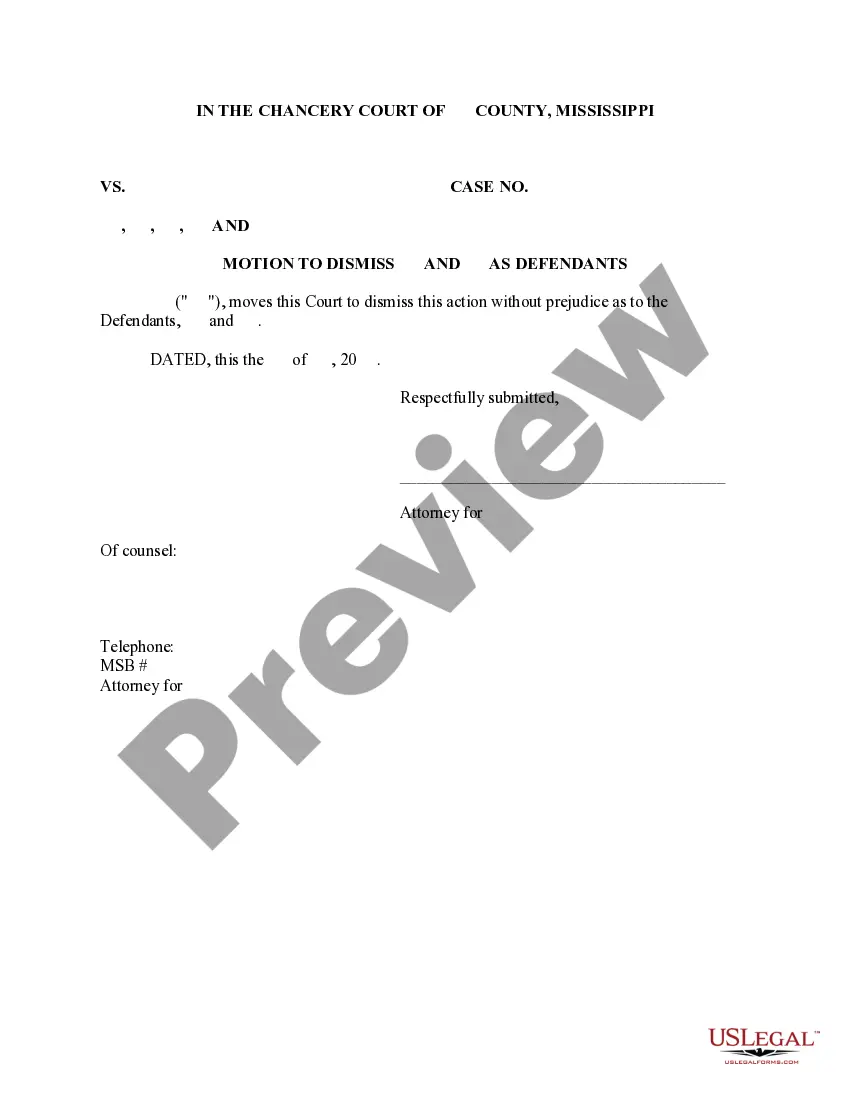
The Motion to Dismiss and For Sanctions is a crucial legal document that requests the court to dismiss a case and impose sanctions on the opposing party. This motion is used when a party believes that a complaint lacks legal merit or is filed in bad faith. Unlike standard motions, this form specifically combines both a dismissal request and a request for sanctions, making it particularly useful in cases where the opposing party's actions need to be addressed alongside the main complaint.
Key components of this form
- Caption: Identifies the court and parties involved in the case.
- Statement of facts: Provides context and background for the motion.
- Grounds for dismissal: Specifies legal bases supporting the request for dismissal.
- Request for sanctions: Details the reasons for seeking sanctions against the opposing party.
- Signature block: Contains the signatures of the defendants and their legal counsel.

Situations where this form applies
This form is typically used when a defendant believes that a lawsuit is unjust or improperly filed. Common situations include cases where the plaintiff fails to state a valid claim, engages in bad faith, or the action is deemed frivolous. If you received a complaint that you feel should be dismissed, using this motion may be an appropriate step.
Intended users of this form
- Defendants in a lawsuit who wish to challenge the validity of the complaint.
- Legal professionals representing clients in court proceedings.
- Any party that has suffered from improper legal actions by a plaintiff.
Completing this form step by step
- Identify the parties: Clearly state the names of the defendants and the plaintiff as they appear in the lawsuit.
- Provide case details: Fill in the date of the complaint and other relevant case information.
- Outline your arguments: Detail the grounds for requesting dismissal, focusing on the specific legal issues at hand.
- Attach any supporting documents: Include relevant exhibits as referenced in your motion.
- Sign the document: Ensure proper signatures from all defendants and their legal representatives are included.
Does this form need to be notarized?
Notarization is generally not required for this form. However, certain states or situations might demand it. You can complete notarization online through US Legal Forms, powered by Notarize, using a verified video call available anytime.
Get your form ready online
Our built-in tools help you complete, sign, share, and store your documents in one place.
Make edits, fill in missing information, and update formatting in US Legal Forms—just like you would in MS Word.
Download a copy, print it, send it by email, or mail it via USPS—whatever works best for your next step.
Sign and collect signatures with our SignNow integration. Send to multiple recipients, set reminders, and more. Go Premium to unlock E-Sign.
If this form requires notarization, complete it online through a secure video call—no need to meet a notary in person or wait for an appointment.
We protect your documents and personal data by following strict security and privacy standards.

Make edits, fill in missing information, and update formatting in US Legal Forms—just like you would in MS Word.

Download a copy, print it, send it by email, or mail it via USPS—whatever works best for your next step.

Sign and collect signatures with our SignNow integration. Send to multiple recipients, set reminders, and more. Go Premium to unlock E-Sign.

If this form requires notarization, complete it online through a secure video call—no need to meet a notary in person or wait for an appointment.

We protect your documents and personal data by following strict security and privacy standards.
Mistakes to watch out for
- Failing to cite specific legal grounds for dismissal.
- Neglecting to attach necessary supporting documents.
- Not following proper formatting guidelines for court submissions.
- Overlooking deadlines for filing the motion.
Why use this form online
- Convenient access to legal forms from any location.
- Editable templates allow for quick customization specific to your case.
- Designed by licensed attorneys to ensure legal compliance.
- Instant download for immediate use.
Looking for another form?



Form popularity
FAQ
Defendants may move to dismiss some or all claims but can only make one motion to dismiss, asserting all defenses (other than those in FRCP 8(c)) that were available when the motion was made (FRCP 12(g)).
Check that the statute of limitations hasn't expired. Find what you forgot to allege in your original complaint.
You do not have to file a response. However, you would be wise to do so as a motion to dsmiss , if granted, could end your suit. Motions to dimiss for failure to state a claim are rarely granted.
To survive a motion to dismiss, a lawsuit must contain sufficient factual matter to state a claim to relief that is plausible on its face. Ashcroft v. Iqbal, 556 U.S. 662, 678 (2009).
A motion to dismiss is filed when a party believes that the complaint is legally invalid, which can be based on a variety of grounds.
When a defendant files a motion to dismiss, he asks the Court to throw out all or part of the plaintiff's case.The parties (well, their lawyers) will come to court, explain their positions on the motion to dismiss, and answer any questions posed by the judge. Finally, the judge will decide to grant or deny the motion.
A discharge of an individual or corporation from employment. The disposition of a civil or criminal proceeding or a claim or charge made therein by a court order without a trial or prior to its completion which, in effect, is a denial of the relief sought by the commencement of the action.
A motion to dismiss or motion for dismissal is a motion made in a civil case, where one party asks the court to dismiss or throw out the case without reviewing all of the facts and legal arguments of the case.
When a defendant files a motion to dismiss, he asks the Court to throw out all or part of the plaintiff's case.The parties (well, their lawyers) will come to court, explain their positions on the motion to dismiss, and answer any questions posed by the judge. Finally, the judge will decide to grant or deny the motion.