Jury Instruction - Explanatory Instruct ion - Transcript of Tape Recorded Conversation
Understanding this form
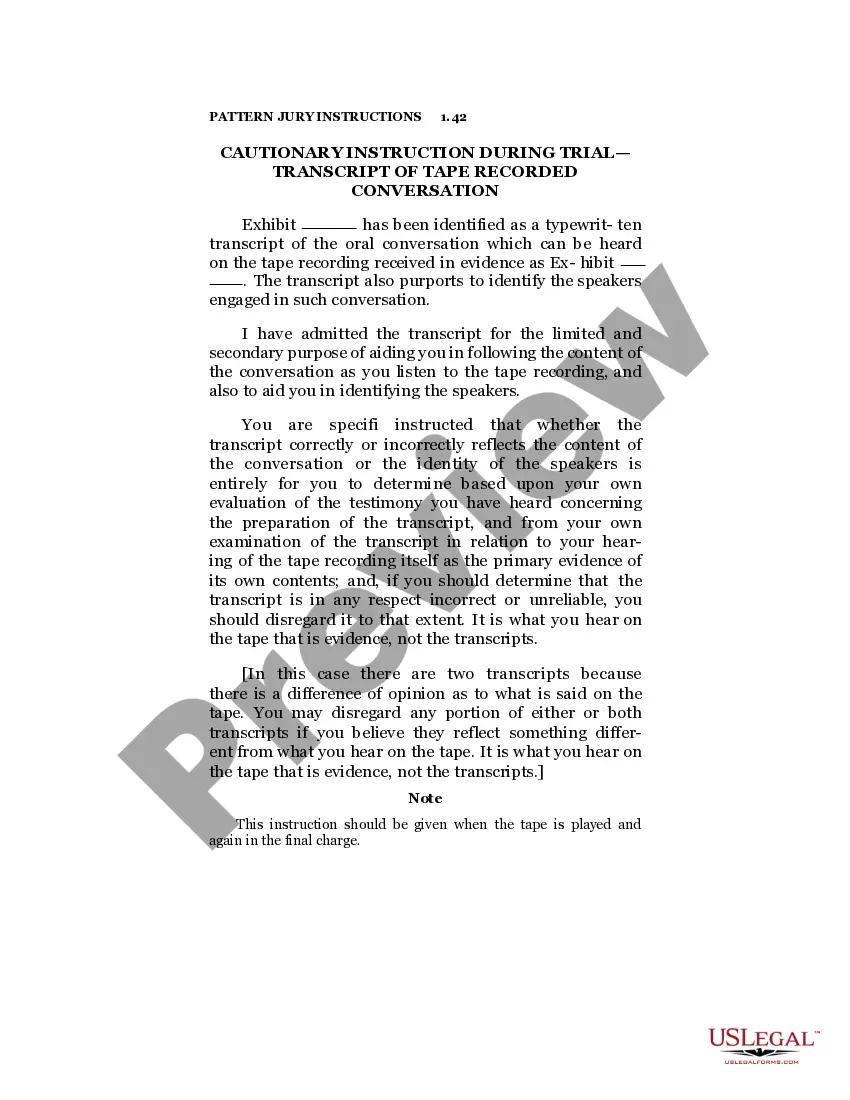
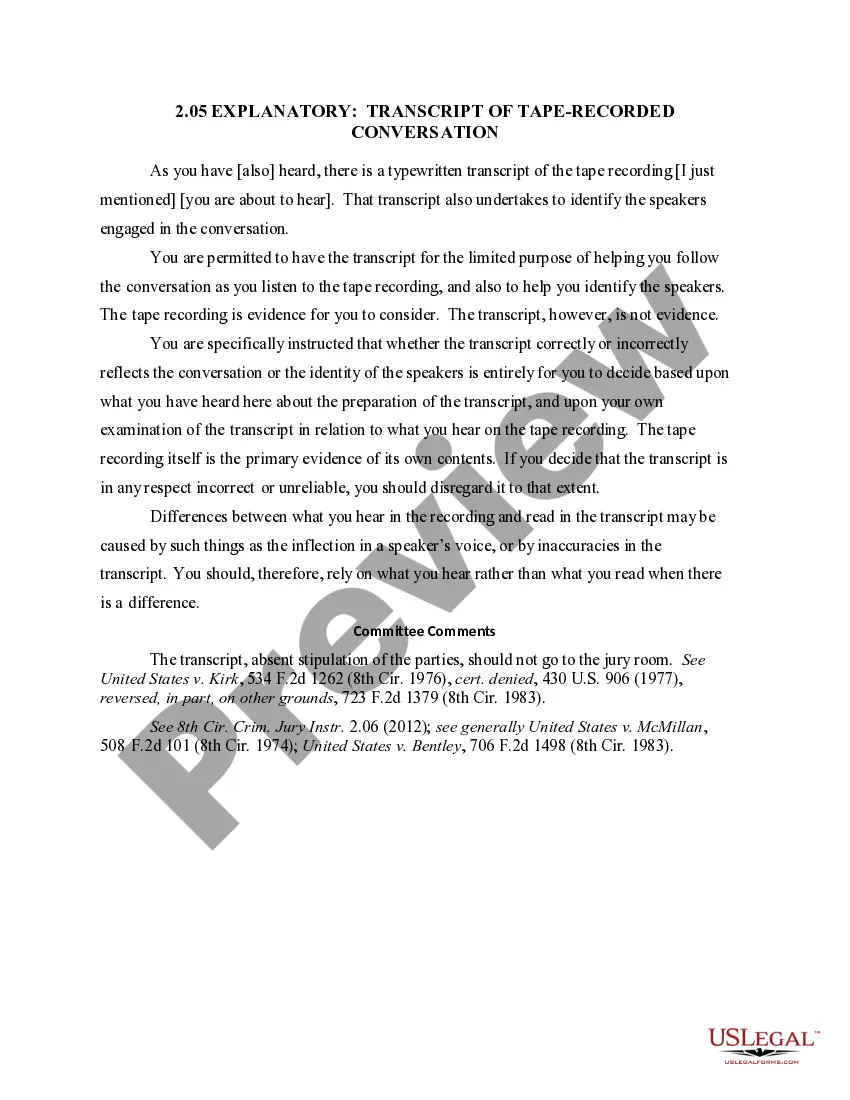
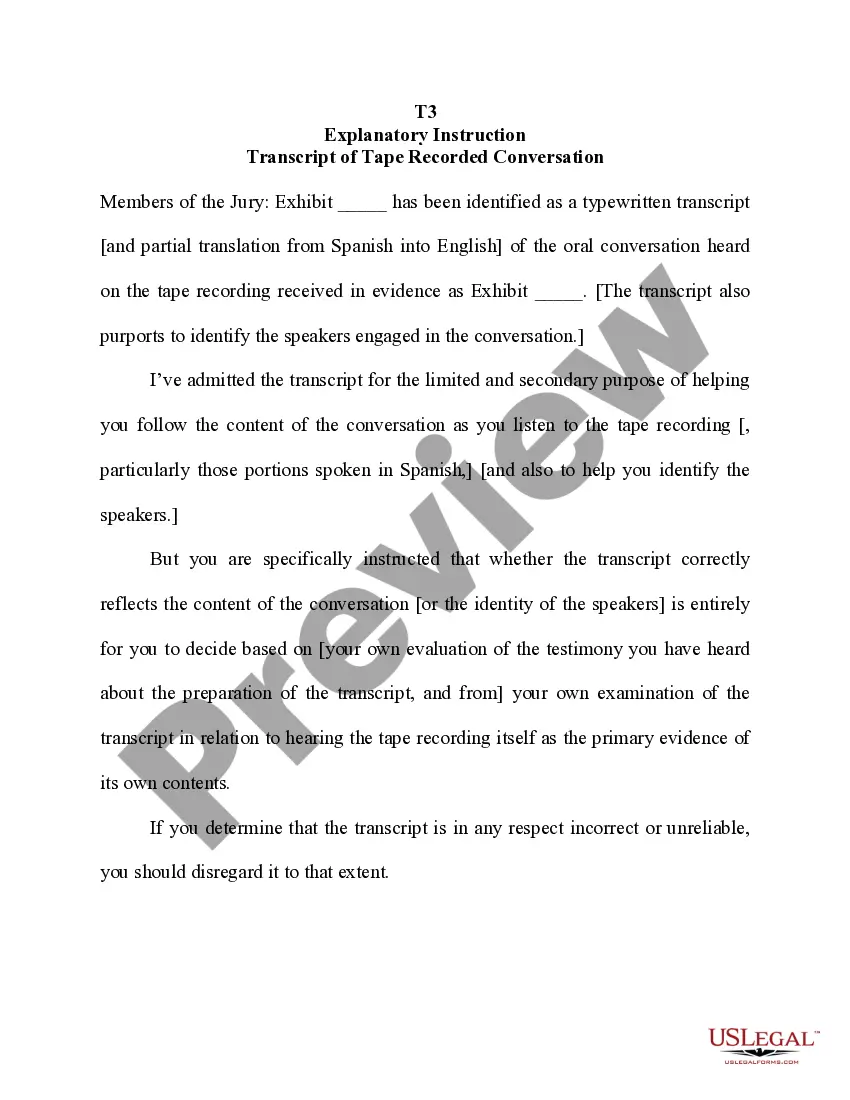
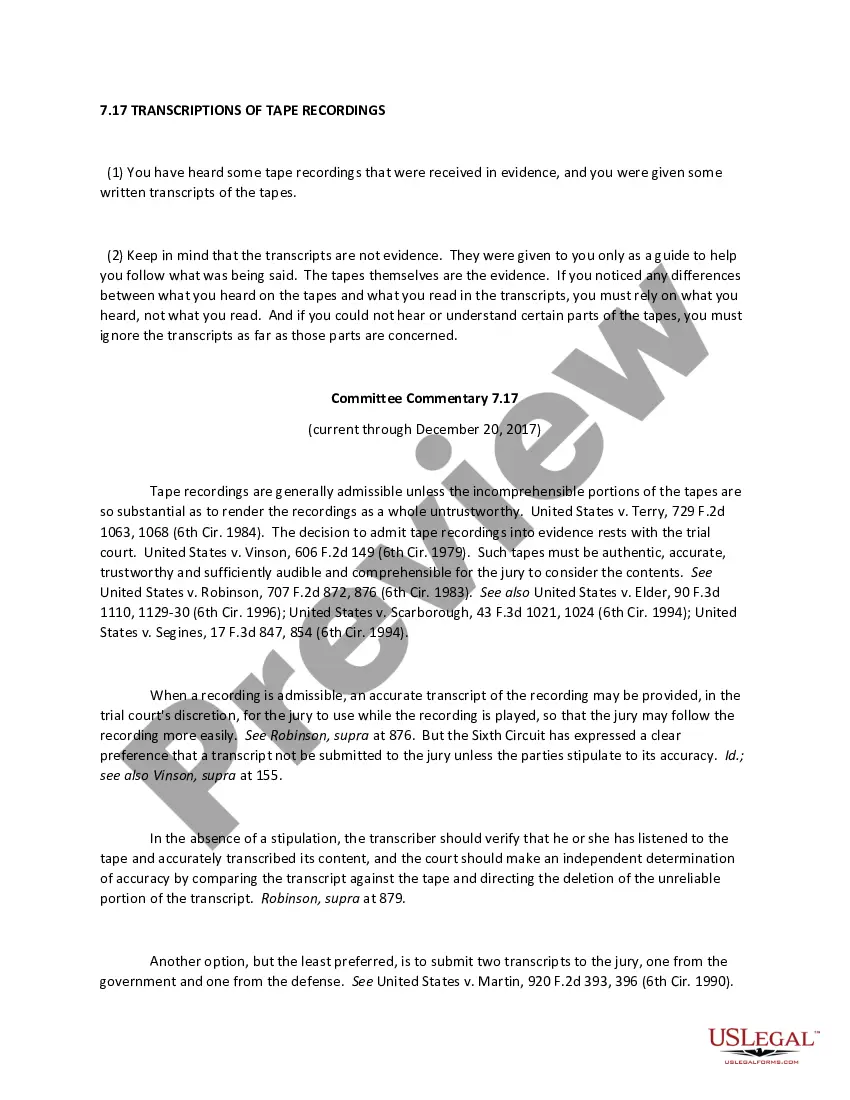
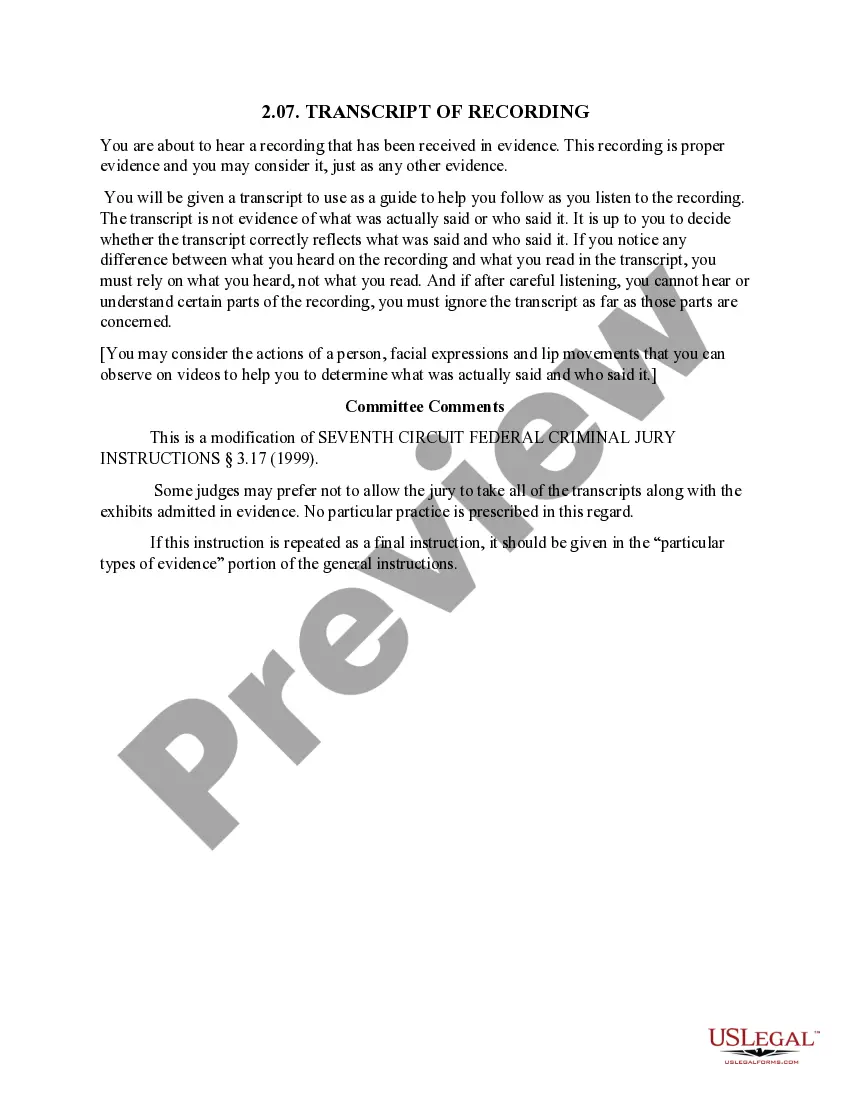
The Jury Instruction - Explanatory Instruction - Transcript of Tape Recorded Conversation is designed to guide jurors in evaluating a transcript related to a tape-recorded conversation. This form, distinct from other jury instructions, specifically helps jurors understand the context and limitations of using transcripts as secondary evidence during deliberation.
Form components explained
- Identification of the tape recording and its corresponding transcript.
- Instruction on using the transcript to aid comprehension of the conversation.
- Clarification that jurors must determine the transcript's accuracy and reliability.
- Reference to relevant legal precedents accepting transcript evidence.
- Notices to disregard portions of the transcript if found unreliable.
Common use cases
This form is utilized during a trial when jurors are presented with a tape-recorded conversation and its typed transcript. It is particularly important in cases involving languages other than English, as it assists jurors in understanding conversations recorded in different languages and ensures accurate interpretation of the evidence.
Intended users of this form
- Judges providing instructions to juries during trial proceedings.
- Trial attorneys wishing to ensure jurors accurately interpret taped evidence.
- Legal professionals involved in cases with recorded conversations in different languages.
Completing this form step by step
- Identify the specific tape recording and its corresponding exhibit number.
- Review the transcript, noting any sections that may need clarification.
- Provide clear instructions to the jury regarding the limited purpose of the transcript.
- Instruct jurors on how to evaluate the transcript against their own hearing of the tape.
- Include legal citations to reinforce the admissibility of the transcript evidence.
Notarization requirements for this form
In most cases, this form does not require notarization. However, some jurisdictions or signing circumstances might. US Legal Forms offers online notarization powered by Notarize, accessible 24/7 for a quick, remote process.
Get your form ready online
Our built-in tools help you complete, sign, share, and store your documents in one place.
Make edits, fill in missing information, and update formatting in US Legal Forms—just like you would in MS Word.
Download a copy, print it, send it by email, or mail it via USPS—whatever works best for your next step.
Sign and collect signatures with our SignNow integration. Send to multiple recipients, set reminders, and more. Go Premium to unlock E-Sign.
If this form requires notarization, complete it online through a secure video call—no need to meet a notary in person or wait for an appointment.
We protect your documents and personal data by following strict security and privacy standards.

Make edits, fill in missing information, and update formatting in US Legal Forms—just like you would in MS Word.

Download a copy, print it, send it by email, or mail it via USPS—whatever works best for your next step.

Sign and collect signatures with our SignNow integration. Send to multiple recipients, set reminders, and more. Go Premium to unlock E-Sign.

If this form requires notarization, complete it online through a secure video call—no need to meet a notary in person or wait for an appointment.

We protect your documents and personal data by following strict security and privacy standards.
Common mistakes
- Failing to clearly instruct jurors on the limited use of the transcript.
- Neglecting to emphasize the importance of their evaluation of both the tape and the transcript.
- Providing insufficient context about the speakers or conversation within the jury instruction.
Advantages of online completion
- Easy access and download whenever needed, allowing for timely inclusion in trials.
- Editable templates facilitate customization to fit specific case requirements.
- Reliability ensured by being drafted by licensed attorneys familiar with legal standards.
Legal use & context
- Transcripts can serve as aids for jurors but are not primary evidence.
- Jurors have the discretion to determine the reliability of transcripts.
- Legal precedents affirm the admittance of transcripts related to recorded conversations.
Key takeaways
- The form aids jurors in interpreting audio recordings with transcripts.
- Jurors must assess the reliability of the transcripts based on their evaluation.
- The explanatory instruction is an essential part of legal proceedings involving recorded conversations.
Looking for another form?

Form popularity
FAQ
A curative instruction is given to a jury by the judge in a case to negate the prejudicial effect of an erroneous instruction or tainted evidence.
Jury instructions, directions to the jury, or judge's charge are legal rules that jurors should follow when deciding a case.
A jury instruction is a guideline given by the judge to the jury about the law they will have to apply to the facts they have found to be true. The purpose of the instructions is to help the jury arrive at a verdict that follows the law of that jurisdiction.
Jury Instructions. instructions that are given by the trial judge that specifically state what the defendant can be found guilty of and what the prosecution or plaintiff has to prove in order for a guilty verdict.
Instructions to the Jury The judge instructs the jury about the relevant laws that should guide its deliberations. (In some jurisdictions, the court may instruct the jury at any time after the close of evidence. This sometimes occurs before closing arguments.) The judge reads the instructions to the jury.
Jury instructions are important for several reasons. The primary reason is they lay out the applicable law for jurors to follow. Without jury instructions, the jury would not know the elements of a DUI or Robbery charge.That is why jury instructions are typed and printed and placed in the court file.
The trial is a structured process where the facts of a case are presented to a jury, and they decide if the defendant is guilty or not guilty of the charge offered. During trial, the prosecutor uses witnesses and evidence to prove to the jury that the defendant committed the crime(s).
Choosing a Jury. Opening Statements. Witness Testimony and Cross-Examination. Closing Arguments. Jury Instruction. Jury Deliberation and Announcement of Verdict.