Cautionary Instruction During Trial - Transcript of Tape Recorded Conversation
What is this form?
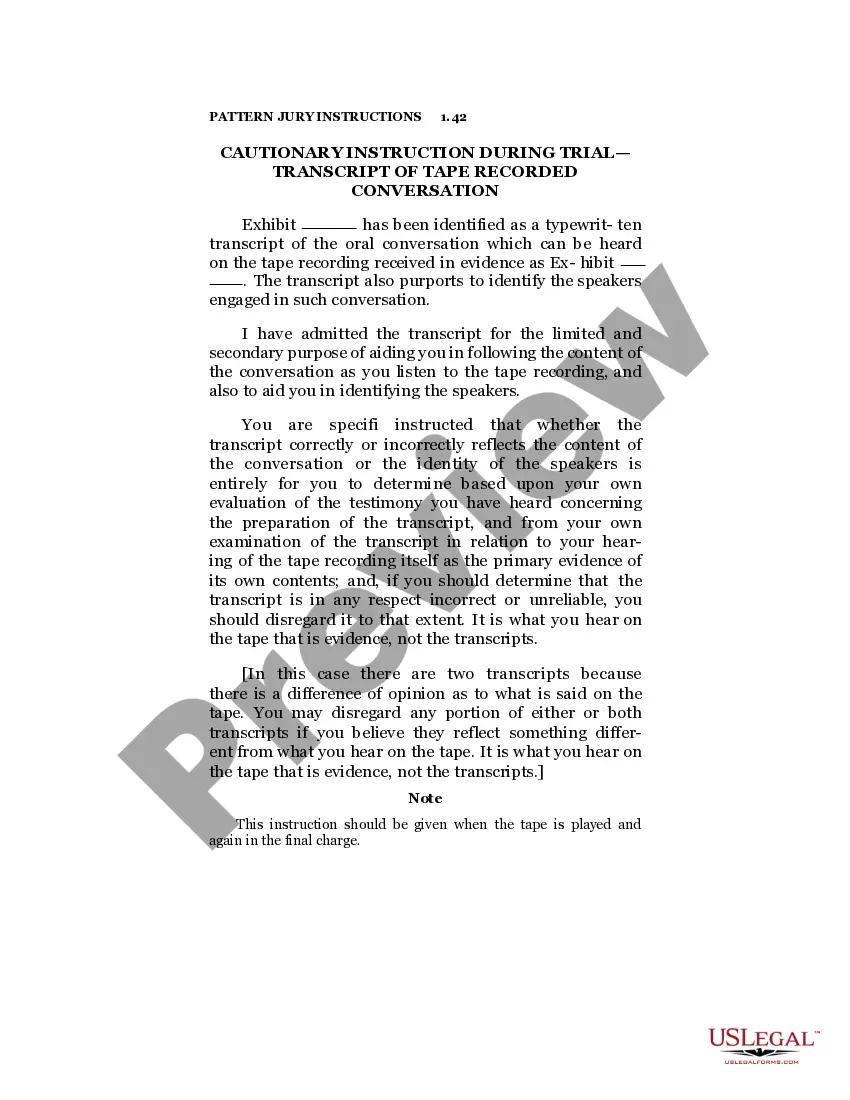
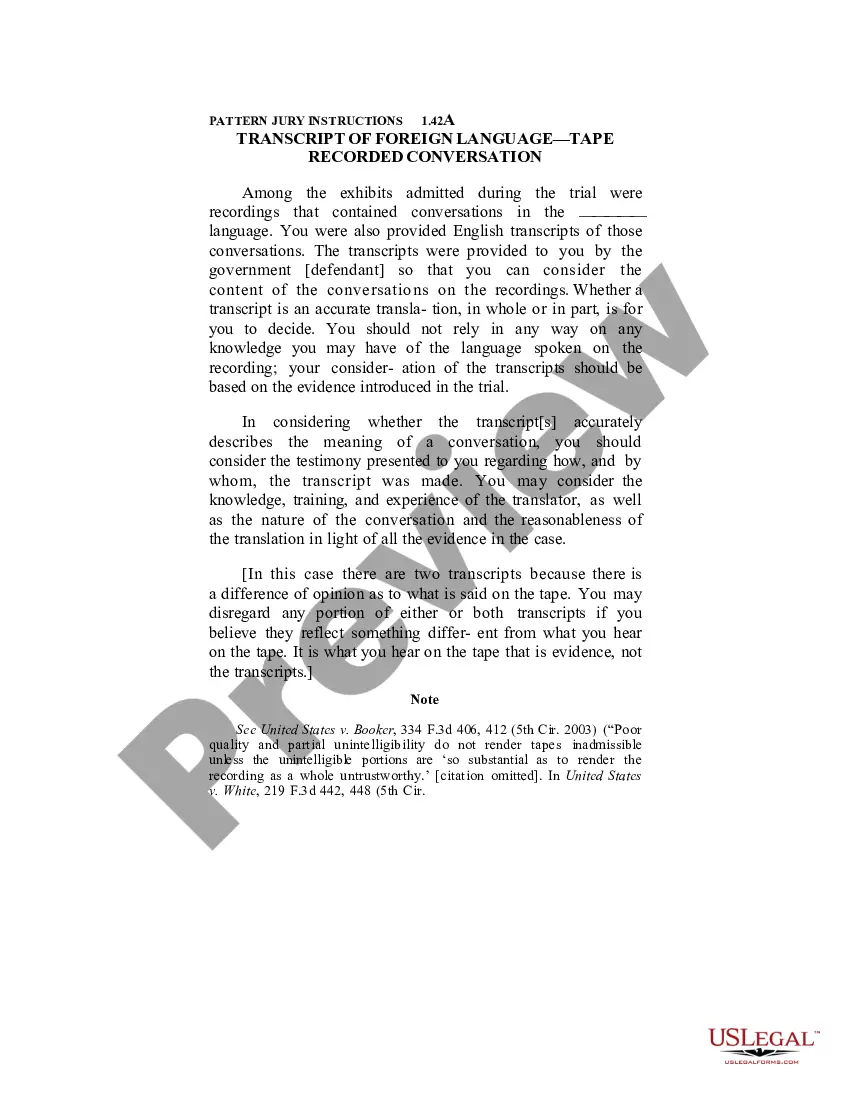
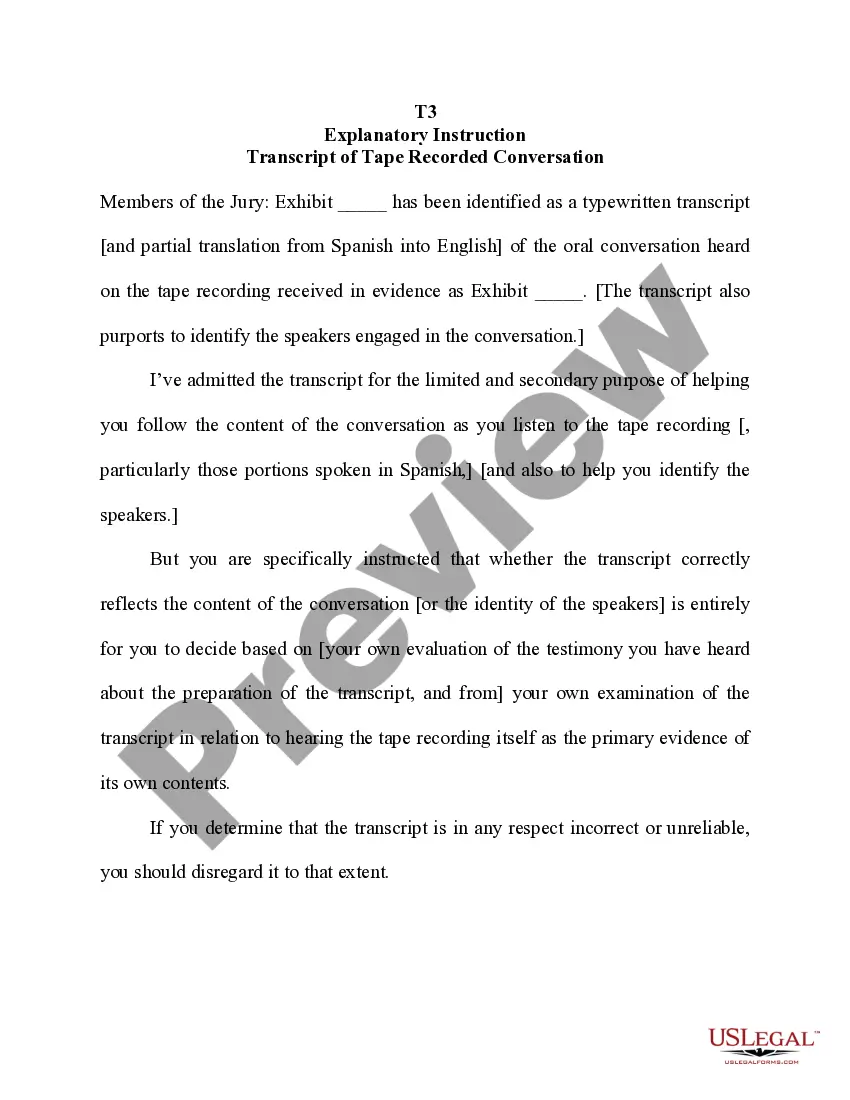
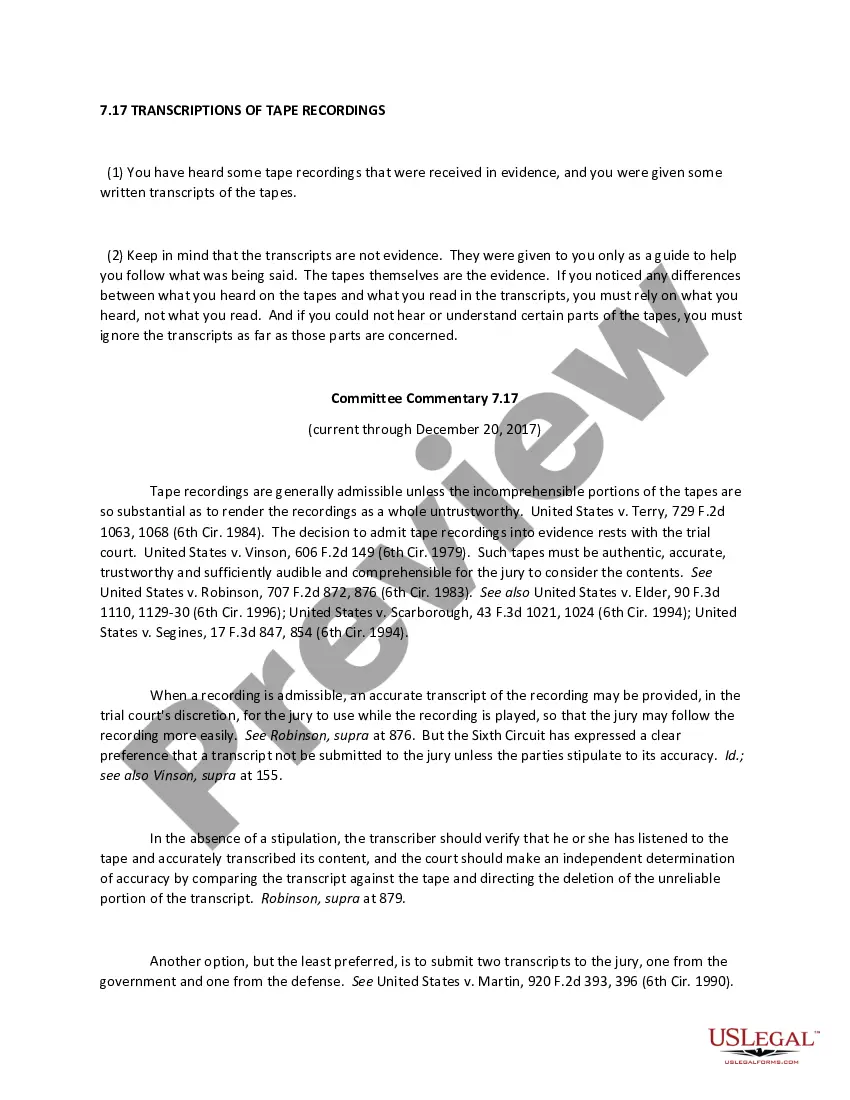
The cautionary instruction during trial regarding the transcript of a tape-recorded conversation is a legal document used in court proceedings. This form offers guidance to jurors on how to interpret a transcript that accompanies audio evidence. Unlike other evidentiary forms, this instruction emphasizes that the audio tape is the primary source of evidence; therefore, jurors must listen to the tape to determine its content and the identities of speakers, rather than relying solely on the transcript.
Main sections of this form
- Identification of the transcript as an aid to the tape recording.
- Clarification that the transcript is not definitive and should be evaluated against the audio evidence.
- Specific instruction for jurors to disregard inaccuracies in the transcript.
- Note about multiple transcripts due to differing interpretations of the conversation.
- Reiteration that the tape recording serves as the primary evidence.



Situations where this form applies
This form is necessary during trial proceedings when a tape-recorded conversation is introduced as evidence. It provides jurors with essential instructions on how to use the accompanying transcript while listening to the tape, ensuring they understand the importance of the audio as the primary evidence.
Who needs this form
- Judges overseeing cases involving tape-recorded evidence.
- Attorney representatives presenting audio evidence to a jury.
- Juries who require guidance on interpreting transcripts associated with audio recordings.
Steps to complete this form
- Identify the transcript and the corresponding tape recording as exhibits.
- Record the names of the speakers as per the transcript.
- Provide jurors with clear instructions on how to evaluate the transcript against the audio.
- Emphasize the importance of the tape as the primary evidence.
- Reiterate the significance of jurors' discretion in determining the trustworthiness of the transcript.
Is notarization required?
In most cases, this form does not require notarization. However, some jurisdictions or signing circumstances might. US Legal Forms offers online notarization powered by Notarize, accessible 24/7 for a quick, remote process.
Get your form ready online
Our built-in tools help you complete, sign, share, and store your documents in one place.
Make edits, fill in missing information, and update formatting in US Legal Forms—just like you would in MS Word.
Download a copy, print it, send it by email, or mail it via USPS—whatever works best for your next step.
Sign and collect signatures with our SignNow integration. Send to multiple recipients, set reminders, and more. Go Premium to unlock E-Sign.
If this form requires notarization, complete it online through a secure video call—no need to meet a notary in person or wait for an appointment.
We protect your documents and personal data by following strict security and privacy standards.

Make edits, fill in missing information, and update formatting in US Legal Forms—just like you would in MS Word.

Download a copy, print it, send it by email, or mail it via USPS—whatever works best for your next step.

Sign and collect signatures with our SignNow integration. Send to multiple recipients, set reminders, and more. Go Premium to unlock E-Sign.

If this form requires notarization, complete it online through a secure video call—no need to meet a notary in person or wait for an appointment.

We protect your documents and personal data by following strict security and privacy standards.
Common mistakes
- Failing to emphasize that the tape recording is the primary evidence can mislead jurors.
- Not clarifying the process for evaluating discrepancies between the transcript and the audio.
- Overlooking the need to instruct jurors on the existence of multiple transcripts.
Why complete this form online
- Convenience of immediate access to essential legal instructions.
- Editability allows for tailoring instructions to specific cases.
- Reliability, as the form is prepared by licensed attorneys and aligns with current legal standards.
Looking for another form?
Form popularity
FAQ
Typically, recorded conversations are inadmissible in court as hearsay. However, California allows an illegally recorded conversation to be admitted as evidence in criminal cases, provided it falls within a hearsay exception.
2ER 404(b) states: Evidence of other crimes, wrongs, or acts is not admissible to prove the character of a person in order to show action in conformity therewith.
If an alleged victim records a crime in progress or if the alleged perpetrator accidentally records the event, the audio recording could get used in court. Also, there are additional exceptions for the media, emergencies, threats, and harassment.
You can use recorded conversations as evidence in court as long as that evidence wasn't obtained illegally. By law, a search warrant is required to record conversations secretly.
Such statement is called oral evidence; (2) all documents including electronic records produced for the inspection of the Court; such documents are called documentary evidence.
The short answer: No. Anything presented in court still needs to comply with the Rules of Evidence, and in many cases recorded conversations will not make the cut.
Two-party consent States like California, Illinois, Florida, Pennsylvania, Connecticut, Michigan and Montana require the consent of all parties of the conversation before taping is allowed. Otherwise, it will be illegal, and not admissible in court.
IN ORDER TO SUBMIT SOUND RECORDINGS AS EVIDENCE IN court, a prosecutor or other attorney must establish that the tape is an authentic representation of the conversation it is said to record.