Escrow Agreement for Source Code of Software
What is this form?
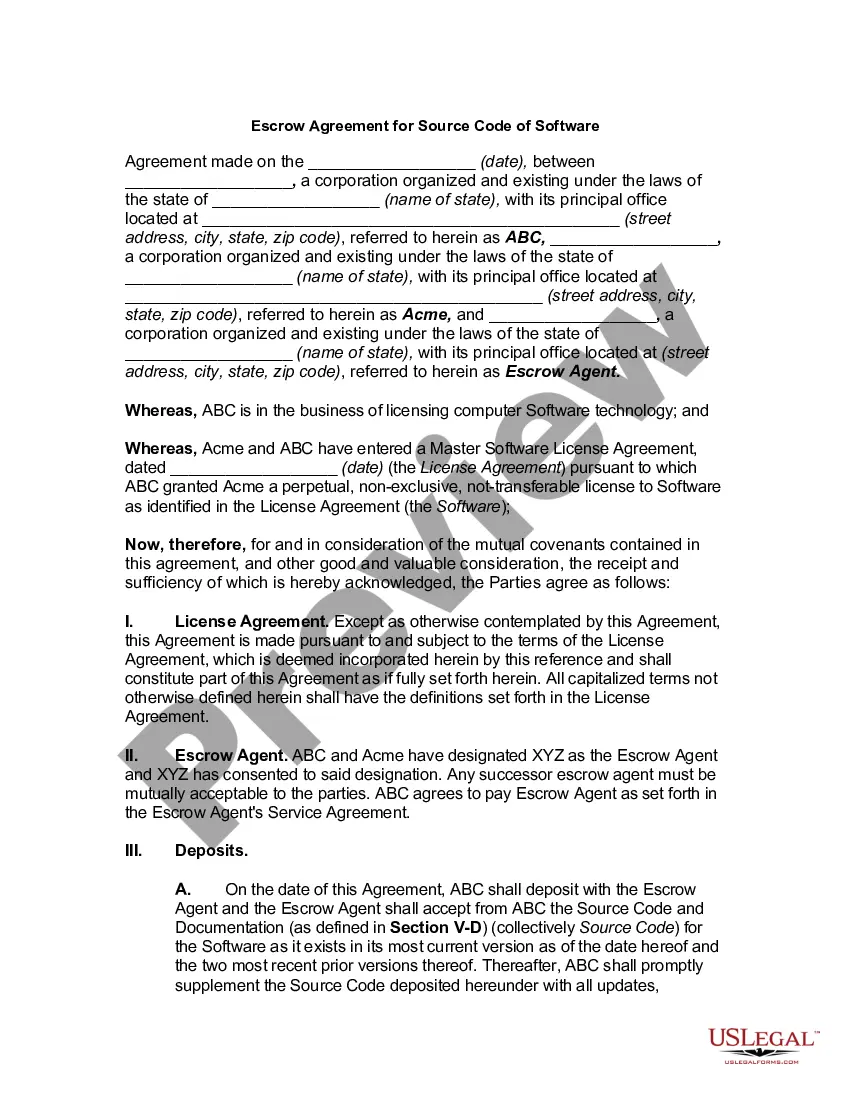
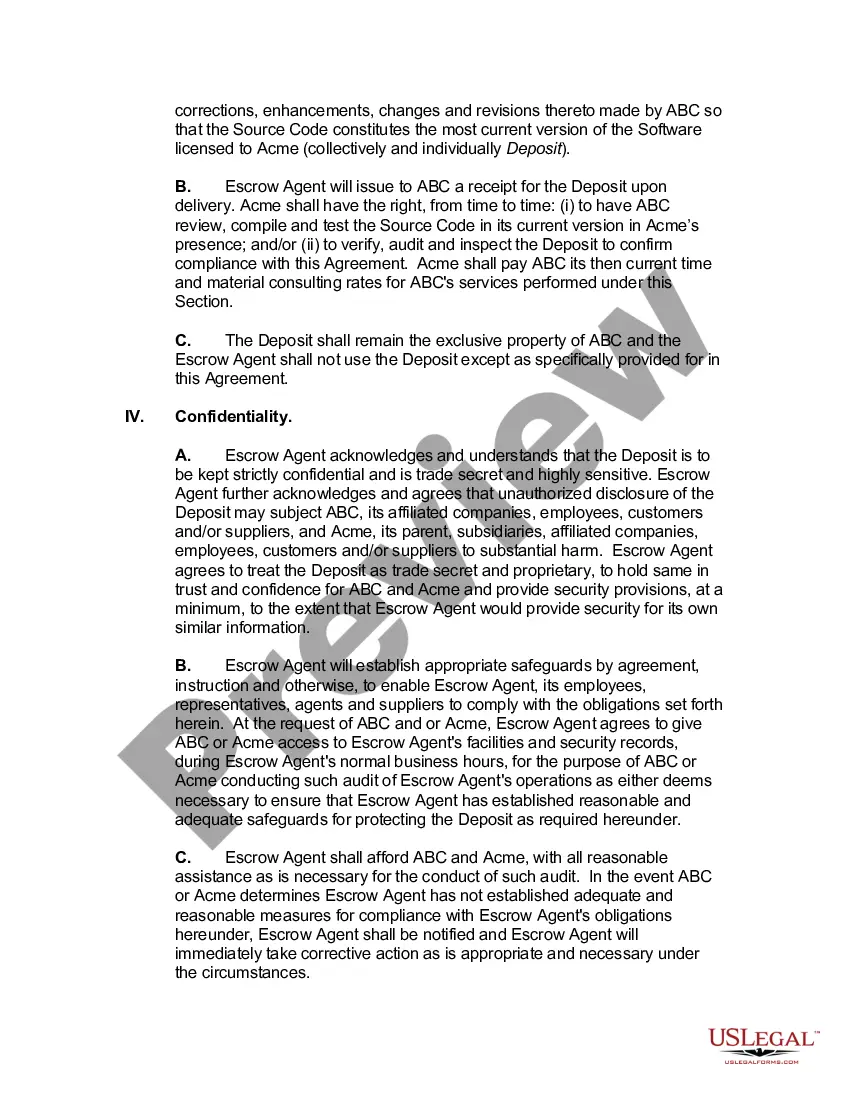
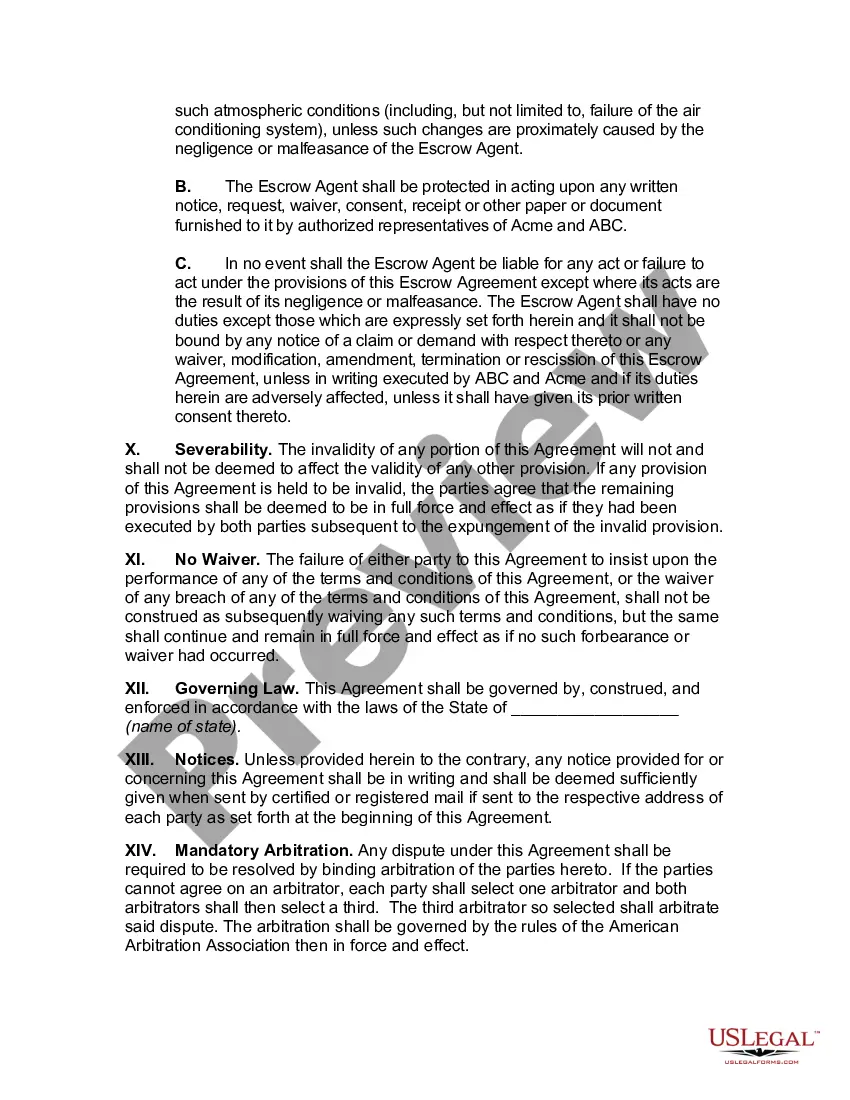
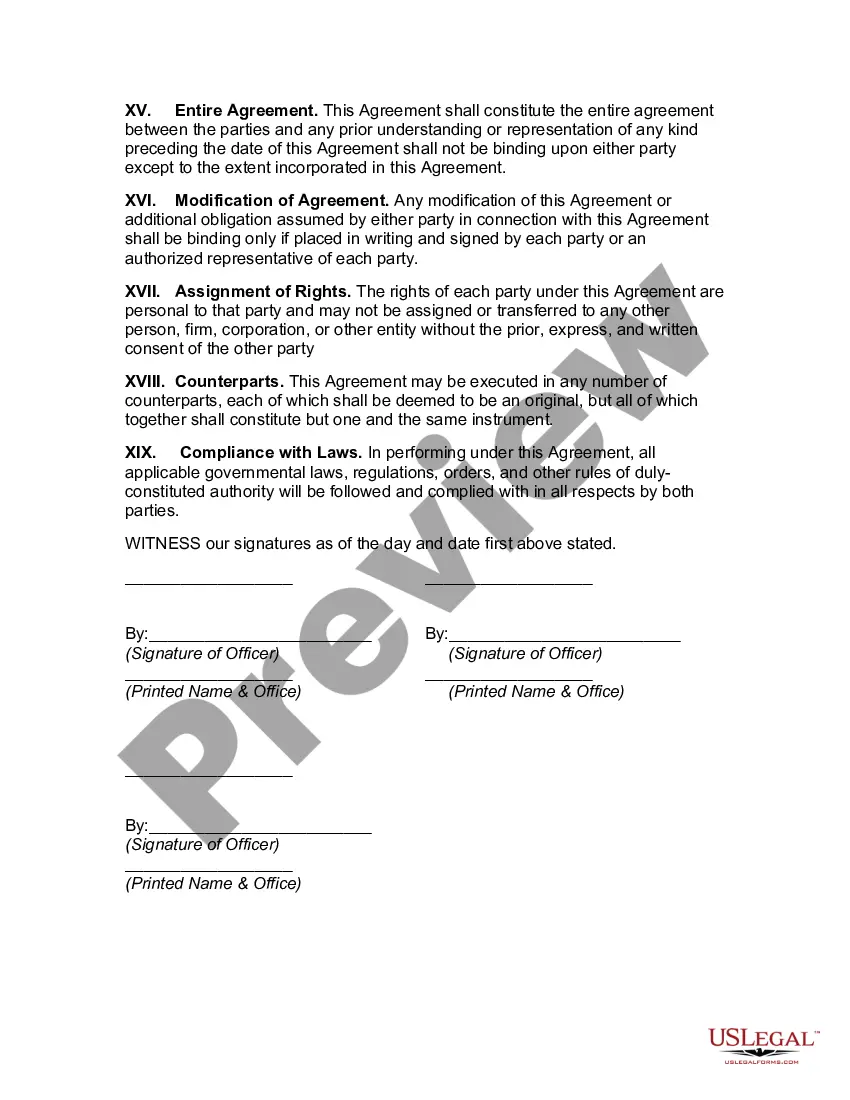
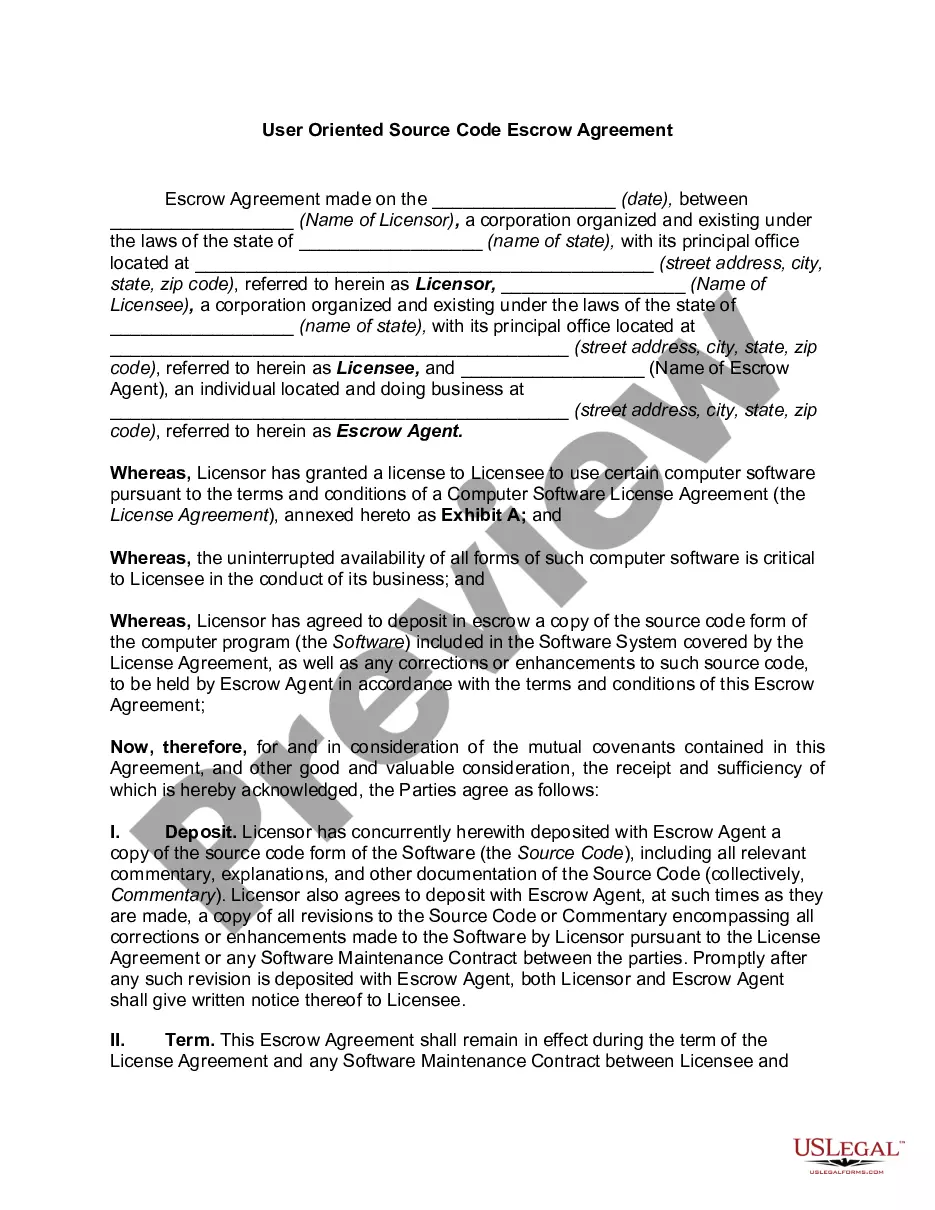
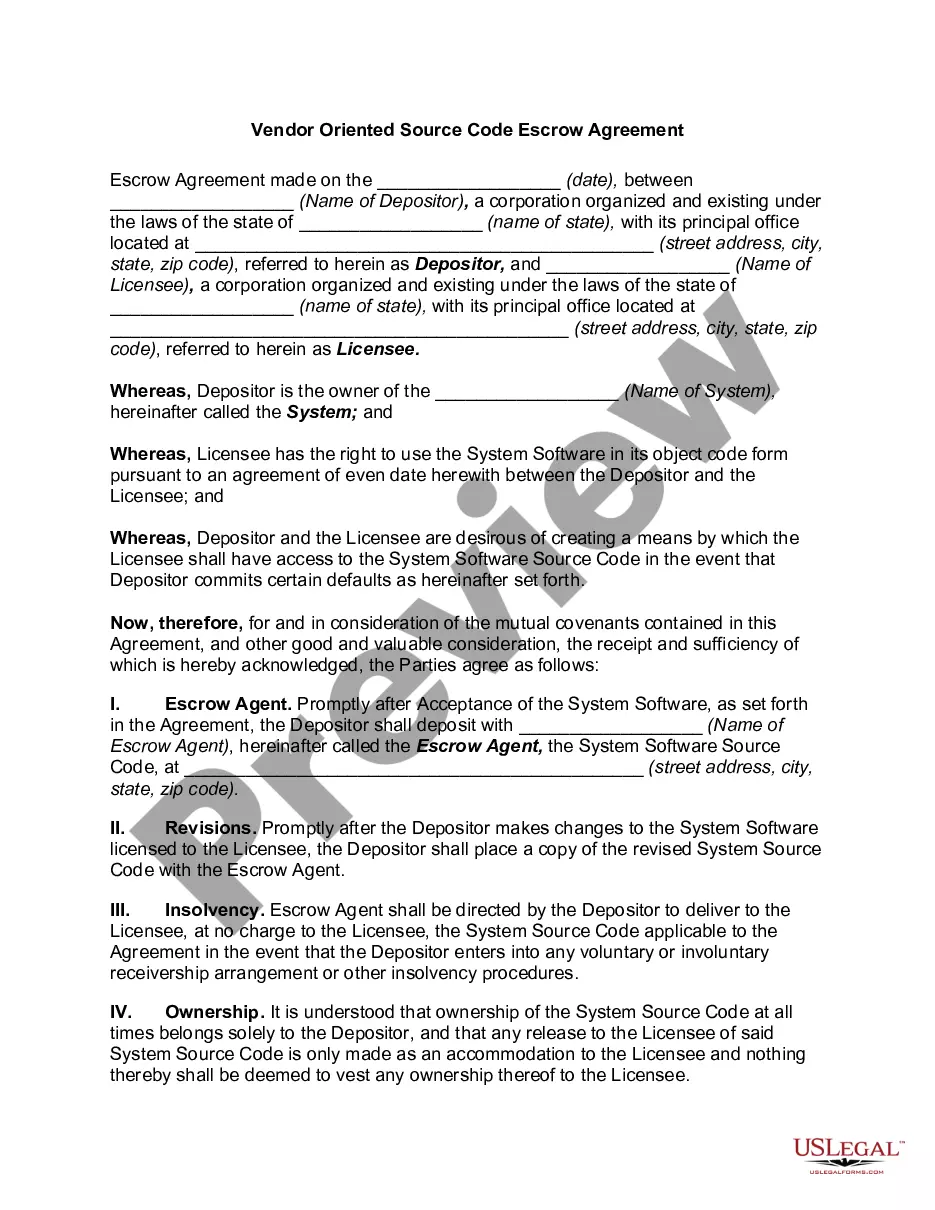
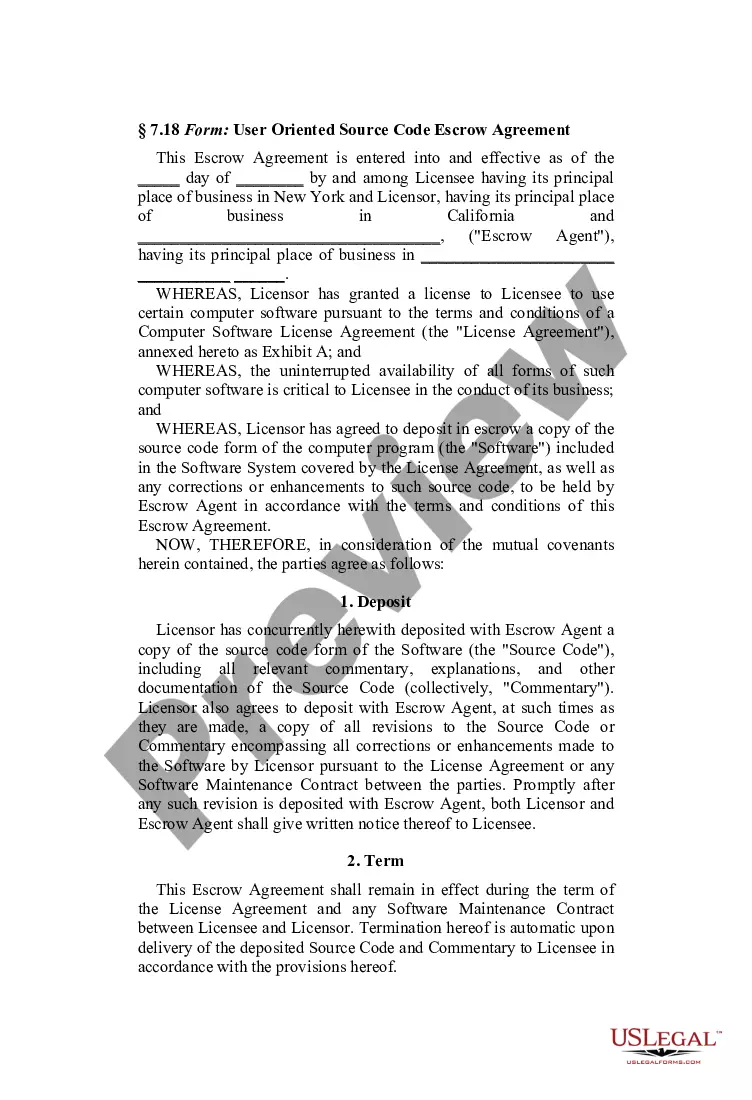
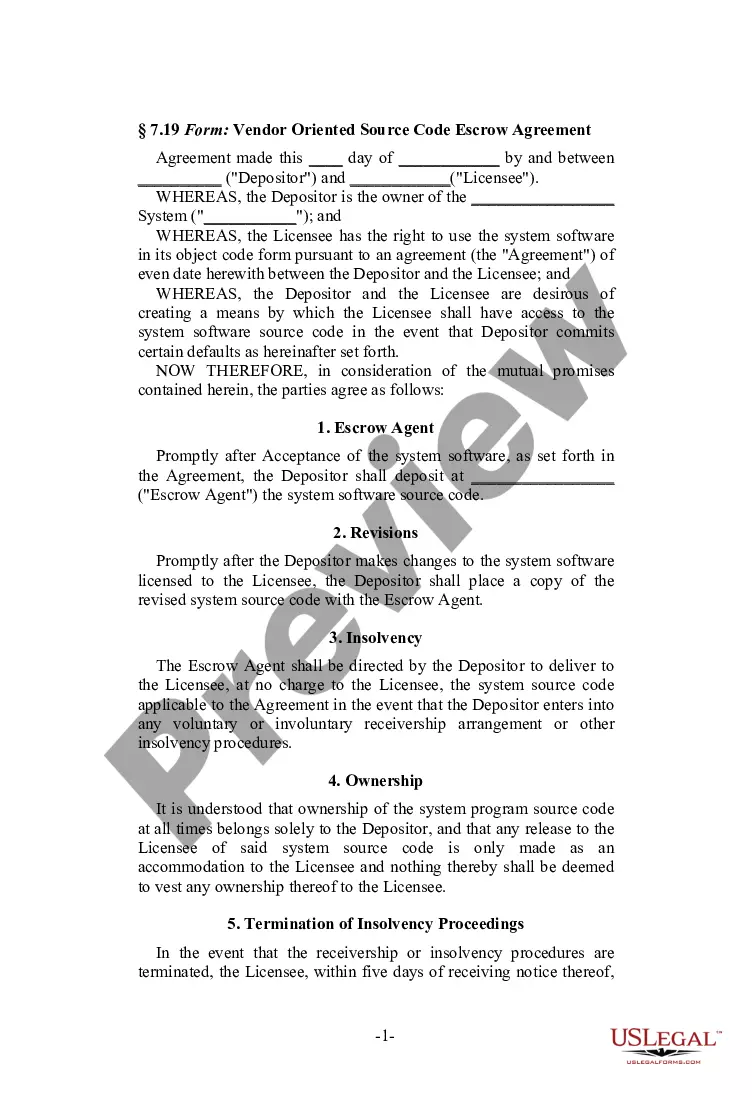
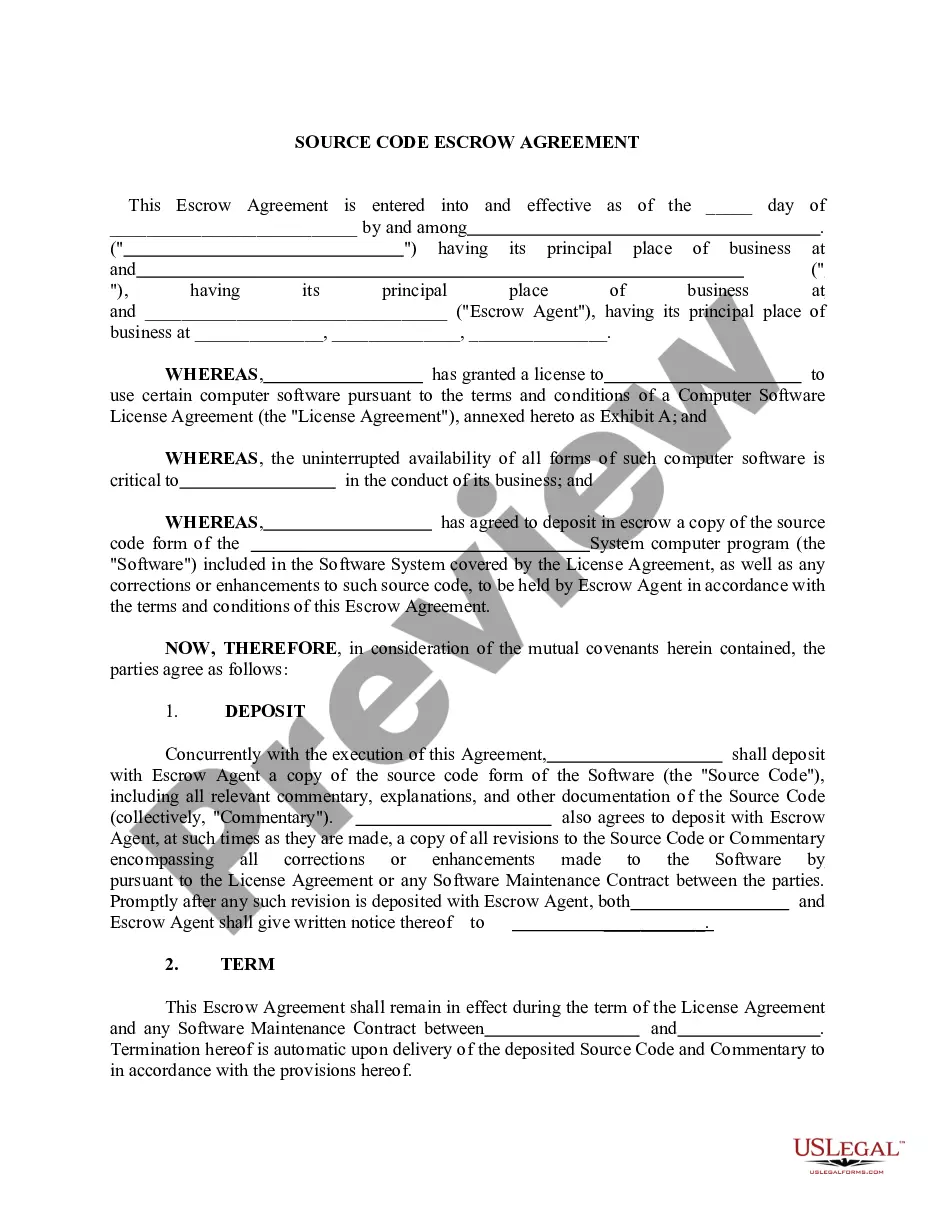
The Escrow Agreement for Source Code of Software is a legal document that outlines the terms under which a software company's source code is held in escrow by a neutral third party. This form ensures that the source code is kept confidential and secure, allowing the licensed party to access it under specified conditions, such as the original software developer going out of business. This agreement differs from other contracts by focusing specifically on the secure handling and eventual release of source code, which is crucial for software maintenance and continuation of service.
Key components of this form
- Identification of parties: Specifies the parties involved, including the software owner (ABC), the licensee (Acme), and the escrow agent (XYZ).
- Deposit terms: Details the obligations for depositing source code and any updates into escrow.
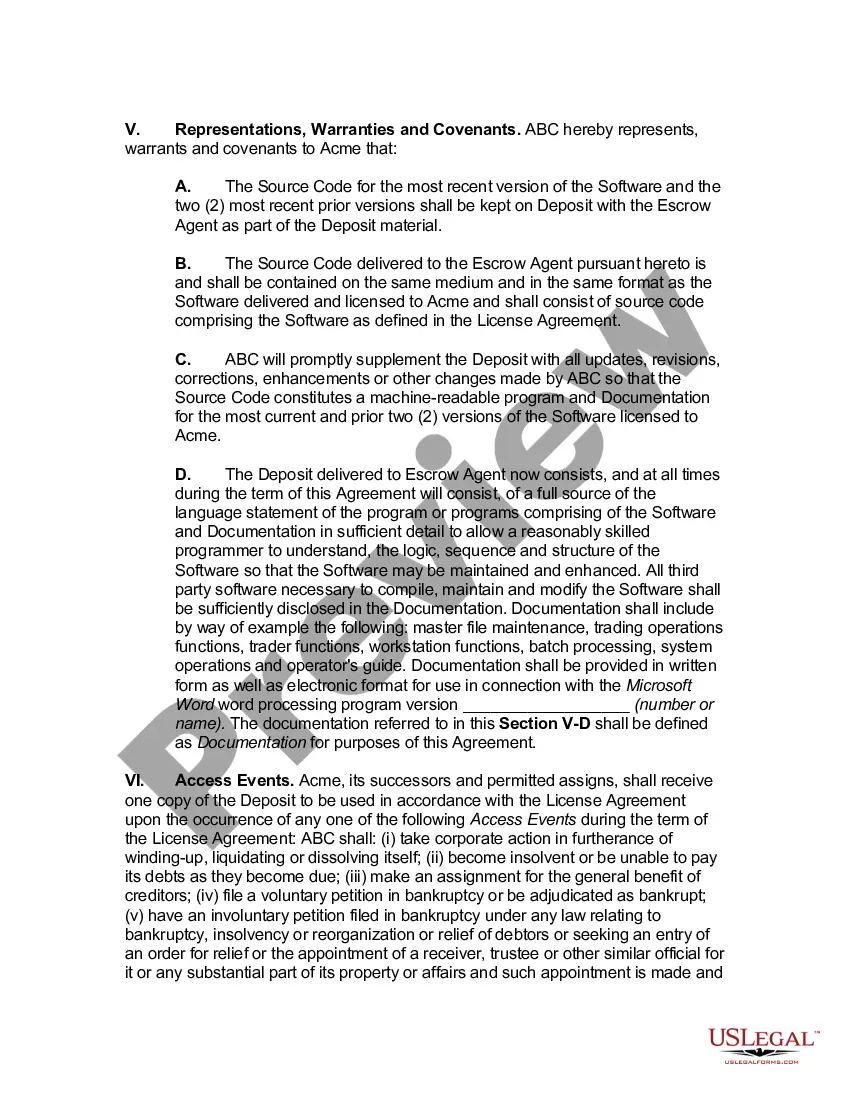
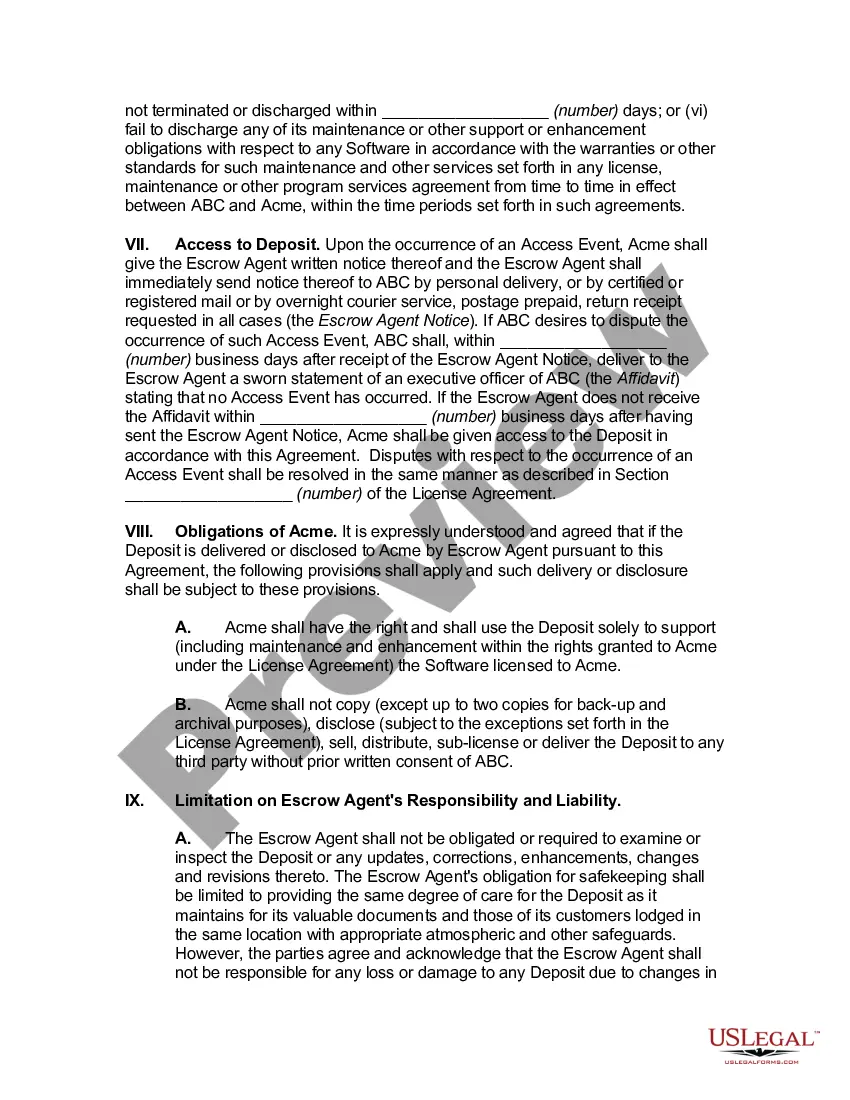
- Access conditions: Outlines the scenarios under which the licensee can access the source code.
- Confidentiality provisions: Establishes that the escrow agent must treat the source code as confidential and proprietary information.
- Limitation of liability: Defines the responsibilities and limits on liability for the escrow agent regarding the deposited materials.
- Legal compliance: References governing laws and stipulates compliance with applicable regulations.
When to use this document
This form should be used when a software licensing agreement is executed between a software developer and a client, where the source code needs to be protected. It is essential when the developerâs financial stability may be in question, ensuring that the client retains access to necessary resources for continued software support and maintenance in case of unforeseen issues such as bankruptcy or withdrawal of support from the developer.
Who should use this form
- Software developers looking to protect their intellectual property while ensuring their clients have access to source code under defined conditions.
- Businesses engaging in software licensing that require secure access to the source code for maintenance or potential future development.
- Escrow agents who facilitate the safe storage and management of software source codes.
How to complete this form
- Identify the parties involved: Fill in the names and addresses of the software developer, licensee, and escrow agent.
- Specify the date of the agreement: Include the date on which the agreement is entered into.
- Detail the deposit terms: Outline what source code and documentation are being deposited and their version history.
- Include access conditions: Clearly list the events that would allow the licensee to access the source code.
- Add signature blocks: Ensure all parties sign and date the agreement to make it legally binding.
Does this document require notarization?
This form does not typically require notarization unless specified by local law. However, it is advisable to check with legal counsel in your jurisdiction to ensure all requirements for enforcement are met.
Get your form ready online
Our built-in tools help you complete, sign, share, and store your documents in one place.
Make edits, fill in missing information, and update formatting in US Legal Forms—just like you would in MS Word.
Download a copy, print it, send it by email, or mail it via USPS—whatever works best for your next step.
Sign and collect signatures with our SignNow integration. Send to multiple recipients, set reminders, and more. Go Premium to unlock E-Sign.
If this form requires notarization, complete it online through a secure video call—no need to meet a notary in person or wait for an appointment.
We protect your documents and personal data by following strict security and privacy standards.

Make edits, fill in missing information, and update formatting in US Legal Forms—just like you would in MS Word.

Download a copy, print it, send it by email, or mail it via USPS—whatever works best for your next step.

Sign and collect signatures with our SignNow integration. Send to multiple recipients, set reminders, and more. Go Premium to unlock E-Sign.

If this form requires notarization, complete it online through a secure video call—no need to meet a notary in person or wait for an appointment.

We protect your documents and personal data by following strict security and privacy standards.
Mistakes to watch out for
- Failing to provide complete identification of all parties involved in the agreement.
- Not specifying the exact contents of the source code deposit.
- Omitting access conditions, leading to potential disputes later.
- Neglecting to establish clear confidentiality terms for the escrow agent.
Advantages of online completion
- Convenience: Download and fill out the form easily from anywhere, saving time.
- Editability: Customize the form to fit specific needs without starting from scratch.
- Legal consistency: The form is drafted by licensed attorneys, ensuring it meets legal standards.
Looking for another form?



Form popularity
FAQ
A SaaS escrow agreement exists to outline how the software data will be delivered from the software as a service, or SaaS provider.
Escrow is a legal arrangement in which a third party temporarily holds large sums money or property until a particular condition has been met (e.g., the fulfillment of a purchase agreement).
You can verify your identity on Escrow.com by visiting the Verify Your Identity page and select 'Verify as Company'. On this page you must confirm your personal details and address. Then you must upload a valid government-issued ID and a proof of address document such as a recent utility bill or bank statement.
A software escrow is a service that helps protect all parties involved in a software license by having a neutral 3rd party escrow agent hold source code, data, and documentation until a mutually-agreed-upon event occurs.
Source code escrow is the deposit of the source code of software with a third-party escrow agent. Escrow is typically requested by a party licensing software (the licensee), to ensure maintenance of the software instead of abandonment or orphaning.
Escrow is a legal arrangement in which a third party temporarily holds large sums money or property until a particular condition has been met (e.g., the fulfillment of a purchase agreement).
Software escrow, also known as technology escrow, is for both the developer and the licensee to mitigate risk when negotiating a software or technology license.The goal is to get the end user up and running whether the technology is on-premises or Software-as-a-Service.
A thorough verification of the materials provides assurance that, in the event of a deposit release, the technology user (also known as the licensee or the escrow beneficiary) would be able to read, recreate and maintain the developer's technology in-house in essence, step into the shoes of their vendor.