Vendor Oriented Source Code Escrow Agreement
About this form
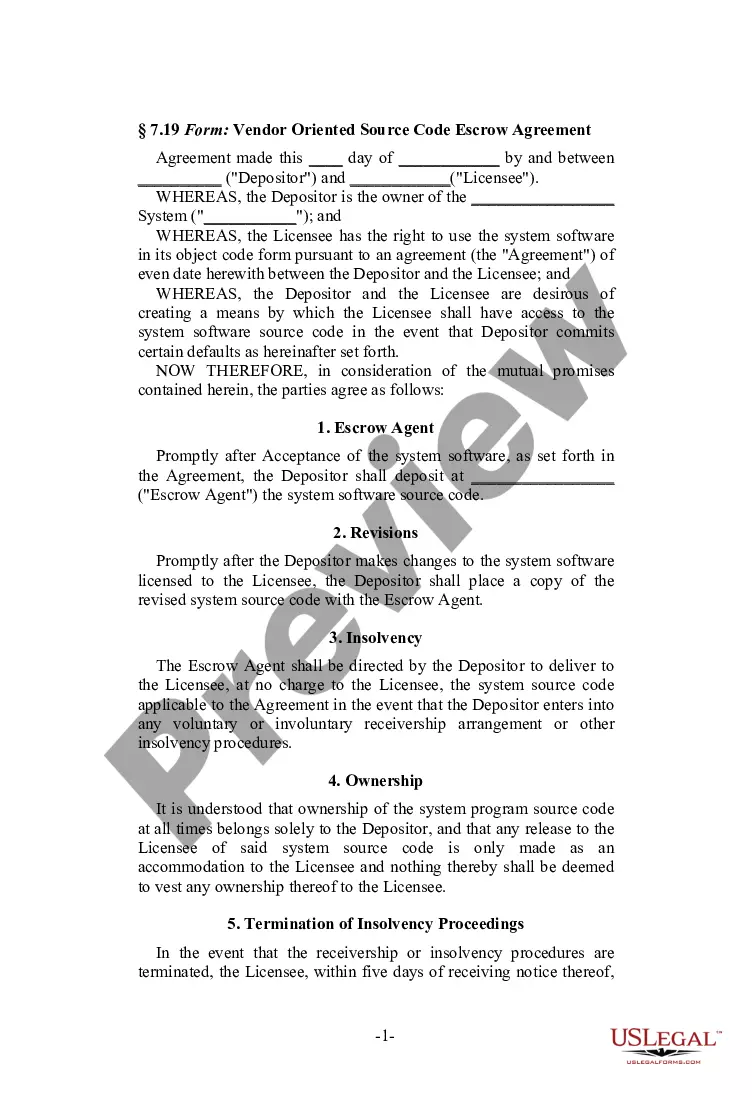
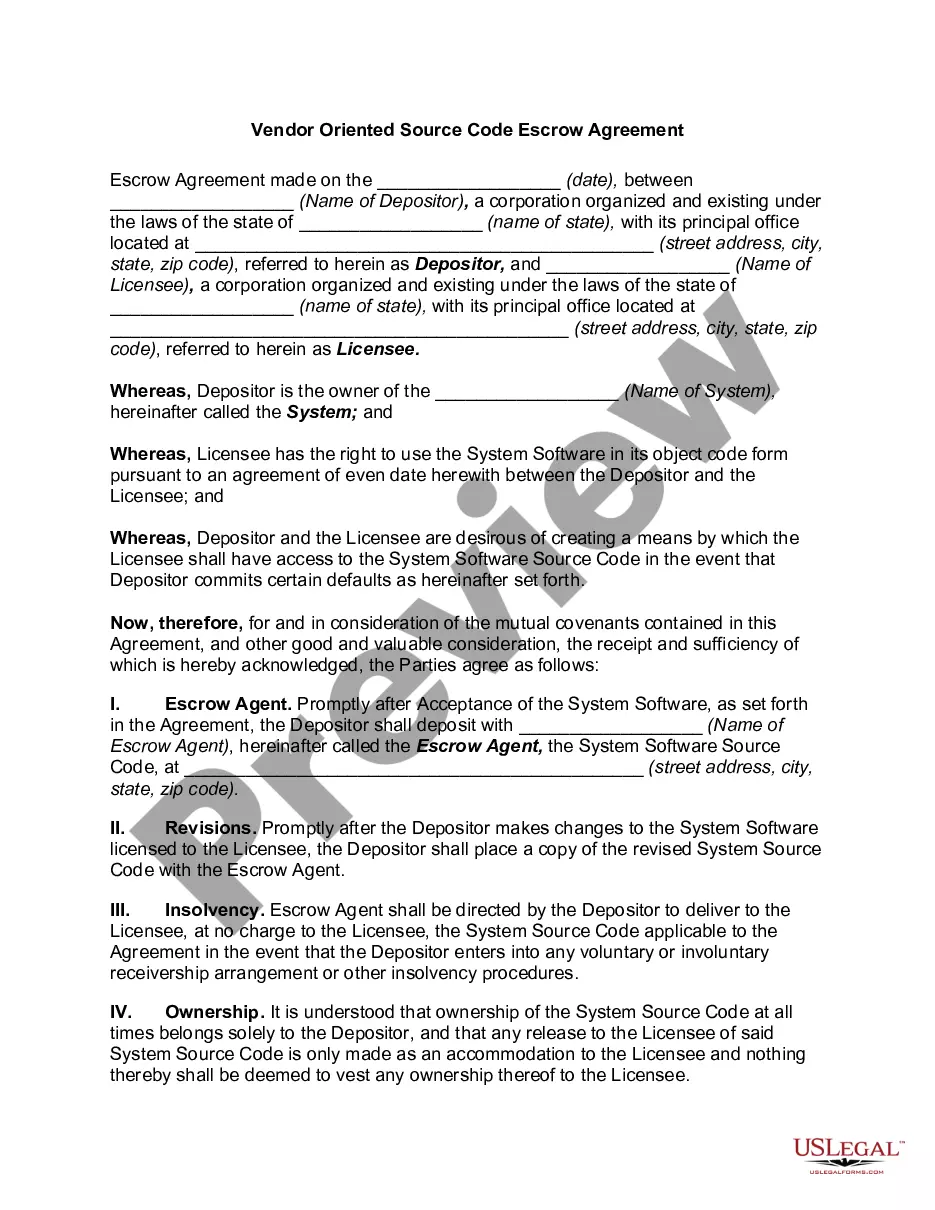
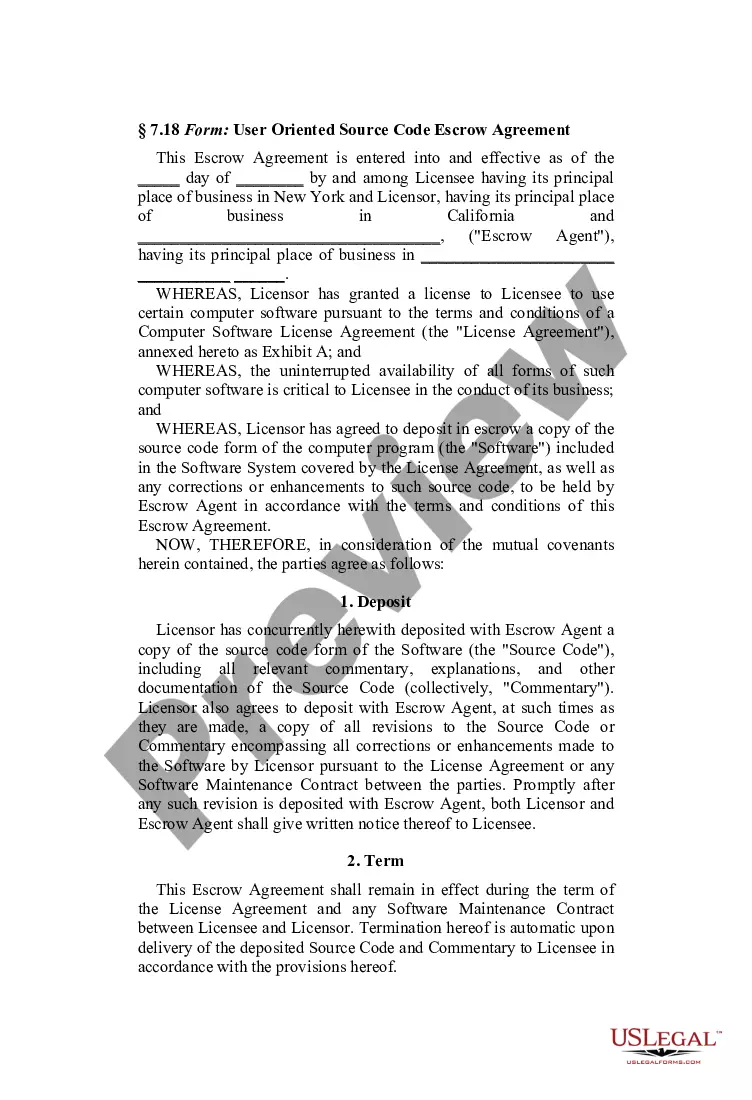
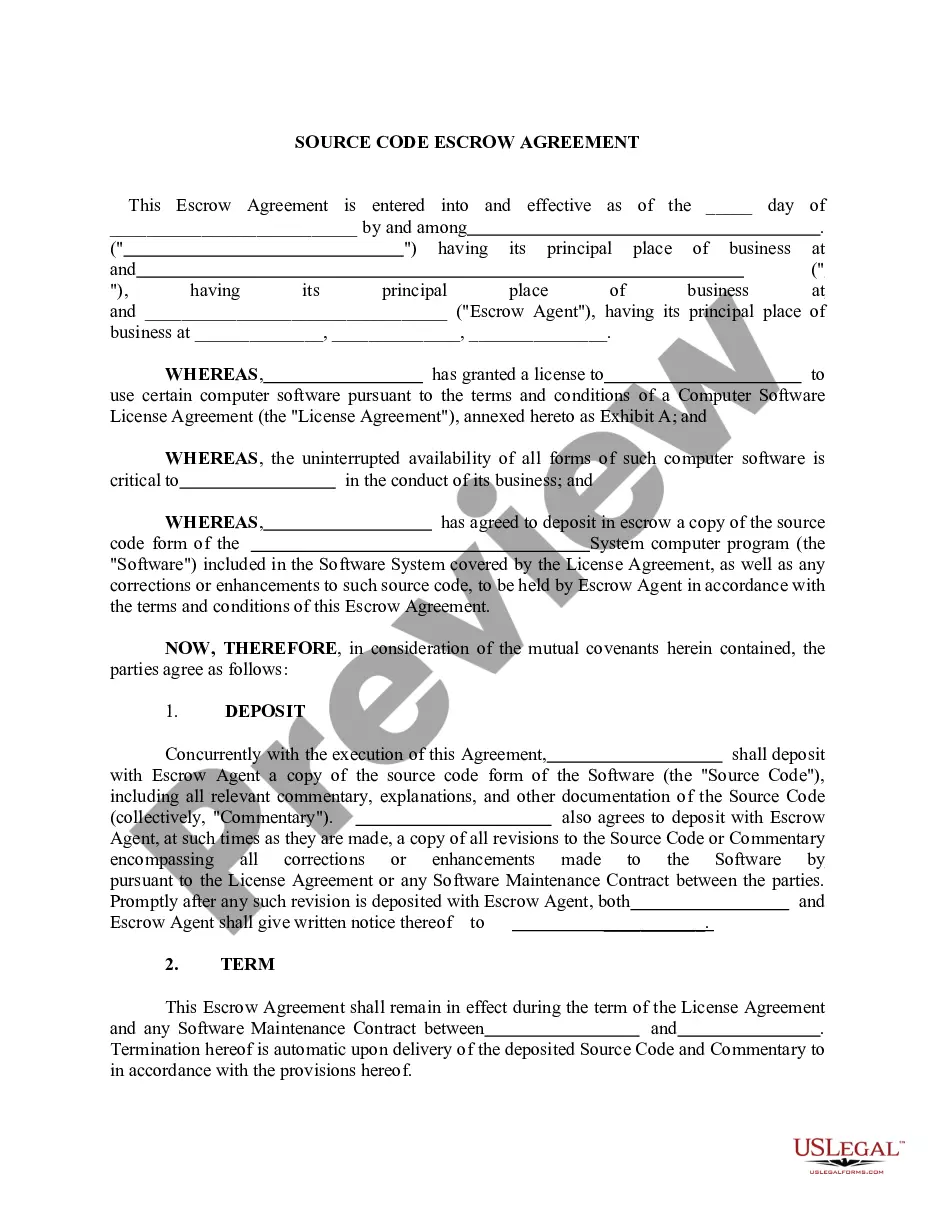
The Vendor Oriented Source Code Escrow Agreement is a legal document used primarily in the software and internet industries. This form ensures that a Licensee has access to the source code of a software system if the Depositor encounters certain defaults or insolvency issues. Unlike standard contracts, this agreement focuses specifically on securing the source code, which is vital for the functionality and maintenance of software applications.
Key parts of this document
- Identification of the Depositor and Licensee.
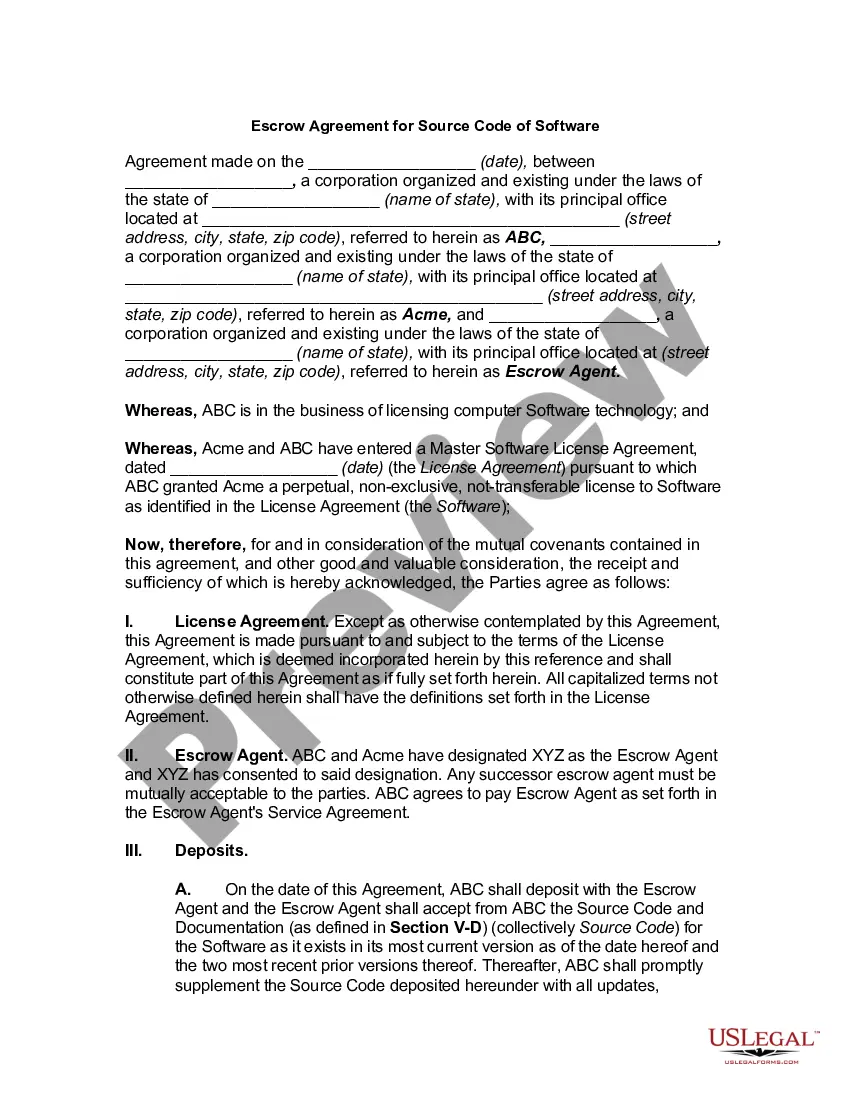
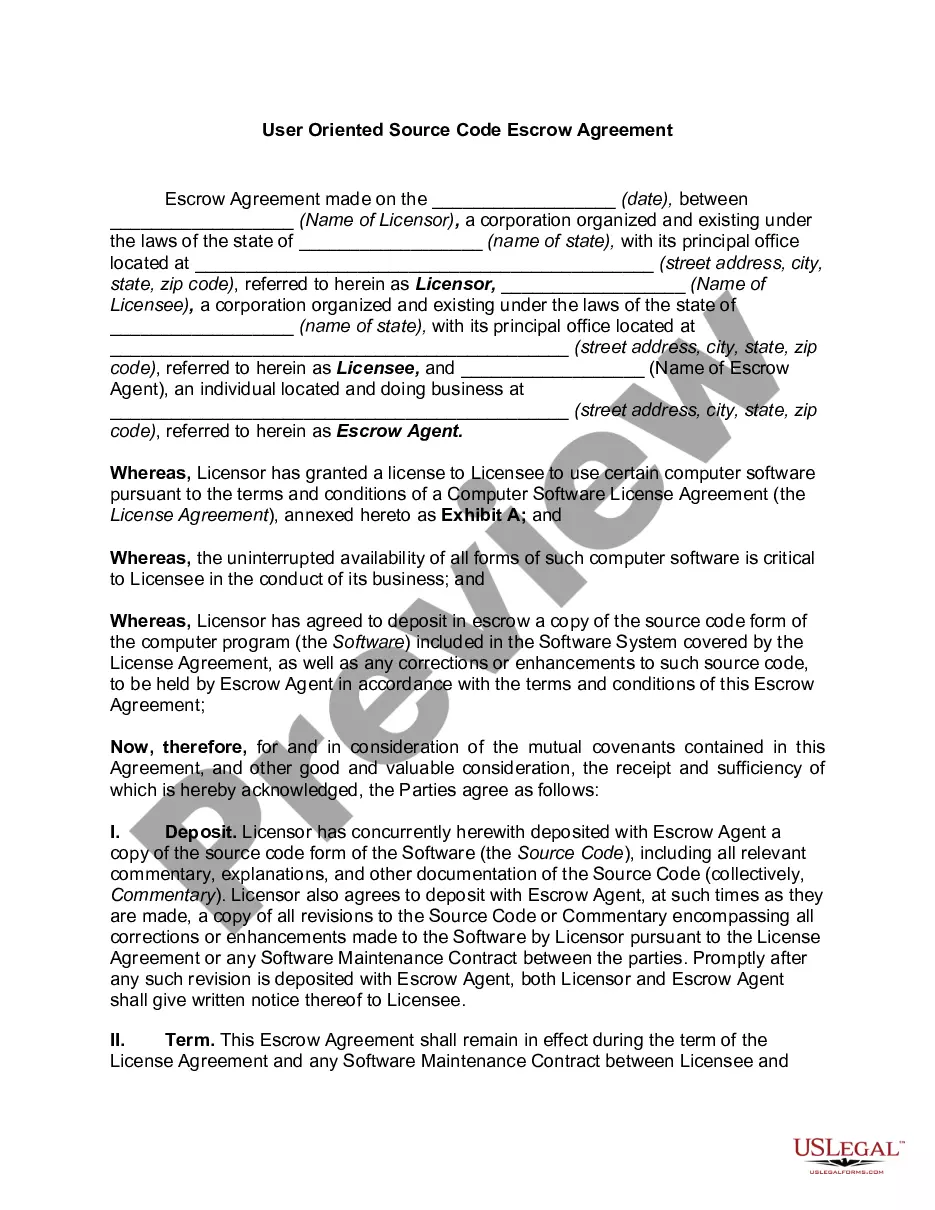
- Details regarding the source code deposit with an Escrow Agent.
- Conditions under which the Licensee can access the source code.
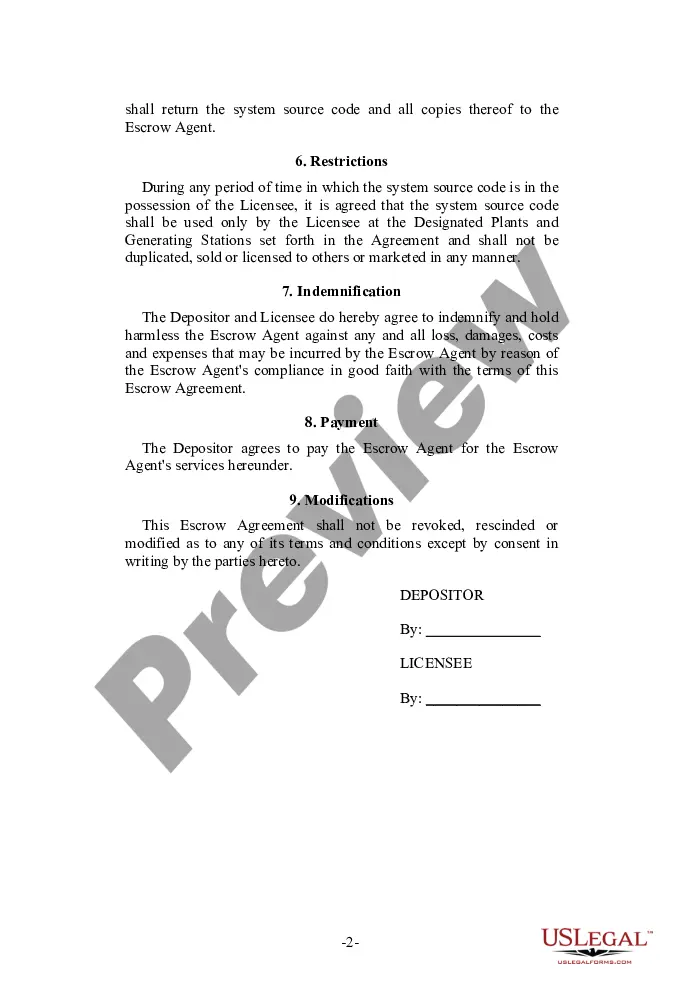
- Provisions regarding ownership of the source code.
- Restrictions on the use of the source code by the Licensee.
- Indemnification clauses protecting the Escrow Agent.
When to use this form
This form is essential when a software developer (Depositor) enters into a licensing agreement with a user (Licensee). It is particularly useful in situations where ongoing access to the source code is critical for the Licensee, especially in cases of the Depositor's financial instability or if the developer ceases operations. Businesses involved in complex software applications should consider this form to protect their investment and operational continuity.
Who this form is for
- Software developers seeking to secure their intellectual property while providing access to clients.
- Businesses that license software and wish to ensure continuity in case of vendor issues.
- Legal professionals advising clients in technology and software agreements.
Instructions for completing this form
- Identify the parties involved: the Depositor and the Licensee.
- Fill in the name of the software system and its description.
- Specify the Escrow Agent who will hold the source code.
- Outline the conditions under which the Licensee can access the source code.
- Include signature lines for both the Depositor and Licensee to execute the agreement.
Does this form need to be notarized?
This form does not typically require notarization unless specified by local law. However, having it notarized can add an extra layer of authenticity and protect the interests of all parties involved.
Get your form ready online
Our built-in tools help you complete, sign, share, and store your documents in one place.
Make edits, fill in missing information, and update formatting in US Legal Forms—just like you would in MS Word.
Download a copy, print it, send it by email, or mail it via USPS—whatever works best for your next step.
Sign and collect signatures with our SignNow integration. Send to multiple recipients, set reminders, and more. Go Premium to unlock E-Sign.
If this form requires notarization, complete it online through a secure video call—no need to meet a notary in person or wait for an appointment.
We protect your documents and personal data by following strict security and privacy standards.

Make edits, fill in missing information, and update formatting in US Legal Forms—just like you would in MS Word.

Download a copy, print it, send it by email, or mail it via USPS—whatever works best for your next step.

Sign and collect signatures with our SignNow integration. Send to multiple recipients, set reminders, and more. Go Premium to unlock E-Sign.

If this form requires notarization, complete it online through a secure video call—no need to meet a notary in person or wait for an appointment.

We protect your documents and personal data by following strict security and privacy standards.
Typical mistakes to avoid
- Failing to clearly define the system software in question.
- Not specifying the responsibilities of the Escrow Agent.
- Overlooking the need for signatures from all parties involved.
- Neglecting to establish conditions for access to the source code in case of insolvency.
Advantages of online completion
- Convenient access to a professionally drafted legal template.
- Edit and customize the agreement to meet specific needs easily.
- Reliable legal framework to protect software licenses and source code.
Legal use & context
- The source code escrow agreement is enforceable under contract law.
- It provides protection for licensees against vendor defaults.
- Clear stipulations in this agreement minimize potential disputes regarding the use and access of source code.
Main things to remember
- The Vendor Oriented Source Code Escrow Agreement is essential for software licensing security.
- It ensures access to critical source code under specific conditions.
- This form is suitable for various parties, including vendors, licensees, and escrow agents.
- Accurate completion of the form is crucial for enforceability.
Looking for another form?





Form popularity
FAQ
You can verify your identity on Escrow.com by visiting the Verify Your Identity page and select 'Verify as Company'. On this page you must confirm your personal details and address. Then you must upload a valid government-issued ID and a proof of address document such as a recent utility bill or bank statement.
A thorough verification of the materials provides assurance that, in the event of a deposit release, the technology user (also known as the licensee or the escrow beneficiary) would be able to read, recreate and maintain the developer's technology in-house in essence, step into the shoes of their vendor.
Escrow is a legal arrangement in which a third party temporarily holds large sums money or property until a particular condition has been met (e.g., the fulfillment of a purchase agreement).
Each month, the lender deposits the escrow portion of your mortgage payment into the account and pays your insurance premiums and real estate taxes when they are due. Your lender may require an escrow cushion, as allowed by state law, to cover unanticipated costs, such as a tax increase.
Source code escrow is the deposit of the source code of software with a third-party escrow agent. Escrow is typically requested by a party licensing software (the licensee), to ensure maintenance of the software instead of abandonment or orphaning.
Software escrow, also known as technology escrow, is for both the developer and the licensee to mitigate risk when negotiating a software or technology license.The goal is to get the end user up and running whether the technology is on-premises or Software-as-a-Service.
A rough calculation of escrow fees in California usually comes out to $2 per $1,000 of the property, plus $250.
A software escrow is a service that helps protect all parties involved in a software license by having a neutral 3rd party escrow agent hold source code, data, and documentation until a mutually-agreed-upon event occurs.
When it comes to the escrow fees that you'll need to pay, they are different for each escrow company, although they typically range from $1.75 to $2.75 per every thousand of the purchase price. Along with these fees, you will also need to pay a base fee of around $200-$400 depending on the escrow company you use.
Escrow is a legal arrangement in which a third party temporarily holds large sums money or property until a particular condition has been met (e.g., the fulfillment of a purchase agreement).