Complaint or Petition for Injunctive Relief Against Adjoining Landowner for Refusing to Remove Fence on Easement of Plaintiff or Petitioner
What this document covers
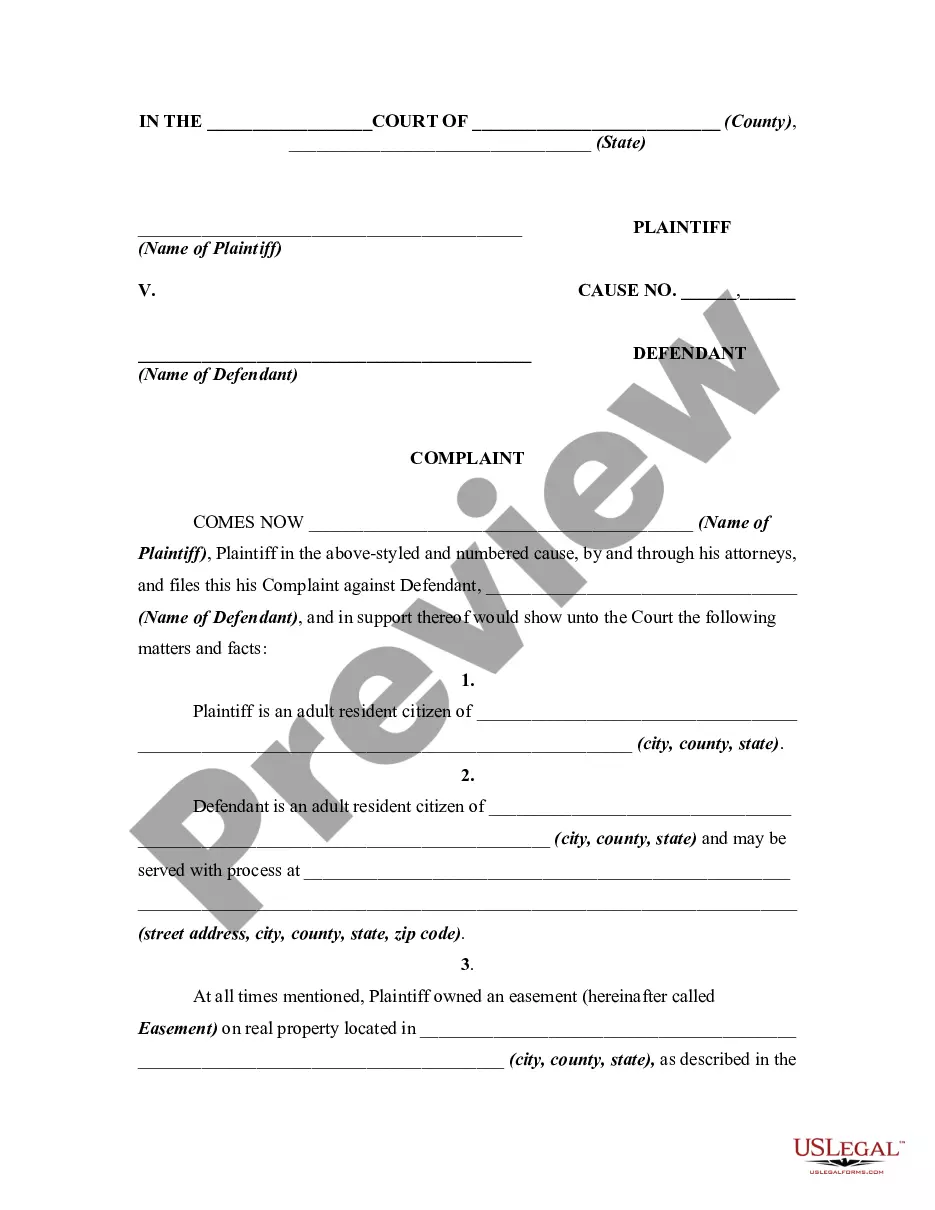
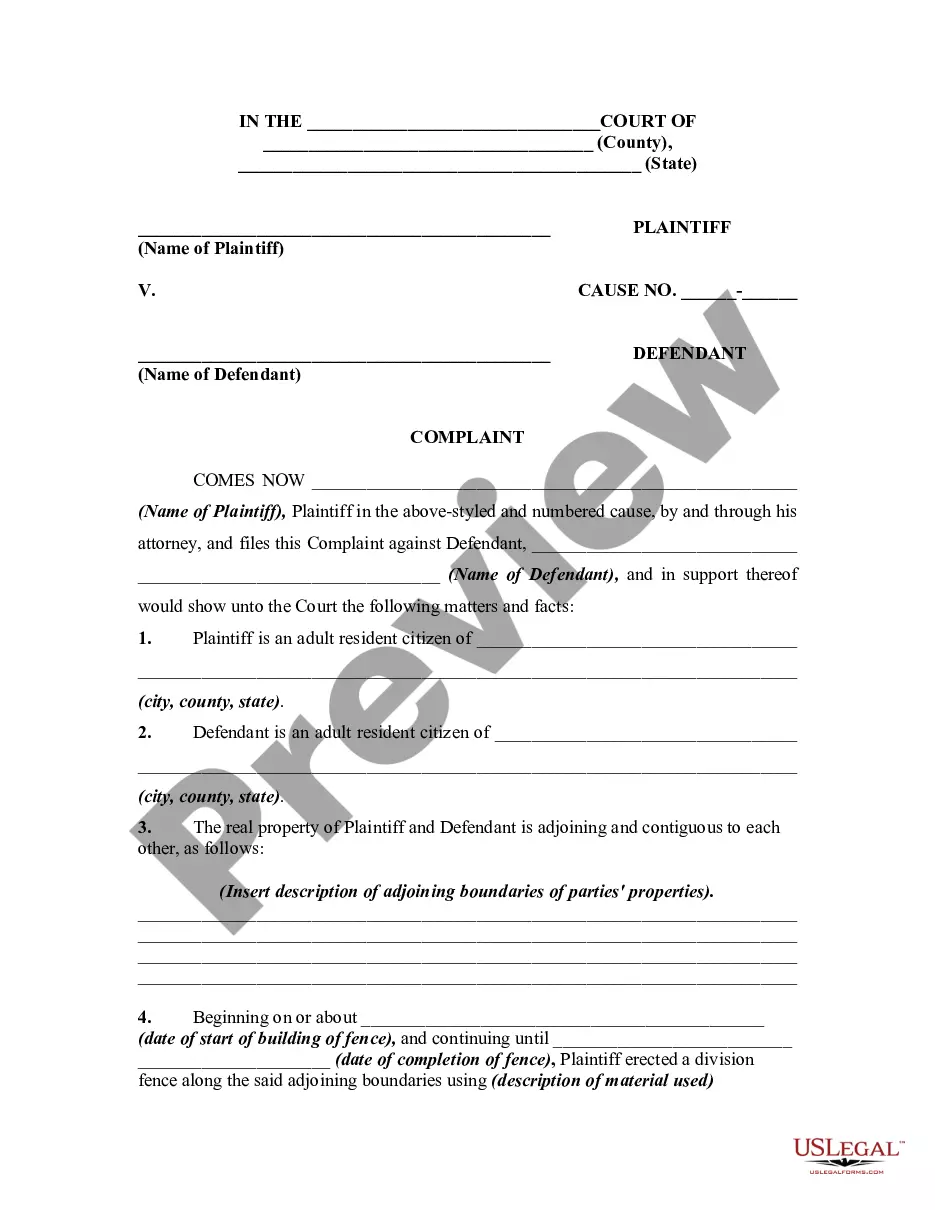
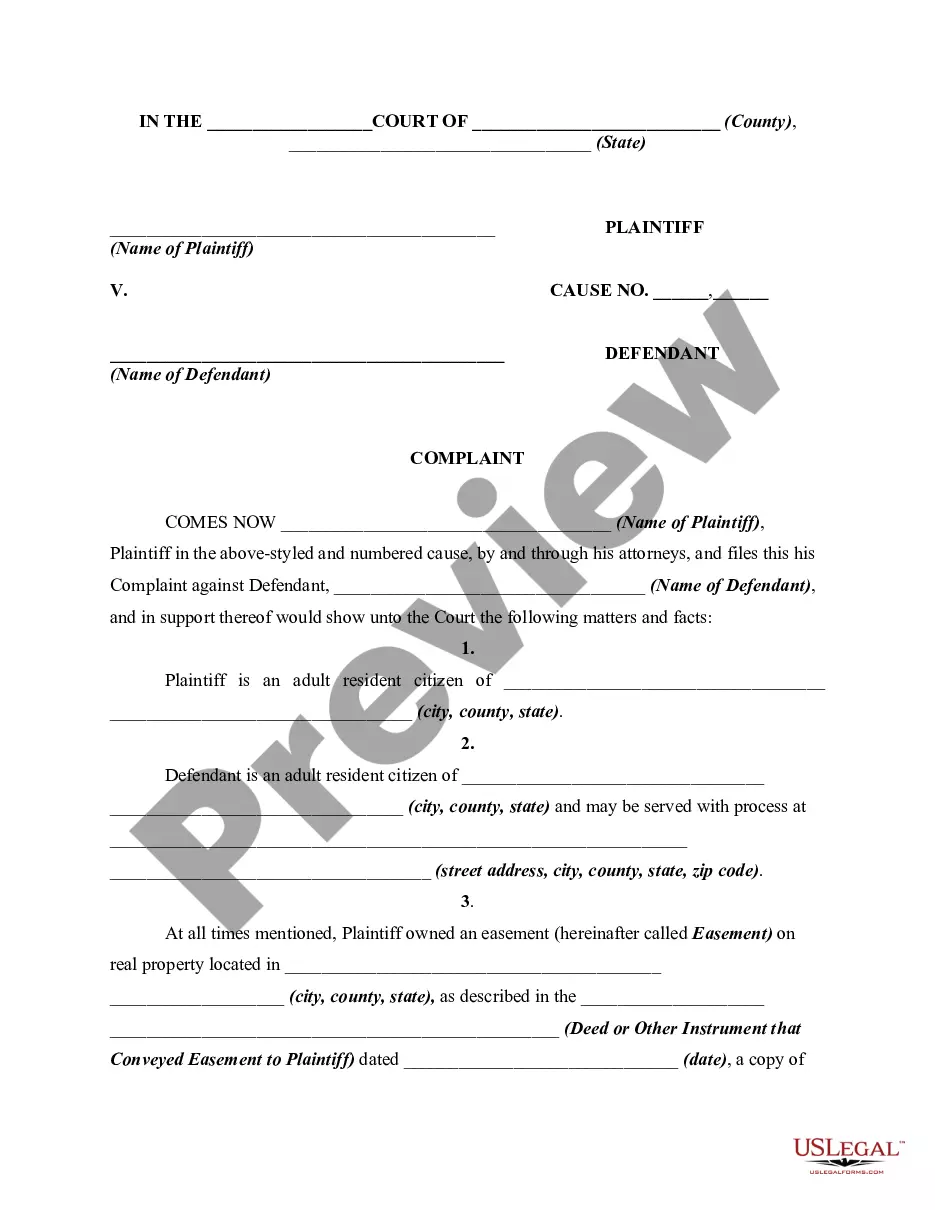
The Complaint or Petition for Injunctive Relief Against Adjoining Landowner for Refusing to Remove Fence on Easement of Plaintiff or Petitioner is a legal document used to request a court order, known as an injunction. This form is particularly relevant when a landowner needs to compel an adjoining property owner to remove a structure, such as a fence, that encroaches upon an easement. Unlike other property-related forms, this specific petition focuses on enforcing property rights through the legal system, ensuring that the plaintiff can access their easement without obstruction.
Main sections of this form
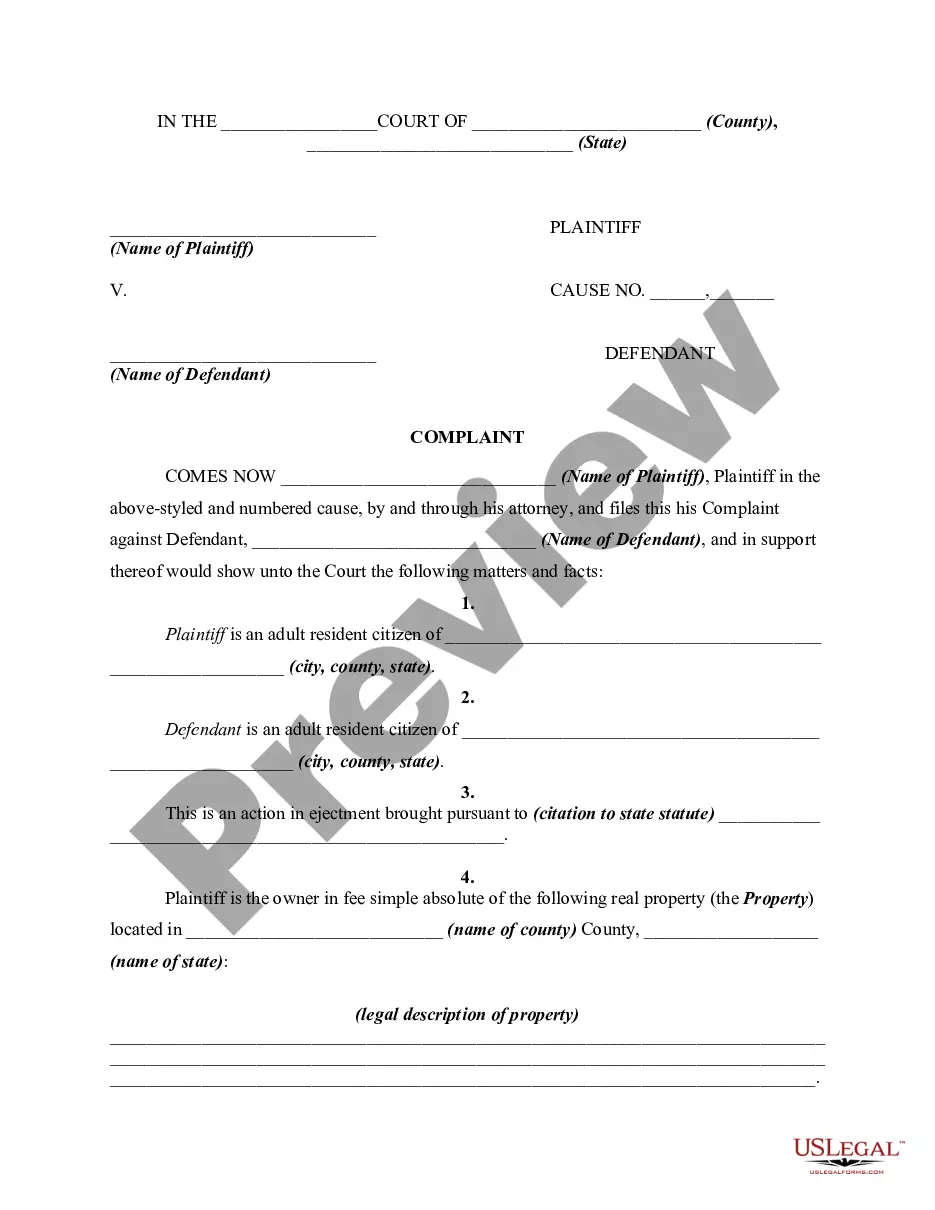
- Identification of the plaintiff and defendant, including names and addresses.
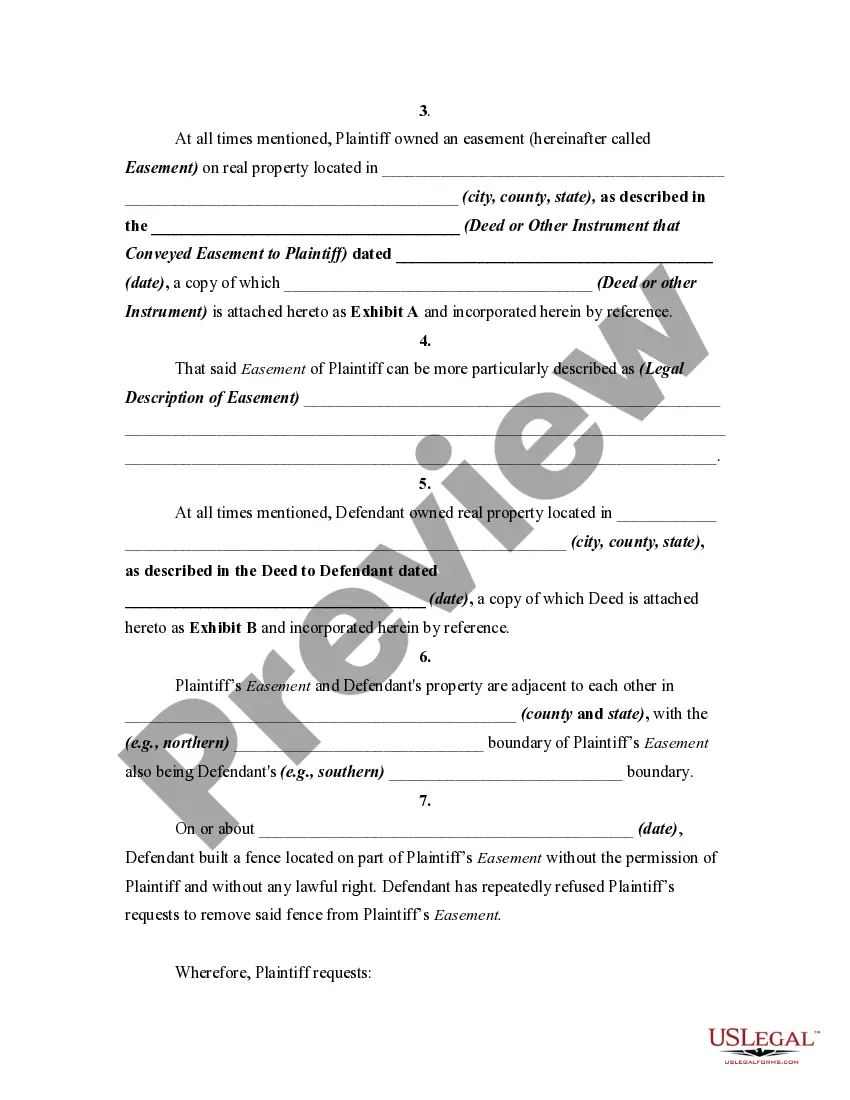
- Description of the easement property and the specific legal documentation supporting the claim.
- Details surrounding the construction of the fence by the defendant on the easement.
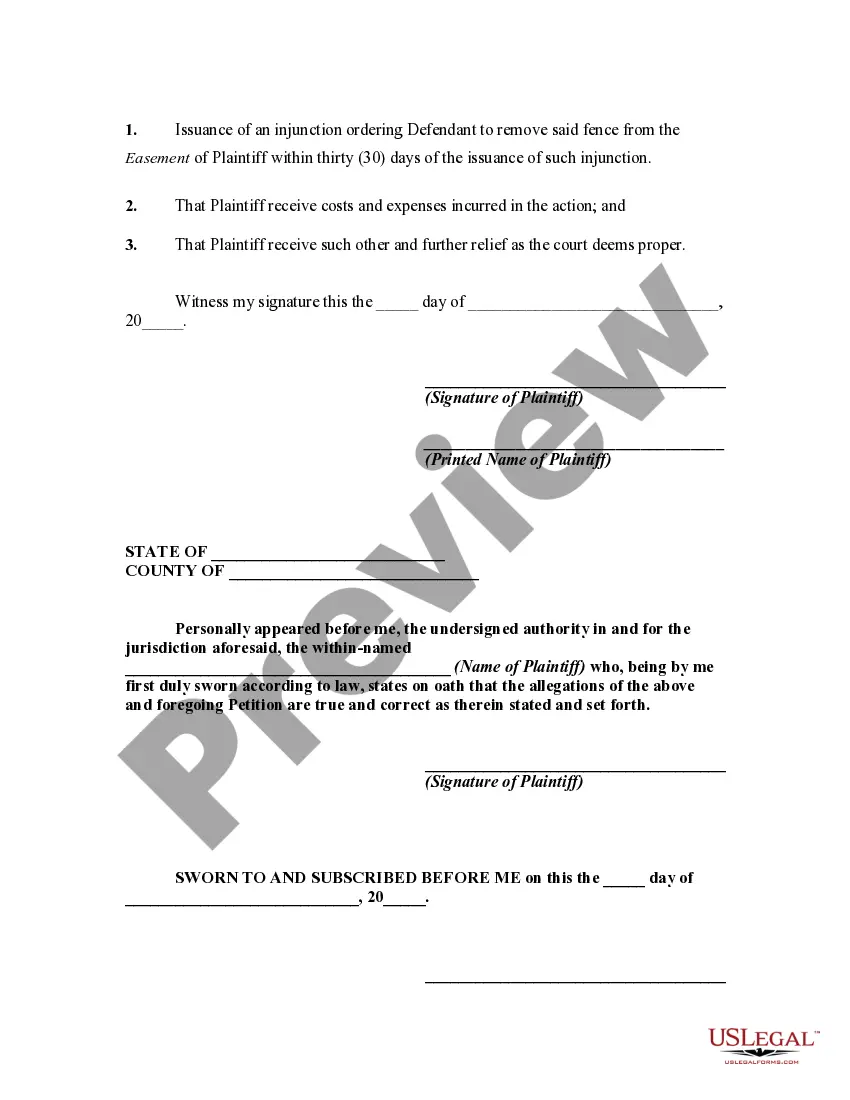
- A request for an injunction ordering the removal of the unauthorized fence.
- Provision for reimbursement of costs incurred in pursuing the matter.
When to use this document
This form is appropriate to use in situations where you, as a property owner, find that an adjacent landowner has constructed a fence or other structure on your easement without permission. It is used when informal requests to remove the obstruction have been ignored. This legal action seeks to remedy the situation through the court system, ensuring that your rights regarding property access are upheld.
Who can use this document
- Property owners who hold an easement and wish to enforce their rights.
- Individuals facing disputes with neighboring landowners regarding property boundaries or easements.
- Legal representatives acting on behalf of clients involved in property disputes.
Steps to complete this form
- Identify and enter the names of the plaintiff and defendant in the appropriate sections.
- Specify the property details related to the easement, including addresses and legal descriptions.
- Describe the circumstances regarding the unauthorized fence or structure.
- Complete the request for the court to issue an injunction, along with any requests for costs.
- Sign the document in front of a notary public, if required.
Does this document require notarization?
This form does not typically require notarization unless specified by local law. However, it is advisable to check your local court requirements to ensure proper validation.
Get your form ready online
Our built-in tools help you complete, sign, share, and store your documents in one place.
Make edits, fill in missing information, and update formatting in US Legal Forms—just like you would in MS Word.
Download a copy, print it, send it by email, or mail it via USPS—whatever works best for your next step.
Sign and collect signatures with our SignNow integration. Send to multiple recipients, set reminders, and more. Go Premium to unlock E-Sign.
If this form requires notarization, complete it online through a secure video call—no need to meet a notary in person or wait for an appointment.
We protect your documents and personal data by following strict security and privacy standards.

Make edits, fill in missing information, and update formatting in US Legal Forms—just like you would in MS Word.

Download a copy, print it, send it by email, or mail it via USPS—whatever works best for your next step.

Sign and collect signatures with our SignNow integration. Send to multiple recipients, set reminders, and more. Go Premium to unlock E-Sign.

If this form requires notarization, complete it online through a secure video call—no need to meet a notary in person or wait for an appointment.

We protect your documents and personal data by following strict security and privacy standards.
Common mistakes
- Failing to properly identify the easement and its legal basis.
- Not including sufficient details about the obstruction (e.g., the location and nature of the fence).
- Neglecting to seek local legal advice regarding specific requirements for filing.
Benefits of using this form online
- Convenience of downloading and filling out the form at your own pace.
- Editability allows for easy adjustment to suit your specific situation.
- Access to legally vetted templates that comply with current procedures.
Looking for another form?
Form popularity
FAQ
The form is used to seek a court order (injunction) requiring an adjoining landowner to remove a fence or other structure that encroaches on the plaintiff’s easement. It should be used after informal requests fail. The packet includes identification of the parties, a description of the easement, details of the encroachment, a request for relief, and a costs provision.
This form is designed for situations where an adjacent owner erected a fence on a plaintiff's easement and informal requests have been ignored. It seeks a court injunction to remove the obstruction and explains how to complete the filing, including identifying the parties, describing the easement, documenting the encroachment, requesting relief, and outlining costs recoverable in pursuing the matter.
This form does not set easement costs. It provides for reimbursement of costs incurred in pursuing the matter. Actual costs vary by property and jurisdiction. For budgeting and potential recoveries, consider consulting an attorney who can outline likely court costs and how the form handles cost recovery.
This form focuses on obtaining an injunction to remove an encroachment on an easement, not on setting compensation for the easement itself. It provides for recovery of costs incurred in pursuing the matter, and requires a clear description of the easement and encroachment. For compensation matters, consult an attorney to explore appraisal or negotiation options.
This form does not define easement dimensions. The 'Description of the easement property' section requires accurately describing the easement’s location, size, and legal basis, using any supporting documents. Accurately detailing the easement helps establish the scope of enforcement, and relies on your attachment or records to identify the affected area.
This form is specifically for enforcing an easement by obtaining an injunction to remove an obstruction on the easement. It includes a dedicated 'Description of the easement property' and an explicit request for an injunction, rather than focusing on damages or general nuisance claims, making it distinct from generic encroachment filings.