Cross Corporate Guaranty Agreement
What is this form?
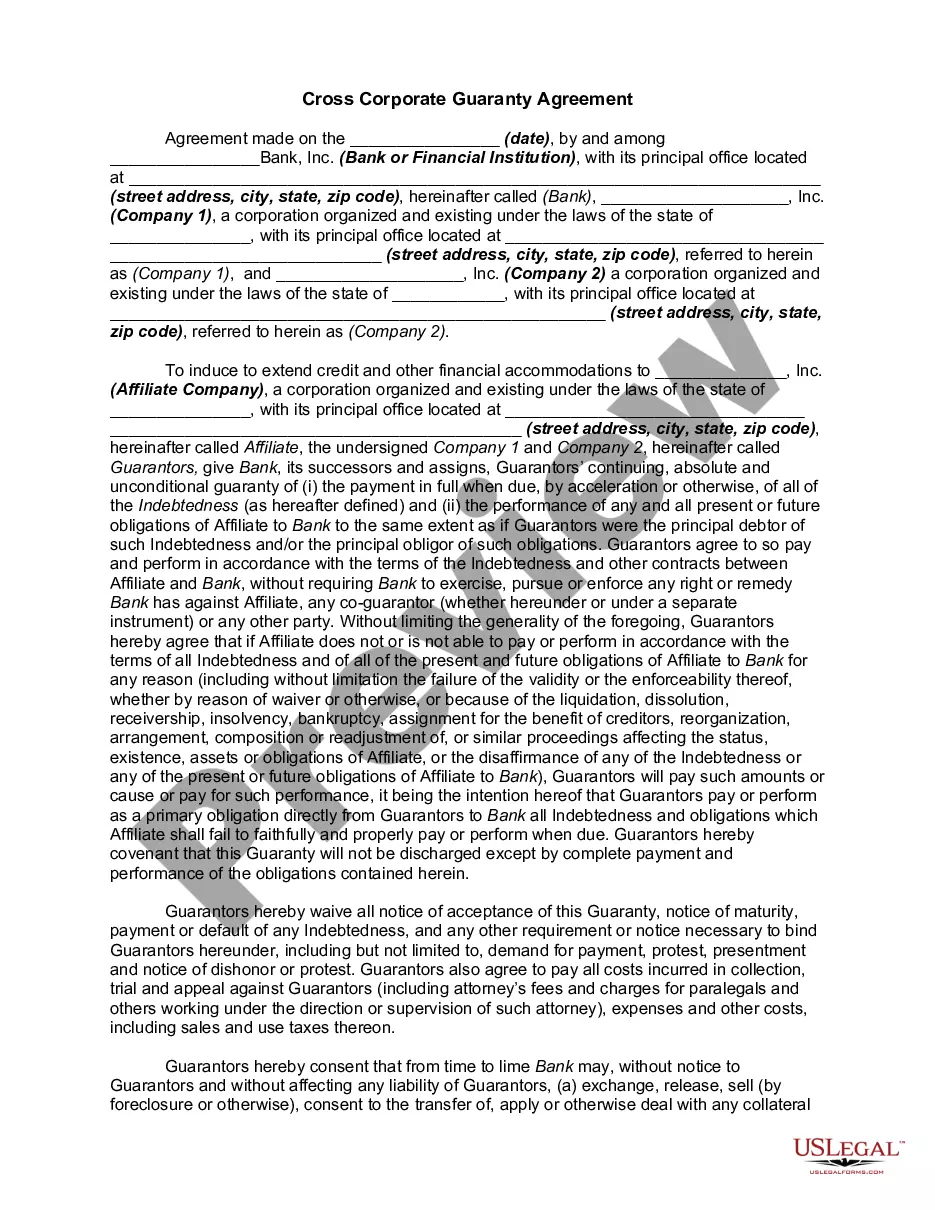
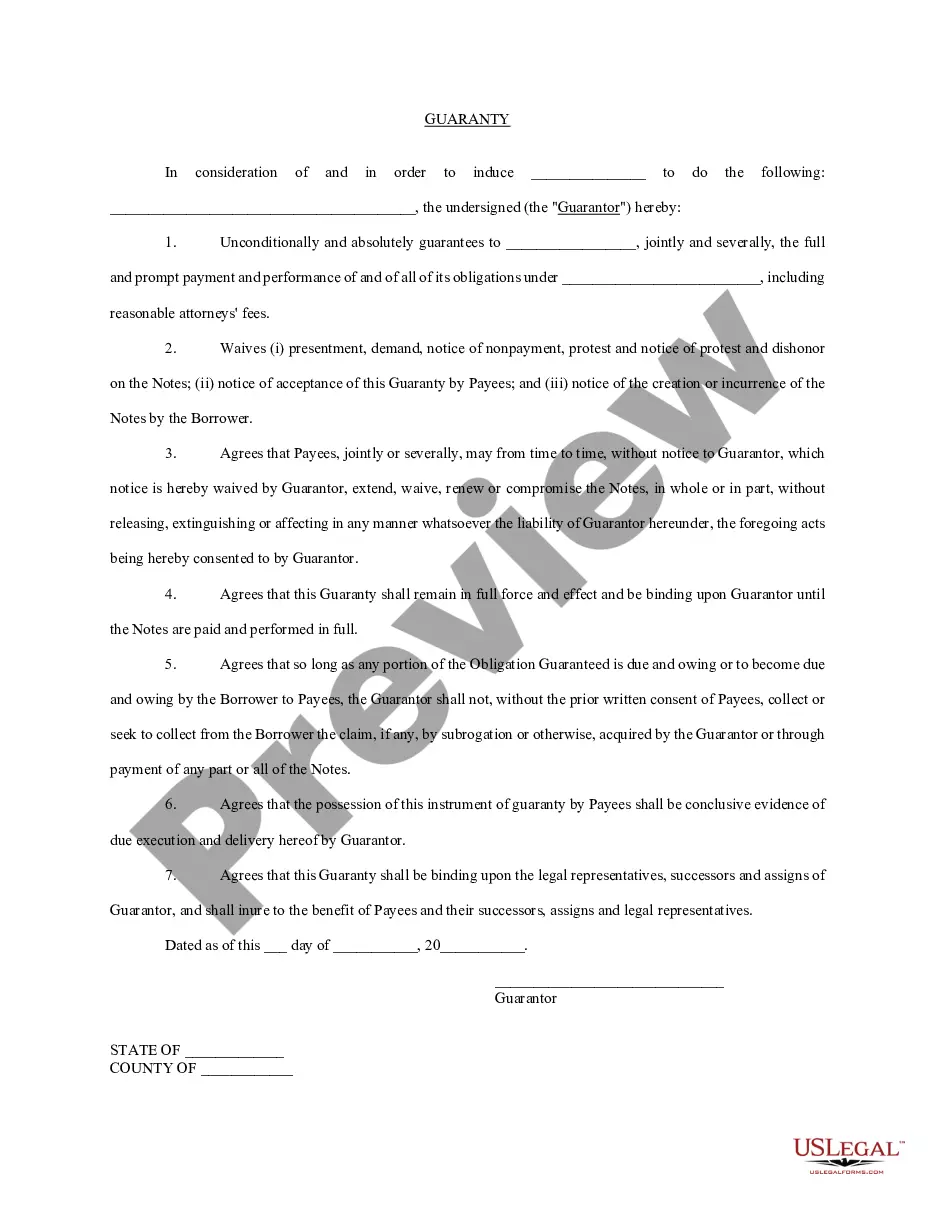
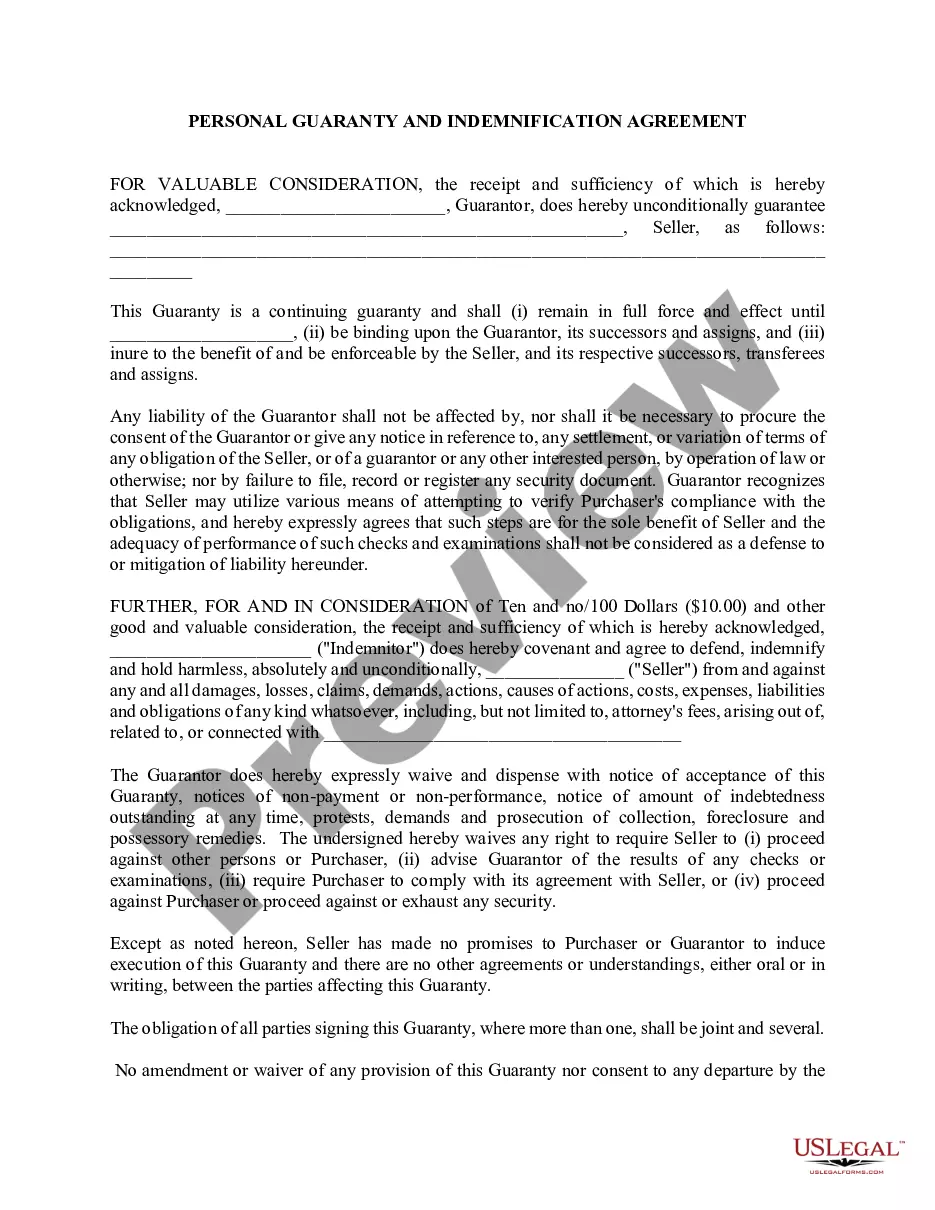
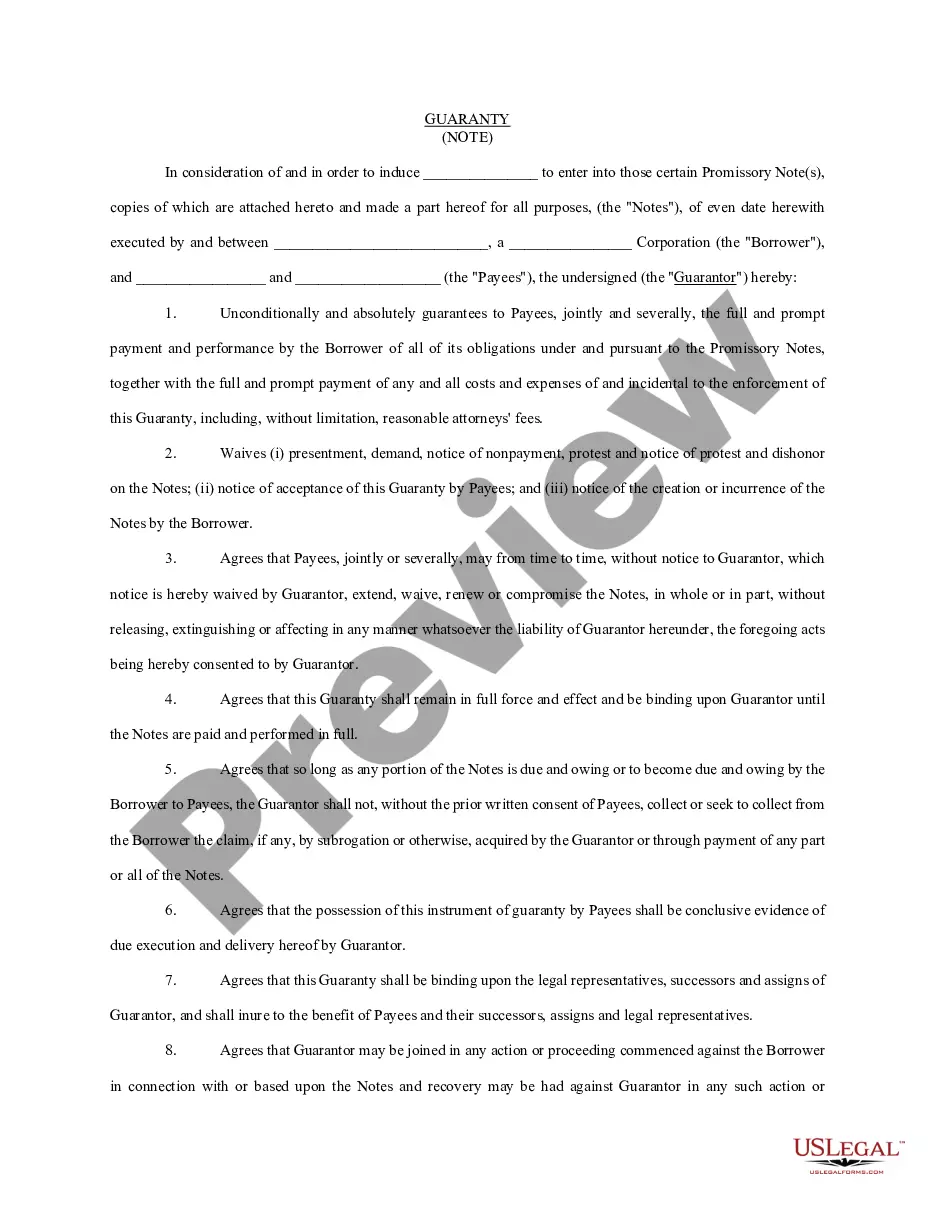
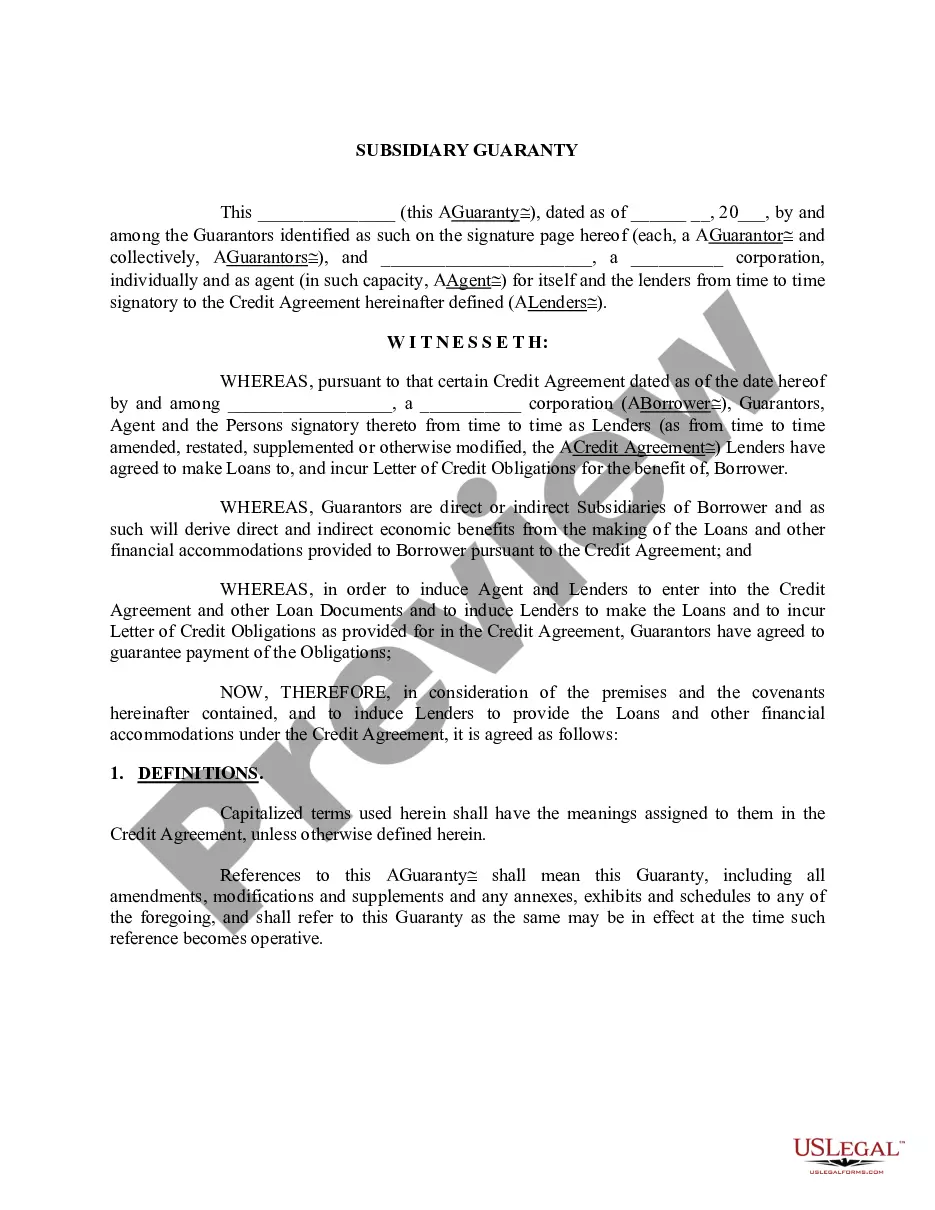
The Cross Corporate Guaranty Agreement is a legal document in which two corporations agree to guarantee the debts of an affiliate corporation. This form is essential for providing additional security to a lender by having multiple entities accountable for fulfilling the financial obligations of the borrowing corporation. It distinguishes itself from other guaranty agreements by involving multiple guarantors backing a single debtor, thereby enhancing the creditor's security position.
Main sections of this form
- Date of the agreement.
- Details of the bank or financial institution providing credit.
- Information on the two guaranteeing corporations.
- Identification of the affiliate corporation whose debts are guaranteed.
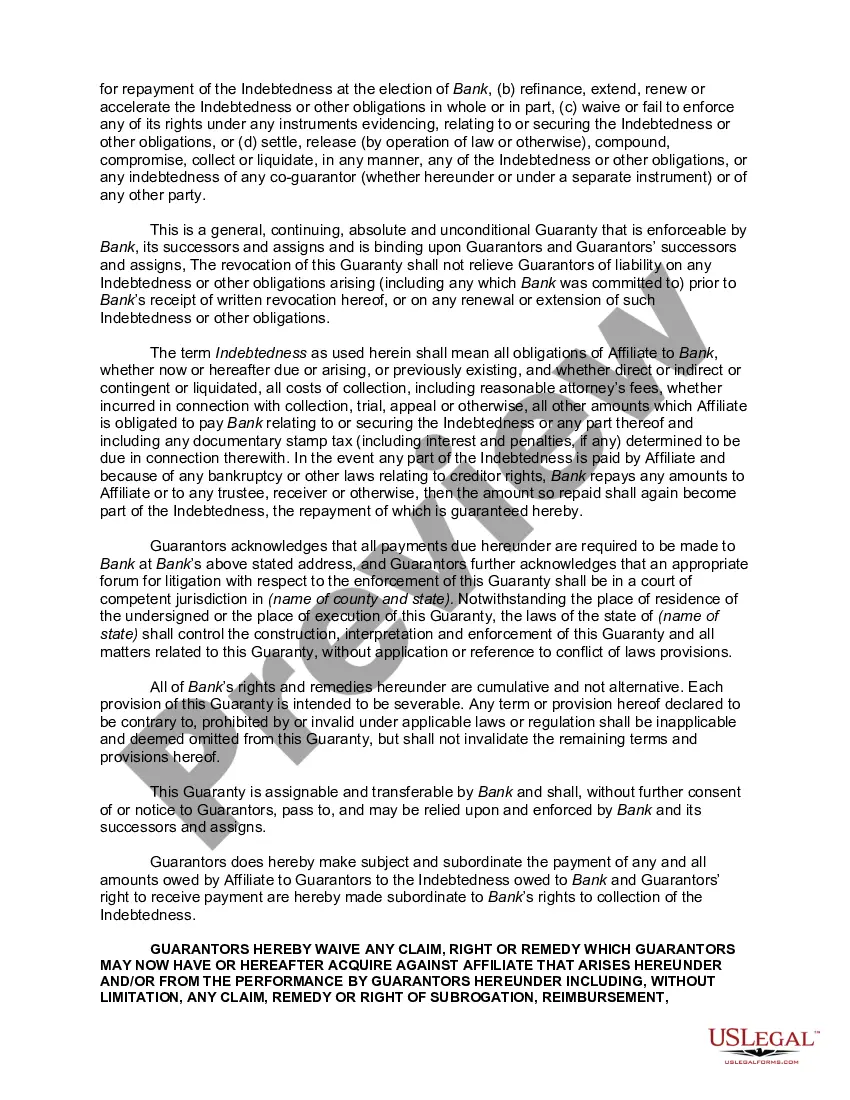
- Terms outlining the responsibilities and liabilities of the guarantors.
- Clauses related to the legal enforcement of the agreement.
When to use this form
This form is particularly useful when two corporations want to support an affiliated corporation seeking credit from a financial institution. It is applicable in scenarios such as when a company is looking for a loan, and the lenders require additional reassurance for the repayment of the loans by involving multiple corporations as guarantors. This strengthens the likelihood of loan approval and provides a more comprehensive safety net for creditors.
Intended users of this form
This form is suitable for:
- Corporations intending to support an affiliate's financial obligations.
- Financial institutions requiring guarantees from multiple entities.
- Corporate officers responsible for negotiating financial agreements.
How to complete this form
Follow these steps to complete the Cross Corporate Guaranty Agreement:
- Identify the parties involved, including the bank and the guaranteeing corporations.
- Fill in the date of the agreement.
- Provide the principal office addresses for all entities involved.
- Specify the affiliate corporation whose obligations are being guaranteed.
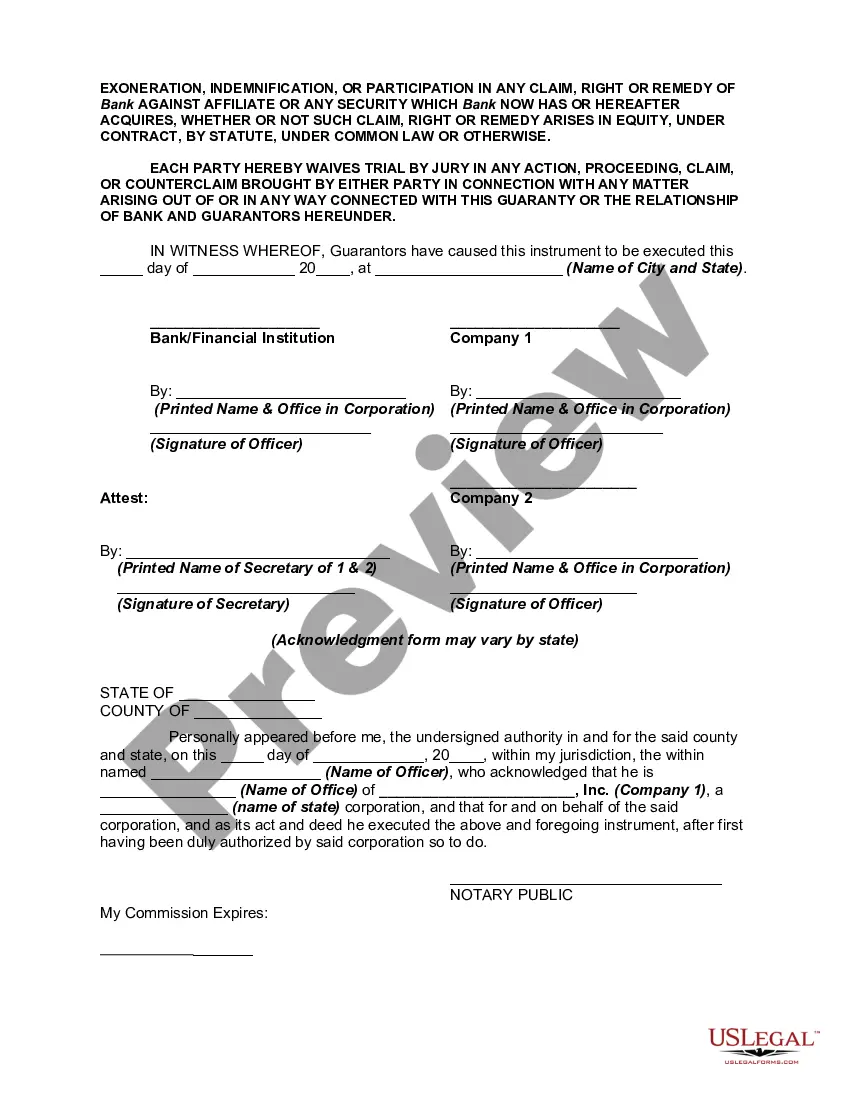
- Ensure all signatures are obtained from authorized officers of the guarantors.
- Review and verify the agreement to ensure all necessary fields are completed accurately.
Notarization guidance
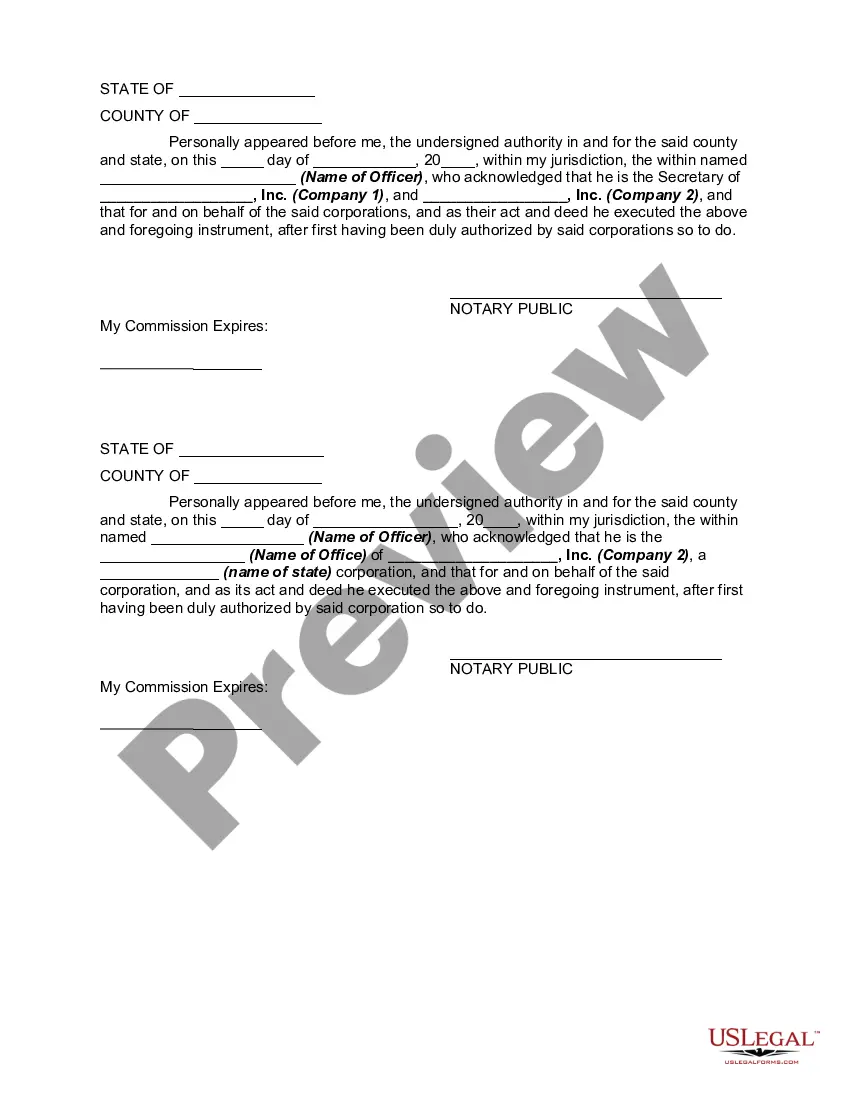
This form does not typically require notarization unless specified by local law. However, it is advisable to check local speaker requirements before finalizing the agreement.
Get your form ready online
Our built-in tools help you complete, sign, share, and store your documents in one place.
Make edits, fill in missing information, and update formatting in US Legal Forms—just like you would in MS Word.
Download a copy, print it, send it by email, or mail it via USPS—whatever works best for your next step.
Sign and collect signatures with our SignNow integration. Send to multiple recipients, set reminders, and more. Go Premium to unlock E-Sign.
If this form requires notarization, complete it online through a secure video call—no need to meet a notary in person or wait for an appointment.
We protect your documents and personal data by following strict security and privacy standards.

Make edits, fill in missing information, and update formatting in US Legal Forms—just like you would in MS Word.

Download a copy, print it, send it by email, or mail it via USPS—whatever works best for your next step.

Sign and collect signatures with our SignNow integration. Send to multiple recipients, set reminders, and more. Go Premium to unlock E-Sign.

If this form requires notarization, complete it online through a secure video call—no need to meet a notary in person or wait for an appointment.

We protect your documents and personal data by following strict security and privacy standards.
Common mistakes to avoid
- Failing to include the full legal names of all parties involved.
- Not specifying the correct addresses for each corporation.
- Omitting signatures from all necessary representatives.
- Using the wrong date or leaving it blank.
Benefits of using this form online
- Access to professionally drafted legal language, reducing the risk of errors.
- Convenience of downloading and printing the form for immediate use.
- Ability to customize the agreement to fit specific corporate needs.
- Secure and reliable, ensuring compliance with legal standards.
Legal use & context
- This agreement is enforceable in a court of law provided it is properly executed.
- It ensures that the bank has recourse to the guarantors if the affiliate fails to meet its financial obligations.
- Limits of liability for the Guarantors should be clearly defined in the document to avoid disputes.
Key takeaways
- The Cross Corporate Guaranty Agreement allows multiple corporations to guarantee an affiliateâs debts.
- Proper completion and notarization of the form are critical for enforceability.
- It is important to understand all definitions and obligations outlined in the agreement.
Looking for another form?
Form popularity
FAQ
Section 186 of the 2013 Act requires that a company will not (i) give loans to any person/other body corporate, (ii) give guarantee or provide security in connection with a loan to any person/body corporate and (iii) acquire securities of any other body corporate, exceeding the higher of (a) 60% of its paid-up share
The main difference between a bank guarantee and corporate guarantee is, in a bank guarantee the bank is providing assurance for repayment in defaults but in a corporate guarantee, the guarantor has the responsibility of repayment in defaults.
Guaranty Agreement a two-party contract in which the first party agrees to perform in the event that a second party fails to perform. Unlike a surety, a guarantor is only required to perform after the obligee has made every reasonable and legal effort to force the principal's performance.
As per Section 186 a company cannot give any loan or guarantee or provide security in connection with a loan to any other body corporate or person: exceeding sixty per cent. of its paid-up share capital, free reserves and securities premium account or one hundred per cent.
A cross guarantee refers to an arrangement between two or more related companies to provide a guarantee to each other's obligations. Such a guarantee is commonly made among companies trading under the same group or between a parent company and its subsidiaries.
A corporate guarantee is an official letter where a guarantor. They are usually a form of insurance for the lender. becomes responsible for handling debt payments or takes overall responsibility for debt repayment in case the debtor defaults on the loan.
A corporate guarantee is a contract between a corporate entity or individual and a debtor. In this contract, the guarantor agrees to take responsibility for the debtor's obligations, such as repaying a debt.
A guarantee is a put option on the assets of the firm with an exercise price equal to the face value of the debt. Consider the following: Let 'V' be the value of a firm and 'F' be the face value of its debt. For simplicity, assume there are no coupon payments and all the debt mature on a specified date.
Guaranty Agreement a two-party contract in which the first party agrees to perform in the event that a second party fails to perform. Unlike a surety, a guarantor is only required to perform after the obligee has made every reasonable and legal effort to force the principal's performance.