Biological Material Use and Storage Consent Form
What is this form?
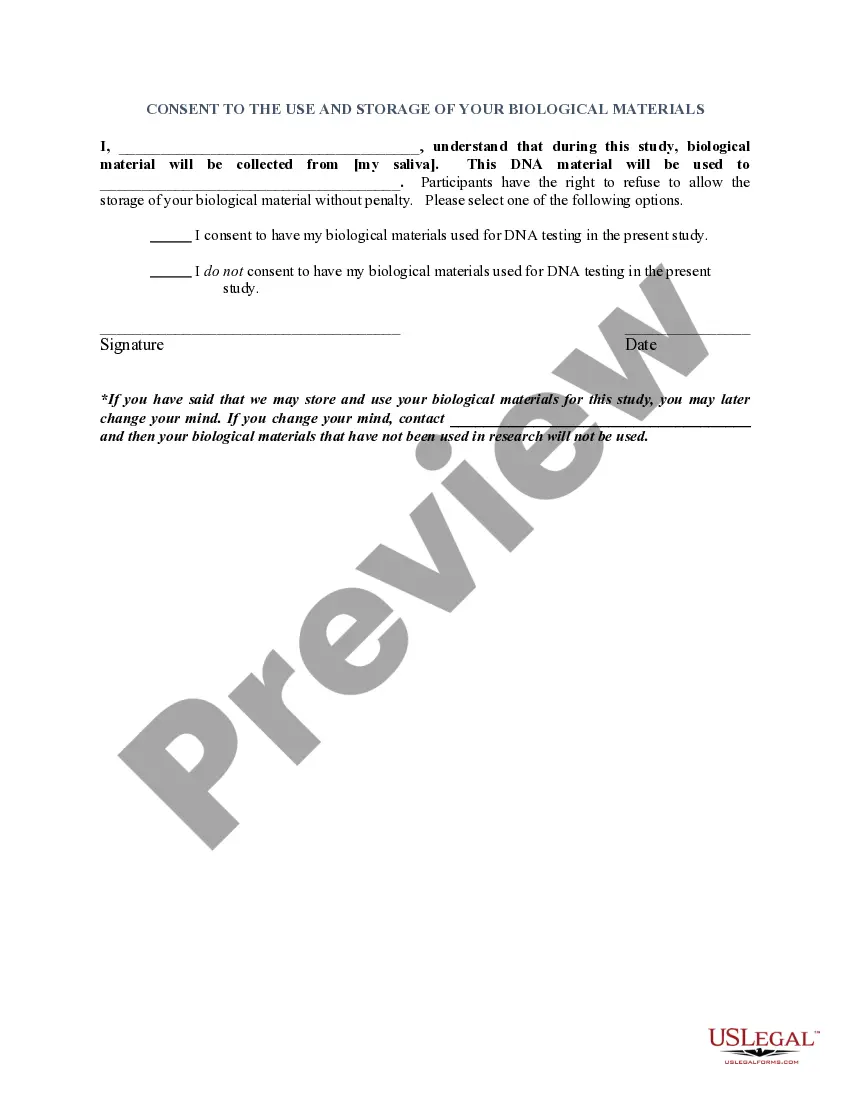
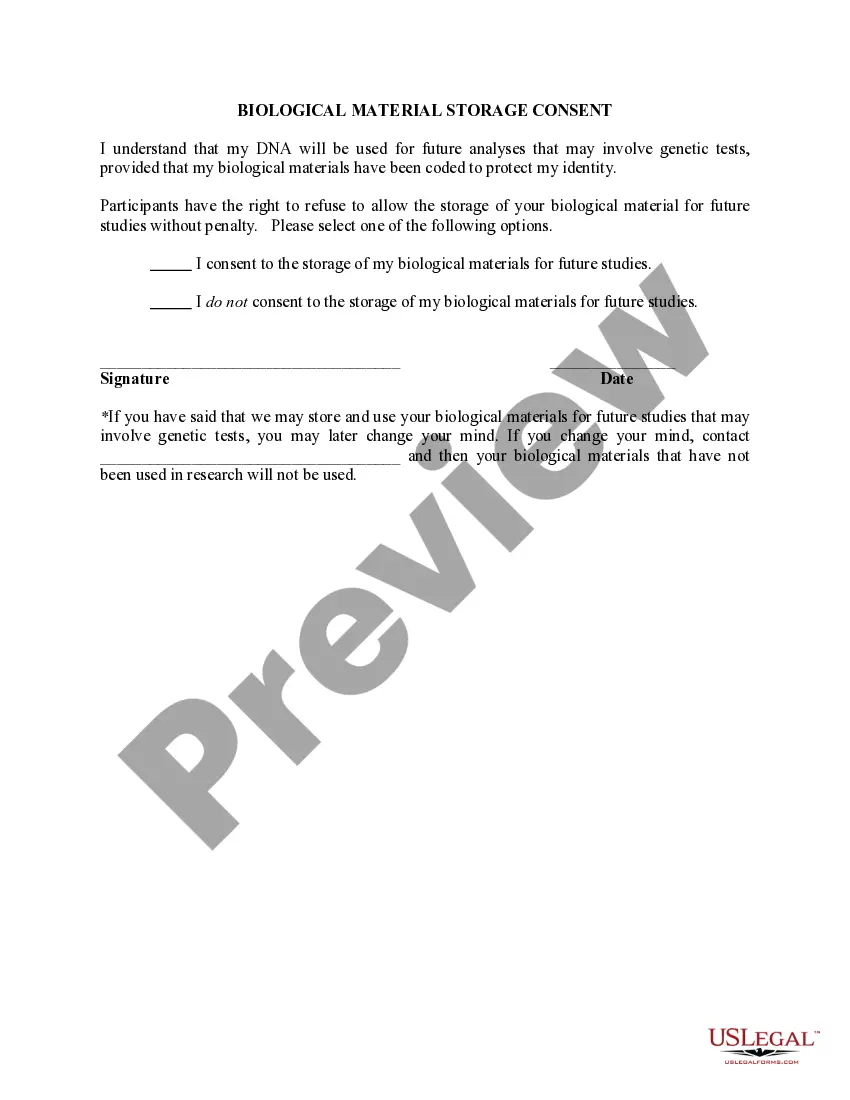
The Biological Material Use and Storage Consent Form is a legal document that allows participants in a research study to consent to the collection, use, and storage of their biological materials, such as saliva. This form is essential for ensuring participants understand how their biological materials will be used in current and future research studies, distinguishing it from other consent forms that may not address the specifics of biological material storage and usage.
Form components explained
- Participant identification section for signature and date.
- Clear statement about the collection of biological material, such as saliva.
- Options for consent regarding the use of biological materials for DNA testing.
- Statement of rights to refuse consent without penalty.
- Instructions for changing consent after submission.
Situations where this form applies
This form should be used in scenarios where biological samples are collected during research studies. It is required when researchers need explicit consent from participants to store and use their biological materials for testing and analysis. Using this form ensures ethical standards are met and participants are fully informed of how their samples will be used.
Who this form is for
- Researchers conducting studies that require the collection of biological materials.
- Participants in research studies who provide biological samples.
- Institutions and organizations involved in research that mandates ethical compliance.
Completing this form step by step
- Enter your full name in the designated section for participant identification.
- Read the explanation about the collection of your biological materials carefully.
- Choose one of the consent options regarding the use of your biological materials.
- Sign and date the form to confirm your consent.
- If you wish to change your consent later, contact the specified individual provided in the instructions.
Is notarization required?
This form does not typically require notarization unless specified by local law. Ensure to check any specific state requirements that may apply to your situation.
Get your form ready online
Our built-in tools help you complete, sign, share, and store your documents in one place.
Make edits, fill in missing information, and update formatting in US Legal Forms—just like you would in MS Word.
Download a copy, print it, send it by email, or mail it via USPS—whatever works best for your next step.
Sign and collect signatures with our SignNow integration. Send to multiple recipients, set reminders, and more. Go Premium to unlock E-Sign.
If this form requires notarization, complete it online through a secure video call—no need to meet a notary in person or wait for an appointment.
We protect your documents and personal data by following strict security and privacy standards.

Make edits, fill in missing information, and update formatting in US Legal Forms—just like you would in MS Word.

Download a copy, print it, send it by email, or mail it via USPS—whatever works best for your next step.

Sign and collect signatures with our SignNow integration. Send to multiple recipients, set reminders, and more. Go Premium to unlock E-Sign.

If this form requires notarization, complete it online through a secure video call—no need to meet a notary in person or wait for an appointment.

We protect your documents and personal data by following strict security and privacy standards.
Avoid these common issues
- Failing to read the consent options carefully before signing.
- Not providing your full name or contact information in the required sections.
- Overlooking the instructions on how to withdraw consent if desired.
Benefits of using this form online
- Convenience of accessing and completing the form from anywhere.
- Ability to review and edit responses before finalizing consent.
- Quick processing of forms helps streamline the research process.
Main things to remember
- The Biological Material Use and Storage Consent Form is crucial for ethical research practices.
- Participants have rights regarding consent and storage of their biological materials.
- Clear instructions are provided for both consenting and changing consent.
Looking for another form?
Form popularity
FAQ
Biological Sample Storage: Industry Applications Biobanks: Biobanks, or biorepositories, are used for biological sample storage and preserving biological specimens. Biospecimens are collected and stored for future research. The types of samples stored include human tissues for DNA analysis.
Biologic materials like blood, tissues, and reproductive specimens, as well as clinical trial materials, should be stored in cryogenic containers that can be maintained at -150 degrees Celsius for at least 10 days. Under those conditions, this type of storage is really the only viable option.
Biologic materials like blood, tissues, and reproductive specimens, as well as clinical trial materials, should be stored in cryogenic containers that can be maintained at -150 degrees Celsius for at least 10 days. Under those conditions, this type of storage is really the only viable option.
Handling of Biological Materials on the Open Bench Disinfect the bench and equipment surfaces regularly. Do not leave sharp objects out. Change absorbent materials frequently. Clearly define all waste streams and have disposal bins readily available. Keep things in order.
Maintained thermostatically between 15.5°C and 24°C (60°F and 75°F) with less than 60% humidity. equal to the ambient temperature of its surroundings; storage area may lack temperature and humidity control methods.
Cryogenic freezer storage is often deemed the gold standard for long-term storage of biological samples. At these extremely low temperatures all biological activity is suspended and no degradation occurs. Cryogenic freezing is ideal for sensitive samples and specimens which cannot be suspended in a preservative.
Vaccines and biologics should be stored in a refrigerator that can maintain constant temperatures between +2ºC and +8ºC and the refrigerator should be in a secure location away from unauthorized personnel and public access.
The consent form must include: A statement that the study involves research.Purpose of the research.Procedures.Risks or discomforts to the subject.Benefits of the research to the subject.Treatment Alternatives.Costs of Participation.Confidentiality.